
These Mississippi Small-Town Foods Rarely Travel Beyond State Borders
Mississippi has a rich food tradition most folks never taste. Small towns guard recipes that rarely leave county lines, served in church halls, gas stations, and family kitchens.
Walk into a counter spot and regulars greet you by name, then point you to what to order. Stories sit on those plates, shaped by the people who make them and the neighbors who show up every week.
Road trips start here for comfort and continuity. Pull up a chair, listen in, and let Mississippi cook for you right now with pride.
1. Delta Hot Tamales
Greenville sits in the heart of the Delta, where tamales arrived with migrant workers over a century ago. The local version differs wildly from Mexican tamales. They’re smaller, spicier, and packed with a cornmeal mixture that soaks up the meat juices.
You won’t find these in fancy restaurants. Street vendors and small shops sell them by the dozen, wrapped tight in corn husks. The spice level can surprise first-timers, but locals grow up eating them at every gathering.
Most families guard their recipes carefully, passing them down through generations.
2. Koolickles
Someone in Clarksdale had a wild idea to soak dill pickles in Kool-Aid, and it stuck. The result is sweet, sour, and completely unexpected. Kids love them, though adults often need convincing before that first bite.
Making them takes patience. The pickles soak in the sugary drink mix for days until they turn bright red or purple. Gas stations and corner stores sell them from big jars on the counter.
This treat captures the creativity born from simple ingredients and hot summer days when anything cold tastes good.
3. Slugburger
During the Depression, meat was expensive in Corinth. Cooks stretched ground beef by mixing it with flour, cornmeal, or soy grits. The name came from the price, a nickel slug, not from any critter you’d find in the garden.
Today, restaurants still serve them the old way. The patties are thinner than regular burgers and have a different texture that takes getting used to. Locals swear by them, especially when fried crispy and served with mustard and pickles.
Annual festivals celebrate this humble sandwich.
4. Doughburger
New Albany took burger innovation in a different direction entirely. Instead of meat, the doughburger uses fried bread dough as the patty. It sounds strange until you try one topped with chili, mustard, and onions.
The dough gets fried until golden and crispy on the outside while staying soft inside. Then it’s dressed like a regular burger with all the fixings. Some places add cheese or slaw to the mix.
This Depression-era creation still draws crowds to the few places that make them right.
5. Hot-Water Cornbread
Cornmeal mixed with boiling water and a pinch of salt creates something magical when dropped into hot oil. The cakes fry up crispy outside and creamy inside, with irregular shapes that prove they’re handmade.
Greenwood cooks have perfected this simple recipe over generations. No eggs, no milk, just three basic ingredients and the right technique. They’re best eaten hot, straight from the skillet, though they never last long enough to cool down anyway.
Every family has slight variations in thickness and seasoning.
6. Lacy Cornbread
Cleveland takes cornbread to the opposite extreme with batter so thin it spreads across a smoking hot skillet. The result looks like golden lace with crispy edges and delicate holes throughout.
Getting the consistency right takes practice. Too thick and it won’t spread properly. Too thin and it falls apart. The skillet needs to be searingly hot before the batter hits the surface.
This version pairs perfectly with greens and beans, soaking up pot liquor while maintaining its crunch. Older cooks make it look easy, but beginners often struggle.
7. Chicken On A Stick
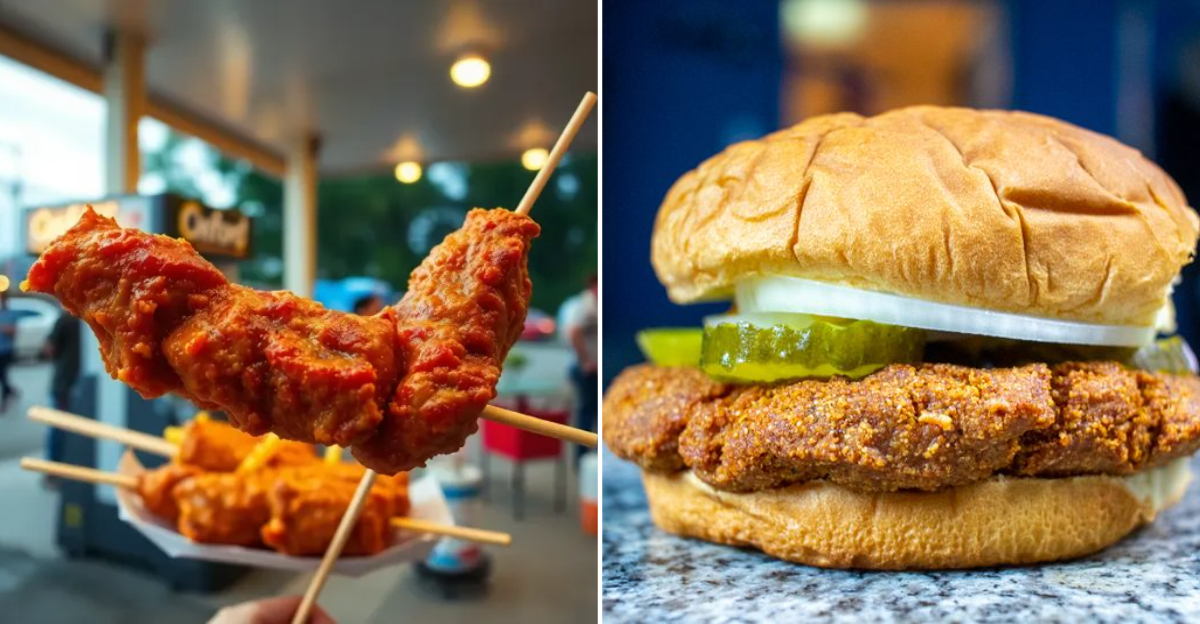
Oxford turned regular fried chicken into portable festival food by threading strips onto wooden skewers. Vendors set up at football games and community events, frying batches in big pots while crowds wait.
The chicken gets marinated, breaded, and fried until golden. Eating it off the stick keeps your hands cleaner than traditional pieces. Dipping sauces vary by vendor, from honey mustard to spicy ranch.
This simple adaptation became so popular that people now associate it specifically with Oxford gatherings and celebrations throughout the year.
8. Biloxi Bacon Fried Mullet And Backbones
Biloxi fishermen have always known that mullet, often overlooked by fancy restaurants, fries up beautifully. The backbones, usually discarded elsewhere, become crunchy treats when cooked right.
Local cooks dredge the fish in seasoned cornmeal before hitting the hot oil. The bacon reference comes from how the fish is sometimes wrapped or the smoky flavor added to the breading. Every bite tastes like the Gulf, salty and fresh.
Coastal families serve this at fish fries where everyone gathers around newspaper-covered tables to eat with their hands.
9. Cathead Biscuits
These biscuits earned their name from their size, as big as a cat’s head. Tupelo cooks shape them by hand instead of using cutters, creating rough, rustic rounds that bake up tall and fluffy.
The dough stays wet and sticky, which makes them tender inside with a golden crust. Buttermilk gives them tang, and the irregular shapes mean every biscuit is slightly different. They’re perfect split open for sausage gravy or filled with country ham.
Making them right requires a light touch and years of practice.
10. Pear Salad
Laurel lunch counters serve this retro dish that younger generations find puzzling. A canned pear half sits on lettuce, topped with mayonnaise, shredded cheddar, and a bright red cherry.
It sounds odd, but the combination works in a nostalgic way. Sweet fruit, creamy mayo, and sharp cheese create layers of flavor that defined mid-century Southern cooking. Church ladies still bring it to potlucks in glass dishes.
Some versions add a dollop of cream cheese or substitute cottage cheese for a different texture.
11. Mayhaw Jelly
Mayhaw trees grow wild in swamps around Lucedale, producing small tart berries each spring. Locals wade into the water to harvest them, a tradition that goes back generations.
The berries cook down into jelly with a unique flavor, tart and slightly floral. It’s too special to waste on regular toast. Most people save it for biscuits at Sunday breakfast or give jars as gifts.
Making it requires patience and knowledge of where the best trees grow. You can’t buy the berries in stores, making this jelly truly local.
12. Sciple’s Mill Grits And Cornmeal
De Kalb’s old water-powered mill still grinds corn the way it did over a century ago. Stone wheels turn slowly, producing grits and cornmeal with texture you can’t get from factory processing.
The difference shows up in the cooking. These grits need longer simmering but develop a creamy consistency and corn flavor that instant versions never achieve. The cornmeal makes cornbread with real character and depth.
Locals drive from surrounding counties to buy bags fresh from the mill, knowing good ingredients make all the difference in traditional recipes.
13. Choctaw Frybread
The Mississippi Band of Choctaw Indians keeps their frybread tradition alive in Philadelphia. Simple dough gets stretched thin and dropped into hot oil, puffing up into golden pillows.
At tribal gatherings and the annual fair, you’ll find it served plain with honey or topped with savory ingredients. Each family has their own method for mixing and frying, passed down through the generations.
This food represents resilience and cultural identity. It tastes best when made by hands that have been shaping the dough for decades, served with stories and community.