
8 Alabama Gulf Islands Locals Say Have Changed Beyond Recognition
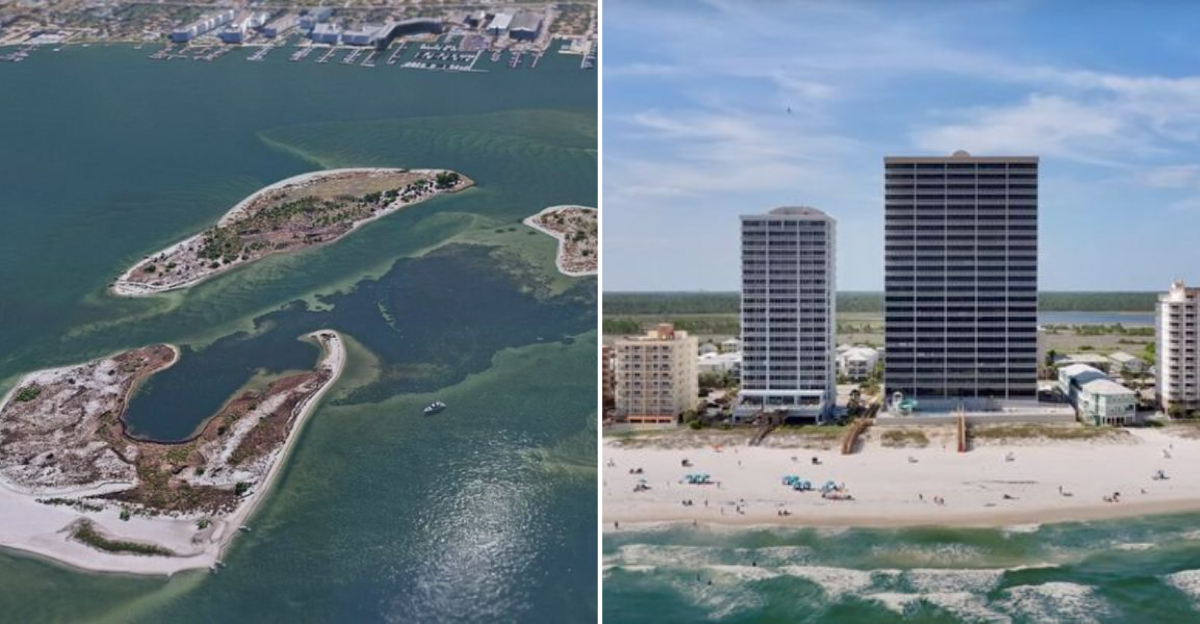
Alabama’s Gulf Coast used to be this sleepy stretch of shoreline where shrimpers hauled nets and families quietly built sandcastles without fighting for beach space.
I remember visiting my aunt in Gulf Shores as a kid, and the entire town felt like a well-kept secret—just a few mom-and-pop motels and endless stretches of sugar-white sand.
Fast forward a few decades, and the transformation is jaw-dropping.
High-rises pierce the skyline, traffic jams replace lazy afternoon drives, and once-humble fishing villages now boast luxury marinas and upscale entertainment districts that would make any resort town jealous.
1. Gulf Shores, Alabama
Gulf Shores was the definition of a laid-back fishing village where shrimpers spent their mornings hauling in the catch and locals knew everyone by name. My uncle used to joke that the biggest traffic jam was three pickup trucks waiting at the only stoplight in town. Those days are long gone, replaced by towering condos that block the sunset and tourist crowds that descend every summer like clockwork.
The transformation happened gradually, then all at once. What started as a handful of modest beach houses evolved into luxury developments with rooftop pools and valet parking. Now the streets are packed with rental cars, souvenir shops line every corner, and finding a quiet spot on the beach feels like winning the lottery.
Locals say they barely recognize the place anymore, trading small-town charm for big-city bustle and tourist dollars.
2. Orange Beach, Alabama
Orange Beach started as this tiny coastal hamlet where fishing boats outnumbered tourists by a landslide. I visited once in the early 2000s and counted maybe five restaurants total—now there are entire entertainment complexes with miniature golf, arcades, and enough seafood joints to make your head spin. The marina developments alone have transformed the waterfront into something resembling Miami Beach’s younger cousin.
Resort hotels sprouted up like mushrooms after a rainstorm, each one bigger and fancier than the last. The Flora-Bama, once a quirky dive bar straddling the state line, is now surrounded by massive developments that dwarf its humble origins. Entertainment districts have replaced quiet neighborhoods, bringing neon lights and live music to areas that once heard only crickets and waves.
Old-timers shake their heads at the changes, missing simpler times.
3. Bon Secour, Alabama
Bon Secour translates to “safe harbor” in French, and for generations it lived up to that name as a humble fishing village where shrimpers worked hard and lived simply. My cousin married a guy whose family had shrimped those waters for three generations, and even he says the place is unrecognizable now. High-priced homes have replaced weathered fishing cottages, and the community vibe has shifted from blue-collar grit to upscale coastal living.
Development crept in slowly at first, then accelerated as Gulf Shores and Orange Beach ran out of prime real estate. Suddenly Bon Secour became the next hot spot, with developers snapping up properties and building homes that cost more than most locals earn in a decade. The fishing industry still exists, but it’s increasingly overshadowed by wealthy newcomers seeking waterfront tranquility.
Old families feel squeezed out by rising property taxes and changing demographics.
4. Dauphin Island, Alabama
Dauphin Island used to be this windswept barrier island where nature called the shots and humans simply adapted to her moods. I camped there as a teenager, and the island felt wild and untouched, with more pelicans than people. Nowadays, coastal restoration and renourishment projects are constantly reshaping the shoreline, fighting an endless battle against erosion and storm damage while accommodating increased visitor traffic.
The island’s appearance changes almost seasonally as crews pump sand onto beaches and rebuild dunes that hurricanes wash away. Higher usage from tourists has altered the island’s character, bringing more development pressure and infrastructure demands. What was once a sleepy escape for birdwatchers and nature lovers now sees summer crowds that strain the island’s limited resources.
Longtime residents worry that restoration efforts, while necessary, are changing the island’s wild essence forever.
5. Robinson Island, Alabama
Robinson Island sits in the Lower Perdido area, and for most of Alabama’s history, it existed as this wild barrier island that few people bothered visiting. I heard about it from a marine biologist friend who studied nesting patterns there before restoration projects kicked into high gear. Now the island is undergoing significant transformation through reshaping initiatives designed to protect coastal habitats and buffer mainland areas from storm surge.
The restoration work has dramatically altered the island’s natural appearance and ecological balance. What was once a more organic, untouched environment now shows clear signs of human engineering—rebuilt dunes, planted vegetation, and reshaped shorelines. While the projects aim to preserve habitat, they’ve fundamentally changed how the island looks and functions within the coastal ecosystem.
Scientists debate whether we’re saving nature or just redesigning it to our specifications.
6. Walker Island, Alabama
Walker Island, another Lower Perdido barrier island, has experienced dramatic habitat and landscape changes that have completely transformed its appearance and ecological role. I chatted with a fisherman who used to anchor near Walker Island decades ago, and he barely recognized recent photos—the shoreline has been so extensively modified through restoration efforts that familiar landmarks have vanished or shifted entirely.
Conservation projects aimed at protecting endangered species and stabilizing coastal zones have reshaped the island’s natural contours. Vegetation patterns have changed, water flow has been redirected, and the island’s use by both wildlife and humans has shifted considerably. What restoration gives with one hand—improved habitat for certain species—it sometimes takes away with the other by altering the wild character that made these islands special.
The debate continues about whether we’re restoring nature or just managing it like a garden.
7. Perdido Key, Alabama
Perdido Key’s western end used to be this remote, rustic slice of paradise where only the most adventurous beach lovers bothered making the trek. I drove out there once in the late ’90s, and the road felt like it might disappear into the Gulf at any moment—just sand, sea oats, and endless sky. That remoteness has faded as development crept westward and storms repeatedly reshaped the landscape, forcing constant human intervention.
Hurricane after hurricane has battered the key, washing away roads, destroying homes, and fundamentally altering the coastline. Each rebuilding effort brings more substantial construction, higher elevation requirements, and increased infrastructure that changes the area’s character. What was once a wild, barely-tamed shoreline now shows clear signs of the ongoing battle between nature’s fury and human determination to stay put.
Some wonder if we should just let nature win this one.
8. Fort Morgan Peninsula
Fort Morgan Peninsula stretched out like Alabama’s quiet pointer finger into the Gulf, where history buffs visited the old fort and not much else happened. I took my kids there years ago expecting solitude and instead found ourselves in a line of traffic heading toward new beach house developments that seemed to pop up overnight. The peninsula has gone from forgotten backwater to desirable real estate faster than you can say “hurricane insurance.”
New construction has filled in formerly empty stretches, bringing year-round residents and vacation rentals to areas that once saw only occasional fishing camps. The historic fort still stands, but it’s now surrounded by modern development that clashes with its Civil War-era vibe. Traffic has increased dramatically, especially during summer months when the peninsula’s narrow road becomes a bottleneck of beach-goers and sightseers.
Old-timers miss when Fort Morgan felt like the end of the earth.