
10 Abandoned Arizona Ghost Towns That Are Hauntingly Beautiful
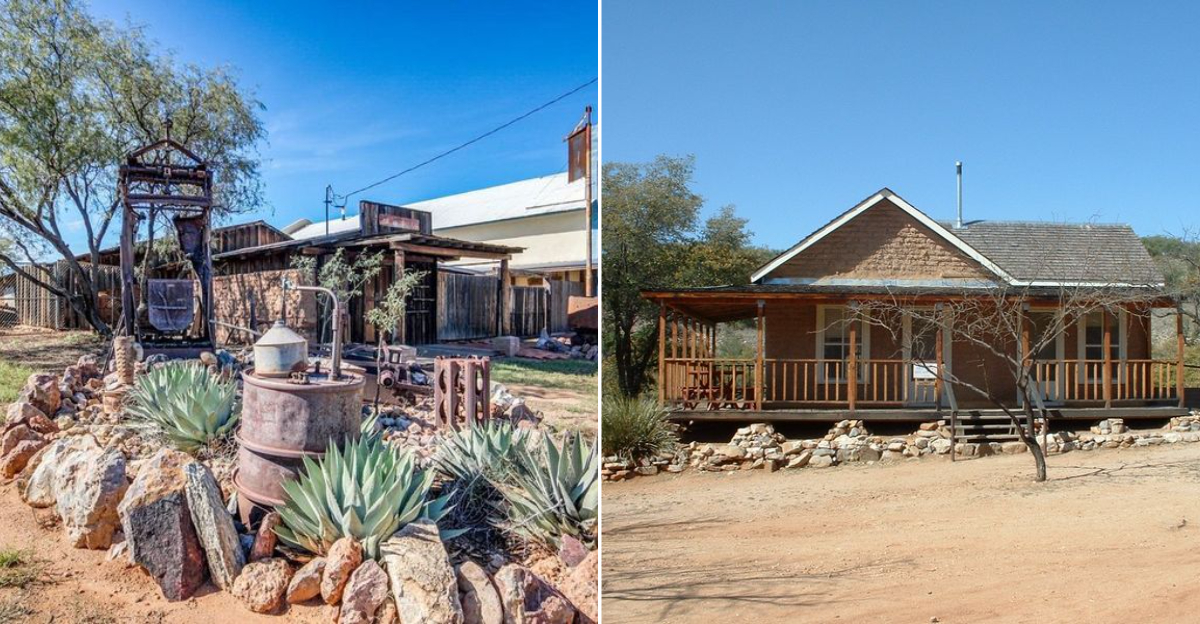
Scattered across Arizona’s rugged landscapes are ghost towns that whisper stories of a bygone era.
Once bustling with miners, traders, and dreamers, these forgotten places now stand frozen in time.
Weathered wooden buildings, creaking saloon doors, and dusty streets create a haunting beauty that draws explorers and history lovers alike.
Each town holds its own mystery, offering a glimpse into the past and a reminder of how quickly fortunes can fade under the desert sun.
1. Gleeson
Copper riches once pumped life into this dusty outpost near Tombstone. Founded in 1900, Gleeson boomed fast, with saloons and stores lining dirt roads where miners spent their hard-earned cash.
Today, crumbling adobe walls and a sturdy old jail are all that remain. The jail, built from local stone, still stands proud, whispering tales of rowdy Saturday nights.
Wandering here feels like stepping onto a Western movie set, minus the extras and plus a whole lot of silence.
2. Pearce
Gold fever struck hard when the Commonwealth Mine opened in 1894, transforming empty desert into a bustling community.
At its peak, Pearce had a post office, school, and even a newspaper chronicling daily dramas.
The Commonwealth Store still stands, its weathered facade a testament to frontier commerce. You can almost hear the clinking of coins and smell fresh-baked bread from a century ago.
Visiting Pearce is like flipping through a sepia-toned photo album, each building a faded memory.
3. Courtland
Between 1909 and 1912, copper drew thousands to this remote spot, swelling the population to nearly 2,000 souls. Courtland had electricity, telephones, and big dreams of becoming Arizona’s next great city.
But when the mines played out, folks vanished faster than rain in the desert. Now only foundations and partial walls mark where homes and businesses once thrived.
The silence here is profound, broken only by wind whistling through empty doorways and lizards scurrying over sun-baked stones.
4. Charleston
Nestled along the San Pedro River, Charleston served nearby Tombstone’s mills, processing silver ore from the famous Tough Nut Mine.
Founded in 1878, it quickly earned a reputation for rowdy saloons and rough characters.
Flooding and fires eventually chased residents away, leaving behind scattered foundations. The river still flows gently past, indifferent to the town’s vanished glory.
History buffs love this spot because Wyatt Earp and Doc Holliday once walked these very grounds, stirring up legends.
5. Contention City
Named after the Contention Mine near Tombstone, this mill town processed tons of silver ore in the 1880s.
Stamp mills pounded day and night, filling the air with noise and dust as fortunes were literally crushed from rock.
When Tombstone’s silver veins dried up, Contention City followed suit. A few walls and the old cemetery remain, silent witnesses to boom times long past.
Walking among the ruins, you can practically feel the ground vibrating with ghostly echoes of industrial might.
6. Harshaw
Silver and gold lured prospectors to these rolling hills in the 1870s, and Harshaw quickly became a lively camp. Saloons and a hotel sprang up, bringing culture to the wilderness.
By the early 1900s, the mines went quiet, and residents drifted to greener pastures. Stone foundations and scattered timbers now hide among oak trees and tall grass.
Harshaw’s peaceful setting makes it feel more like a forgotten fairy tale than a mining town gone bust.
7. Dos Cabezas
Spanish for “Two Heads,” this town takes its name from twin mountain peaks looming overhead like silent sentinels. Gold and silver mining kept Dos Cabezas alive from the 1870s through early 1900s.
A few residents still live nearby, but most buildings stand empty, their windows dark and doors hanging crooked. The old cemetery tells stories through weathered headstones and faded inscriptions.
Standing here, you feel the weight of history pressing down, as real as those twin peaks watching over everything.
8. Two Guns
Route 66 travelers once stopped here for gas, food, and a peek at the quirky zoo and curio shop. Two Guns thrived during the highway’s heyday, offering weary motorists a break from endless desert miles.
When Interstate 40 bypassed the town in the 1970s, business dried up overnight. Now graffiti-covered ruins and empty buildings create an eerie roadside attraction.
Photographers flock here for haunting shots, capturing the melancholy beauty of America’s forgotten Mother Road.
9. Canyon Diablo
Perched near a dramatic canyon gorge, this wild town earned a reputation as one of Arizona’s toughest in the 1880s.
Railroad workers, gamblers, and outlaws mingled in saloons where gunfights erupted with alarming regularity.
When the railroad moved on, so did everyone else. Scattered foundations and the spectacular canyon remain, offering jaw-dropping views alongside frontier history.
Canyon Diablo proves that sometimes the scenery outlasts even the wildest human ambitions and misadventures.
10. Kentucky Camp
Tucked away in the Santa Rita Mountains, Kentucky Camp offers a surprisingly well-preserved glimpse into Arizona’s mining past.
Built 1902–1906, this former headquarters for the Santa Rita Water and Mining Company served as a bustling administrative center during the region’s copper boom.
Unlike many ghost towns that fell into complete ruin, Kentucky Camp’s adobe and wood-frame buildings have been carefully maintained by volunteers and the Forest Service.
Visitors today can explore the original headquarters building, bunkhouse, and other structures that once housed workers and managers.