
This Wyoming High-Alpine Lookout Locals Guard As The State’s Quiet Gem
Imagine climbing high into the Snowy Range, where the air sharpens every sense and the world below feels distant.
At nearly 10,900 feet, the Libby Flats Observation Site unfolds like a living postcard, stone towers rising against the wind, wildflowers trembling between patches of snow, lakes glinting like fragments of sky. The pull-outs along the byway invite you to stop, breathe, and look out across a horizon that seems to stretch forever.
The air is thin but clean, carrying only the sound of wind and the call of a distant bird. Bring a jacket, step from the car, and let the stillness settle in, this is Wyoming’s quiet high point, both in altitude and in spirit.
Wind-In-Your-Ears Views
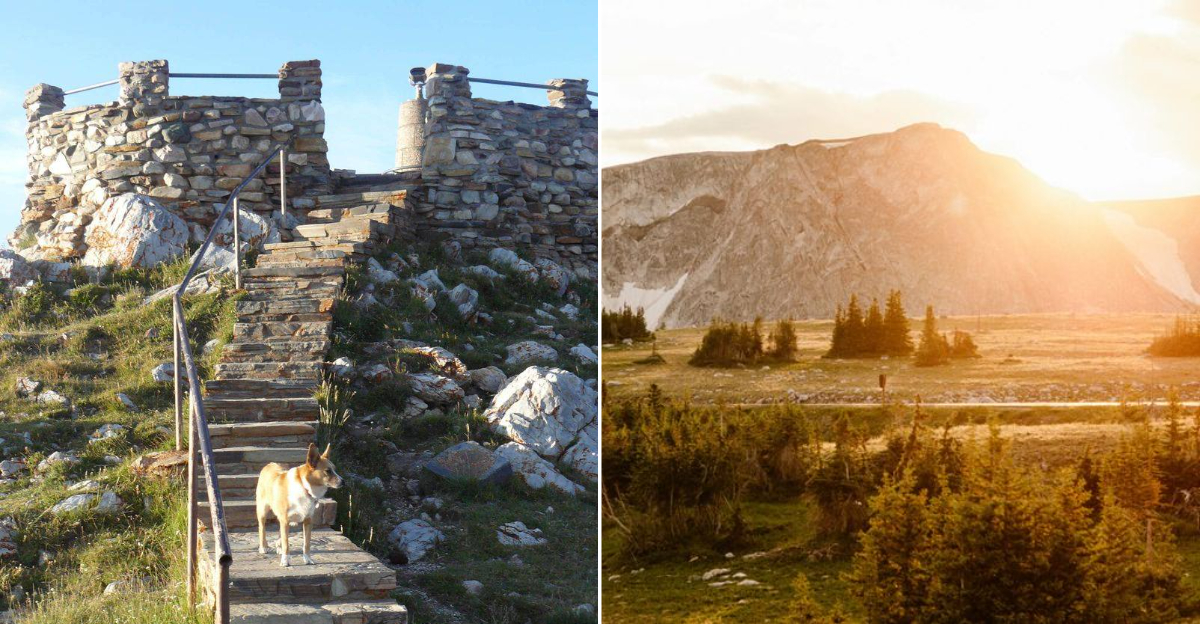
The wind whistles in your ears before you even reach the top, it’s that kind of open, sky-level quiet that feels ancient. At the summit pullout, the old stone tower rises from the tundra like a watchful guardian.
Built by the Civilian Conservation Corps in the 1930s, the tower now serves as Wyoming’s most photogenic perch on the Snowy Range Scenic Byway. It’s an easy climb, even in thin air.
Standing up there, I felt ridiculously small and wildly lucky, like the horizon had just let me in on a secret.
Stone Tower At The Summit
Perched majestically at the summit pullout, the stone tower stands as an emblem of history and exploration. This structure not only offers a viewpoint but also a connection to the past.
As you ascend, imagine the stories witnessed by these stones, the travelers who have paused here. The tower provides a unique perspective over the sweeping landscapes.
Its rustic charm and strategic location make it a favorite spot for photographers and history enthusiasts alike.
Panoramas Toward Medicine Bow Peak
If you squint against the glare, you’ll see Medicine Bow Peak cutting into the clouds, 12,000 feet of weathered granite and snow patches that cling through July. The view is impossibly wide, and yet somehow peaceful.
This is Wyoming’s highest southern peak, visible from Libby Flats and along Highway 130, shaped by glaciers over two billion years ago. You can spot it clearly from the overlook near the stone tower.
Bring binoculars for detail and patience for awe. The landscape doesn’t shout, it unfolds, slowly and completely, if you stay still long enough.
Look South Toward Rocky Mountain NP
The air tastes faintly metallic here, thin and sparkling, like altitude itself has flavor. Southward, beyond the shimmer of alpine lakes, the horizon ripples into Colorado’s mountain spines.
From this high point, you can trace the line of peaks leading toward Rocky Mountain National Park, about forty miles away. It’s one of those clear-day rewards that the forest signs hint at but never oversell.
I leaned against the railing just grinning. It’s funny how a view this big can make the whole world feel smaller and friendlier.
Nearly 10,000-Foot Highpoint
The air feels lighter and cleaner by the minute as you wind along the Snowy Range Scenic Byway. Pines give way to tundra, and suddenly you’re surrounded by nothing but sky.
This point along Highway 130 marks one of Wyoming’s highest paved elevations, just shy of 10,000 feet, where travelers stop to stretch and catch their breath. The altitude alone makes your pulse quicken.
Tip: bring a jacket even in July. The breeze up here has teeth, and that first deep inhale will remind you why it’s worth it.
Short Walk To The Overlook
Most overlooks make you work for it; this one feels like it’s doing you a favor. From the parking lot, a short paved path leads straight to the viewing platform, just enough effort to earn the view.
The trail is easy, accessible, and lined with alpine flowers that seem to cheer you on as you go. Within minutes, you’re face-to-face with the whole Snowy Range.
I love places like this, where grandeur and accessibility meet halfway, letting anyone feel like they’ve climbed something meaningful.
Lake Marie And Mirror Lake Nearby
Wind skips across the surface of twin lakes that sparkle like dropped glass in the valley below. Their reflections catch everything—the peaks, the clouds, even the colors of passing cars.
Just a few minutes’ drive from the overlook, Lake Marie and Mirror Lake are glacial basins fed by snowmelt, famous for picnic spots and short shoreline trails. The air smells faintly of pine and cold stone.
If you stop, wander the water’s edge. These lakes make you believe stillness is an art form.
Alpine Wildflowers In Midsummer
For a few short weeks, the tundra turns technicolor, fields of paintbrush, columbine, and bluebells crowding the rocky slopes. Even the wind seems to carry a hint of pollen and sunshine.
At nearly 10,000 feet, this burst of life feels miraculous. The flowers bloom fast and fade quickly, nourished by melting snow and cool afternoons. It’s nature’s brief rebellion against the cold.
I’ve never seen colors glow like this anywhere else. Every step felt like walking through someone’s private masterpiece.
Boardwalk Paths And Easy Pullouts
You’ll notice it right away how civilized the wild feels here. Timber boardwalks cross the meadows, and wide pullouts make it easy to step out without missing a view.
These trails keep fragile alpine soil safe while giving everyone a front-row seat to Wyoming’s best high-country drama. They loop near the tower, through wind-shaped trees and lichen-covered rock.
Visitors often linger longer than they plan to, coffee in hand, watching clouds slide by like slow-moving continents. It’s the easiest kind of wonder.
Best Light At Sunrise And Late Evening
If you’ve ever wanted to watch a mountain wake up, this is the place. The first rays spill over Medicine Bow Peak, turning the granite pink and the lakes molten gold.
Both sunrise and evening bring the best light, when shadows carve detail into every ridge. Photographers swear by these hours, and honestly, they’re right.
I dragged myself out of bed at 4:30 a.m. for this view. Ten minutes later, the sky made me forget how tired I was.
Season Typically May Through October
The high country doesn’t wait for anyone. Winter locks this road tight for half the year. When the drifts finally melt, the mountains reappear like they’re letting us borrow them for a season.
The Snowy Range Scenic Byway usually opens in late May and closes again by October, depending on storms. The window feels almost too short for the beauty it holds.
I came once in June, still patches of snow by the road, and it felt like the world was waking up with me.
Watch for Snow Closures In Early Fall
There’s something eerie about driving through sunshine and suddenly hitting walls of snow on either side of the highway. At this altitude, the seasons flip in hours.
Highway 130 often shuts down without much warning when fall storms roll in. The Forest Service posts updates, but locals trust their eyes, if clouds gather, they turn back.
My best advice: never assume. I once watched a bluebird day turn into whiteout in twenty minutes. Up here, weather writes its own script.
Wide Views To The Laramie Plains
Stand at the railing and glance east: the land seems to exhale. The jagged ridges flatten into rolling prairie, the color palette shifting from granite gray to sage green.
From here, you can see where mountains surrender to plains, a slow, graceful unraveling that defines Wyoming’s geography. The view stretches for miles, stitched with sunlight and shadow.
I stayed longer than I meant to, watching clouds slide toward Laramie. It felt like the world showing its soft side after a long climb.
Medicine Bow Peak Hikes Nearby
Just beyond the overlook, trailheads branch toward Medicine Bow Peak, luring hikers with the promise of thin air and sweeping silence. The scent of alpine stone follows you up every switchback.
The trail climbs to 12,018 feet, winding past lakes and wildflowers before reaching the summit ridge. Even the drive between trailheads feels cinematic.
If you’re tempted, go early before storms gather. I made the trek once at dawn, the light poured over the peaks like a benediction. Every breath hurt, and I loved it.