
10 Wisconsin Classics People Misorder On Day One (Until A Local Shows Them The Ropes)
Eating in Wisconsin has its own rhythm, a blend of supper club pace, small-town ritual, and quiet tradition that locals absorb without ever needing to explain.
Visitors might order the right dish but miss the little gestures that complete it, the slice of rye that belongs beside a fish fry, the pickle spear that anchors a butter burger, the slow sip that always follows an Old Fashioned. These details are part of what makes a meal feel rooted here.
Spend a little time, listen to the regulars, and the rhythm starts to make sense. This guide walks you through the customs and comforts that turn eating in Wisconsin from a meal into a way of belonging.
1. Friday Fish Fry
Walk into any Wisconsin tavern on a Friday night and the air hums with fried cod, laughter, and old-school jukebox tunes. It’s not just a meal—it’s a standing date with the community.
The tradition began during Catholic meatless Fridays, when lake perch and walleye filled the gap. Now it’s practically a state religion, and every town swears theirs is best.
My favorite part? That first bite of perch, crisp outside, sweet and buttery inside, tastes like home.
2. Butter Burger
The name doesn’t lie. A true butter burger glistens unapologetically, melting butter running down the bun like it owns the place. The beef stays juicy, almost caramelized on the edges, layered with pickles and onions for balance.
Born in Milwaukee at Solly’s Grille in the 1930s, it’s Wisconsin’s most decadent claim to fame. The butter isn’t a garnish; it’s part of the cooking philosophy.
Order one medium-well and skip the napkin for the first few bites—half the fun is feeling it drip down your hand.
3. Cheese Curds
They squeak. That’s how you know they’re fresh, so fresh the curds bounce lightly against your teeth. The sound is small but strangely satisfying, like confirmation that you’ve joined the local club.
They’re made from just-separated curds, eaten before the cheese is pressed or aged. Deep-fried versions are everywhere too, their molten interiors stretching like caramel when pulled apart.
I tried my first curds in Madison, still warm from the dairy. Honestly? I don’t remember anything else from that day. They rewired my brain.
4. Frozen Custard Concrete
There’s something hypnotic about watching the custard churn, thick, slow, silky. The machine hums, and suddenly you’re handed a cup so dense your spoon stands upright. It’s dessert engineered for devotion.
Milwaukee’s Leon’s and Kopp’s have perfected the ritual since the 1940s, blending eggs, cream, and air at just the right speed. The result? A texture that makes ice cream seem flimsy.
Add crushed pecans or hot fudge if you must, but don’t rush it. Custard should be savored, not conquered.
5. Kringle
At first glance, it looks unassuming, a golden oval pastry with a delicate glaze. But one bite and you’ll taste why Racine built an empire on it. The layers are impossibly thin, each fold whispering butter and almond paste.
Danish immigrants brought the recipe here in the 1800s, and bakeries like O&H and Bendtsen’s keep it alive with quiet pride. It’s now Wisconsin’s official state pastry.
If you want to do it right, warm it gently before slicing. That glaze turns syrupy, just enough to coat your fingertips.
6. Booyah
The first time you smell booyah cooking, you’ll swear the whole town’s invited. Massive kettles bubble for hours, packed with chicken, beef, and vegetables, turning into something halfway between soup and legend.
Belgian settlers around Green Bay started the tradition as a way to feed crowds after harvest. Every family tweaks the recipe, some add barley, others hot sauce, but the heart stays the same.
My advice? Bring your own container if you see a “booyah sale” sign. The portions are generous, and leftovers taste even better the next day.
7. Hot Ham And Rolls
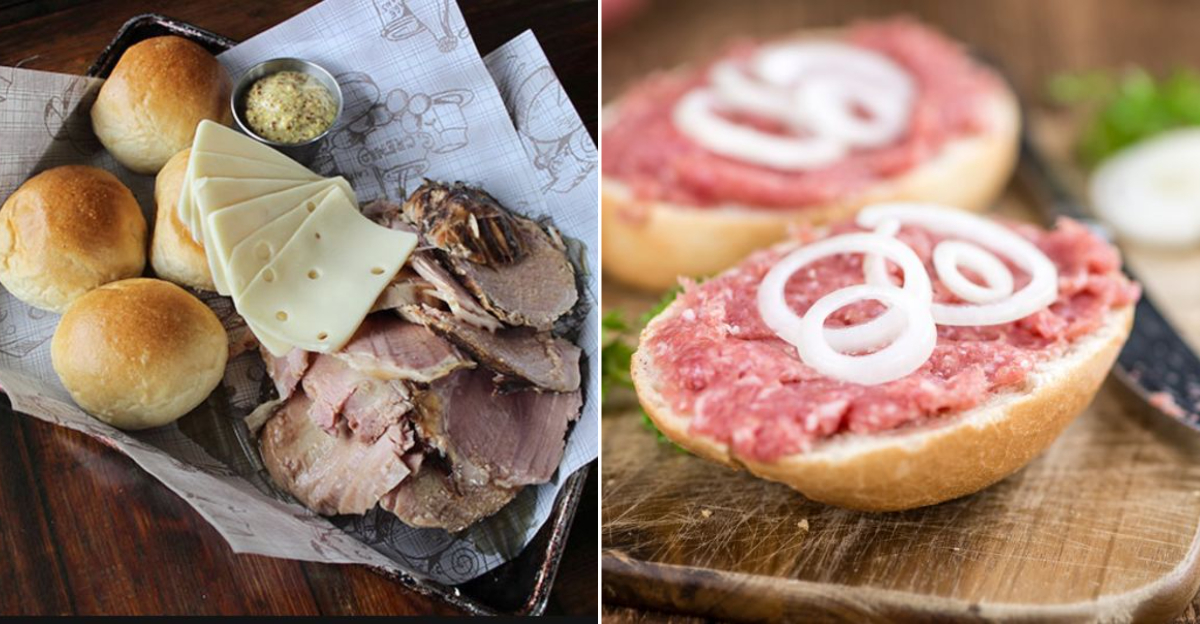
Sunday mornings in Wisconsin don’t need an alarm clock—the smell of baked rolls and sliced ham drifting from local bakeries is enough. There’s a hush of routine in the air, families lining up at Grebe’s or Sendik’s for warm paper bundles.
It’s a ritual older than most parish pews. The tradition began as a post-church comfort meal, simple yet celebratory. No fancy condiments, no ceremony, just good bread and hot ham.
I always eat mine standing by the counter, mustard dripping, napkin already defeated. It’s humble perfection.
8. Bratwurst With Kraut And Onions
The hiss of brats hitting the grill feels like summer being declared official. The smoky air fills with onions and laughter as someone inevitably debates which beer is best for boiling.
This German import became a Wisconsin cornerstone, especially in Sheboygan, where every backyard has its own “correct” method. The magic is in the pre-boil, beer, butter, onions, and a final sear that locks in flavor.
Don’t skip the sauerkraut. Its tang is what cuts through the richness, transforming a simple sausage into balance on a bun.
9. Door County Fish Boil
There’s fire, spectacle, and the brief roar of flames as kerosene hits boiling water, a show that makes first-timers gasp and locals grin. The fish boil is pure theater.
Scandinavian settlers brought the custom, feeding crowds of fishermen with whitefish, onions, and potatoes cooked over open flames. Today, restaurants like Pelletier’s still host the ritual seaside.
It’s not just about the food; it’s a community performance. When the “boil over” happens, everyone claps, then quiets as butter-drenched fish lands on their plate.
10. Cannibal Sandwich
Raw beef on rye might sound like a dare, but in Wisconsin, it’s tradition dressed in nostalgia. Locals call it “tiger meat,” and it shows up quietly at winter parties next to the cheese tray.
There’s always an aunt insisting it’s safe if the beef is fresh, and she’s usually right. The dish harks back to German immigrants who craved Mettbrötchen, a seasoned raw minced pork sandwich.
Here, it evolved with lean ground beef, onions, salt, and pepper. I tried it once at Christmas in Milwaukee. Cold, spicy, oddly primal, and somehow, I understood the obsession.