
These Deserted Ghost Towns In Indiana Are Full Of Forgotten Stories
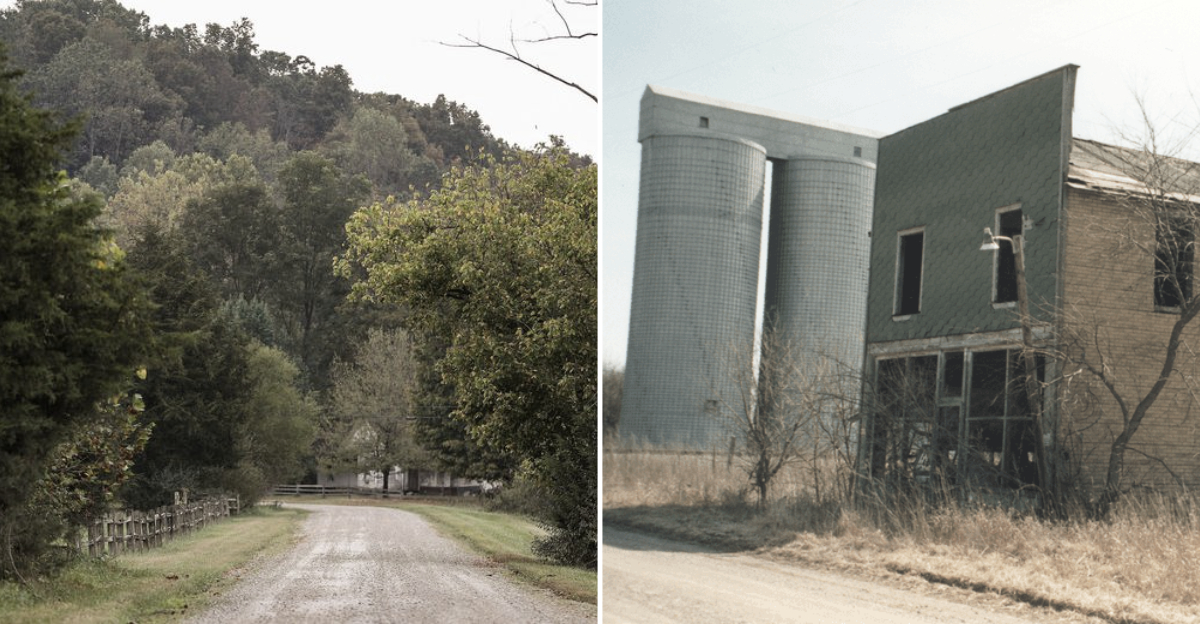
Indiana hides more than cornfields and basketball hoops. Scattered across the state are towns that once buzzed with life but now sit silent, their stories buried under weeds and water.
These ghost towns tell tales of boom and bust, disease and displacement, canals and railroads that shaped the land and then moved on. If you love history with a side of mystery, these forgotten places will pull you in.
So let’s get started!
1. Hindostan Falls (Martin County)
A roaring shelf of river stone once framed a frontier boomtown of about a thousand souls. Disease swept in with travelers, and the town emptied almost as fast as it rose.
Today, you’ll find the falls, pioneer cemeteries, and square mill holes drilled into bedrock, plus a state-managed fishing and wildlife area where the streets once ran.
Nature has reclaimed what illness took away, but the scars of ambition remain visible in stone.
Pack sturdy shoes and a sense of wonder when you visit this haunting landscape.
2. Monument City (Huntington County)
A lakeshore parking pull-off looks out over Salamonie Reservoir, where a drowned town sleeps. In drought years, the outlines of foundations reappear like ghosts surfacing for air.
The Civil War monument and graves were moved uphill to a memorial cemetery before the valley was flooded in the 1960s. Families packed up their memories and left behind streets that now serve as fish highways.
Visit during the low water season, and you might spot the bones of a forgotten community peeking through the surface.
3. Elkinsville (Brown County)
A quiet hollow hints at a farm village taken by eminent domain for Monroe Lake. Most families left in the 1960s, carrying away furniture but leaving behind footprints in the soil.
A cemetery, a few private residences, and traces of lanes linger inside Hoosier National Forest. The place feels suspended between past and present, neither fully gone nor fully alive.
Wander the forest trails and imagine the voices that once echoed through these hollows before the government decided water mattered more than memory.
4. Granville / Weaton (Tippecanoe County)
Canal days built it, railroads unbuilt it. Platted in 1834 along the Wabash and Erie Canal near the old Ouiatenon site, Granville faded when traffic shifted to rails.
A cemetery and bridge still carry the name, standing as lonely sentinels over fields where merchants once hawked goods to travelers. The canal that promised prosperity delivered only a brief moment of glory.
Stop by the bridge and listen closely; you might hear the echo of flatboat captains calling out to dockworkers long gone.
5. Corwin (Tippecanoe County)
Seven platted lots by the rail line never blossomed into a town. Grain elevators stood longer than the community itself; maps sometimes labeled it Corwin Station, but the population faded to none.
This place teaches a hard lesson about dreams outpacing reality. Someone imagined bustling streets and shops, but the land had other plans.
Not much to see here except the ghost of ambition, but that can be the most interesting kind of ruin if you look at it right.
6. Sloan (Warren County)
A rail-side hamlet with a short-lived post office slid into memory when service ended and the tracks were pulled. Historic photos show a store and silos; no structures remain on the site today.
When the trains stopped coming, so did the people. Sloan vanished so completely that even locals sometimes forget it existed.
Search for old county maps to pinpoint where it stood, then stand in the empty field and imagine the whistle of locomotives that once promised connection to the wider world.
7. Chatterton (Warren County)
A late-1890s crossroads with a school and a short-run post office, now reduced to a dot on county maps and a remembered place name. The USGS still lists it, but the town is gone.
Chatterton existed just long enough to earn a spot on official records, then slipped away before anyone could take a proper photograph. The school taught children who grew up and moved on, taking the town with them.
Hunt for it on topographic maps and feel the strange thrill of finding a name without a place.