
13 Pennsylvania Small-Town Foods That Locals Keep Within State Lines
Pennsylvania’s small towns have a way of guarding their culinary treasures like family heirlooms.
From sweet, sticky shoofly pie to hearty meat-filled potpies, locals know that some flavors are best enjoyed right where they were born.
These dishes aren’t just meals; they’re traditions served on paper plates or passed across diner counters.
They tell the story of Pennsylvania’s roots, one delicious bite at a time, and locals are in no rush to share them with outsiders.
1. Old Forge Pizza
Old Forge calls itself the Pizza Capital of the World, and locals will fight you on that title. This isn’t your typical round pie.
The rectangular slices come with a thick, airy crust that’s almost bread-like, topped with a blend of cheeses that creates something entirely different from New York or Chicago styles.
What makes it special is the cheese mixture, often including American cheese alongside mozzarella, creating a creamy, slightly sweet flavor.
The dough recipe stays closely guarded within family pizzerias. You won’t find this anywhere else, which is exactly how Old Forge residents prefer it.
2. Moravian Sugar Cake
Bethlehem’s Moravian community brought this sweet treasure from Germany centuries ago.
The cake features a soft, yeasted dough dotted with buttery pools and sprinkled generously with cinnamon and brown sugar. Those little dimples filled with melted butter are what breakfast dreams are made of.
Every Moravian bakery has its own slight variation, passed down through church communities. The texture sits somewhere between coffee cake and sweet bread, perfect for dunking in morning coffee.
Locals buy whole trays for holidays, knowing outsiders will never understand the magic until they taste it fresh from a Bethlehem bakery.
3. Teaberry Ice Cream
Teaberry tastes like wintergreen’s sweeter cousin, and Pennsylvania is one of the few places you’ll find it in ice cream form.
The flavor comes from Eastern teaberry plants that grow wild in the state’s forests. That distinctive pink color and minty-but-not-quite-mint taste confuses first-timers every single time.
Central Pennsylvania ice cream shops keep this flavor in regular rotation because locals demand it.
Kids grow up thinking it’s normal, then leave for college and discover nobody else knows what they’re talking about.
The flavor profile is hard to describe, which makes it even more special to those who grew up with it.
4. Red Beet Eggs
Hard-boiled eggs swimming in beet juice might sound weird, but Pennsylvania Dutch communities know better.
The eggs soak up that deep magenta color and tangy-sweet flavor, turning them into something far more interesting than plain boiled eggs.
They’re a staple at church picnics, family reunions, and roadside farm stands. The pickling liquid usually includes vinegar, sugar, and sometimes spices, creating a flavor that’s both tart and earthy.
Slice one open and you’ll see the brilliant pink outer layer surrounding the yellow yolk. Most people either love them or think they’re absolutely bizarre, with very little middle ground.
5. Chicken Corn Soup with Rivels
Rivels are tiny dough droplets that Pennsylvania Dutch cooks pinch into chicken corn soup. They’re not quite dumplings, more like little bits of pasta that soak up the broth.
The soup itself combines chicken, sweet corn, hard-boiled eggs, and those distinctive rivels in a simple but deeply satisfying way.
Making rivels requires rubbing flour, egg, and salt between your fingers until small crumbs form, then dropping them into simmering broth.
Church cookbooks throughout Lancaster County include rivel recipes passed down for generations.
The technique seems simple but takes practice to get the texture just right, keeping this soup firmly in local hands.
6. Pennsylvania Dutch Potato Filling
Calling this stuffing or dressing will get you corrected real quick in Pennsylvania Dutch country.
Potato filling combines mashed potatoes with bread cubes, celery, onions, and butter into something that’s required at every Thanksgiving table.
The texture sits somewhere between mashed potatoes and traditional stuffing, creating its own unique category.
Every family swears their recipe is the authentic version, leading to friendly debates at holiday gatherings. Some add eggs, others don’t.
The ratio of potato to bread varies wildly. What doesn’t change is the comfort it brings and the confusion it causes when Pennsylvania natives try explaining it to outsiders who’ve never experienced it.
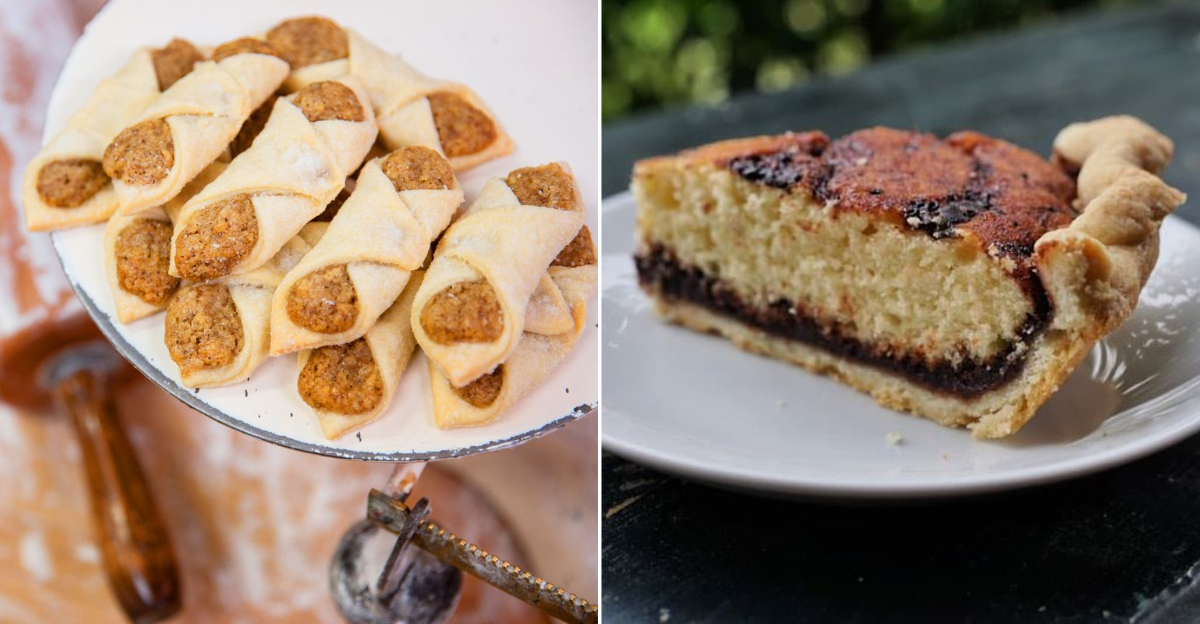
7. Kiffles
These crescent-shaped cookies came over with Eastern European immigrants and settled into Western Pennsylvania bakeries permanently.
The cream cheese dough melts in your mouth, wrapped around fillings like apricot, walnut, or prune.
Christmas cookie trays feel incomplete without them, according to anyone who grew up in Pittsburgh’s ethnic neighborhoods.
Rolling the dough thin enough takes skill, and getting that perfect crescent shape requires practice. Bakeries in Homestead and McKeesport still make them the traditional way, with multiple filling options.
The name changes depending on who’s making them, sometimes called kolaczki, but the buttery, flaky result stays consistently delicious and decidedly local.
8. Porketta (Coal Region)
Coal Region Italians brought porchetta to Pennsylvania and transformed it into porketta with their own twist.
The pork roast gets heavily seasoned with fennel, garlic, and black pepper, then slow-roasted until the outside develops a flavorful crust. The aroma alone could wake up an entire neighborhood.
Towns like Shenandoah and Hazleton serve porketta at festivals, fundraisers, and family gatherings throughout the year.
The fennel flavor dominates in a way that surprises first-timers. Sandwiches made from leftover porketta are a lunch staple, with the seasoned meat piled high on crusty rolls that soak up all those delicious juices.
9. Bleenies (Coal Region Potato Pancakes)
Bleenies are the Coal Region’s answer to potato pancakes, thinner and crispier than their German cousins. Grated potatoes, onions, eggs, and flour combine into a batter that fries up into lacy, golden circles.
They’re breakfast, dinner, or snack food depending on what else is happening at the table.
The name probably comes from blini, reflecting the region’s diverse immigrant population. Some families make them thick, others paper-thin.
Everyone has an opinion on whether to serve them with applesauce, sour cream, or ketchup.
Fire halls throughout Schuylkill County host bleenie fundraisers where locals line up for plates piled high with these crispy treasures.
10. Funny Cake
Nothing about funny cake makes logical sense, which might be why it earned that name. You pour chocolate sauce into a pie shell, then add vanilla cake batter on top.
During baking, some chocolate sinks while some rises, creating a dessert that’s part cake, part pie, and entirely confusing to anyone seeing it for the first time.
Lancaster County diners and bakeries keep funny cake on their menus year-round. The bottom stays gooey and chocolate-rich while the top becomes light and cake-like.
It defies normal dessert categories, which perfectly suits Pennsylvania’s tendency to do things its own way regardless of what the rest of the country thinks.
11. Snitz Pie
Snitz means dried apples in Pennsylvania Dutch, and this pie showcases the old preservation method beautifully.
Dried apple slices get rehydrated and sweetened with sugar and spices, then baked into a pie that tastes deeper and more concentrated than regular apple pie.
The texture is softer, almost jammy, with intense apple flavor in every bite. Before refrigeration, drying apples was how families preserved their harvest through winter.
Snitz pie became a way to enjoy fruit during cold months. Today, it remains a specialty in Amish and Mennonite communities, where traditional methods still thrive.
Most grocery stores don’t carry dried apple slices, keeping this pie firmly within Pennsylvania’s borders.
12. Ham Loaf
Ham loaf combines ground ham and pork into a loaf that gets glazed with a sweet and tangy sauce. It’s not meatloaf and it’s not quite ham, sitting in its own delicious category that Pennsylvania Dutch cooks perfected.
The glaze usually involves brown sugar, vinegar, and mustard, creating that perfect sweet-savory balance.
Central Pennsylvania restaurants serve ham loaf as a dinner entree with sides like mashed potatoes and green beans. The mixture includes graham cracker crumbs as a binder, adding a subtle sweetness to the meat.
Cold ham loaf sandwiches make excellent leftovers. Try explaining this dish to someone from another state and watch their confused faces appear instantly.
13. Dandelion Salad with Hot Bacon Dressing
Dandelion greens might be weeds to your neighbors, but Pennsylvania Dutch cooks know they’re the first fresh greens of spring.
The slightly bitter leaves get wilted with hot bacon dressing made from bacon drippings, vinegar, sugar, and sometimes hard-boiled eggs.
It’s a warm salad that celebrates the season’s arrival and uses what’s growing freely in fields. Timing matters because young dandelion greens taste best before the plants flower.
Older leaves turn too bitter for most palates. Farmers markets in Lancaster and Berks counties sell bundles of cleaned dandelion greens during spring months.
The hot bacon dressing transforms the bitter greens into something rich, tangy, and completely addictive to those raised on it.