
These Deserted Ghost Towns In Nebraska Are Full Of History And Mystery
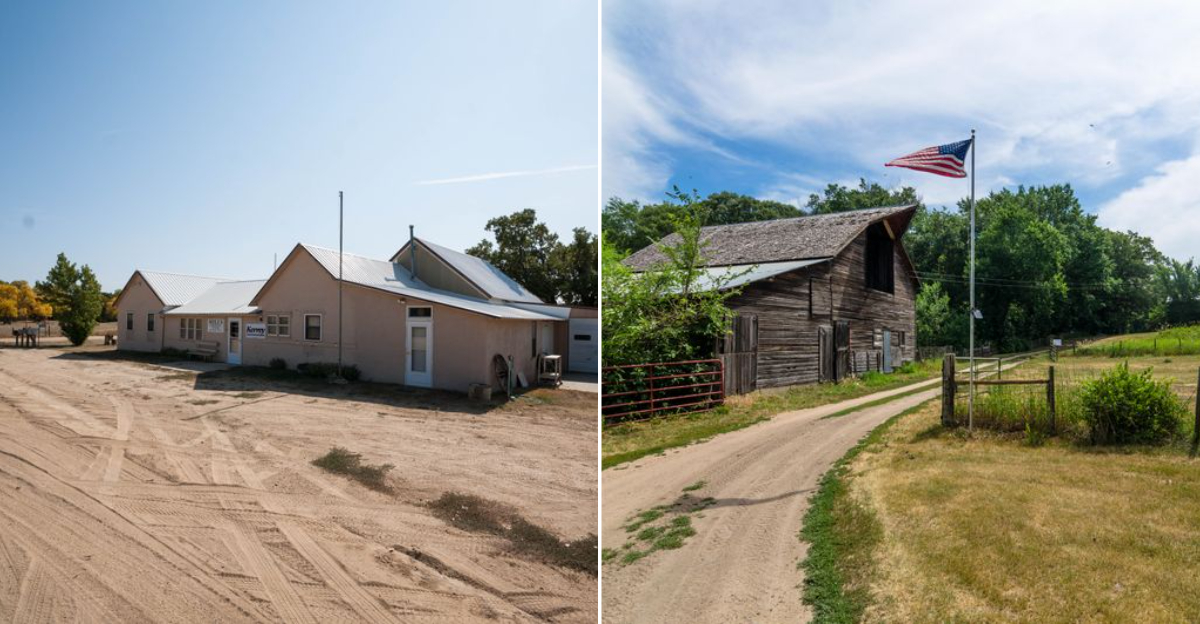
Before major highways dominated the landscape, Nebraska was dotted with ambitious settlements-towns built on dreams of railroads, gold, or farming booms. When the promised prosperity failed to materialize, residents packed up, leaving behind silent monuments to frontier ambition.
These deserted spots aren’t ruins; they are time capsules holding the secrets, successes, and heartbreaking failures of the American West. Prepare to step back into the state’s forgotten past and understand why the Cornhusker State has so many silent cities.
1. Factoryville – The Town That Lost Its Rails
Factoryville earned its name from a thriving flour mill that powered the local economy in the late 1800s. Stores lined the streets, and a college brought education to frontier families. Back when railroads determined a town’s fate, Factoryville seemed destined for success.
Everything changed when the railroad decided to bypass the settlement entirely. Without train access, businesses collapsed and residents packed their belongings. The college closed, the mill fell silent, and Factoryville became a memory.
Walking through what remains today feels like stepping into a photograph from another century. Foundations peek through prairie grass where homes once stood. The silence is profound, broken only by wind rustling through abandoned spaces where laughter once echoed.
2. Belmont – The Tunnel Town That Disappeared
Railroad engineers built Belmont around one of Nebraska’s most unusual features: a tunnel carved straight through solid rock. Workers settled nearby, creating a community that serviced trains passing through this engineering marvel. Saloons, boarding houses, and supply shops catered to railroad employees who kept the route running.
When the railroad company rerouted trains to avoid the expensive tunnel maintenance, Belmont’s purpose vanished overnight. Families followed the work elsewhere, leaving behind structures that nature slowly reclaimed. The tunnel still exists, a stone testament to human ambition.
Photographers and history buffs trek to this remote spot in Dawes County to glimpse the past. The tunnel mouth yawns empty now, but it once echoed with steam whistles and shouted orders.
3. Mars – The Settlement That Never Took Off
Settlers established Mars in 1886 with hopes as high as its celestial namesake. A post office opened to serve surrounding homesteaders, and for a brief moment, this tiny Knox County settlement appeared on official maps. Farmers gathered supplies and shared news at the modest general store.
By 1910, the post office shuttered its doors for good, signaling Mars had failed to launch. Population dwindled as families sought opportunities in larger towns with better infrastructure. Today, only the faintest traces remain scattered across farmland.
Finding Mars requires determination and a good sense of direction since hardly anything marks its former location. A few foundation stones and local memory are all that prove this place ever existed under Nebraska’s endless sky.
4. Covington – Where Gamblers Once Gathered
Covington earned a rowdy reputation throughout Dakota County for its numerous saloons and gambling establishments. Riverboat workers, drifters, and fortune-seekers crowded its streets, looking for entertainment and quick money. The town thrived on vice and commerce in equal measure during the late 1800s.
I once read a newspaper account describing Covington as where proper folks feared to tread after dark. Gunfights and card games kept the sheriff busy. As civilization spread and law enforcement tightened, Covington’s wild days ended abruptly.
The declining town eventually merged into South Sioux City, losing its separate identity completely. Streets that once rang with raucous laughter now blend seamlessly into suburban development, though old-timers still remember Covington’s colorful past with knowing smiles.
5. Montrose – The Church That Stands Alone
Montrose once boasted a schoolhouse, church, and handful of families determined to make the harsh Sioux County landscape home. Children learned their lessons in the one-room school while parents worked the unforgiving soil. The church served as the community’s spiritual and social center, hosting services and gatherings.
By the 1950s, the schoolhouse was physically moved to another location where it could serve more students. Families followed opportunities elsewhere, leaving Montrose to fade. Only the church remains standing, a lonely sentinel on the prairie.
Visitors describe an eerie beauty to this solitary structure surrounded by nothing but grassland and sky. The church doors are locked now, but its presence speaks volumes about pioneer determination and eventual surrender.
6. Pleasant Hill – The County Seat That Burned
Pleasant Hill held the prestigious position of county seat in Saline County, making it a center of government and commerce. Court proceedings, land deals, and official business drew people from surrounding areas. Hotels and restaurants catered to visitors conducting county affairs, creating a thriving local economy.
Disaster struck when fire swept through the town, destroying key buildings and infrastructure. Adding insult to injury, residents of Wilber successfully campaigned to move the county seat to their town. Without its governmental role and facing expensive rebuilding, Pleasant Hill couldn’t recover.
The hillside where this town once stood now shows only faint depressions where buildings anchored themselves. Wildflowers bloom where politicians once debated, and the pleasant hill remains, though the town does not.
7. Dobytown – The Fort’s Forgotten Neighbor
Fort Kearny served as a crucial military outpost protecting wagon trains heading west during pioneer days. Dobytown sprang up nearby to supply soldiers and travelers with everything the army didn’t provide. Saloons, trading posts, and boarding houses lined its muddy streets, profiting from the constant flow of people.
When the military closed Fort Kearny in 1871, Dobytown lost its entire reason for existing. Soldiers marched away, wagon trains found new routes, and business owners packed up shop. Within months, this once-bustling settlement stood empty.
Kearney County now preserves Fort Kearny as a historical site, but Dobytown receives far less attention. Prairie grass covers where rowdy establishments once stood, and only historians remember this rough-and-tumble neighbor.
8. Brocksburg – The Town Roads Forgot
Brocksburg sits in one of Nebraska’s most remote corners, accessible only by rugged roads that test even sturdy vehicles. Homesteaders who settled here possessed incredible toughness, enduring isolation and harsh weather. A few buildings went up, serving the scattered ranching families who called this unforgiving landscape home.
During one research trip, I learned that even at its peak, Brocksburg barely qualified as a town by most standards. The population never grew large enough to support substantial infrastructure. When younger generations sought easier lives elsewhere, Brocksburg simply emptied out.
Getting to Brocksburg today requires serious commitment and good directions since GPS often fails in this area. The few remaining structures lean precariously, fighting a losing battle against wind and time in Keya Paha County.
9. Ponca Creek Station – The Stagecoach Stop Time Forgot
Before railroads crisscrossed Nebraska, stagecoaches carried passengers and mail along established routes between settlements. Ponca Creek Station provided fresh horses, hot meals, and beds for weary travelers making the long journey. The station keeper’s family maintained the facility, earning income from the constant traffic.
Railroads rendered stagecoach travel obsolete almost overnight, and stations like Ponca Creek lost their purpose. Without paying customers, the station closed and the family moved on. Buildings deteriorated as Nebraska weather worked its destructive magic year after year.
Local historians debate the exact location of this station since records are sketchy and landmarks have changed. Somewhere along Ponca Creek, remnants may still exist, buried under vegetation and forgotten by all but the most dedicated ghost town hunters.
10. Alkali – The Town With Poisoned Water
Settlers named this town after the alkaline deposits that crusted the soil and contaminated local water sources. Despite the challenging conditions, homesteaders tried farming here, hoping to overcome the mineral-heavy soil through determination and hard work. A small community formed, bound together by shared struggles against the harsh environment.
Crops consistently failed because the alkali content made the soil nearly toxic to most plants. Livestock suffered from drinking the bitter water, and human residents faced constant health challenges. Eventually, even the most stubborn pioneers admitted defeat and abandoned Alkali to the elements.
White mineral deposits still mark the landscape where this ill-fated town once stood, visible reminders of why some places resist human settlement. Nature reclaimed Alkali completely, erasing nearly all evidence that people once tried calling this inhospitable spot home.