
This California 3.5-Mile Waterfall Walk Feels Straight Out Of A Postcard
Just beyond the sprawl of Los Angeles, the road to Chantry Flat in the Angeles National Forest feels like a quiet spell being cast. One minute you’re in city traffic, the next you’re surrounded by green canyon walls and cool mountain air.
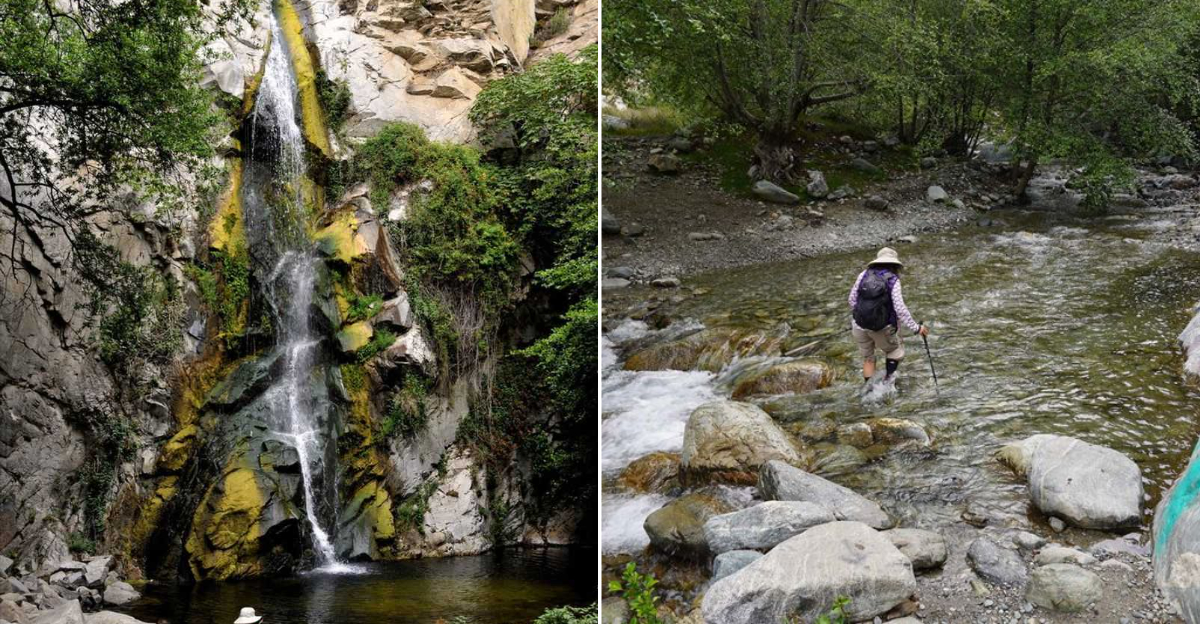
The trail to Sturtevant Falls winds through shade and water, a 3.5-mile round trip that feels far more remote than it is. You’ll skip across creek stones, pass old cabins, and walk under towering sycamores and oaks that filter the sun into shifting patterns.
Every turn teases the sound of rushing water until the falls appear, fifty feet of white spray tumbling into a tranquil pool. The hike back is uphill but peaceful, the sort of climb that leaves you pleasantly tired and quietly happy to have come.
Chantry Flat Trailhead Sign
The trailhead appears suddenly after that long, curving drive, sunlight bouncing off cars, the forest air thick with pine and road dust. There’s the wooden sign, simple, slightly weathered, the unofficial “gateway to adventure.”
It’s where hikers check packs, snap the “before” photo, and take that first whiff of canyon air. The ground here feels different, lighter, looser, like it’s ready to carry stories downhill.
I touched the post before heading off, half superstitious, half thankful. It felt like knocking on nature’s front door.
Shaded Santa Anita Canyon Start
The first few minutes plunge you straight into cool shadow. Oaks arch overhead, leaves shifting light into green mosaics, and the temperature drops a few welcome degrees.
This section has been part of Southern California hiking culture for generations, connecting curious weekenders to waterfalls since the early 1900s. It’s surprisingly lush for something so close to the city.
Pro tip: start early. The quiet hum of water and wind feels almost sacred before the chatter of mid-morning hikers arrives.
Creek Crossing Stepping Stones
Your shoes hover, your balance tilts, and the creek whispers below, tiny whirlpools spinning between smooth stones. Every step feels like a small act of trust.
The crossings change with the seasons: in spring, the water rushes loud and bright; by summer, it softens into calm trickles. Families still line up, laughing through each wobbly step.
Honestly, this part made me grin like a kid. There’s something about hopping rock to rock that reminds you hiking can still feel like play.
Fern Walls And Tall Sycamores
There’s a stretch where the canyon suddenly narrows and the world turns emerald. Ferns crawl up the slopes like velvet, and tall sycamores lean overhead, pale trunks glowing in the filtered light.
This lush corridor sits close to the old resort area once called “Big Santa Anita Canyon,” where city folk escaped heat long before air conditioning existed. It still feels like a hideaway.
I caught myself walking slower here, half to cool down, half to make the moment last a little longer.
Sturtevant Falls 50 Foot Cascade
The first thing you notice is the sound: deep, constant, and rolling through the trees before you even see water. Then the trail opens, and there it is: Sturtevant Falls, a white ribbon dropping fifty feet into the canyon’s green basin.
These falls have been a local pilgrimage since the 1890s, part of an old hiking boom that built lodges and cabins all through the Angeles National Forest. It’s living history, wet and loud.
Tip: go after spring rains when the flow’s strongest. It’s worth getting a little misted.
Pool At The Base In Spring Flow
Cool mist touches your face before you reach the edge. The pool glimmers under sunlight breaks, tiny ripples catching every color in motion. Frogs chirp, water hums, and the temperature dips ten degrees.
Around the edges, hikers kick off shoes and dip tired feet into the icy basin, a long-standing ritual of triumph and relief. It’s cold enough to sting at first, then addictive.
I sat on a smooth rock and let the spray hit my shoulders. It felt like the canyon saying “good job.”
Adventure Pass On The Dashboard
You can’t miss the tiny printed reminder near the trailhead, Adventure Pass required. It’s your golden ticket to park and roam freely through this slice of the Angeles National Forest.
The pass traces back to a federal program that keeps trail maintenance funded; you can grab one at gas stations or the Adams Pack Station nearby. It’s five bucks well spent.
My ritual: I tuck it under the windshield and smile, it’s the cheapest passport to paradise I’ve ever owned.
Adams Pack Station General Store
Half a mile before the trail lot sits the Adams Pack Station, a wooden outpost that feels older than it looks. Horses graze nearby, and the smell of hay mixes with fresh coffee.
This station has served hikers since 1936, back when mules carried supplies to canyon cabins. Today, it sells snacks, cold drinks, and that all-important Adventure Pass.
Stop here first. Parking fills fast, and the folks behind the counter always know the latest trail conditions, plus, they make a mean lemonade.
Trail Map Board By The Lot
It’s the first thing many hikers walk past too quickly, a tall wooden board covered in maps, distances, and trail updates. The corners curl from sun, but it’s charmingly analog.
Printed routes mark everything from short loops to multi-day treks deep into the San Gabriels, a quiet nod to how extensive this canyon system really is.
I always pause here, tracing the path with a finger before heading down. There’s something grounding about knowing where you are before the wild takes over.
Footbridge Near The Wash
A sudden glint of metal appears between the trees, the small footbridge stretching over a shallow wash. The boards creak just enough to make each step feel adventurous.
This bridge is part of a long-standing trail repair project after heavy rains and fire damage reshaped parts of the canyon. Volunteers keep it sturdy, ensuring the walk stays welcoming.
I paused mid-crossing to watch the water run beneath. It’s simple, steady, and oddly meditative, like the trail teaching you balance in more ways than one.
Historic Cabin Sites Along The Creek
A few minutes past the falls, you’ll spot wooden cabins tucked along the water’s edge, some with hand-carved signs, others with curtains faded by decades of sun. They’re relics of another era.
Built between 1907 and 1936, these private cabins are remnants of Southern California’s early hiking boom. Each one whispers stories of kerosene lamps, card games, and creek-cooled drinks.
Standing there, I half-expected to hear music spill from a porch. It’s history you can almost touch, and it still feels alive.
Uphill Return To The Parking Area
The climb back sneaks up on you, a steady incline that makes your legs remember every easy downhill step you took earlier. The air shifts warmer as the shade thins.
This reverse stretch is the reason locals tell first-timers to start early. Morning light makes the ascent friendlier, and afternoon heat turns it into a slow burn.
Personally, I like that uphill push. It’s the part that seals the memory, sweat, sunlight, heartbeat, all proof that you earned the waterfall waiting in your camera roll.
Restrooms Beside The Picnic Area
You’ll spot them before the trail sign, the modest beige restrooms tucked beside the picnic tables. After a canyon climb, they feel like civilization restored.
These were rebuilt during a Forest Service update in the 2000s, part of preserving Chantry Flat’s role as one of the oldest recreation sites in the San Gabriels. Families picnic here while hikers trickle in dusty and smiling.
I’ll admit, nothing hits quite like that first sink splash of cold water. It’s the unspoken finale every hiker understands.
Early Morning Parking Fills Fast
The parking lot at Chantry Flat wakes early; before sunrise, before the first thermos clicks open. Engines idle, headlamps flash, and hikers stake out spaces like it’s a quiet race.
On weekends, this fill-up can happen before 8 a.m., the overflow curling down the narrow access road toward Arcadia. Seasoned locals know to carpool or come midweek.
My advice? Treat the dawn as part of the ritual. Watching light spill over the canyon while the world yawns awake is worth every lost hour of sleep.