
8 Hidden Caves In Kentucky That Only The Brave Explore
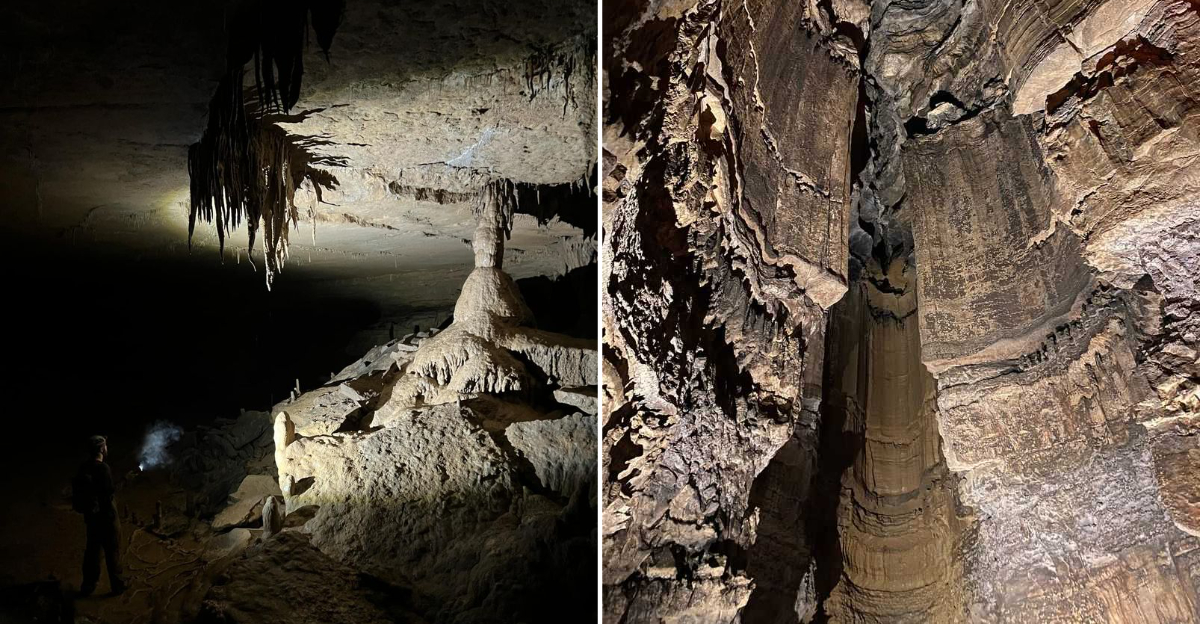
Kentucky sits on a labyrinth of underground passages, many of them protected, restricted, or rarely visited by the public.
I still remember the first time I went on a guided wild-caving trip here — my headlamp flickering against ancient limestone, the air still and cool and it felt like entering another world entirely.
These caves aren’t the typical tourist walk-throughs, they require experience, respect for safety protocols, and in many cases official permission or guided access.
If you’re fascinated by the underground, these eight remarkable Kentucky caves offer a glimpse into some of the state’s most intriguing and, in many cases, rarely seen — subterranean wonders.
1. Sand Cave At Cumberland Gap
Sand Cave is known for its massive sandstone chamber and its important place in caving history, particularly the story of Floyd Collins. Today, the interior beyond the scenic shelter area is closed to the public for safety and preservation reasons, but the hike to the entrance remains popular.
You can still stand at the impressive mouth of the cave, surrounded by towering rock walls shaped by water and time. The story of the 1925 rescue attempt echoes through the region, making this one of Kentucky’s most historically significant cave sites — even if full access is no longer allowed.
2. Gap Cave Near Middlesboro
Gap Cave is part of Cumberland Gap National Historical Park and can only be entered on official ranger-guided tours. While the tours explore only a portion of the vast cave system, they still reveal underground rivers, impressive formations, and large rooms carved over millions of years.
The undeveloped areas of the cave are restricted for scientific research and safety, but the guided routes offer a thrilling, safe, and educational glimpse into Kentucky’s underground geology.
3. Sloan’s Valley Cave In Pulaski County
Sloan’s Valley Cave is one of Kentucky’s longest cave systems. The cave is on private property, and entry is restricted, requiring direct permission from landowners and participation in organized caving groups.
Its impressive formations and extensive passages make it well-known among experienced cavers, but it remains off-limits to the general public due to safety, flooding risks, and conservation concerns.
4. Sauerkraut Cave In Anchorage
Sauerkraut Cave sits beneath the grounds of the former Lakeland Asylum and has countless local legends attached to it. The interior is not maintained for public exploration, but the entrance area can be visited via the Anchorage Trail system.
Its unusual name, tied to stories of stored fermented foods and later urban myths, gives it a mysterious allure. While the cave itself is closed, the area remains a favorite curiosity spot for local history and folklore buffs.
5. Lost River Cave Wild Section In Bowling Green
Lost River Cave offers a popular guided boat tour — the only underground boat tour in Kentucky — and the wild cave sections beyond the commercial area are closed to general exploration except for special supervised educational programs.
The restricted portions contain sensitive ecosystems, water-filled passages, and delicate formations, so access is tightly controlled. Even the public tour, however, gives visitors a stunning look at the entrance chamber and underground river.
6. Floyd Collins’ Crystal Cave In Hart County
Crystal Cave, discovered by famed caver Floyd Collins, is part of the Mammoth Cave system. It is now protected and closed to general tourism, with the land managed for conservation.
Historically, Crystal Cave was briefly operated as a stand-alone tourist attraction, and it remains an important part of Kentucky’s speleological history. Its gypsum formations and crystal structures are legendary among researchers and historians.
7. Colossal Cave In Mammoth Cave Backcountry
Colossal Cave, once a commercial cave, is now within Mammoth Cave National Park and is not open to the public. Access today is limited to researchers and specialized park activities due to safety and environmental protection.
Known for its enormous chambers and historic signatures on the walls, it stands as one of the park’s most fascinating sealed-off wonders — a reminder of Kentucky’s deep connection to early cave exploration.
8. Buffalo Cave In Wayne County
Buffalo Cave is a remote and rugged cave system located on private land, with access limited to landowner permission and organized caving groups.
Its maze-like passages and isolated location make it widely known among experienced cavers but off-limits to untrained visitors. The surrounding wilderness hike is beautiful and challenging, offering a taste of adventure even without entering the cave itself.