
10 Georgia Food Sayings That Outsiders Have No Idea What They Mean
I learned Georgia food talk the way you learn a two-step—by stepping on a few toes until somebody laughs, grabs your shoulders, and shows you exactly where to move.
One long summer at my aunt’s table, I kept nodding like I understood every phrase, but the truth showed up the moment a spoon tapped a bowl and the room shifted. That’s when I realized the words themselves were a kind of sauce.
Each saying carried heat, humor, and a hint of family code that unlocked the meaning of the meal in front of me. Come explore the expressions that finally taught me how to eat here without sounding lost at the buffet.
1. “Bless your heart, you brought store-bought banana pudding?”
The room goes gentle, but the message lands like a ripe peach. I walked in smiling with a plastic tub and watched Aunt Dot pat my arm as if I were a friendly raccoon. Bless your heart, you brought store bought banana pudding? means welcome, but also please try again with love and a whisk.
Around here the custard sings only when stirred on a stove, and the vanilla wafers soften with proud patience. Boxed mix tastes like a short story that skipped the middle. The from scratch version delivers plot, twists, and a triumphant finale of meringue.
I learned to slice bananas at the last minute so they do not sulk, and to chill the bowl without chilling the spirit. Next time I brought the real thing and the compliments sounded like church bells. That tub never made it back home, and neither did my beginner’s pride.
2. “That tea’s so sweet it’ll curl your toes.”
The first sip hit me with a memory I had not earned. That tea’s so sweet it’ll curl your toes is not a warning so much as a welcome mat in syrup form. In Georgia we pour sunlight into a glass and call it lunch if the ice clinks just right.
Outsiders ask for unsweet and get quiet looks, as if they requested winter in July. I learned to stir the pitcher while it is still warm, letting sugar dissolve into a promise of porch talk. It is dessert disguised as hydration, a little vacation for the tongue.
The sweetness snaps the line between past and present, pulling old stories to the surface. My toes did curl, then uncurled into a grin. I now measure a diner by its tea and the way it fogs the glass like a shy compliment. Refill, please, and keep the memories coming.
3. “Put some South on that plate.”
The plate looked fine until it looked lonely. Put some South on that plate means stop decorating and start feeding your soul. I learned fast that a neat little chicken breast is just an opening act without mac and cheese leaning heavy like a favorite cousin.
Collards slide in with a smoky whisper, and cornbread drops anchor with a crumb that knows its worth. The command sounds casual, but it is a culinary hug that insists on balance and ballast. Add a spoon of chow chow, let the colors argue kindly, and watch your fork find its faith.
Outsiders chase calories here, locals chase harmony. When the South lands on your plate, the conversation deepens and the napkins work overtime. By the time you scrape the last cheesy edge, the table feels like a choir. That is the moment the meal becomes a memory you carry home.
4. “You didn’t get fried okra? You drove all this way for nothing.”
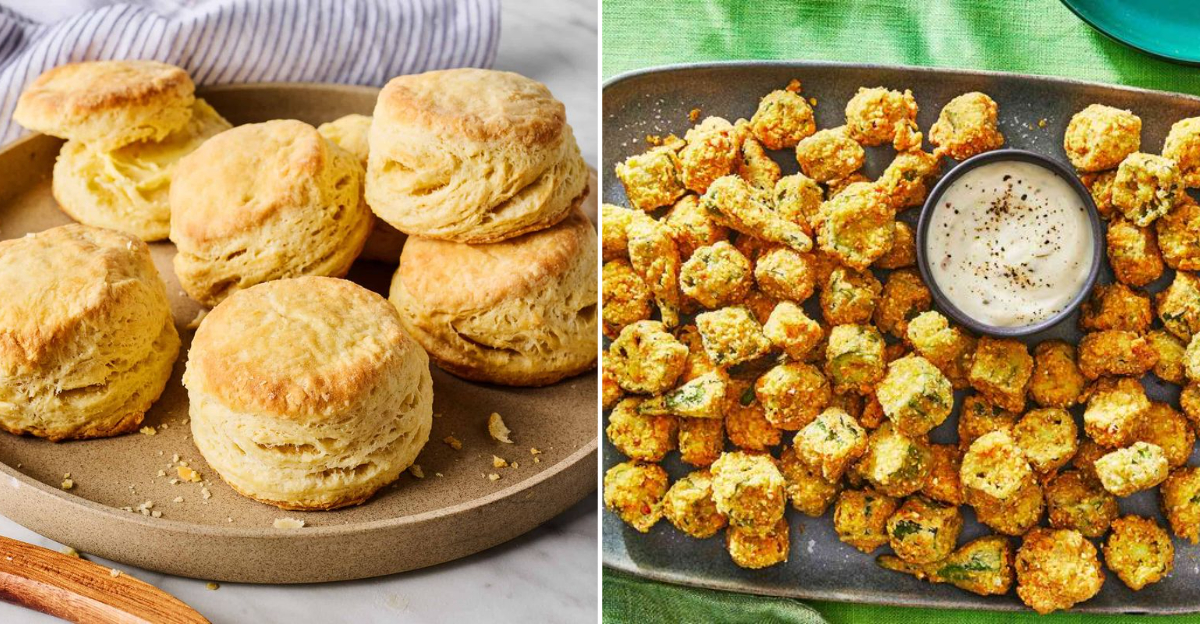
The cashier stared at my tray like it had forgotten its shoes. You didn’t get fried okra? You drove all this way for nothing is equal parts roast and rescue. Okra is a cultural checkpoint, a crispy handshake with the kitchen. I learned to love the cornmeal crunch that guards a tender center, each bite a tiny drum solo.
Skip it and the meal feels like a story with no subplot. People argue sliced or whole, light dusting or thick jacket, but everyone agrees on hot and quick.
Salt plus pepper and a dash of pride seal the deal. I ordered a double and earned a nod that tasted better than dessert. Somewhere between bites the road home got shorter. Now I do not pass a diner without honoring the okra bell, because some rituals are directions disguised as side dishes.
5. “Mind the pot—it’s fixin’ to boil over.”
The kitchen speaks before anyone shouts. Mind the pot it’s fixin’ to boil over is a timer and a truth serum. I heard it over simmering peas and felt the room steady like a seasoned captain. Around here pots gossip, lids tremble, and steam carries hints of what the table will forgive.
The phrase also nudges emotions back from the edge, because family recipes can stir old stories faster than a wooden spoon. I learned to tilt the lid, lower the flame, and breathe like the stew. Control the boil and you control the mood.
When the bubbles behave, the conversation does too. The best meals balance heat with patience, urgency with care. A watched pot may never boil, but a guided one sings. I keep that line handy when life threatens to foam up. Gentle hands, steady heart, and dinner arrives right on time.
6. “He cooks like he’s got company coming.”
The Wednesday plate looked like a holiday had RSVP’d. He cooks like he’s got company coming means every meal gets the red carpet even when the guest list is just you and the dog. I watched my uncle zest citrus into greens and glaze carrots that never asked for glamour. He layers flavor like a playlist, no filler tracks, just hits.
The phrase is a compliment with a wink, praising generosity without counting the cost. It celebrates the everyday feast, the belief that Tuesday deserves applause.
Outsiders call it extra, we call it respect. When the kitchen smells like welcome, people show up, sometimes before they are invited. I learned to set the table even for leftovers because care tastes better than salt. Cook like someone might knock and you will not mind when they do.
7. “That barbecue could make a grown man weep.”
The first bite went quiet, then the room answered with soft ohs. That barbecue could make a grown man weep is praise that sticks to your ribs and your memory. Smoke should taste like time well spent, not a shortcut, and the bark should crackle like polite thunder.
I learned to press a slice with my fork and watch the juices testify. Sauce is a conversation, not a disguise, and the meat should hold its shape just long enough to surrender. Outsiders chase heat, locals chase balance, where tang and sweet shake hands.
When the pitmaster nods, you know the wood and the weather both agreed. I wiped my eyes and blamed the onion slaw. Truth is, tenderness gets emotional around here, and nobody minds. Good barbecue makes silence friendly and seconds inevitable.
8. “Save room—Auntie didn’t make that pound cake for decoration.”
The cake sat there like a golden promise with edges that caught the light. Save room Auntie didn’t make that pound cake for decoration is a loving order wrapped in sugar. I learned the math of hospitality here: one slice equals two compliments, two slices equals a phone call later.
Pound cake is patience you can slice, butter made into a speech. The crumb should whisper when you press it, the crust should sing when you cut.
Skipping dessert is considered a scheduling error, not a choice. Coffee or milk, either way the fork finds its destiny. Outsiders think full means finished, locals know full means intermission. When Auntie bakes, calories negotiate and common sense loses politely. I took seconds and still left thinking about thirds. That is not greed. That is manners.
9. “You added raisins? Now why would you go and do that?”
The question arrives sweet as tea and sharp as a paring knife. You added raisins? Now why would you go and do that signals a polite detour back to tradition. I learned that certain dishes are sacred texts and raisins are loud footnotes.
Slaw wants crunch, not surprise sweetness. Potato salad prefers a steady hand, not a plot twist. The phrase rescues the table from well meaning experiments that trip the flavor. It is humor with a guardrail, saving feelings while saving lunch.
Bring creativity to the right recipe and you get applause. Bring raisins where they do not belong and you get this soft correction with a smile. I picked them out and kept my dignity. Next time I asked the elders first and my bowl came home empty, which is how you spell success.
10. “If it ain’t biscuit-worthy, it ain’t worth waking up for.”
The morning test is simple and unforgiving. If it ain’t biscuit worthy, it ain’t worth waking up for separates breakfast from mere survival. I learned to judge gravy by how it hugs a split biscuit and to rank jams by the silence they cause.
A good biscuit flakes like a polite secret, warm at the center and fierce about butter. Eggs and sausage stand taller beside it, as if knighted. The phrase reminds me to demand joy from the day before the first email.
Make it tender, make it real, or start again. When the biscuit passes, the sun feels closer. Outsiders think it is about carbs, locals know it is about standards. I keep a cast iron ready and a promise to myself. If breakfast does not sing, I turn up the heat until it does.