
The Little-Known 100-Foot Covered Bridge Hiding In Michigan
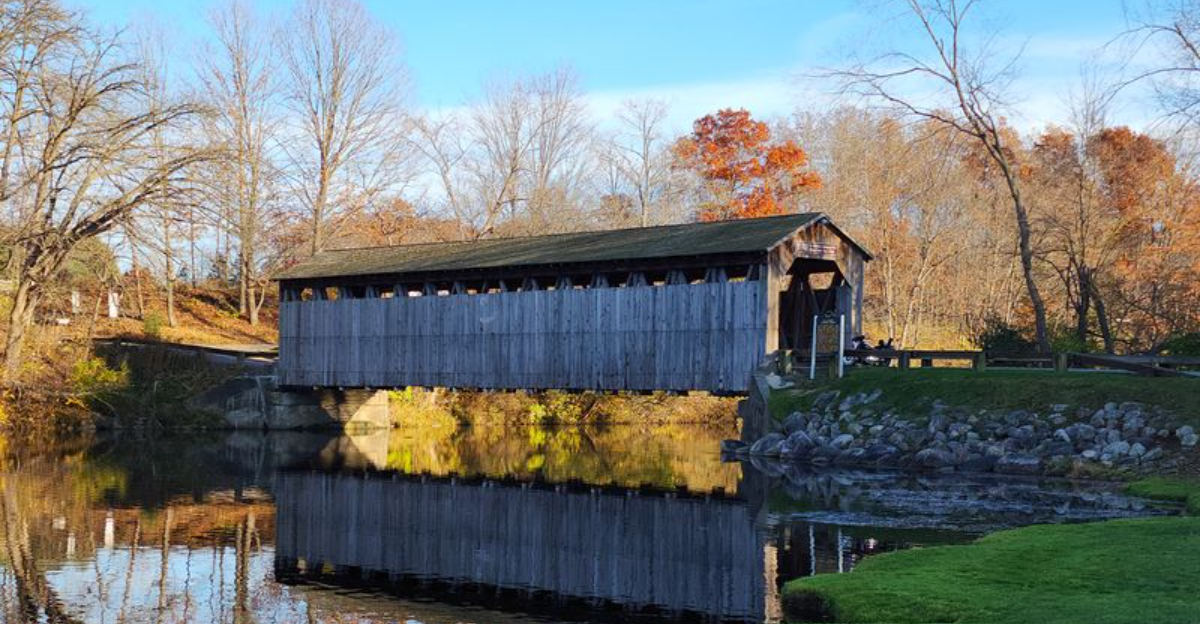
Tucked away in Vergennes Township, Michigan, sits a charming piece of history that most people have never heard of.
The Fallasburg Covered Bridge stretches 100 feet across the Flat River, quietly connecting the past to the present.
Built in 1871, this wooden wonder is one of only three covered bridges in Michigan that still welcomes cars to cross its timbers.
Whether you love history, nature, or just discovering hidden gems, this bridge offers a peek into a simpler time.
Walking or driving across, you can almost hear the echoes of the past in the creaking timbers and rushing river below.
Surrounded by lush greenery, it’s a perfect spot to pause, take photos, and soak in the quiet beauty of Michigan’s countryside.
A Bridge Born In 1871
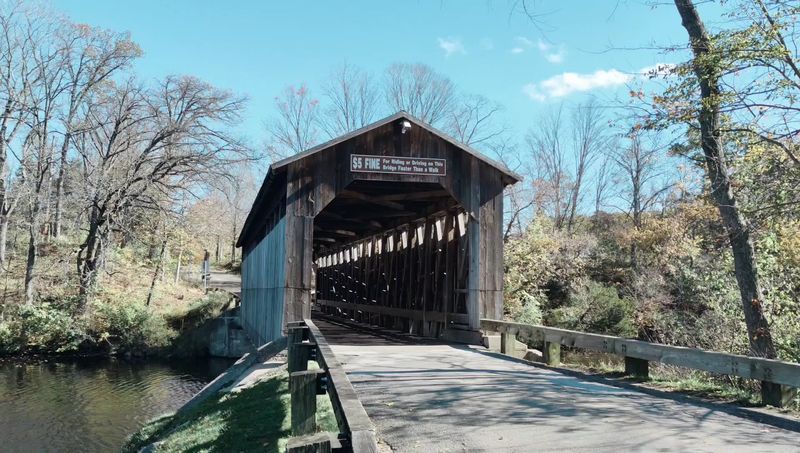
Jared N. Bresee constructed this bridge for just $1,500, which sounds like pocket change now but was serious money back then.
He used white pine timbers from nearby Greenville, creating a structure that would outlast most modern buildings.
The Brown truss design he chose featured diagonal compression beams and vertical tension members, a system patented by Josiah Brown in 1857.
This engineering marvel distributed weight so efficiently that the bridge still carries vehicles today.
Walking through it feels like stepping into a time machine.
The wooden beams creak gently underfoot, telling stories of horse-drawn carriages and Model T Fords that once rumbled across.
Despite being over 150 years old, the bridge remains remarkably sturdy, proving that craftsmanship from the 1800s was built to last generations.
One Of Michigan’s Last Three Covered Bridges
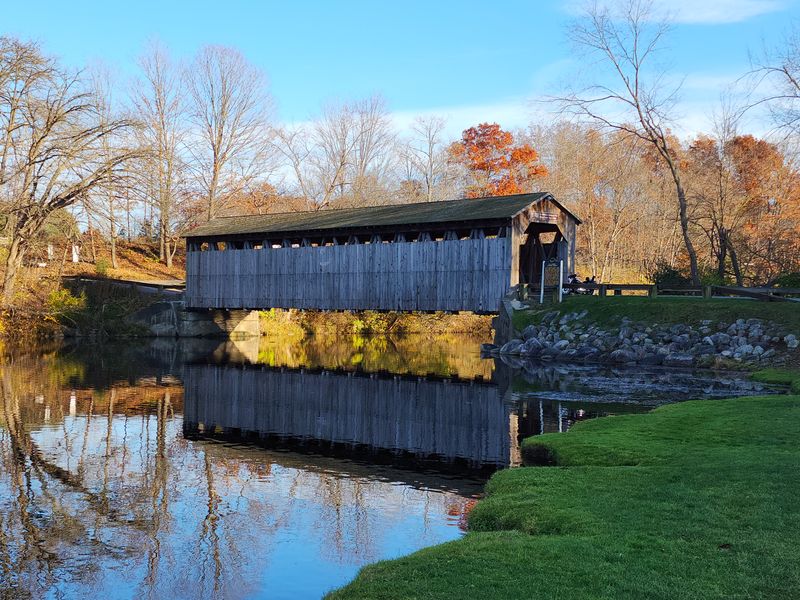
Michigan once boasted dozens of covered bridges dotting its landscape, but time and progress claimed most of them.
Today only three remain open to vehicular traffic, making Fallasburg a rare survivor worth celebrating.
Driving through feels both thrilling and slightly nerve-wracking, especially when you meet another car coming from the opposite direction.
The one-lane passage requires drivers to slow down and take turns, forcing a moment of patience in our rushed world.
I remember my first time crossing it, gripping the steering wheel tighter than necessary while my kids squealed with excitement in the backseat.
The wooden planks rumbled beneath our tires, creating a sound you just don’t hear on modern roads.
That brief journey through history left us all grinning and eager to walk back through on foot to examine every detail.
The Brown Truss System Explained
Josiah Brown’s 1857 patent revolutionized bridge building by creating a system that balanced compression and tension forces brilliantly.
Diagonal beams handle compression while vertical members manage tension, working together like a perfectly choreographed dance.
The Fallasburg Bridge showcases this design beautifully, with lattice-work trusses visible from inside the structure.
White pine timbers crisscross overhead and along the sides, forming geometric patterns that are both functional and surprisingly artistic.
Engineers today still admire this design for its simplicity and effectiveness.
The system requires no complex calculations or fancy materials, just solid wood and smart geometry.
Standing inside and looking up at the intricate framework, you can appreciate how 19th-century builders solved complex problems without computers or modern tools, relying instead on mathematical principles and good old-fashioned ingenuity.
The 2013 Cement Truck Incident
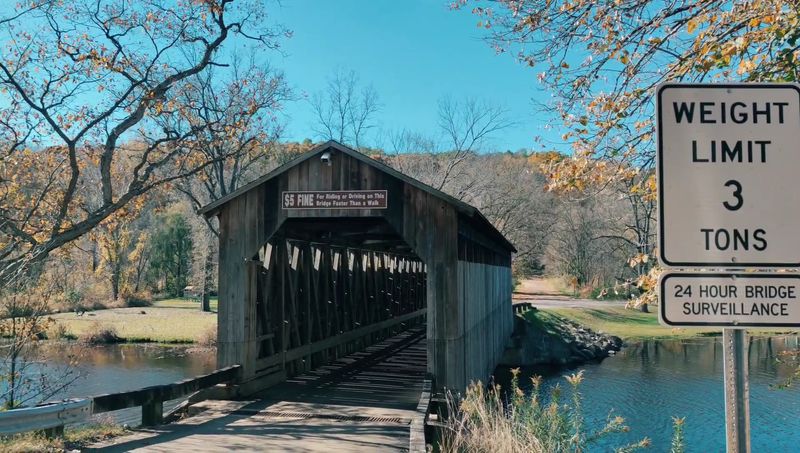
Picture this scenario: a cement truck, weighing far more than the posted 3-ton limit, rumbles onto the bridge in 2013.
Everyone held their breath, expecting disaster.
Remarkably, the bridge survived thanks to steel tension rods installed during the 1930s and replaced in 1994.
These reinforcements saved the day, proving that sometimes modern additions to historic structures make perfect sense.
The incident sparked conversations about preserving the bridge while keeping it functional for modern traffic.
Weight limits exist for good reason, but accidents happen.
The fact that the bridge withstood such abuse speaks volumes about both the original construction and the thoughtful updates made over the decades.
Now there’s even a local joke about a troll collecting tolls for speeders, reminding drivers to respect this elderly lady of a bridge.
The Fallasburg Historic District
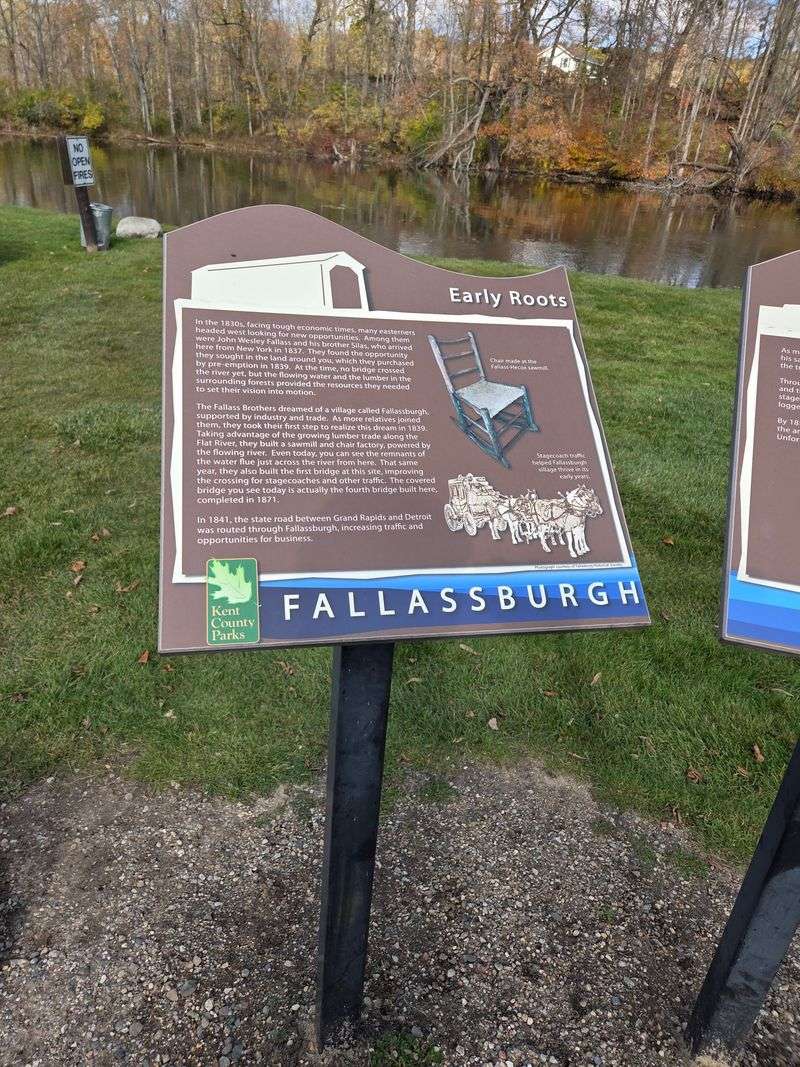
Established in 1999, this district includes over a dozen structures dating back to the mid-1800s, creating a living museum of pioneer life.
The one-room schoolhouse stands ready to transport visitors back to when children of all ages learned together in a single space.
The Misner House museum offers glimpses into domestic life from generations ago, with period furnishings and artifacts that tell family stories.
Meanwhile, the Orlin Douglass/Tower Farm demonstrates how agriculture shaped the community’s development and survival.
Wandering through these buildings feels like flipping through a history book, except you can touch the walls and walk the same floors that pioneers once trod.
Each structure contributes a chapter to the larger story of how communities formed, thrived, and adapted in 19th-century Michigan, making the covered bridge just one piece of a much bigger historical puzzle.
Recognition And Preservation
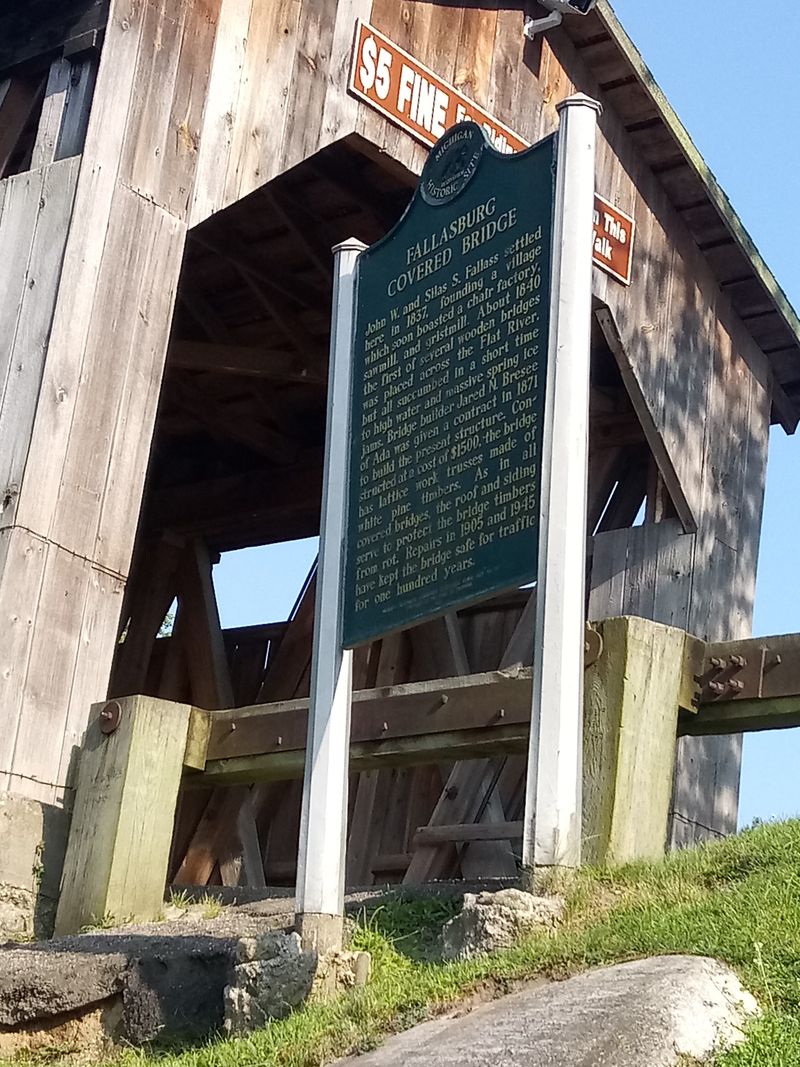
The Michigan State Register of Historic Sites welcomed the bridge in 1959, acknowledging its importance to state heritage.
Thirteen years later, in 1972, the National Register of Historic Places added it to their prestigious list.
These designations aren’t just fancy titles or bragging rights for the community.
They bring funding opportunities, preservation requirements, and public awareness that help protect the bridge for future generations.
Maintaining a historic structure requires constant vigilance and careful repairs that respect original materials and methods.
Every restoration project must balance authenticity with safety, ensuring the bridge remains true to its 1871 roots while meeting modern standards.
The community takes this responsibility seriously, organizing fundraisers and volunteer efforts to keep their beloved bridge standing strong.
Recognition from state and national organizations validates these efforts and ensures this treasure won’t fade into obscurity.
A Perfect Recreation Destination
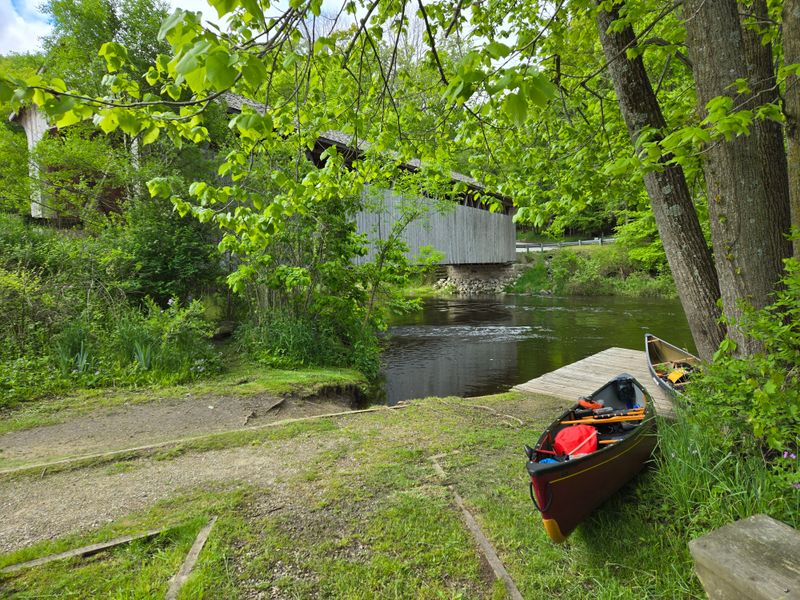
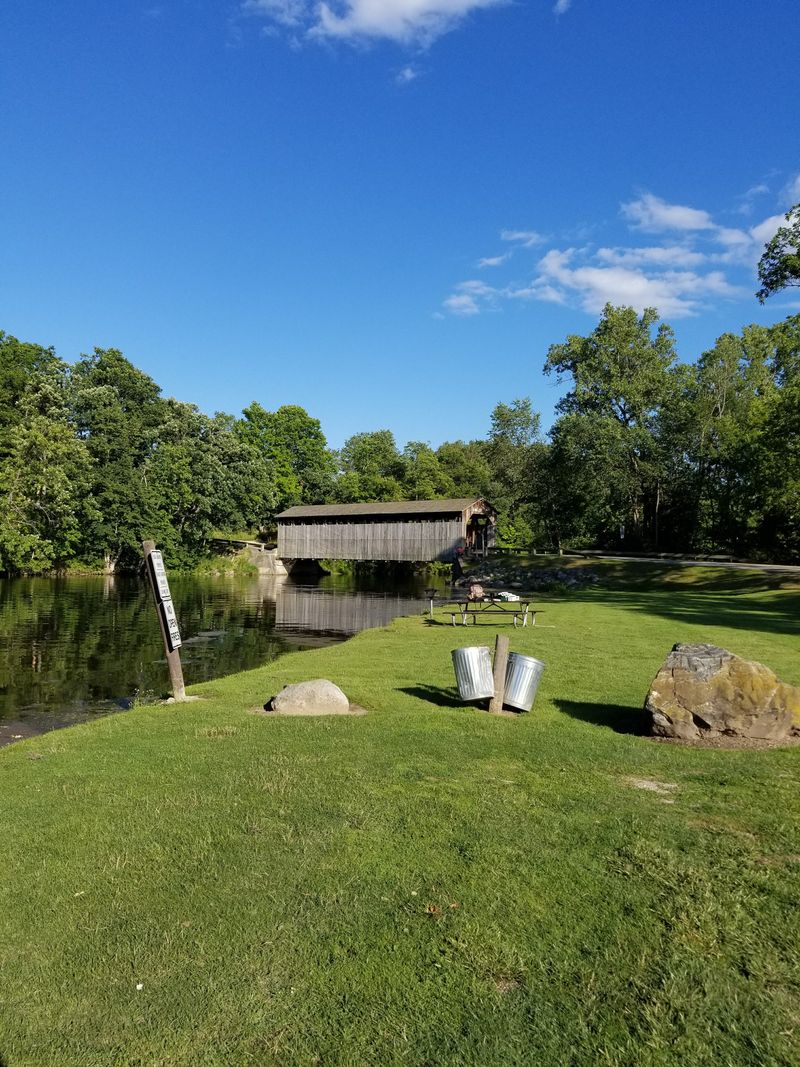
Located at 13944 Covered Bridge Road in Lowell, the bridge anchors a beautiful park offering activities for everyone.
Picnic tables dot the shaded areas, perfect for spreading out lunch while listening to the river babble nearby.
Fishermen line the banks of the Flat River, casting lines and swapping stories about the one that got away.
Kayakers and canoers use the spot as a convenient launch point, paddling through calm waters surrounded by Michigan greenery.
Walking trails wind through the park, inviting visitors to explore at their own pace while soaking in nature and history simultaneously.
A disc golf course on the other side of the park adds modern recreation to the historic setting.
The bridge itself remains open 24 hours, welcoming photographers at sunrise and romantics at sunset.
Visitors consistently praise the peaceful atmosphere and photogenic scenery.
A Photographer’s Dream Location
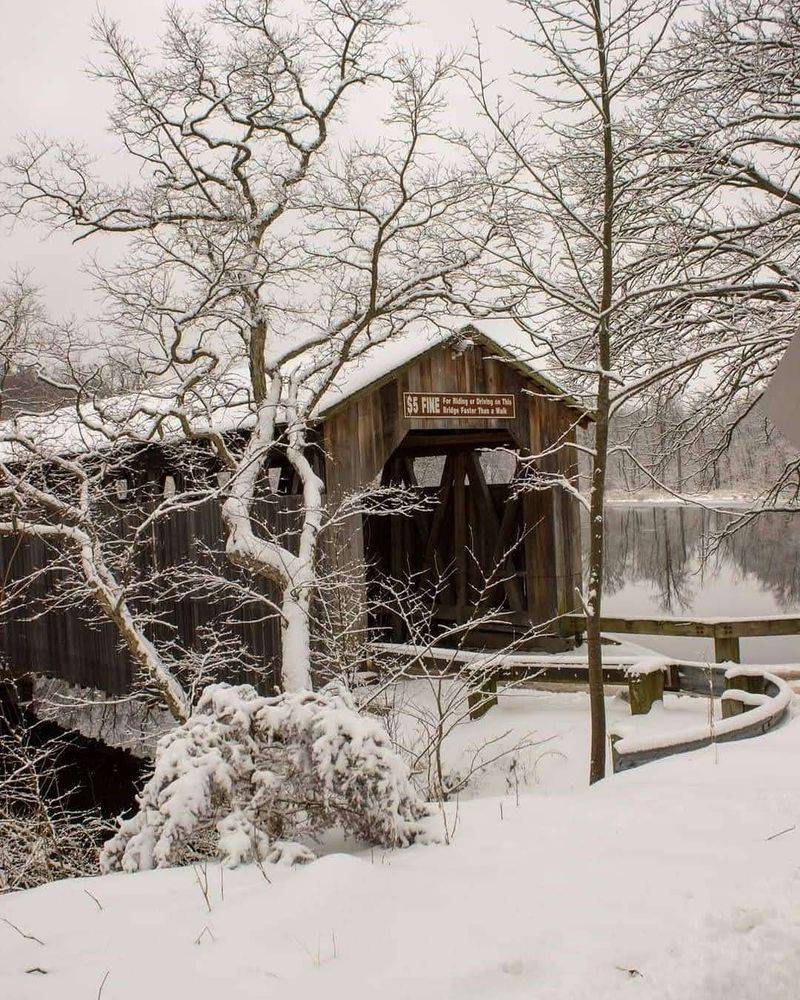
Photographers flock to this location like moths to a flame, and for good reason.
The rustic bridge framed by lush trees and sparkling water creates compositions that practically take themselves.
Wedding photographers particularly love the spot, setting up elaborate shoots with brides and grooms posed on the bridge or along the riverbank.
Family portrait sessions capture multiple generations against a backdrop that screams timeless Americana.
The changing seasons transform the location dramatically, offering fresh perspectives throughout the year.
Spring brings wildflowers and fresh green leaves, summer delivers deep shade and vibrant colors, autumn paints everything in oranges and reds, and winter occasionally dusts the bridge with snow for a fairytale effect.
Natural light filters through the bridge’s openings at different angles depending on the time of day, creating dramatic shadows and highlights that make even amateur photos look professional.