
13 Hidden California Getaways To Explore Before Everyone Finds Them In 2026
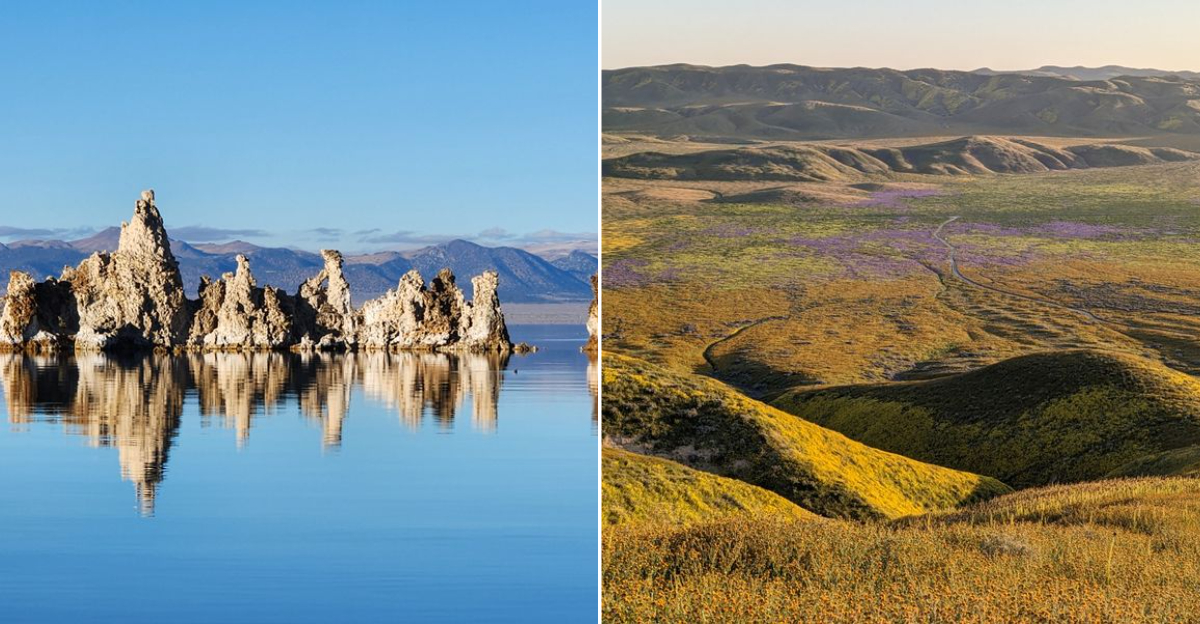
Quiet corners still exist in California if you steer off the main highway and let the landscape set the tempo, trading engine noise for the hiss of wind sliding through dry grass and the occasional birdcall rising from an unseen ridge.
This list leads you toward places where the terrain does most of the talking, from coastal overlooks that appear suddenly after a bend, to inland paths that reward your detour with shifting light, unexpected silence, and a sense of scale that is hard to find in busy towns.
You will get exact addresses for trailheads, viewpoints, and small stops worth pulling over for, along with brief notes on what makes each location feel earned rather than stumbled upon.
Bring curiosity, a charged phone for maps, and a willingness to walk a little farther than you planned, because these routes reveal details slowly, the smell of eucalyptus warming at midday, the way dust settles on your boots as the sun drops, the quiet realization that you have found a pocket of the state that feels almost private.
1. Trona Pinnacles, Trona
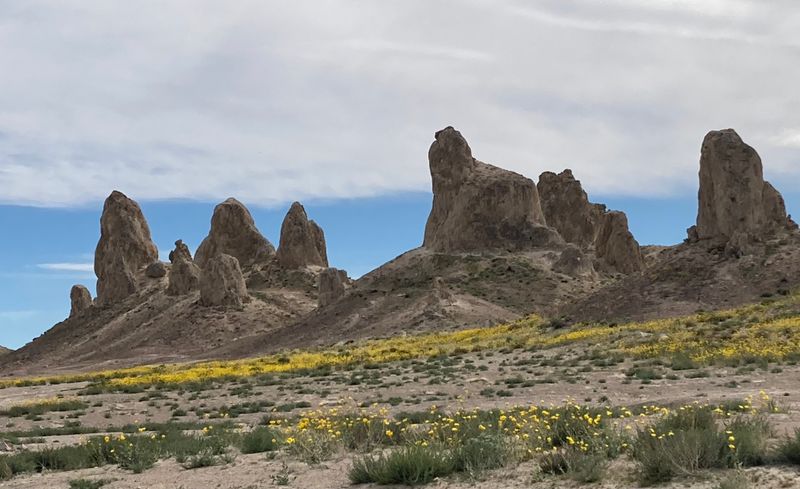
Dawn spreads pale gold across a field of tufa towers that jut out of the desert floor like a cluster of misplaced sculptures, and the silence grows so wide that even the crunch of gravel under your boots feels like it echoes into geological time.
Driving the rough approach road demands slow, deliberate movement, the kind that forces you to notice how the pale crusted earth changes texture with every bend, revealing pockets of dust that swirl up like powdered bone.
History sits quietly in the spires, formed by mineral springs from an ancient lake that dried long before any maps claimed this basin, and the sheer oddness of the formations makes the landscape feel halfway borrowed from another planet.
Film crews come and go chasing alien backdrops, but solitude stays loyal to sunrise hours, when wind curls softly between towers and shapes shadows so crisp they look carved.
Navigation becomes intuitive out here, because the absence of noise sharpens your sense of distance, and even a simple walk between pillars feels like an act of small, deliberate discovery.
Cell service flickers, so wandering becomes a negotiation between instinct and sky, leaving you more attuned to light than to screens.
By the time you drive away, shoes dusty and skin cooled by desert breeze, the quiet follows you like a souvenir you did not realize you were collecting.
2. Sinkyone Wilderness State Park, Garberville
Fog pushes through the spruce forest in slow ribbons that tangle between branches, and when it breaks apart, the coastline opens like a long, hollow breath filled with the scent of wet earth and distant salt.
The drive in feels both winding and purposeful, each curve revealing another slanted hillside where ferns spill over the road and the sense of remoteness grows thicker than the marine layer.
Trails here run close to old stories and stewardship, shaped by generations who knew the coastline not as a postcard but as a living sequence of meadows, gullies, and tide-scored inlets.
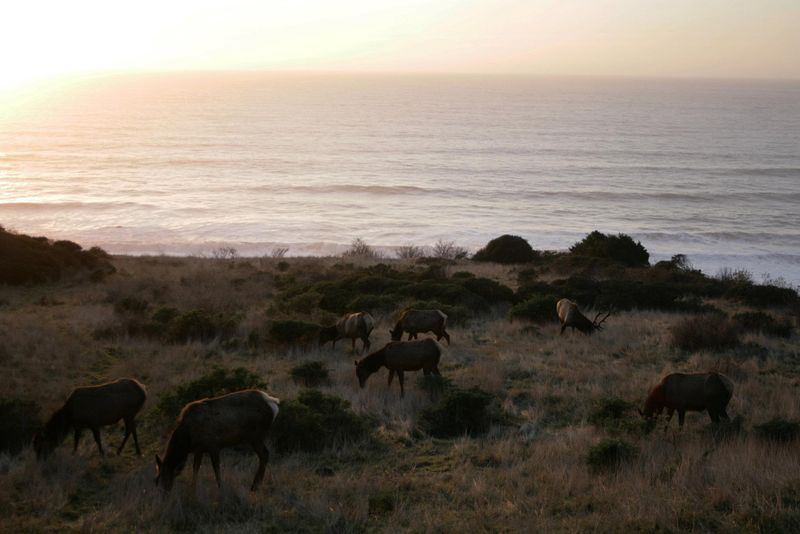
Elk appear like punctuation marks across the grasslands, sometimes motionless, sometimes drifting in small shifts that remind you how quietly a large animal can own a landscape.
Every path gives the impression of a place that remains exactly itself regardless of who arrives, and that stubbornness of character is what makes each hike feel earned rather than consumed.
Weather changes abruptly, and the fog returns whenever it pleases, wrapping the coastline in a chill that demands layers and a willingness to walk by sound rather than horizon.
When you leave, boots carrying mud from at least three kinds of soil, the memory of this coast keeps returning in small flashes of scent and wind long after the car heater kicks on.
3. Navarro River Redwoods State Park, Navarro

Light filters through the redwoods in thin vertical strands, creating the sensation of walking inside a cathedral where the walls breathe and the ceiling stretches beyond the scale of your imagination.
The air smells like river stones and old bark, earthy without heaviness, and the quiet is so complete that even your own footsteps feel like an intrusion softened only by moss.
Driving the winding road along CA-128 sets the mood before you ever reach the groves, because the forest begins announcing itself miles in advance through shifts in shadow, temperature, and the way the road narrows under the canopy.
These trees rise along corridors once used for logging transport, yet the sense of reclamation is strong enough that the past feels absorbed rather than erased.
Pullouts appear like secrets, each one offering a different angle on the river, a new echo, or a pattern of light that makes the understory glow in greens you cannot name.
Walking among the trunks reshapes your sense of scale, grounding you in a way that feels strangely physical, as if your breathing adjusts to match the slow confidence of old-growth forest.
Leaving the park means stepping back into a world that moves too quickly, and you may find yourself turning around once more just to absorb a final quiet you know you cannot take with you.
4. Tolowa Dunes State Park, Crescent City
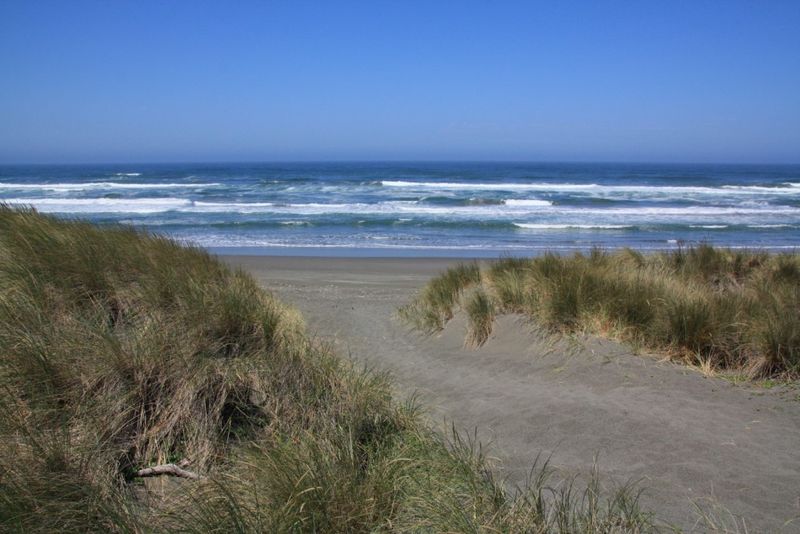
Wind shapes the dunes into long, pale curves that look soft from a distance but shift under every step, reminding you that this coastline is always rewriting itself grain by grain.
Walking toward the water feels like moving through a layered soundscape where surf, wind, and the startled lift of shorebirds combine into something that resembles music played on sand instead of strings.
Tide and fog collaborate unpredictably here, creating moments when the horizon vanishes completely and you navigate by intuition, footprints, and whatever scraps of sunlight slip through the gray.
Wetlands stretch behind the dunes in quiet pools that mirror the sky, revealing traces of the Tolowa Dee-ni’ heritage that still shapes the land even when visitors overlook the stories beneath their feet.
Paths demand mindfulness because delicate sedges and hidden water channels thread the ground, and each careful step becomes its own small act of respect for a landscape that feels both fragile and enduring.
The stillness that settles between gusts makes the dunes feel spacious in a way that empties your head, giving you room to think in slower shapes and longer thoughts.
Leaving the park means brushing sand from your shoes without ever quite shaking off the sensation that the wind is still moving with you, rearranging your memory of the place as deftly as it rearranges the shoreline.
5. Los Osos Oaks State Natural Reserve, Los Osos
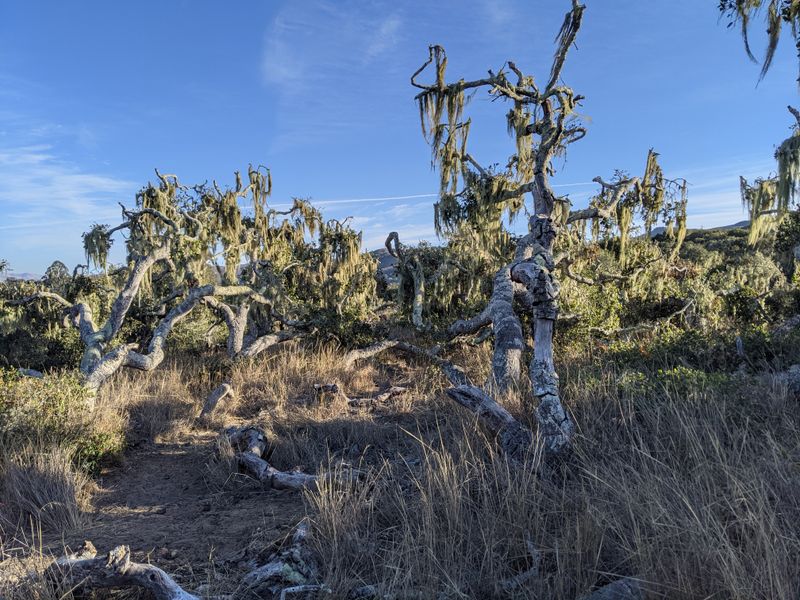
Ancient coast live oaks twist in broad spirals that look like they were shaped by stories rather than wind, pulling your gaze upward into a canopy so tangled and expressive it feels like nature’s version of calligraphy.
Walking the sandy paths beneath them, you notice how the air here mixes salt from the marine layer with the faint sweetness of lichen, creating a scent that feels both coastal and woodland without settling firmly into either identity.
Light slants between branches in thin ribbons that illuminate patches of dune soil left over from the Pleistocene era, reminding you that this small reserve holds geological history far older than the communities surrounding it.
Silence arrives in pockets, especially when the breeze drops, leaving only the soft shuffle of your steps and the occasional clicking of acorn caps tumbling over dry leaves.
Because the reserve is small, each turn in the path presents a new perspective on trees that seem to reshape themselves depending on where you stand, their forms shifting from elegant to eerie within the same handful of steps.
The deeper you wander, the more the oaks seem to lean inward like a council in quiet conversation, and you start feeling like a guest who has been invited to listen without interrupting.
By the time you return to the parking area, the coastal light has sharpened just enough to make the last glimpses of those twisting trunks feel like a gentle farewell rather than a simple exit.
6. Guadalupe-Nipomo Dunes, Guadalupe
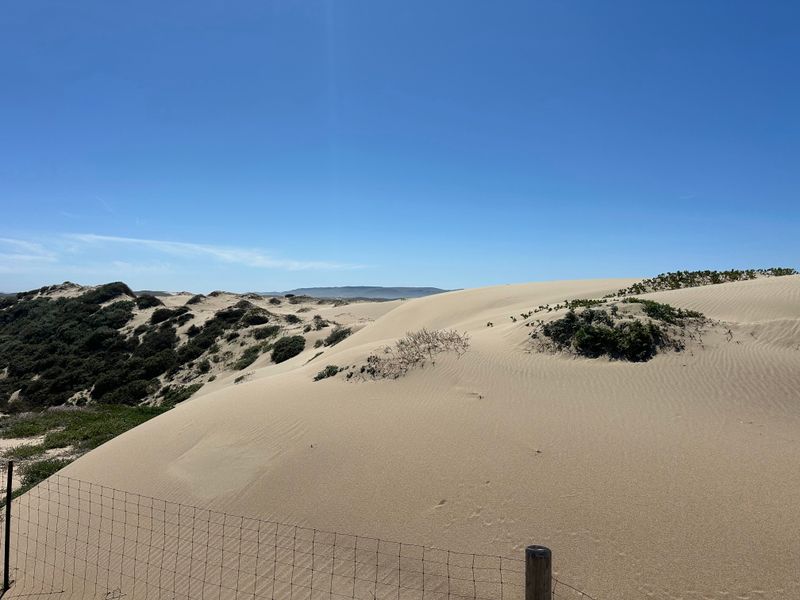
Sand stretches in wide golden folds that look smooth until you climb them and discover the subtle textures shaped by wind, heat, and the rhythm of footpaths left by earlier wanderers.
Standing on a high crest, you can hear the ocean long before you see it, the sound rising like distant thunder softened by miles of dunes that act as both amplifier and muffler in alternating breaths.
History runs deep here, from Indigenous stewardship to buried film sets from the early 20th century, and that layering of eras gives the landscape an uncanny feeling of being both untouched and touched endlessly.
Plants cling to their patches of stability, small bursts of green anchored in sand, and their persistence helps you understand how delicate and stubborn this ecosystem must be to survive shifting winds.
Every marked trail feels like a line drawn in respect rather than restriction, reminding visitors that plovers nest in places where footsteps look harmless but carry real consequence.
Fog sometimes slips in with a dramatic quietness, flattening color and turning the dunes into a grayscale dreamscape that feels more like memory than place.
Walking back toward town at sunset, with sand cooling underfoot and the horizon smudging into violet, you sense how the dunes hold onto heat and stories in equal measure, releasing both only when the day decides to let go.
7. Carrizo Plain National Monument, California Valley
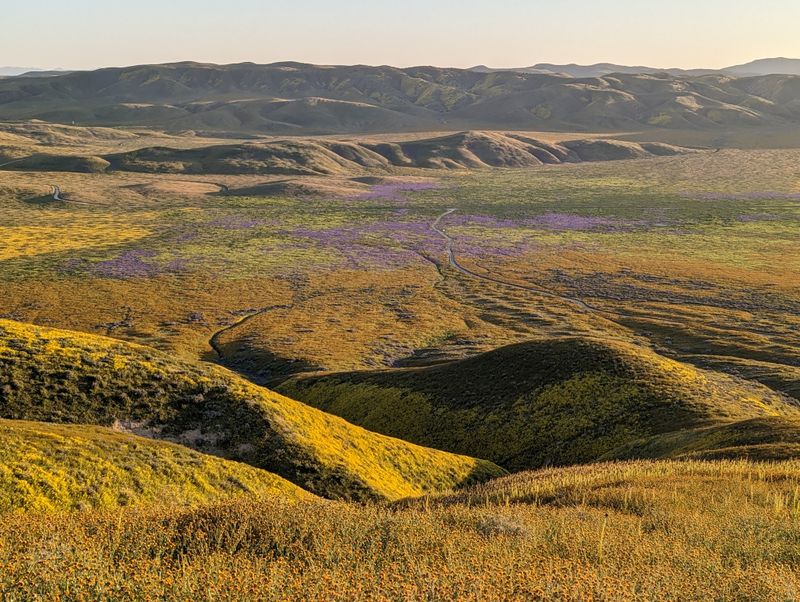
The wide basin opens like a forgotten chapter of California, where long distances flatten sound and color until even your own breathing feels like part of the terrain itself.
Wildflower seasons arrive unpredictably, but when they do, the Temblor Range burns with yellow and purple bands that look almost painted on, reminding you how quickly beauty can transform an otherwise austere valley.
Soda Lake stretches in pale tones that shift from mirrored water to white mineral crust, creating a surface that behaves like an enormous mood ring for the sky above it.
The San Andreas Fault runs through the plain in a visible line, and seeing that subtle offset in the land gives you a rare sense of Earth’s constant and indifferent movement.
Pronghorn sometimes appear far off like moving punctuation marks, steady and self-contained against the openness that makes everything else seem temporary.
The roads rattle your bones and require both patience and extra water, but they reward you with a scale of quiet that modern life rarely allows.
Driving out, you feel as though the plain has slowed your internal clock, leaving a residue of stillness that follows you long after the dust settles.
8. Mono Lake Tufa State Natural Reserve, Lee Vining
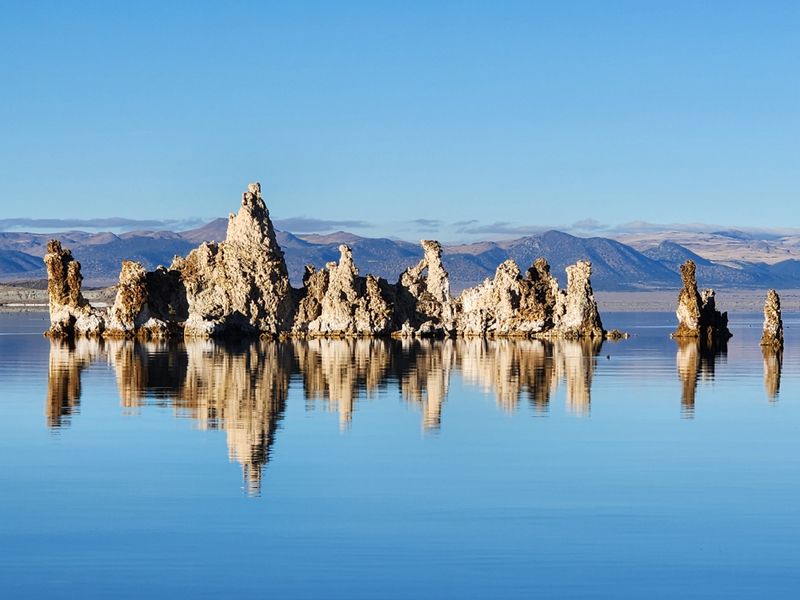
The water spreads in a muted metallic sheen that changes with the hour, giving the lake a mercurial temperament that makes even short visits feel strangely elastic in time.
Tufa towers rise from the shoreline like accidental sculptures, each one formed through slow chemical exchanges that reveal how endurance can shape elegance without ever seeking attention.
The alkaline air carries a faint mineral sharpness, and even your footsteps seem to meet the ground differently, as though the landscape insists on being heard at its own frequency.
Millions of brine shrimp and clouds of alkali flies support vast migrations of birds, turning this harsh and ancient lake into an improbable engine of life.
Closures shift with nesting seasons and water levels, reminding you how delicate the balance remains in a place that appears so visually solid and immovable.
Walking the shoreline requires a kind of humility, because the quiet here is not decorative but elemental, pressing you to notice the small textures of light and wind.
By the time you return to the trailhead, the tufas feel less like scenery and more like an archive of geologic patience, holding stories that time refuses to rush.
9. Alabama Hills, Lone Pine
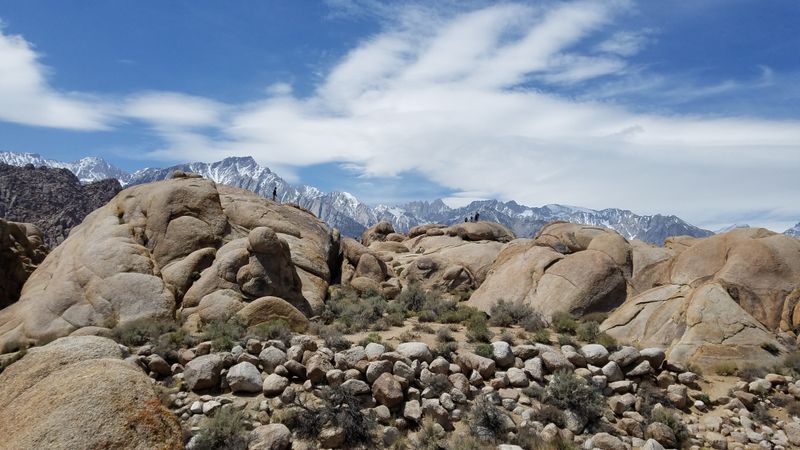
Granite mounds scatter across the desert floor like a collection of unfinished ideas, each one curved or split in ways that seem too deliberate to be accidental yet too unpolished to be sculptural.
At sunrise, shadows stretch long enough to redraw the entire terrain, creating temporary corridors of cool air that dissolve as soon as the light shifts a few degrees.
The Sierra Nevada towers behind everything with a sudden and theatrical verticality, anchoring the scene with a contrast that feels both improbable and inevitable.
Film history threads through the landscape quietly, leaving behind subtle traces in the alignments of dirt roads and the familiarity of certain rock formations that seem to echo scenes you half remember.
Trails weave through arches and boulder fields with minimal signage, forcing you to navigate by intuition and by the slow read of light on stone.
Weather can pivot quickly as storms roll down from Whitney, turning clear air into something charged and uneasy within minutes, so awareness becomes part of the experience.
When you head back toward Lone Pine, the wind passing through the arches feels like a reminder that this place has been shaped by forces older than stories, older than films, older even than the stillness that first drew you in.
10. Anza-Borrego Desert State Park, Borrego Springs
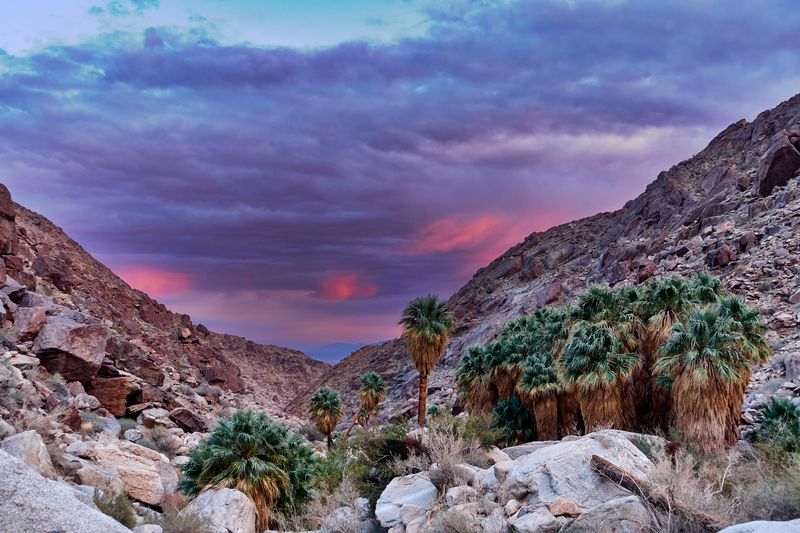
The desert opens in broad, shifting planes of color that change with every small tilt of the sun, making the landscape feel alive even when nothing moves except the slow drag of wind across gravel.
Ocotillo stalks raise their thin green flags after rare rains, and the sudden appearance of delicate leaves feels like a private performance offered only to those who arrive at the right moment.
Slot canyons wind through sandstone with the narrow patience of water’s memory, inviting you to walk between walls that carry the echo of ancient floods.
Farther out, badlands ripple in pale ridges that resemble a topographic model of some forgotten dreamscape, and the scale becomes almost unsettling in its silence.
Dark skies fall quickly here, revealing constellations with a clarity that makes the entire valley feel suspended between time and emptiness.
Temperatures swing from gentle to punishing with little warning, teaching you to read shadows, clouds, and the quiet instincts that deserts sharpen in anyone who listens.
By the time you leave, the combination of light, heat, and vastness settles into your memory like a long, slow chord that continues resonating after the landscape disappears in the rearview mirror.
11. Lassen Volcanic National Park, Mineral

Steam lifts from vents with a restless energy that betrays the volcanic machinery beneath the surface, creating a landscape that behaves more like a living organism than a park.
Boardwalks thread through sulfur-scented basins where mud pots bubble and hiss, reminding you that the ground here is not passive but full of concealed movement.
Snow lingers late into the year, softening the outlines of peaks and framing the terrain in a high-altitude stillness that contrasts with the turbulence below.
Lassen Peak rises like a compact monument to resilience, a reminder of the 1915 eruption that reshaped the region and left behind scars the forest is still slowly reclaiming.
Trails wind between burnt stands and new growth, allowing you to observe recovery in real time as lupine, fir, and manzanita move into places where fire once held dominion.
Weather can shift abruptly into sleet or blazing sun, making preparation feel less like a chore and more like a respectful acknowledgment of alpine volatility.
Descending from the heights, you recognize how the tension between heat and ice gives this park its character, a place that feels both volatile and meticulously composed by forces older than memory.
12. Abbotts Lagoon, Point Reyes Station
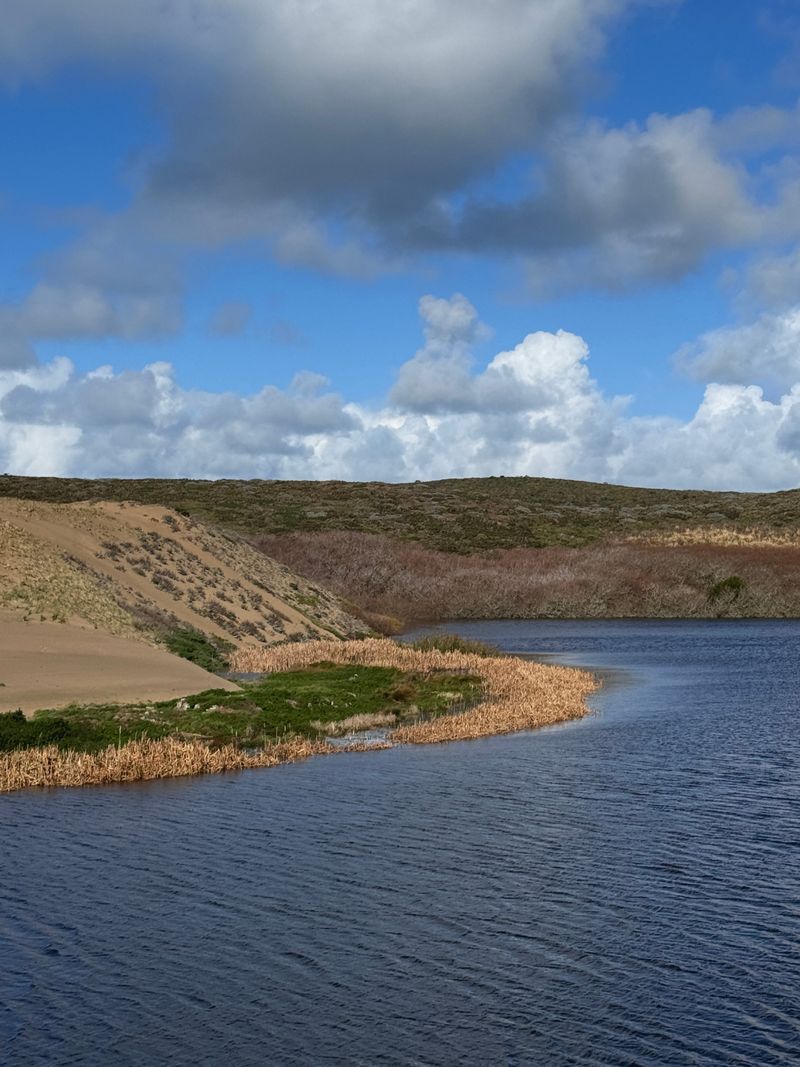
Wind sweeps across the dunes and shapes the lagoon into a muted silver oval, creating a hush that settles over the landscape like a gentle command to slow your breathing.
The sand shifts underfoot with a light, floury softness, and every step carries the faint crunch of shells and the muted pulse of distance.
Dune grasses bend in synchronized arcs that reveal the direction of the wind long before you feel it on your face, teaching you to read movement with your eyes rather than your skin.
The area hosts nesting birds whose patterns of flight draw soft diagonals across the sky, and their presence lends the lagoon a kind of quiet, watchful intelligence.
Remnants of dairy history drift around the edges of the region, not obtrusive but present enough to remind you that humans have moved through these meadows for generations.
Paths curve gently between the lagoon and the ocean, and each twist reveals a new collaboration between land and tide that feels as deliberate as a painter’s brushstroke.
By the time you reach the shoreline, the combination of wind, birdsong, and shifting horizon leaves you with a calm so integrated into your body that you only notice it once you’ve begun walking back.
13. Palomar Mountain State Park, Palomar Mountain
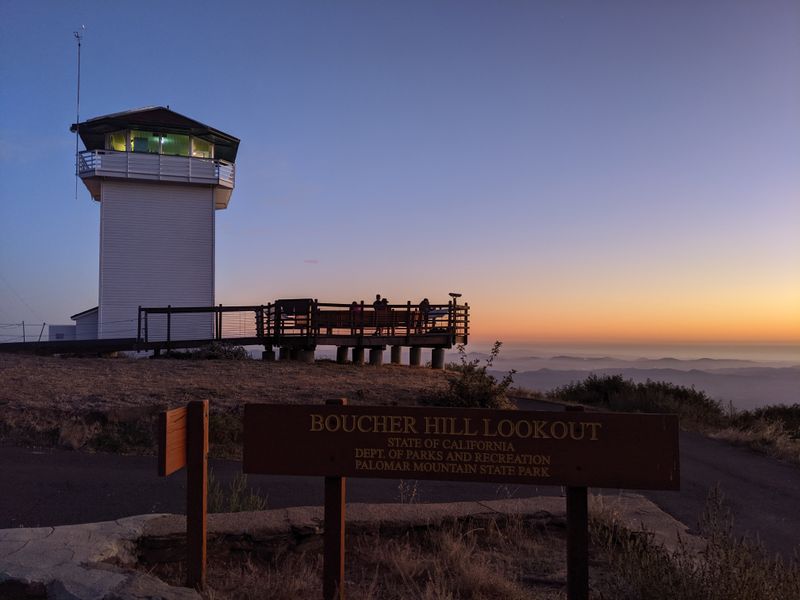
Pine and cedar gather in tall, cool ranks across the mountain, and the air settles into a shade that feels almost blue, carrying the scent of sap and soil with a steadiness that asks you to pause.
Sunlight filters through the canopy in slow-moving patches that drift across the forest floor like quiet signals, giving even short walks the feeling of passing through a living clock whose hands move according to weather rather than hours.
The observatory dome flashes briefly between treetops as you climb, a polished curve that looks both futuristic and deeply rooted in the scientific histories that unfolded here.
Trails wind through fern-filled drainages and old-growth stands, offering small moments of cool darkness that temper the climb and highlight how elevation reshapes humidity, sound, and even thought.
Clouds form and dissolve quickly on the ridge, and the sudden appearance of mist softens the landscape into a watercolor where trunks, branches, and sky blur into gentle gradients.
When the weather clears, the views open toward distant ranges and rolling foothills, creating a layered horizon that stretches with a calm authority that is both grounding and disorienting in its scale.
Descending again, you realize the mountain’s quiet has tuned you differently, leaving a residue of slow attention that follows you long after the forest releases you back to the road.