
15 North Carolina Christmas Towns Where Every Block Of Main Street Glows With Holiday Spirit
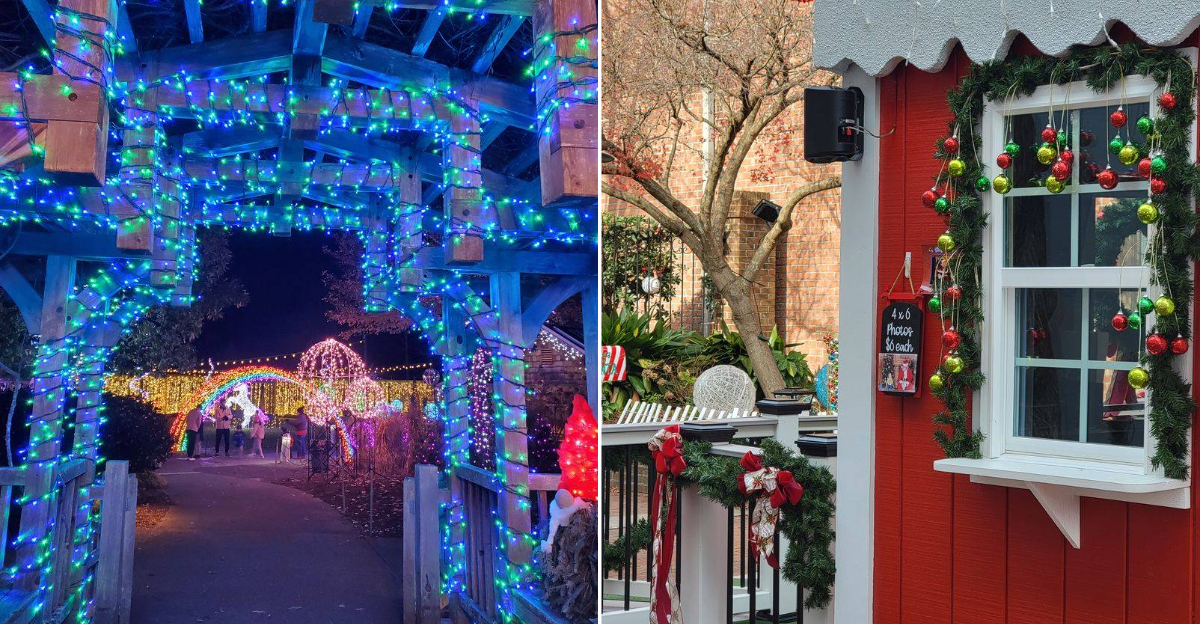
There’s a moment I’ve come to expect in North Carolina once December settles in, when an ordinary drive down a Main Street quietly turns into something else, and you realize the evening has been rerouted by strings of lights overhead and the faint, unmistakable scent of peppermint drifting out of doorways.
I usually notice it when I slow the car more than necessary, windows cracked despite the cold, because the street has taken on a different rhythm, one set not by traffic lights but by people lingering, pointing upward, and deciding to stay a little longer than planned.
Storefronts hum in a low, collective way, choirs warming up inside churches or on courthouse steps, cocoa being poured steadily into paper cups, and neighbors greeting each other with the ease of people who have done this together many times before.
What I appreciate about these towns is how little they strain for attention, because the lights aren’t meant to overwhelm or compete, they’re meant to gather, to signal that tonight is for walking, talking, and paying attention to where you are.
I’ve wandered preserved downtowns where the bricks seem to hold the glow just a bit longer, festival streets that feel festive without being frantic, and corners where a single well-lit tree becomes the unofficial meeting point.
Over time, I’ve realized that what makes these places work isn’t scale or novelty, but care, the careful repetition of traditions that people trust and return to year after year.
Think of this guide as a thread through those evenings, leading you to towns where holiday lights function less as decoration and more as an invitation, a nightly signal that says this is where the season gathers, and you’re welcome to join it.
1. Forest City
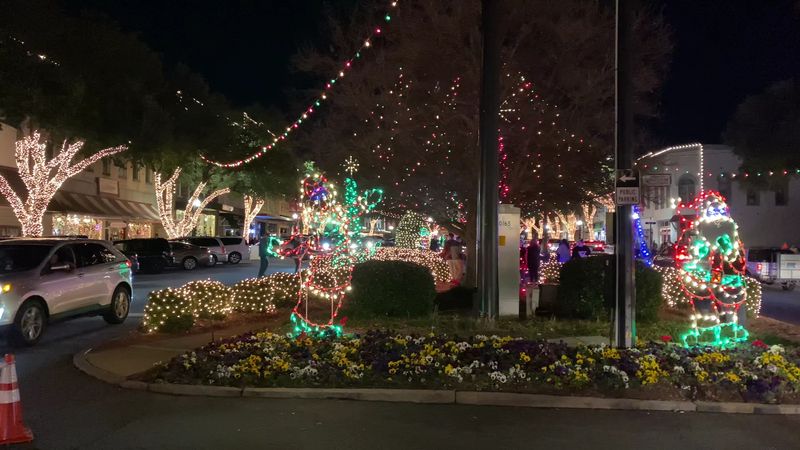
A canopy of lights sweeps the full length of Main Street in Forest City like a glowing river suspended above brick sidewalks, anchored visually by the oversized tree at the traffic circle and framed by storefronts that seem to lean slightly inward, as if participating in the scene rather than merely observing it.
During Hometown Holidays, the Rutherford County courthouse area becomes a carefully paced walking loop where horse-drawn carriages, trolley rides, bundled families, and brass bands overlap in motion, creating a sense that the evening is unfolding collaboratively rather than being staged for spectators.
The soundtrack settles naturally into place, with carols drifting from the pavilion, casual chatter bouncing off brick façades, and the soft squeak of stroller wheels filling the quieter gaps between songs.
Mill history quietly shapes the experience, visible in sidewalk panels and archival photos that explain why the downtown grid feels so well suited to light canopies, open sightlines, and slow wandering.
Arriving early allows parking near Depot Street, which drops you directly beneath the densest stretch of lights and makes the first impression feel immediate and immersive rather than gradual.
Hot cider steam curls into the cold air near vendor tents, briefly fogging glasses and camera lenses before clearing just in time for the synchronized light sequence that locals time instinctively.
By the time you drift toward the ice-skating rink or circle back under the canopy for a second pass, the town feels less like a destination and more like a shared seasonal room everyone agreed to inhabit for the night.
2. McAdenville
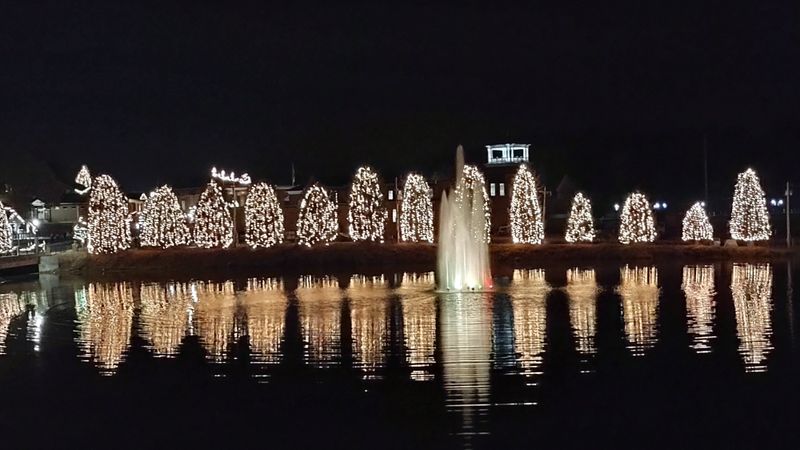
The still surface of the lake doubles every strand of red and green, transforming mill houses, shrubs, and sidewalks into a mirrored corridor of light that feels immersive without becoming overwhelming.
McAdenville’s claim as Christmas Town USA rests not on novelty but on continuity, with decades of coordinated neighborhood displays that move in quiet sync from block to block.
Entire streets participate evenly, so the experience feels choreographed only because everyone knows the rhythm, not because anything is forced or exaggerated.
Hydrangeas wrapped in lights, modest porches, and tidy lawns all contribute equally, reinforcing the sense that the spectacle belongs to residents first and visitors second.
Interpretive plaques along the route explain the textile mill village roots and the origins of the first light displays in the 1950s, grounding the glow in lived history rather than branding.
Traffic builds quickly on peak nights, which makes parking near the Greenway and walking the loop the most relaxed way to absorb the lake views and historic McAden Mill No. 1.
Gloves help with the breeze off the water, and patience becomes part of the ritual as nearly every porch turns into a postcard moment people quietly line up to photograph.
3. Dillsboro
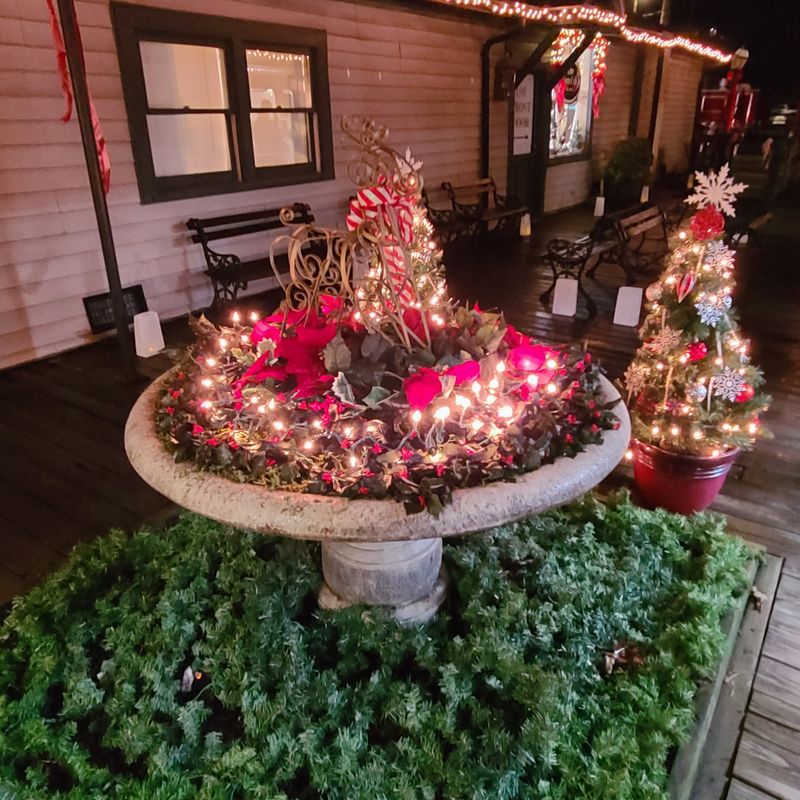
Paper-bag luminaries line Front Street in a steady, low glow that carries the scent of beeswax, cinnamon, and wood smoke, instantly setting a slower pace for the evening.
Dillsboro’s Lights and Luminaries event uses more than two thousand candle bags to guide visitors past craft galleries, cafés, and the small railroad depot without ever rushing them forward.
Carolers weave between storefronts at their own speed, sometimes stopping mid-song to greet familiar faces, which makes the music feel conversational rather than performative.
Rail history remains close to the surface here, especially near the depot, while Appalachian and Cherokee crafts fill shop windows that invite lingering even in the cold.
Parking by Monteith Park and walking uphill allows the luminary glow to accumulate gradually, giving each block a slightly different temperature and density of light.
There is no advantage to keeping a tight schedule, because drum circles, kettle corn stands, and spontaneous greetings gently reroute you whether you plan for it or not.
By the time you reach the coffeehouse with a warm cup in hand, the town feels less illuminated than quietly illuminated, as if the lights were meant to be noticed slowly rather than admired all at once.
4. Bryson City
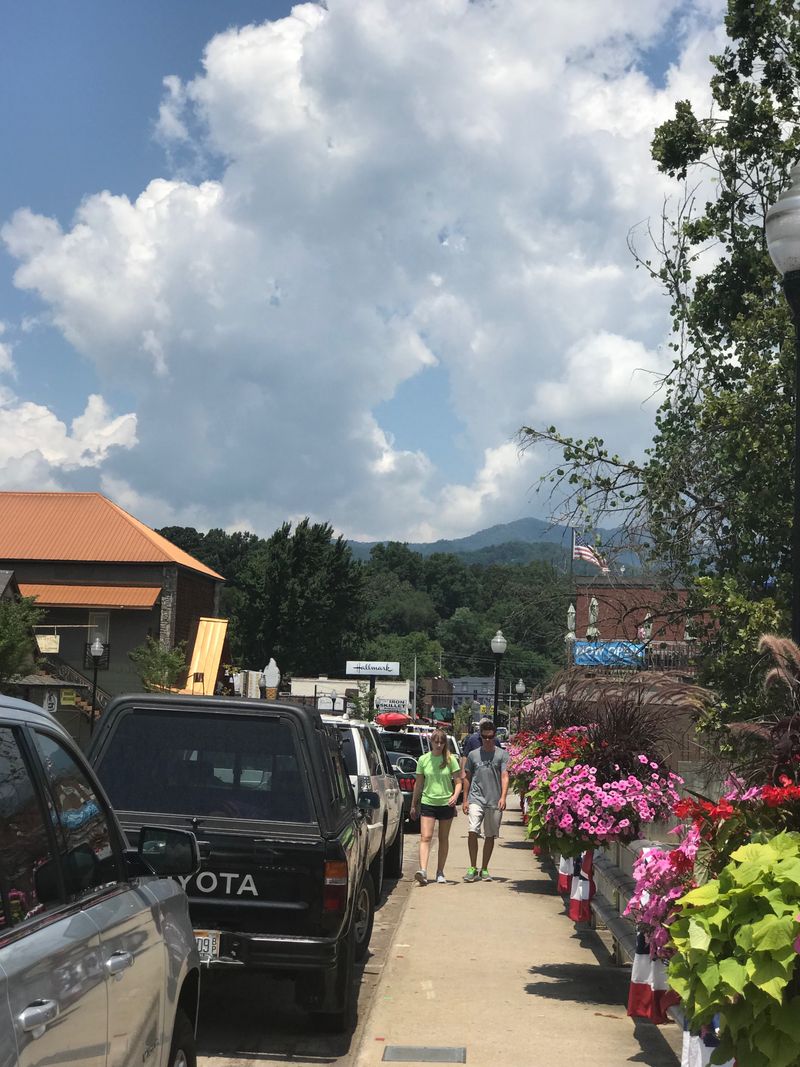
A sharp train whistle slices through the cold as steam lifts into the night air, drifting above Everett Street and settling briefly in the glow of garlands that frame the compact downtown like a scene designed to be entered rather than observed.
The Polar Express excursion operated by the Great Smoky Mountains Railroad brings a cinematic surge of energy to the season, but once the train doors close, the surrounding shops and sidewalks quickly return the evening to a friendly, small-town scale.
Brick storefronts built alongside the rail line reflect a history that feels structural rather than decorative, giving the lights something solid to rest on instead of floating freely.
Families cluster near the depot for photos while others peel off toward quieter side streets, creating a natural ebb and flow that keeps the crowd from feeling compressed.
Booking train tickets well in advance is essential, not only for access but for peace of mind, since the town’s winter rhythm bends around the arrival and departure times.
After the ride, the short walk to the Tuckasegee River bridge offers reflections that soften the brightness and cool the senses after the bustle.
A final stop at the small train museum, modest and hands-on, reinforces the sense that the holiday atmosphere here grows out of local identity rather than seasonal performance.
5. Hendersonville
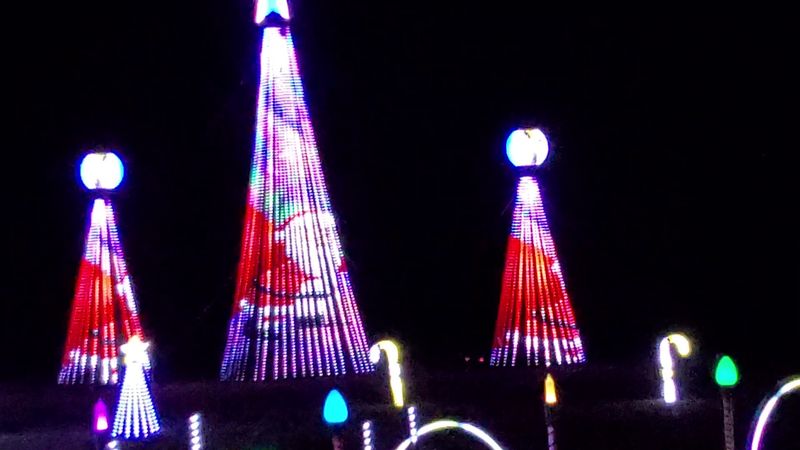
Brick sidewalks along Main Street catch the glow of overhead snowflake lights, while the faint scent of apples from nearby markets mixes with cocoa steam and cold air in a way that feels distinctly seasonal and grounded.
Hendersonville’s Home for the Holidays spreads its decorations evenly, using planters, window displays, and street-level lighting to keep the experience walkable and unhurried.
The Peppermint Bear Scavenger Hunt threads children and parents through the downtown grid, turning shop windows into informal gathering points rather than passive displays.
Historical markers quietly remind visitors of the 1840s courthouse and the mid-century streetscape planning that made this stretch of town so naturally suited to strolling.
Parking near the Visitor Center allows you to enter the lights gradually, rather than stepping directly into the busiest blocks before your eyes adjust.
Cocoa breaks at the renovated soda fountain act as natural pauses, giving the evening a rhythm of movement and rest instead of a continuous push forward.
By the time the community tree lights up and the menorah nearby completes the scene, the town feels balanced, inclusive, and calmly festive rather than crowded or overstimulating.
6. Blowing Rock
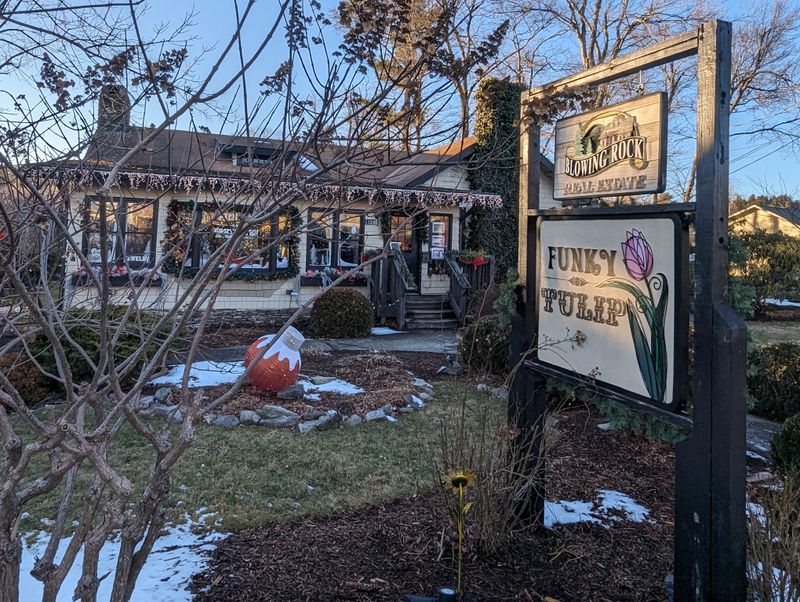
Cold wind cuts across Memorial Park, sharpening the sparkle of the lights and making wreaths and garlands feel more vivid against the dark mountain backdrop.
Blowing Rock’s Christmas programming centers on the park, where the tree lighting and afternoon festivities gather residents and visitors into a compact, elevated space that feels communal without being tight.
The Blue Ridge elevation gives even modest decorations extra presence, as if the land itself lifts them into better view.
Resort-era architecture sits comfortably beside older mountain cabins, and preservation efforts keep stonework and shingles visible beneath the seasonal trim.
Lodging fills quickly on winter weekends, making advance planning essential if you want to experience the town after sunset without rushing back down the mountain.
Layered clothing matters here, because the gusts find gaps easily and can turn still moments brisk without warning.
Looping past the candy shop and then circling by the Blowing Rock Art and History Museum after the crowd thins allows the lights to register more clearly on a second, quieter pass.
7. Sylva
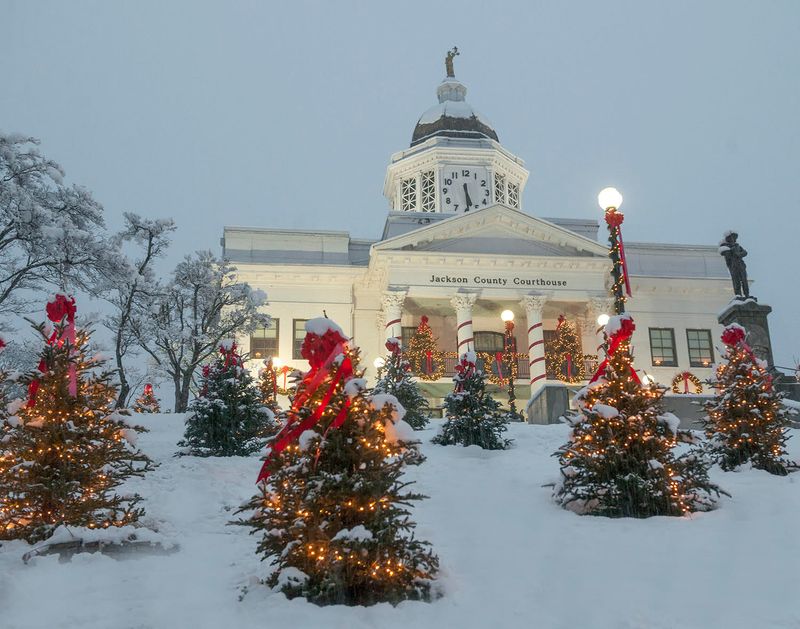
The courthouse rises above Main Street like a lit ship climbing out of the valley, its long staircase catching strings of light that pull the eye upward and give the entire town a sense of direction and focus as soon as night settles in.
Sylva’s holiday parade moves through the lower blocks first, bouncing sound off the steep hillsides and making even small crowds feel amplified and lively without tipping into noise.
Independent bookstores, breweries, and cafés along the street glow warmly, creating pockets where people naturally stop, talk, and regroup before continuing uphill.
Built in 1914, the Jackson County Courthouse anchors both the town’s history and its winter spectacle, with restoration work ensuring the structure reads clearly beneath the lights rather than disappearing behind them.
Parking behind Main Street lets you experience the full ascent, which matters because the view improves with each step and rewards patience.
Arriving just before full dark allows you to browse shops first, then transition into the lighting moment without feeling rushed or disoriented.
Once the tree lighting begins and the hill turns into a shared overlook, the town briefly feels like a balcony suspended over its own story.
8. Morganton
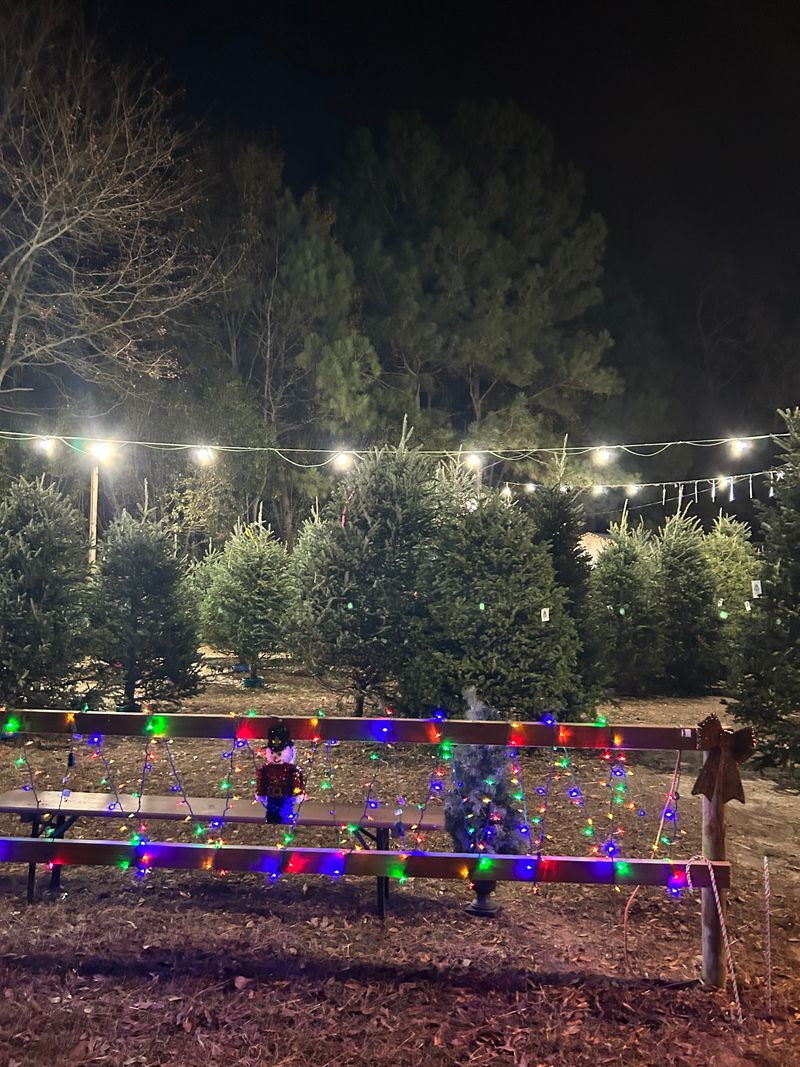
Warm white lights trace the edges of brick buildings around the historic square, while music from the pavilion drifts outward and softens the cold with a sense of invitation rather than spectacle.
Morganton’s Downtown Christmas event adds simulated snowfall that draws quick laughter and photos, but the town wisely keeps sidewalks clear and walkable so the novelty never overwhelms the evening.
Restaurants adjust their pacing during the season, leaning into longer dinners and seasonal menus that encourage lingering instead of turnover.
Railroad and furniture-making history still shape the downtown grid, and preservation work gives the lights architectural context instead of letting them float without purpose.
Parking near the courthouse makes it easy to loop side streets, where murals and quieter storefronts offer visual relief from the main gathering points.
Choosing a later dinner time helps avoid parade congestion and allows the square to breathe once families begin to thin out.
Standing near the kinetic light ornaments on the lawn, you can feel the crowd settle into a shared rhythm that feels communal rather than programmed.
9. New Bern
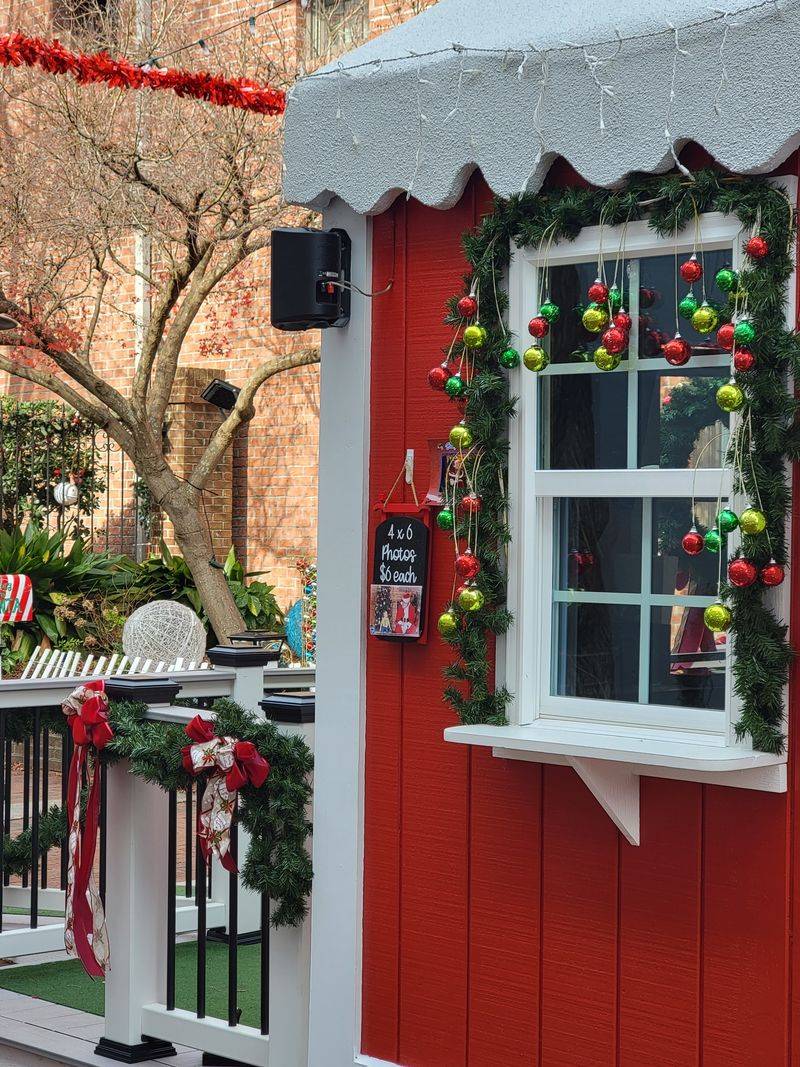
Candlelight throws moving shadows across Tryon Palace brickwork while the Trent River carries cold air and reflections that double the glow of the gardens.
New Bern’s Candlelight Christmas Evenings blend living history with restraint, using costumed interpreters and period music that know when to step back and let silence work.
As North Carolina’s former colonial capital, the town’s architecture naturally supports a calmer, more formal holiday tone that feels earned rather than imposed.
Middle Street extends the experience with decorated bear statues, shop windows, and restaurants that release rosemary and butter into the night air.
Reserving palace tickets ahead is essential, since the evening programs sell out quickly and shape the flow of the entire downtown.
Allowing time to wander after the formal portion lets the atmosphere loosen, especially as crowds drift toward river views.
Standing briefly by the palace gate to hear carriage wheels before moving toward the waterfront helps reset the senses and keeps the evening from feeling overly scripted.
10. Mount Airy
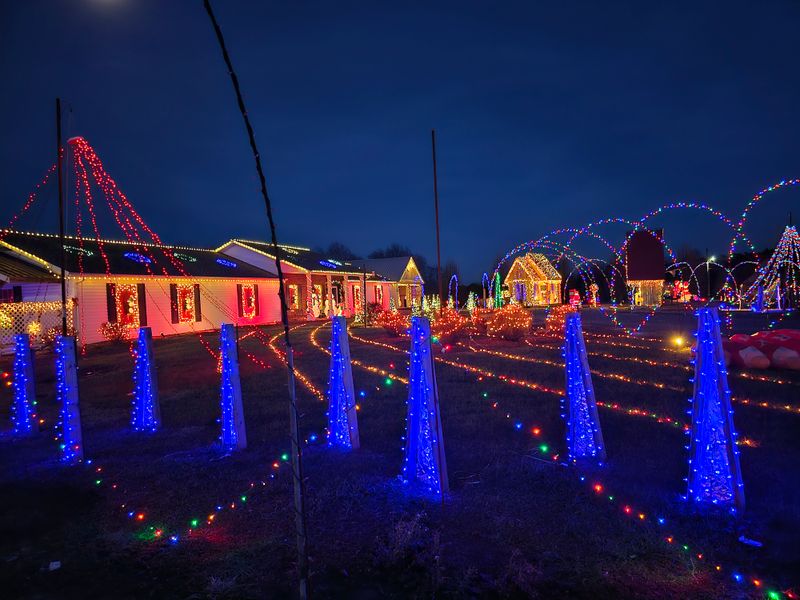
Candy-cane striped lights lean inward over Main Street storefronts that deliberately echo the town’s television-famous past, creating an atmosphere where nostalgia is present but controlled, never tipping fully into parody or theme-park excess.
Mount Airy’s Mayberry heritage fuels parades, barbershop harmonies, and window displays that feel carefully paced, giving visitors time to notice details instead of rushing them from one photo opportunity to the next.
Granite quarried nearby shows up in sturdy curbs and building details that hold wreaths and garlands with a grounded, practical confidence that matches the town’s personality.
Local museums and interpretive signs quietly connect the holiday cheer to Andy Griffith’s story and broader regional craft traditions, keeping the experience anchored in place rather than fantasy.
Parking near the Andy Griffith Playhouse shortens the walk and puts you directly on the parade route, which matters when crowds swell but sidewalks remain narrow.
Eating something simple before the tree lighting, like a hot dog or fried apple pie, helps the evening stretch comfortably without forcing a long restaurant wait.
When a vintage squad car sits idling under the lights, its presence does quiet emotional work, stitching memory, place, and season together without saying a word.
11. Apex
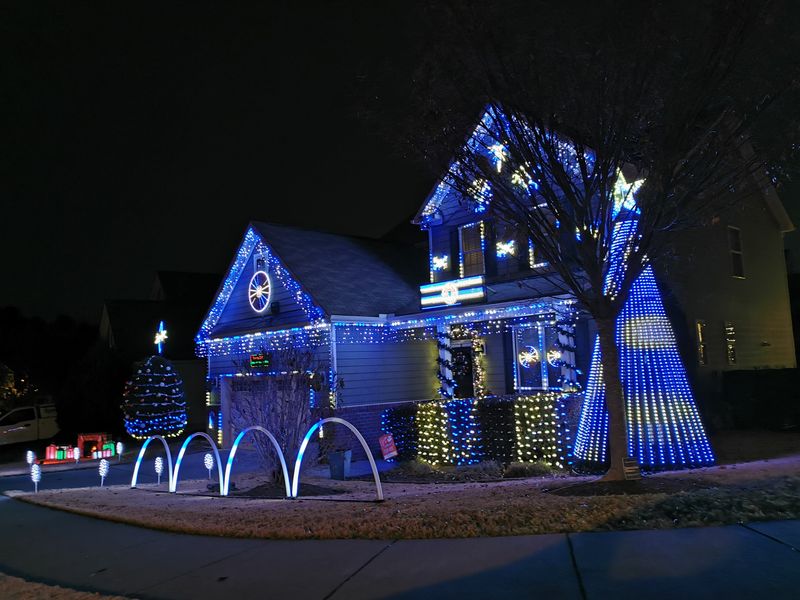
The train whistle along Salem Street becomes an accidental soundtrack as lights reflect off shop windows and passing railcars, reminding you that this downtown still moves to working rhythms beneath the decorations.
Apex’s Historic Downtown Christmas layers a parade, tree lighting, and compact night market into a space small enough to feel intimate but busy enough to feel alive.
Victorian storefront details catch the light especially well here, turning trim, brackets, and cornices into subtle design features rather than background architecture.
The town’s railroad origins shape the long, linear Main Street, which helps distribute crowds naturally instead of bottlenecking them in one central square.
Using park-and-ride options or arriving early is crucial, because parade parking disappears quickly and side streets fill without warning.
After the lighting, drifting toward the Halle Cultural Arts Center offers warmth, performances, and a brief reset away from the densest foot traffic.
Circling back afterward with a cup of cocoa lets you see the lights reflected in glass more clearly, like a constellation mapped at human scale.
12. Beaufort
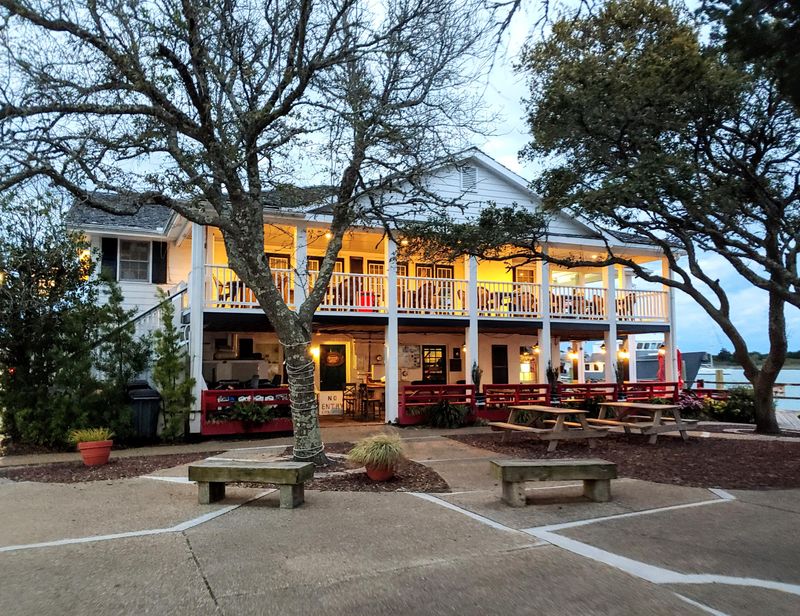
Salt air slips easily through garlands along the waterfront, and boat masts dressed in lights rise like tall, slow-moving ornaments against the dark harbor.
Beaufort’s Crystal Coast Christmas flotilla shifts the focus outward toward the water, creating a holiday experience that feels maritime, narrative, and slightly unpredictable.
Lantern-lit tours through the Beaufort Historic Site move at a measured pace, encouraging listening and observation rather than constant photographing.
As one of North Carolina’s oldest towns, Beaufort protects its Federal and Victorian homes carefully, which gives the seasonal decorations a sense of restraint and legitimacy.
Checking tide schedules and parade timing helps avoid awkward gaps, especially when cold wind off the docks sharpens quickly after sunset.
Carrying an extra layer matters more here than style, since the breeze ignores fashion and rewards preparation.
Pausing near the old burying ground before returning to the boardwalk lets the lantern light soften the evening and keeps the experience reflective rather than rushed.
13. Greensboro
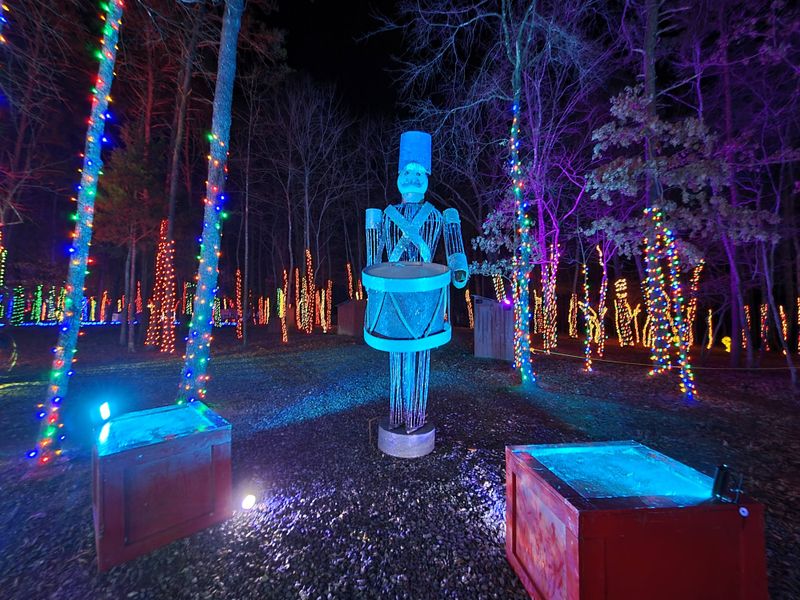
Elm Street takes on a glassy, reflective sheen as lights bounce between storefronts and the Tanger Center façade, creating the impression of a long corridor where movement and color gently echo back at each other.
Greensboro’s downtown Festival of Lights works because it spreads attention across multiple blocks instead of concentrating everything in one plaza, allowing visitors to wander without feeling pushed or managed.
Shop windows and murals tied to the city’s textile and civil rights history seem to gain extra depth under December lighting, as if the stories embedded in the walls are briefly easier to read.
The nearby botanical and science center displays add a second chapter to the night, offering a quieter, more immersive contrast to downtown’s social energy.
Parking decks near Friendly or Bellemeade give you flexibility, which matters if you want to split the evening between urban lights and garden paths.
A planned pause at a coffee shop along 4th Street can reset your senses and thin out the noise before you step back into the brighter stretches.
When the community tree finally flares to full brightness, the crowd response feels earned rather than automatic, like a collective agreement that the season has officially arrived.
14. Belmont
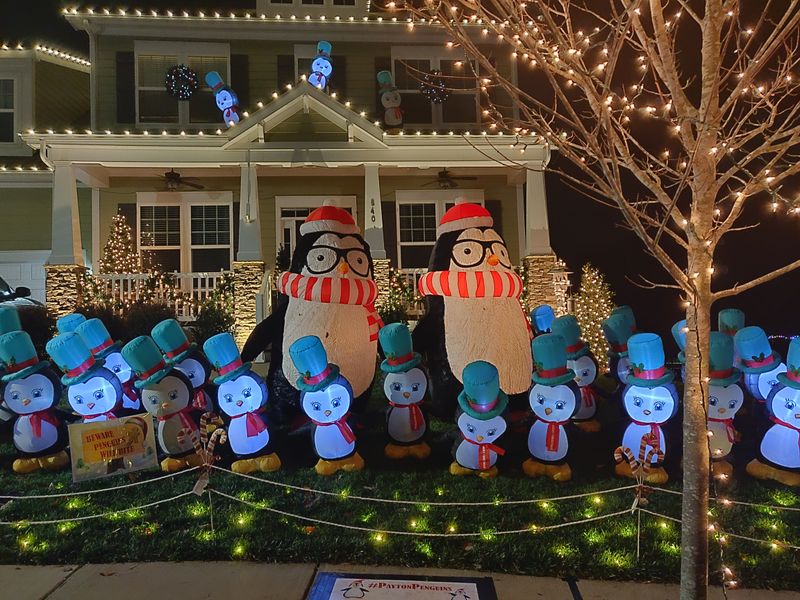
Strings of lights lace Main Street while Stowe Park fills with families moving at different speeds, some lingering near the tree and others drifting toward nearby restaurants with porch-lit windows.
Belmont’s mill-town foundations show clearly in the brickwork and compact blocks, which give the decorations texture and prevent the scene from feeling overly polished.
The proximity of the Daniel Stowe Botanical Garden expands the experience beyond downtown, especially when the Mile of a Million Lights turns garden paths into glowing corridors.
Downtown itself stays relaxed, with planters, benches, and storefronts arranged in a way that invites stopping rather than funneling people forward.
Parking near City Hall simplifies the evening and makes it easy to move back and forth between the park, shops, and dinner plans.
Visiting the garden after spending time downtown often means thinner crowds and a more contemplative pace among the illuminated plantings.
By the time you circle back toward Main Street, the town feels settled into a shared calm that balances festivity with familiarity.
15. Asheville
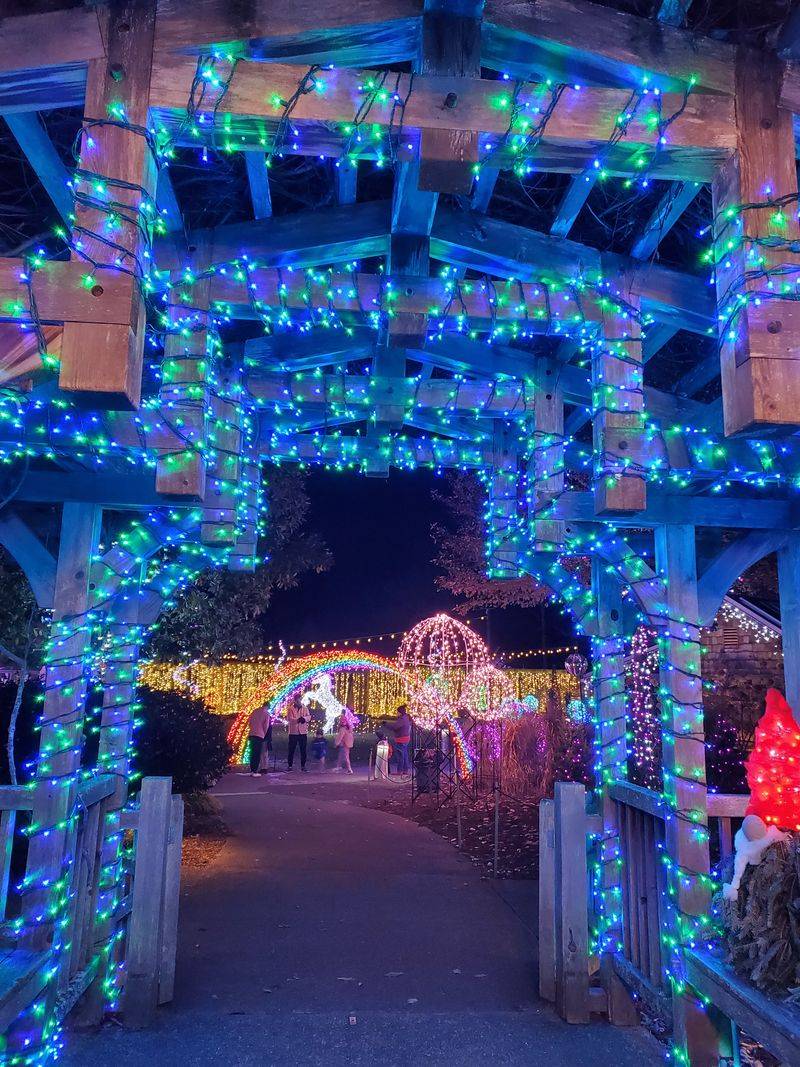
Pack Square hums with buskers and food stalls as ginger, smoke, and sugar mingle in the air, creating a sensory density that feels distinctly Asheville rather than generically festive.
The Grove Arcade’s wreath-lined corridors and the Omni Grove Park Inn’s gingerbread competition add layers of spectacle that coexist surprisingly well with street-level spontaneity.
Asheville’s creative culture shows up in handmade decorations, late-night gallery hours, and musicians who reshape carols into something looser and more personal.
Preserved architecture downtown gives the lights structure, while the surrounding mountains hold the darkness close, sharpening contrast and color.
Planning Biltmore or Grove Park visits in advance is essential, since those experiences shape traffic patterns and crowd density across the city.
Using buses or rideshare reduces friction, especially on cold nights when parking patience runs thin faster than expected.
Ending the evening on the South Slope, watching city lights flicker below like a second set of ornaments, brings the scale back down to something human and quietly satisfying.