
This Quaint Michigan Village Makes Every Stroll Feel Like A Step Into The Past
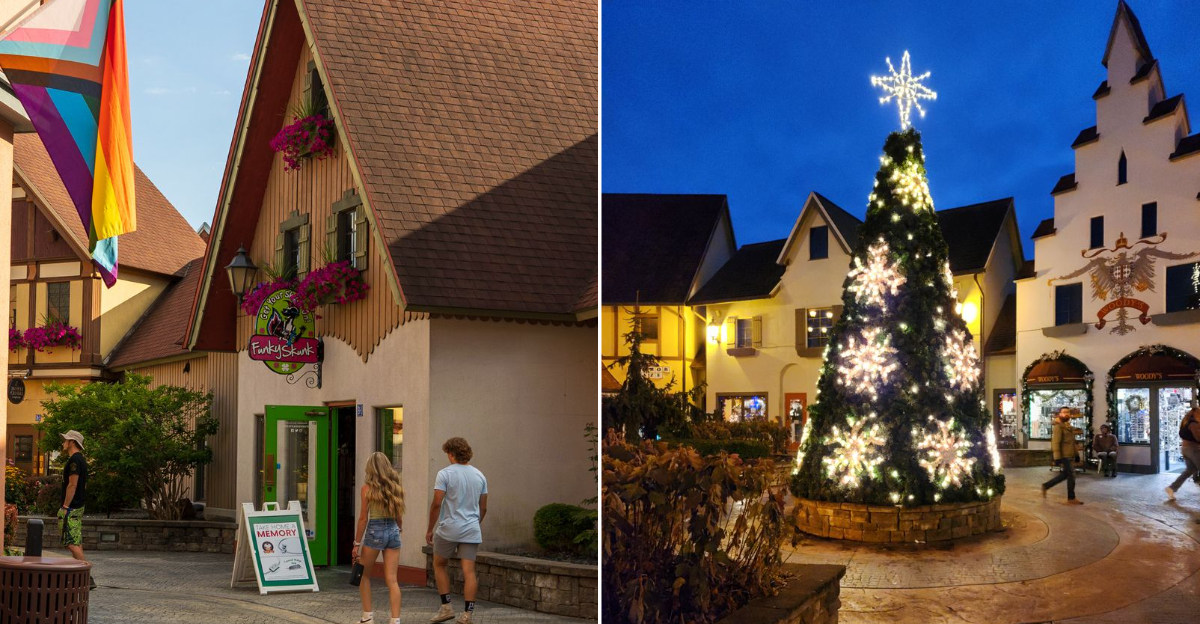
Frankenmuth has always felt to me like a place that knows it’s being looked at and doesn’t mind one bit, standing there like a Bavarian postcard that’s been left out in real Michigan weather long enough to earn a little texture and honesty.
I notice the details before the narrative takes over, half-timbered façades lining the Cass River, flower boxes painted with care rather than flourish, the faint warmth of pretzels drifting across sidewalks where people aren’t in a rush to be anywhere else.
As you slow down, the stories begin to surface naturally, bell towers that feel less decorative and more declarative, signage that nods gently to immigrant grit and the decision to build something lasting far from home.
What I appreciate is how the town rewards patience, museums that deepen rather than summarize, seasonal festivals that feel rooted instead of staged, and small craftspeople who keep traditions alive quietly, without asking for applause.
Walking here isn’t about covering ground, it’s about letting the place reveal itself in layers, practical, good-humored, and surprisingly resilient.
I’ve found that Frankenmuth works best when you keep your curiosity open and your pace unhurried, allowing the past to show up not as nostalgia, but as something still useful, still lived in, and still shaping the town one careful detail at a time.
Strolling Main Street At River Pace
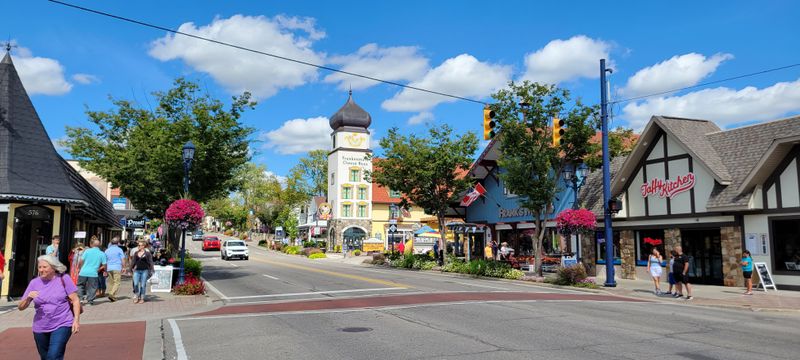
Main Street unfolds at a measured rhythm that feels calibrated to footsteps rather than traffic, with brick sidewalks gently guiding you past half-timbered facades, flower boxes trimmed with care, and signage that favors clarity over spectacle, all while the Cass River runs close enough to cool the air and subtly slow your breathing.
There is an orderliness to the street that never tips into stiffness, a sense that hospitality here was learned through repetition and daily use rather than design theory, which makes the experience feel lived-in instead of staged.
As you walk, warm notes of yeast, butter, and salt drift outward from bakeries and kitchens, blending with river air in a way that anchors the village firmly in the present even as the architecture gestures backward.
Much of what you see comes from a mid-twentieth-century Bavarian revival meant to honor nineteenth-century settlers from Franconia, yet it reads less like reenactment and more like a local dialect that simply stuck.
The street rewards those who commit to walking rather than hopping between parking spots, because details reveal themselves sequentially, rooflines first, then window trim, then the quiet humor tucked into hand-painted signs.
Early mornings offer the clearest read of the place, before tour groups compress the pace, when shopkeepers are still unlocking doors and the river reflects facades without interruption.
For the smoothest experience, park once, carry a little cash for bakeries, and let the street set the tempo instead of trying to impose one of your own.
Inside The Frankenmuth Historical Museum
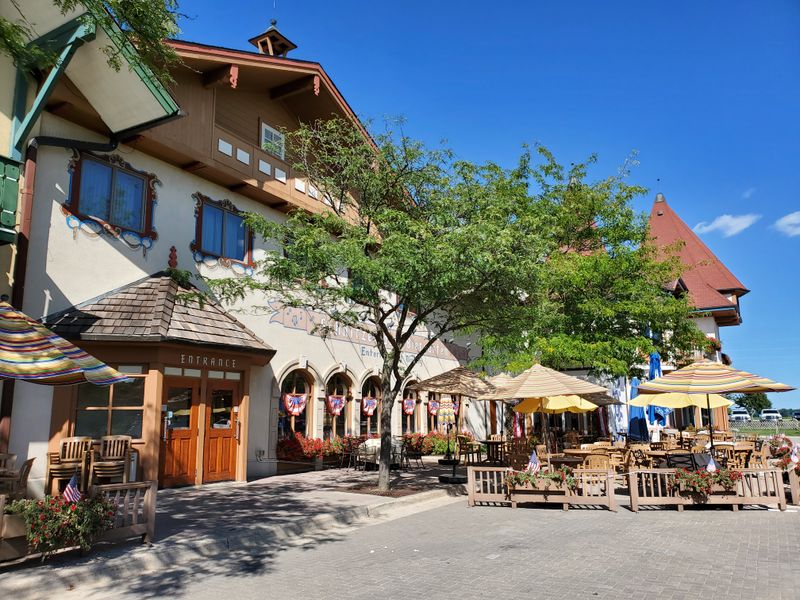
Stepping into the museum feels like entering a carefully lit pause, where immigrant tools, handwritten letters, and textiles sit behind glass that emphasizes use rather than rarity, encouraging you to lean closer instead of rushing on.
The atmosphere balances academic care with neighborly warmth, as if someone has agreed to walk you through family archives but trusts you enough not to overexplain every object.
Exhibits trace the 1845 arrival of Lutheran settlers from Franconia to this stretch of river, laying out not only dates and names but the practical reasons behind architectural choices and community organization.
Church plans, river transport maps, and domestic objects quietly demonstrate how survival, belief, and environment shaped what later became visual tradition.
Labels remain concise and factual, which keeps visitors moving at a steady pace while still allowing connections to form naturally between rooms.
Reading the timeline first gives the rest of the museum clearer structure, turning isolated artifacts into chapters rather than curiosities.
If you plan to visit multiple heritage sites, the joint ticket saves effort, and staff are happy to point out which stops complement what you have just seen.
Pretzel Twisting At The Bakeries
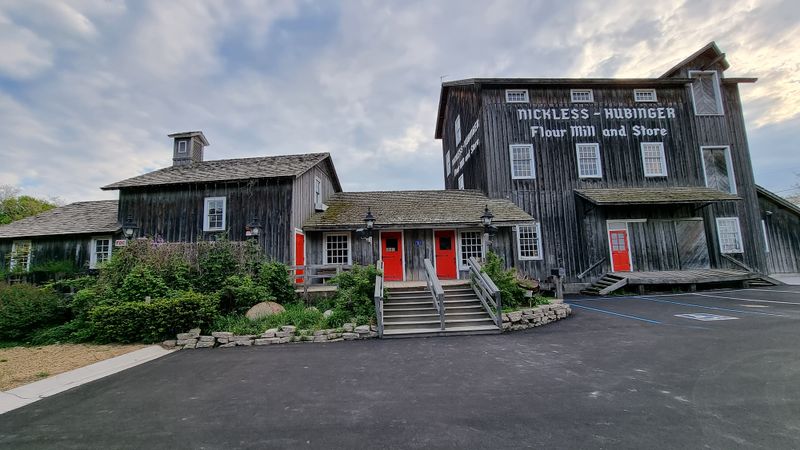
Inside the bakeries, salt crystals catch the light like small stones while dough turns and folds with a faint squeak under practiced hands, creating a rhythm that belongs to the bakers even as visitors gather close.
The air carries a dense mix of butter, malt, and heat, and ovens release warmth in steady breaths that make the room feel communal rather than performative.
Pretzel making here draws from German guild traditions, adapted over time to meet modern safety standards without losing the structural logic that gives the bread its chew and sheen.
Demonstrations simplify technique for clarity, yet you can still see how the twist count, the bath, and the bake work together rather than as isolated steps.
Watching long enough teaches patience, because the process rewards consistency more than speed, a lesson that mirrors the town itself.
If a short lesson is offered, take it and eat the pretzel immediately, before the crust cools and the interior tightens, letting the dough speak first.
Skip condiments on the opening bite, keep a napkin handy for migrating salt, and notice how something so simple carries an entire cultural memory in its shape.
The Covered Wooden Bridge And River Drift
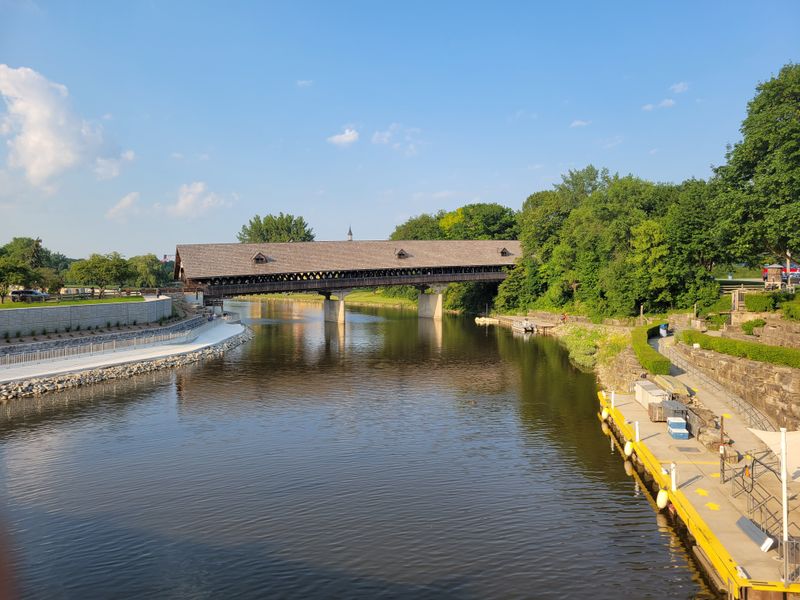
Crossing the covered wooden bridge slows you almost involuntarily, as the scent of aged timber and the hollow drum of tires or footsteps under the trusses signal that this is a structure meant to be noticed rather than rushed.
The Cass River slips beneath in an unhurried way, making boats appear smaller and quieter from the pedestrian lane, as if scale itself adjusts when framed by wood beams and narrow sightlines.
Known as Zehnder’s Holz Brücke, the bridge was completed in 1980 using traditional lattice design reinforced for Michigan weather, a deliberate blend of old-world aesthetics and modern engineering discipline.
What makes it linger in memory is not spectacle but proportion, the way light filters through slats and briefly edits the town into calm, centered shapes.
Walking across on foot reveals details missed by drivers, tool marks, subtle color shifts in the wood, and the way sound softens mid-span.
Off-peak hours reward photographers with cleaner lines and fewer interruptions, while drivers who roll windows down catch the resinous note of timber that still feels alive.
Moving slowly here is not politeness but practicality, because the bridge teaches you how the town prefers to be entered and left.
Chicken Dinners With Stories In The Walls
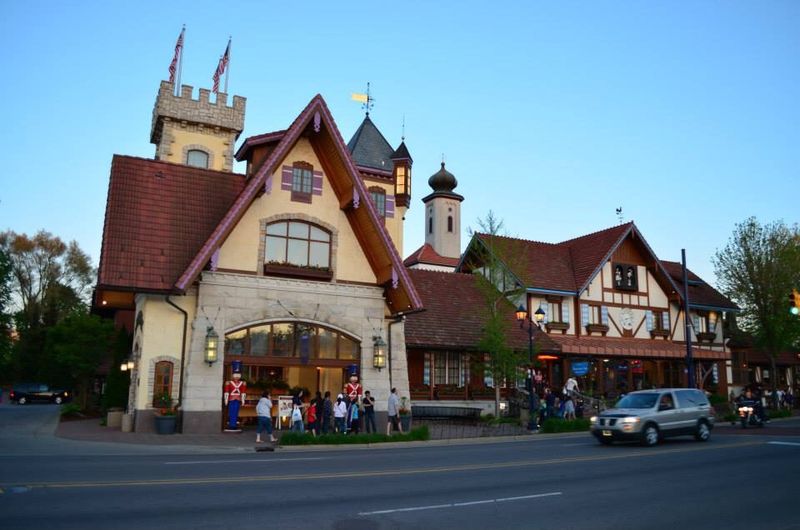
The dining rooms hum with layered sound, plates settling, conversations overlapping, and servers moving with practiced efficiency that feels closer to choreography than service theater.
Family-style chicken dinners arrive in reliable sequence, crisp skin beside buttered noodles and warm sides, creating a rhythm that encourages shared pacing rather than individual urgency.
These meals trace back to early boardinghouse hospitality tied to church gatherings, when feeding travelers and neighbors was as much obligation as welcome.
What sustains the tradition is not secrecy but repetition, staffing discipline, and an understanding that consistency itself becomes a form of memory.
Rooms are lined with murals, photographs, and architectural details that quietly narrate immigrant settlement without demanding attention, rewarding diners who glance up between courses.
Weekends and festival days fill quickly, so reservations smooth the experience and prevent the pace from collapsing into impatience.
Eating here works best when you surrender to the sequence, take smaller first servings, and let the stories in the walls catch up with you before dessert.
Heritage Park By The Cass River
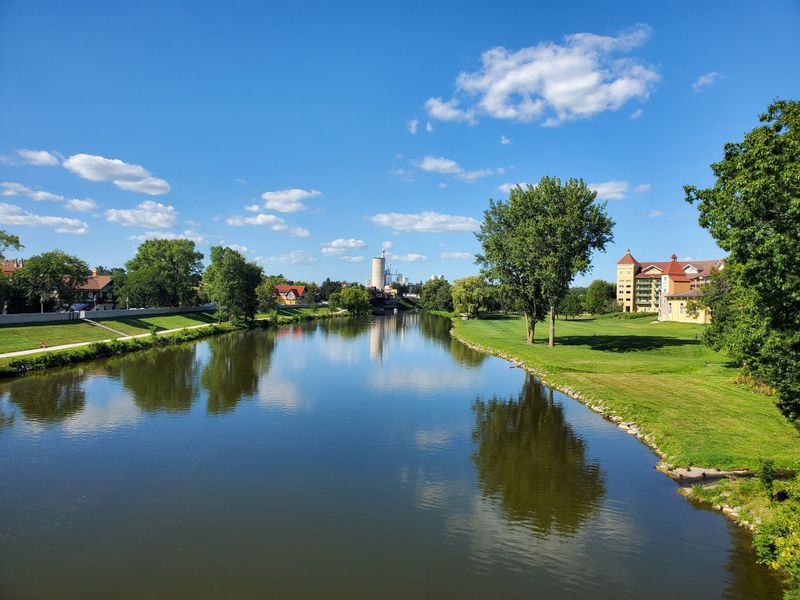
Heritage Park opens like a communal pause button, where the Cass River slides past lawns and pathways that feel intentionally public rather than leftover space.
Sounds layer gently, crickets in summer, festival music drifting from a pavilion, and the low thud of games played without urgency, creating an atmosphere that invites lingering.
The park exists because the town chose to keep river access shared, resisting the urge to privatize the most calming edge of the village.
Seasonal events unfold here with practical charm, less spectacle than participation, turning the grounds into a living scrapbook of local traditions.
Benches, shade trees, and sightlines are placed with quiet intelligence, making it easy to stop without feeling in the way.
Weekday mornings offer the clearest sense of the park’s original intent, when river reflections dominate and conversations stay low.
Bringing a light sweater is wise even on warm days, since the river breeze rewrites the forecast and gently reminds you where you are.
Michigan’s Military & Space Heroes Museum
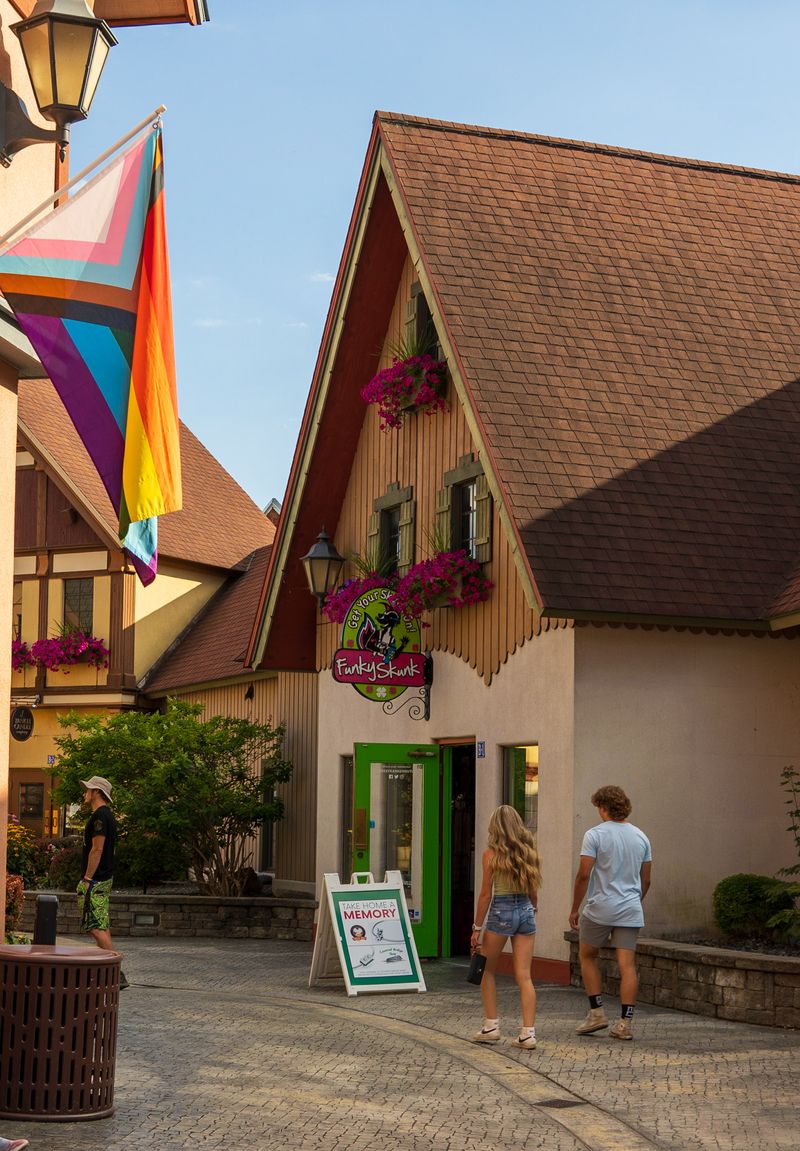
Glass cases hold flight suits with worn knees, medals that seem heavier than their size suggests, and letters typed on uneven lines, creating a quiet gravity that slows your reading pace without ever needing dramatic lighting or sound.
The atmosphere is respectful and focused, shaped by careful curation that allows silence to do most of the work while visitors move with an instinctive awareness that this is not a place for rushing.
The museum is dedicated exclusively to Michigan service members, including Medal of Honor recipients and astronauts with direct ties to the state, which grounds global conflicts and space exploration in local biographies.
Instead of abstract timelines, the exhibits lean into individual lives, showing how technological achievement and military service remain inseparable from ordinary towns, families, and return journeys home.
Displays are arranged so that equipment and personal artifacts sit close together, making the human scale of sacrifice feel unavoidable rather than symbolic.
Starting with the overview wall helps orient the conflicts and eras before details accumulate, preventing the experience from becoming overwhelming too quickly.
Plan extra time, because stories expand as you read, and staff volunteers often add precise context that never strays from fact but deepens understanding in ways labels alone cannot.
Frankenmuth Aerial Park Ropes And Trees
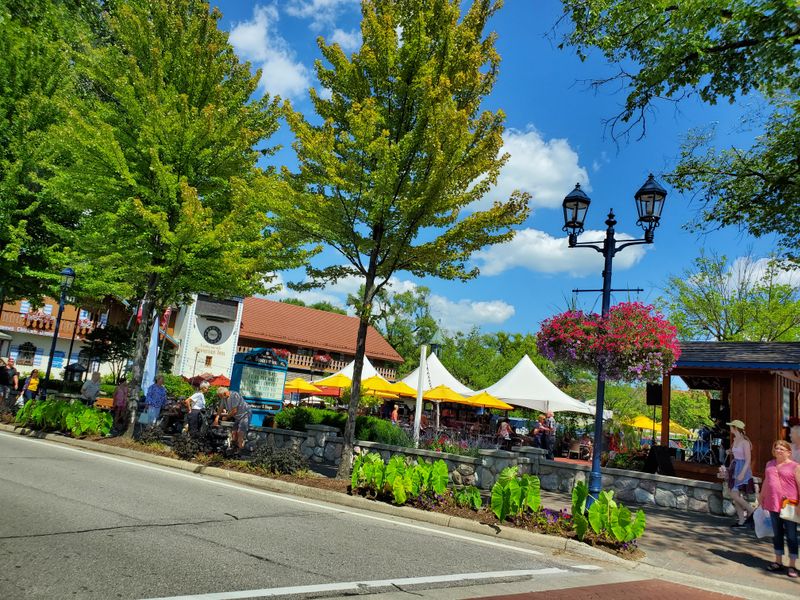
From below, the soft click of carabiners and the low whirr of zip lines blend with leaf movement and distant voices, creating an elevated soundscape that feels energetic without breaking the surrounding calm.
Platforms and cables thread through trees with deliberate spacing, keeping the experience playful while maintaining a sense of order that reassures even hesitant climbers.
The course design draws from European ropes traditions, organizing challenges by difficulty so progress feels measured rather than chaotic.
Safety briefings form the quiet backbone of the park, setting expectations clearly and allowing participants to focus on balance, coordination, and trust once they leave the ground.
What surprises many visitors is how quickly concentration replaces nerves, shifting attention from height to movement and problem-solving.
Wearing close-toed shoes and bringing light gloves can make longer sessions more comfortable, especially when gripping cables repeatedly in cooler weather.
Those who prefer to stay grounded still find value nearby, where forest paths and observation points offer a clear view of the course and the satisfaction of watching small victories unfold overhead.
Riverboat Sightseeing With Historical Notes
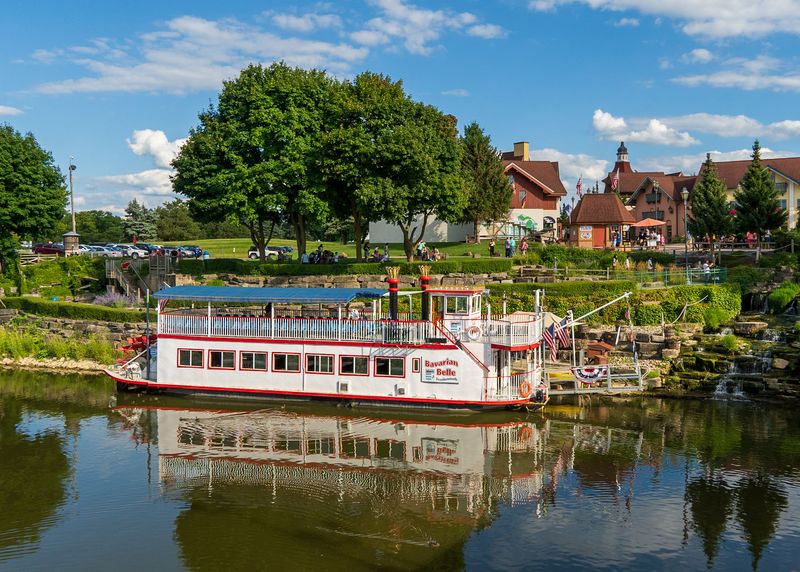
The paddlewheel settles into a steady rhythm as soon as the boat leaves the dock, its pulse syncing naturally with the slow movement of the Cass River and the softened outlines of the town.
On deck, bakery scents drift faintly across the water while cooler air slides up from the river’s surface, creating a layered sensory mix that feels distinctly local.
The cruise narration weaves together settlement history, timber transport, flood cycles, and bridge construction, grounding each detail in practical cause rather than nostalgia.
Guides speak with an ease that suggests familiarity rather than performance, offering dates and context while allowing the scenery to hold equal weight.
From the water, Main Street compresses into a series of calm silhouettes, revealing how closely the town was planned around the river’s bend.
Late afternoon departures reward photographers with softer light and longer shadows that simplify the scene without flattening it.
If seating fills quickly, moving to the upper deck provides clearer sightlines and fewer voices, letting the rhythm of water and history carry most of the experience.
Seasonal Switch: Snow, Lights, And Quiet Streets
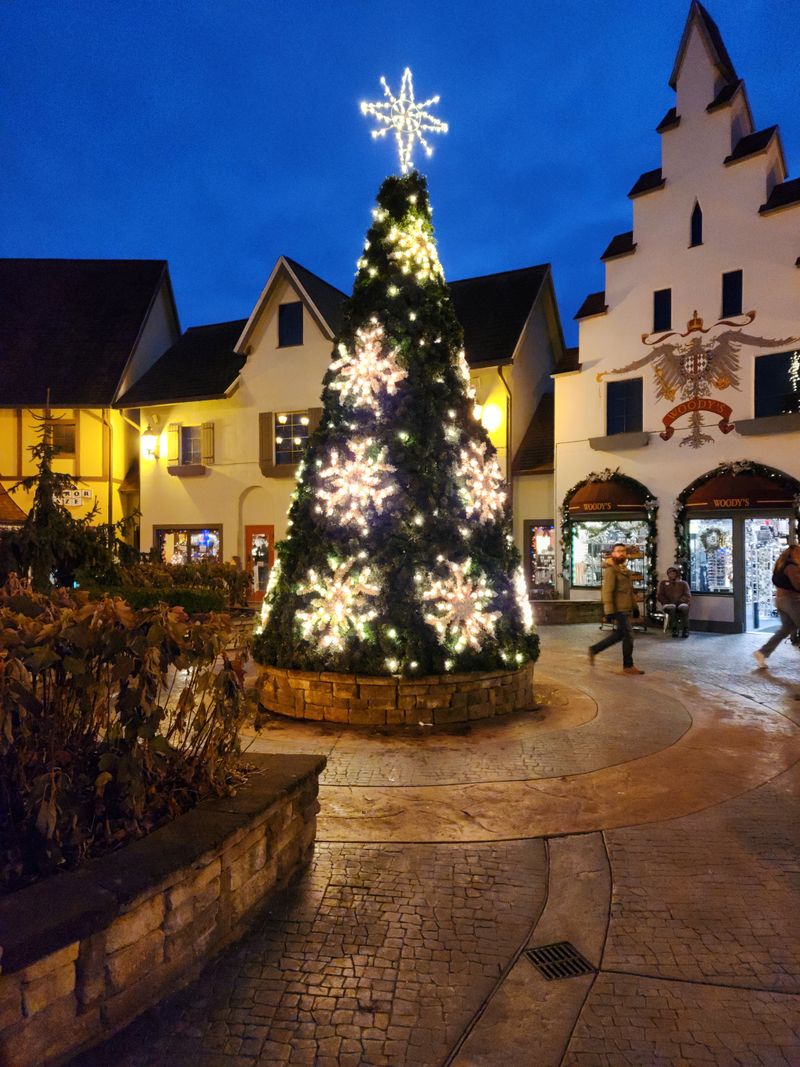
Snow redraws the village overnight, smoothing rooflines into clean geometry while shop windows glow steadily against early darkness, so every evening walk feels staged by weather rather than design.
Underfoot, the crunch changes pitch depending on temperature, and the air carries cinnamon, wood smoke, and cold metal in a mix that announces winter before you consciously register it.
Holiday lights lean into Bavarian aesthetics without excess, outlining gables and bridges in a way that feels orderly and practical rather than theatrical.
The slower pace is not enforced but invited, as fewer crowds and shorter daylight hours gently compress errands into walks that linger longer than planned.
Local routines adapt smoothly, with businesses adjusting hours, neighbors exchanging weather notes, and streets becoming places to pass through deliberately instead of quickly.
Layers matter more than style now, traction becomes part of daily footwear decisions, and a thermos turns from accessory to companion.
Photographs near the covered bridge reward patience in these months, when snow gathers along timber edges and the town briefly resembles its own memory of itself.