
12 Secluded Beach Destinations In Florida For The Perfect Getaway
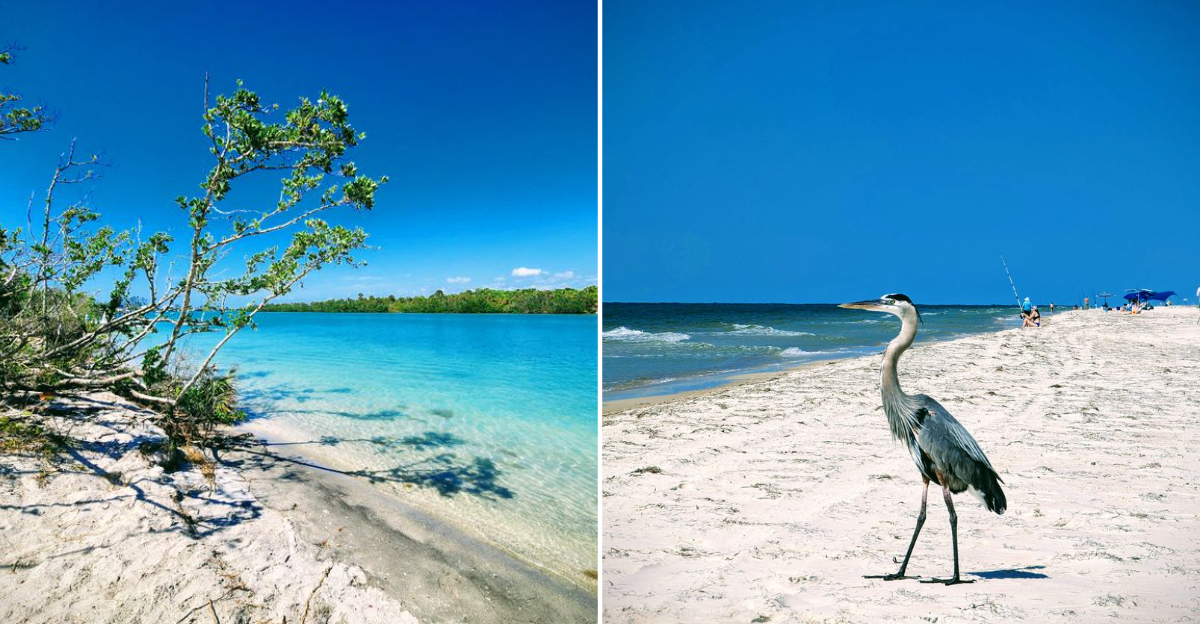
Florida’s coastline stretches over abou 1,350 miles, offering far more than the crowded tourist traps you see on postcards.
Hidden among the well-known hotspots are pristine, peaceful beaches where you can actually hear the waves instead of a hundred radios blasting different songs.
These secluded gems provide the perfect escape for anyone craving soft sand, crystal-clear water, and the kind of tranquility that makes you forget your phone exists.
1. Caladesi Island State Park
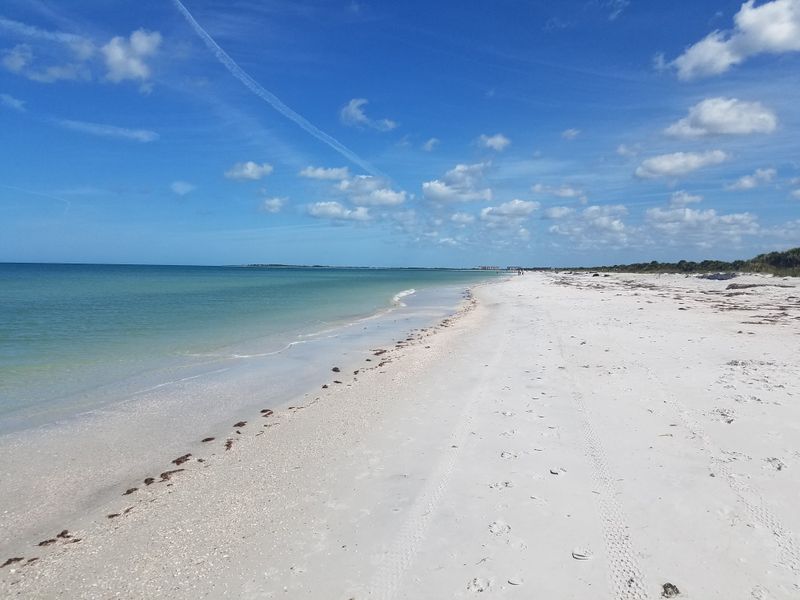
Accessible only by boat or ferry, Caladesi Island State Park near Dunedin in the Tampa Bay area earned its spot as one of America’s best beaches, and honestly, the hype is justified.
Three miles of sugar-white sand greet visitors who make the journey across the water, creating an instant vacation mood that no landlocked beach can match. The island’s untouched beauty feels like stepping into a postcard that somehow got mailed from 1950.
Slash pine forests and coastal vegetation line the island’s interior land trail, offering shade and wildlife spotting opportunities for adventurous souls who need a break from sunbathing. Dolphins frequently patrol the waters offshore, putting on free shows that beat anything SeaWorld could stage.
The park’s kayak trail winds through peaceful mangrove tunnels where ospreys nest overhead and fiddler crabs scuttle along muddy banks. Shelling enthusiasts find treasures washed up daily, including lightning whelks and sand dollars that make perfect souvenirs.
Pack everything you need because commercial development is wonderfully absent here. Located at 1 Causeway Blvd, Dunedin, FL 34698, this barrier island paradise requires planning but rewards visitors with memories worth far more than the ferry ticket price.
2. Egmont Key State Park
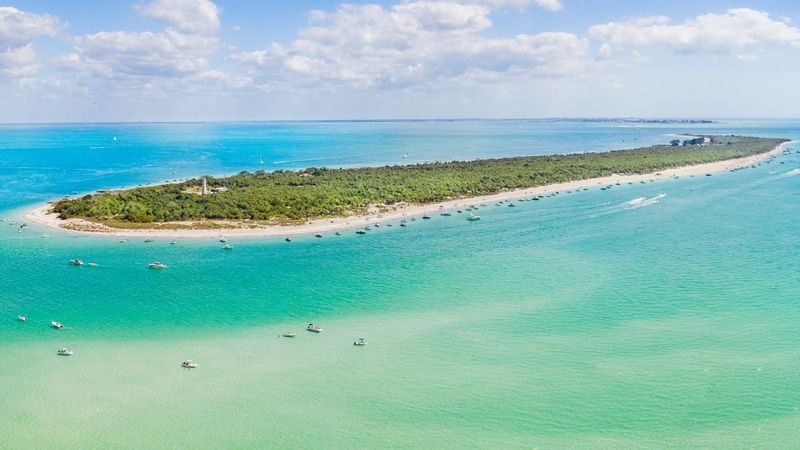
Positioned at the mouth of Tampa Bay like a sandy sentinel, Egmont Key State Park offers history buffs and beach lovers an unusual combination of Civil War ruins and pristine shoreline.
Getting there requires a private boat or charter service, which automatically filters out the flip-flop crowds seeking easy access. The island’s historic lighthouse, built in 1858, still stands watch over shipping channels where Spanish explorers once sailed.
Fort Dade’s crumbling brick structures, constructed in 1898 during the Spanish–American War era, scatter across the northern end, creating an eerie backdrop for beach walks that feel like time travel. Gopher tortoises waddle around the ruins, completely unbothered by human visitors who photograph their prehistoric-looking shells.
Snorkeling around the island reveals underwater landscapes teeming with fish, sea stars, and occasional manatees cruising through like underwater tourists. The western beaches stretch endlessly, offering solitude that feels impossible to find anywhere near a major metropolitan area.
No street address exists for this offshore treasure, but boats depart from nearby marinas and parks such as Fort De Soto. Amenities are extremely limited, so visitors should bring all necessary water, food, and sun protection.
3. T.H. Stone Memorial St. Joseph Peninsula State Park
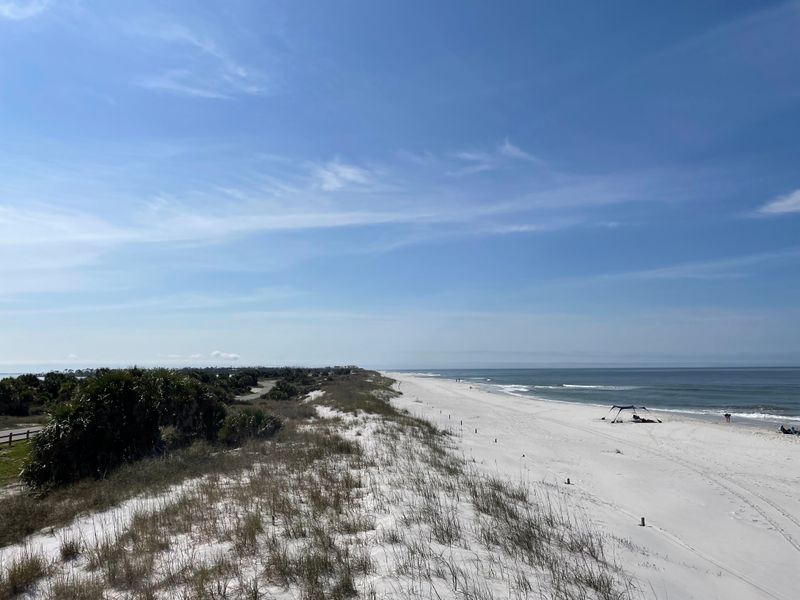
Jutting into the Gulf like Florida’s crooked finger pointing toward adventure, T.H. Stone Memorial St. Joseph Peninsula State Park near Port St. Joe delivers Panhandle perfection without the Panama City Beach madness.
Twenty miles of undeveloped coastline wrap around this narrow peninsula, creating a beach lover’s paradise where wilderness meets waves in spectacular fashion. The park’s western shore faces open Gulf waters that glow turquoise under afternoon sunlight, while the eastern bay side offers calmer waters perfect for paddling.
Dunes rise like miniature mountains covered in sea oats that dance with every breeze, providing natural beauty that landscape architects could never replicate. The peninsula is an important habitat for nesting sea turtles and other coastal wildlife during summer months.
Camping facilities attract nature enthusiasts who want to fall asleep to wave sounds and wake to sunrise over the Gulf. Hiking trails wind through scrub habitat where rare St. Andrew beach mice scurry among saw palmetto and rosemary bushes.
Located at 8899 Cape San Blas Road, Port St. Joe, FL 32456, this peninsula paradise requires a drive down scenic Highway 30, but the journey becomes part of the adventure.
4. Dr. Julian G. Bruce St. George Island State Park

Occupying the eastern end of St. George Island, Dr. Julian G. Bruce St. George Island State Park protects over nine miles of Panhandle coastline that looks airbrushed even without Instagram filters.
The park’s beaches consistently rank among Florida’s finest, offering soft sand that squeaks underfoot and water so clear you can count your toes while standing waist-deep. Unlike the island’s residential western section, this state park preserves natural Florida in its most photogenic form.
Gap Point provides unique geography where a narrow strip of sand separates the Gulf from Apalachicola Bay, creating a two-beaches-for-one situation that geography teachers dream about. Shorebirds congregate here in impressive numbers, especially during migration seasons when sandpipers and plovers cover the beach like a feathered carpet.
Fishing enthusiasts cast lines from the beach, hoping to hook redfish, pompano, or whiting cruising the surf zone. The park’s trails and boardwalks protect fragile dune ecosystems while providing access to stunning views that stretch for miles.
Find this coastal gem at 1900 E. Gulf Beach Dr., St. George Island, FL 32328, where the Panhandle’s laid-back vibe meets world-class natural beauty without the attitude.
5. Gamble Rogers Memorial State Recreation Area
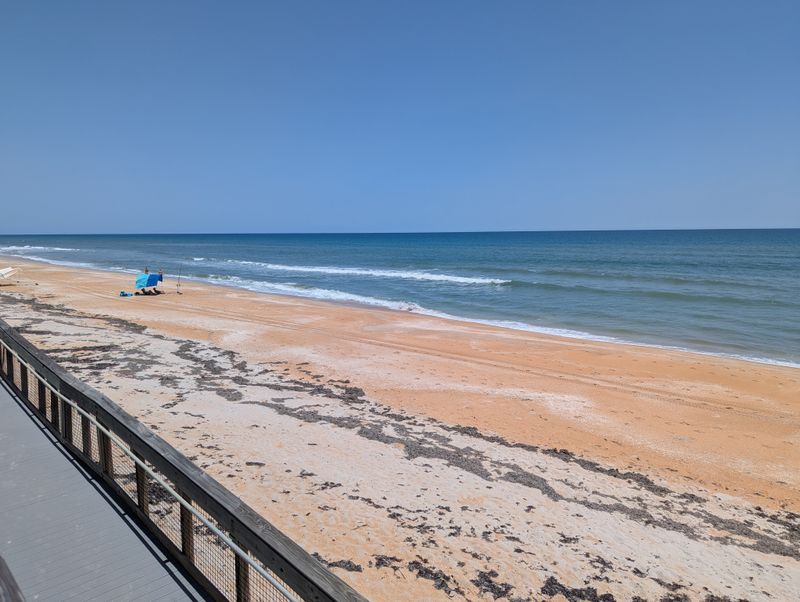
Named after a beloved Florida folk singer who died rescuing a swimmer, Gamble Rogers Memorial State Recreation Area near Flagler Beach honors heroism with 145 acres of Atlantic coastline that sings its own quiet song.
Coastal hammock forests separate the campground from the beach, creating a natural buffer that makes the ocean’s appearance feel like discovering a secret. Ancient live oaks draped in Spanish moss provide shade along trails where armadillos occasionally bumble past like armored potatoes with legs.
The beach itself stretches northward in a golden ribbon, less crowded than nearby Daytona but equally beautiful in a more understated way. Coquina rocks break the surface at low tide, creating tide pools where small fish dart between coral-like formations that feel prehistoric.
Surfers catch Atlantic swells here, though the waves maintain a mellow personality compared to more aggressive surf spots. Beachcombers find shark teeth, sand dollars, and colorful shells deposited by currents that sweep along Florida’s eastern edge.
Located at 3100 South Oceanshore Blvd (A1A), Flagler Beach, FL 32136, this park offers a quieter alternative to the commercialized beaches dominating much of Florida’s Atlantic coast, proving that sometimes the best adventures are the ones fewer people know about.
6. Barefoot Beach Preserve
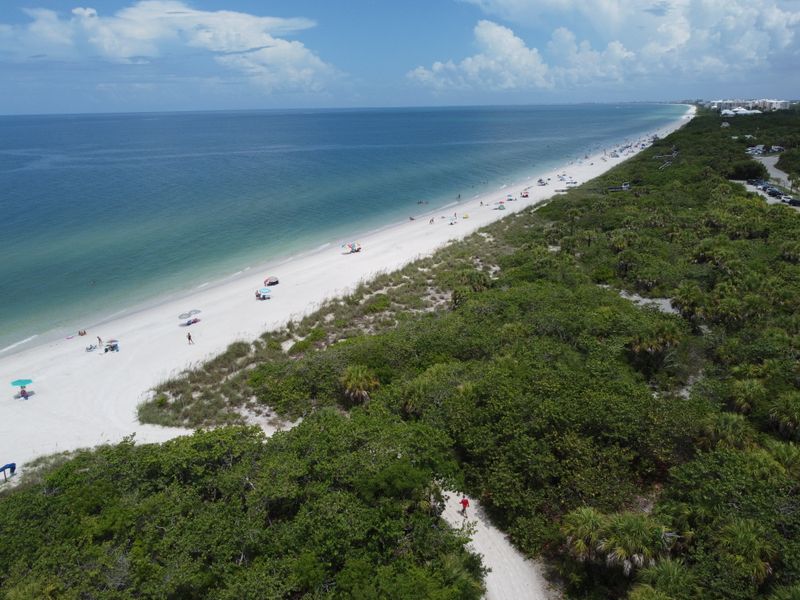
Tucked away in Bonita Springs, Barefoot Beach Preserve lives up to its name by encouraging visitors to kick off their shoes and reconnect with 342 acres of Collier County’s most pristine coastline.
The preserve’s beaches regularly appear on best-of lists, and one stroll across the powdery sand explains why awards keep piling up. Sea grape and cabbage palm trees lean toward the Gulf like they’re trying to catch a better view of the sunset.
Gopher tortoises dig burrows in the dunes, which can provide shelter for other native species, and shelling opportunities here rival any location in Southwest Florida, with fighting conchs, lightning whelks, and alphabet cones washing up after storms.
The preserve’s butterfly garden attracts monarchs, swallowtails, and gulf fritillaries that flutter between native wildflowers like tiny stained-glass windows come to life. Nature trails wind through coastal hammock, offering shade and wildlife viewing when the beach sun becomes too intense.
Located at 505 Barefoot Beach Blvd, Naples, FL 34134, this preserve requires a small parking fee but delivers priceless natural experiences that make every penny worthwhile.
7. Stump Pass Beach State Park
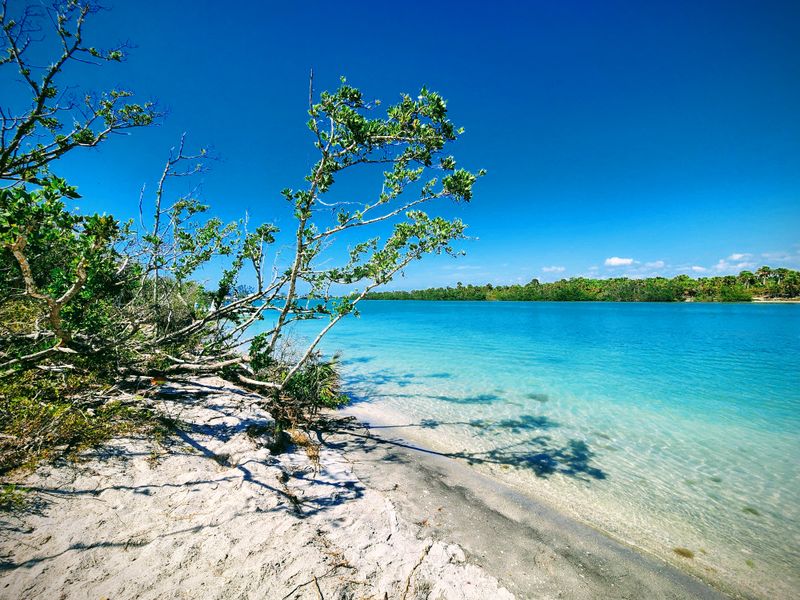
Positioned at the southern tip of Manasota Key, Stump Pass Beach State Park offers Englewood’s best-kept secret: a beach that feels like a private island without the yacht requirement.
The pass itself creates a natural channel where tides rush between the Gulf and Lemon Bay, attracting fish, dolphins, and pelicans that dive-bomb the water like feathered missiles. Shelling here reaches legendary status, with serious collectors arriving at dawn to claim the best specimens before other treasure hunters arrive.
The beach curves around the pass, offering both Gulf-facing and bay-side options depending on your mood and wind direction. Families with small children appreciate the bay’s calmer waters, while wave enthusiasts head toward the Gulf for more action.
Kayakers launch from the park to explore Lemon Bay’s mangrove islands, where roseate spoonbills and great blue herons pose like they’re auditioning for nature documentaries. The park’s limited parking naturally controls crowds, ensuring that even on beautiful weekends, you can find your own stretch of sand.
Find this hidden gem at 900 Gulf Blvd, Englewood, FL 34233, where the only thing more abundant than seashells is the peace and quiet that modern life so rarely provides.
8. Lovers Key State Park
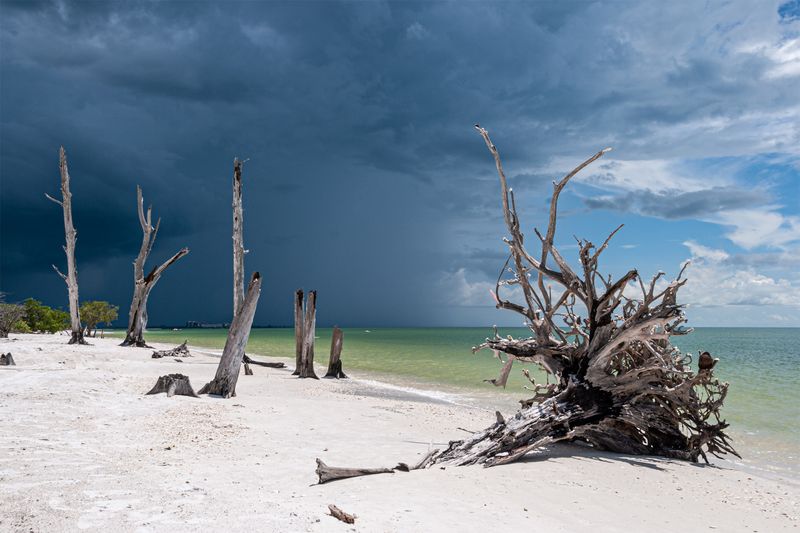
Romantically named and perfectly positioned between Fort Myers Beach and Bonita Springs, Lovers Key State Park delivers more than 700 acres of barrier island bliss where nature plays matchmaker between land and sea.
Legend claims the island earned its name when couples sought privacy on this boat-accessible paradise before a bridge connected it to the mainland. Today’s visitors still find romance in sunsets that paint the sky in colors Photoshop couldn’t improve.
More than two miles of beach provide ample space for spreading out, building sandcastles, or simply watching dolphins cruise the shoreline like they own the place. Manatees frequent the park’s inland waterways, especially during cooler months when they seek warm-water refuges.
The park’s tram shuttles visitors from parking areas to the beach, though walking the shaded path offers better opportunities for spotting raccoons, marsh rabbits, and roseate spoonbills. Kayak rentals allow exploration of mangrove-lined channels where baby fish hide from predators among tangled roots.
Located at 8700 Estero Blvd, FL 33931, Lovers Key proves that Southwest Florida’s development boom hasn’t completely erased the natural beauty that attracted people here in the first place.
9. Big Talbot Island State Park (Boneyard Beach)
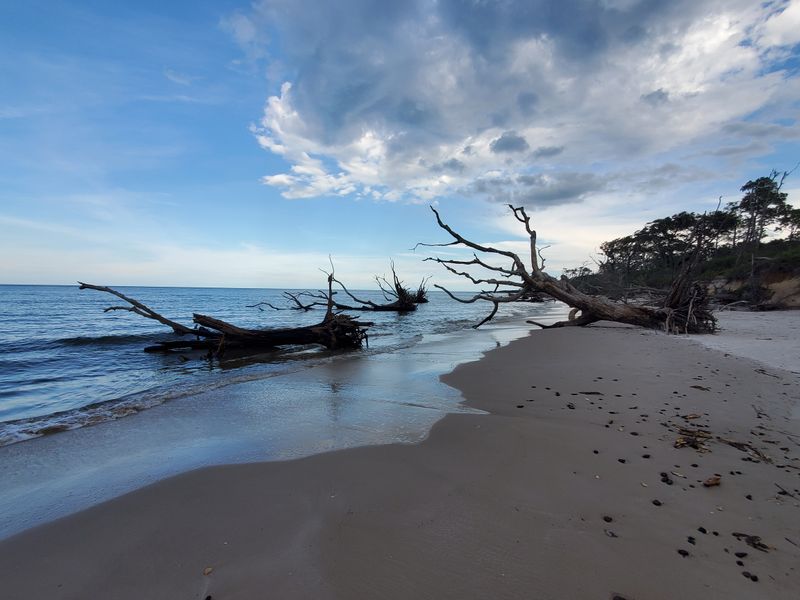
Big Talbot Island State Park near Jacksonville features Boneyard Beach, where erosion has created an otherworldly landscape of bleached tree skeletons sprawling across dark sand like a Tim Burton film set come to life.
The beach’s haunting beauty attracts photographers who arrive at golden hour when sunlight transforms driftwood into glowing sculptures. Ancient oaks and cedars, once rooted in maritime forest, now lie scattered across the beach in twisted, salt-bleached formations that beg to be photographed.
This isn’t a swimming beach—the currents here run strong and the water stays murky—but the visual drama compensates for any recreational limitations. Beachcombers explore tide pools formed among the driftwood, discovering crabs, barnacles, and small fish trapped by the receding tide.
Hiking trails wind through maritime hammock where live oaks create cathedral-like canopies overhead, providing stark contrast to the beach’s stark beauty. The Timucuan people once inhabited these islands, leaving shell middens that archaeologists still study.
Located at 12157 Heckscher Drive, Jacksonville, FL 32226, Big Talbot Island offers a completely different beach experience than Florida’s typical sun-and-surf destinations, proving that coastal beauty comes in many surprising forms.
10. Little Talbot Island State Park
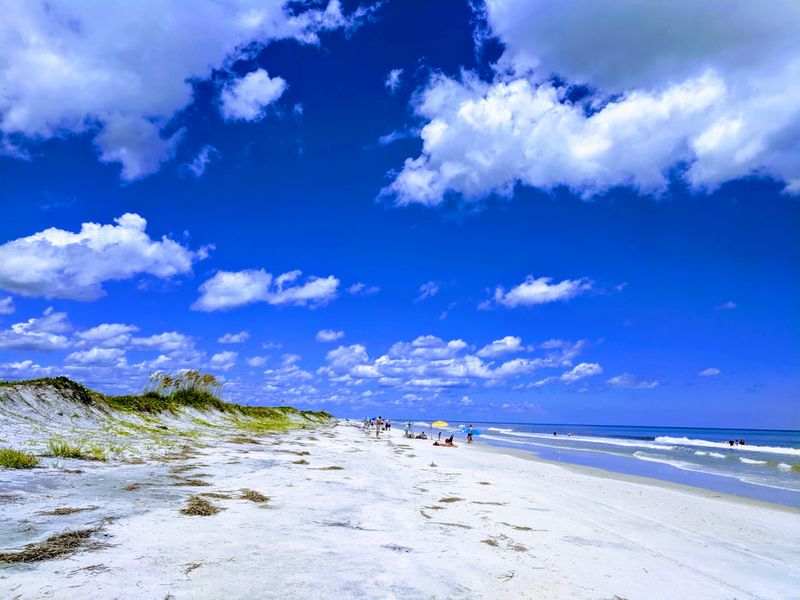
Just south of its more dramatically named sibling, Little Talbot Island State Park protects more than five miles of pristine Atlantic coastline that feels impossibly wild considering Jacksonville’s urban sprawl lies just minutes away.
The beach here maintains a more traditional appearance than Boneyard Beach, with wide expanses of golden sand meeting rolling Atlantic waves. Dunes rise behind the beach, stabilized by sea oats that wave like nature’s own welcome flags.
Shelling is surprisingly productive, with Atlantic cockles, whelks, and sand dollars appearing after storms stir up the ocean floor. Fishing from the beach yields whiting, pompano, and occasional redfish that fight harder than their size suggests.
The park’s interior offers hiking and biking trails through maritime forest where deer browse and wild turkeys strut with exaggerated self-importance. Marshes along the Intracoastal Waterway provide excellent birding, especially during spring and fall migrations when warblers and shorebirds stop to refuel.
Camping facilities allow overnight stays, letting visitors experience the island’s nocturnal personality when ghost crabs emerge and stars appear unobscured by city lights.
Find this barrier island sanctuary at 12157 Heckscher Drive, Jacksonville, FL 32226, where Northeast Florida’s natural heritage survives in remarkably unspoiled condition.
11. Bowman’s Beach Park

Sanibel Island’s Bowman’s Beach offers a quieter alternative to the island’s more famous shelling beaches, though the seashell selection remains absolutely first-rate for collectors who know quality when they see it.
A long boardwalk crosses wetlands before reaching the beach, creating anticipation and naturally spacing out visitors along the shoreline. The walk itself often provides wildlife viewing opportunities, as herons fish the shallows and other wetland species move through the area.
Once you reach the sand, the shelling opportunities become immediately obvious, with lightning whelks, fighting conchs, and alphabet cones scattered like nature’s own gift shop exploded. The famous Sanibel Stoop develops quickly as collectors hunch over, scanning the tide line for perfect specimens.
The beach curves westward, offering spectacular sunset views that turn the Gulf into a liquid mirror reflecting pink and orange clouds. Facilities include restrooms and outdoor showers, but commercial development stays blissfully absent.
Located at 1700 Bowman’s Beach Road, Sanibel Island, FL 33957, this beach proves that Sanibel’s reputation for natural beauty and world-class shelling isn’t just tourist board hype but legitimate reality worth experiencing firsthand.
12. Perdido Key Area (Gulf Islands National Seashore)
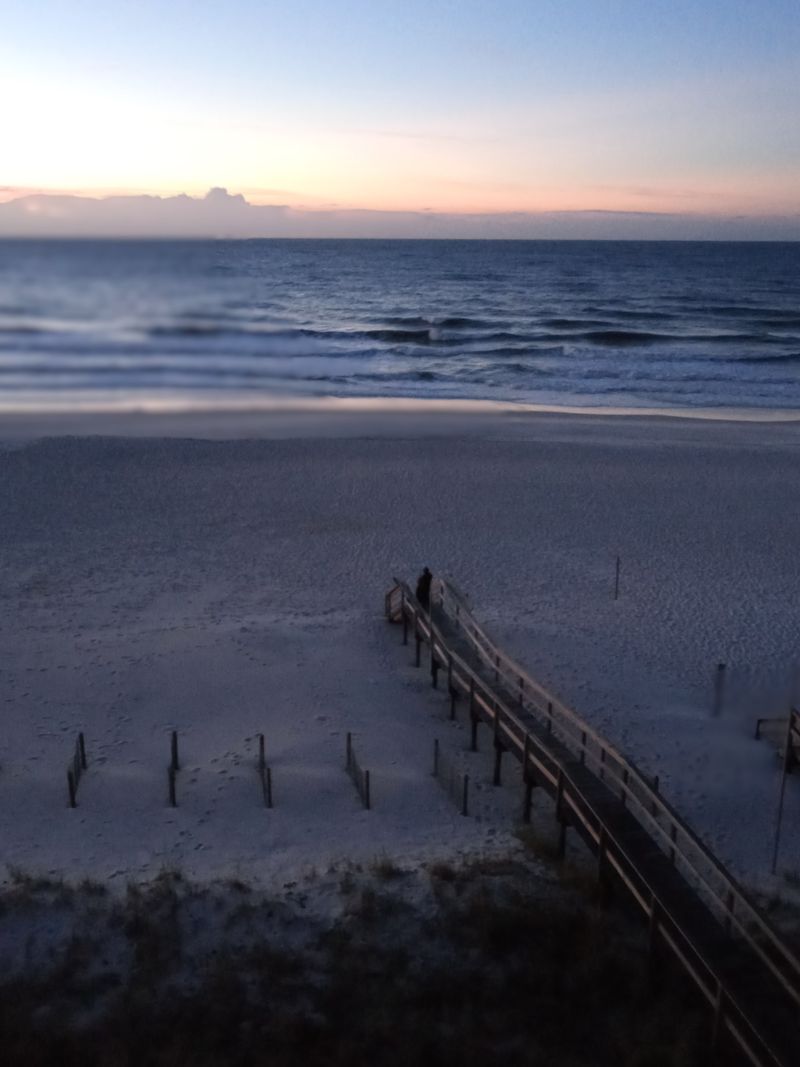
Stretching along Florida’s western edge near Pensacola, the Perdido Key Area of Gulf Islands National Seashore protects sugar-white beaches and emerald waters that define the Panhandle’s legendary coastal beauty.
Johnson Beach occupies the key’s western tip, offering miles of pristine shoreline where development takes a backseat to preservation. The sand here achieves an almost supernatural whiteness, created by quartz crystals ground fine over millennia.
Beach access requires a short walk from parking areas, which naturally limits crowds and rewards those willing to carry their coolers a few hundred yards. Sea turtle nests dot the dunes during summer, marked with stakes and tape that remind visitors they’re sharing this paradise with ancient mariners.
Conditions for snorkeling vary, but nearshore waters can reveal fish and coastal marine life in calmer conditions. The national seashore designation ensures this beach will remain undeveloped, preserving its natural character for future generations.
Located off FL-292 via Johnson Beach Road near Pensacola, Florida, Perdido Key delivers the Panhandle beach experience in its purest form, where nature’s architecture surpasses anything human developers could design.