
This Hidden Ohio River Town Is So Underrated It Barely Shows Up On Most Maps
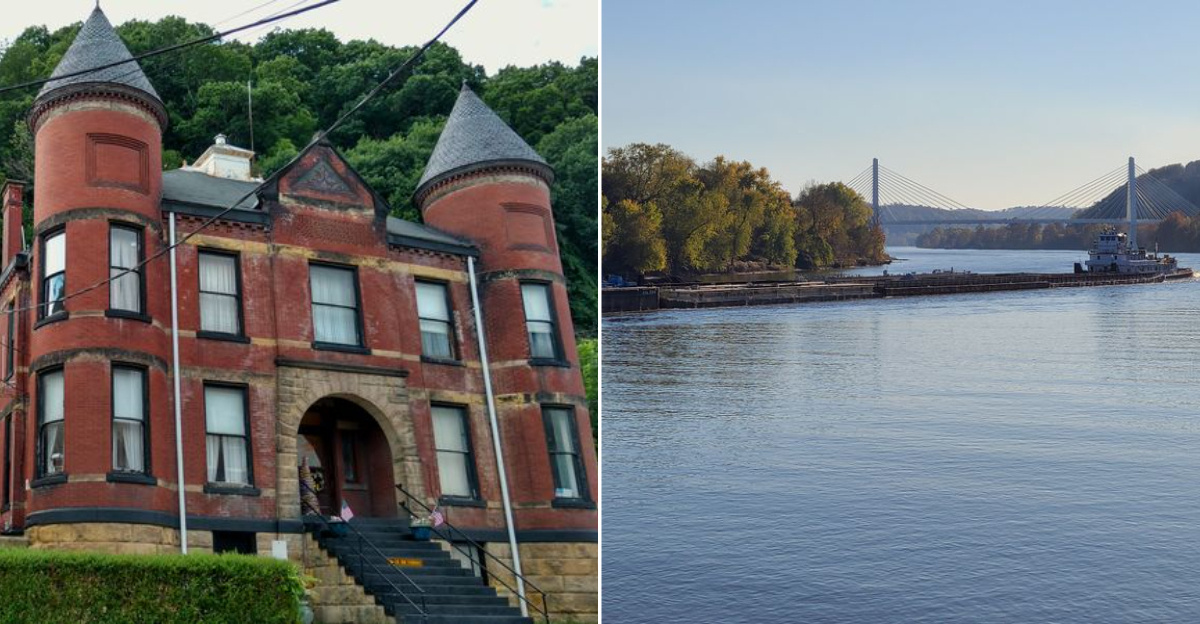
Some towns announce themselves with billboards and slogans, but Pomeroy has always felt content to let the river handle the introductions, moving steadily past town with the calm assurance of something that knows it will outlast first impressions.
When I arrive here, I’m struck by how the streets cling to a narrow shelf between the bluff and the Ohio River, as if the town learned early on how to make peace with limited space instead of trying to conquer it.
Brick storefronts line up patiently, old stonework keeps quiet company, and nothing seems in a hurry to reinvent itself.
You start noticing small peculiarities once you slow down, the courthouse that once proudly advertised having zero parking, buildings that lean just enough to reveal how they adapted to hillside logic rather than resisting it.
What I enjoy most is how Pomeroy doesn’t ask to be consumed quickly, it asks to be read carefully.
Keep walking and the rhythm settles in, towboats sliding past on their own schedule, murals appearing without explanation, the courthouse chiming marking time gently instead of demanding attention.
The river stays present at the edge of everything, a constant reminder of why this place exists at all.
Pomeroy rewards curiosity that isn’t rushed, the kind that lingers on details, listens to ambient sounds, and accepts that character often lives in persistence rather than polish.
If you’re willing to slow down and really look, the town quietly assembles itself around you, not as a spectacle, but as a place that has learned how to endure with dignity.
Reading The River From The Sidewalk
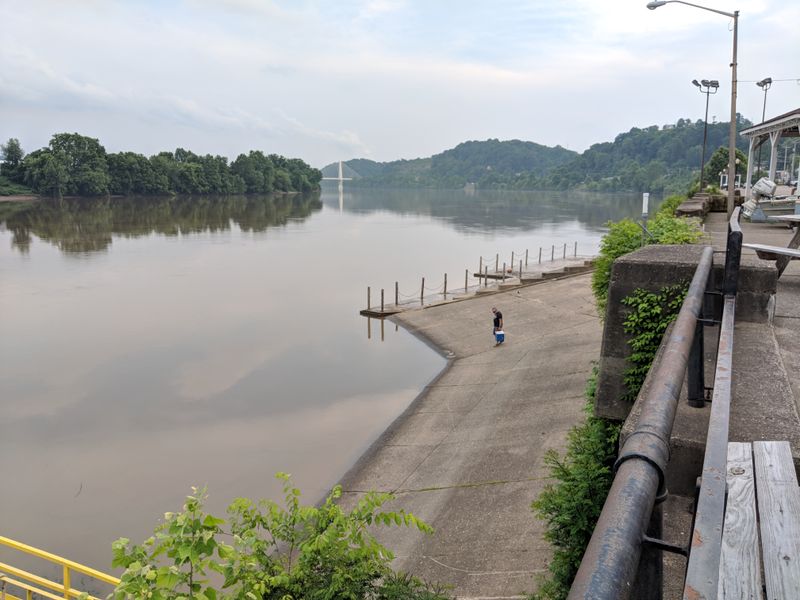
Standing on the sidewalk along Main Street, the Ohio River behaves like a broad, slow-moving mirror that throws shifting light back onto brick facades and parked cars, making the town feel as if it is quietly breathing in rhythm with the water rather than merely sitting beside it.
Towboats slide past at an unhurried pace, their engines low and steady, while wakes tap against the riprap with a repetitive patience that becomes a kind of metronome for anyone lingering long enough to notice patterns instead of events.
This steady movement seeps into the town’s posture, encouraging conversations to stretch, pauses to lengthen, and people to settle onto benches or stoops without the faint anxiety that often accompanies places built around schedules.
Many storefronts face the river as though taking attendance, their windows holding reflections of West Virginia hills that feel closer than maps suggest and reinforce how porous the boundary between states feels here.
The scale of Pomeroy keeps everything walkable, even when weekend activity swells slightly, because distances remain human and streets never quite give in to hurry.
Letting gravity guide you downhill toward the riverwalk becomes a practical navigation method rather than a metaphor, especially when narrow streets make parking feel more strategic than abundant.
By the time you reach the water’s edge, the town has already explained itself without saying a word.
A Courthouse With A Story About Parking
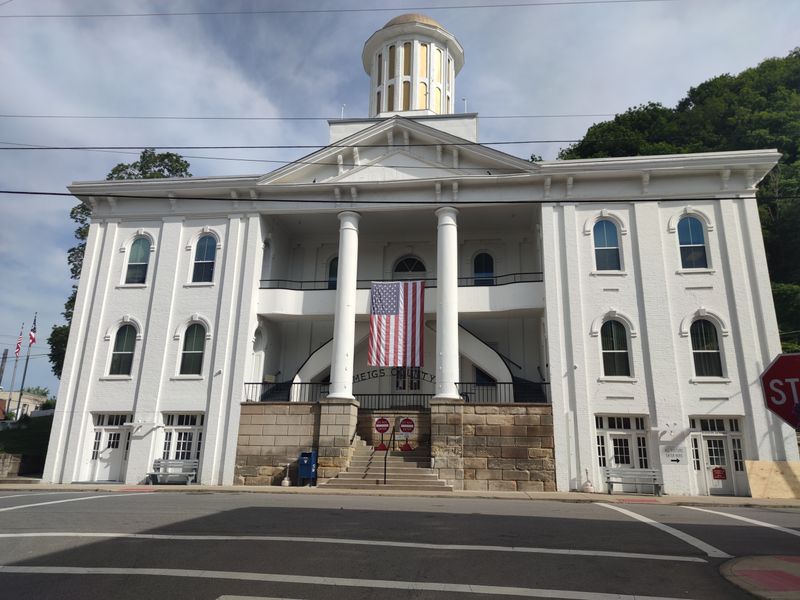
Pomeroy’s courthouse gained quiet notoriety for once claiming zero parking spaces, a fact that sounds whimsical until you realize it grew directly from the town’s physical constraint of being pressed tightly between hillside and river.
The Meigs County Courthouse rises in layered sections that reflect decades of adjustment rather than a single architectural moment, with each addition reading like a footnote to changing civic needs.
Its elevated position gives the steps a ceremonial quality, orienting authority not inward toward a square but outward toward commerce, movement, and the river below.
Terrain dictated logistics here, shaping not only how government functioned but how people physically approached it, often on foot and often with a pause halfway up the climb.
Arriving early reveals how quickly street parking fills on court days, turning everyday errands into small exercises in planning and patience.
Approaching from upper streets softens the climb and gives the building time to come into view gradually rather than abruptly.
The result is a courthouse that feels earned rather than imposed, shaped by land more than ambition.
Murals That Hold The River’s Memory
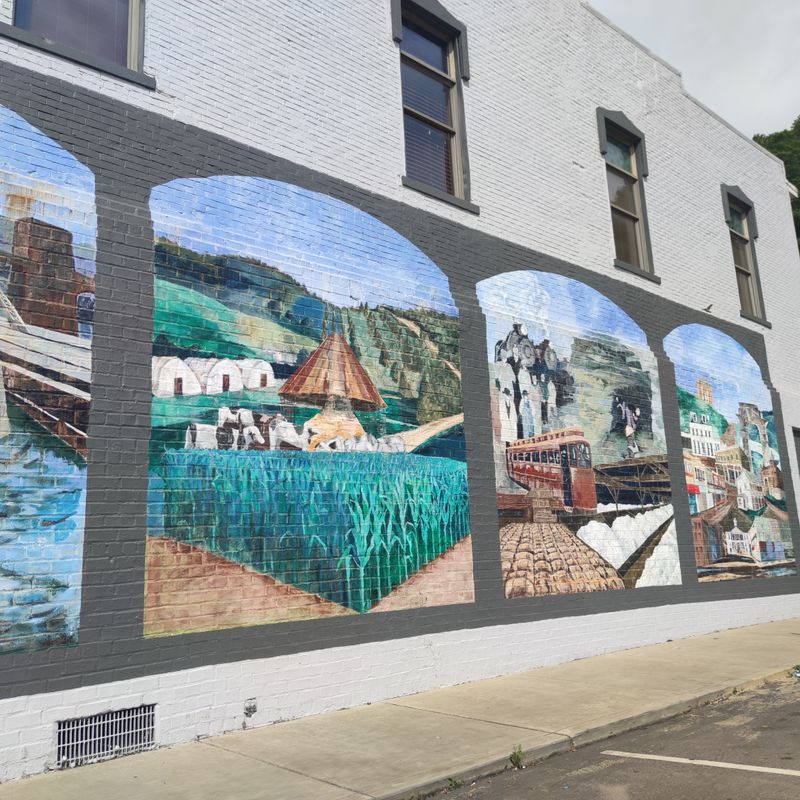
Color appears unexpectedly across retaining walls and underpasses, where murals capture steamboats, floods, coal loading, and labor scenes that read less like decoration and more like a public memory bank.
The paint stands bold against concrete but never loud, offering narrative rather than instruction, and allowing viewers to assemble their own understanding of the river’s long working life.
These images hold the river’s mood swings, showing both industrious energy and periods of retreat, which mirrors how the town itself has learned to persist without insisting on permanence.
Local volunteers and regional artists maintain the murals with steady care, retouching after winters that quietly erode surfaces rather than dramatically destroying them.
Soft morning light reveals the most detail, reducing glare and letting colors sit calmly against the infrastructure they inhabit.
Stepping back from traffic becomes part of the viewing process, a reminder that these stories live alongside ongoing movement rather than outside it.
Small date signatures tucked into corners create a subtle timeline that rewards closer looking.
Steel, Span, And A Frame For The Sky
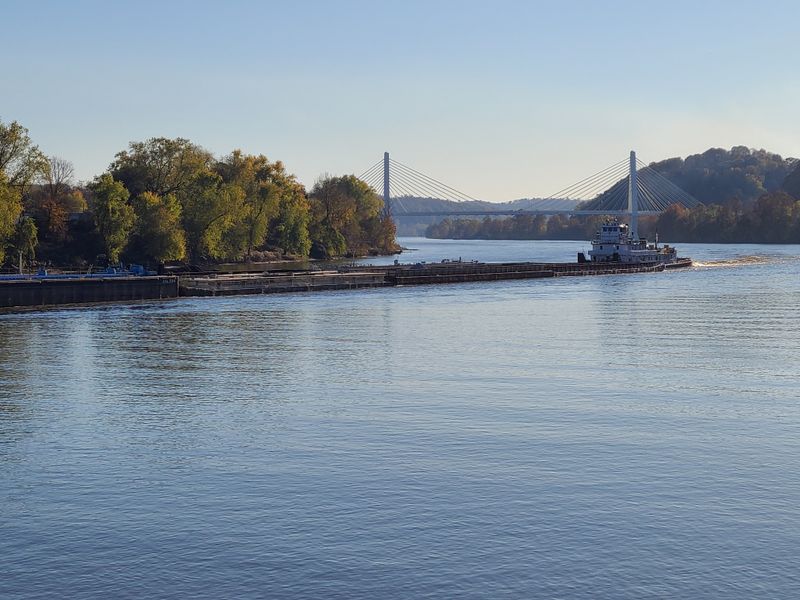
The bridge at Pomeroy stretches across the river with a kind of quiet authority, its steel trusses forming a geometric frame that seems to underline the town’s relationship with movement, trade, and watching things pass rather than rushing to follow them.
As trucks roll across, the structure hums with a low, functional vibration that carries down to the riverwalk, reminding you that this span is not scenery alone but a working piece of infrastructure still earning its keep.
Standing beneath it, you begin to notice how the lines shift from delicate to muscular depending on your angle, creating an accidental architecture lesson delivered slowly enough to absorb.
This crossing once stitched Pomeroy more tightly to Point Pleasant and beyond, marking a transition from river-first commerce to road-based connection without fully erasing the older rhythm.
Pausing at a safe vantage point lets you time photographs with passing barges, which gives the bridge scale and returns attention to the river’s patience.
In late afternoon, light slides along the steel members and drops into the water, turning shadows into long sentences that feel unfinished until evening settles them.
Coffee Steam And Coal Dust Echoes
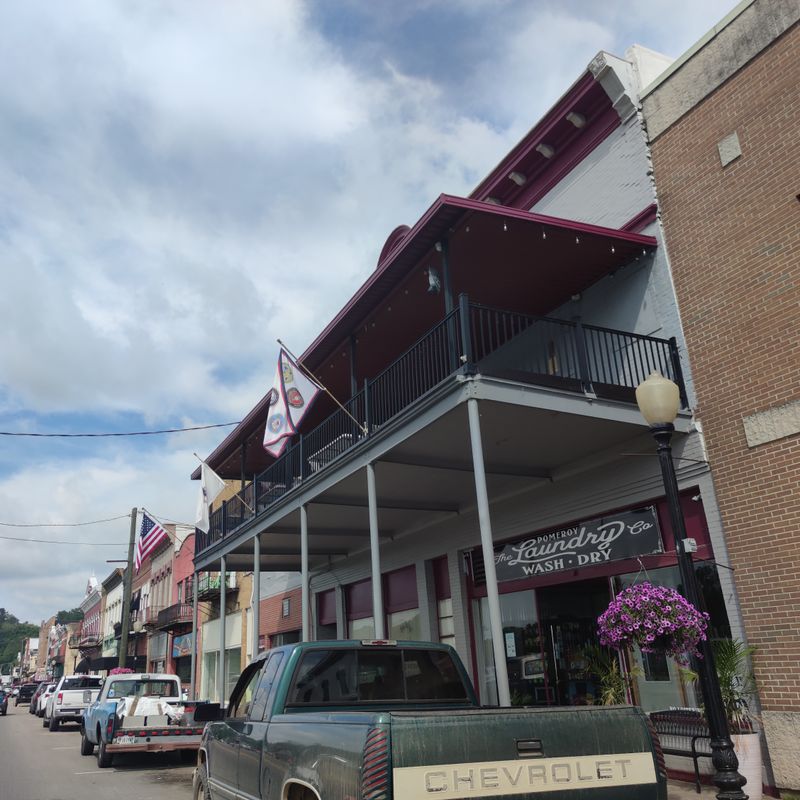
Mornings in Pomeroy often begin with the smell of coffee drifting out onto sloped sidewalks, blending with damp river air in a way that quietly overlays present-day routines onto an industrial past that never fully disappears.
Older residents still talk about coal dust settling on windowsills decades ago, not with nostalgia exactly, but with the matter-of-fact tone reserved for things that shaped daily life without asking permission.
Cafes along Main Street act as informal meeting rooms where courthouse visitors, students from nearby Athens, and locals tracking river levels share space without urgency.
Sitting by a front window reveals how the street’s incline subtly choreographs movement, with strollers, dogs, and delivery carts all negotiating gravity in small, practiced ways.
Ordering early matters on busy mornings, especially when court sessions let out and lines lengthen without complaint.
Carrying your cup a block downhill before it cools becomes part of the town’s pacing lesson, encouraging you to walk, look, and linger instead of standing still.
Listening For Flood Heights And Footsteps
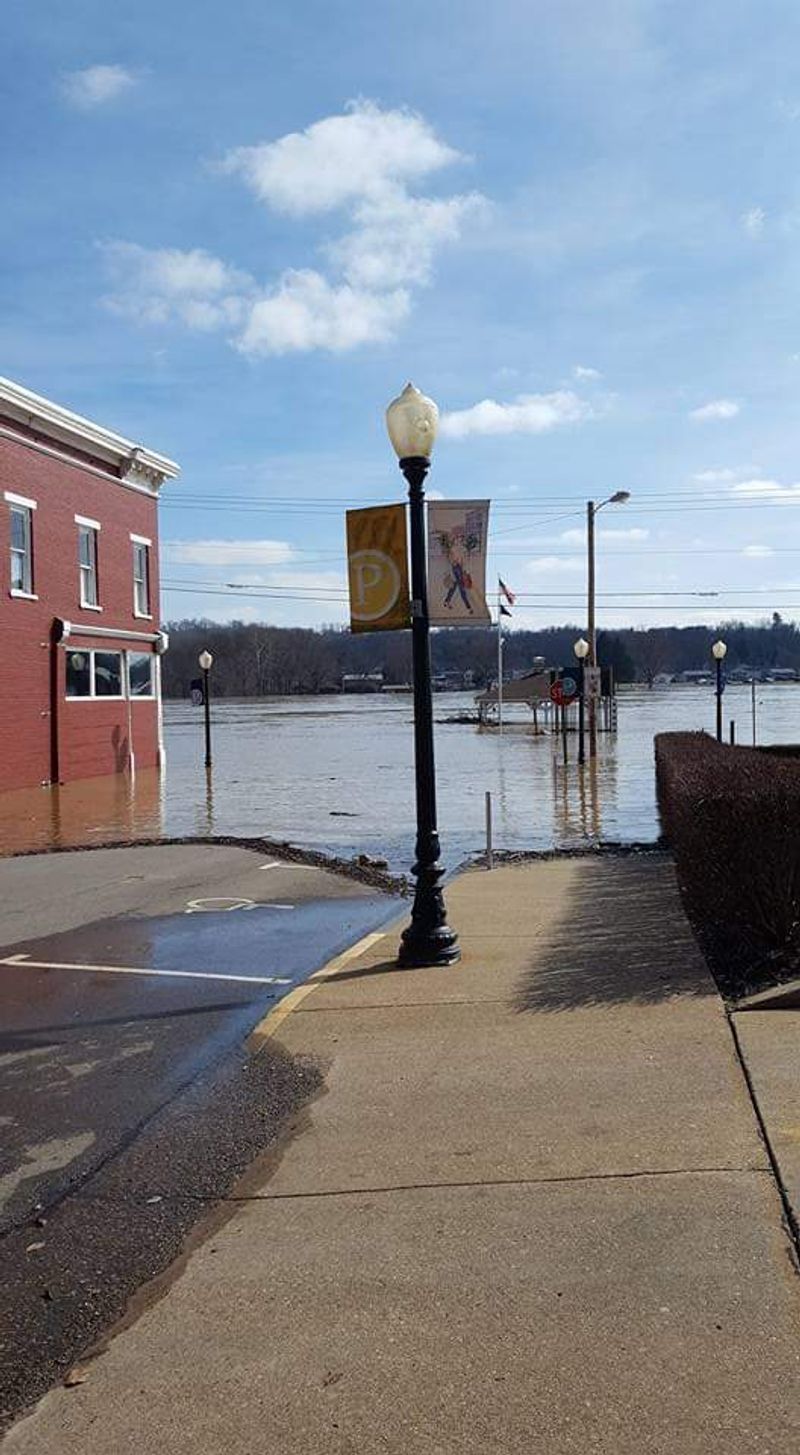
On certain corners, faint high-water marks etched into brick quietly recalibrate your sense of scale, transforming ordinary walls into records of negotiation between town and river.
After rain, footsteps sound different on tilted sidewalks, with slaps turning to hush as moisture settles, making you suddenly aware of thresholds raised just enough to bargain with seasonal flooding.
Rather than dramatizing these realities, the town handles them with steady maintenance habits, checking pumps, clearing drains, and adjusting without ceremony.
Wearing shoes with good grip quickly feels less like advice and more like respect for terrain that never pretends to be flat.
Parking slightly uphill becomes second nature when forecasts look uncertain, allowing you to enjoy river views without hovering over puddles.
The town teaches attentiveness through these small adjustments, rewarding anyone willing to listen with a deeper sense of how place and practice stay aligned.
Brick Cornices And Narrow Lots
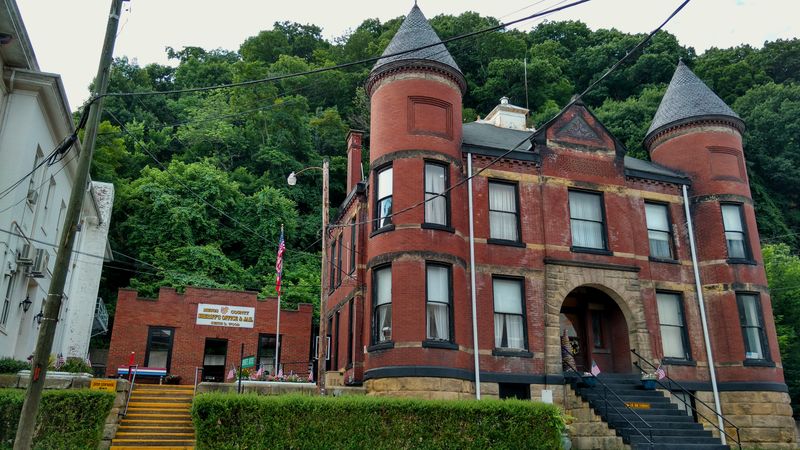
Looking upward along Main Street reveals a procession of brick cornices, pressed tin details, and weather-softened stone accents that quietly explain how commerce adapted itself to a narrow strip of land squeezed between bluff and river.
The lots are famously skinny, a direct result of hillside pressure that forced buildings to grow vertically rather than outward, giving windows tall proportions that seem designed to catch sky, light, and passing clouds like architectural periscopes.
Most of this streetscape dates to late nineteenth century rebuilding after fires and floods, which means what you see is not accidental charm but the product of repeated correction, resilience, and pragmatic reinvention.
From across the street, textures emerge clearly, mortar lines, chipped paint, patched brick, all layering time in a way that rewards slow observation rather than quick glances.
Earlier hours offer softer contrast before river glare bounces hard light back into the facades, making morning the best moment for photographs that emphasize material rather than shine.
Doorways still function as working thresholds, so stepping aside for locals carrying packages or pushing carts becomes part of the sidewalk choreography, reinforcing how lived-in this narrow corridor remains.
A Friendly Pointer From The Antique Dealer
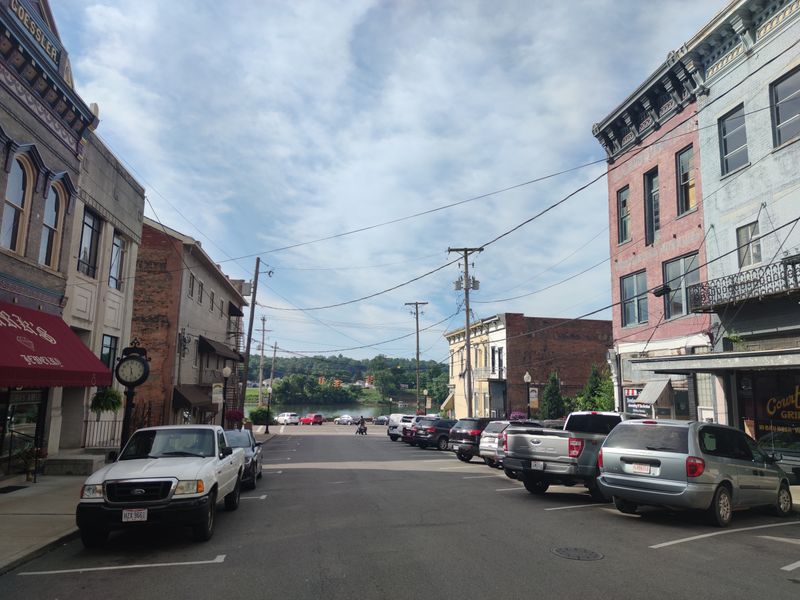
Inside one of the antique shops, a casual question can turn into a precise recommendation, perhaps a river chart tucked into a drawer or a postcard showing the courthouse stacked like a tiered cake against the hillside.
This kind of guidance rarely feels transactional, leaning instead toward shared stewardship of objects whose value comes as much from story as from condition or rarity.
The interaction reflects a broader local culture that favors provenance, practicality, and clear-eyed assessment over salesmanship or spectacle.
Handling items slowly and asking before touching fragile pieces signals respect in spaces where aisles narrow and objects lean close to one another.
Weekends tend to draw browsers from nearby towns, which makes early arrivals especially rewarding if you want space to linger without negotiating elbows.
Carrying purchases wrapped in newspaper up the hill becomes part of the experience, turning even the walk back to the car into a continuation of the town’s gentle, effort-aware rhythm.
Spring Dogwoods, Summer Shade
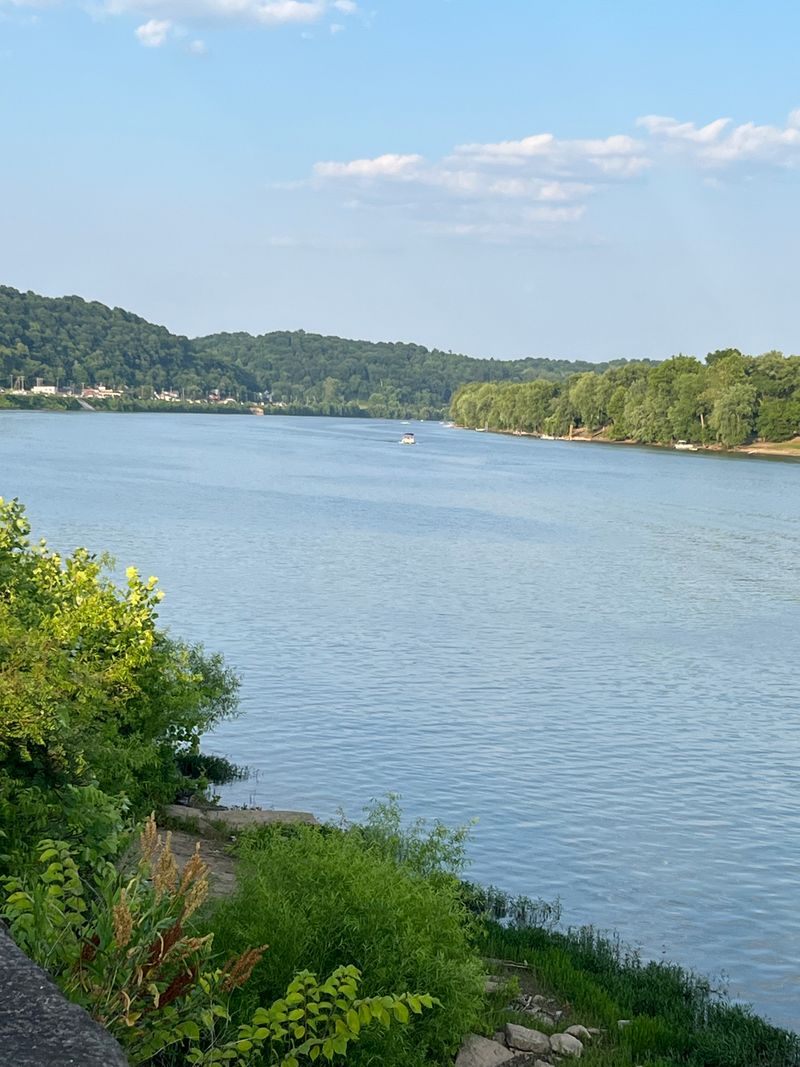
In spring, dogwoods scatter pale blossoms across the hillsides above town, visually lifting the river’s steel-blue surface and making the entire valley feel briefly weightless.
By midsummer, trees stretch a thin but meaningful veil of shade over the riverwalk, while breezes slip across from West Virginia hills just often enough to soften the heat.
Seasonal shifts register clearly here, not dramatically, but decisively, as if the town recalibrates itself several times a year without fuss or announcement.
Festivals and courthouse square events align themselves to the slope, with food trucks angled carefully and crowds moving with relaxed efficiency that never feels rushed.
Weather can change quickly along the river, so light layers, water, and patience tend to serve visitors better than rigid plans.
When rain arrives unexpectedly, ducking under storefront awnings and listening to drops tap against metal signage becomes less an inconvenience than another small lesson in how Pomeroy asks you to pause rather than push through.
Noticing The Small, Leaving Room For Silence
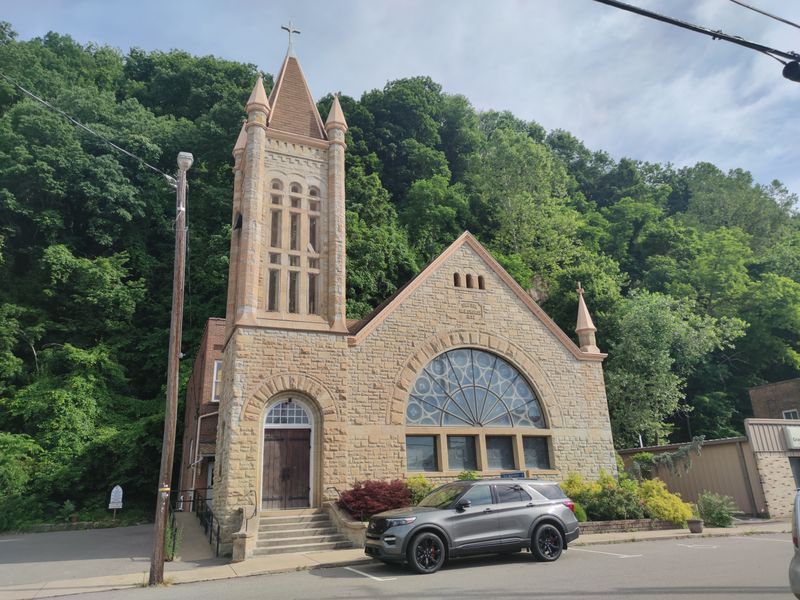
The most lasting impressions arrive without announcement, in moments like a barge horn softened by distance, a hardware store cat stretching in a sunlit window, or a faded hand-painted arrow still pointing somewhere useful after decades of weather and reconsideration.
These details only surface when you slow your pace enough to let the town’s quieter signals register, because Pomeroy does not compete for attention so much as it waits for it, confident that careful looking will do the work.
Silence here is not empty but layered, made of river movement, courthouse bells, footfalls on brick, and pauses in conversation that feel earned rather than awkward.
Preservation takes the form of incremental care rather than grand restoration, with bolts tightened, trim repainted, and walls patched in ways that value continuity over reinvention.
Practical habits help visitors settle into this rhythm, stepping aside on narrow sidewalks, greeting people without urgency, and letting the town’s courteous tempo set the speed of the day.
Leaving Pomeroy rarely feels like departure so much as decompression, as if the river air, measured architecture, and unhurried exchanges recalibrate your attention and follow you quietly back onto the road.