
This Ohio Trail Takes You Straight To A Hidden Ghost Town Most People Don’t Realize Is There
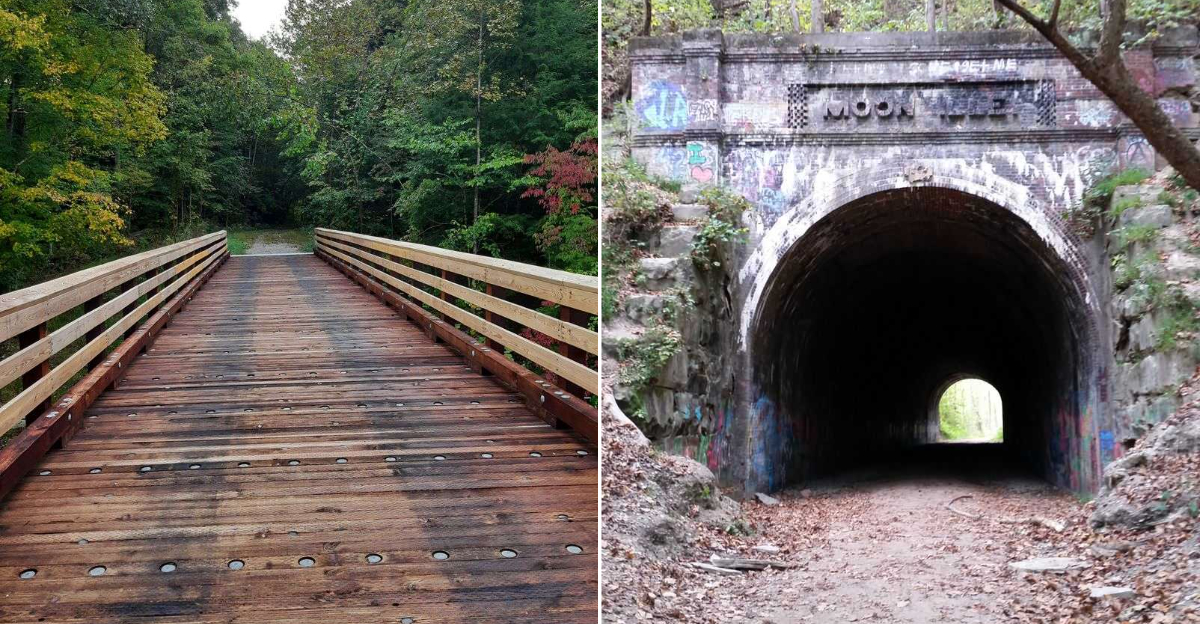
Morning mist hangs low over Zaleski State Forest, and the Moonville Rail Trail slips into view like a sentence you hesitate to finish, aware that once you do, it may stay with you longer than expected.
The gravel path follows the quiet logic of an old railroad grade, guiding you toward the hushed remains of Moonville, once a lively coal town, now reduced to suggestion, memory, and a brick tunnel that seems to absorb sound as much as it frames it.
Walking here, you feel history less as a lesson and more as breath, carried in the damp scent of the creek, the soft decay of oak leaves underfoot, and the way the forest seems to close in gently rather than dramatically.
Nothing announces itself loudly, and that restraint sharpens your attention.
The tunnel arrives almost suddenly, dark and cool even on warm days, and it shifts the mood without theatrics, reminding you how thin the line can be between presence and absence.
Keep walking when instinct tells you to pause, because the light changes quickly along this trail, filtering through trees at different angles, altering not just the scenery but your sense of time.
Out here, what’s gone and what still lingers are never entirely separate, and the path lets you feel that distinction blur with every step forward.
Reading The Trail’s Mood Before Your First Step
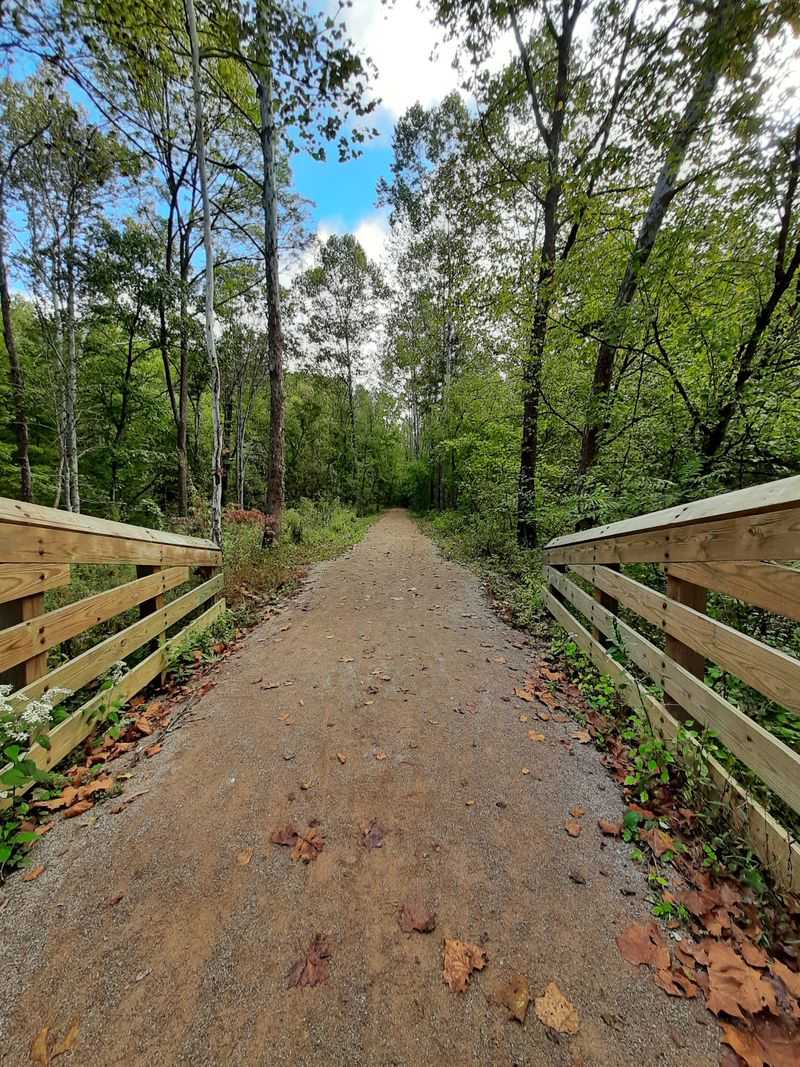
The gravel announces itself immediately underfoot, not loudly but insistently, each crunch landing in a steady rhythm that slows your breathing and signals that this walk will reward attention rather than speed.
Birdsong threads through the air in loose, irregular patterns while ferns glow along the cut, and Raccoon Creek runs beside the path with a low, continuous murmur that feels less like background noise and more like a quiet companion.
There is an unmistakable sense of expectation in this stretch of Zaleski State Forest, as if the landscape itself is measuring your patience and deciding how much of its story it is willing to reveal.
This corridor once carried coal trains toward Moonville, and although the rails are gone, the intention of movement remains embedded in the grade, guiding you forward without drama or spectacle.
Nothing here feels theatrical, yet everything feels purposeful, from the gentle curve of the trail to the way light filters unevenly through the canopy.
Starting early matters, because distant engine noise and ATV echoes creep in later, thinning the illusion of isolation that makes the first mile feel so self-contained.
If you let the forest set your pace instead of imposing one of your own, the trail begins to read less like a route and more like a sentence unfolding at exactly the speed it needs.
Noticing The Tunnel’s Brickwork Like A Patient Puzzle
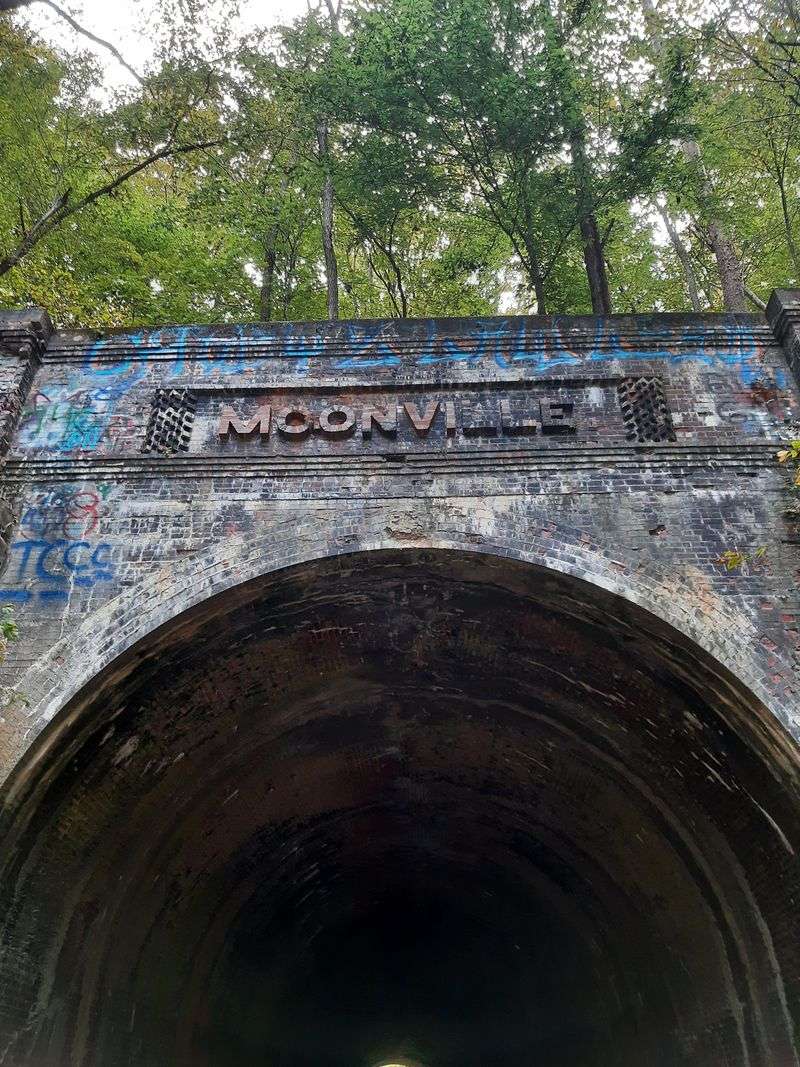
The tunnel emerges gradually, its dark oval framed by trees and stone, giving you just enough time to register that this structure was built to endure weight, time, and repetition.
Moisture beads on the nineteenth-century bricks, each one placed with a confidence that still holds despite soot stains, moss growth, and decades of freeze-thaw cycles pressing outward.
Your footsteps trigger an echo that returns a fraction late, turning every movement into a call and response that makes even a single walker feel briefly accompanied.
Light at the far end stays small and steady, pulling your attention forward while the curved brickwork presses your focus inward.
The Marietta and Cincinnati Railroad carved this tunnel to move coal and clay efficiently, never intending it to become a destination, yet it now anchors Moonville’s remaining presence more firmly than any foundation.
A headlamp becomes less optional than expected, because even midday light thins quickly once you pass the threshold and the tunnel’s geometry takes control.
Reading the historical plaques after walking through feels more meaningful, because the acoustics, temperature, and scale have already settled into your body.
Let The Creek’s Small Oddities Lead Your Camera
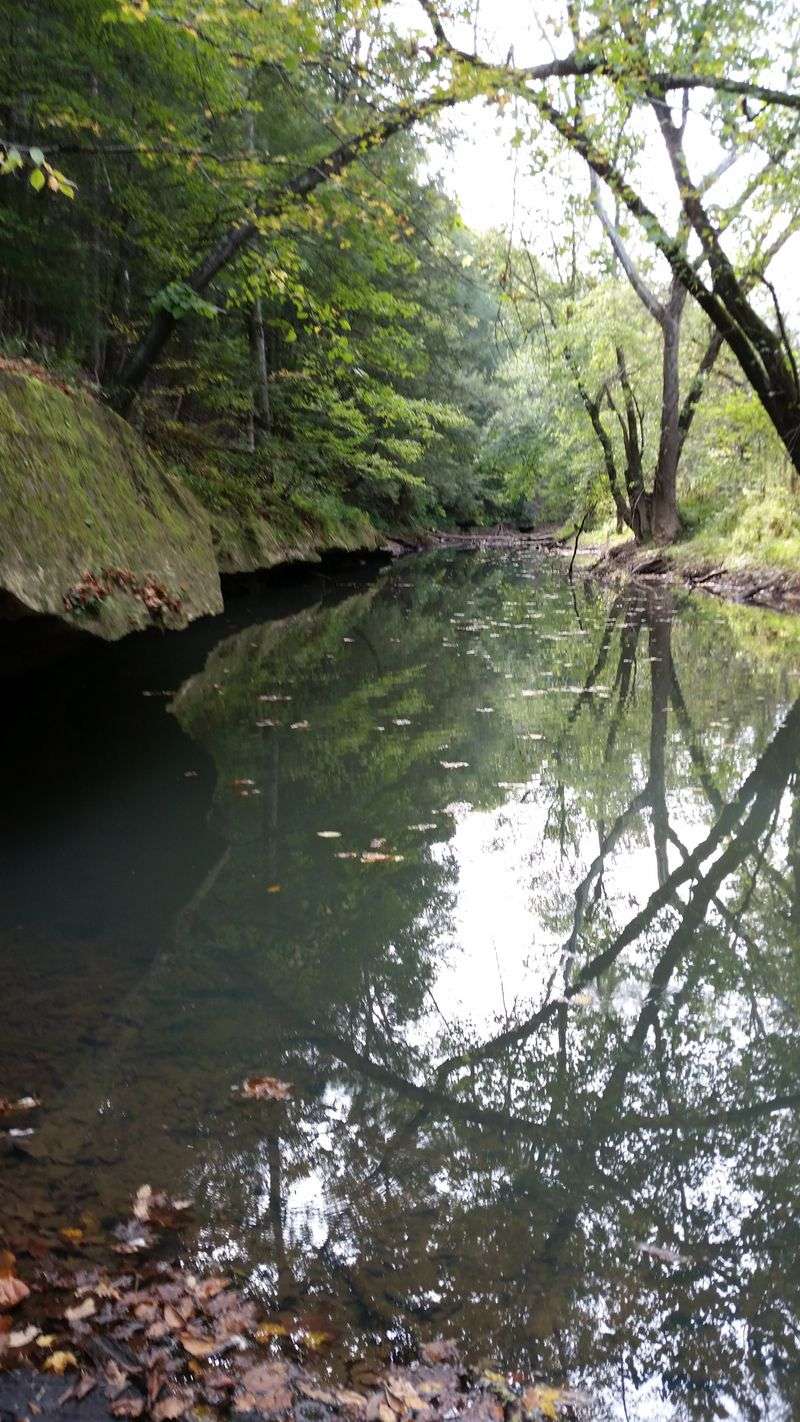
Alongside the trail, Raccoon Creek breaks into small visual surprises, where leaves spin in tight whirlpools and reflections fracture into shifting patterns that reward stillness.
Sycamore roots grip the banks like braided rope, exposed just enough to suggest both resilience and erosion working in quiet negotiation.
The air here smells mineral-bright, especially after rain, sharpening colors so greens deepen and rust tones glow against wet stone.
Trains once followed this water closely, their passage loud and regular, but the creek outlasted them by refusing urgency altogether.
That patience reshapes the mood of the walk, pulling your attention toward details that would be invisible at speed.
Photographing low and slow works best, elbows braced against logs or knees sunk into gravel, allowing water movement to register without blur or glare.
Staying to the established edges matters, because these banks hold their shape delicately, and preserving them keeps the creek’s quiet grammar intact.
A Quick History Handshake Before The Deeper Dive
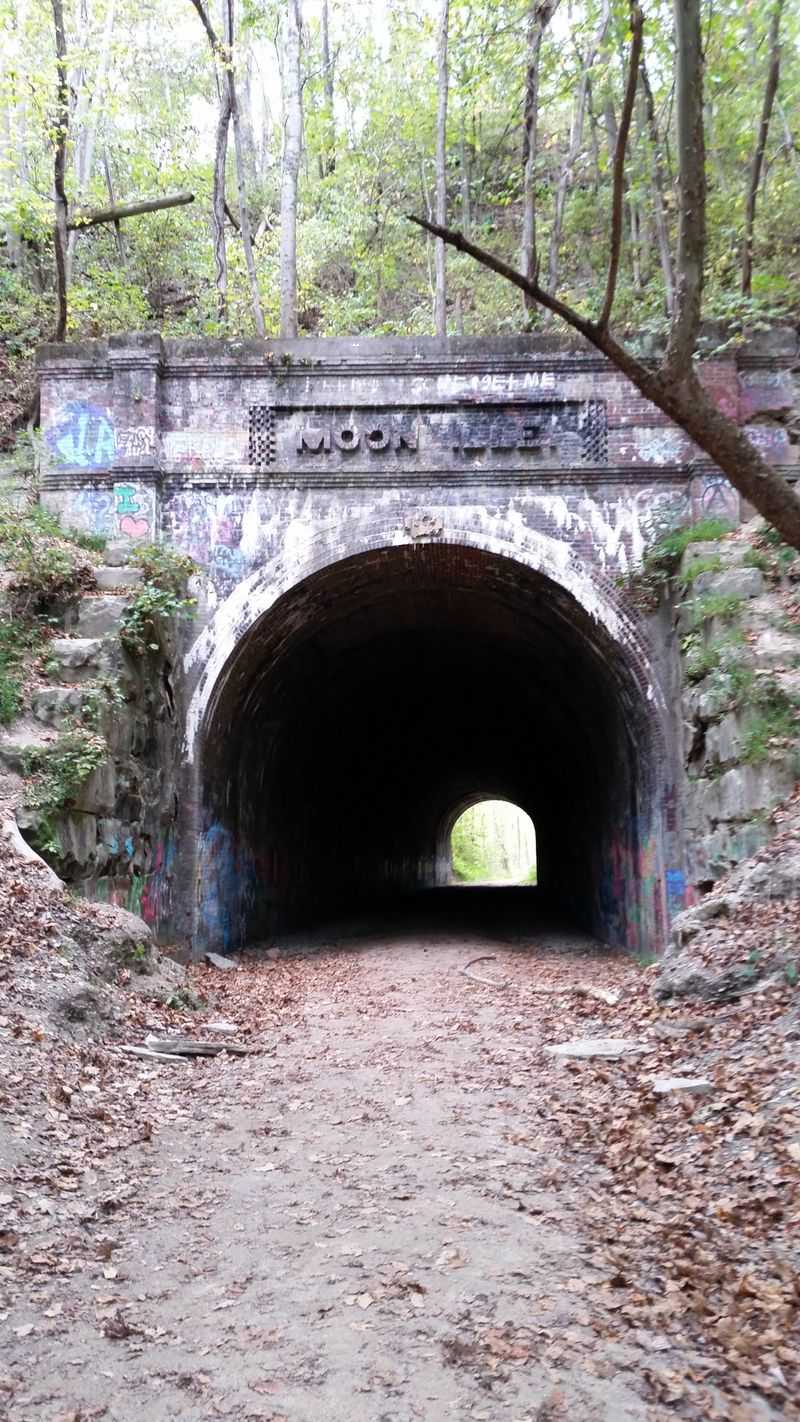
Moonville’s story can be held in a few sentences if you need it to be, but it carries more weight when you let those sentences stretch, because this was a coal town built quickly, lived in intensely, and abandoned without ceremony once the economics collapsed.
The settlement existed because the Marietta and Cincinnati Railroad needed a stop to service nearby mines, which meant that homes, stores, and work rhythms were shaped entirely around the schedule of trains and the labor they supported.
It never grew large enough to anchor itself politically or commercially, leaving it vulnerable when accidents, isolation, and declining demand pushed families toward safer and steadier ground elsewhere.
When the railroad line was abandoned, the town lost its only real reason to exist, and Moonville faded not through disaster but through quiet relocation, board by board and memory by memory.
What remains today is not a town in the traditional sense but a corridor of traces, where infrastructure outlasted community simply because it was engineered to resist time more stubbornly than wood or habit.
Reading this history beforehand gives the walk context, but walking first gives the facts texture, making dates and names feel less abstract.
With even a loose historical outline in mind, every culvert, embankment, and curve in the grade starts to behave like evidence rather than scenery.
Finding The Rhythm Of Footsteps And Echoes
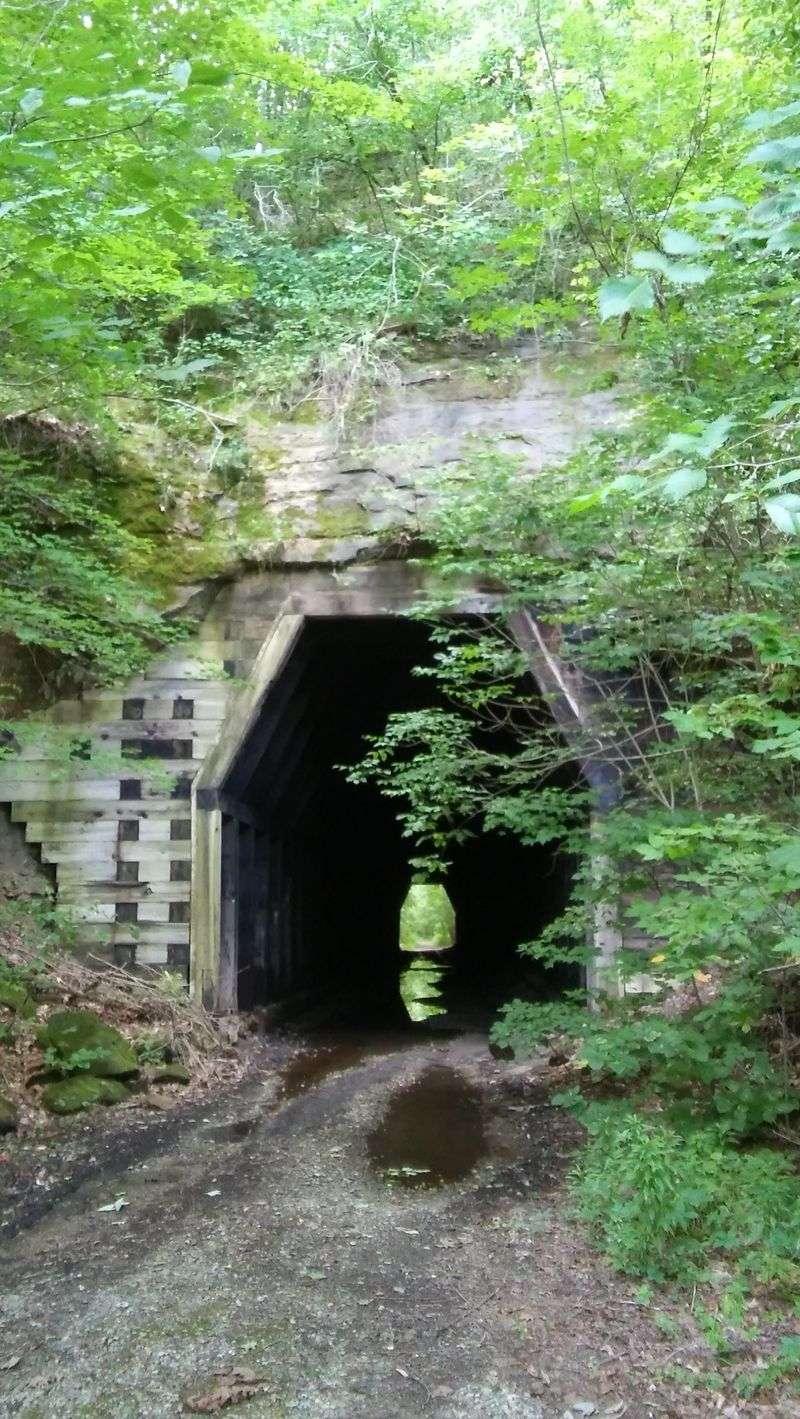
Your footsteps establish a pattern long before you notice it, but once the tunnel amplifies and returns that sound, the walk becomes a collaboration between movement and space.
Each step echoes back with a slight delay, creating the impression that someone is following at a respectful distance, close enough to hear but far enough to remain unseen.
Drips fall intermittently from the tunnel’s crown, punctuating the rhythm with small, irregular notes that make the acoustics feel tuned rather than accidental.
This chamber was never designed for listening, yet the density of brick, the arch’s proportions, and the tunnel’s length combine to produce a soundscape that feels deliberate and almost instructive.
Railroad crews built it for efficiency and durability, not atmosphere, but those priorities accidentally created one of the trail’s most memorable sensory moments.
Speaking softly lets you hear how sound changes as you move, flattening near the edges and blooming toward the center where reflections overlap.
Treating the tunnel less like a novelty and more like an instrument preserves its character and allows the experience to remain shared rather than dominated.
Reading Seasonal Quirks Like A Local Would
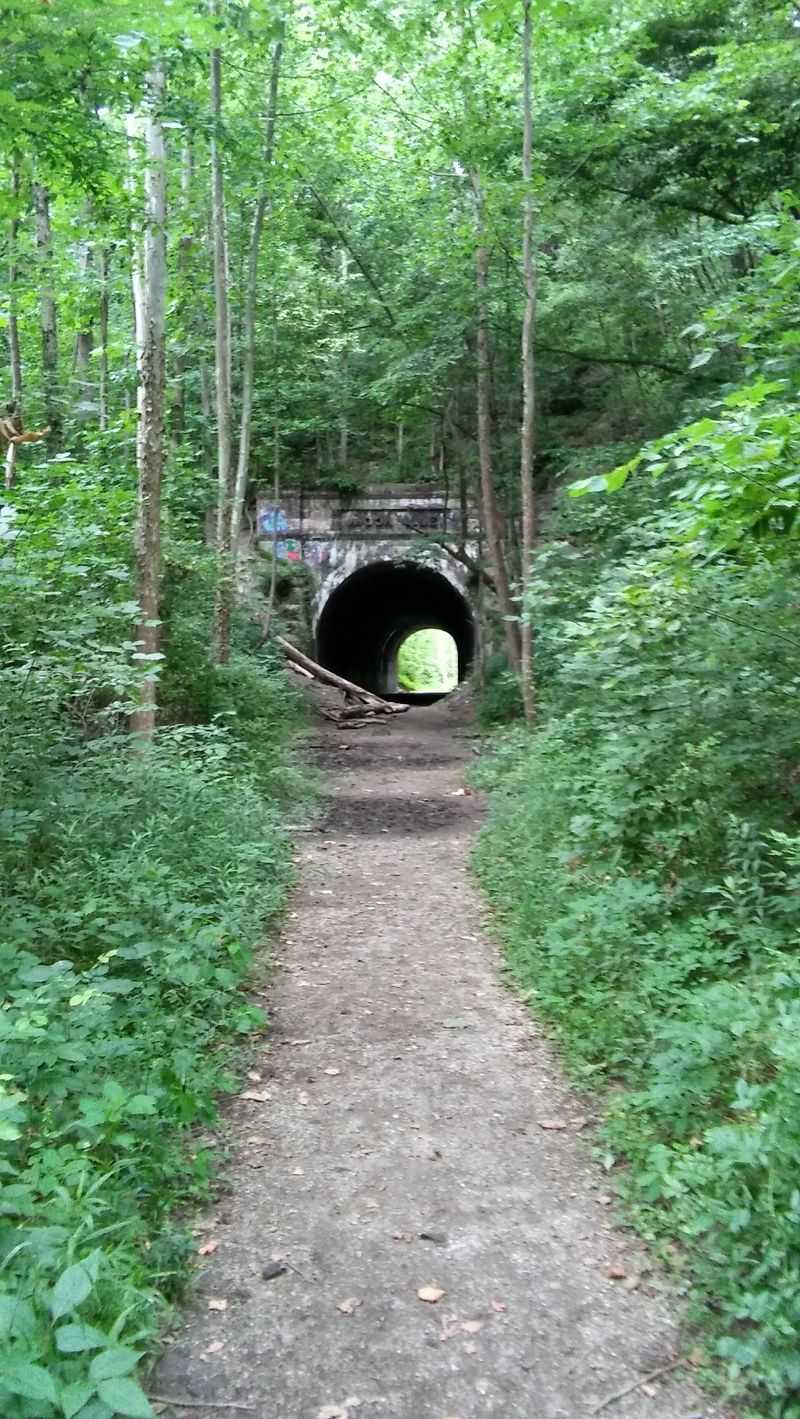
Spring arrives early along the trail edges, where trillium and new growth brighten the corridor before the canopy fully closes, and rain sharpens every scent into something freshly cut and clean.
By summer, the forest thickens overhead into a green ceiling that traps humidity and muffles distant road noise, making the walk feel enclosed and quietly insulated from the outside world.
Autumn transforms the grade into a corridor of copper and rust, where falling leaves outline the old rail alignment with almost architectural clarity.
Winter strips everything back to structure, revealing embankments, cuts, and stonework that are harder to notice once vegetation returns.
Local visitors time their walks around these shifts, knowing that fall weekends draw photographers and folklore seekers, while early weekday mornings preserve a calmer mood.
Halloween season brings extra headlamps and whispered stories, but even then the forest tends to soften exaggeration rather than amplify it.
Checking conditions before you arrive, especially during freeze-thaw cycles or hunting season, ensures the walk remains attentive rather than reactive, which is exactly how the trail seems to prefer to be met.
Spotlighting Small Structures Many People Miss
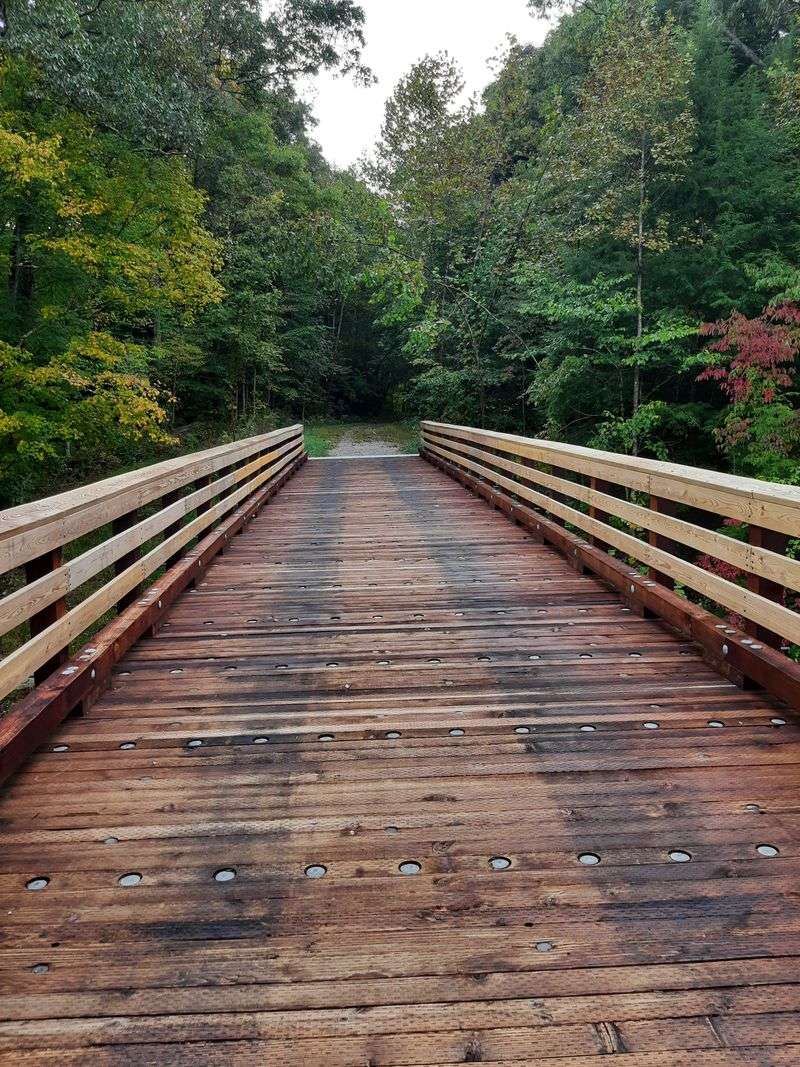
Just beyond the obvious features, the trail quietly reveals sandstone culverts tucked beneath grasses, retaining walls stepping the hillside in squared blocks, and drainage channels that look incidental until you realize they are doing the long, unglamorous work of keeping the entire corridor intact.
These structures rarely earn attention because they do not photograph dramatically, yet they are the reason your boots stay dry after storms and the grade remains walkable despite decades of erosion pressure.
Each block and channel reflects a practical engineering mindset from the railroad era, where water management mattered as much as track alignment and mistakes were paid for slowly over time.
Local crews and volunteers now maintain these elements with minimal intervention, favoring stabilization over restoration and allowing wear to show as long as function holds.
After rainfall, you can hear water moving beneath the trail, a muted rushing that traces the hidden architecture supporting your steps.
Photographing these features works best straight on, emphasizing geometry and repetition rather than drama, which suits their purpose-driven design.
Avoid climbing or touching loose stone, because even small disturbances accelerate damage and consume volunteer labor that is better spent keeping the trail passable for everyone.
Navigating with simple logistics and a calm plan
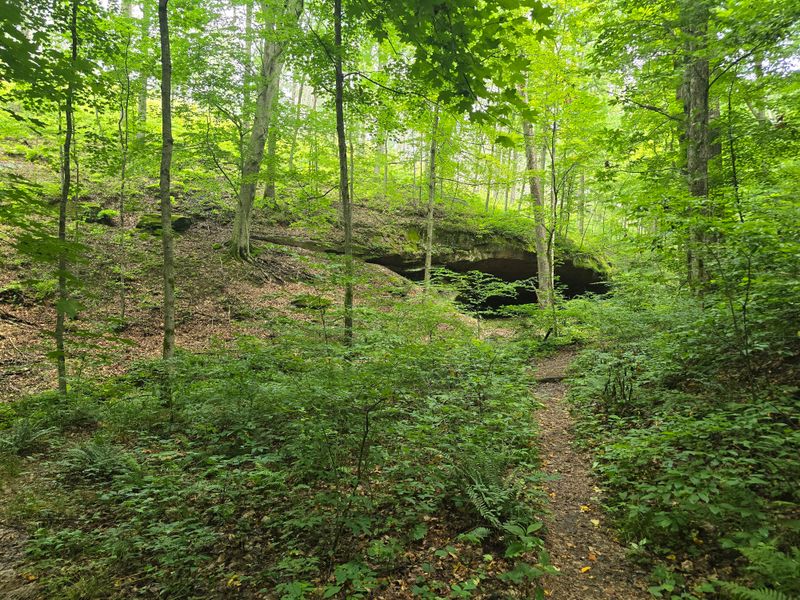
Parking near the trailhead fills faster than expected on pleasant days, and roadside pull-offs that look firm can soften suddenly after rain, turning departures into awkward and unnecessary problem-solving.
Arriving early removes most of that friction and aligns better with the forest’s quieter hours, when sound carries less and movement feels less hurried.
Because the Moonville Rail Trail follows a former railroad corridor, the route itself is forgiving, gently graded, and easy to follow even for first-time visitors.
Cell service drops unpredictably, which makes offline maps and saved references far more useful than relying on real-time navigation.
A small first-aid kit, a backup light, and dry socks left in the car solve most minor inconveniences before they become distractions.
Where horses are permitted, yielding calmly and announcing yourself early maintains shared use without tension.
Keeping track of the 11 PM closing time matters more than it seems, because twilight arrives quickly under tree cover and the forest loses detail faster than expected.
Listening For Culture In The Quiet
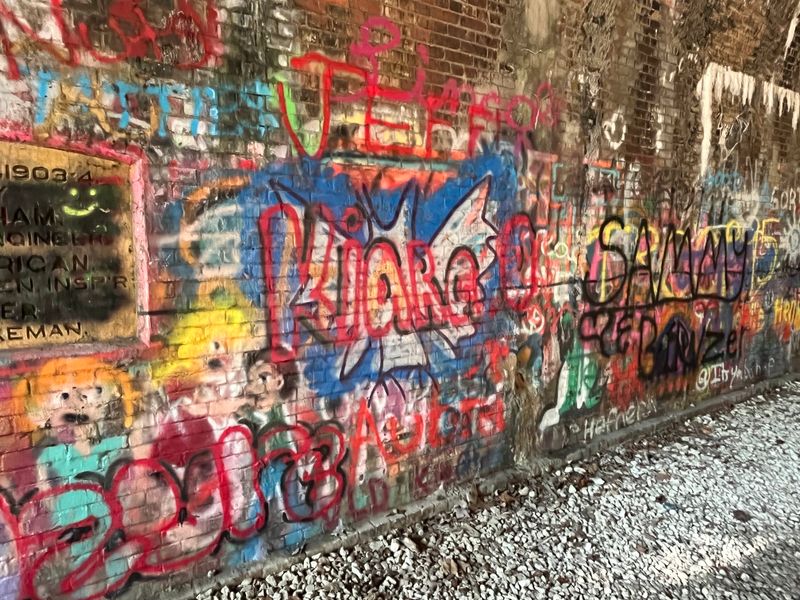
Conversation along the trail arrives in fragments, overheard and unforced, ranging from family anecdotes to cautious speculation about ghost stories that rarely escalate beyond curiosity.
The culture here favors restraint, blending respect for the forest with mild amusement at Moonville’s reputation, as if everyone has agreed not to push the myth harder than the place itself will support.
Moonville’s real history is grounded in labor, risk, and relocation, and those facts sit comfortably beside folklore without needing to compete.
Visitors who linger tend to return, drawn less by novelty and more by the way the trail allows different interpretations to coexist without argument.
Signboards encourage questions rather than conclusions, inviting walkers to think rather than react.
Small acts of courtesy, like offering to take a photo or stepping aside quietly, reinforce the atmosphere more than rules ever could.
Handled gently, the trail carries its stories forward without distortion, allowing each person to leave with understanding rather than spectacle.
Leaving With A Mindful Close To The Day
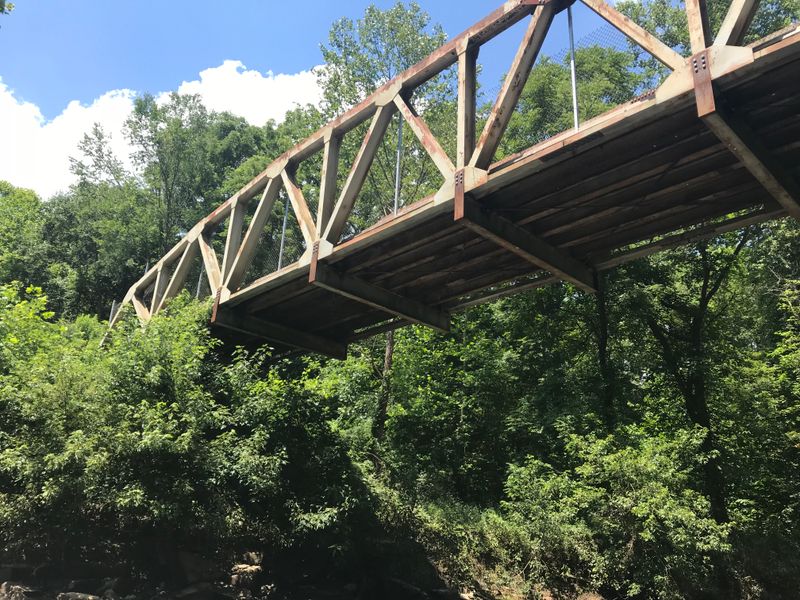
As dusk settles in, the forest canopy threads itself with low gold light that catches on leaves, rails, and damp stone, making the old railroad grade appear briefly refined and intentional, as if the day is giving the place one last careful adjustment before letting it disappear back into shadow.
Footsteps thin out, voices soften into murmurs that dissolve quickly between trees, and even Raccoon Creek seems to lower its volume, turning the entire corridor into a slow-moving exhale where time stretches just enough to notice how little urgency is actually required to leave.
The tunnel, now more silhouette than structure, reads differently in this light, less ominous and more architectural, a darkened arch that frames absence rather than mystery, holding space instead of demanding attention.
Nothing feels resolved here, because Moonville was never meant to be concluded neatly, only encountered at walking speed, with its railroad geometry still quietly determining how bodies move through the landscape long after trains and houses vanished.
The return walk repeats familiar curves and grades, but they register differently, as if your senses are now calibrated to smaller shifts in sound, slope, and temperature than when you arrived.
Turning on your light earlier than feels necessary proves wise, since darkness thickens quickly under trees, and the trail gives very little warning before detail collapses into outline.
By the time you reach the car, pockets filled with nothing tangible but memory and damp air, the forest lingers longer than expected, following you into the drive home as a slowed rhythm rather than a story you feel obliged to retell.