
This Florida Park Has A Treetop Walkway Where You Can Stroll Through The Canopy
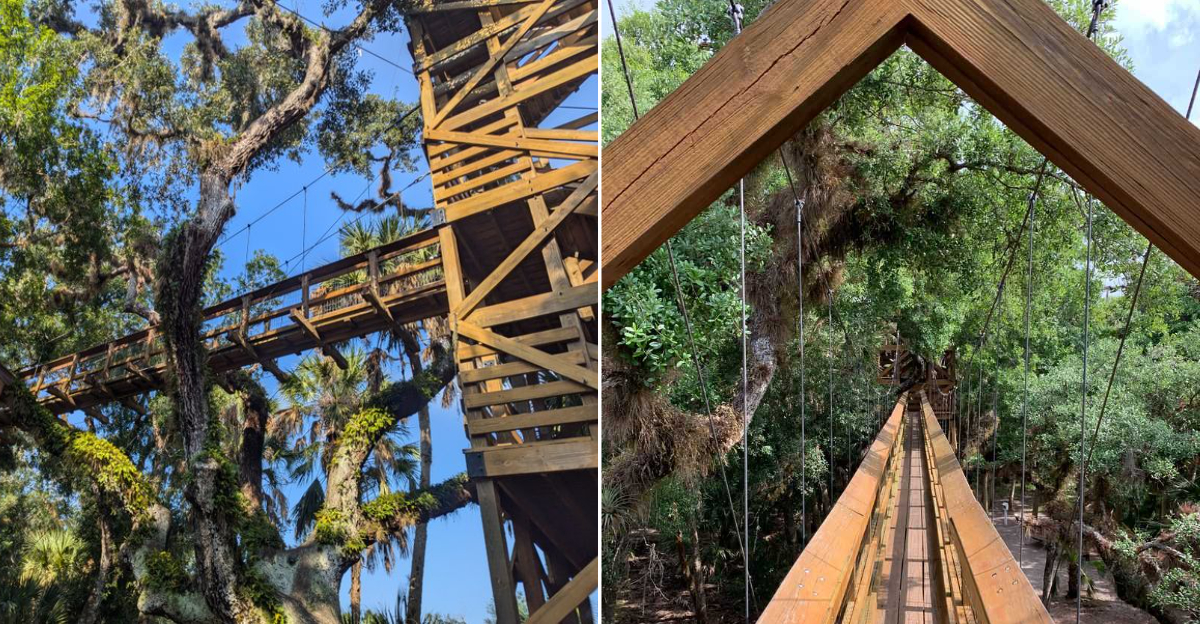
As the first morning light begins to slip softly through the ancient oaks at Myakka River State Park, the canopy walkway rises from the forest floor like a quiet, structural invitation to leave the ground behind.
This narrow, elegantly engineered suspension bridge allows you to step directly into the world of the treetops, where the broad fronds of cabbage palms and the gnarled branches of live oaks braid together in a lush green ceiling high above the sprawling floodplain.
The accompanying wooden tower delivers an even higher vantage point for those willing to make the climb, lifting your gaze far over the expansive dry prairies, dense hammocks, and the winding silver thread of the Myakka River as it bends toward the horizon.
If you have ever found yourself curious about how the wild heart of Florida looks from a bird’s unique perspective, this destination offers a gentle, surprising, and thoroughly immersive way to satisfy that curiosity without the need for flight.
By approaching the walkway with a sense of unhurried observation, you allow the specific rhythm of the subtropical environment to dictate your experience, ensuring that you don’t just see the forest, but truly understand its vertical complexity.
Following these specific field-tested guidelines will help you navigate the heights and the various observation landings with the ease of a seasoned naturalist, maximizing your appreciation for the ecology that makes Myakka a premier Florida destination.
Whether you are an avid birdwatcher seeking a rare sighting or a traveler looking for a moment of high-altitude tranquility, this treetop path provides a versatile and welcoming backdrop that consistently reveals the hidden side of the Florida wilderness.
Start Early For Soft Light And Calmer Trails
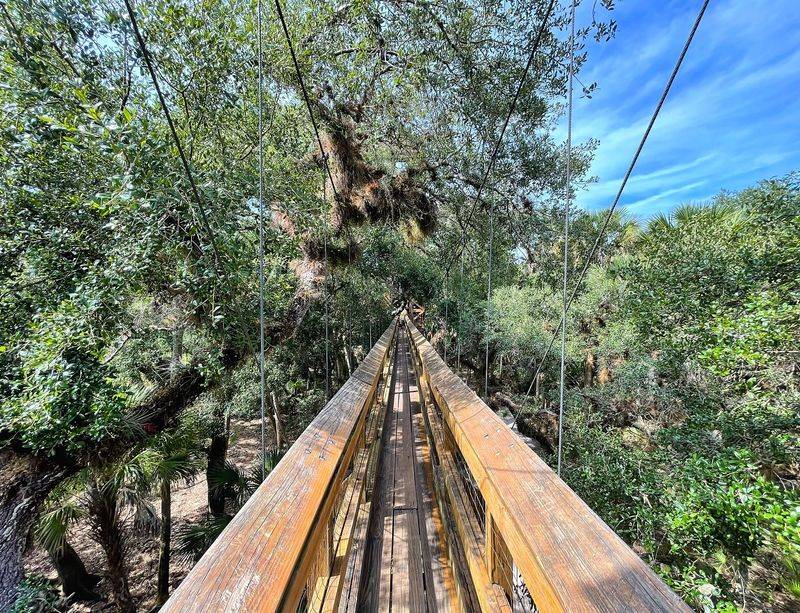
The entire walkway experience feels fundamentally different when the park first opens its gates at 8 AM, as the early light slides horizontally through the palmettos and the resident spiders are still busy rebuilding their intricate silk traps across the gaps.
During these quiet opening hours, the suspension bridge tends to creak in a friendly, conversational way that is often drowned out by the midday crowds, allowing your senses to settle enough to notice the delicate maps of lichen on the handrails.
Myakka’s subtropical climate causes the day to heat up with remarkable speed, and the open prairie sections of the park can quickly begin to bake under the intense Florida sun if you wait too long to begin your journey.
Arriving early also aligns perfectly with the natural rhythms of the local wildlife, especially the many bird species that move actively between the shaded hammock edges and the cooling waters of the river during the first few hours of light.
You will find that parking is much easier to secure near the trailhead in the morning, and you can take your time climbing the wooden tower while resting on the various landings without the pressure of congestion from other visitors.
I personally recommend taking a slow, deep breath once you reach the first elevated platform to appreciate the crispness of the morning air, which carries the earthy scent of the wetlands much more vividly than it does during the humid afternoon.
Notice The Bridge’s Modest Engineering
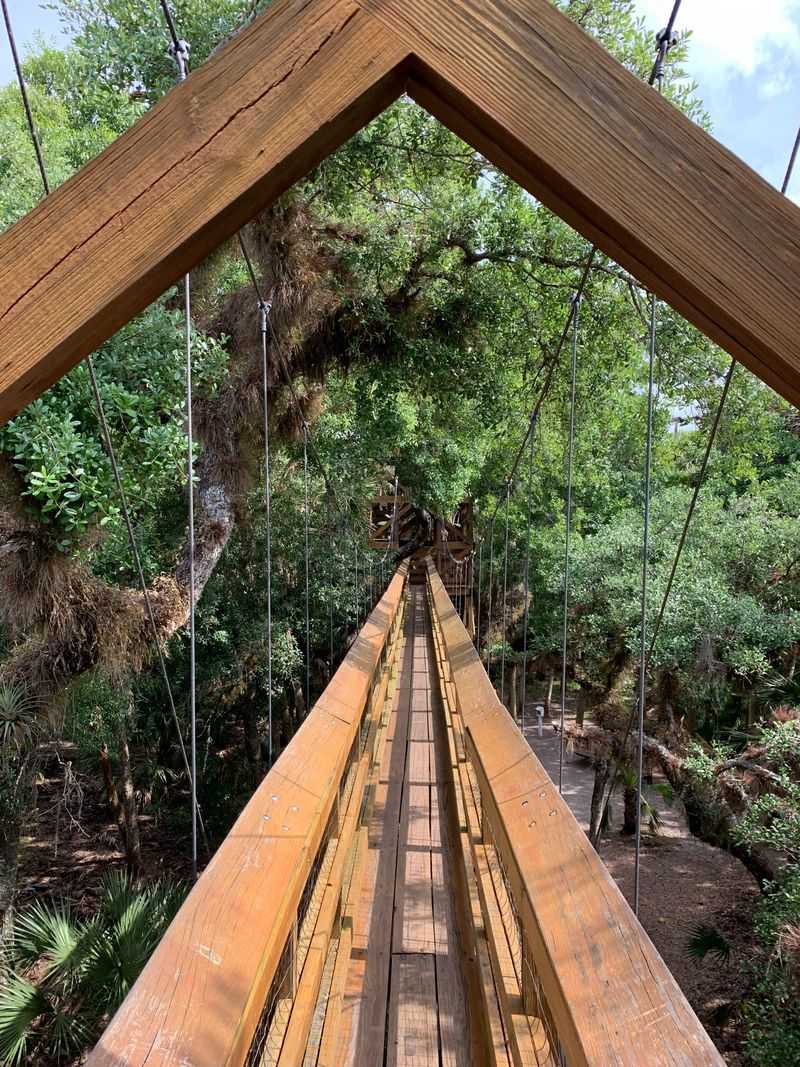
The walkway itself is surprisingly compact and intimate, consisting of a short suspended span tucked neatly between two sturdy wooden towers rather than a dramatic or sweeping architectural statement.
The design features a simple slatted wooden deck and protective side netting that intentionally keep your focus on the incredible bark textures and the hanging epiphytes rather than on the cheap thrills of height or exposure.
There is just enough subtle sway in the cables to remind you that the surrounding trees are living organisms that move with the wind, and that you are merely a temporary, respectful guest in their complex vertical world.
Built specifically to hover just beneath the forest’s crown layer, the structure prevents heavy human intrusion into the sensitive ecosystem while still granting a privileged perspective that few ground-based trails can offer.
The relatively modest height of the span preserves the feeling of being nestled inside the forest canopy rather than simply looking down upon it, creating a sense of immersion that is both comforting and educational.
You will quickly come to appreciate the solid grip of the wooden rails and the careful anchoring of the suspension cables, as your internal sense of balance adapts to the gentle movement of the bridge within the first few steps.
Climb The Observation Tower For The Prairie View
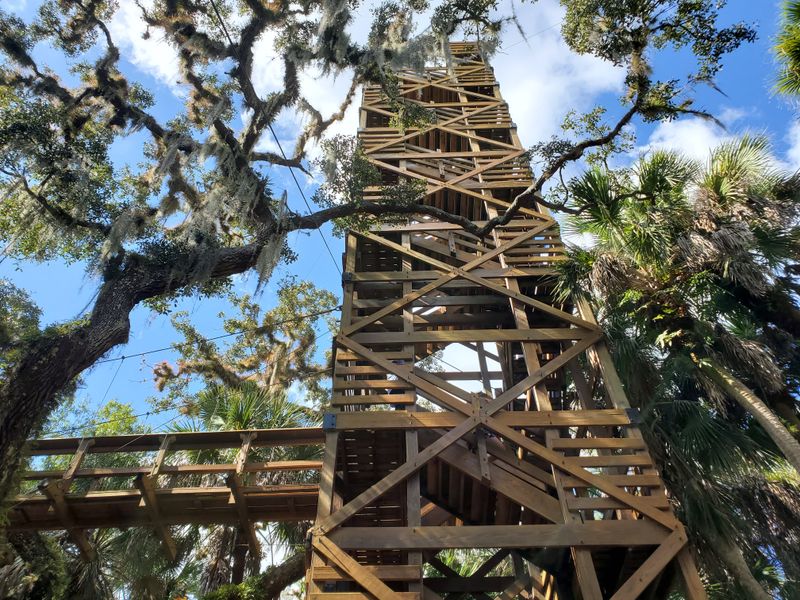
Once you reach the far end of the suspension bridge, a much taller wooden tower stacks upward, landing by landing, until the surrounding canopy finally thins out and gives way to the vast, open Florida sky.
From the highest platform, you can scan the expansive dry prairie, the dense hardwood hammocks, and the winding stitch of the Myakka River as it bends through the golden sawgrass in a pattern that has remained unchanged for centuries.
The wind feels significantly cleaner and cooler at this height, and the loud, territorial calls of the local grackles seem to thin out into the distance as you rise above the noise of the lower forest layers.
Historically, these massive prairie systems have depended on a natural cycle of fire and renewal to survive, a complex ecological fact that becomes immediately legible from the tower, looking almost like a living geographic diagram.
I suggest bringing a bottle of water and making a point to pause between each flight of stairs, which not only preserves your energy but also allows you to let other visitors pass by on the landings without any sense of hurry.
On particularly clear days, you should definitely carry a pair of binoculars to watch for red-tailed hawks or swallow-tailed kites as they ride the rising thermals far above the river corridor.
Tune Into The Park’s Soundscape
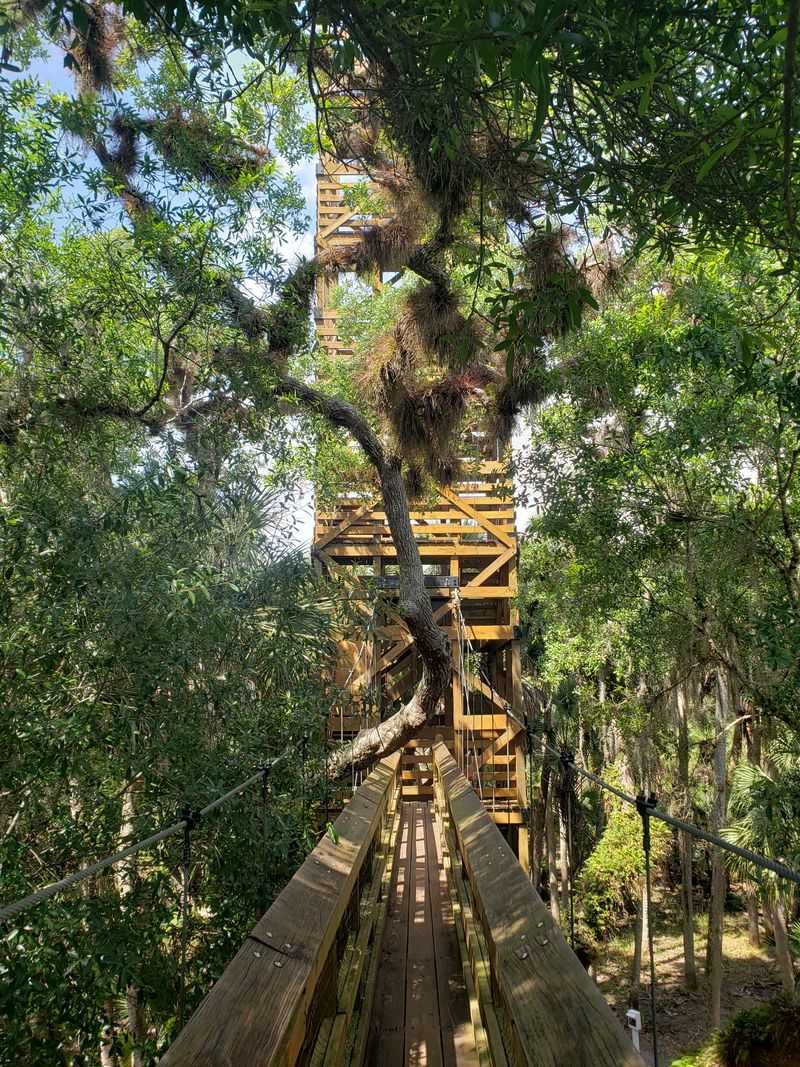
Before you become completely captivated by the expansive views from the top, I encourage you to close your eyes for a moment and truly listen to the layered sounds of the Myakka forest as they rise toward the bridge.
You will hear the dry palm fronds clattering against one another like sheets of paper, the rhythmic tapping of red-bellied woodpeckers in the oaks, and the distant, muffled hum of boat motors that softens into a low background drone.
The bridge structure adds its own unique voice to this symphony, contributing a small, metallic clink of hardware whenever someone shifts their weight, which serves as a constant reminder that the quiet here is layered and complex.
This specific sound profile changes dramatically throughout the day and with the shifting seasons, such as when the local frogs begin to speak in a loud chorus from the humid understory following a heavy summer rain.
During the prolonged dry spells, the wind becomes the dominant percussion instrument of the park, whistling through the pine needles and rattling the dried seed pods of the various native shrubs below.
Keeping your own conversation low will allow you to hear how the dense canopy carries sound differently than the open forest floor, a realization that will likely recalibrate your walking pace more effectively than any posted sign.
Respect The Living Architecture
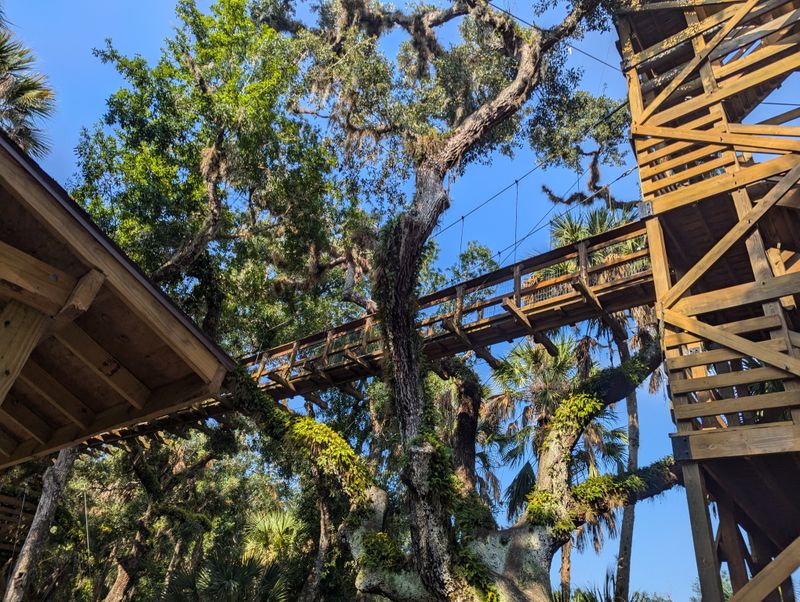
It is important to remember that the trees themselves shoulder the entire weight of this experience, with the massive live oaks and sturdy sabal palms creating the green corridors that the walkway threads through.
Spanish moss drapes from the branches like soft, grey punctuation marks, having evolved to never grow heavy enough to harm its host tree, while vibrant bromeliads perch securely where light and moisture strike a perfect biological truce.
These complex botanical communities form incredibly slowly over many decades, and the physical structure of the walkway was intentionally designed to be low-profile in order to minimize the need for intrusive pruning.
I recommend that you make a conscious effort to touch only the man-made rails rather than the living trunks of the trees, as the oils from human hands can sometimes interfere with the delicate mosses and lichens growing on the bark.
Stepping lightly will help to minimize the amount of vibration felt by the birds and insects nesting nearby, and keeping your snacks tightly sealed will ensure that the resident raccoons do not learn any disruptive or unhealthy habits.
Ultimately, you are merely borrowing a high balcony that the forest has spent many years building, and leaving the environment exactly as you found it is the only fair rent you can pay for such a privileged view.
Plan Around Heat Storms And Seasonal Quirks
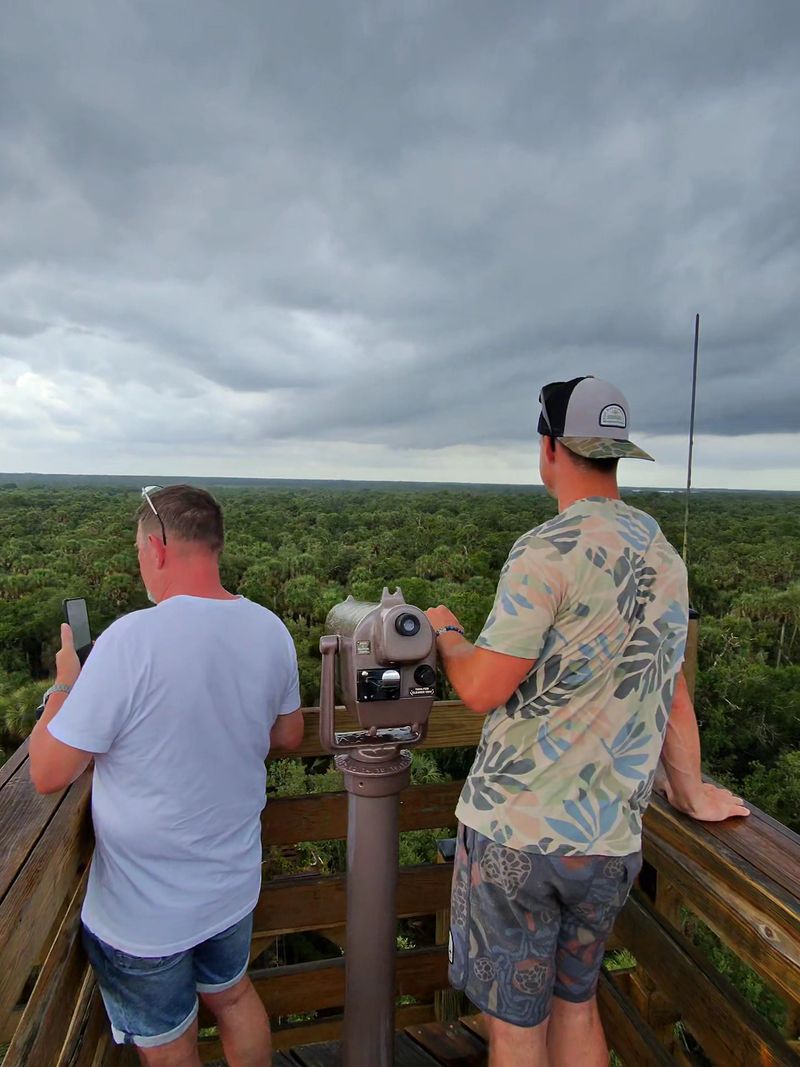
The unpredictable Florida weather effectively writes the daily schedule for the park, as the intense summer afternoons often build massive thunderheads that can lead to the temporary closure of the tower for guest safety.
The winter dry season typically brings much clearer air and expansive, long-distance views, while the humid wet months deliver luminous greens and dramatic cloud theaters that make for incredible photography.
While the local mosquito population fluctuates throughout the year, the consistent breeze found at the height of the observation tower usually provides a welcome relief from the insects found on the ground-level trails.
Locals in this part of Florida often watch the weather radar like a dedicated hobby, and I suggest you do the same by aiming to time your walk for the early morning or immediately after a cooling rainstorm has passed.
A light rain can make the wooden boards of the bridge and the tower stairs quite slick, so you should tread deliberately and wear shoes with a reliable grip if the weather has been damp.
Always carry a hat and a small bottle of sunscreen, and consider keeping your phone in a pocketable dry bag so that a sudden, unannounced subtropical downpour doesn’t ruin your electronics during your descent.
Let Birds Set The Itinerary
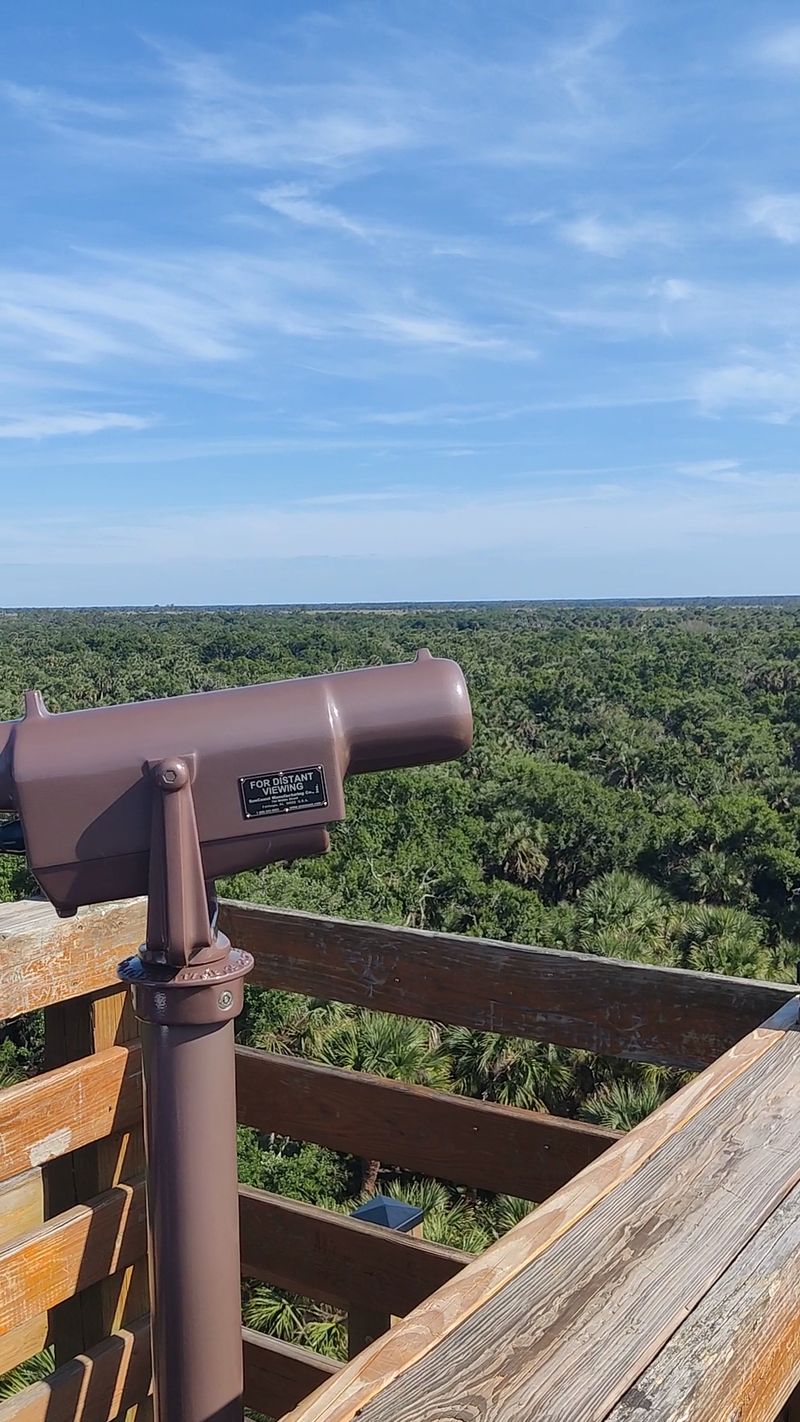
While large egrets are a common sight as they cruise the river corridor, being at canopy height provides a rare opportunity to catch a glimpse of hawks, caracaras, and even restless flocks of warblers as they move through the branches.
The sturdy wooden railing of the bridge provides an excellent and stable perch for your binoculars, while the corners of the observation tower offer enough protection from the wind to allow for steady, long-distance viewing.
You will likely find that your eyes start looking for the subtle movement of a leaf or a branch rather than searching for bold colors, as many of the park’s most interesting avian residents are masters of natural camouflage.
The spring and fall migration seasons often bring incredible surprises to Myakka, as the park serves as a vital stopover point for thousands of birds traveling along the Atlantic and Gulf Coast flyways.
I suggest learning a few of the most common local bird calls before you visit, as being able to identify a species by sound alone will help you locate it much faster within the dense layers of the hammock.
Remember to step aside on the landings so that your scanning doesn’t clog the flow of other visitors, and keep in mind that the very best sightings often appear the exact moment you consider heading back down.
Move With The Bridge Not Against It
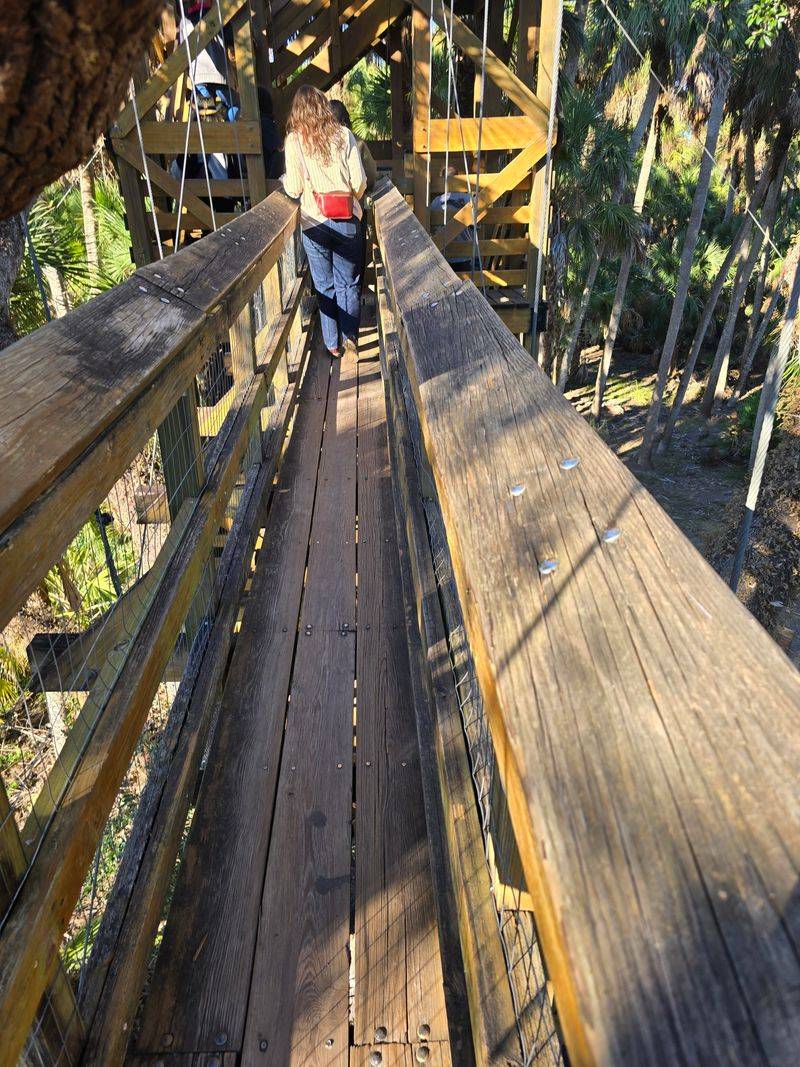
The slight, rhythmic sway of the suspension bridge is a fundamental part of its charm, and the structure often feels significantly livelier when multiple visitors are stepping in sync with one another across the span.
The most effective way to navigate this movement is to relax your knees and let your hips naturally absorb the motion, a small adjustment that quickly turns any initial jitters into a sense of rhythmic ease.
You will soon notice how the canopy reveals entirely new angles and hidden details as the bridge breathes and moves, providing a dynamic perspective that a static platform simply cannot replicate.
This specific suspension design protects both the people and the trees by distributing the physical force of the walk across the entire structure rather than concentrating it in one single, damaging point.
Sturdy shoes with good support will help you feel more secure, and I recommend keeping at least one hand free to steady yourself on the rail as you pass other hikers coming from the opposite direction.
If the height begins to nudge your nerves, simply focus on the wooden boards just two steps ahead of you, pause for a moment at a support post, and look outward toward the horizon only when you feel completely ready.
Learn The Backstory Before You Go
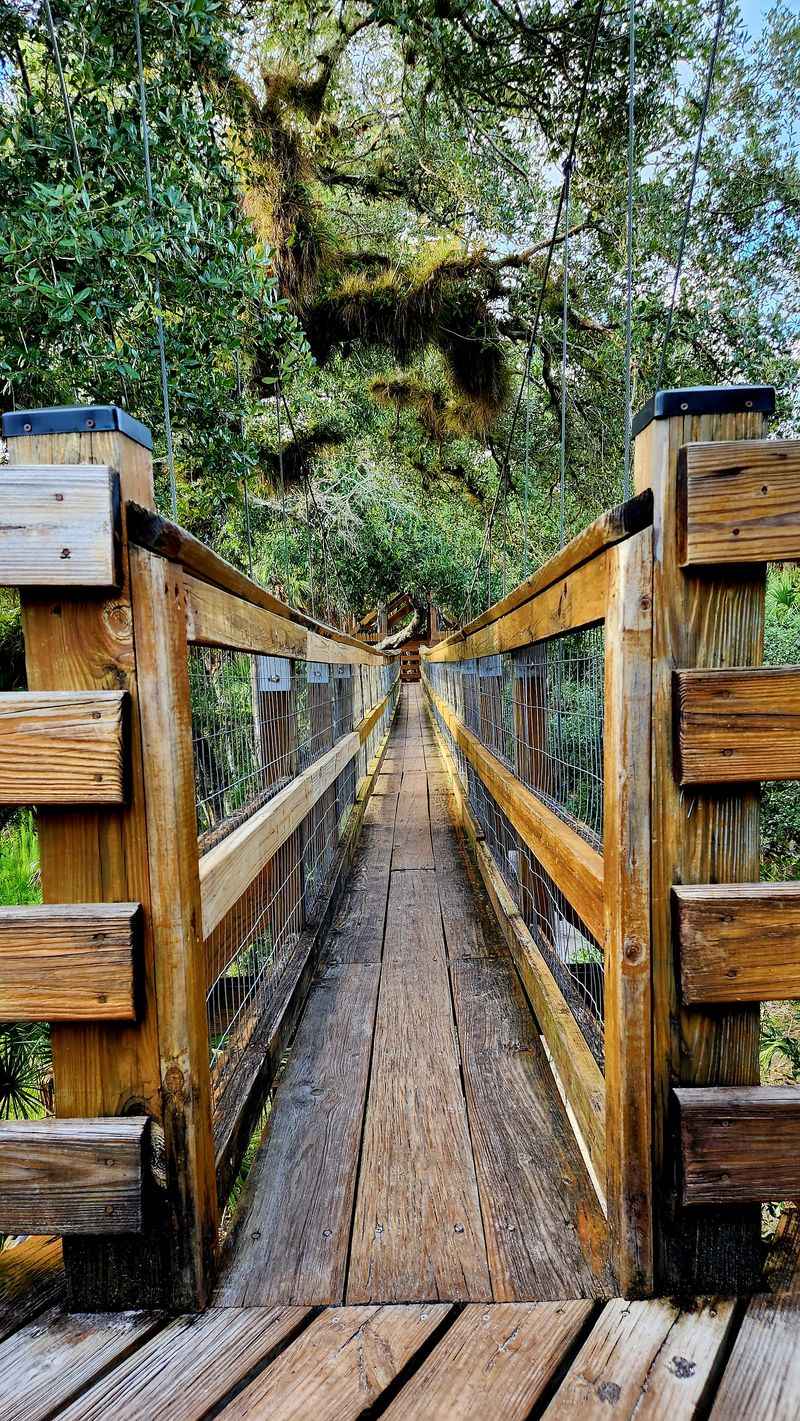
Myakka River State Park is officially recognized as one of Florida’s oldest and most historic state parks, and this canopy walkway was among the very first of its kind in the United States when it was completed in the early 2000s.
Understanding this historical context reframes the walkway from a simple tourist novelty into a sophisticated educational tool that rangers use to interpret the local hammocks, the fire regimes, and the complex hydrology of the region.
I suggest skimming the official Florida State Parks webpage before your arrival to check for current operating hours, any weather-related advisories, and the exact location of the trailhead within the park’s main road loop.
Knowing exactly what you are likely to see at each level of the forest increases your patience on the stairs and helps you appreciate the subtle transitions between the different ecological zones of the park.
Taking the time to read the small interpretive signs that many others rush past will turn a short walk into a layered and meaningful lesson about how the Florida wilderness functions as a complete system.
End With A Quiet Pause On The Final Landing
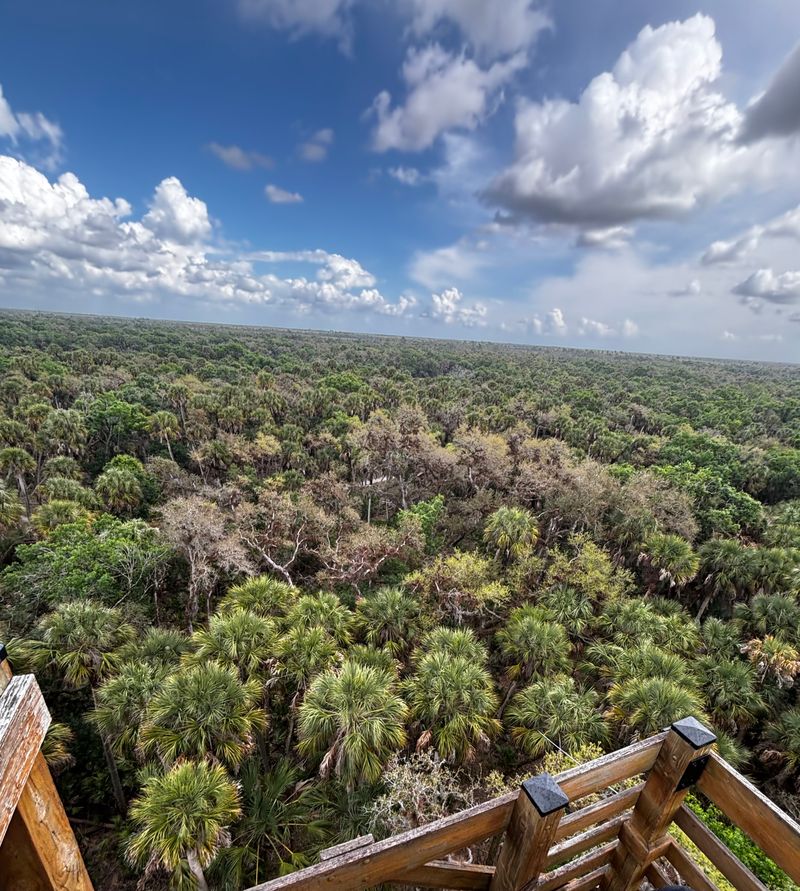
After you have completed the full loop across the suspension bridge and up the observation tower, the last landing before the final descent offers a perfect natural intermission for reflection.
Many people tend to hurry down these final steps in a rush to reach the next park attraction, which often leaves a small, rare pocket of silence for those who choose to linger for just a moment longer.
I suggest staying on this landing for at least one full minute, counting your own breaths while seeing how many distinct shades of green your eyes can separate within the complex canopy patchwork below you.
This small, personal ritual makes the final descent feel like a conscious choice rather than a forced exit, helping you to process the vast scale of the prairie you just observed from the top.
It also serves to reset your expectations for the rest of your park visit, as the river trails and the open grasslands will offer a completely different set of sensory experiences than the ones you found in the treetops.
Walk back down to the forest floor with soft, deliberate steps, and try to carry that high-altitude hush with you as you return to the ground to explore the rest of what Myakka has to offer.