
This North Carolina BBQ Counter Still Serves Lexington-Style The Old Way
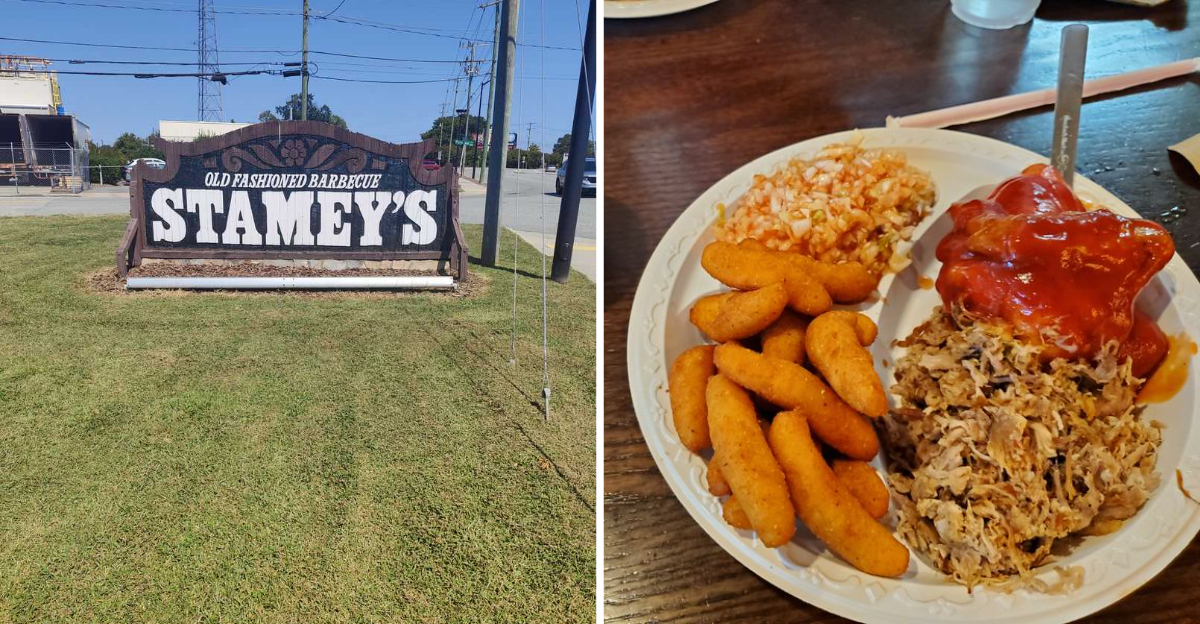
I had eaten a lot of barbecue in North Carolina before this, but something felt unfinished.
Eastern or Western, chopped or pulled, vinegar or tomato, everyone had an opinion and a favorite hill to die on.
Then someone mentioned a counter that still did Lexington-style the old way, no explanations, no shortcuts.
That got my attention.
Lexington barbecue isn’t flashy, and it doesn’t try to be.
It’s pork cooked slow, chopped fine, kissed with just enough tang, and served like it has been for decades.
No reinvention, no apology, no need to chase trends.
You order, you wait, you watch, and you learn.
Some places preserve history in museums, and this one does it in butcher paper and smoke.
Stamey’s, A Greensboro Landmark

Stamey’s Barbecue in Greensboro wasn’t a place you stumbled upon by accident, it was a destination you earned by wanting something real.
Located at 2206 W Gate City Blvd, it felt less like an address and more like a point in time, one that had been holding steady for decades.
I didn’t need directions so much as intention to get there.
It didn’t advertise, didn’t shout, didn’t try to be anything other than what it had always been: a quiet icon of Lexington-style barbecue.
There was no glitzy exterior and no oversized signs competing for attention or validation.
Instead, I walked in and immediately felt like I had crossed an invisible line.
On the other side of it was something authentic, something earned, something timeless.
The room didn’t boast or perform or try to impress me.
It simply existed, steady and enduring, completely unbothered by the fast pace of the world outside.
Once I stepped inside, I understood why people kept coming back.
The smell of smoke settled in first, familiar and grounding.
The sound of easy chatter followed, punctuated by the rhythm of orders being called and filled.
Everything moved with quiet confidence, like it had rehearsed this moment for years.
This was a routine deeply ingrained and carefully protected.
Here, the food didn’t need to sell itself or explain its value.
By the time I found my seat, I was already convinced.
I wasn’t a customer walking in, I was someone who had arrived exactly where I was meant to be.
The Rhythm Of Lexington-Style BBQ
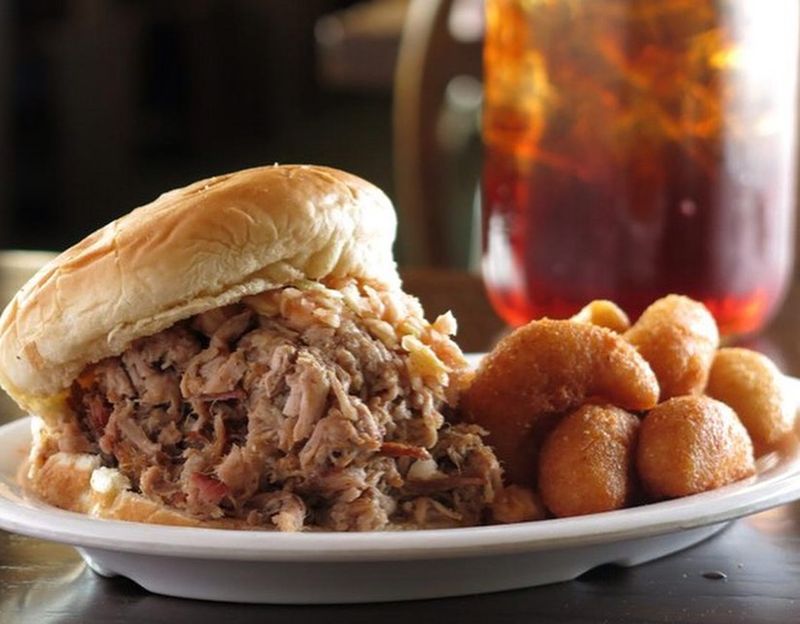
The counter is where it all happens, and I quickly realized that it was the pulse of the entire place.
There’s no rushing, no fast orders here.
It’s a bit like watching someone work a slow, deliberate dance.
Everything’s laid out with purpose, like they’ve been perfecting this for so long, it’s second nature.
Lexington-style barbecue isn’t about creativity or flair.
It’s about tradition, and it demands patience.
As the staff slices the tender pork, it’s clear that they’re doing something that has been handed down for generations, without compromise.
There’s nothing fancy on the plate, and nothing extra is added.
This is what it’s always been, and what it always will be.
The barbecue here isn’t meant to be “impressive”; it’s meant to be a consistent, reliable experience that gives you exactly what you came for.
And as you stand at that counter, watching them work with such ease, you realize: this is more than just food.
It’s ritual.
It’s the same way it’s been done for decades.
Slowly, carefully, and with an unwavering respect for the craft.
In a world obsessed with trends, Stamey’s remains one of the few places that keeps it simple and perfect.
The Simple Perfection Of Stamey’s
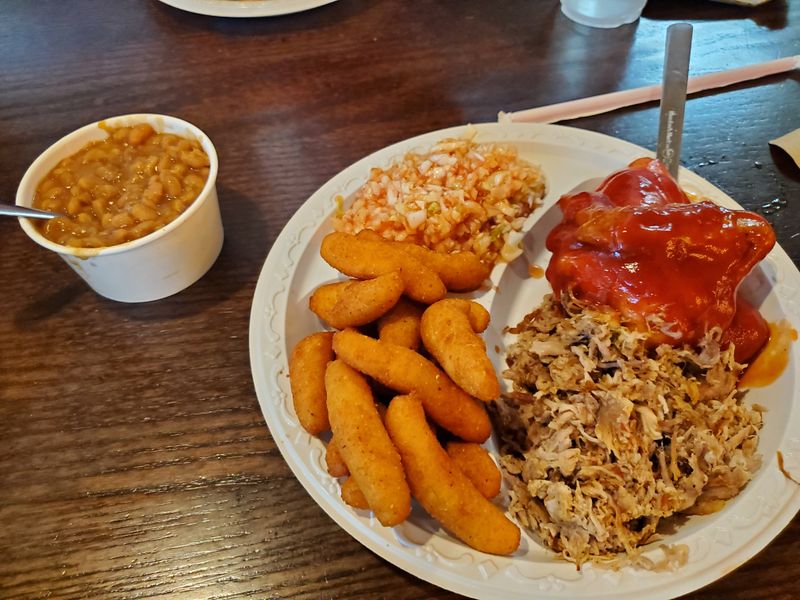
By the time the plate was set before me, I wasn’t expecting fireworks or dramatic revelations.
I wasn’t looking for something that would wow me or make me rethink everything I thought I knew about barbecue.
I had already settled into the idea that this would simply be lunch, and that felt like enough.
But when I took that first bite, something quietly clicked into place.
The pork was tender, smoky, finely chopped, and clearly handled by someone who respected it.
It was balanced with just enough tangy vinegar-based sauce to complement the meat without ever trying to steal the spotlight.
There were no bells, no whistles, just pork that spoke for itself in a calm, confident voice.
I didn’t feel rushed to analyze it, which felt like a good sign.
The cole slaw arrived cool and crunchy, cutting through the richness like it had practiced this role many times before.
Together, they made sense in a way that didn’t need explaining.
Every bite reminded me that the simplest combinations, when done right, could be the most satisfying.
There was nothing flashy or overly complex about the plate, but everything about it felt exactly right.
It was food that didn’t need to prove anything to anyone.
The plate knew its place, and somehow, sitting there, so did I.
This wasn’t just a meal, it felt like a piece of history that fit perfectly into the present moment.
How Stamey’s Became A Local Ritual
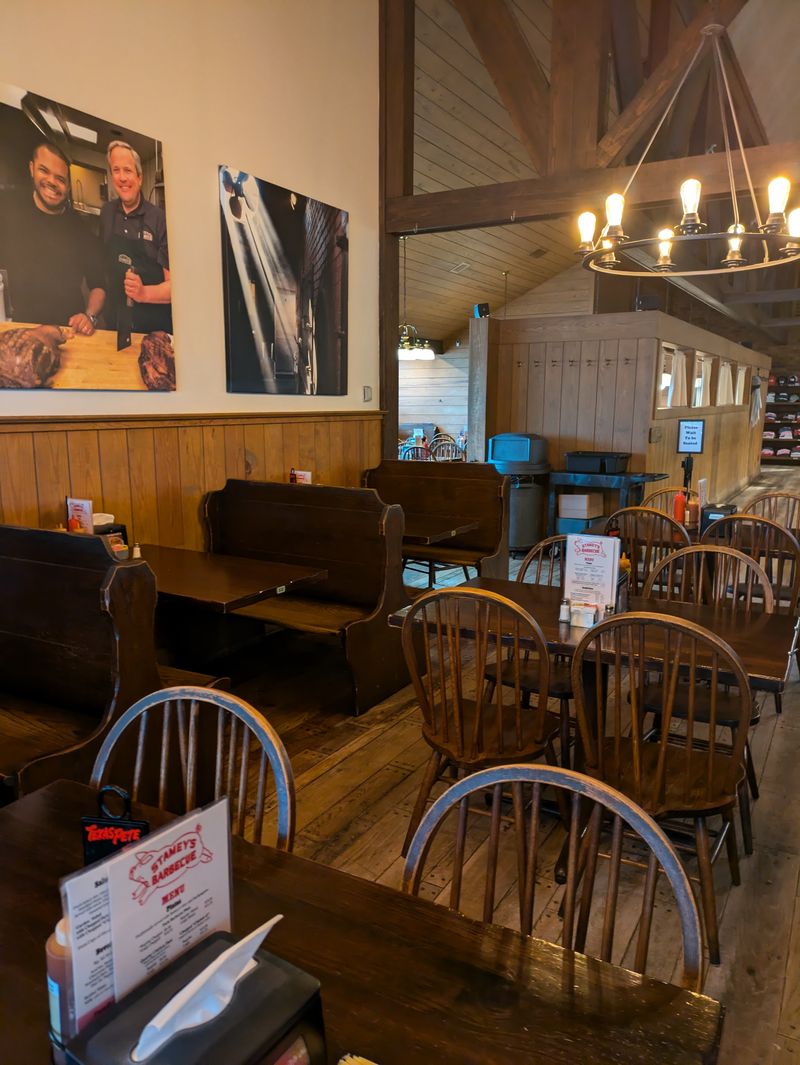
As I watched the regulars around me, it struck me how little people actually talked about the food.
Sure, they ordered, they ate, but it wasn’t the kind of place where people discussed the meal as if it were some culinary masterpiece.
Here, food wasn’t for debate, it was simply a part of the experience.
The way the locals casually dug into their plates without fuss, without need for praise or critique, told me everything I needed to know.
This wasn’t food you “try”, it was food you live with, and it becomes a part of your rhythm.
The silence around the table wasn’t awkward.
It was filled with the kind of comfort you only get from something deeply familiar.
It wasn’t just about the barbecue, it was about being in a space that didn’t require validation.
You could sense that this wasn’t some new trend to be celebrated.
This was a meal that had been perfected and trusted, year after year, and the locals respected that tradition without a second thought.
There was a calm assurance in that, a sense of community built around shared, unspoken rituals.
The Unchanged Legacy Of Stamey’s
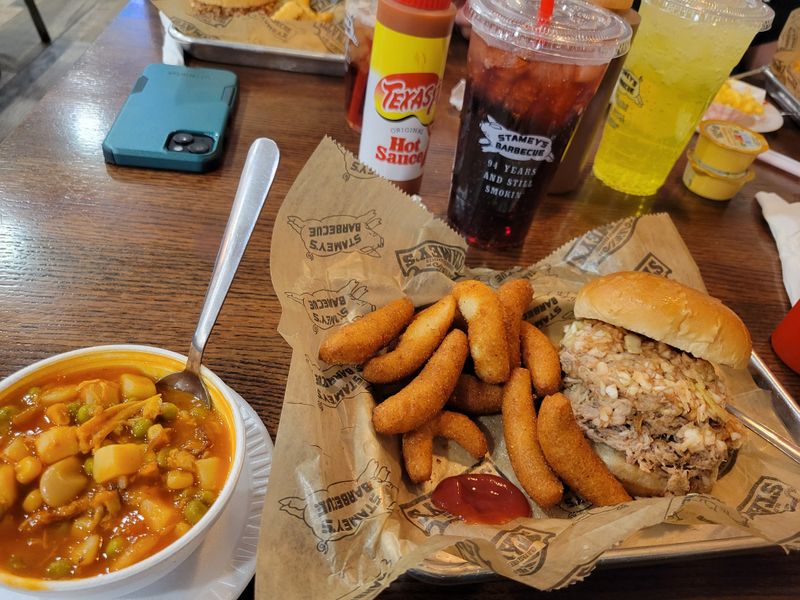
It wasn’t until I finished my meal that I realized just how much of an institution Stamey’s truly was.
What stood behind me wasn’t just a restaurant, but a cornerstone of Greensboro’s culinary history, quietly holding its ground.
The realization arrived slowly, like smoke clinging to your jacket long after the pit had cooled.
What struck me most was how steadfast they were in keeping things exactly the same.
Nothing here had changed for years, and it wore that fact like a badge of honor.
There were no tweaks, no modern edits, no adjustments to chase approval or novelty.
This place wasn’t interested in catering to the latest food trends or reinventing itself for attention.
It was focused on keeping things the way they were meant to be from the very beginning.
Here, barbecue wasn’t about the next big thing waiting around the corner.
It was about preserving a history that deserved to be remembered, tasted, and passed along.
You could sense the pride the staff carried in every quiet movement behind the counter.
Each plate felt like a small, deliberate act of rebellion against an ever-changing culinary world.
It wasn’t just about serving good food, even though the food more than delivered.
It was about maintaining a rhythm, a method, and a way of doing things right.
Sitting there, I felt like a guest inside a story that had been going on long before me.
The consistency was comforting, grounding, and surprisingly emotional in its restraint.
That was what made Stamey’s feel so special, not loud or flashy, but deeply and confidently itself.
Mastery On A Plate
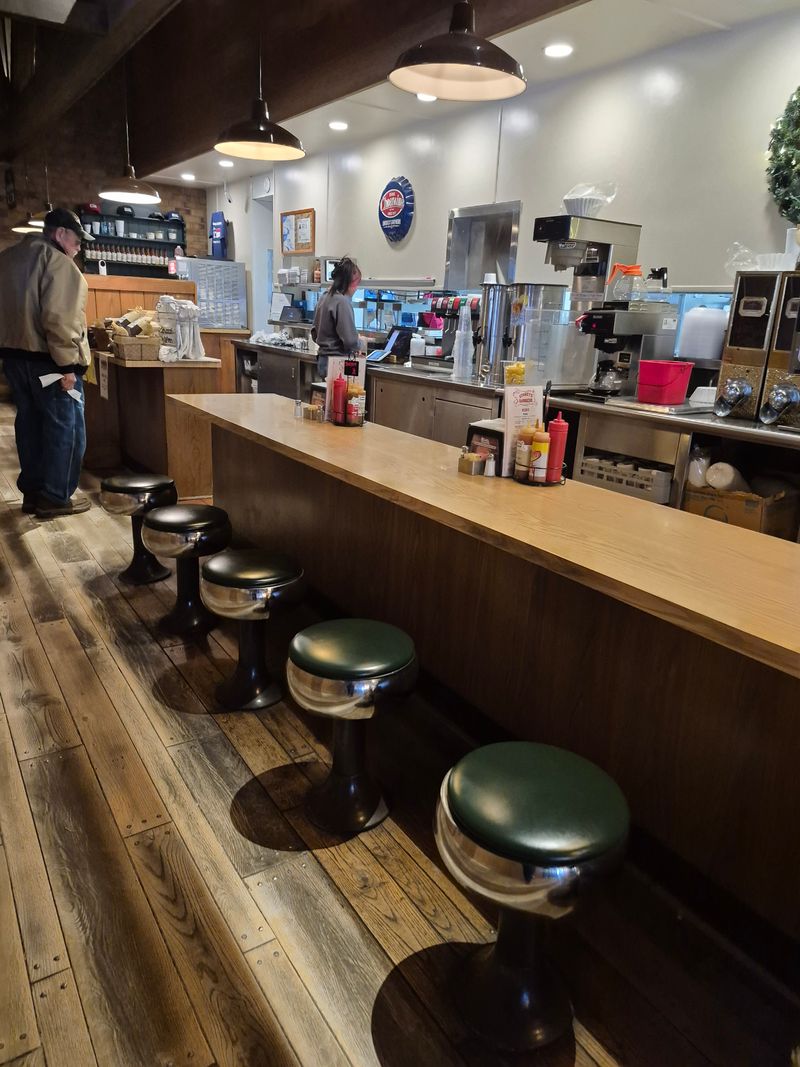
Stamey’s doesn’t need to reinvent the wheel because their wheel, the finely chopped, perfectly smoked pork, is already a masterpiece.
Every bite is a small revelation: the smoke lingers just long enough, the sauce enhances rather than dominates, and the pork itself carries a tenderness that speaks for itself.
It’s not flamboyant, it doesn’t beg for attention, but it sticks in your memory.
You notice how the bread and the tangy sauce team up with the pork to make the simplest, most satisfying bite possible.
This is why people come back, year after year.
It’s not novelty, it’s mastery.
And while the dining room hums with quiet activity, all the focus is on the food.
On the meat, the sauce, the slaw, and the tiny rituals that make Lexington-style what it is.
Stamey’s is a quiet teacher.
It doesn’t lecture, it doesn’t exaggerate, it simply serves the lesson one perfectly balanced bite at a time.
And somehow, in that simplicity, it becomes unforgettable.
You don’t just eat this barbecue, you absorb it, and it stays with you long after you leave.
A Legacy, Not Just A Meal

When I walked out of Stamey’s in North Carolina, I wasn’t thinking about anything revolutionary or life-altering.
I wasn’t rushing to share it on social media, and I wasn’t even planning on writing about it.
It simply didn’t feel necessary in that moment.
The experience had settled in quietly, like it trusted me to remember it later.
I realized this meal, this place, didn’t need hype because it had already earned its reputation the slow way.
Time had done the marketing, and it had done it well.
Stamey’s felt like the kind of restaurant that didn’t shout about its greatness.
It let the food do the talking, steady and confident, without raising its voice.
There were no flash tricks, no gimmicks, no need to dress it up for attention.
Everything was exactly as it should have been.
Once I had Lexington-style barbecue at Stamey’s, I understood the point.
There was no urge to compare it to anything else.
It stood comfortably on its own, unbothered by trends or opinions.
The flavors stayed with me longer than expected, calm and certain.
The taste of history, carefully preserved, turned out to be all I needed.