
This Massive Car Museum In Michigan Feels Like A Full-Day Auto Adventure
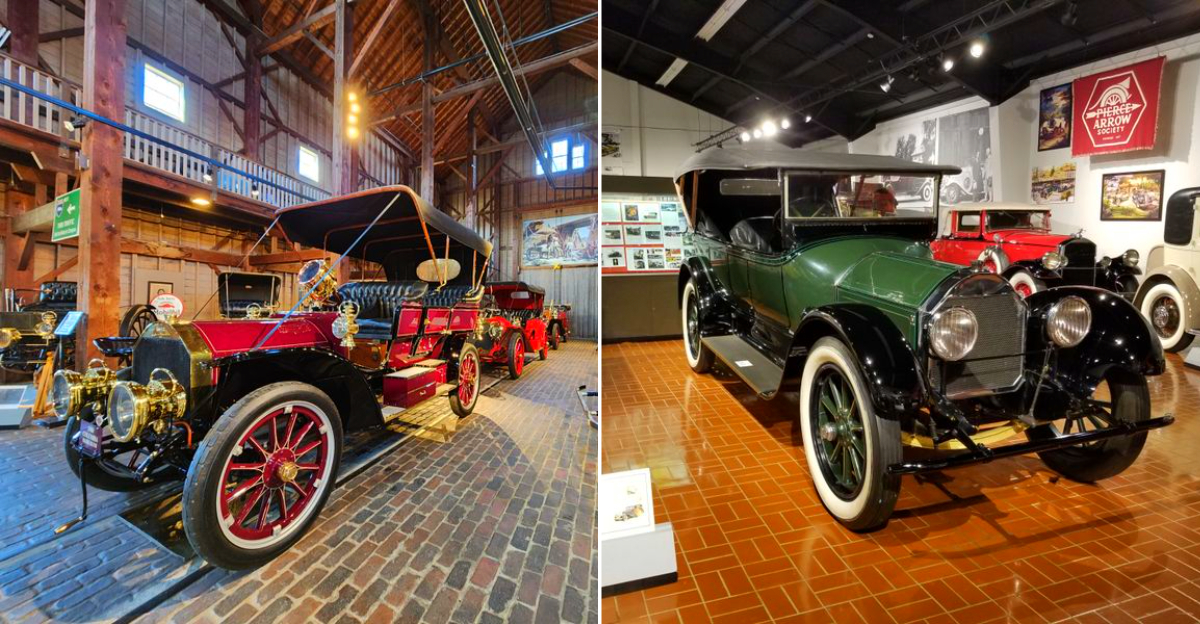
Stepping onto the grounds of the Gilmore Car Museum in Hickory Corners feels like entering a perfectly preserved automotive town that exists just outside the reach of time.
I remember the first time I pulled into the gravel drive; the sharp, sweet scent of freshly cut grass was punctuated by the faint, metallic aroma of engine oil and old leather.
There is a profound sense of space here, where rolling green lawns act as the stage for a collection of bright red barns that house some of the world’s most significant mechanical treasures.
It isn’t just a museum; it is a sprawling ninety-acre campus where the architecture, from the 1941 diner to the vintage Shell station, serves as a living backdrop for the evolution of the American road.
Finding the best car museum in Michigan often brings travelers to this rural intersection, where over 400 vehicles are displayed with a level of care that feels both personal and professional. For those seeking family-friendly day trips in West Michigan, the Gilmore provides a rare blend of historical education and pure, nostalgic spectacle.
The vibe is welcoming and methodical, designed by people who clearly value a well-maintained patina as much as a high-gloss restoration.
If you are looking for classic car events in Michigan or a deep dive into automotive heritage, this institution offers a multisensory experience that rewards those who arrive ready to wander.
The history of the property is deeply tied to the agricultural roots of the region, and you can feel that legacy in the sturdy timber frames of the barns that now protect million-dollar marques.
It is a quiet, expansive refuge for anyone who finds beauty in the curve of a fender or the steady tick of a brass-era clock.
Consider this your field-tested strategy for navigating one of the largest automotive collections in North America, where a quick stop inevitably turns into an all-day ramble through the history of movement.
Arriving Through The Red Barns
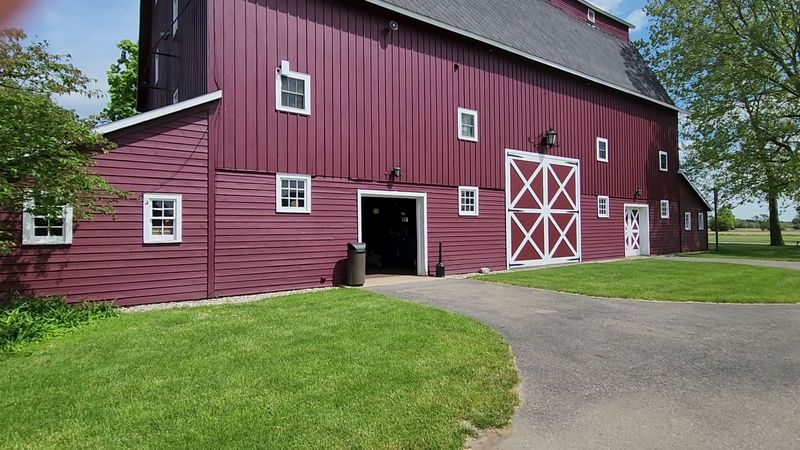
The first thing that hits you is the sheer scale of the property, characterized by crisp country air and a series of handsome red barns that house the primary galleries. The vibe is campus-like and orderly, inviting you to slow your pace as you move between buildings that have been carefully spaced to encourage a leisurely walk.
These barns are not replicas; they reflect the property’s original purpose and have been adapted to serve as dedicated halls for specific brands and eras. It is a practical, beautiful way to organize a massive collection, ensuring that each car has enough room to “breathe” within its own historical context.
The landscaping is meticulous and the pathways invite wandering.
Parking is plentiful and the ticketing lobby moves with a practiced efficiency that gets you onto the grounds quickly. A practical tip: grab a physical map at the entrance and take a moment to note which rotating exhibits are currently on display so you don’t miss a limited-time feature.
Arriving right at opening ensures you have the quietest experience in the halls before the mid-afternoon crowds arrive. Because the museum is spread across so many acres, comfortable walking shoes will pay significant dividends by the time you reach the final barn.
Arrive at opening for the quietest halls.
The 1941 Blue Moon Diner
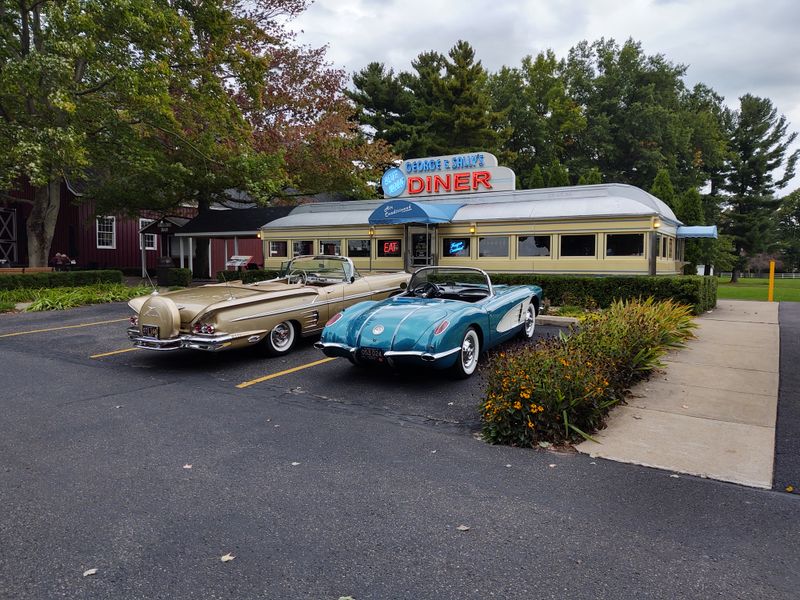
Sensory oddity meets roadside hospitality at this authentic stainless steel railcar diner, which gleams like a neatly polished hood ornament against the green grass. Inside, the clatter of heavy ceramic plates mixes with jukebox notes, creating a cheerful atmosphere that avoids feeling like a forced kitsch.
The pecan pie here has a reputation that precedes it, offering a sugary, buttery break that serves as the perfect fuel for a long afternoon of gallery-hopping. Originally the Blue Moon Diner from Connecticut, this structure was meticulously restored to provide a working example of the culture that once made cars a social centerpiece.
Order at off-peak times to snag a booth.
Food service can become very brisk during the large-scale car shows, so it is wise to plan your mealtime a bit earlier or later than the standard lunch hour. The diner accepts both cash and card, making it an easy pit stop for a quick sandwich or a slice of that famous pie.
If sweets are your primary motivation, keep in mind that the most popular pie slices tend to disappear faster as the mid-afternoon rush sets in. Snagging a window seat allows you to watch the vintage cars cruise the museum grounds while you eat.
Snag a slice of pecan pie early.
Maker Barns And Marque Halls
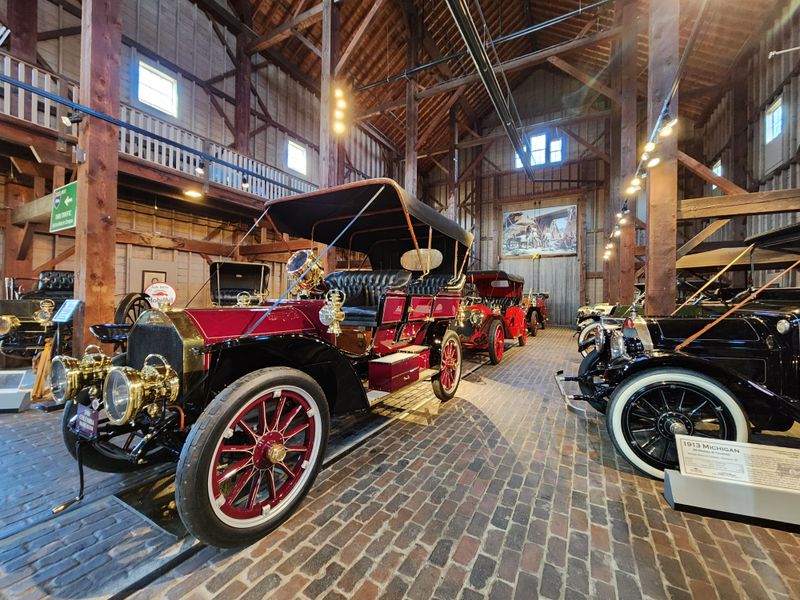
Place and philosophy change with every doorway as you step from the Ford gallery into the Cadillac hall or the Lincoln exhibit. The lighting, signage, and even the floor finishes are subtly tuned to reflect the brand’s specific identity, putting different design languages in conversation across the decades.
You can feel the rapid pace of American innovation by simply comparing the dashboards and grilles of the 1920s to the space-age chrome of the 1950s. These dedicated buildings are the result of partnerships with national clubs, ensuring that the curators have access to the absolute best examples of each marque.
Exhibits rotate, so returning visitors spot new lineups.
Take the time to read the placards; they are written to balance technical specifications with accessible human context that anyone can appreciate. This approach makes the museum feel like a narrative of progress rather than just a warehouse of expensive metal.
Plan your route based on your specific interests rather than following a strict alphabetical order of buildings. If your energy begins to dip, switching eras, moving from the brass age to the muscle car era, is a great way to reset your attention span.
Angle your camera to avoid midday glares.
Early Motoring And Steam Curiosities
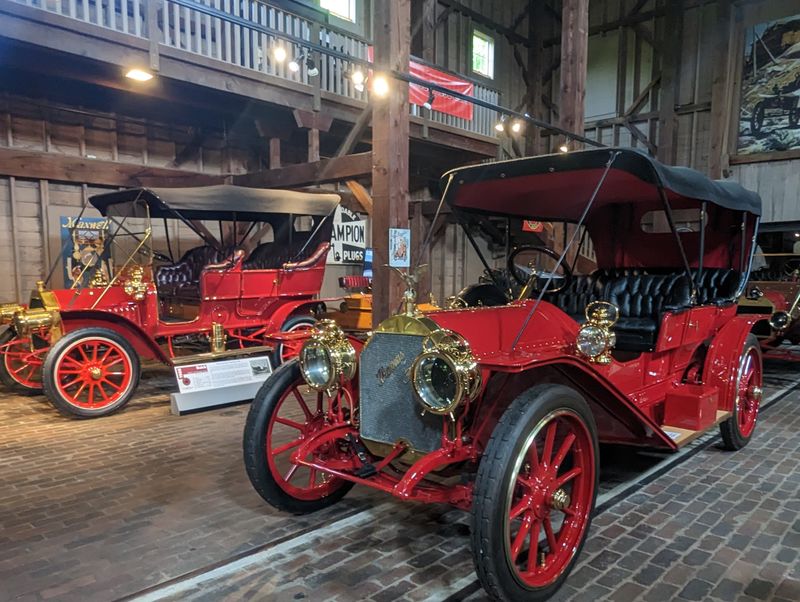
The quiet tick of old mechanisms makes the earliest galleries feel almost reverent, like a library dedicated to the dawn of human invention. You will see brass lamps, skinny wooden-spoked tires, and tiller steering systems that pull your eye toward mechanical details that have long since vanished from the modern road.
There is a hushed, contemplative energy in this section, where steam-powered and early electric vehicles sit as tangible “what-ifs” of transportation history. The museum frames these as vital experiments that shaped the mainstream, rather than just historical dead-ends.
Watch for demonstrations on special event weekends.
Start your day here if you prefer to have a solid historical context before moving on to the more flamboyant spectacles of the mid-century. Revisit these halls later in the afternoon to see how the solutions found in these early machines evolved into the features we take for granted today.
If you are traveling with children, point out the primitive controls and ask them to imagine driving through the mud with only goggles and a lot of patience. It turns a static display into a vivid exercise in imagination and historical empathy.
Read the placards slowly for the best context.
Muscle Row And Concept Dreams
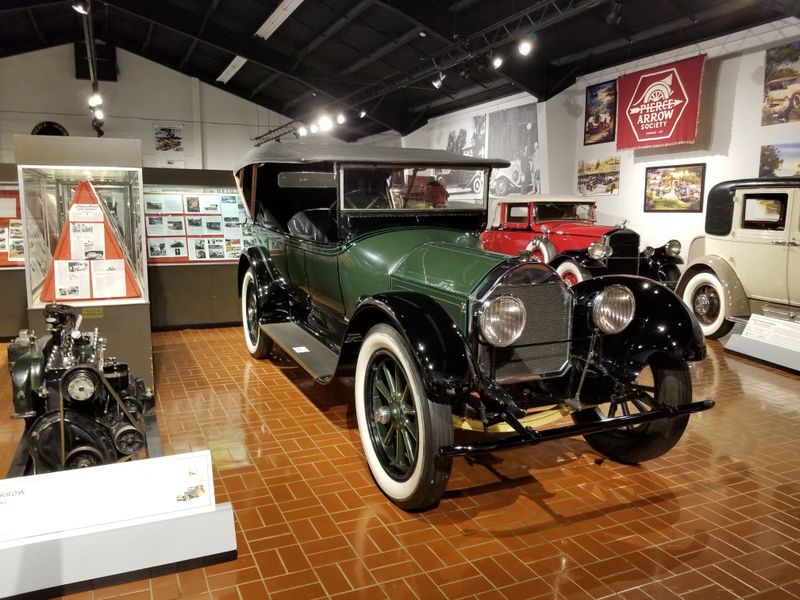
The air seems to tighten near the muscle car gallery, a space filled with vibrant colors and aggressive stances that feel like a lineup flexing without moving. Paint names like “Plum Crazy” and “Hugger Orange” sound like dares, and the rare Yenko Camaro usually draws a permanent orbit of respectful enthusiasts.
It is nearly impossible not to smile at this unapologetic display of American horsepower and bravado. These cars trace a specific cultural moment when engineering met postwar optimism, resulting in some of the most iconic silhouettes ever produced.
The muscle cars draw a small orbit of reverence.
Nearby, the concept car displays underline how designers once probed the future using little more than clay, foam, and radical imagination. You can see the constant argument between ambition and restraint playing out across the fiberglass panels of these one-of-a-kind prototypes.
Crowds tend to build in these popular halls by late morning, so looping back in the final hour of the day often yields the clearest sightlines for photography. If you are taking photos, kneel for low angles that exaggerate the “hips” and haunches of these powerful machines.
Watch reflections to keep your silhouette out of fenders.
The Vintage Gas Stations And Small Town Street
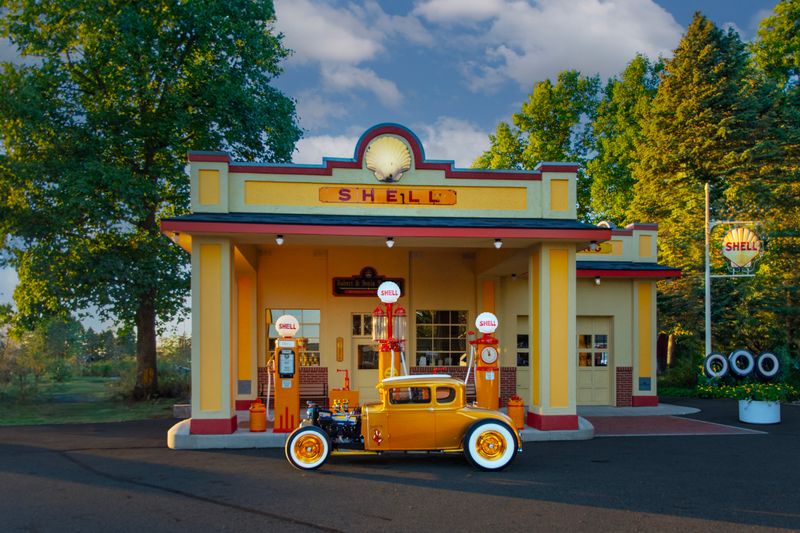
Local detail and theatrical flair come together in the 1930s Shell station and the surrounding period storefronts, creating a streetscape that feels authentic rather than showy. The pump globes glow like little moons in the afternoon light, and the porcelain signs have that satisfying, heavy curve of genuine mid-century manufacturing.
The scene naturally slows your stride, encouraging you to peer into the service bay windows to see the tools and price charts of a bygone era. These buildings aren’t just props; they are immersive classrooms that interpret the infrastructure that made long-distance travel possible.
Look for restored details like vintage price charts.
Bright, overcast days provide the best lighting for capturing the vibrant colors of the enamel signs without the interference of harsh shadows. Tempting as it may be to touch the smooth, cool surfaces of the porcelain, the museum asks that you appreciate the patina from a short distance.
If you are traveling with elders, this is the perfect place to pause and ask for their personal road stories. Matching their memories to the hardware in front of you often yields the most meaningful “exhibit” of the entire day.
Pause here to hear local road stories.
Motorcycles And The Building You Might Miss
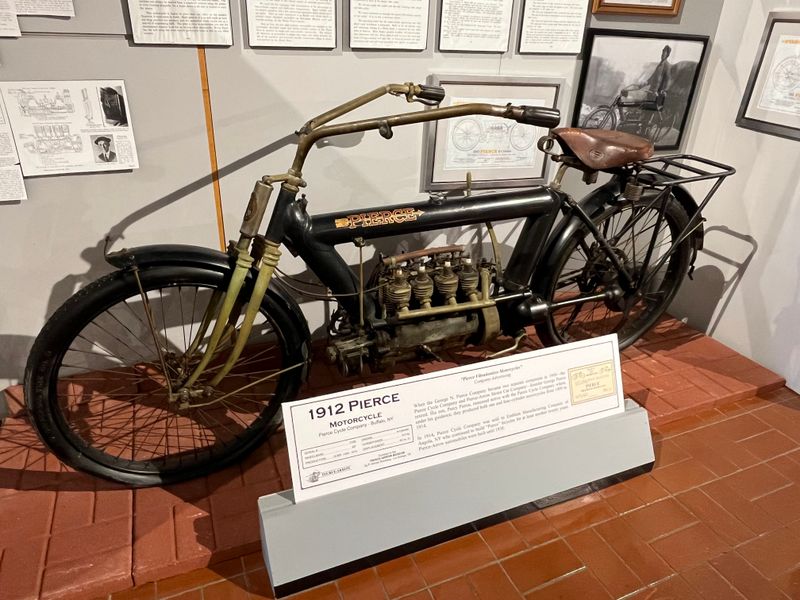
Hidden element of the Gilmore is a quieter hall tucked away on the back side of the campus that holds an extensive and world-class motorcycle collection. Rows of chrome, leather, and purposeful frames are lined up like sketches in steel, each representing a different philosophy of two-wheeled travel.
The room seems to hum with the energy of accumulated miles even when everything stands perfectly still. Many reviewers note that this building is easily overlooked because the signage is a bit more subtle than the main marque barns, so make it a specific destination on your map.
Reviewers note this building can be easily overlooked.
The historical range here is staggering, stretching from the earliest motorized bicycles to the massive touring models of the late 20th century. It is a must-see for anyone interested in the raw mechanics of the internal combustion engine, as nothing is hidden behind a hood.
Photographing the badges and instrument clusters in this hall provides a great graphic punch for your travel album. If your group decides to split up, set a firm meet-up time, as the outdoor cell reception on the sprawling grounds can occasionally be wobbly.
Ask volunteers about the specific preservation techniques.
Model T Driving Experience

The vibe of the “teaching circle” begins with a set of pedals that will almost certainly contradict every modern driving instinct you possess. Low, high, and reverse share positions that make even the most experienced drivers blink in confusion, until the moment the mechanism finally clicks.
There is always a burst of laughter when the engine coughs into life and the car begins to roll forward with a sense of dignified, shaky optimism. The guides are famously patient and meticulous about safety, ensuring that you feel comfortable with the “Armstrong” starter and the hand throttle.
Book ahead because slots fill up very quickly.
This hands-on experience deepens your appreciation for everything you’ve seen inside the galleries, proving how much early cars demanded from their operators. It is one thing to see a Model T; it is quite another to feel the vibration of the floorboards as you navigate the museum’s backroads.
If you are feeling nervous, opt to ride as a passenger first and drive second to let your muscle memory catch up to the unusual controls. You will leave the property appreciating how the early roads shaped the drivers, rather than the other way around.
Wear closed-toe shoes for the pedal work.
Seasonal Lights And Community Events
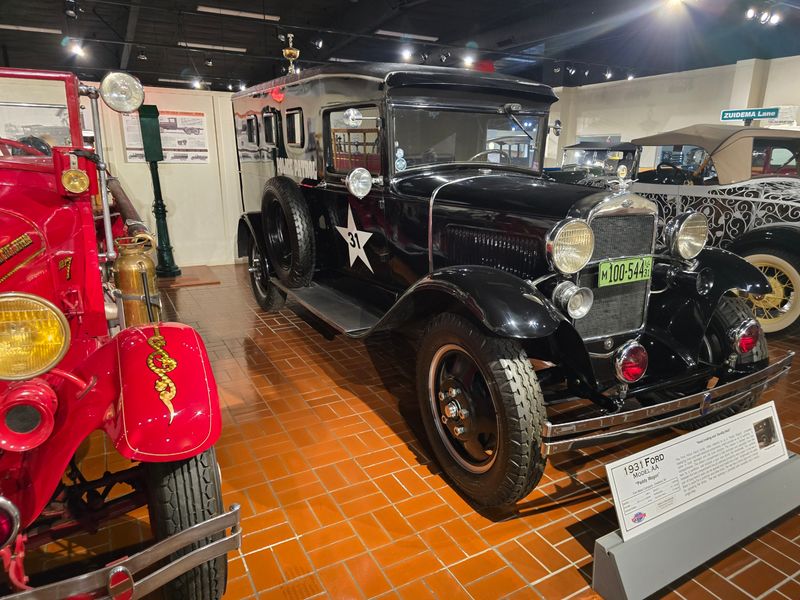
Vibe and community come together during the winter months when the grounds are wrapped in millions of LEDs and radio-synced music. The cars in the windows become dramatic silhouettes against the colors, and the pace of the drive-through experience is gentle, focusing on wonder rather than high-speed spectacle.
Throughout the rest of the year, the museum’s lawns are frequently repopulated with “living metal” during weekend car shows and motorcycle meets. These events bring a neighborly, high-energy mood to the campus as hundreds of private owners drive their own treasures onto the grass.
Check the calendar before you drive out.
Because admission prices and access can differ on major event days, it is always a smart move to check the museum’s website before you depart. If you are attending the winter light show, bring blankets for the car and be sure to tune your radio to the directed frequency for the full effect.
The volunteers and staff keep these events feeling like a local gathering regardless of how many thousands of people attend. It is a straightforward, cozy experience that manages to be surprisingly moving for visitors of all ages.
Arrive early for parking during the summer shows.
Architecture, Placards, And Quiet Corners
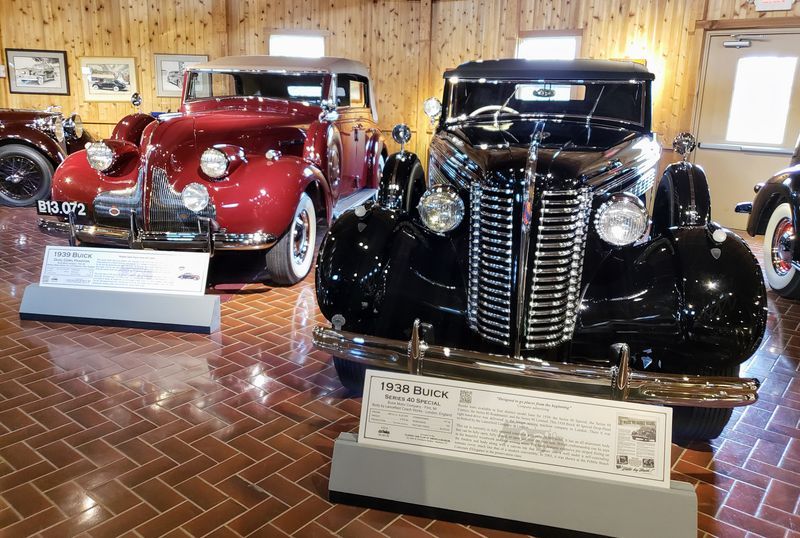
Not every highlight gleams. Some of the best moments happen where barn boards meet polished concrete and the lighting drops to a soft pool around a hood ornament.
Those quiet corners encourage unhurried looking. The interpretive signs are concise, readable, and factual without fuss.
You will learn why a line curves, how a factory innovated, or which coachbuilder crafted a body. It rewards patient readers.
Find benches near windows for a rest and a long view across grass. If crowds swell, pivot to an adjacent building rather than waiting.
Keep a small notebook or phone list of favorites, because the day’s memory gets happily crowded.
Planning Your Day Like A Pro
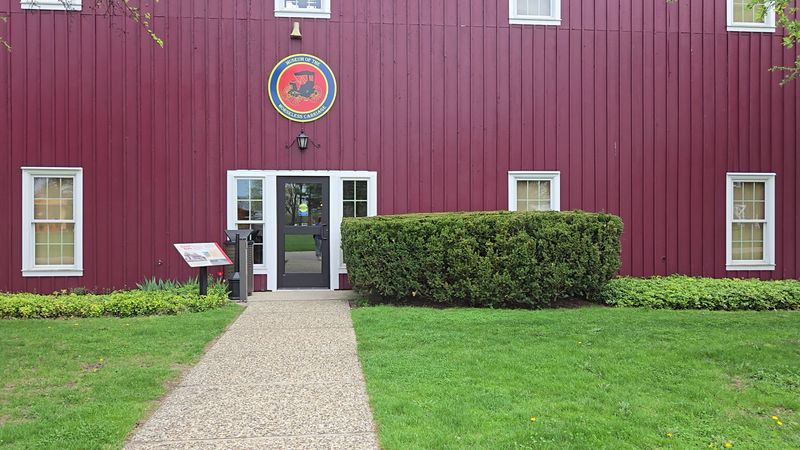
Logistics are key at a site this large, so start your adventure at opening (usually 10 AM) and plan for at least four to five hours as a baseline. The grounds are significantly larger than they appear on a map, and some of the best surprises are tucked in the small corridors between the main barns.
Because you will be moving between indoor galleries and the outdoor campus, layering your clothing is essential to handle the Michigan weather swings. The Gilmore’s website (gilmorecarmuseum.org) is the best resource for the most up-to-date hours and the specific Model T teaching schedule.
Check the website for the Model T schedule.
Bring a bottle of water and a plan to hit the diner at a non-standard time to avoid the longest queues for a booth. While photos are encouraged everywhere on the grounds, be sure to respect the physical barriers and avoid leaning on the vehicles for that “perfect” shot.
When your attention begins to fade, step outside for five minutes of fresh country air to reset your senses before entering the next building. You will leave the property with a crowded, happy memory of a day well-spent in a town built entirely for the love of the car.
Wear comfortable shoes for the ninety-acre walk.