
This Quiet Corner Of Arizona Lets You Stroll In The Actual Footprints Of Prehistoric Giants
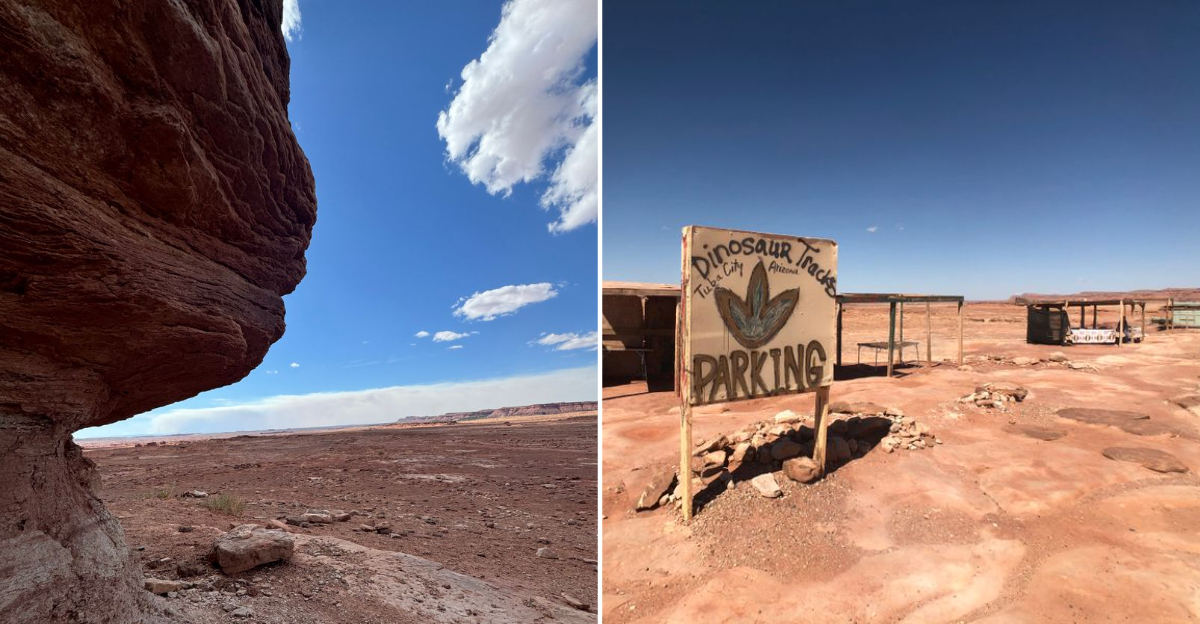
There’s a corner of Arizona so mellow it could be a yoga retreat, yet it packs a punch that would make even the most seasoned fossil‑fan gasp.
I’m talking about a secluded mesa where the only “trail markers” are the gigantic, perfectly preserved footprints of dinosaurs that roamed the land when the planet was still figuring out how to be a home.
The moment I set foot on that ancient pathway, I felt like a kid in a giant’s backyard-except the backyard belonged to a creature the size of a school bus.
With a gentle breeze rattling the sagebrush and the distant call of a hawk, you can wander these fossilized steps. Or snap a selfie with a 70‑million‑year‑old footprint, and leave with a story that’s as personal as it is prehistoric.
Who knew the desert could double as a time‑machine for the adventurous heart?
A Journey Back 200 Million Years
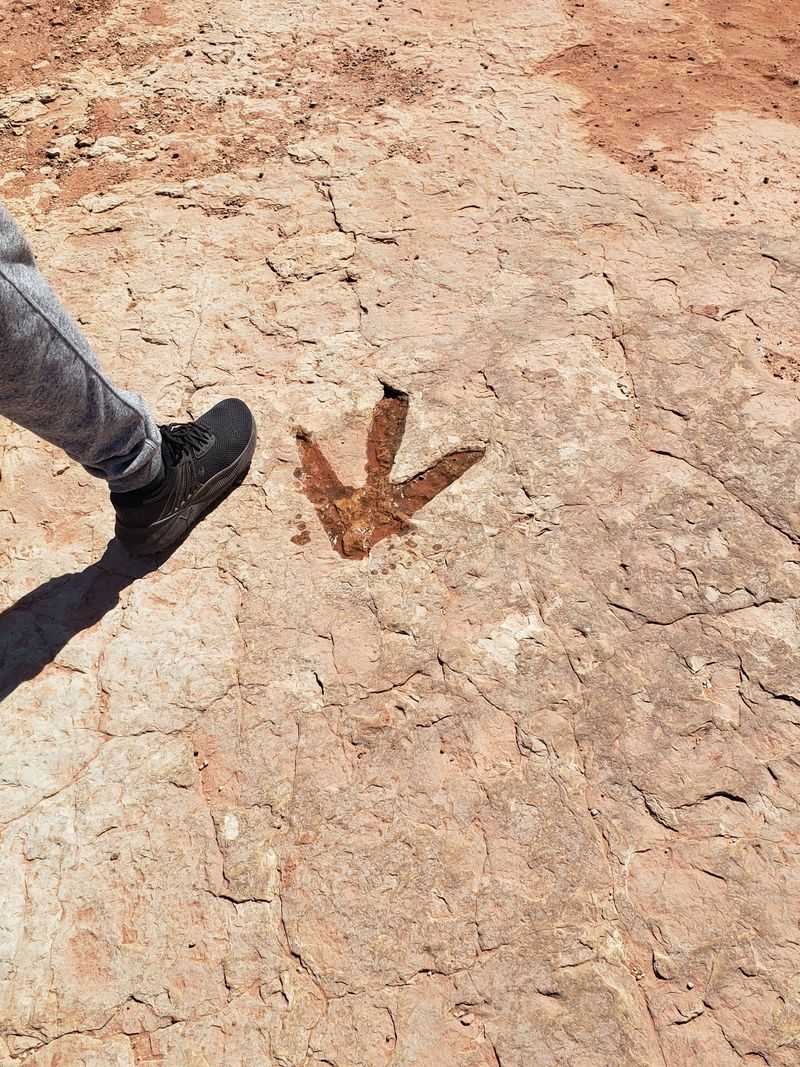
Stepping onto the red sandstone near Tuba City feels like crossing an invisible threshold into another world entirely. When I first visited, I couldn’t quite wrap my head around the fact that these weren’t replicas or museum displays.
These were the real deal, preserved by sheer geological luck. The tracks date back to the Early Jurassic period, when this entire region was a marshy riverbed teeming with life.
Back then, dinosaurs trudged through soft mud and sand, leaving impressions that would eventually harden into stone. Over millions of years, layers of sediment buried these footprints, protecting them like nature’s own time capsule.
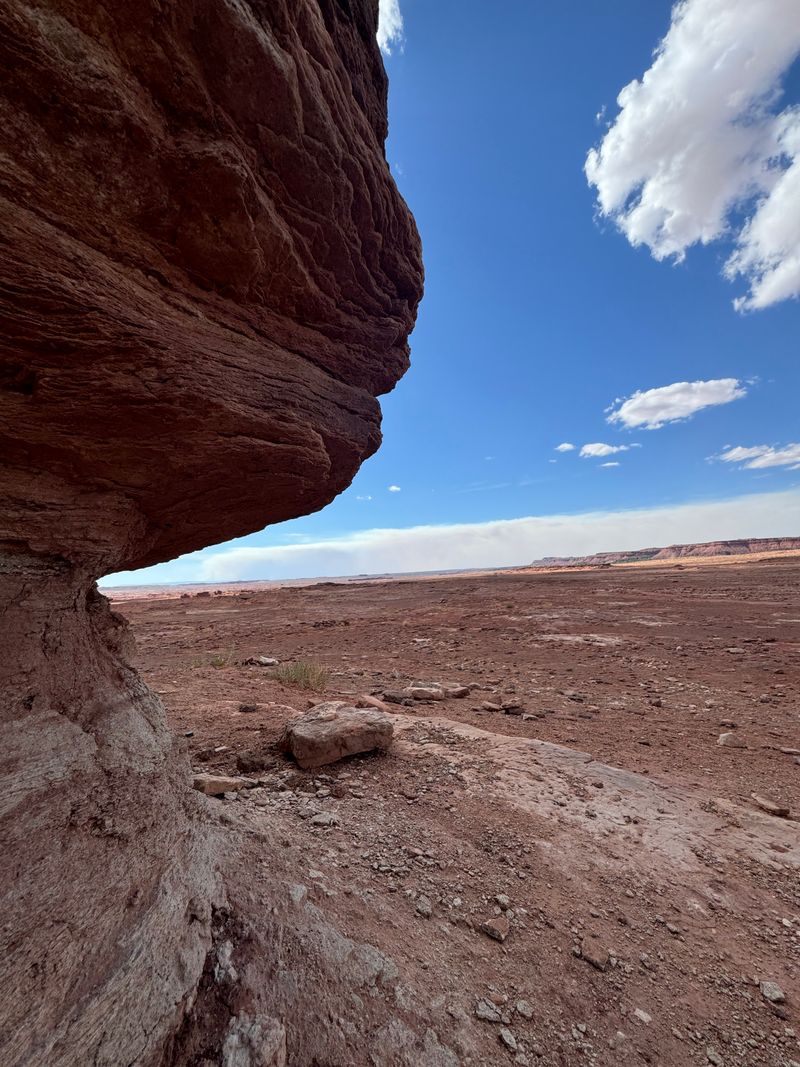
Erosion eventually revealed them again, scattered across the open desert floor in stunning clarity.
Scientists have verified the authenticity of the site, identifying these as trace fossils—evidence of ancient behavior rather than bones. Standing there, wind whipping across the open landscape, I felt time collapse in the most humbling way.
You’re not looking at history through glass; you’re standing in it, feeling the same sun that warmed those ancient creatures so long ago.
Finding The Site Along Highway 160

Getting to the dinosaur tracks is refreshingly straightforward, though the first time I drove past, I almost missed the turn. The site sits about five miles west of Tuba City along U.S.
Highway 160, marked by a simple roadside sign that reads “Dinosaur Tracks.”
No fancy entrance gates, no visitor center-just pull off the highway and park near the small vendor stands.
The location is part of the Navajo Nation, which means you’re visiting sovereign land with its own customs and respect protocols. When I arrived on a Saturday morning, several local families had set up small stands selling handmade jewelry and crafts.
It felt more like visiting someone’s backyard than a tourist attraction, which honestly made the experience more authentic.
The site is technically open 24 hours, though I’d recommend visiting during daylight for safety and to meet the guides.
There’s no official entrance fee, but tipping your guide is customary and expected-usually between $10 and $20, depending on the length and quality of your tour. Bring cash, because card readers aren’t exactly common out here in the high desert.
Meeting Your Navajo Guide
One of the absolute highlights of visiting the tracks is connecting with the local Navajo guides who’ve spent their entire lives on this land. When I pulled up, a woman named Helen greeted me with a warm smile and asked if I’d like a tour.
I’m so glad I said yes, because without her, I would have walked right past some of the best-preserved prints.
These guides aren’t trained paleontologists, and they’ll tell you that themselves. What they offer instead is generational knowledge, stories passed down through families, and an intimate familiarity with every inch of the site.
Helen pointed out tracks I never would have noticed-some filled with rainwater that made the impressions pop, others nearly invisible until you knew exactly where to look.
She shared stories about growing up near the tracks, watching tourists come and go, and protecting the site from vandalism. Her passion was contagious.
The guides work entirely on donations, so whatever you can afford to tip is appreciated. I gave Helen $20 and bought a handmade bracelet from her stand, which felt like the least I could do for such a memorable experience.
The Three-Toed Tracks Of Ancient Theropods
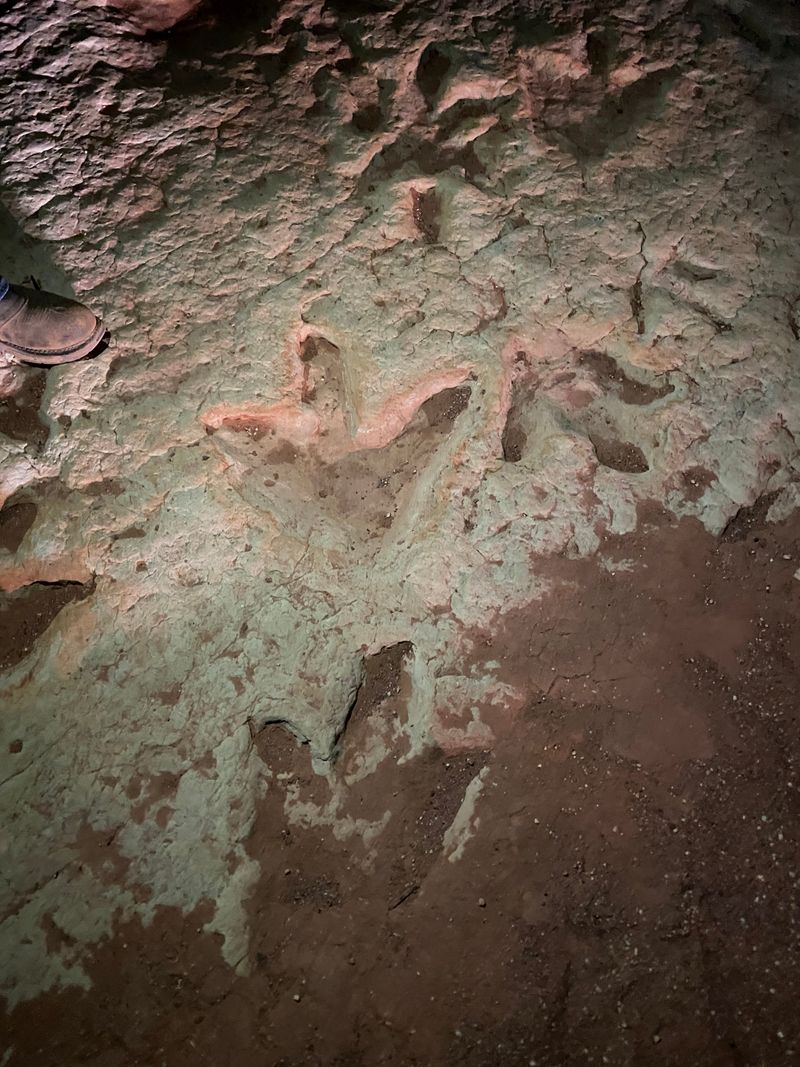
The most striking feature of the site is the abundance of three-toed tracks scattered across the sandstone like prehistoric graffiti. These footprints belong to theropods-meat-eating dinosaurs that walked on two legs and left distinctive claw marks in the mud.
Based on the size and shape, paleontologists believe they were likely made by creatures like Dilophosaurus, Coelophysis, or Grallator.
Dilophosaurus is particularly exciting because fossils of this dinosaur have been found nearby, dating to the same Early Jurassic period.
Some tracks are small, barely bigger than my hand, while others stretch nearly a foot across. The variation in size suggests different species or perhaps juveniles and adults traveling together.
My guide poured a little water from her bottle into one of the deeper tracks, and suddenly the details became crystal clear-three distinct toes, sharp claw marks, even the texture of the dinosaur’s skin pressed into the stone.
It’s one thing to see dinosaur bones in a museum, but seeing evidence of how they moved, where they stepped, and how they interacted with their environment? That’s something else entirely, something that sticks with you long after you leave.
Fossilized Eggs And Coprolites
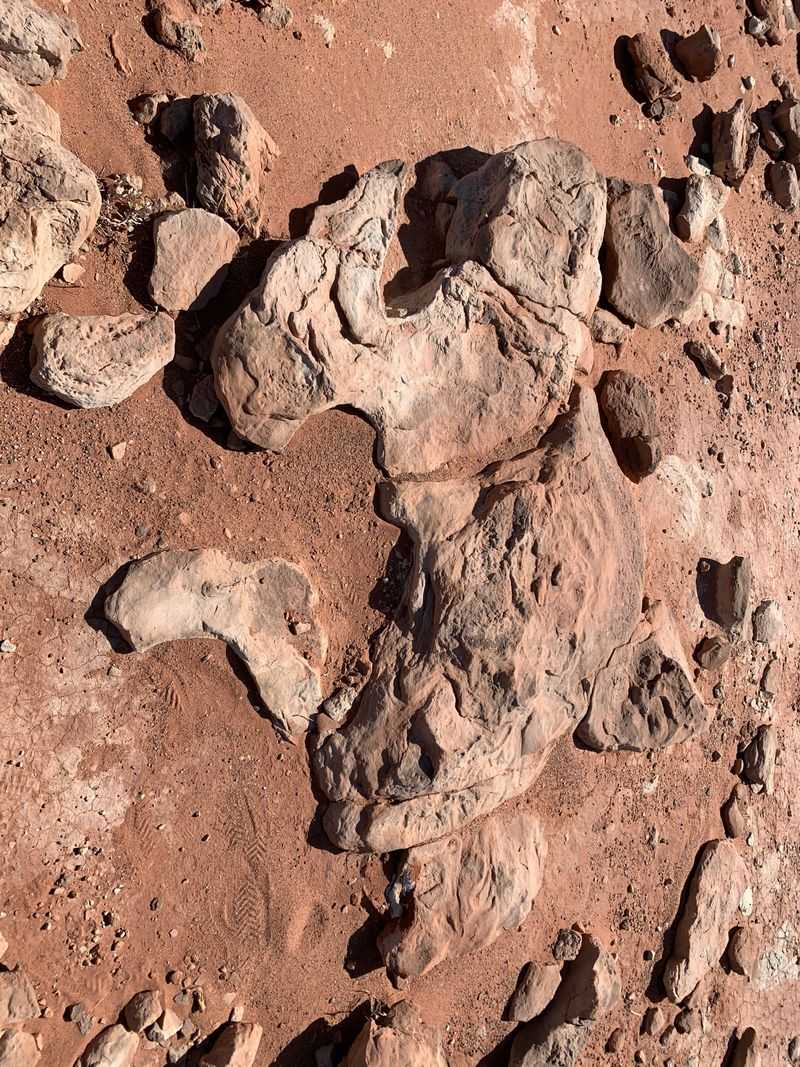
Beyond the footprints, the site holds other prehistoric treasures that many visitors overlook if they’re exploring without a guide. My guide pointed out what appeared to be fossilized dinosaur eggs-smooth, rounded shapes embedded in the rock that looked almost too perfect to be natural formations.
Whether they’re truly eggs or just oddly shaped stones is still debated, but seeing them sparked my imagination either way.
Even more fascinating were the coprolites-fossilized dinosaur droppings. Yes, you read that right: ancient poop preserved for millions of years.
These weren’t just random lumps, though.
They had clear circular rings where the material had dropped and piled up, much like you’d see with modern animal waste. It’s strangely beautiful in a gross-yet-scientific way.
One afternoon during my visit, a kid on a tour with his family shouted, “Mom, I found dinosaur poop!” with the kind of unbridled enthusiasm that only a ten-year-old can muster.
His excitement was contagious, and soon the whole group was crouched around examining the fossilized evidence. It’s these little moments that make the site feel less like a sterile educational experience and more like a genuine adventure into the past.
Ancient Riverbeds And Marine Fossils
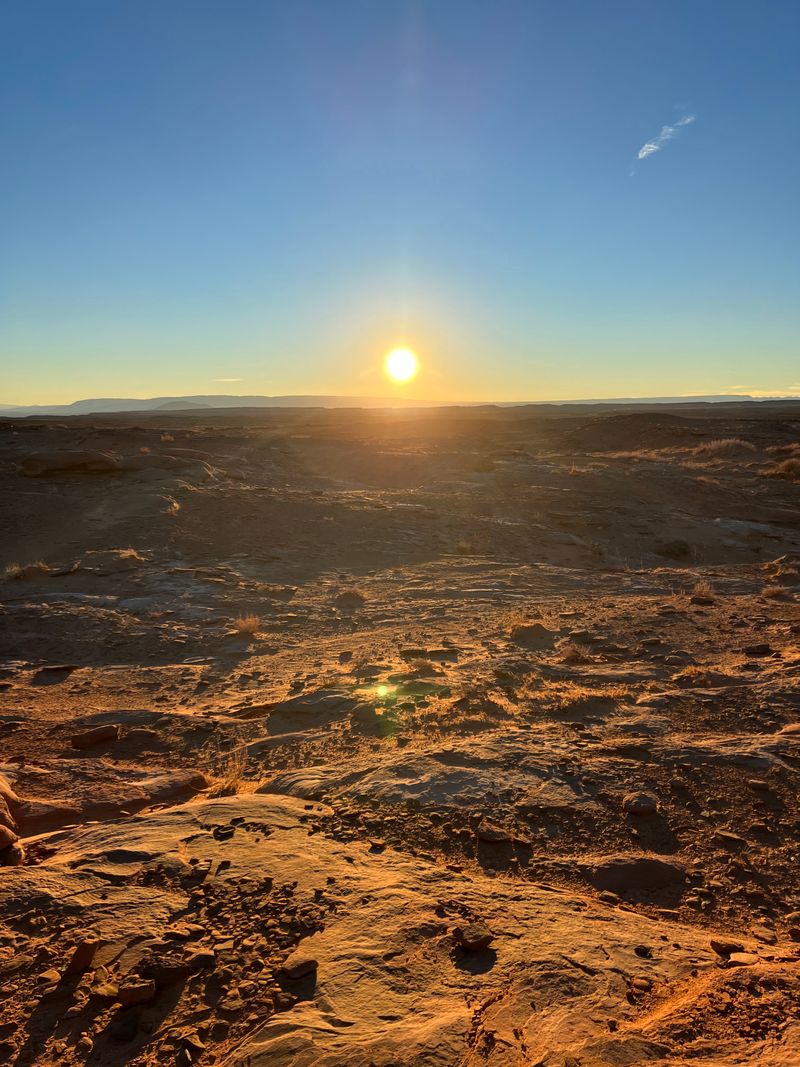
What really blew my mind was learning that this entire area was once underwater. The Moenave Formation preserves not just dinosaur tracks but also evidence of ancient rivers, lakes, and even marine life.
If you look closely at the rocks, you can spot fossilized ripple marks from water currents, plant impressions, and tiny aquatic fossils embedded in the stone.
My guide showed me sections where the rock had distinct wavy patterns-ancient riverbeds frozen in time. She explained that during the Early Jurassic, this region experienced seasonal flooding, creating mudflats where dinosaurs would gather to feed and drink.
When the water receded, their tracks remained, eventually hardening before the next flood cycle buried them under fresh sediment.
I spent a good twenty minutes examining one particular section that had what looked like fossilized ferns and small shell fragments. The level of preservation is remarkable, offering a complete snapshot of an entire ecosystem rather than just isolated dinosaur evidence.
It’s like reading a 200-million-year-old diary written in stone, each layer revealing another chapter of Earth’s history. You don’t need a science degree to appreciate the wonder of it all.
Respecting Sacred Land And Leaving No Trace
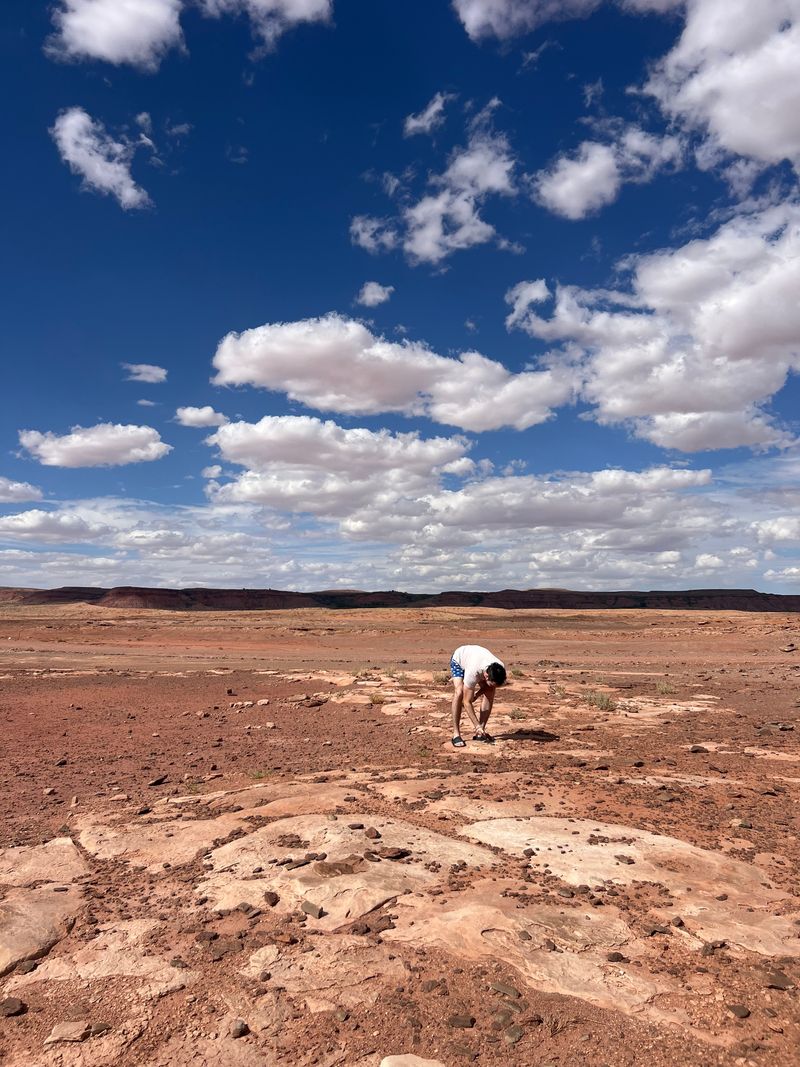
Visiting the dinosaur tracks comes with an important responsibility: respecting both the land and the Navajo people who’ve chosen to share this treasure with outsiders.
Unlike many fossil sites that are fenced off and heavily regulated, this place remains open and accessible-a privilege that requires conscious care from every visitor.
When I was there, I noticed broken glass scattered in a few areas, which was heartbreaking to see.
The tracks themselves are fragile. While guides will often encourage you to touch them and even stand in them for photos, it’s crucial to avoid scraping, chipping, or removing anything from the site.
I watched one family carefully step around the smaller tracks to avoid damaging them, setting a great example for their kids.
Take only photos, leave only footprints-the classic outdoor ethics apply here more than anywhere.
My guide mentioned that vandalism and theft have been ongoing issues, with some visitors trying to chip off pieces of fossilized material as souvenirs. Please don’t be that person.
This site belongs to the Navajo Nation and represents both natural history and cultural heritage. Treat it with the reverence it deserves, and future generations will get to experience the same magic you did.
Supporting Local Artisans And Vendors
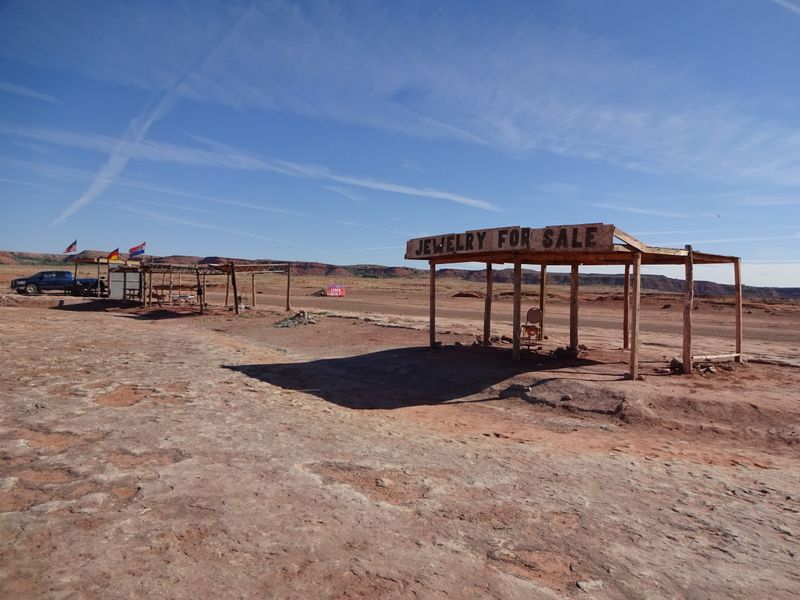
Before and after exploring the tracks, take time to browse the handmade jewelry and crafts sold by local Navajo families at the site. These aren’t mass-produced tourist trinkets-they’re genuine pieces of art created by skilled artisans using traditional techniques passed down through generations.
I purchased a simple turquoise bracelet that’s become one of my favorite travel souvenirs, not just because it’s beautiful but because of the story behind it.
The woman who sold it to me explained that her grandmother taught her silversmithing when she was just a girl, and now she’s teaching her own daughter the craft.
Buying directly from these vendors supports families who live in one of the most economically challenged regions of the country. Your $20 bracelet or $15 necklace makes a real difference in their lives.
Some visitors feel uncomfortable with the donation-based system or worry about being pressured to buy things. In my experience, the vendors were friendly but never pushy.
If you genuinely can’t afford to tip or purchase anything, the guides still welcomed us to explore the tracks. That said, if you can contribute, please do.
These families are sharing something irreplaceable with you, and supporting them is part of being a responsible, grateful visitor.
Planning Your Visit And Nearby Attractions
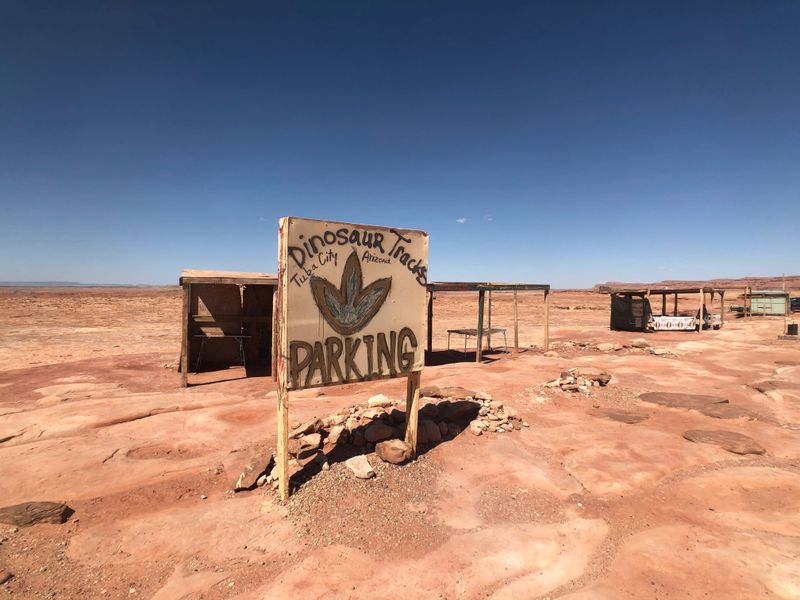
Timing your visit can make a big difference in your experience. Weekends tend to be busier, with more guides available and a livelier atmosphere at the vendor stands.
Weekdays are quieter-when I stopped by on a Tuesday afternoon, I had the entire site almost to myself, which was both peaceful and slightly eerie. The downside was no guides were present, so I missed out on the expert commentary.
The site has no facilities-no bathrooms, no water fountains, no shade structures. Bring plenty of water, wear sunscreen, and consider a hat because the desert sun is no joke, even in cooler months.
Comfortable walking shoes are essential since you’ll be navigating uneven sandstone surfaces. I wore hiking boots and was glad I did after slipping once on a smooth rock surface.
If you’re in the area, combine your visit with nearby attractions. Blue Canyon in Moenkopi Wash, about thirty minutes southwest, offers surreal geological formations and stunning photo opportunities.
The Grand Canyon’s eastern entrance is roughly ninety minutes away, making the dinosaur tracks a perfect stop on a larger northern Arizona road trip. Just remember: this isn’t a quick five-minute photo op.
Give yourself at least an hour to truly absorb the experience and do justice to this remarkable place.