
11 Secret Michigan Destinations You’ll Be Glad You Found First
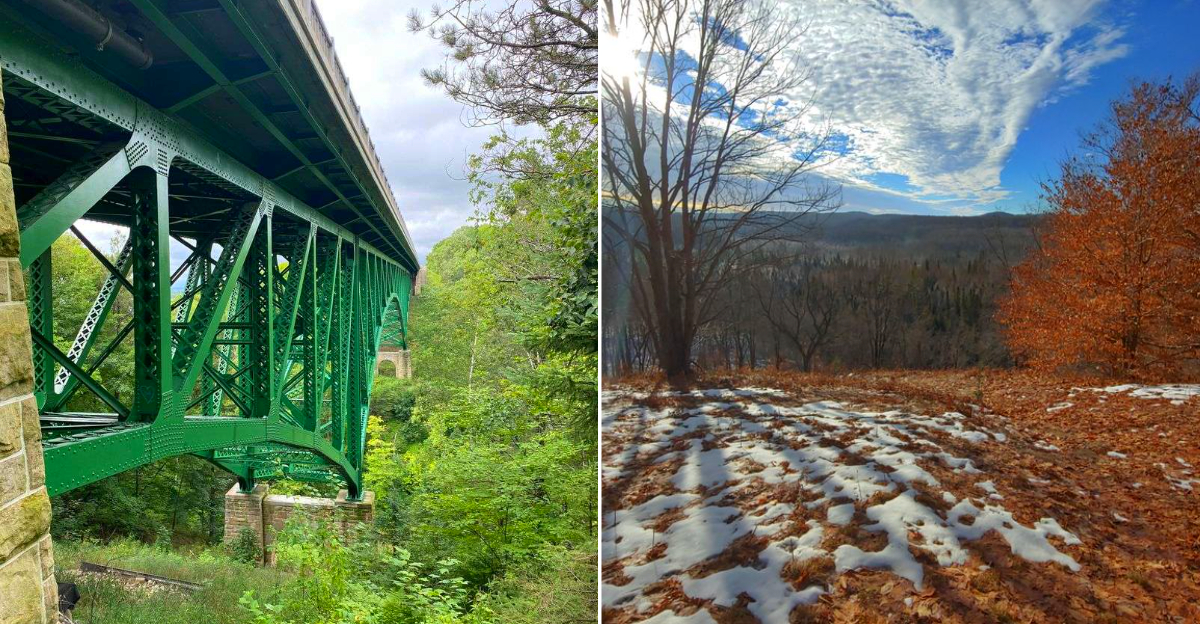
Michigan hides quiet corners where the chatter drops and the landscape does the taking. These are the places where the air smells like pine shavings and cold stone, and where the rhythmic “slap” of the water against the shore is the only clock you need.
This list wanders from wind-scrubbed lakeshores to solemn forests, places that reward unhurried eyes and sturdy shoes. You will not find the noise of boardwalks or crowded lobbies here; instead, you’ll discover small oddities, patient histories, and a night sky so clear it feels borrowed from deep space.
Standing on the remote, red-lanterned precipice of Crisp Point Lighthouse or exploring the silent, limestone ruins of Fayette Historic State Park, these stops offer a necessary pause. Pack your curiosity, leave room for detours, and let these under-the-radar destinations reshape your map of the Great Lakes State.
These secret sanctuaries offer a masterclass in stillness, providing a rare front-row seat to Michigan’s most evocative and untouched natural wonders.
I’ve mapped out these locations to help you find the spots that remain blissfully off the main tourist circuit, from the emerald depths of Kitch-iti-kipi to the wildflower meadows of Arcadia Dunes.
Whether you are looking for the best backcountry campsite to hear the wolves of Isle Royale or a hidden beach to hunt for stones in solitude, this guide is your key to the state’s quietest treasures.
1. Isle Royale National Park
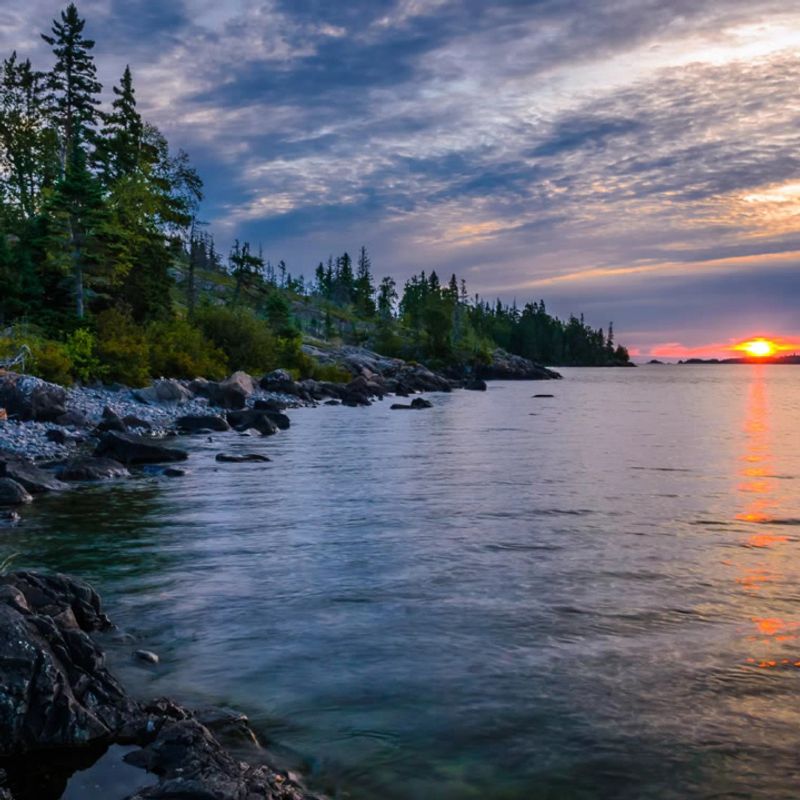
Waves slap the basalt shore with a hollow drumbeat, and the sharp scent of spruce hangs in the cool, northern air. Moose prints frequently dimple the muddy trails, serving as a silent reminder of who truly owns this rugged island.
Ferries arrive from the mainland like measured heartbeats, briefly connecting the wilderness to the world before the quiet stitches itself back together once the gangplank rises.
Once a copper mining outpost for those brave enough to weather the storms, Isle Royale eventually traded ore for an intense, rewarding solitude. Today, the park is a living laboratory, protecting wolves and moose in one of the world’s longest-running studies of predator and prey.
Lighthouses stand like lonely punctuation marks on Lake Superior’s run-on sentence of a coastline.
To experience it, book the Ranger III or a seaplane early and commit to the slow miles of the Greenstone Ridge. Filtration of water and strict adherence to backcountry rules are essential, but the reward is a sense of time widened by incredible distance.
2. Porcupine Mountains Wilderness State Park
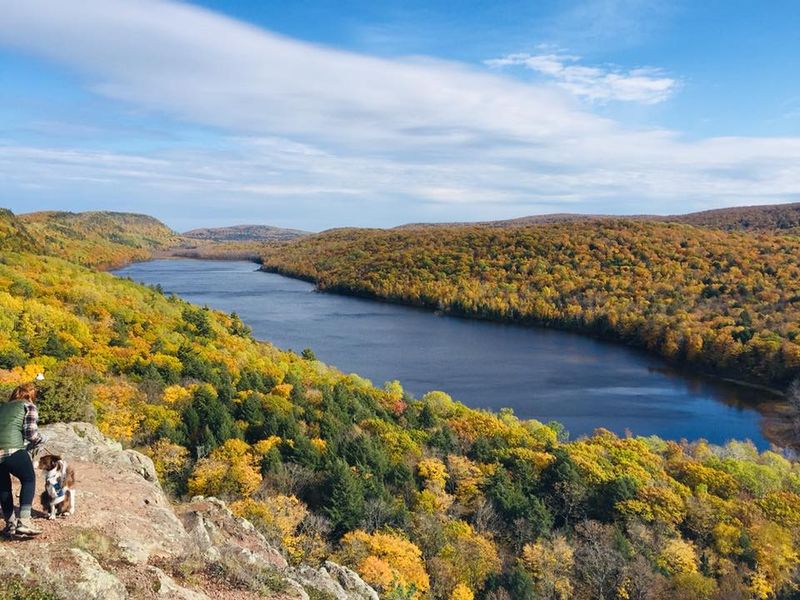
Maples and hemlocks fold over Lake of the Clouds like a heavy green quilt, with ancient bedrock stitched into the seams. While the main overlook feels ceremonial and grand, it is the quieter ravines and secret hollows that carry the park’s true voice.
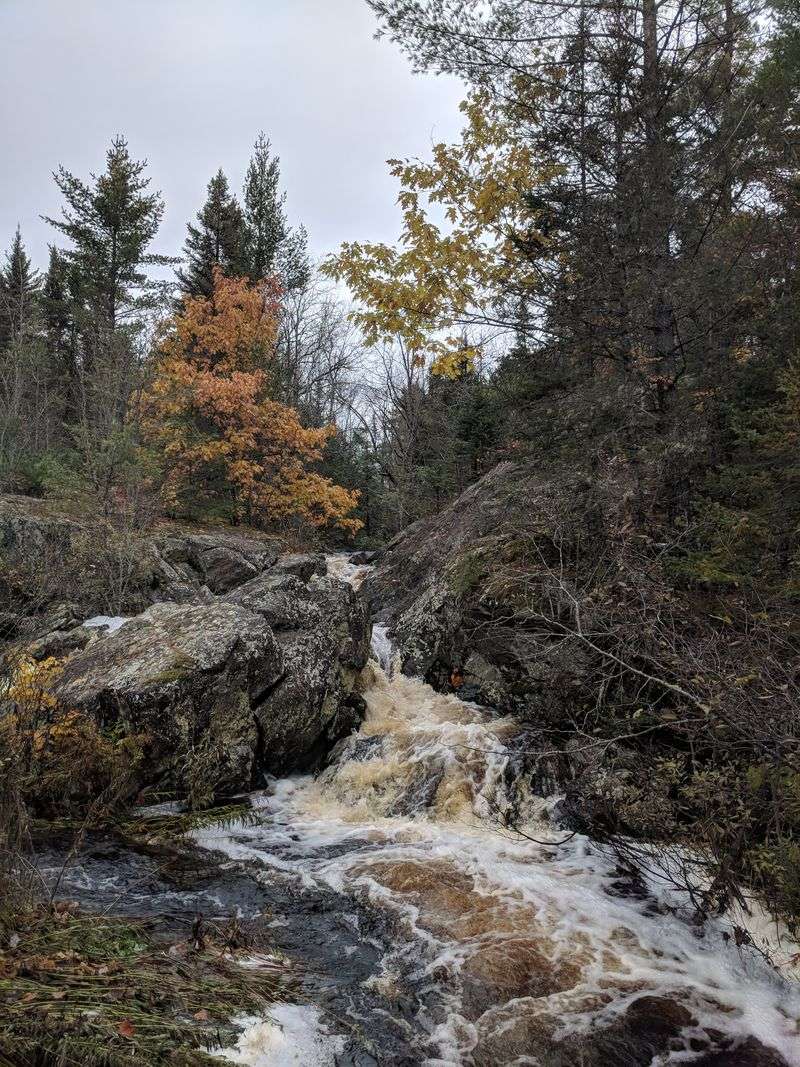
Waterfalls throughout the “Porkies” speak in steady, rhythmic syllables, tumbling over dark rock toward the vastness of Superior.
This old-growth forest survived the logging era because the trees were deemed too tangled and the terrain too stubborn to haul lumber easily. Later, Civilian Conservation Corps (CCC) crews left behind stonework and cabins that now blend seamlessly into the lichen and moss.
Mining towns once flickered nearby, but they have since dimmed, leaving only the wind in the canopy.
Plan your loops on the Escarpment and North Mirror Lake trails, then chase the sunset from Summit Peak. Just remember: bug spray is non-negotiable in June.
You will leave with legs pleasantly tired and a mind that has finally lowered its shoulders.
3. Craig Lake State Park
Silence lands thick here, broken only by a loon’s far-off tremolo or the hollow clunk of a paddle against an aluminum canoe. The rough two-track road leading into the park corrugates your plans until they rattle down to the simple essentials.
Granite knobs and jack pines create a spare, handsome skyline that feels more like the Canadian Shield than the lower Midwest.
Once a private hunting and fishing preserve for manufacturing moguls, the area eventually became Michigan’s most remote state park. The old logging two-tracks now serve as paths to walk-in campsites and ink-dark water where beavers edit the shorelines with patient teeth.
High-clearance vehicles are highly recommended for the entrance road, and your gear will certainly earn its keep.
Portage your boat to the smaller, interior lakes for total solitude and let the night sky reset your sense of scale. You will not miss your cell signal here, because you simply won’t have one.
4. Headlands International Dark Sky Park
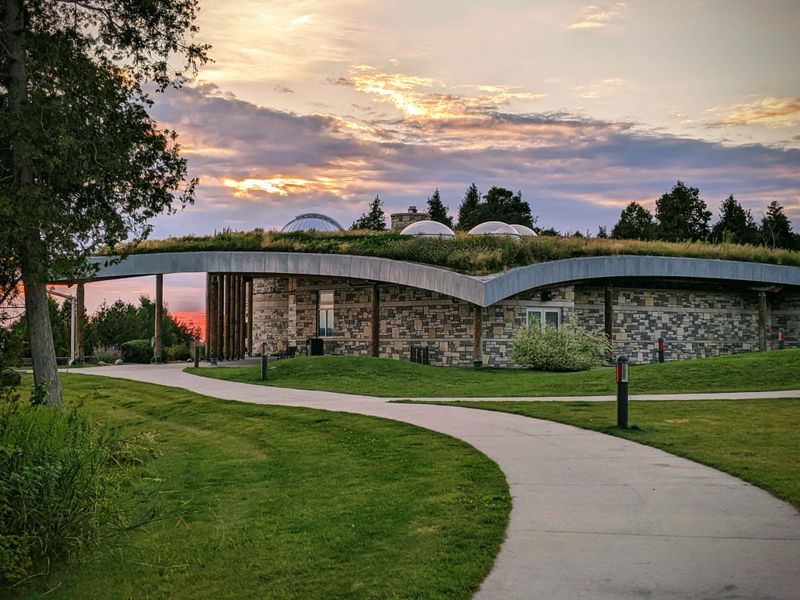
Stars pour into the sky like spilled salt, and Lake Michigan transforms into a vast, black mirror reflecting the cosmos. The Milky Way is not a mere rumor or a faint smudge here; it is a brilliant, glowing ribbon that stretches from horizon to horizon.
Along the shoreline paths, the red light of headlamps blinks like thoughtful fireflies, as visitors move carefully to preserve their night vision.
As a designated International Dark Sky Park, Headlands protects the night from the stray watts of modern development. Interpretive signs along the Dark Sky Discovery Trail trace constellations and the human stories, Anishinaabe and European alike, layered beneath them.
The on-site Observatory and event lawn host quiet gatherings that feel almost reverent under the celestial canopy.
Arrive before full dark to allow your eyes to adjust and claim a respectful spot on the viewing platform. Pack warm layers even in the heat of August, and silence your screens to let the universe do the talking.
5. Sanilac Petroglyphs Historic State Park
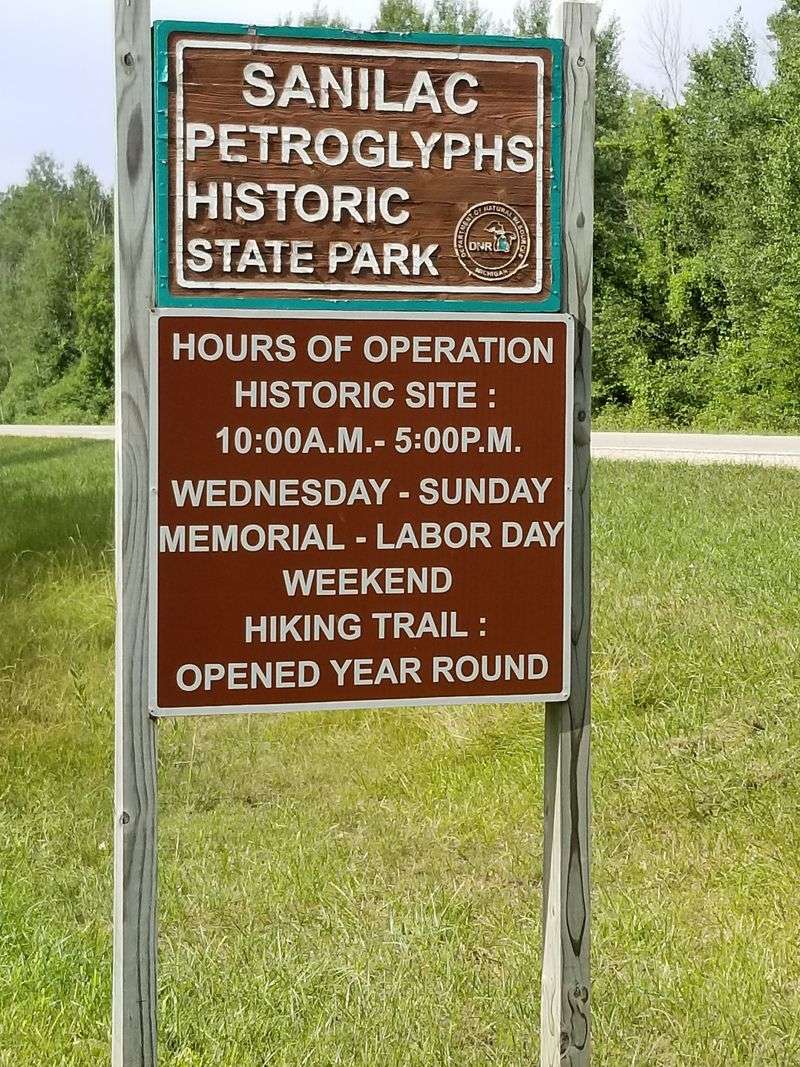
Sandstone holds careful cuts of birds, hunters, and spirits, softened by time and weather. The pavilion’s wooden ribs frame a quiet that The soft sandstone here holds careful cuts of birds, hunters, and spirits, all softened by centuries of Michigan weather. The pavilion’s wooden ribs frame a deep quiet that encourages visitors to lean in and look closer at the ancient carvings.
Outside the enclosure, the wind carries whispers from the surrounding cornfields and forests of the Thumb region.
Known as Ezhibiigaadek Asin (“written on stone”), these petroglyphs are Michigan’s only known prehistoric rock carvings. Anishinaabe teachings and oral history give the figures their proper context, viewing them as sacred records rather than mere curiosities.
The 19th century saw a mix of discovery and accidental harm, but today the site is a place of active stewardship and education.
Visitors are asked to stay on the boardwalk and approach the stones with humility.
After a light rain, the details of the bowman and the water panthers seem to sharpen in their grooves, bridging the gap between the past and the present.
6. Iargo Springs
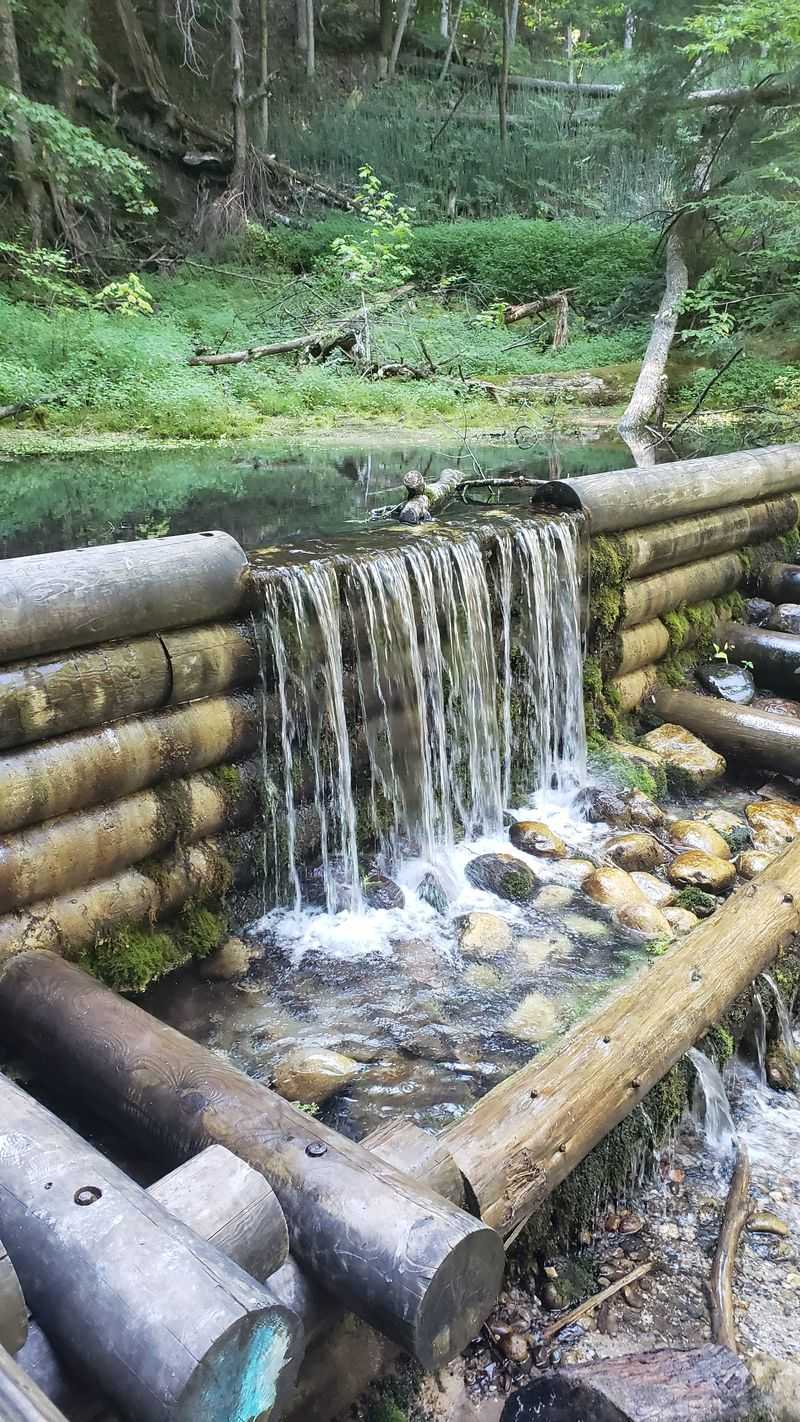
Cold, clear water sighs from the hillside in glassy threads, collecting in a series of cedar-framed pools before continuing its journey. The long wooden stairway down from the bluff counts your resolve, step after careful step, descending deep into the springs.
In the height of summer, the Au Sable River appears through the trees like a ribbon of moving shade far below the overlook.
The platforms and railings, many originally built by the CCC, still serve visitors with modest grace. Lumber history lingers heavily along this stretch of the river, where massive log drives once crowded the channels and reshaped the banks.
Today, the pace is much slower, as anglers and bald eagles divide the afternoon’s patience between them.
Bring a bottle to taste the cold spring water at its source, then linger on the lower decks.
The mornings are particularly quiet, providing a sanctuary where you can sit and let the rhythm of the forest settle into your bones.
7. Jordan Valley Pathway
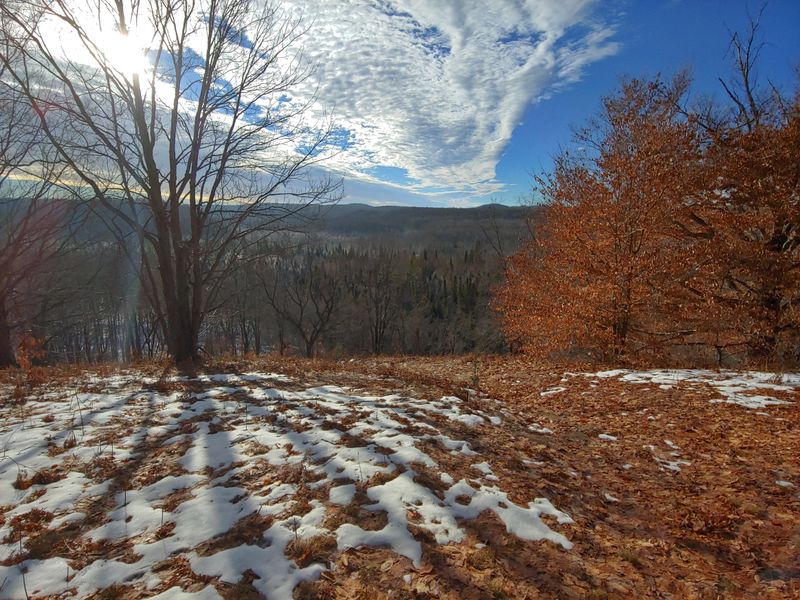
Sandhill cranes bugle over the ridges of the Jordan River Valley, and the trail rolls through the landscape like a polite, green rollercoaster. Floating boardwalks carry hikers above the damp cedar swales before the path climbs back into the dry, scented pine uplands.
The small falls and springs at Deadman’s Hill whisper more than they shout, hidden beneath a canopy of hardwoods.
Created as a 19-mile loop, the pathway showcases a classic glacial carve, offering views that feel much more expansive than the elevation suggests.
Careful stewardship has kept erosion in check, allowing the Jordan River to remain one of the most pristine cold-water streams in the state; you can often see trout stacked up in the clear runs like little silver arrowheads.
Whether you backpack the full loop overnight at Pinney Bridge or day-hike the sections near the overlooks, the valley demands a steady pace.
You will soon notice your own breathing syncing with the long, slow breath of the valley.
8. Cut River Bridge Roadside Park
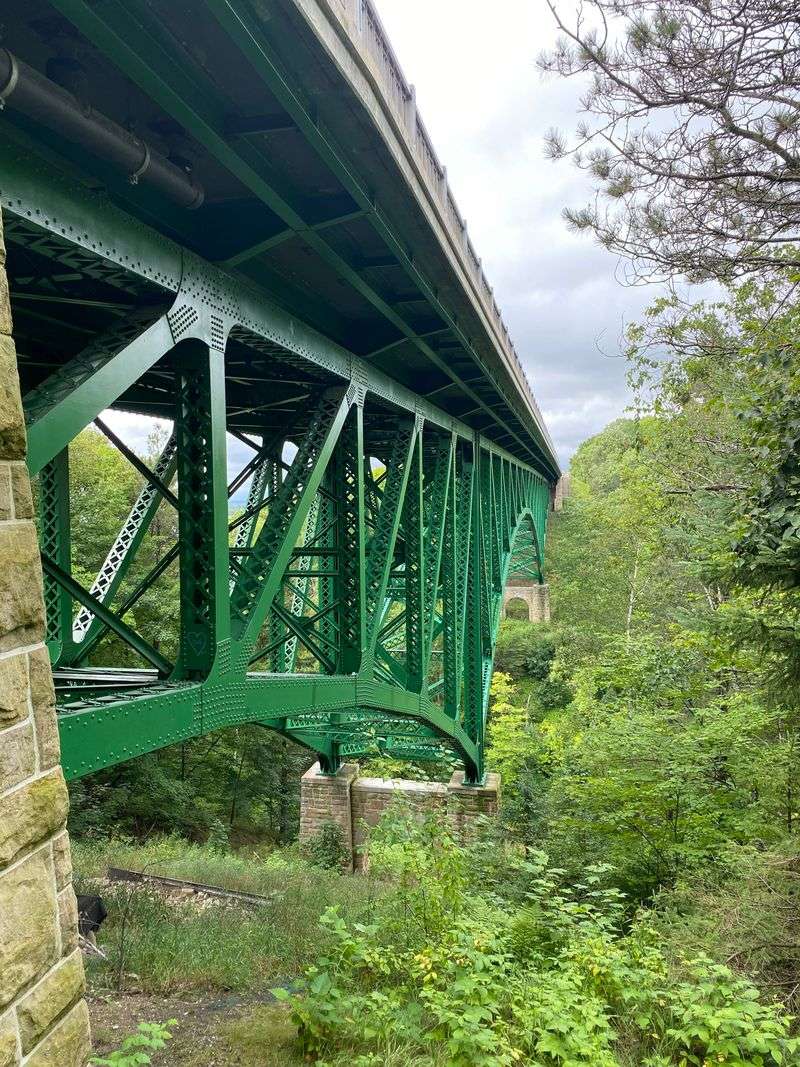
Cars whoosh across the highway above while the gorge below keeps its own cool counsel. The steel lattice of the Cut River Bridge looks remarkably delicate from the valley floor, appearing like green filigree scaled up to massive proportions.
Wind frequently funnels up the ravine from Lake Michigan, tugging at jacket zippers and carrying the scent of the big lake inland.
Built in the 1940s, this impressive cantilevered steel truss bridge spans a surprising depth between two sandy uplands.
A series of stairs switchback down the steep banks to a pocket beach where driftwood collects like forgotten stories.
The bridge’s signature green paint meets the Upper Peninsula sky in a friendly handshake.
Park in the shoulder pullout and take the time to explore both the bridge-level views and the river-level trails. In the spring, trout move up the creek, and in autumn, the maples gild every steel rib of the bridge in brilliant orange.
9. Sleeping Bear Dunes National Lakeshore
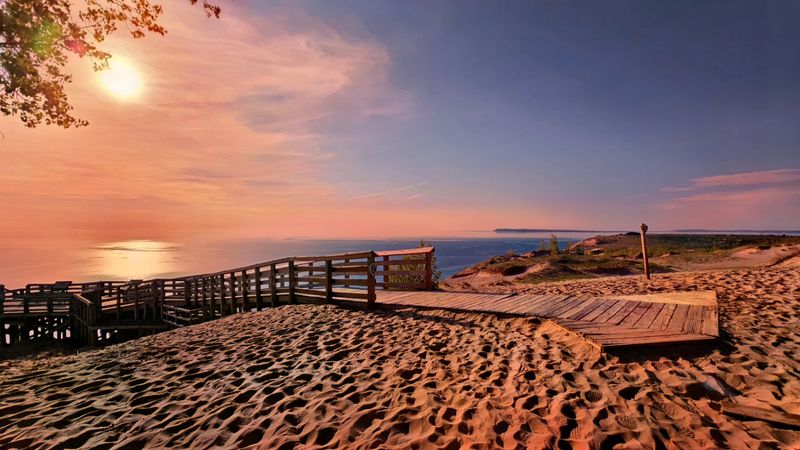
Sand hisses softly underfoot as the massive Dune Climb tilts the horizon and challenges your calf muscles. From the crest, Lake Michigan flashes in shades of turquoise and slate, shifting colors as the clouds pass overhead.
In the hollows, the leaves of the cottonwoods tick against each other like loose change in the wind.
Anishinaabe legend tells of a mother bear and her cubs who swam across the lake to escape a fire, eventually forming the dunes and the Manitou Islands.
This landscape of shifting sands, hidden cedar forests, and ghost orchards was caught by preservation efforts just in time. Pierce Stocking Scenic Drive offers framed viewpoints that make even the most talkative car passengers go quiet.
For a more personal experience, try a dawn hike on Pyramid Point, when the footprints are few and the light is kind to the landscape.
You will carry sand home in your shoes for weeks, and you likely won’t mind a bit.
10. Great Lakes Shipwreck Museum At Whitefish Point
Deep foghorn notes roll across the surface of Lake Superior while gulls argue in the margins of the beach.
The lighthouse complex at Whitefish Point wears its white paint bravely against the relentless northern weather, standing as a sentinel at the edge of the “Graveyard of the Great Lakes.”
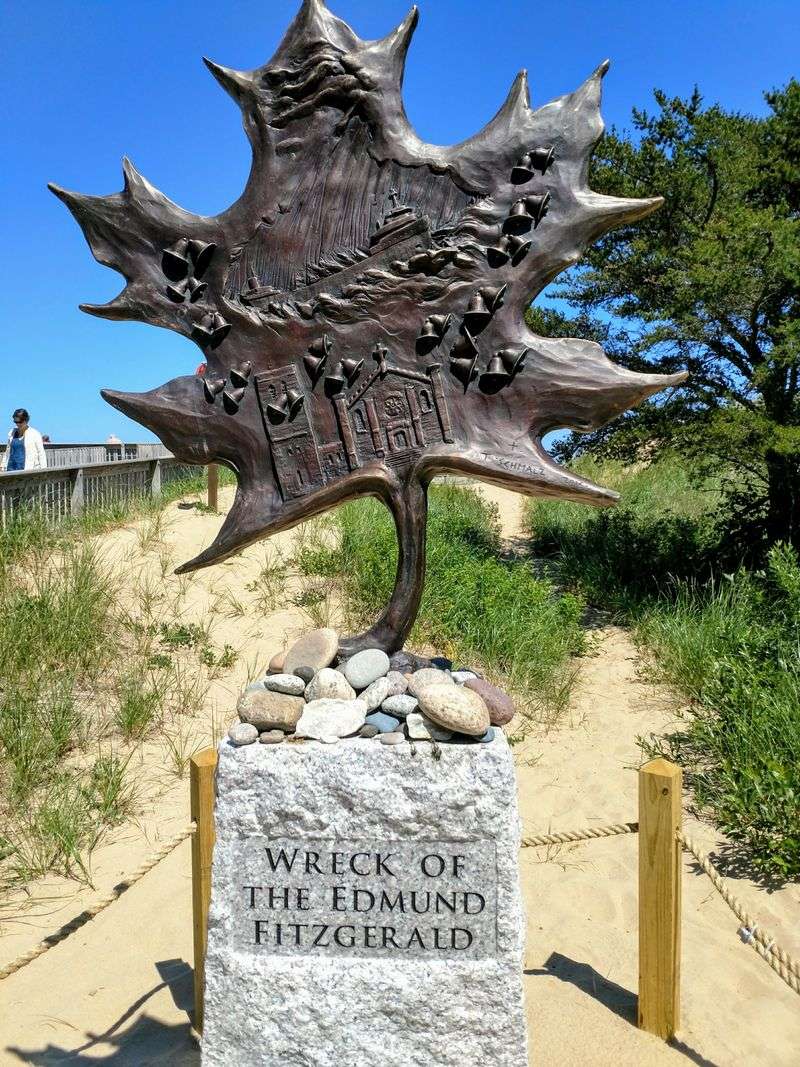
Here, the waves write and erase the same sentence on the pebble beach over and over again. The museum serves as a solemn honor guard for the lives and vessels lost on this notorious stretch of coast.
Artifacts from the SS Edmund Fitzgerald, including its recovered bell, sit with an emotional weight that does not fade with time.
The restored lifesaving station illustrates how courage once looked in everyday clothes and woolen coats. Arrive with enough time to walk the boardwalks and explore the shoreline, but dress for a wind that cut through most layers.
When you step back into your car, the horizon will feel a little steeper with the weight of history.
11. Hartwick Pines State Park
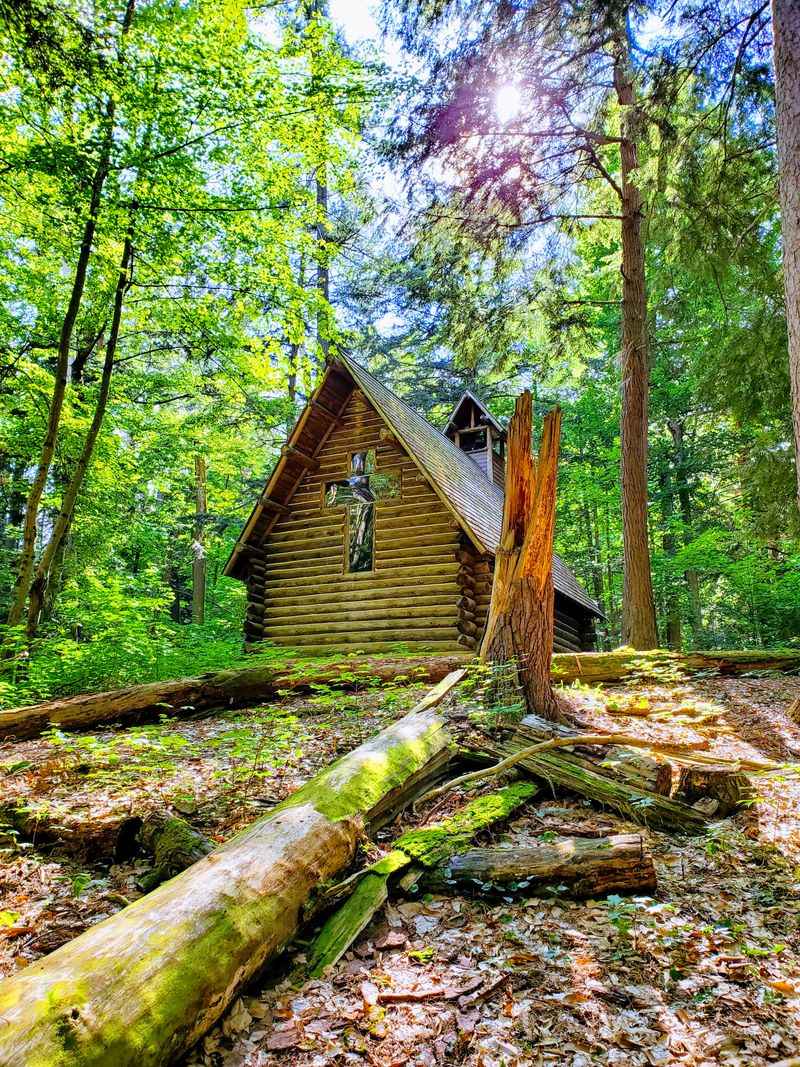
Light sifts down through the canopy from a hundred feet above, reaching the soft, needle-strewn floor where everything slows to a cathedral tempo. These white pines, some of the last of their kind, rise as straight as good intentions toward the Michigan sky.
Even the most boisterous visitors find that their footsteps instinctively try to whisper here. This remnant of old-growth forest survived the frantic logging era of the 1800s by a combination of chance and later, deliberate choice.
The onsite logging museum tells the story of the “shanty boys” with artifacts and a refreshing lack of swagger, focusing on the hard reality of the timber camps.
CCC-era craftsmanship is visible in the trails and structures, which were tucked into the understory with great care. Walk the Old Growth Trail and spend a few quiet moments on the benches of the forest chapel.
Winter snow hushes the place even further, creating a second silence layered upon the first. You will leave this park measuring your own noise more carefully.