
Follow This Illinois Trail To Uncover Ancient Petroglyphs In The Forest
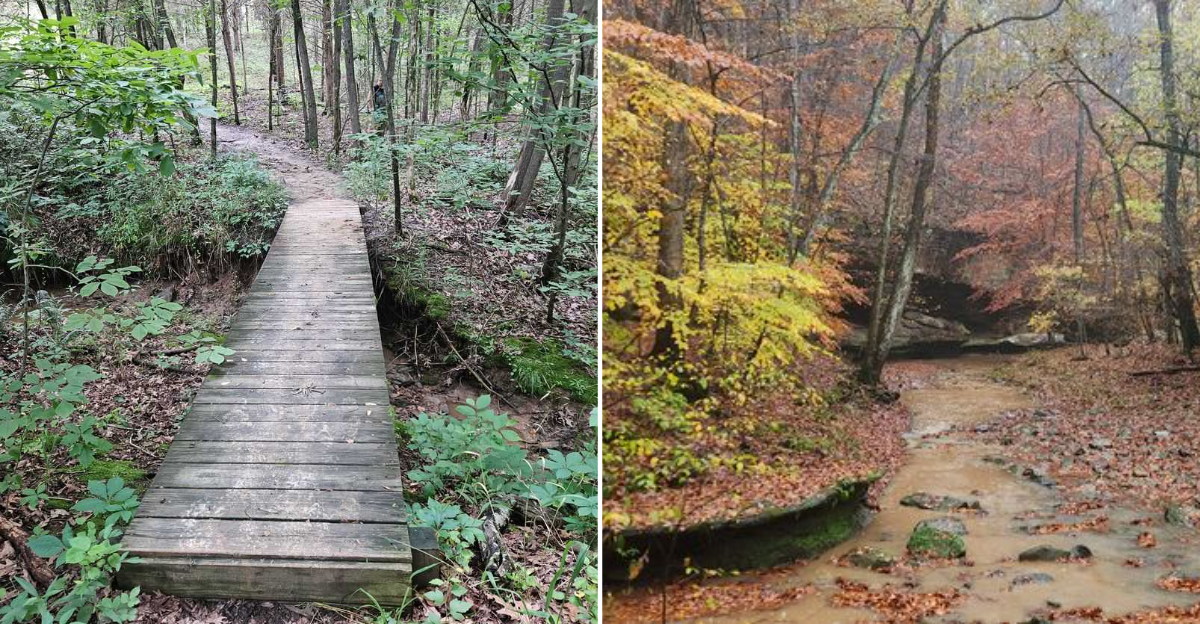
Nestled between endless cornfields and towering sandstone bluffs, Piney Creek Ravine State Natural Area feels like a hidden gem waiting to be discovered at the end of a quiet gravel lane.
The trail gently winds down towards a cool, murmuring creek, then leads you under majestic rock walls where ancient petroglyphs seem to whisper their secrets from the stone.
You arrive for the mystery, but you stay for the serene silence, the refreshing mist of the waterfall, and the feeling that time has slowed to a crawl here. Lace up your boots, bring a sense of wonder, and let this ravine reveal the quiet, forgotten beauty that Illinois keeps tucked away in plain sight.
Finding the Trailhead and First Impressions
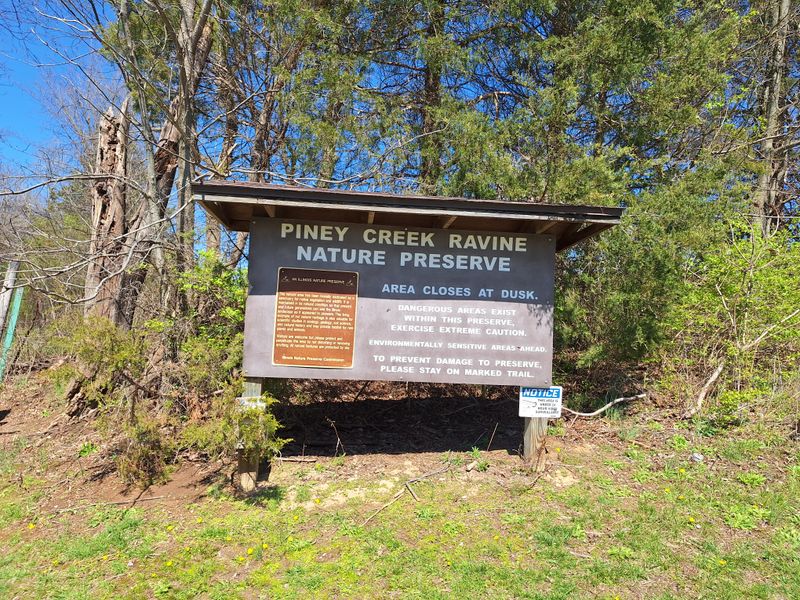
You roll off Piney Creek Road onto a chat lane, wondering if you have missed the entrance, then a small gravel pullout appears like a wink from the woods. The parking lot is simple and unassuming, bordered by prairie grasses and a mowed path that heads straight between farm fields.
Even before stepping onto the trail, the contrast is striking, with tidy rows of crops giving way to a shadowed ravine and a whispering canopy.
The first third of a mile follows an easement, flat and friendly, a chance to warm up your legs. Birds chatter from the hedgerows, and the breeze carries the faint scent of pine.
Ahead, the land drops away, and the mood shifts from sunny stroll to forest secret.
You will see green Illinois DNR markers guiding the way, but do not expect big signage or visitor center comforts. This place runs on quiet.
A right turn after the second small sign tilts you down a steep, root-laced descent, where sandstone bluffs rise like ship hulls and a tucked stream flickers with light. The forest hush takes over.
Now the ravine begins to tell its story.
The Descent Into the Ravine
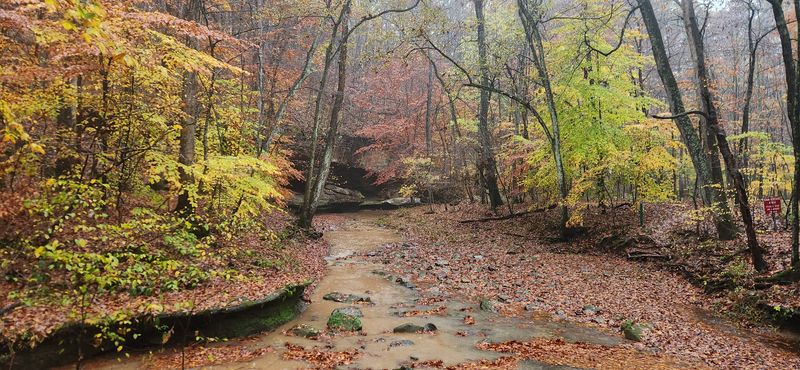
Trails switch from gentle to grab-the-tree-trunk steep as you step off the ridge. The dirt can be slick after rain, so place your feet carefully and enjoy the soundtrack of creek water somewhere below.
The light thins out under oak and shortleaf pine, and the air feels cooler on your cheeks.
On the way down, the sandstone reveals swirling patterns, iron-rich stains, and curving ledges shaped by centuries of runoff. You will likely pause at overlooks where bluffs wrap around the valley like theater balconies.
The descent does not last long, but it recalibrates your sense of scale.
You can smell damp leaves and a hint of mineral tang. In spring, wildflowers splash color along the slope, and in fall, every step lands in crunching bronze.
This is where you realize the hike is short but not casual. Keep an eye on blazes, give yourself time to negotiate roots, and let your pace match the terrain.
The ravine rewards patience with texture and depth.
Reading the Rocks: Sandstone and Iron Swirls
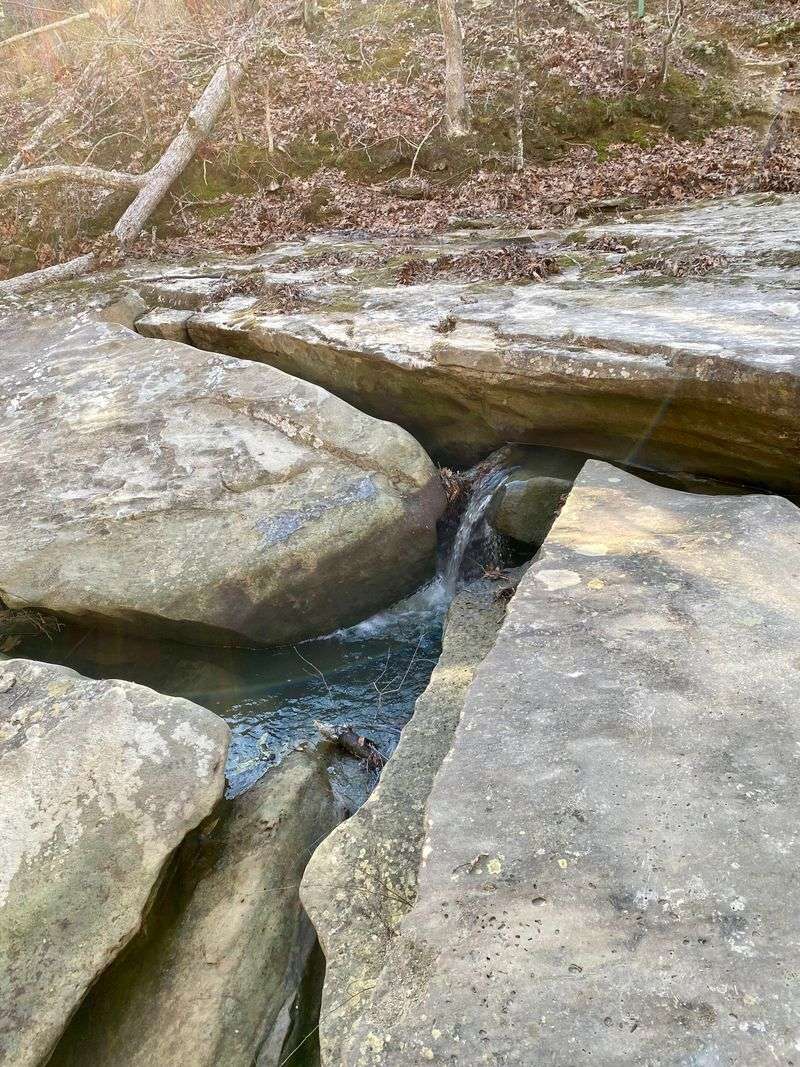
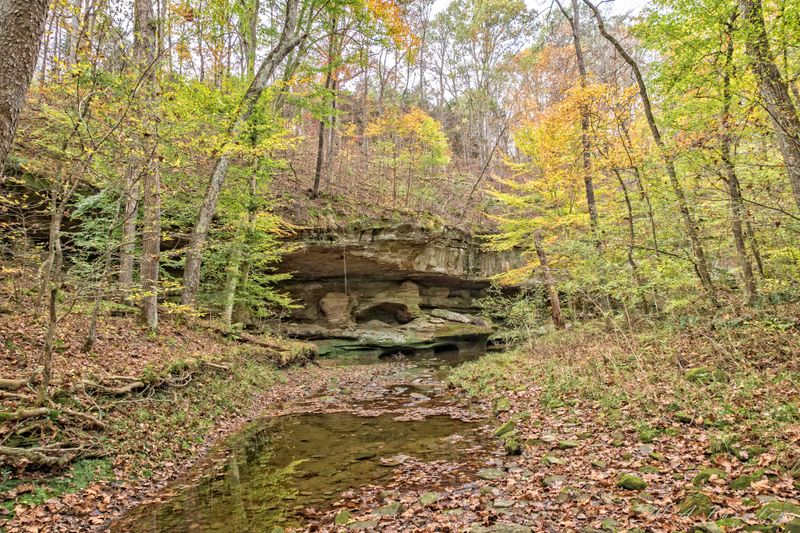
Down in the ravine, the bluffs are a gallery of erosion, iron concretions, and cross-bedding that looks like fingerprints pressed into stone. Take a close look and you will see reddish streaks where iron oxidized, creating painterly ribbons.
Sunlight grazes the rock face and pulls out oranges, creams, and smoky grays.
Water shaped this whole amphitheater, carving pockets and overhangs, polishing ledges that catch pools after storms. The stone is soft as rock goes, which makes the curves pleasing to the eye and the steps underfoot sometimes crumbly.
You can run your hand gently along a dry panel and feel grains shift like whispers.
Listen while you stand still. Drips echo under the lip of a shelter, and a jay scolds from somewhere up the cliff.
This is the setting that made the petroglyphs possible, both canvas and cathedral. The rocks hold heat on cool days and coolness on hot ones, and they map the story of flowing water.
Every bend in the creek reads like a page.
The Petroglyph Panel: Ancient Marks in the Shade
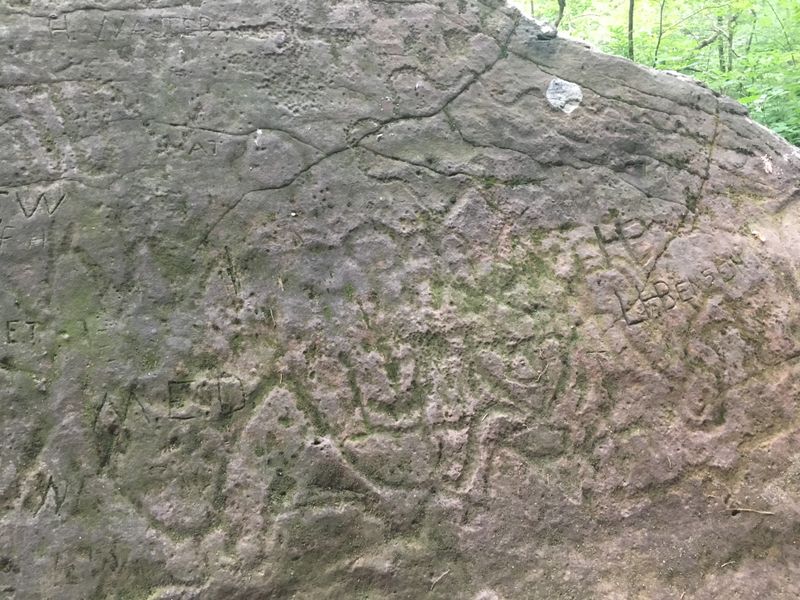
Follow the bluff line and you will find the reason people whisper here. A protected panel of petroglyphs sits beneath an overhang, where shadow preserves faint carvings on the sandstone.
They are subtle, so let your eyes adjust and trace lines patiently.
Figures and symbols appear in the low light, often more visible at an angle than head on. You may notice modern scratches too, an unfortunate reminder that rock art needs care.
Stand back, keep your hands off, and give the panel respect. The story reaches through centuries, and your presence should not blur it.
These carvings are part of a broader tradition in Southern Illinois, tied to Indigenous histories far older than the farms above. Interpretations vary, and you will not find an exhaustive on-site explanation.
That is part of the mystery. Let the quiet do the talking.
Photograph from a distance if you like, without flash, and carry the moment out with you unchanged.
Waterfall and Wet-Weather Magic
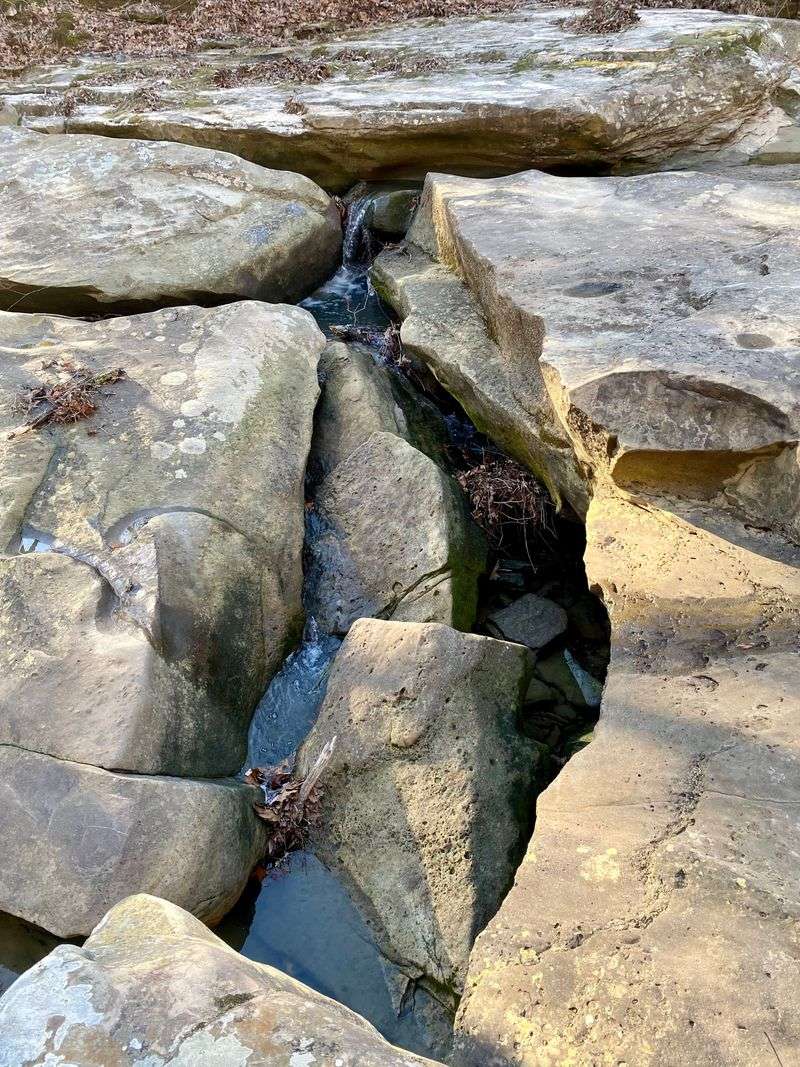
When rain funnels down the ravine, a tall wet-weather waterfall fans across sandstone and threads into Piney Creek. On dry days it lays quiet, a streaked veil etched into the bluff.
After storms, it wakes up with a silver roar you can hear long before you see it.
Approach carefully, since mud turns the approach slick and stream crossings can become tricky. Rocks shine like glass, and the creek may run high enough to block the usual hop-and-step route.
If water is up, make smart calls, turn around when needed, and enjoy the power from a safe distance.
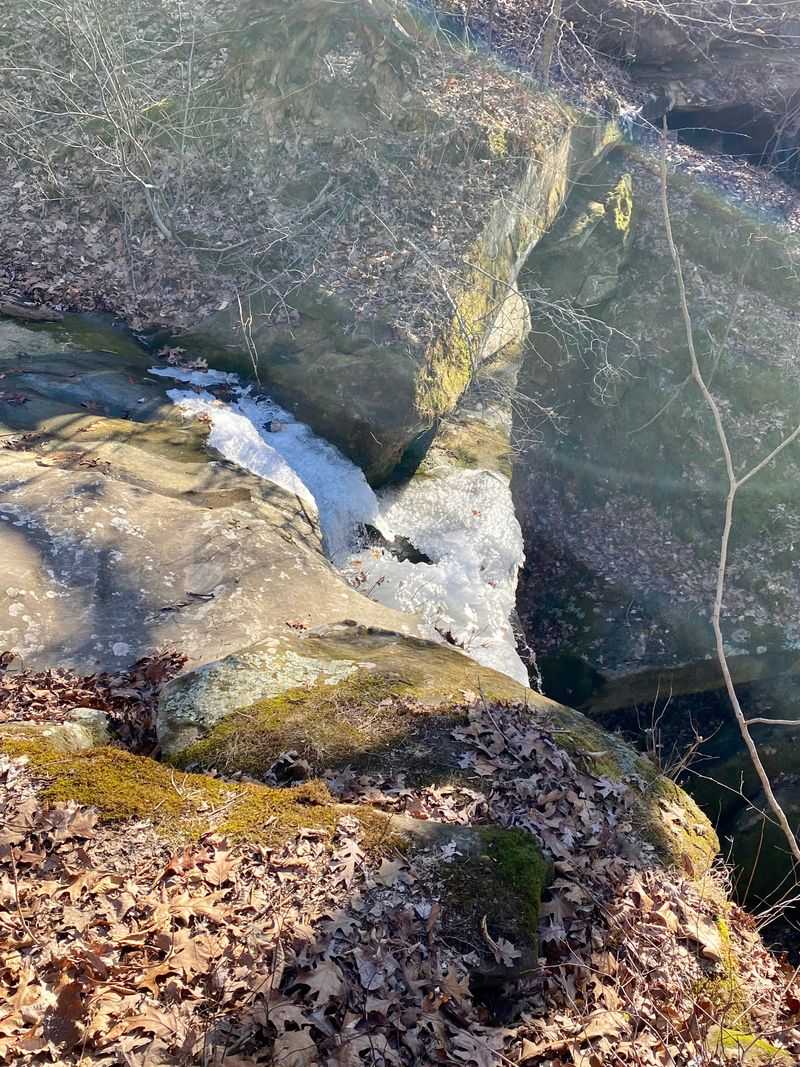
In leaf season, the falls wear a collar of gold and crimson. In winter, icicles frame the cliff like organ pipes.
You will smell cold stone and leaf tannins, and the mist speckles your sleeves. Whether it is a trickle or a curtain, the falls change the ravine’s mood in an instant, from hushed to celebratory.
Bring a camera and a towel for your boots.
Trail Navigation, Safety, and Seasonal Tips
The loop here is short by mileage, roughly two miles depending on your wander, but it can feel longer when you lose the line. Markers are present, yet junctions near the creek and bluff toes can be confusing.
Download a map beforehand, since cell service drops in the ravine.
After heavy rain, stream crossings may be unsafe, and the clay-rich soil gets slick fast. Boots with real tread help, and trekking poles are not overkill.
Take water, even on cool days, because the climbs come steep. If you get turned around, stay calm, backtrack to the last marker, and look for the mowed corridor on the return.
Spring wildflowers sparkle, summer runs green and buggy, fall colors blaze, and winter opens views through bare limbs. Hours generally follow daylight with no gatehouse, but check the Illinois DNR site for seasonal notices or hunting dates.
There is no fee posted at the lot when most visitors arrive. Sunrise to sunset is the safe bet, and you will want the light anyway.
Parking, Access, and What to Expect on Arrival
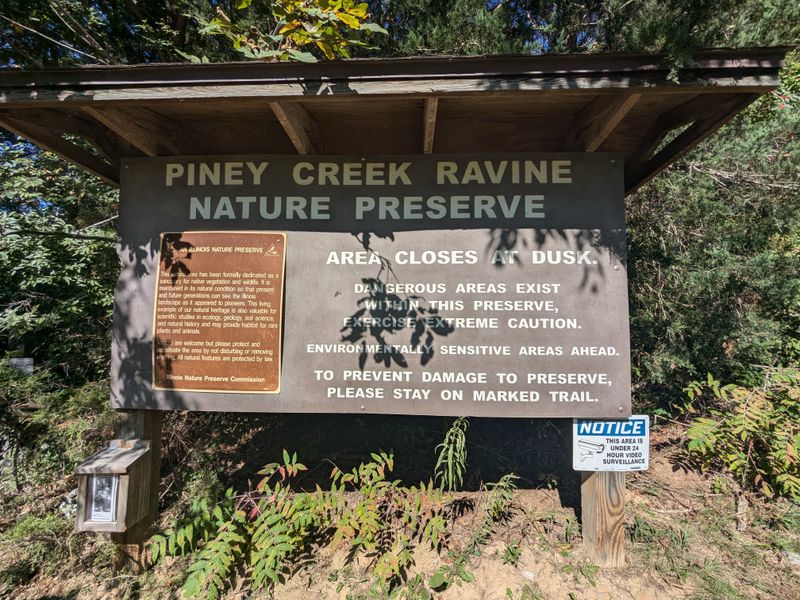
The entrance sneaks up on you after the pavement ends, with a gravel pullout tucked against a hedgerow. There is no gatehouse, no flush restrooms, and no big sign shouting your arrival.
Think simple and self-reliant. Park nose out so it is easy to leave if rain turns the lot soft.
From the car, a mowed access path heads straight into the fields like a green carpet to the woods. It feels almost too open, then the corridor tips into shade and the ravine takes over.
The transition is part of the charm, farmland to forest in a few minutes of walking.
Bring water and a small kit, since amenities are nil. Weekdays feel extra quiet, and even weekends can be hushed compared to bigger parks.
Leashed dogs do fine if they can handle steep grades and slippery spots. If you arrive after storms, expect muddy boots and plan to clean up before you climb back in the car.
History in the Hills: Context for the Rock Art
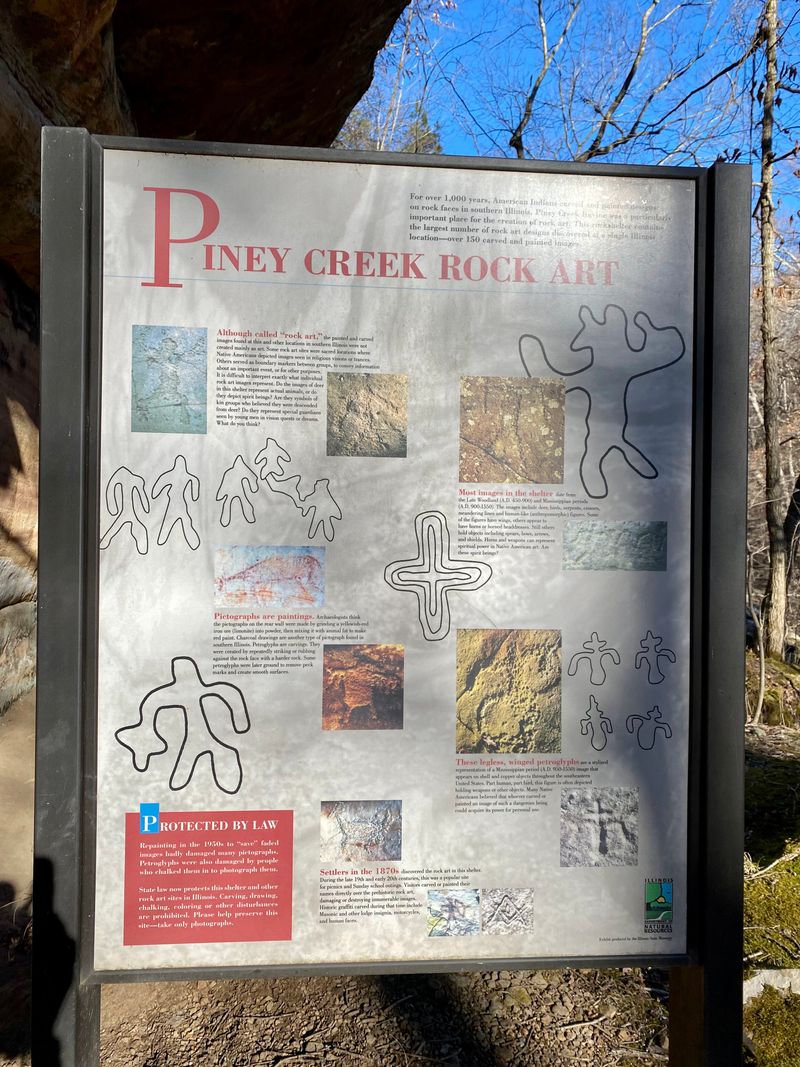
The petroglyphs sit within a region rich with Indigenous history, where sandstone shelters preserve glimpses of belief and daily life. Exact dates at this site are not posted on the trail, and archaeologists continue to study similar panels across Southern Illinois.
What you can feel here is continuity, a long thread running from ancient artists to your quiet moment at the bluff.
Imagine families moving along the creek, following game trails and seasonal plants. These marks were not made for us, yet their survival asks for our care now.
That means eyes open, hands off, and voices low. Photographs are fine from a respectful distance, but chalk, tracing, and rubbings damage the stone.
Back at home, you can read more through the Illinois DNR and regional archaeology resources to frame what you saw. The ravine becomes a doorway, and learning deepens the visit.
History does not hand over every answer, which keeps this place alive. You leave with curiosity buzzing, and that is exactly right.
Wildlife, Flora, and the Soundtrack of the Ravine
Expect birds first. Cardinals flash between branches, woodpeckers drum on hollow trunks, and jays carry the news.
In spring, you might find trillium, spring beauties, and ferns uncurling near seep lines. Shortleaf pines scent the air on warm days, a rare native presence in Southern Illinois that feels almost southern Appalachian.
Down by the water, look for crayfish under stones and dragonflies needling the surface on still afternoons. Deer browse the edges, and now and then someone spots an armadillo nosing along leaf litter.
You will hear the creek more than you see it, a steady hush that mixes with wind on the bluff tops.
Keep wildlife wild and give space. Ticks are real here, so use repellent and check after the hike.
The soundtrack remains gentle even when the falls are running hard, a layered hum of water, wingbeats, and leaves. It is the kind of quiet that stays with you in the car ride home, like a song you cannot quite place.
Planning Your Visit: Hours, Costs, and Accessibility
Piney Creek Ravine Nature Preserve keeps things straightforward. There is no staffed entrance, and visits typically align with daylight hours.
Always check the Illinois DNR website for seasonal updates, closures, or hunting notices in the broader region. You will not find a ticket booth, and no posted fee is the norm, though bring a few dollars just in case rules change.
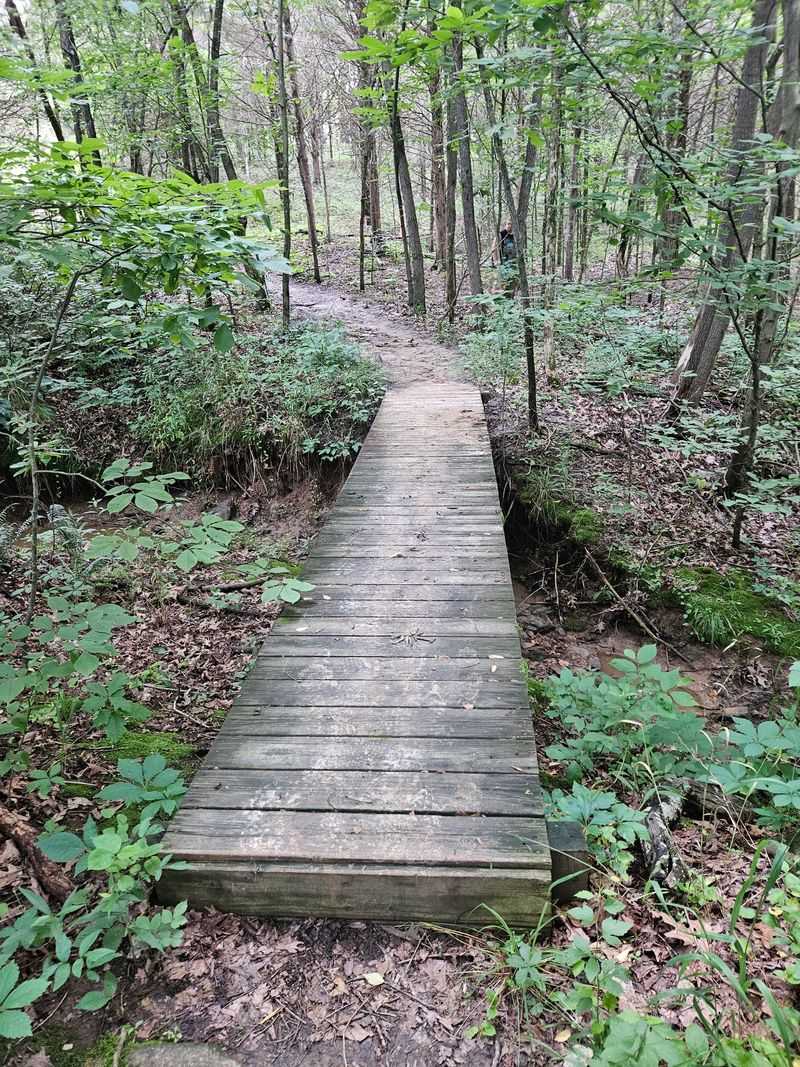
Parking is free at the gravel lot, and space is limited, so arrive early on pleasant weekends. The trail itself includes steep segments, roots, and stream crossings, which means it is not wheelchair accessible.
If you are hiking with kids, choose dry weather and coach careful footing along bluffs.
Best strategy: go after a day or two of dry weather for easier footing and clear creek crossings. Bring water, snacks, and a paper map or offline map.
Cell service fades in the ravine. If you want extra solitude, try sunrise or the golden last light, when the bluffs sip color and the forest goes soft around you.