
This Hidden 48-Foot-Tall Native American Sculpture In Illinois Will Take Your Breath Away
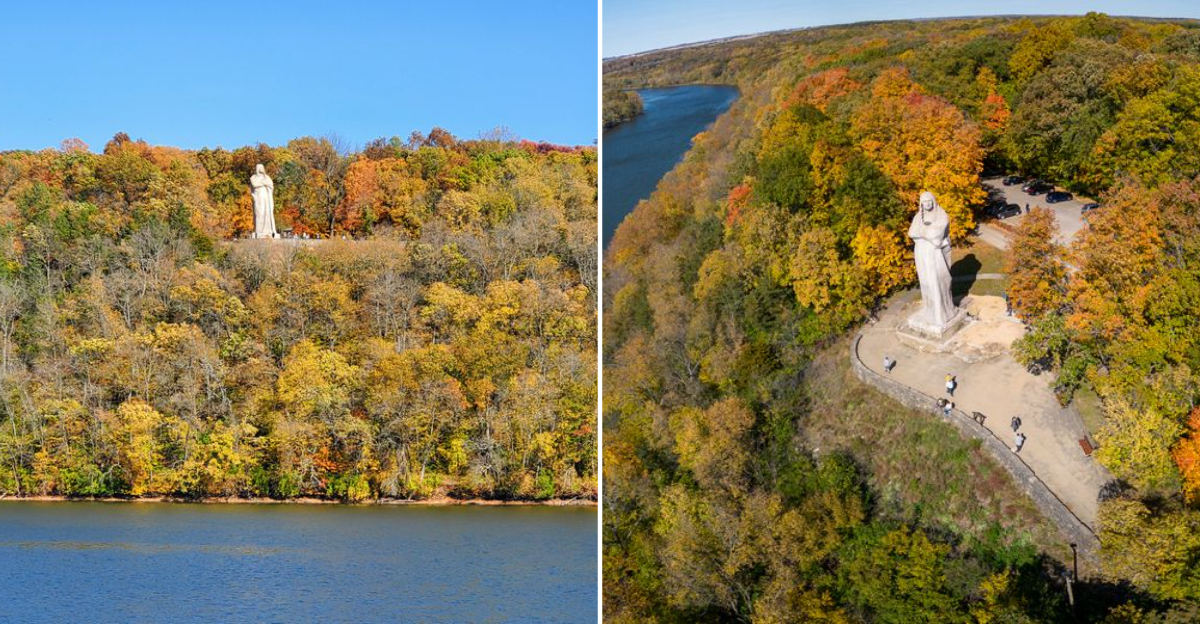
Perched high above the Rock River on a peaceful bluff in Oregon, Illinois, a majestic figure gazes out over the valley with quiet, unblinking grace.
The Black Hawk Statue, also known as The Eternal Indian, stands 48 feet tall, yet, when you stand beneath it and look up, it feels even more imposing, like it’s part of the sky itself.
The air here carries the fresh scent of pine and river water, while the breeze gently stirs the trees, almost as if the forest is whispering its own stories.
If you come closer, you’ll feel it too, a powerful blend of history, nature, and awe that slows you down and invites you to pause, to breathe, and to take it all in.
A First Look From The Bluff
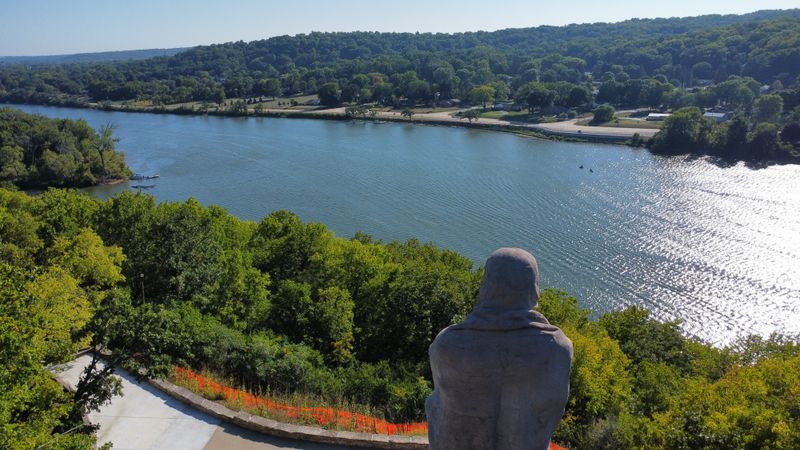
You make your way down a winding road, and suddenly the trees part like a curtain, revealing the bluff. There, rising from the limestone edge, stands the Black Hawk Statue — arms folded, eyes locked on the Rock River valley below.
At first, it’s almost instinctive: a deep breath, your gaze lifting up, and a slow release of tension in your shoulders.
As the sunlight falls on the statue’s surface, it catches the textures, making the robe look almost carved from stone. In the distance, birds glide lazily, while the river whispers below, its steady flow calming every step you take.
The statue’s towering presence against the open sky speaks volumes: quiet strength, unwavering calm, a sense that time here moves a little slower.
Standing by the low wall, you can feel the breeze lift from the water, carrying with it the scents of the river and the trees. The view stretches far across farm fields and tree lines, hazy in the summer heat but crisp and vivid come fall.
This is not a place to rush. Let the moment wash over you, this is your invitation, your moment of peace, and the beginning of everything this place has to offer.
The Story In The Stone
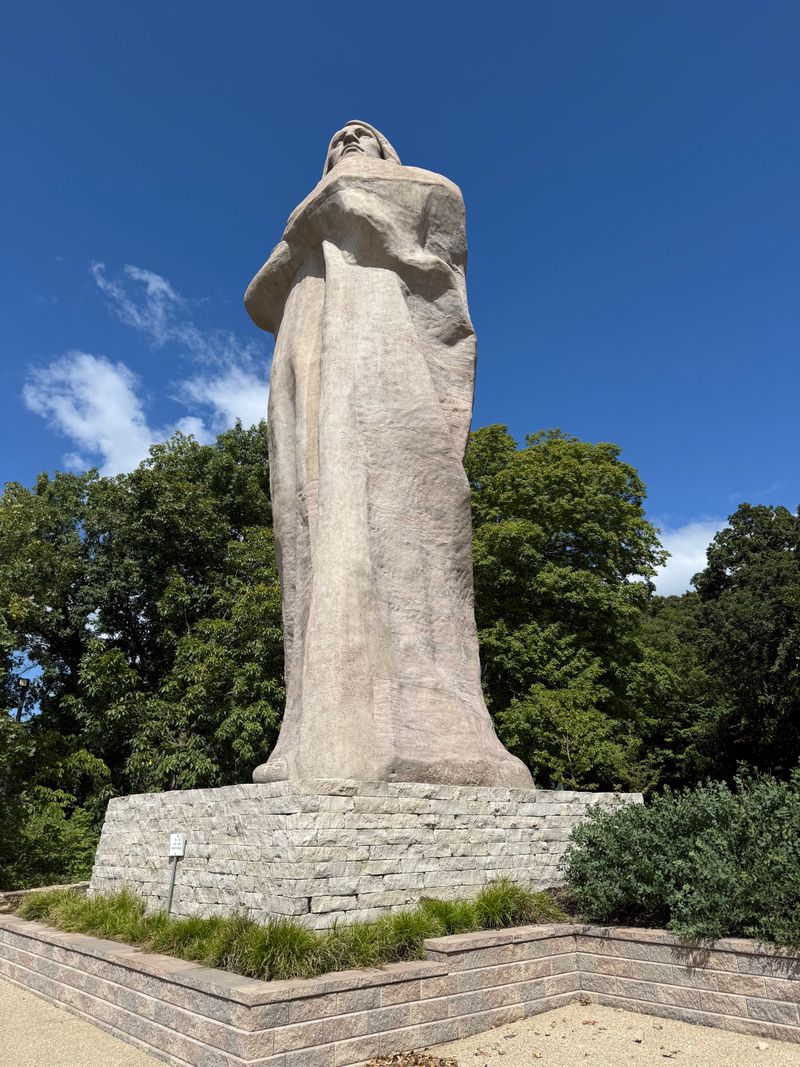
Even before you read the wayside sign, you sense the age and purpose in this figure. The statue was designed by sculptor Lorado Taft and dedicated in 1911, inspired by the spirit of Native peoples who called this region home.
Though commonly linked to the Sauk leader Black Hawk, it is not a portrait, but a symbolic guardian watching the valley.
Concrete with crushed rock gives the surface its rugged character, weathered by a century of winters, summers, and river winds. Restorations have kept it standing strong, and you might notice subtle color changes where repairs were made.
That history matters, because it means people keep caring, generation after generation.
Read the interpretive panel near the plaza to anchor the story while you stand in the scene itself. The river below once carried canoes, commerce, and migrations.
You can feel the continuity in the quiet. It is a respectful place, and the statue’s folded arms invite a pause rather than a pose. Let the story settle while you look across the water.
That Jaw-Dropping Rock River View
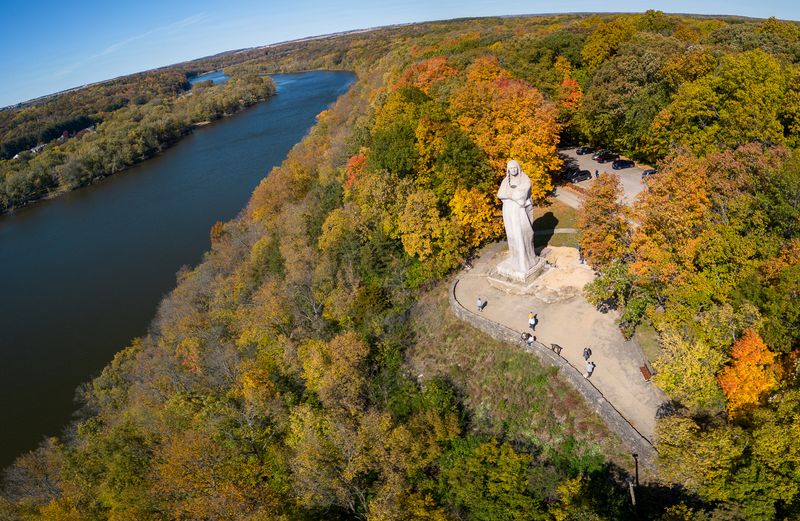
Walk to the overlook and the valley opens wide, a painterly sweep of water and woods that refuses to sit still. On breezy days the leaves shine like scales on a fish, flipping from bright to shade while the river slides by.
The sound is never loud, just a constant hush that smooths out thoughts. In fall the hills fire up with reds and golds, making the gray robe of the statue glow like flint. Spring brings softened greens and migrating birds that stitch the air with flickers of wings.
Even in winter, the landscape has backbone, a clean geometry of trunks, ice, and sky. Lean your elbows on the stone wall and stay a while. You will see anglers below, or maybe a canoe slipping through a curve.
Traffic noise barely reaches this perch. The view turns time elastic, and minutes spill into an hour without you noticing.
Follow The Wooden Stairs To The Water
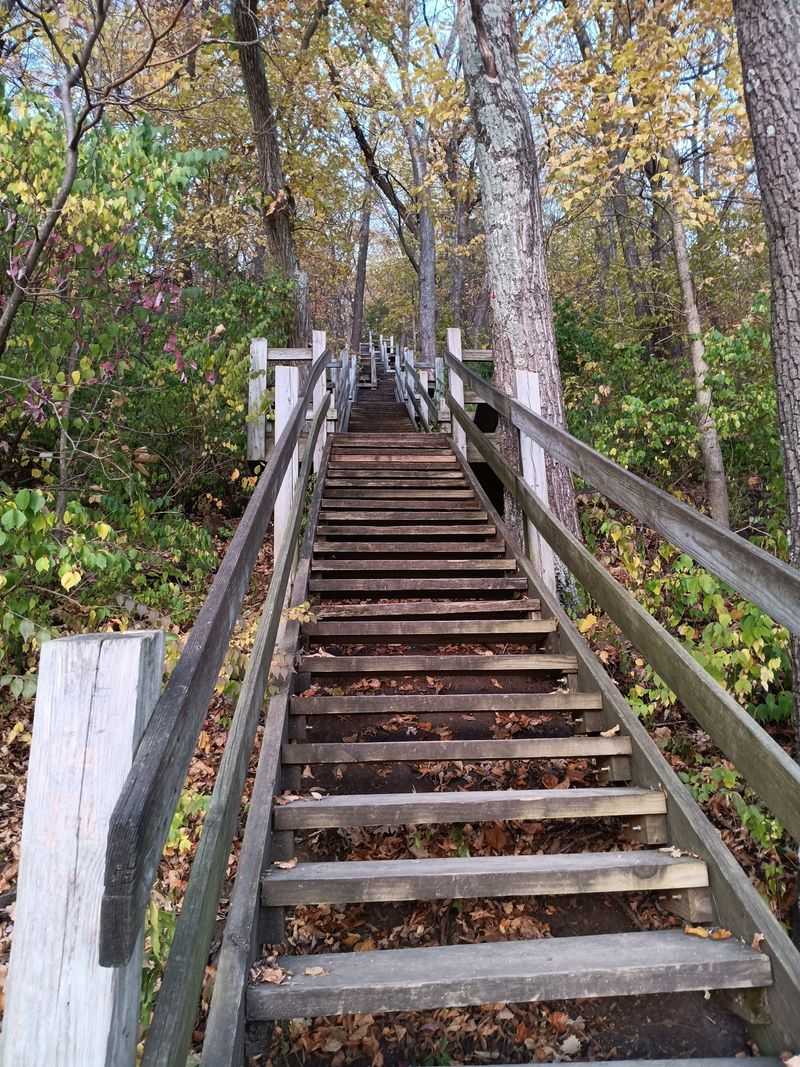
Beside the statue, informal trails thread down the bluff like a ribbon. It is sturdy, well kept, and a little humbling if you are out of practice on steps. Count them if you want a challenge, but you will lose track when the river breeze starts talking.
Each landing gives you a new angle on the statue and the valley, like flipping through frames of a slow movie. The forest here smells like fresh sawdust after rain and dry leaves in late summer. By the time you reach the bottom, you can hear the soft slap of water against the bank.
Trails lace along the river, sometimes muddy, sometimes packed firm. Take care after heavy rain, and wear shoes that do not mind a little grit.
Down here, the view shifts from grand to intimate: pebbles, cattails, and the low hum of insects. When you turn back up, the climb warms your lungs and gives you bragging rights.
A Quiet Place To Learn
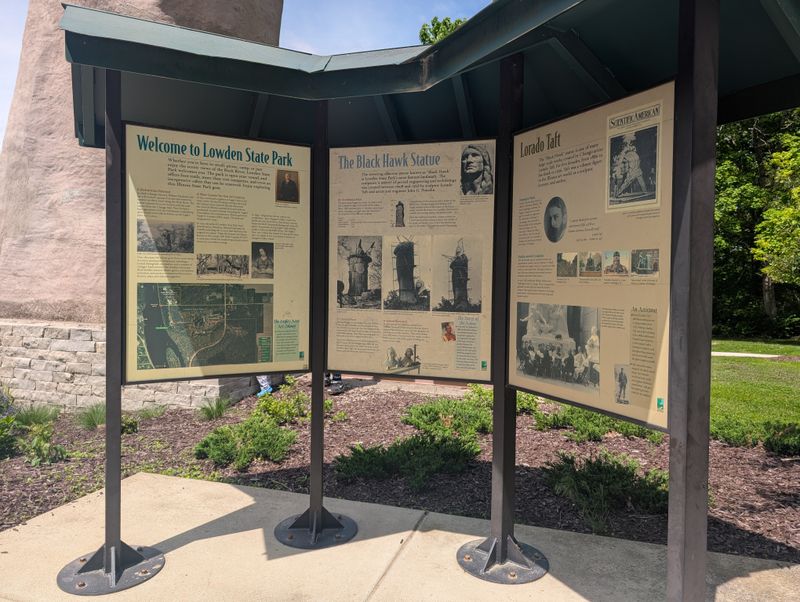
History here feels more like a conversation between the land and its stories than a lecture. The wayside panels by the plaza share insights into Native peoples, Lorado Taft, and the early 1900s vision that placed this statue on the bluff.
As you read and look around, everything connects in a way that feels real, not abstract.
The statue, often called The Eternal Indian, symbolizes a broader spirit rather than one individual. This distinction matters, especially as public memory shifts over time. When the facts are clear, respect naturally follows.
Families gather, kids ask thoughtful questions, and the river flows quietly as conversations bloom. You leave with more than a photo, you take with you a deeper sense of connection. The space invites reflection, a rare gift that’s worth protecting.
Picnic, Pause, And Breathe
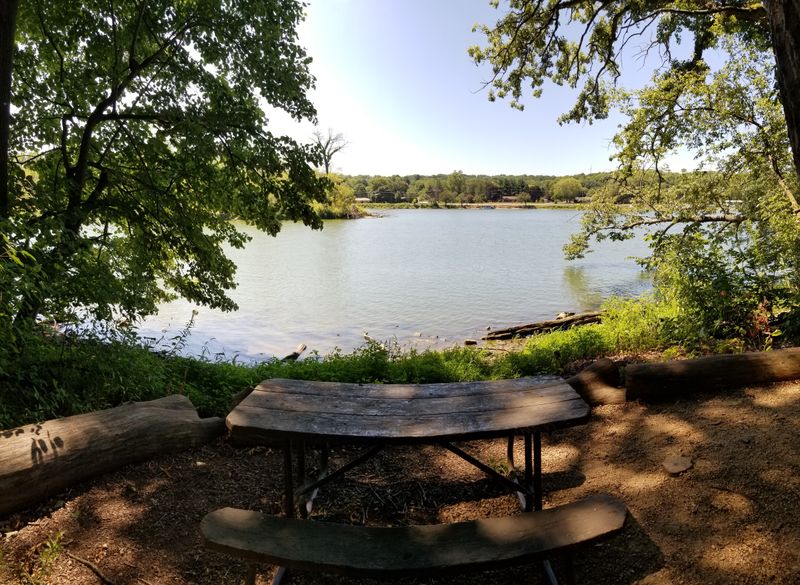
Bring a simple picnic and you will wonder why food never tastes this good at home. The park offers shady tables, soft lawns, and views that make even a peanut butter sandwich feel elevated.
Birds chatter from the treetops and the breeze does the rest.
There are restrooms nearby and plenty of space to spread out, even on weekend afternoons. If you are traveling with kids, the playground in the campground area gives them a run while you sip water and watch the sky.
Everything moves at a slower rhythm here, like the park deliberately nudges you to linger. A pro tip: save a treat for after the stair climb, not before. You will thank yourself.
Keep trash sealed and leave the place as tidy as you found it. The setting is too lovely to mistreat. When you pack up, take one more look from the wall.
Best Times, Hours, And Easy Logistics
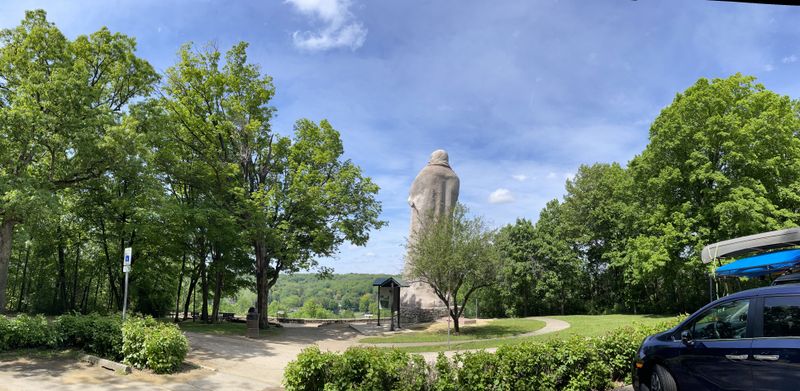
The statue sits within Lowden State Park, which generally keeps daylight hours with seasonal shifts. Mornings are calm, evenings glow, and fall weekends can be popular, so arrive early for quieter paths. Parking is straightforward near the statue, and the road leads right up to the main lot.
There is no ticket gate for the statue area as of the latest visits, and any fees related to camping or shelters are posted by the park. Restrooms are available, and the paved approach and plaza make the overlook area friendly for many mobility levels.
The staircase to the river is optional and not required for the view. Bring water, sturdy shoes, and layers for river breezes. After rain, lower trails can be muddy.
Cell signal is decent but do not count on full bars in every dip. The simple plan works best: arrive with time, keep expectations open, and let the place guide the day.
Fall Color And Campfire Nights
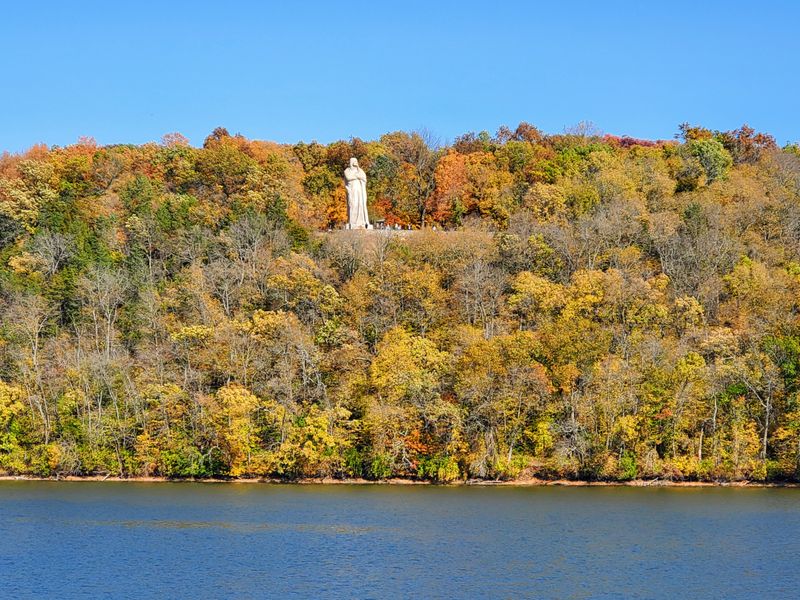
Autumn turns the bluff into a theater of light. Maples and oaks ignite, and the river reflects the show in long ribbons of copper.
If you camp in the state park, you can watch dusk soften the statue’s edges until it becomes a quiet silhouette against the last orange line of sky.
Even if you are not camping, the evening air smells like woodsmoke and leaves, and the sound of the Rock River deepens after dark. Bring a jacket and stay for sunset.
The stairs feel different in low light, so use the overlook instead and save the descent for daytime.
On clear nights, stars shake loose from the dark and the valley turns hushed. It is a good time to talk low, think long, and remember why places like this matter. Fall is popular, but it never feels like a crowd is running the show.
Accessibility And Gentle Paths
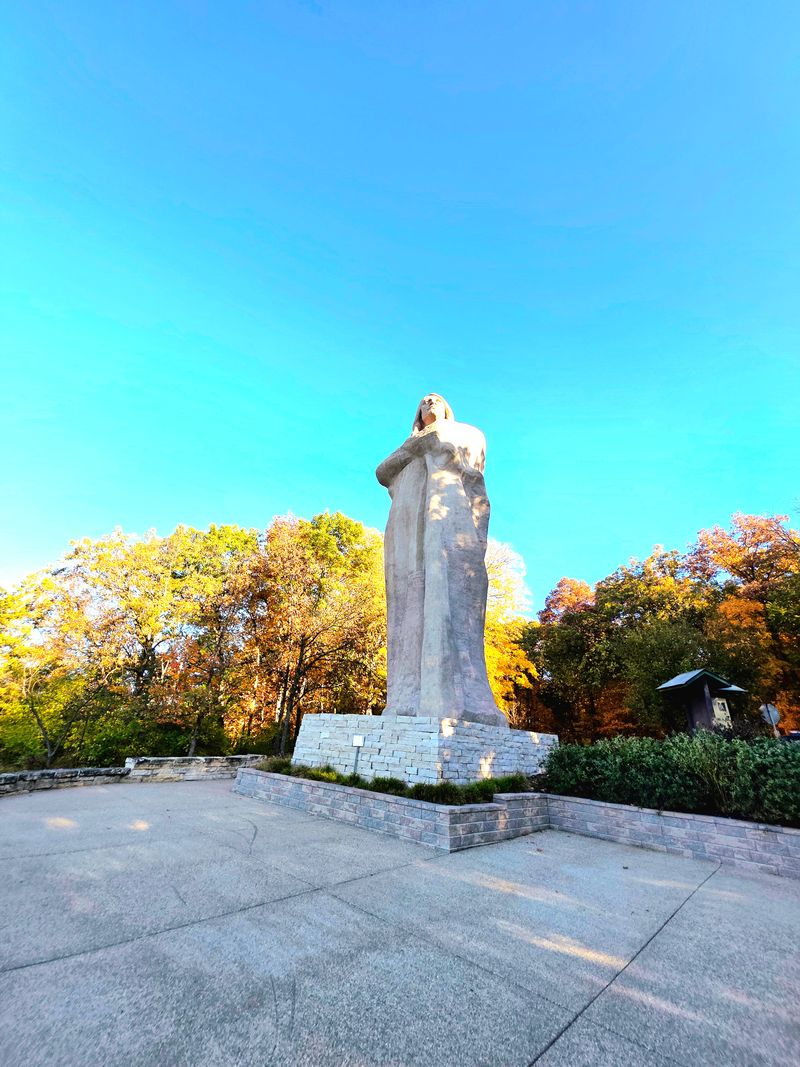
If stairs are not your thing, do not worry. The main overlook near the statue is reached by paved paths from the parking area, and benches provide restful stops.
You can soak up the view and the history without descending the bluff.
Surfaces are generally smooth up top, though you might find slight slopes and tree debris after storms. Restrooms are basic but convenient. If you use a mobility aid, bringing a companion can make navigation easier when crowds gather on weekends.
The staircase to the river is steep and long, better left for those who feel steady on continuous steps. Luckily, the view from the plaza is the star anyway, and the interpretive signs are all within easy reach.
This is a place that welcomes many kinds of visitors. Take it at your pace, and let the river set the rhythm.
A Respectful Photo Moment
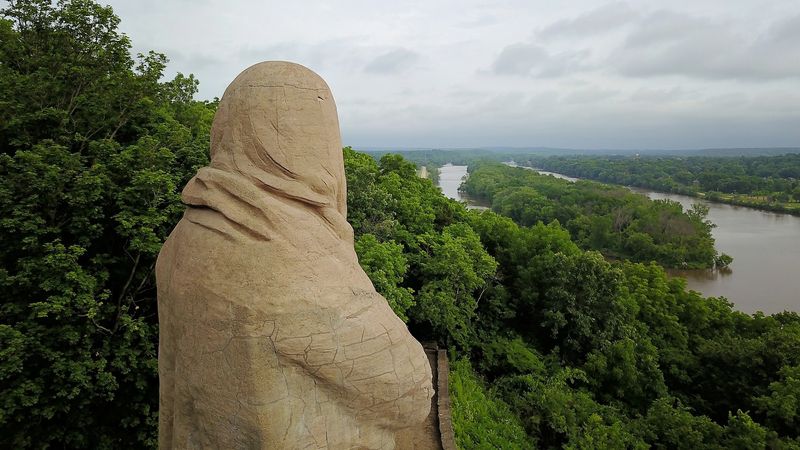
It’s easy to rush straight into selfies, but take a moment to soak in the space first. Then, find your shot: the statue framed by the river horizon, or a side angle that highlights the graceful folds of the robe.
Morning light is gentle and soft, while late afternoon casts a warm glow across the bluff.
Keep your tripods compact and out of the way, and be mindful of others who want to enjoy the view. If you shoot from the lower landings, watch your step and protect your phone.
The breeze has its own way of shaping the moment. Across the river, you can capture the full silhouette by pulling off at safe viewpoints.
Photos are memories, but the feeling of standing beneath that calm gaze will stay with you longer than any filter. Take a deep breath, listen to the river, and let the camera capture your moment of stillness. Respect is key in places like this, and your photos will reflect that.