
10 State Parks In Michigan That Feel Like National Parks With Fewer Crowd
I’ve spent enough time on the backroads to know that Michigan saves its best theatrics for the places where the cell service finally dies. Walking these trails, you’re surrounded by the deep, loamy perfume of ancient hemlocks and the hollow thwump of a pileated woodpecker echoing through the canopy.
It is a world of national park scale, towering dunes and shipwreck-haunted horizons, but without the maddening, elbow-to-elbow scramble of the more famous West Coast peaks.
Michigan state parks offer breathtaking national park views and rugged wilderness adventures for travelers looking to escape the crowds.
I’ve found that the most soul-stirring views are the ones that require a bit of mud on your boots and a willingness to let the lake wind dictate your pace. Pack the good shoes; these vistas aren’t just staged for a quick photo, they are earned through the quiet grit of the trail.
10. Porcupine Mountains Wilderness State Park, Ontonagon
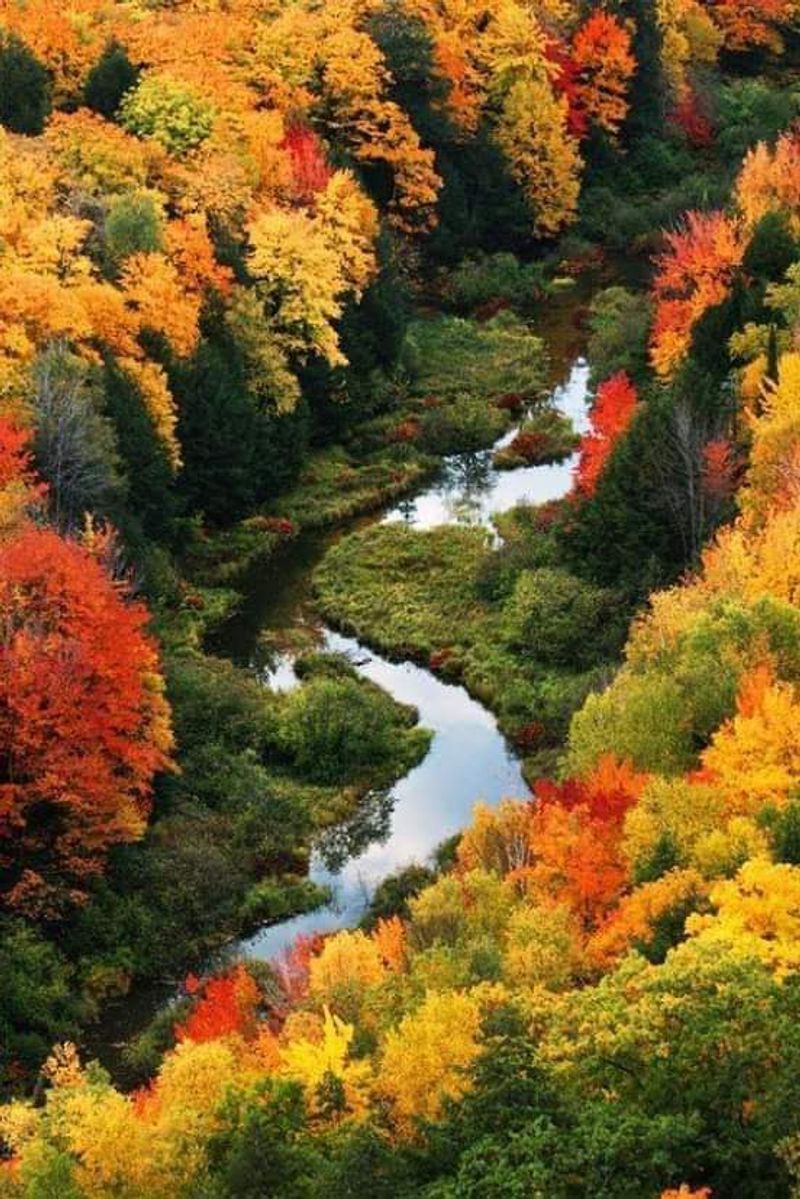
Lake Superior breathes fog into the Porcupines, and the forest answers with a hush that feels cathedral-deep. As you step onto the trail, the scent of ancient hemlock and sugar maple wraps around you like a heavy wool blanket.
The crowning jewel here is the Escarpment, where the earth suddenly drops away to reveal a sweep of glacial bowls and the dark, mirror-like sheen of the Lake of the Clouds. You usually hear the distant rush of water before you see the spectacular views, and then the whole basin unfurls like a secret held by the earth for ten thousand years.
The Ojibwe communities knew these ridges long before the first copper miners and loggers arrived, and if you look closely, relics of those early industrial dreams still hide in the thick understory. With over 90 miles of trails braiding through the wilderness, the park offers a scale of solitude that is hard to find elsewhere.
Rustic cabins are spaced perfectly for a multi-day trek of thoughtful wandering. To stay safe, always carry a physical map and respect the weather, because Superior can brew up a storm faster than you can lace your boots.
9. Tahquamenon Falls State Park, Paradise
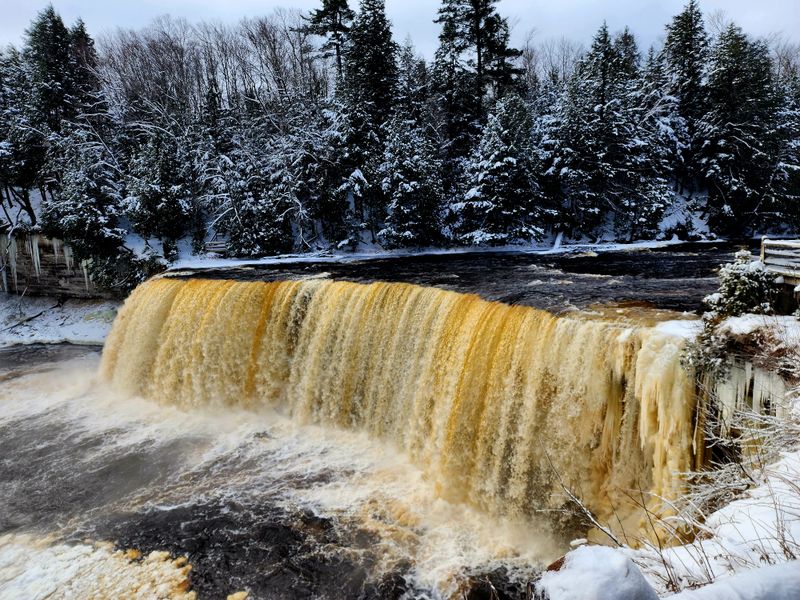
The river here smells like tea, stained a deep, translucent copper by tannins from cedar swamps, and it hurls itself over the Upper Falls with an unwavering, muscular grace. A permanent mist blooms above the drop, drifting into white spruce and softening the roar into a steady, rhythmic heartbeat you can feel in your chest.
A few miles downstream, the Lower Falls provide a more intimate experience, braiding around an island where you can rent a rowboat and get close enough to feel spray on your face.
Long before modern breweries began naming brown ales after the river’s hue, these falls nourished vital trade routes and fueled logging booms that shaped the rugged identity of the Upper Peninsula. While the boardwalks protect delicate shoreline plants, they will give your calves a workout.
It is wise to bring layers, even in summer, because constant spray can drop the temperature by ten degrees in an instant. Winter visits can be the most magical, turning handrails into sugar-crusted sculptures and the steps into a cautious dance of ice and snow.
I prefer arriving early, when the only crowd you’ll encounter is a pair of ravens negotiating the wind above the gorge. The light is softer then, and the river’s color reads deeper and more mysterious.
8. Ludington State Park, Ludington
Sand whispers across the trail as massive dunes lean toward Lake Michigan, and the black-and-white stripes of Big Sable Point Lighthouse cut a tidy, geometric line against the infinite blue sky. This park is a masterclass in varied ecosystems, stitching together sunlit boardwalks, deep pine shade, and the gentle slap of Hamlin Lake against a rented kayak.
It manages to be popular without ever feeling hurried, because the space is wide and the shoreline keeps pulling attention outward.
The lighthouse dates back to 1867, and its survival is a testament to volunteer grit and stubborn local love for historic signal beams. Because the campgrounds sit between the big lake and inland water, mornings might smell like warm pine resin or cold waves, depending on the breeze.
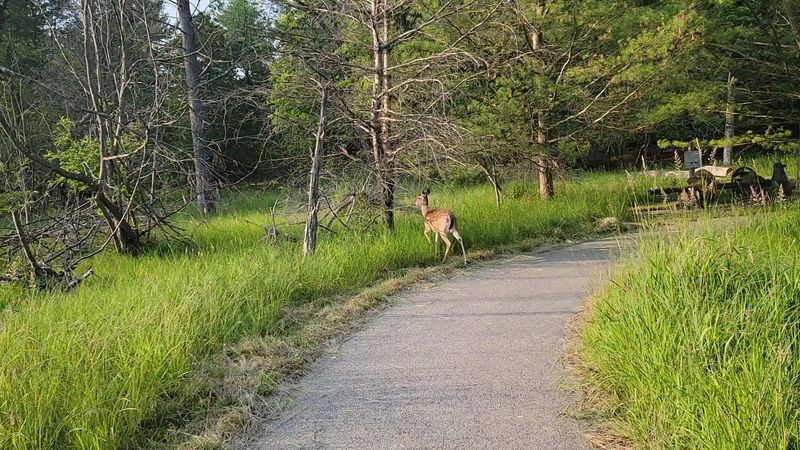
Keep your eyes peeled at dusk, as deer appear like quiet punctuation marks at the edge of the forest. The wind builds fast on the big lake, so plan paddling for the calm, early side of the day.
The climb is straightforward, but the view feels like a reward earned by steady steps.
7. Wilderness State Park, Mackinaw City area
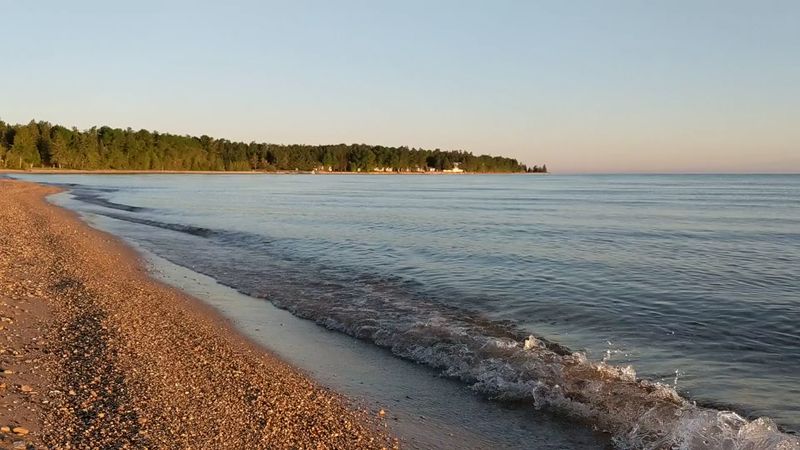
Past the tourist churn of the bridge and the fudge shops, Wilderness State Park feels like a quiet, firm handshake with Lake Michigan. Shoreline cobbles click musically underfoot, and jack pine leans into the wind like it has memorized the script for a gale.
On clear nights, the lights of the Mackinac Bridge glow faintly in the distance, a reminder that you’re far enough away to find peace, but not so far as to be lost.
Once a patchwork of logging lands and small farms, the area has returned to a rough, resilient mosaic of shifting dunes, cedar flats, and vibrant wetlands. This is critical habitat, and rare piping plovers often nest on certain beach stretches, so heed signs that ask for breathing room.
One of the park’s greatest gifts is its dark sky designation, and the stargazing is so profound it can be worth a midday nap just to stay awake for the celestial show.
Bug jackets are a badge of honor in June when the hatch is on, but fall rewards patience with migrating raptors soaring above the nearby Headlands. I find late afternoon hikes best, because the lowering sun turns lake light into a sheet of polished metal.
6. Holland State Park, Holland
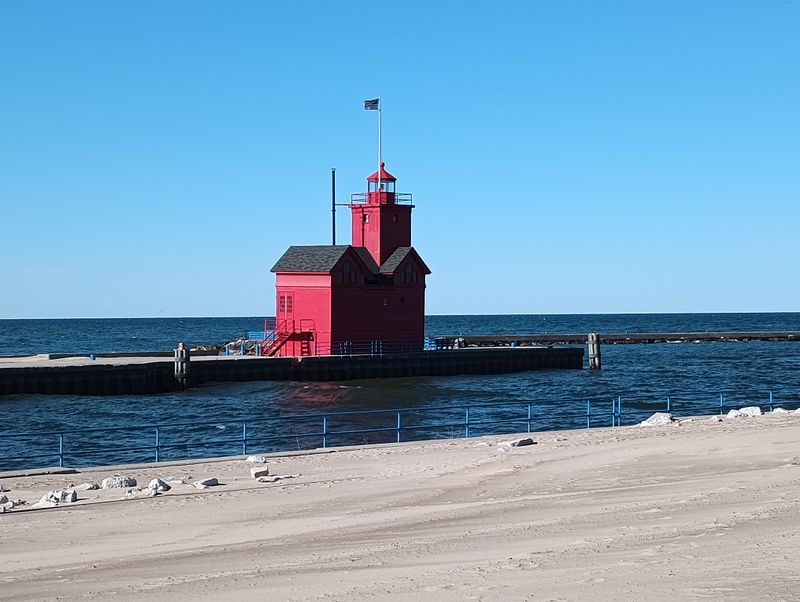
The lighthouse known as Big Red watches the channel like a friendly, stationary sentinel, and the long pier pulls your feet toward the sunset almost automatically. Beach grass shivers over pale dunes while gulls ride thermals above volleyball lines and tidy picnic setups.
When the Great Lakes are calm, the water turns a blue that looks unreal until you touch its cold reality and remember it isn’t a postcard.
Holland’s Dutch heritage shows up in clean, thoughtful park design and spring celebrations that spill tulips across the nearby town. The lighthouse, restored with care, anchors the region’s maritime memory without fuss.
The park uses pathways to steer foot traffic, keeping sand surprisingly pristine even on peak summer weekends. To dodge crowds, arrive on a Tuesday or Wednesday, and always bring shoes, because boardwalks can get hot enough to sting.
I love watching massive freighters slide through the channel, small silent dramas against a gargantuan horizon. If you have patience, the best moment is when the ship lines up with the pier and the scale suddenly becomes obvious.
5. Silver Lake State Park, Mears
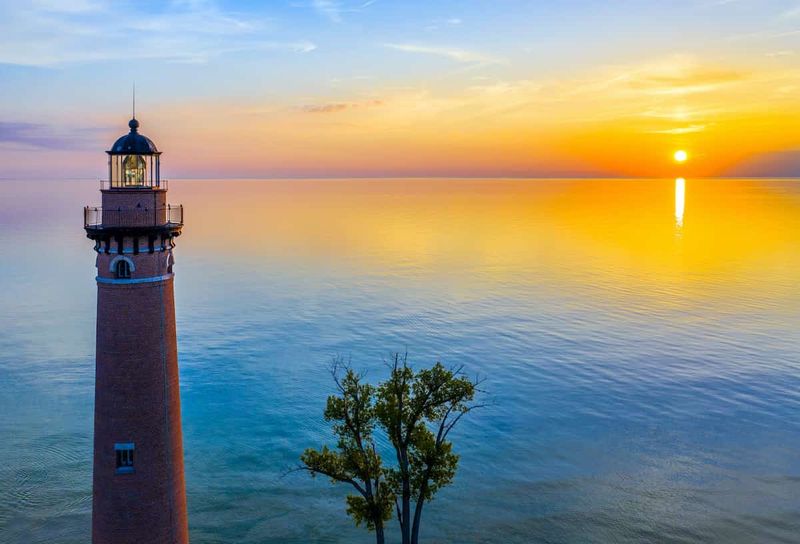
The dunes move like giant, sleeping animals, their ridges slumping and rebuilding with every gust of wind. Silver Lake flashes brilliantly inland while Lake Michigan hammers the outer shore, and between them sits a desert-like playground that asks your legs and lungs to work.
Depending on where you stand, you can hear the mechanical purr of tires from the ORV zone, a modern counterpoint to the ancient whistle of the wind.
These dunes formed as post-glacial sands migrated across the landscape, later reshaped by logging-era changes and unpredictable lake weather. The park is split so foot travelers and motor riders each have their own zones, keeping both groups sane.
Pay attention to signage protecting marram grass, the thread stitching the dunes together. For the best experience, hike at sunrise when sand is cool and shadows draw crisp edges across the peaks.
I’ve rented a sandboard for a few hours, then recovered by dipping my toes into Silver Lake, where the water feels like a cool act of forgiveness after a long, vertical climb. Bring water, because sand steals energy quietly.
If you go later in the day, plan a slower pace, because the heat on open dunes can feel like a different season.
4. P.J. Hoffmaster State Park, Muskegon
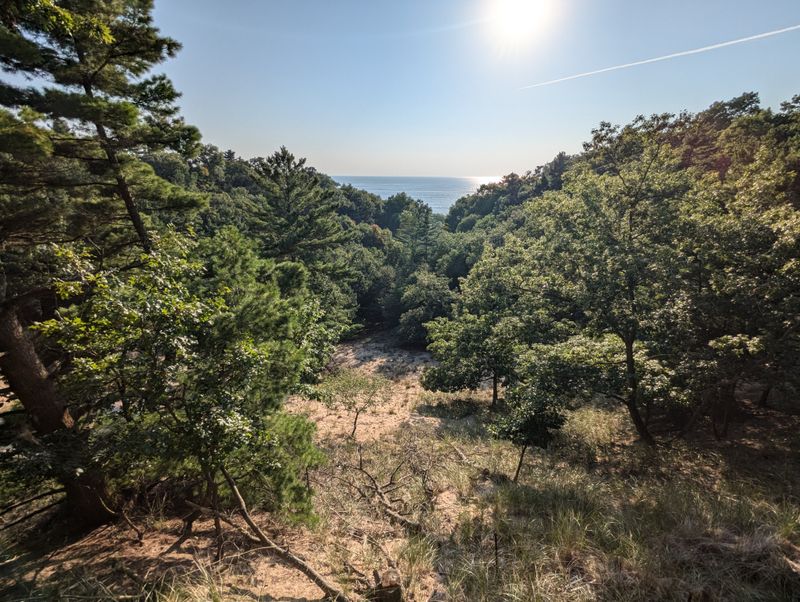
Wooden steps rise through a deep beech-maple hush until the trail exhales onto a crest with a stern, blue horizon. The wind writes daily calligraphy across the sand and erases it by lunchtime, leaving the landscape feeling new every visit.
At the base of the dunes, the Gillette Visitor Center offers smart, interactive exhibits on the ecology that allows these massive sand structures to exist.
Preservation here feels practical and precise; boardwalks float above sensitive roots and signage invites curiosity without sounding like a lecture. Forest and dunes survived because the community treated them like a living laboratory worth defending.
It is fascinating to watch dune areas slowly recover where human feet once chewed vegetation bare. Weekdays are best for quiet overlooks, especially after rain when dampness firms up sand and makes hiking easier.
I always bring binoculars for lakewatching; freighters appear more often than you’d think, looking like small steel stories sliding along the edge of the world. Stay a moment at the crest and watch the horizon, it trains your eye.
3. Hartwick Pines State Park, Grayling
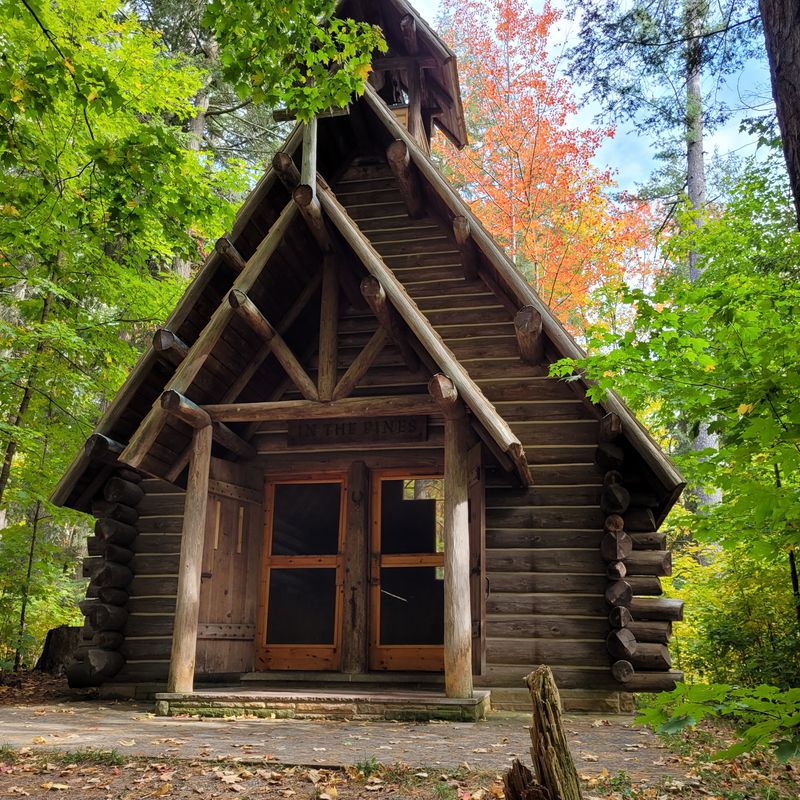
The air drops noticeably under the canopy of white pines, giants that groan softly when wind leans into them. Your stride shortens to match the reverent hush of the forest floor, where a thick carpet of needles filters sunlight into glowing green coins drifting across your path.
The whole park smells of pitch and old, sun-warmed paper, the scent of a forest that has watched centuries pass.
These trees are among the last virgin tall stands left in the state after the logging era of the 1800s chewed through the peninsula. The nearby museum keeps that history unvarnished, showing grit and environmental cost side by side.
Boardwalks are essential, protecting ancient roots while you crane your neck upward until it complains. History doesn’t live in books here; it lives in rings and silence.
Mosquitoes practice a special kind of persistence in June, so long sleeves are a wise investment. I find winter visits most profound, when deep snow muffles the parking lot and every footstep writes a temporary paragraph between massive trunks.
If you go in summer, pause and look up for a full minute, because the canopy’s scale takes time to register.
2. Fayette Historic State Park, Garden
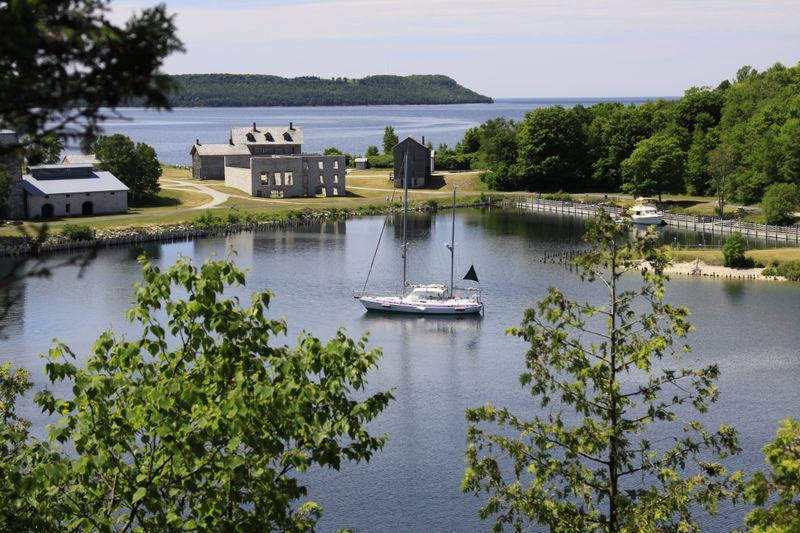
Limestone cliffs hold a turquoise harbor where an iron-smelting town once clanged and smoked, but today it is quiet enough to hear sailboat masts pinging against the sky. Boardwalks thread between worker homes, the grand hotel, and the furnace complex, each building squared-up and defiant against the bay.
The water looks strangely Mediterranean until a sharp northern breeze reminds you exactly where you are.
Fayette’s charcoal iron days ended when richer ore and more efficient techniques elsewhere cut demand, leaving a ghost town in their wake. Preservation teams stabilized foundations and interpreted the site without turning it into a theme park.
The town’s grid still reads like a ledger of nineteenth-century ambition and industrial ash. For best photos, walk during low, slanting late-afternoon light when shadows begin sculpting the limestone walls.
I like to linger on the bluff trail, watching swallows stitch the air above anchored hulls like patient punctuation. Bring a layer for the bay wind, because it can turn quickly even on bright days.
1. Leelanau State Park, Northport
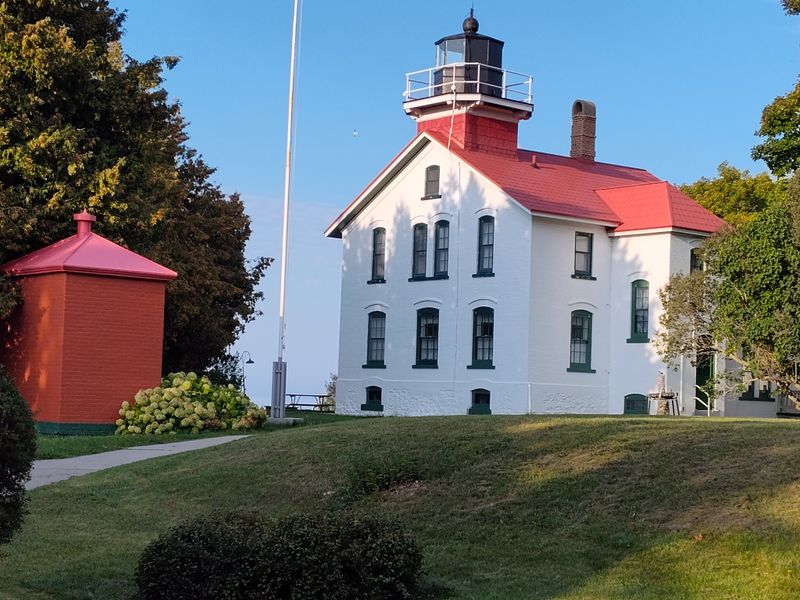
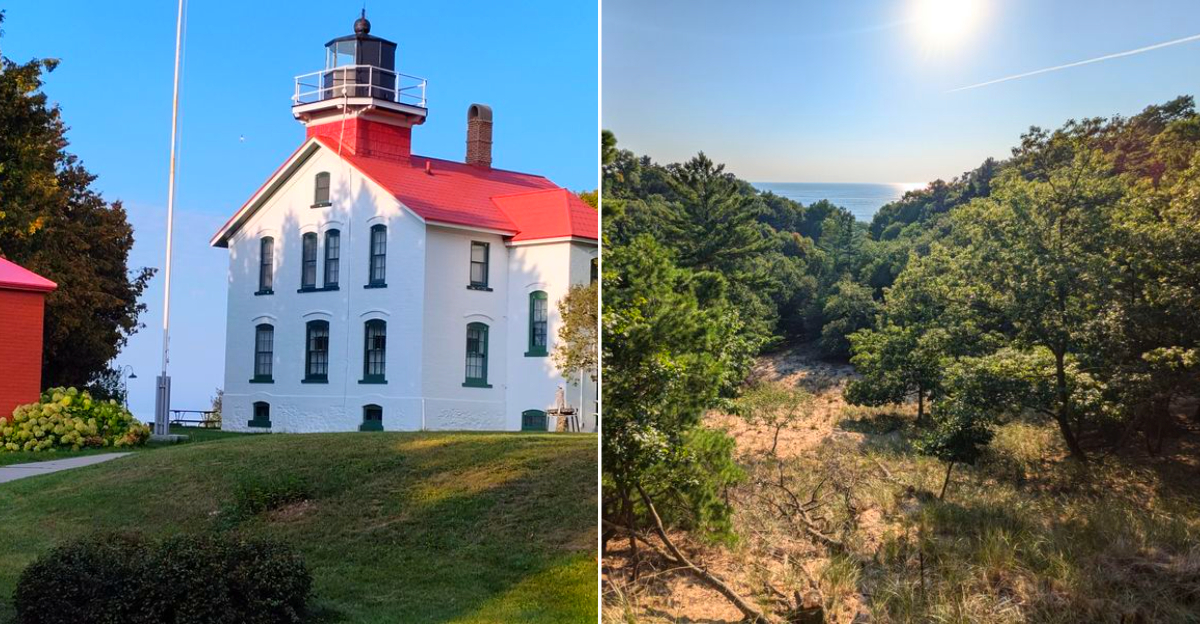
The Leelanau Peninsula ends with a scenic bow: a classic white lighthouse, a rocky hemline, and water that always seems engaged in overlapping conversations. Cedar shadows cool the trails, and ancient stones click as waves sort them into patient, changing patterns.
On extra-clear days, the Manitou Islands flirt with the horizon, appearing just out of reach and making the whole lake feel wider than you expected.
The Grand Traverse Lighthouse, preserved through volunteer devotion, tells stories of ship-lane tragedies and the mundane routines of keepers with equal care. Footpaths keep you off fragile lichen mats clinging to exposed rock, so stay on marked ways.
This park rewards unhurried circuits rather than a frantic dash to a viewpoint. Pack layers, because the tip of the pinky brews its own unpredictable weather, and it rarely asks permission.
Bring a thermos of coffee and find a quiet shore spot to watch light turn water from steel gray to bottle green, then back again, without ceremony. If the wind rises, tuck in behind cedars and let the lake keep talking.
Leave time for the return walk, because the best moments here tend to happen when you stop trying to hurry them.