
This Beloved Michigan Lighthouse Has People Driving In From Everywhere
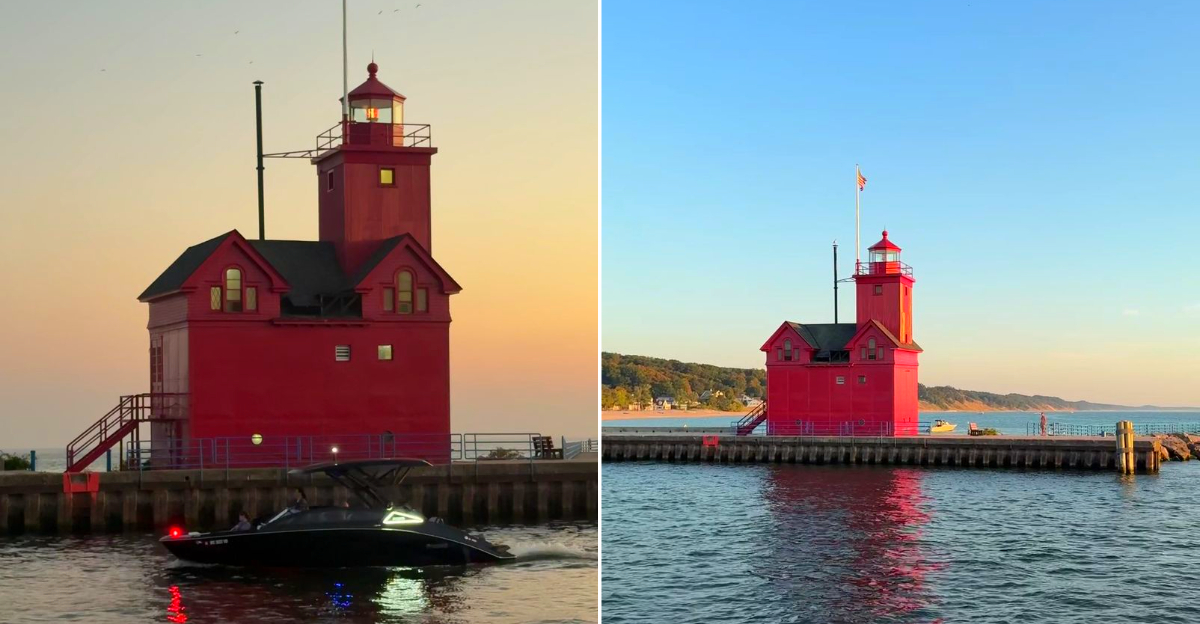
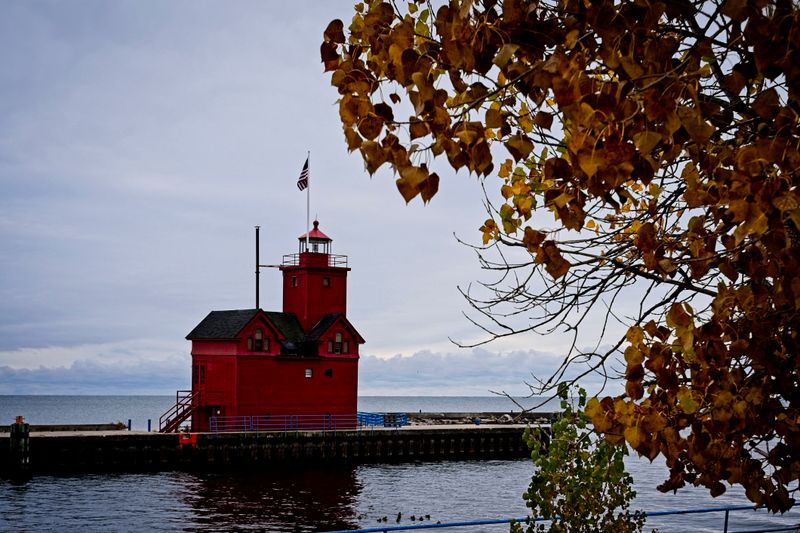
If you’ve ever wondered what a red exclamation point looks like against a bruised Lake Michigan sky, you’ll find the answer vibrating across the channel in Holland. Unlike other landmarks that let you lean against their shingles, Big Red is a tease: a scarlet sentinel locked away on private sands, forcing you to admire it from the jagged concrete stage of the Holland State Park pier.
Michigan sightseeing enthusiasts can capture the most stunning views of the historic Big Red lighthouse from the accessible Holland State Park pier.
I’ve learned the hard way that a nose-stinging October morning beats a crowded July afternoon every time; the colors are deeper, and the silence allows the lake to do the talking. If you want the shot that looks like a masterpiece, wait for that precise moment when the evening light turns the water to liquid mercury and the lighthouse to a glowing coal.
First Look From The North Pier
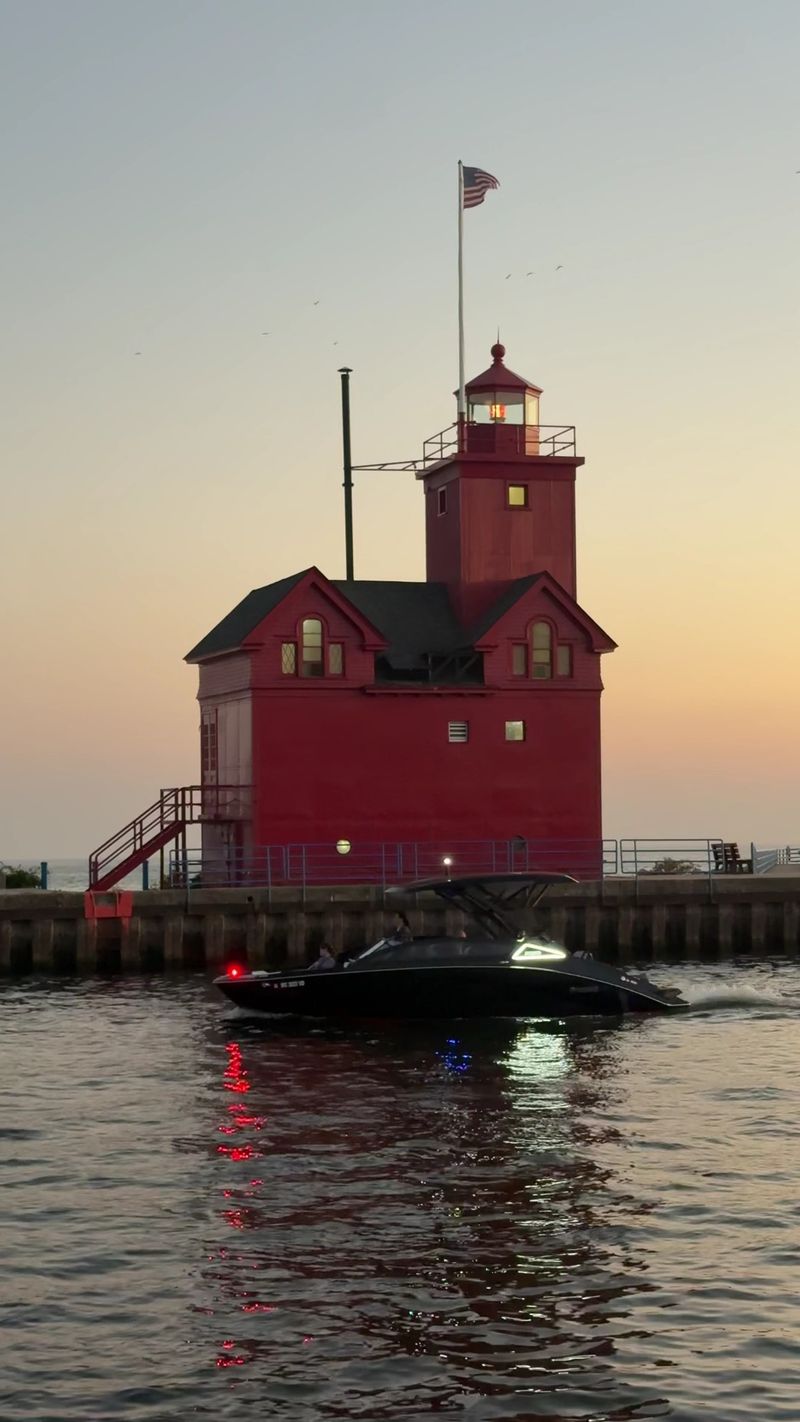
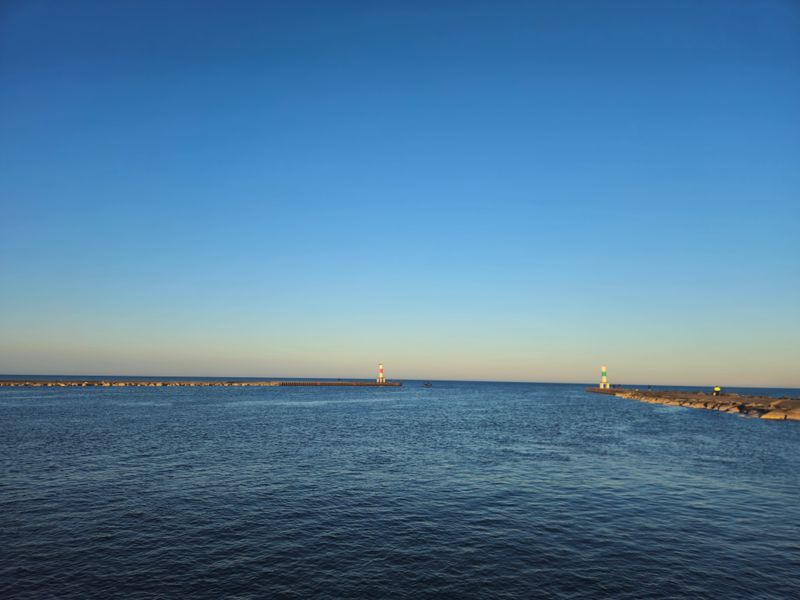
Begin your journey at Holland State Park and walk the long north pier until the lake breeze starts tugging at your sleeves with real intent. As you move toward the lake, Big Red aligns perfectly across the channel, a shock of crimson against the endless blue, with boats sliding gracefully between you and the structure.
The first impression is one of scale and deceptive simplicity, lighthouse geometry turning into a quiet, visual headline. It’s the kind of view that looks composed even when the day feels windy and wild.
Originally guiding vital commercial traffic from the big lake into Lake Macatawa, the purpose of Big Red reads clearly even from this distance. Engines hum in the background, gulls heckle overhead, and the lantern room glints in the sun.
As you walk, step wide and watch your footing on occasional wet spots where the lake has reached up to the concrete. Bring a wind-resistant layer because the pier amplifies the weather quickly, and that golden sunset light disappears faster than you’d expect.
Why The Color Sticks
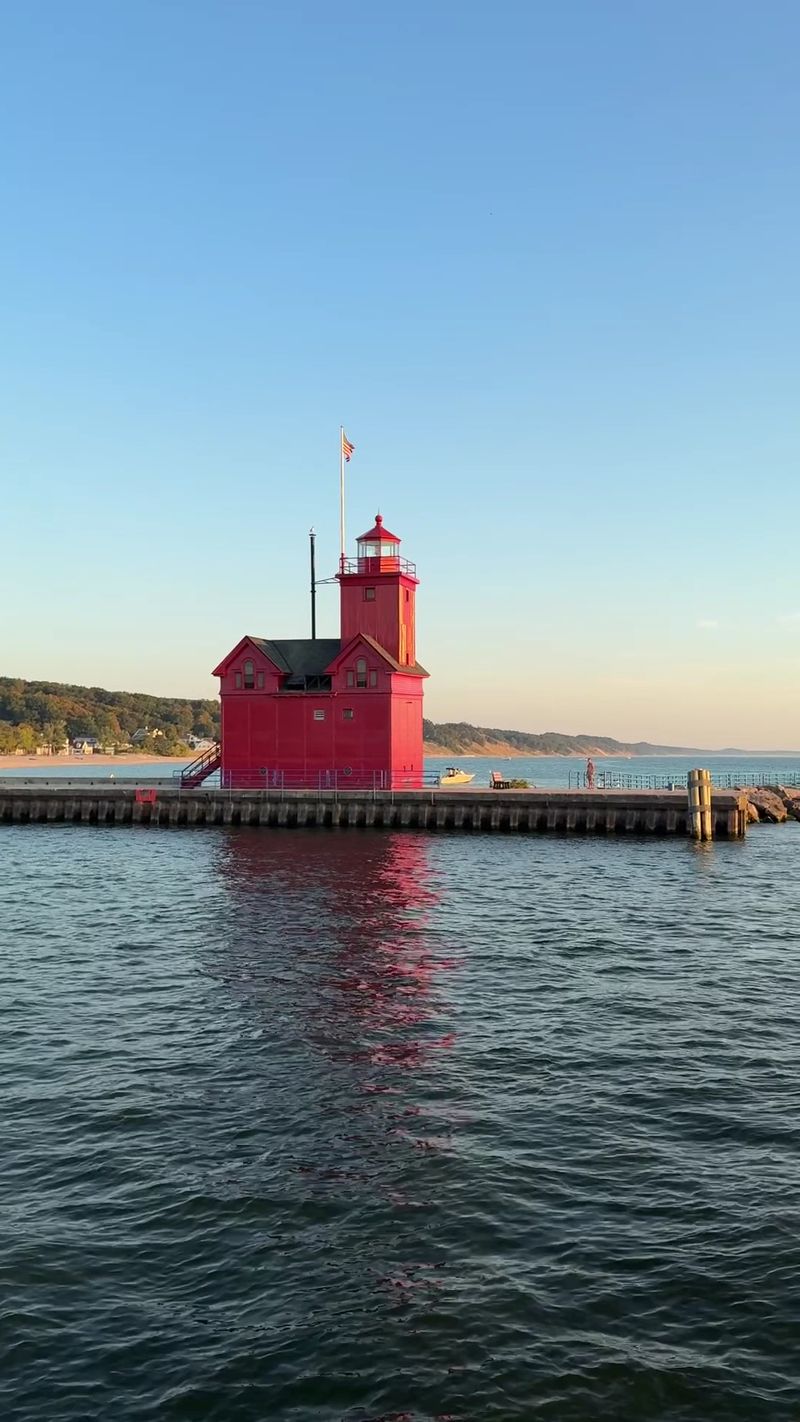
That specific shade of red is not shy. When sunlit, it vibrates against the shifting water, and even on moody, overcast Michigan days, it manages to glow like a buoyant landmark.
Your brain files it under directional aid, then quickly re-categorizes it as a comfort object. The color feels practical and emotional at the same time.
The saturated paint evolved through decades of maintenance cycles and preservation standards, designed to keep corrosion at bay on a working waterfront. This hue also improved visibility for mariners navigating the famously narrow channel.
If you want photos without harsh glare, skip the hardest midday light and look for broken clouds that soften the red. A polarizing filter helps with water shine, and on a phone, tap to expose for the red so details don’t wash out.
Understanding Access Limits
Here is the practical truth before you make the long drive, Big Red sits on property with restricted public access on the south side of the channel. You view it from the north at Holland State Park, and honestly, that vantage point is the most iconic one anyway.
It gives you the cleanest composition, with the channel acting like a natural frame.
The lighthouse is not generally open for interior tours, which keeps a bit of mystery intact. Historically, the structure served as the gatekeeper where Lake Macatawa meets Lake Michigan, and the setting is still busy today.
This is a working waterway with shifting currents and intimidating winds at times, so plan like it matters. Park in the official state lot, and if you don’t have a Michigan Recreation Passport, budget for the day-pass fee.
Reading The Wind And Waves
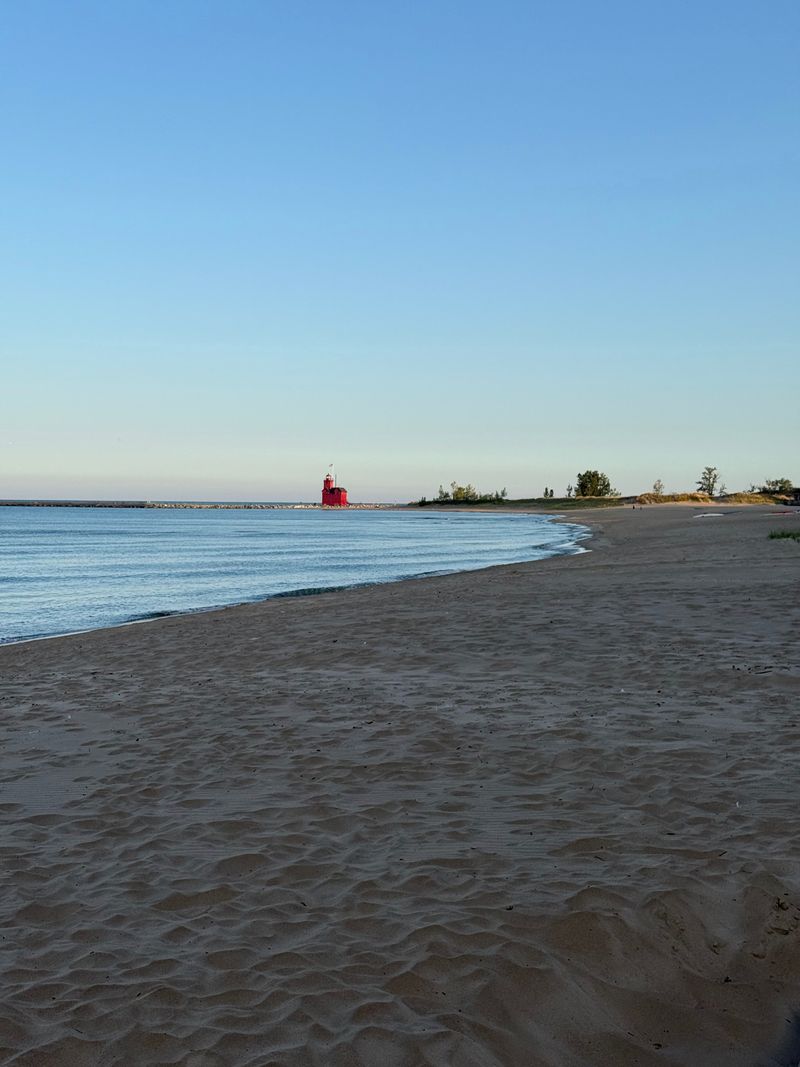
Sound carries differently when the lake is flexing its muscles. Flags snap sharply, the pier seems to hum under your feet, and you feel small in the best possible way.
In all that motion, Big Red becomes the fixed point that makes the water’s chaos feel readable.
Winds often funnel through the channel, creating cross-breezes that can catch you off guard. On rough days, waves slap the breakwater and spray can turn the pier into a slick strip of concrete.
Check conditions before walking too far out, keep distance from the edges, and secure hats and loose gear. When gusts really pick up, step back and let the scene perform from the sand, where the roar softens into a steady hush.
History In The Lines
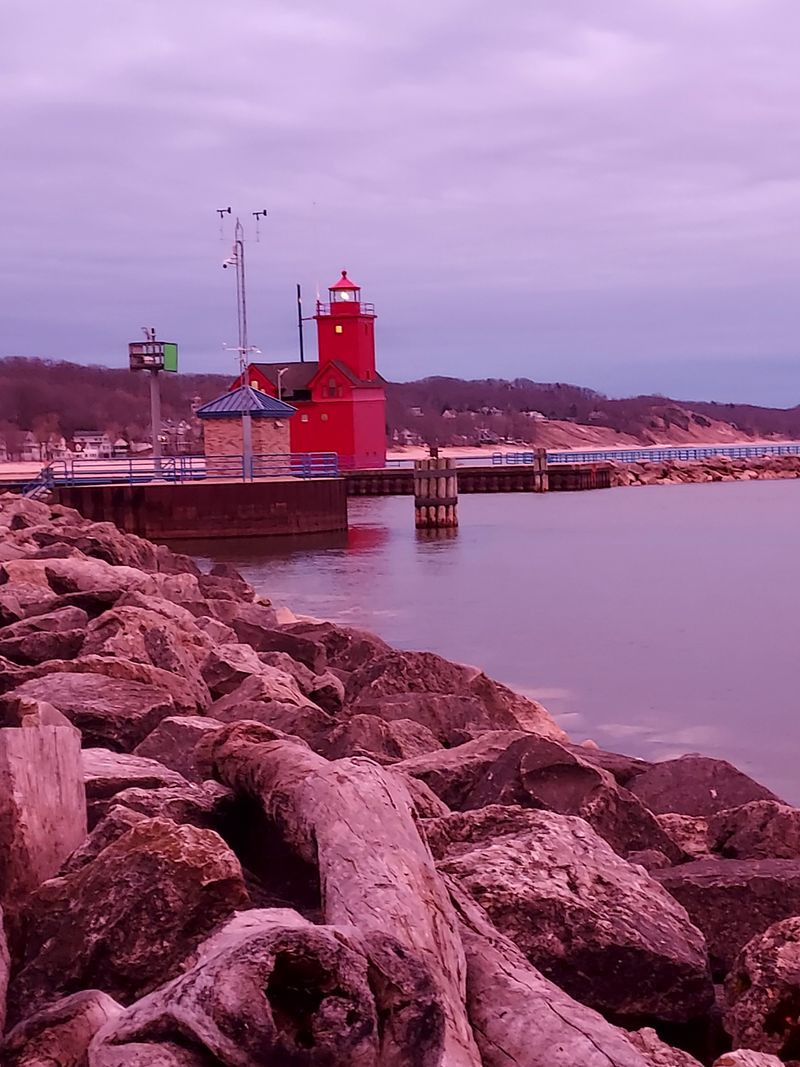
Look closely and you’ll notice the keeper’s quarters blending into the square tower, a compact profile that favors function over flair. That shape tells a working-class story, not a decorative one.
The channel demanded a sentinel you could read at a glance, whether you were on a freighter or standing on shore.
The harbor’s aids to navigation date back to the late 19th and early 20th centuries, with the recognizable form of Big Red emerging through structural changes over time. Its design has guided freight and pleasure boats safely into the harbor for generations.
It’s worth reading the history before you arrive, then watching how the angles meet the horizon. If you have binoculars, bring them for lantern-room details, you’ll see how the roof planes steer the eye toward the light.
Sunset Strategy Without Stress
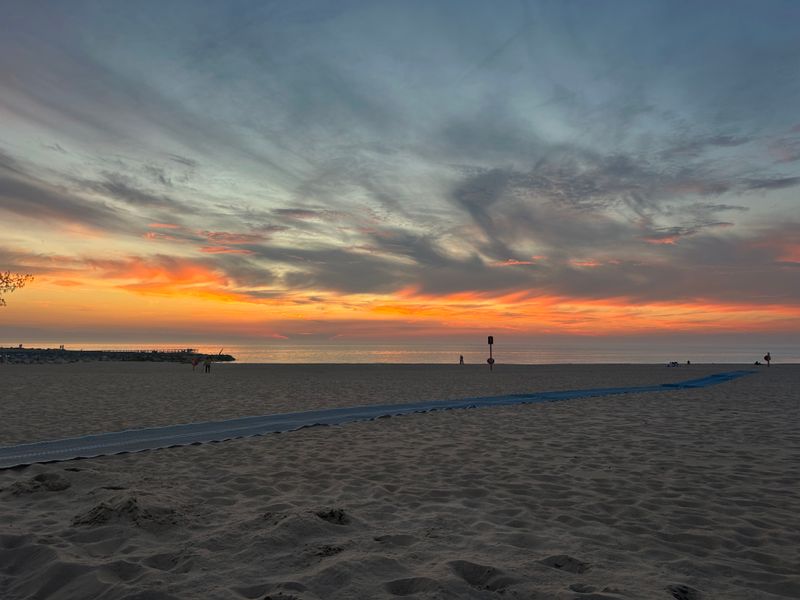
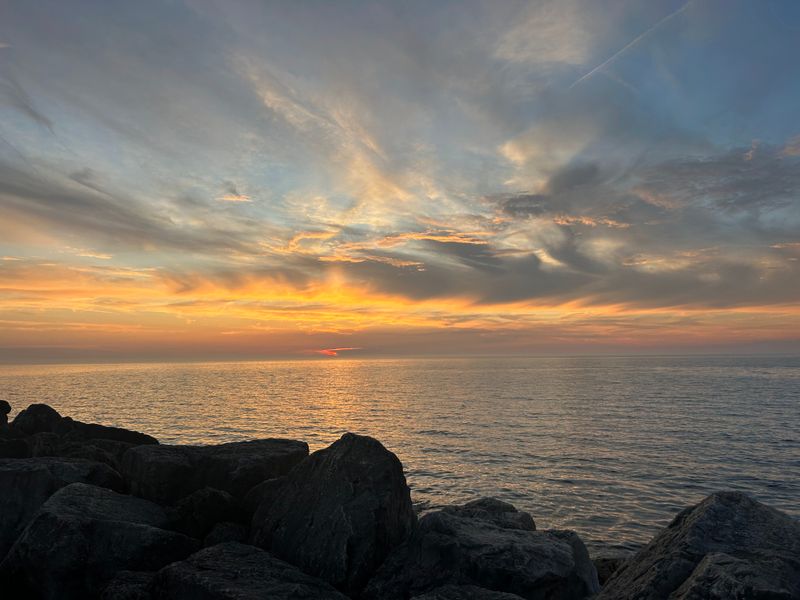
Sunset is the headliner here, and locals know it. Colors stack in tiers of orange and pink over Lake Michigan while Big Red shifts from bright scarlet to a deep, dignified maroon.
On those evenings, the pier becomes a slow parade of families, photographers with tripods, and locals sharing quiet nods.
On fair-weather weekends, arrive early because the parking lot fills up fast. A midweek evening is the better move, with more breathing room and fewer distractions along the railings.
Don’t fear cloud cover, it can scatter light into metallic water and sharpen the show. Shoot wide for boat silhouettes, then tighten as the lighthouse starts to glow, and keep a microfiber cloth ready for spray.
Winter Edges And Quiet Hours
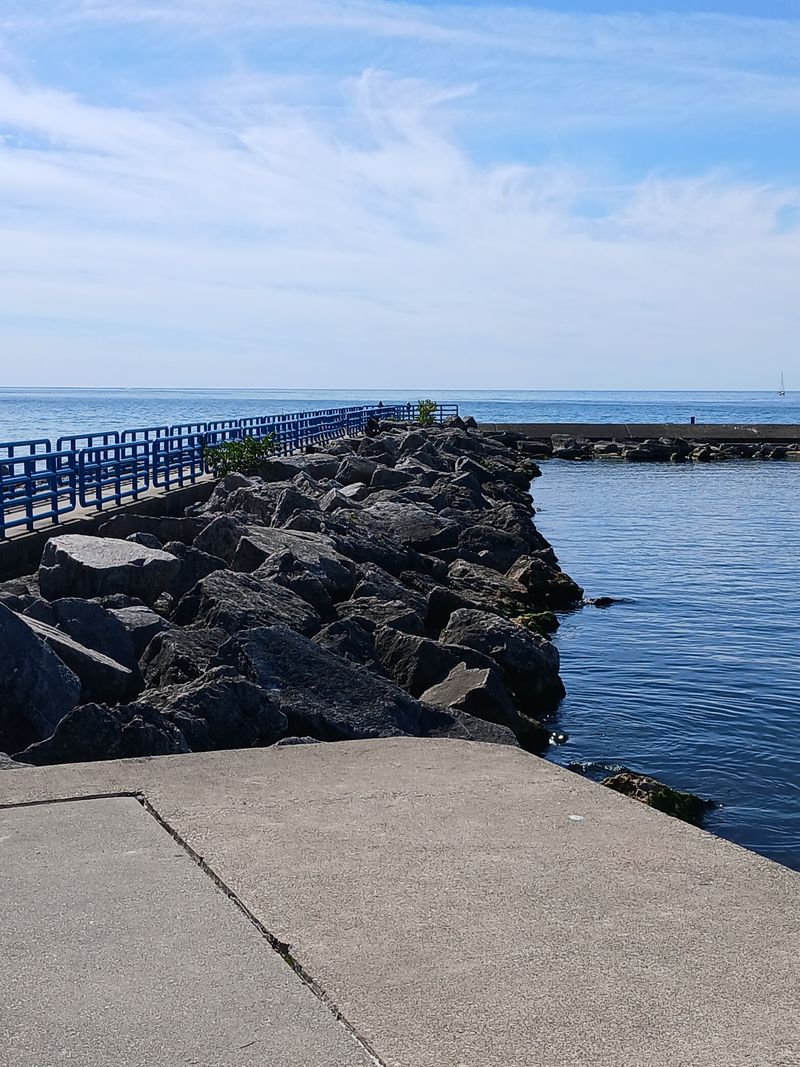
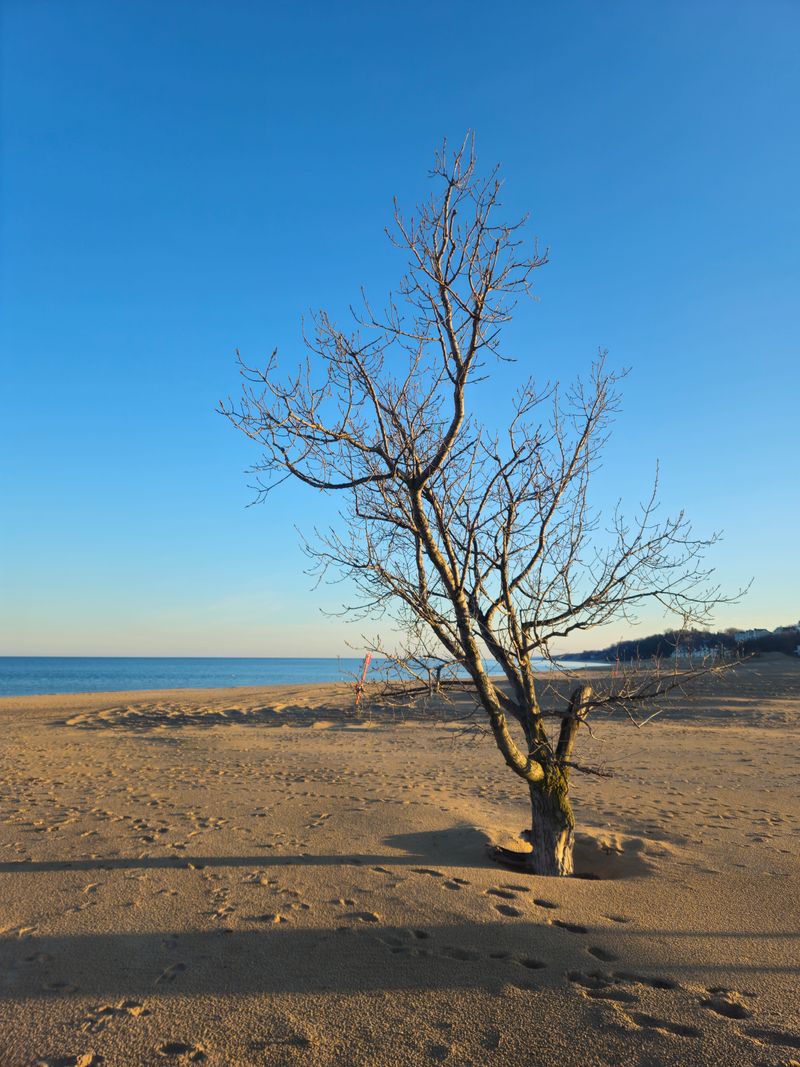
When the cold weeks arrive, they press a profound silence onto the beach, and every sound becomes crisp. Big Red seems to wear the sky’s pale blue like a borrowed coat, with ice feathering along the shoreline and footprints turning into brief signatures.
It’s quieter, sharper, and strangely intimate.
Locals say winter can deliver the clearest views because the air is drier and the summer haze is gone, along with the crowds. Dress for windchill, watch for icy patches near the pier, and keep visits short with warm car breaks.
For safety, do not step on shelf ice, it can look solid and still collapse without warning. A thermos and glove-friendly camera settings make the season feel generous instead of punishing.
Framing The Channel
Sometimes, the foreground is what does the heavy lifting for your storytelling. Dune grass threads the bottom of your vision while Big Red anchors the far side of the water.
Boats occasionally split the channel, leaving temporary calligraphy in their wake. Architecturally, the lighthouse’s stacked volumes sit perfectly against the long, horizontal lines of the lake. That contrast makes it easy to snap a great photo, even with a basic phone.
Historically, this place is all about utility, which translates to a sense of calm when paired with the shifting natural elements. For a unique shot, try kneeling for a lower angle so the lantern room clears the pier railing.
If the crowds start to gather, don’t get frustrated; just step back and use their silhouettes as texture for your photos rather than obstacles. Patience pays off here because the boat traffic ebbs in clean intervals, offering bright gaps for a tidy, perfect shot.
Finding Calm On Busy Days
On peak summer weekends, the park can feel like a small festival. Noise lifts from the beach, gulls negotiate for snacks, and the pier develops its own slow queue.
The trick is not always escaping the crowd, it’s lowering the volume of it in your mind.
The culture here is family-forward, with kite lines carving the sky and coolers rolling along the sidewalks. Drift toward the channel rocks and the beach voices fade while the water views sharpen.
Bring water and your own shade because the sun can be relentless on the concrete. If the lot is full, loop once, grab dinner in town, and return later, as the light softens and the pier begins to breathe again.
Respecting The Working Waterway
What looks like a perfect postcard is, in reality, a busy corridor. Boats thread the no-wake zone with practiced, professional patience, and Big Red watches over them like a retired supervisor. Everything feels wonderfully organized when the traffic behaves.
Historically, this harbor was what kept local commerce flowing, and today’s pleasure craft have inherited that same choreography. You can help by letting anglers, walkers, and other photographers share the space on the pier, stay aware of your surroundings and leave plenty of rail space open.
It’s helpful to remember that the lighthouse was built for mariners first and sightseers second. Follow all the posted signs, keep the kids close to you near the water, and resist the urge to climb barriers for a “better” angle; the views are already spectacular from the safe zones.
When you hear the deep roll of a freighter horn echoing down the channel, just pause and listen. That sound ties the present day neatly to the vital purpose that Big Red still serves.