
A Colossal Piece Of Ohio’s Coal Mining History Still Stands Today, And It Is An Unbelievable Sight To See
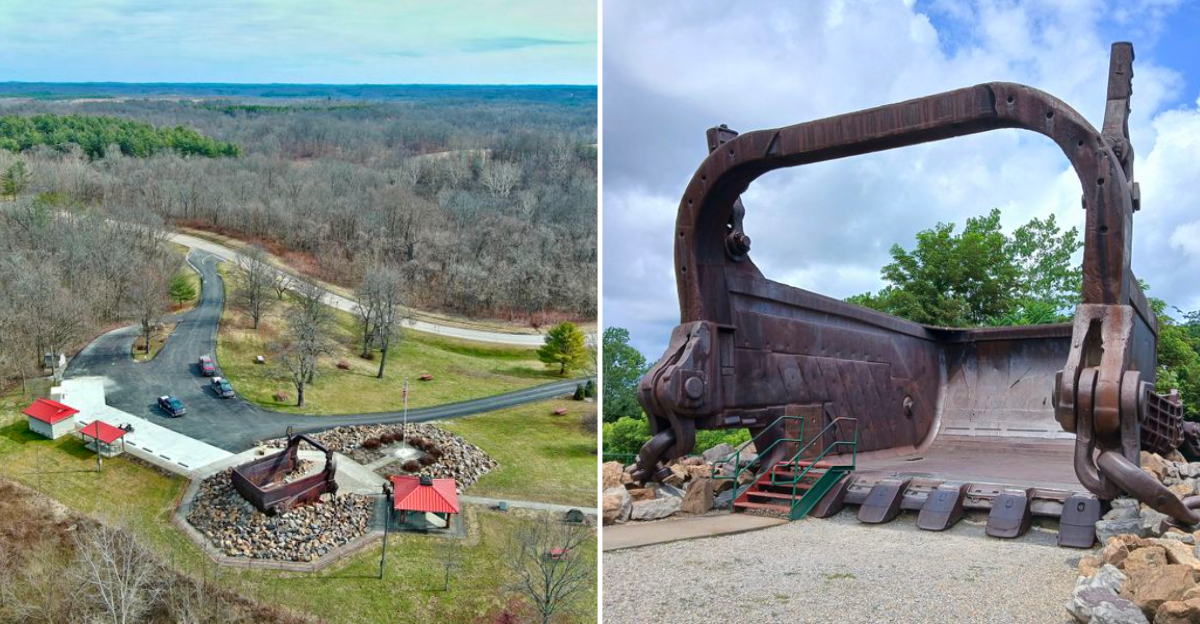
I had heard whispers about a massive bucket sitting in southeastern Ohio, but nothing could have prepared me for the jaw-dropping reality of standing next to it in person. This is not just any bucket.
This is the legendary Big Muskie Bucket, located at 4470 OH-78 in McConnelsville, a testament to an era when humans built machines so enormous they defied imagination.
The bucket alone weighs 230 tons and could hold two Greyhound buses with room to spare. Walking around this colossal relic at Miners Memorial Park, I felt dwarfed by its sheer scale and humbled by the engineering brilliance of the people who designed it.
The bucket is all that remains of Big Muskie, once the largest single-bucket digging machine ever created. It tells a powerful story about Ohio’s coal mining heritage, the workers who risked everything underground, and the incredible land reclamation efforts that followed.
Standing Before A Monument To Industrial Might
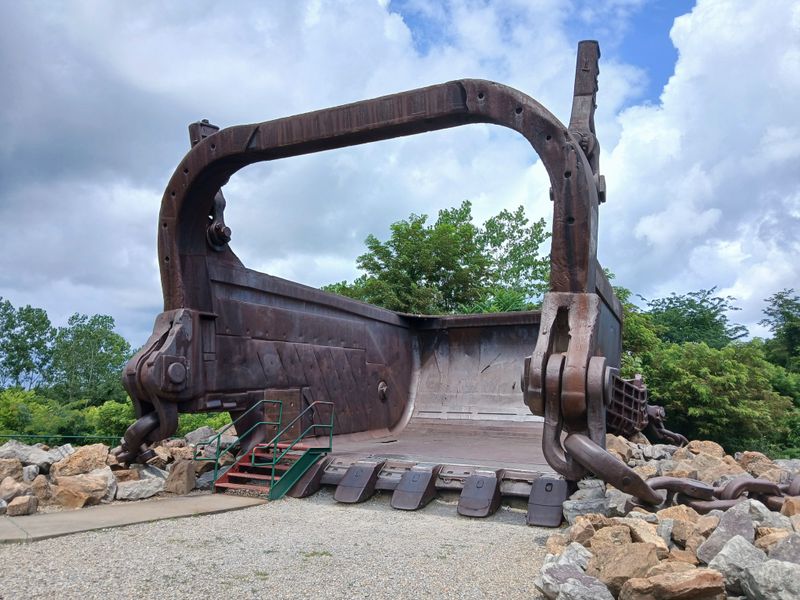
When I first pulled into the parking lot and caught sight of the bucket, my brain struggled to process what my eyes were seeing. The thing is absolutely gigantic.
I have stood next to dump trucks and excavators before, but this bucket made those machines look like toys.
The bucket measures about 27 feet wide and 14 feet high, standing roughly as tall as a two-story building. Its capacity was 325 tons of coal and earth in a single scoop.
Walking up to touch the weathered steel, I could see the battle scars from decades of brutal work, deep gouges and heavy welds that spoke to the punishment this machine endured.
What struck me most was imagining the crane that once operated this bucket. Big Muskie itself was born in 1969 and stood 22 stories tall, making it one of the largest mobile earth-moving machines ever built.
The bucket is just a fraction of what that machine was, yet it commands complete attention and respect from everyone who visits.
The Engineering Marvel That Changed Surface Mining
Big Muskie was not just big for the sake of being big. It was purpose-built for strip mining operations in Ohio, designed to remove massive amounts of overburden to reach coal seams deep below the surface.
The machine could move 39 million pounds of earth and rock every single hour during operation.
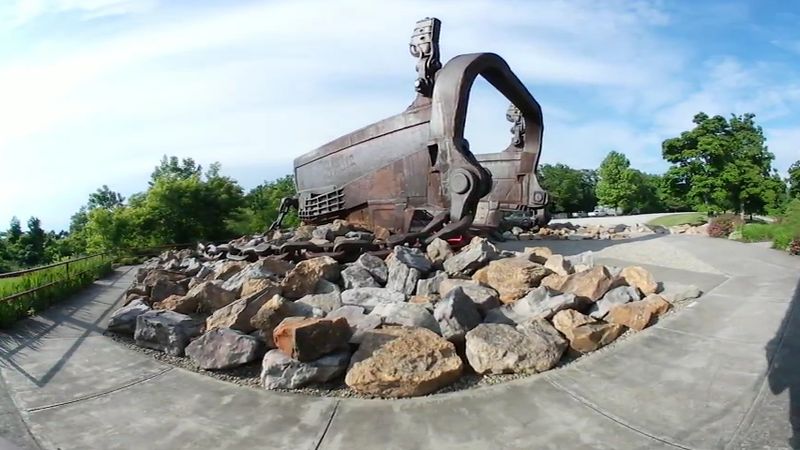
Looking at the chains that once suspended this bucket, each link thicker than my torso, I marveled at the precision required to operate such a beast. The bucket had enormous steel teeth designed to rip through compacted soil and rock layers.
These teeth show significant wear, testament to the unforgiving nature of the work.
Engineers designed multiple buckets for Big Muskie, rotating them as needed for maintenance and repairs. This particular bucket survived because it was likely in the best condition when the machine was dismantled in 1999.
The welds and patches visible across its surface tell stories of emergency repairs and constant upkeep required to keep such equipment running in harsh mining conditions.
A Tribute To The Miners Who Built Ohio
Miners Memorial Park serves as more than just a display site for this massive bucket. It stands as a powerful tribute to the miners and coal company workers who dedicated their lives to extracting coal from Ohio soil.
Reading the plaques and displays surrounding the bucket, I felt a deep connection to the generations of workers whose labor powered American industry.
Coal mining was dangerous, backbreaking work that required incredible courage and stamina. These miners descended into the earth daily, facing risks most of us cannot imagine, to provide energy for homes, factories, and communities across the nation.
The memorial honors their sacrifice and celebrates their contribution to building modern America.
The park includes informational panels that explain not just the technical aspects of surface mining but also the human stories behind the operation.
Visitors can learn about mining culture, safety improvements over the decades, and the tight-knit communities that formed around mining operations throughout southeastern Ohio.
From Devastated Landscape To Thriving Ecosystem
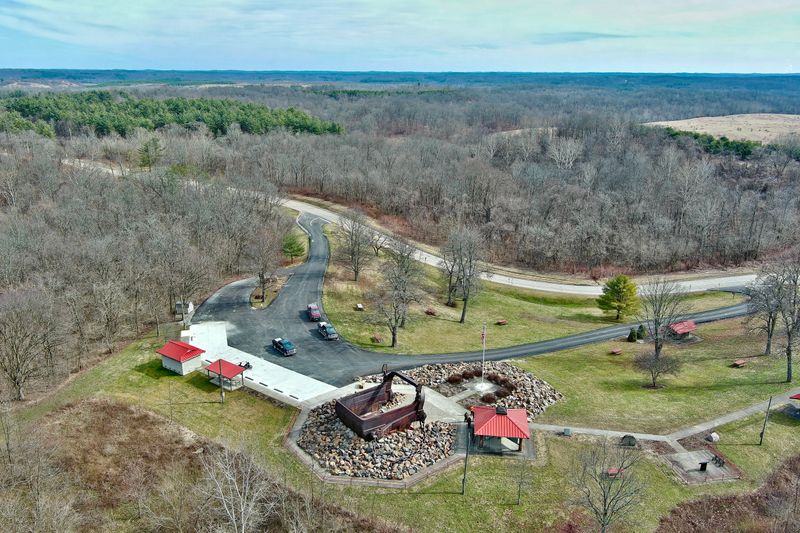
Standing in this beautiful park surrounded by mature trees and rolling hills, it is almost impossible to imagine that this entire area was once a massive open-pit coal mine. The land reclamation work done here represents one of the most successful environmental restoration projects in Ohio.
After mining operations ceased, extensive efforts were made to restore the landscape to a natural state. Topsoil was replaced, native vegetation was planted, and careful attention was paid to water drainage and ecosystem balance.
Today, the area is part of the larger AEP ReCreation Land, which spans thousands of acres and provides habitat for wildlife.
The transformation is remarkable. Where massive machines once tore into the earth, forests now thrive.
Deer, wild turkey, and other animals have returned to make this their home. The park demonstrates that with proper planning and commitment, heavily disturbed land can be brought back to life.
It serves as a model for responsible mining practices and post-mining land management.
Perfect Stop For Motorcycle Riders And Road Trippers
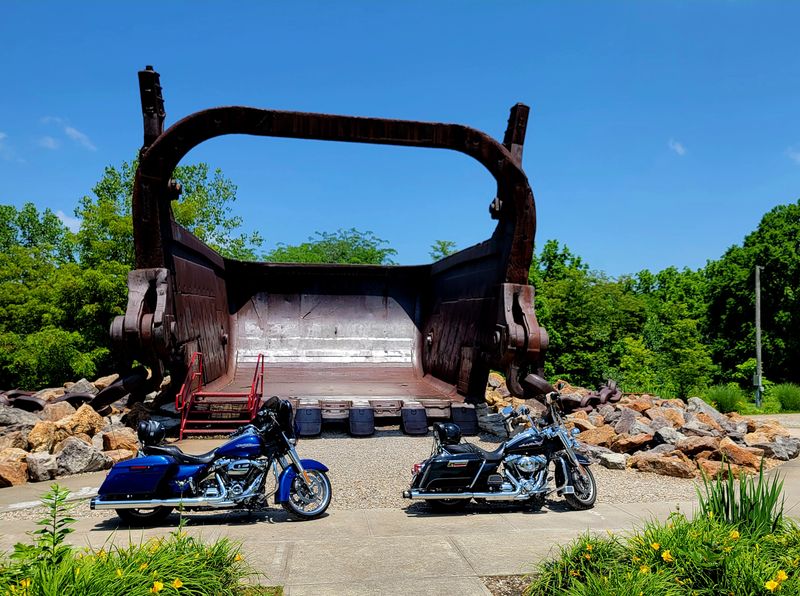
The journey to Big Muskie Bucket is almost as memorable as the destination itself. Located along scenic Ohio Route 78, the drive features winding roads that cut through beautiful hill country, making it a favorite destination for motorcycle enthusiasts seeking adventure and unique roadside attractions.
I encountered several groups of riders during my visit, and they all shared the same excitement about discovering this hidden treasure. The roads leading to the site offer excellent cornering opportunities, though recent chip-seal treatments require careful attention.
Route 78 and nearby Route 555 provide spectacular riding through southeastern Ohio landscapes.
The parking area can easily accommodate large vehicles, RVs, and groups of motorcycles, with plenty of space for everyone to explore comfortably. Several visitors I spoke with mentioned making the Big Muskie Bucket a regular stop on their annual riding trips through Ohio.
The combination of great roads, fascinating history, and the sheer spectacle of the bucket makes it an irresistible destination for anyone who loves the open road.
Family-Friendly Amenities And Accessibility
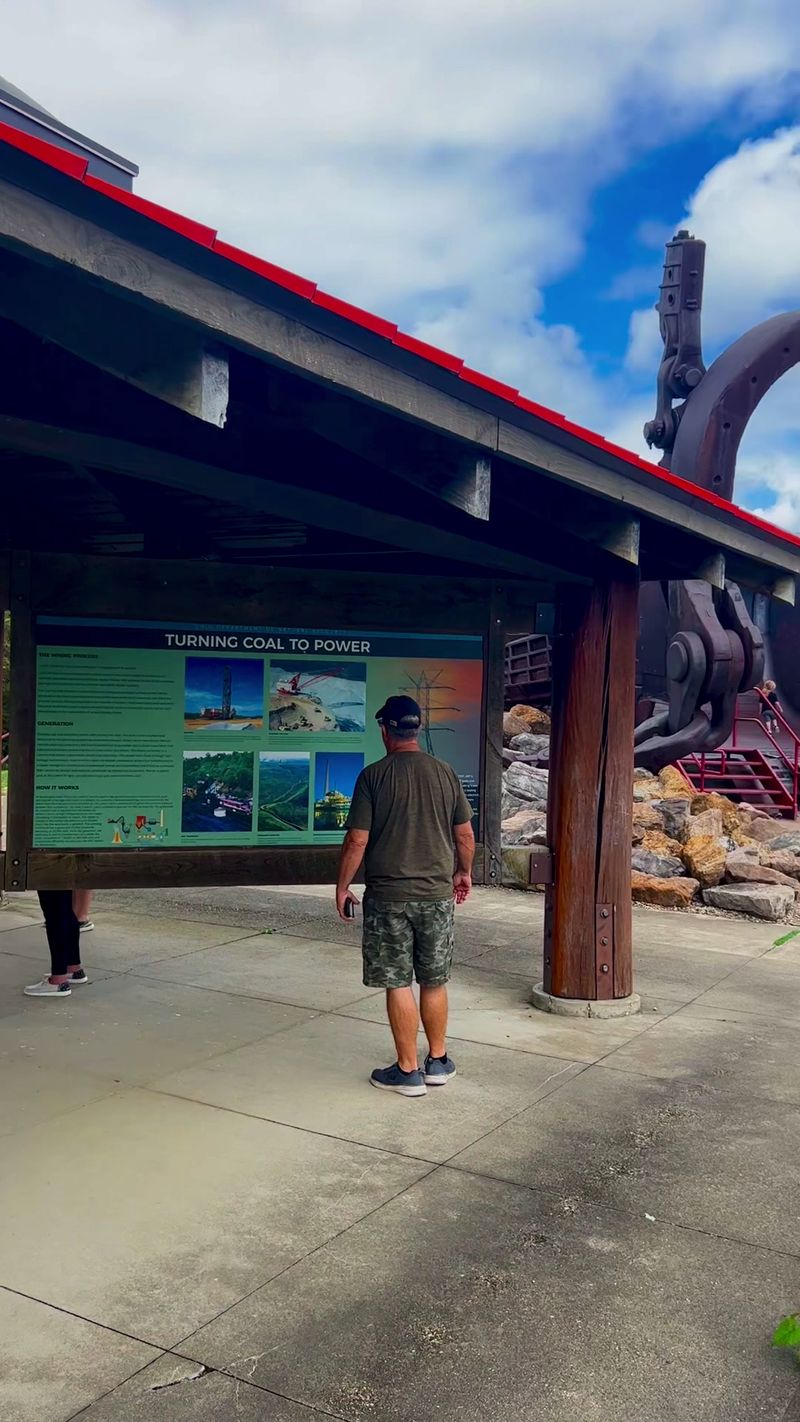
One of the best aspects of visiting Big Muskie Bucket is how accessible and welcoming the site is for visitors of all ages and abilities. The parking area sits directly adjacent to the bucket, requiring minimal walking to get up close to this impressive relic.
Families with young children, elderly visitors, and those with mobility challenges can all enjoy the experience without difficulty.
The park includes several picnic tables scattered throughout the grounds, making it an ideal spot for a lunch break during a day of exploring southeastern Ohio. Shaded areas provide relief on hot summer days, and the well-maintained grounds create a pleasant environment for relaxing and taking photos.
Restroom facilities are available on-site, though visitors should note they are portable toilets rather than full facilities. The park even includes a designated spot where you can set your phone to capture timed group photos with the bucket, showing thoughtful attention to visitor experience.
Best of all, admission is completely free, making this an affordable family outing.
Educational Opportunities And Historical Context
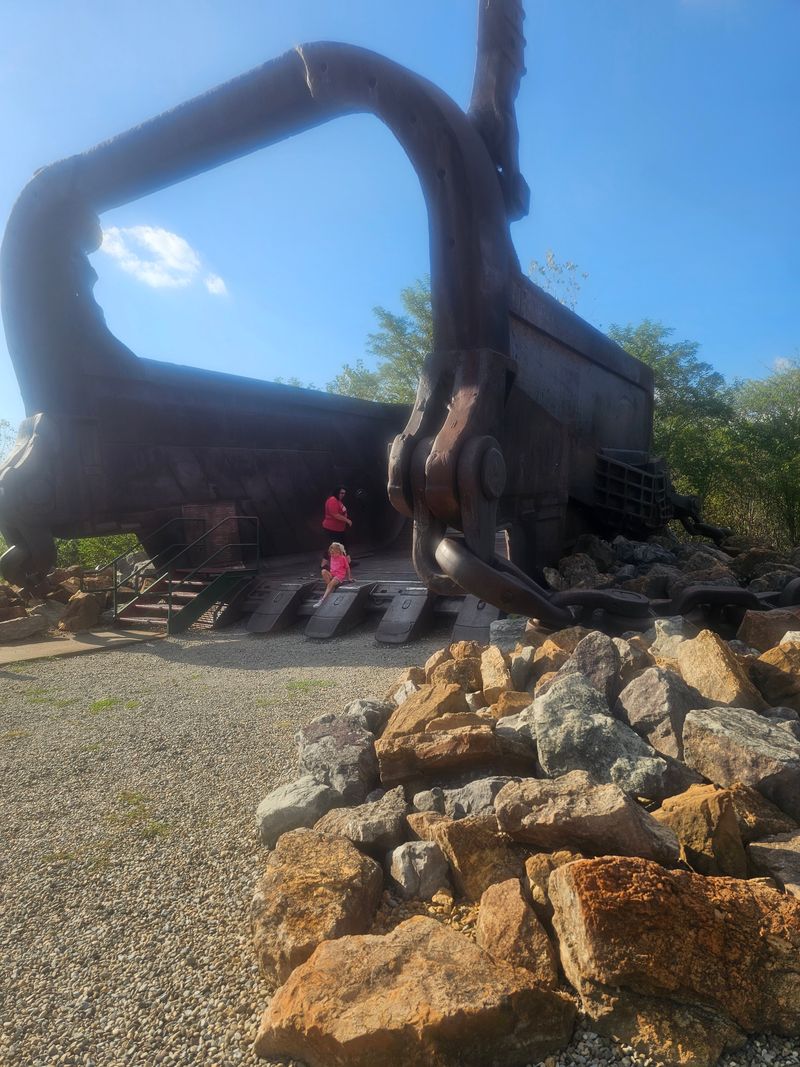
The educational value of visiting Big Muskie Bucket extends far beyond simply seeing a large piece of equipment. The site offers extensive information about surface mining techniques, the history of coal extraction in Ohio, and the engineering challenges involved in building and operating such massive machinery.
Historical photographs displayed throughout the park show Big Muskie in its full glory during active mining operations. Seeing images of the complete machine helps visitors understand the true scale of what they are looking at.
One particularly striking photo shows a full marching band performing inside the bucket, which really drives home just how enormous this thing is.
The displays explain how dragline excavators work, the role of coal in American industrial development, and the evolution of mining technology over the decades. For students, educators, and anyone interested in industrial history or engineering, the site provides valuable insights.
I spent nearly an hour reading all the informational panels and examining the bucket from every angle, discovering new details with each pass.
Part Of The Larger Jesse Owens State Park Experience
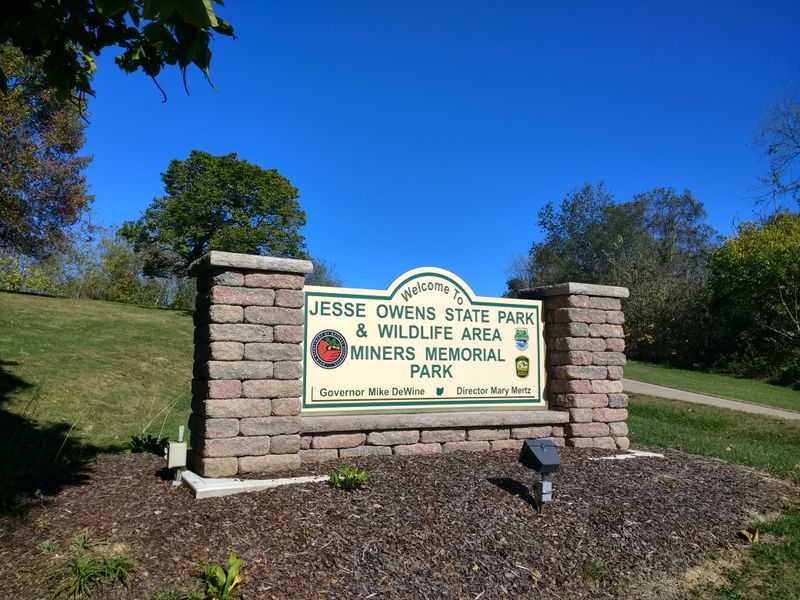
Big Muskie Bucket sits within the broader context of Jesse Owens State Park and the surrounding AEP ReCreation Land, offering visitors multiple reasons to extend their stay in this beautiful part of southeastern Ohio.
The park system provides opportunities for camping, hiking, wildlife viewing, and exploring the restored landscape.
Free camping locations are available nearby for those who want to make a weekend adventure out of their visit. The park trails wind through reclaimed mining lands, offering a unique perspective on environmental restoration efforts.
During my visit, I saw families enjoying picnics, photographers capturing the bucket from creative angles, and nature enthusiasts exploring the surrounding woodlands.
The park honors Jesse Owens, the legendary Olympic athlete who grew up in Ohio and became an American hero. His legacy of excellence and perseverance connects beautifully with the themes of hard work and achievement embodied by the Big Muskie Bucket and the miners it represents.
Together, these elements create a destination that celebrates multiple aspects of Ohio heritage.
Capturing The Perfect Photo Opportunity
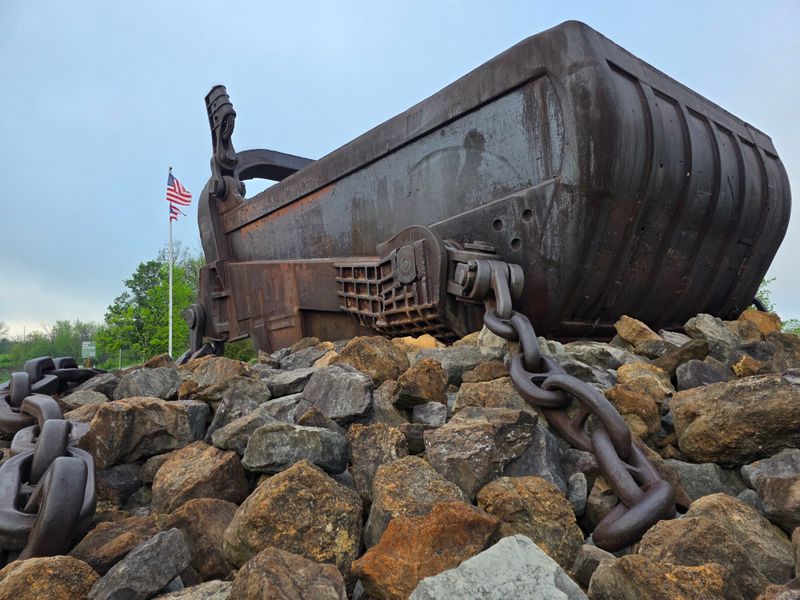
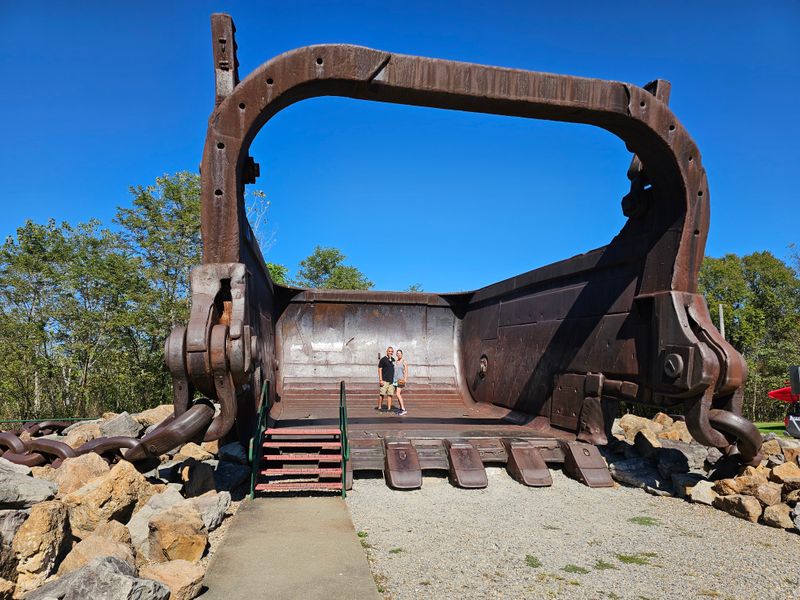
Photographers absolutely love Big Muskie Bucket because it is nearly impossible to take a bad picture of something this impressively massive. The challenge is actually capturing the true scale in your photos, which is much harder than it sounds.
Even wide-angle lenses struggle to fit the entire bucket in frame while standing close enough to show detail.
I recommend taking photos from multiple angles and distances. Get up close to capture the texture of the weathered steel, the massive chains, and the battle-scarred teeth.
Then step back to show the full bucket with people standing nearby for scale reference. The dedicated phone stand for timed group photos is a thoughtful touch that ensures everyone in your party can be in the picture.
The best lighting typically occurs during morning or late afternoon when the sun creates dramatic shadows that emphasize the bucket’s three-dimensional form and surface details. The surrounding trees and grass provide attractive natural framing.
Many visitors mentioned wishing they had visited sooner because the photos simply do not do justice to the experience of standing next to this monument to industrial achievement.
A Bucket List Item Worth Checking Off
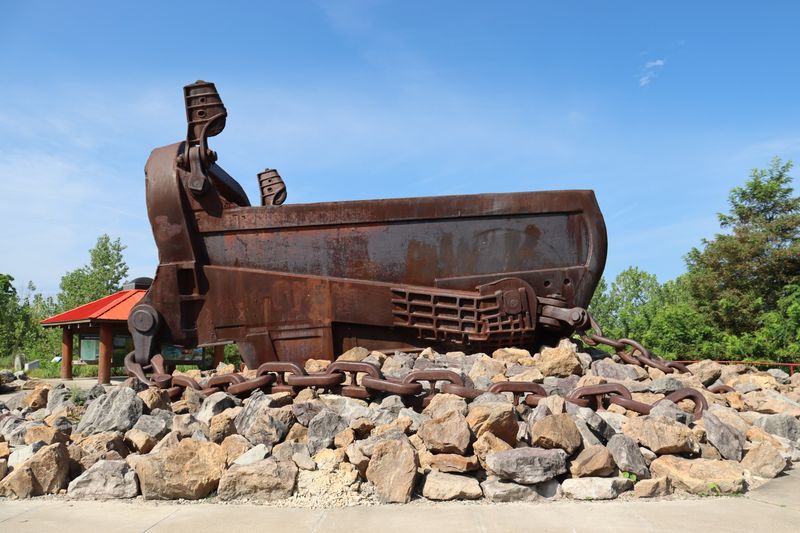
Visiting this amazing place truly deserves a spot on your bucket list, and I mean that without a trace of irony. This is not just another roadside attraction or quirky tourist stop.
It represents a significant chapter in American industrial history and Ohio heritage that deserves recognition and respect.
The experience of standing next to something this enormous creates a lasting impression that stays with you long after you leave. I found myself thinking about the engineers who designed it, the workers who operated it, and the communities that depended on the coal it helped extract.
The bucket serves as a tangible connection to a not-so-distant past when American ingenuity and determination built machines that seemed to defy the laws of physics.
Whether you are a history enthusiast, engineering buff, motorcycle rider seeking interesting destinations, or simply someone who appreciates unique experiences, Big Muskie Bucket will not disappoint.
The short detour off your route through southeastern Ohio is absolutely worth it to witness this colossal piece of mining history that continues to inspire awe in everyone who visits.