
This Colorado Ghost Town Hike Winds Through Eerie, Beautiful Mountain Ruins
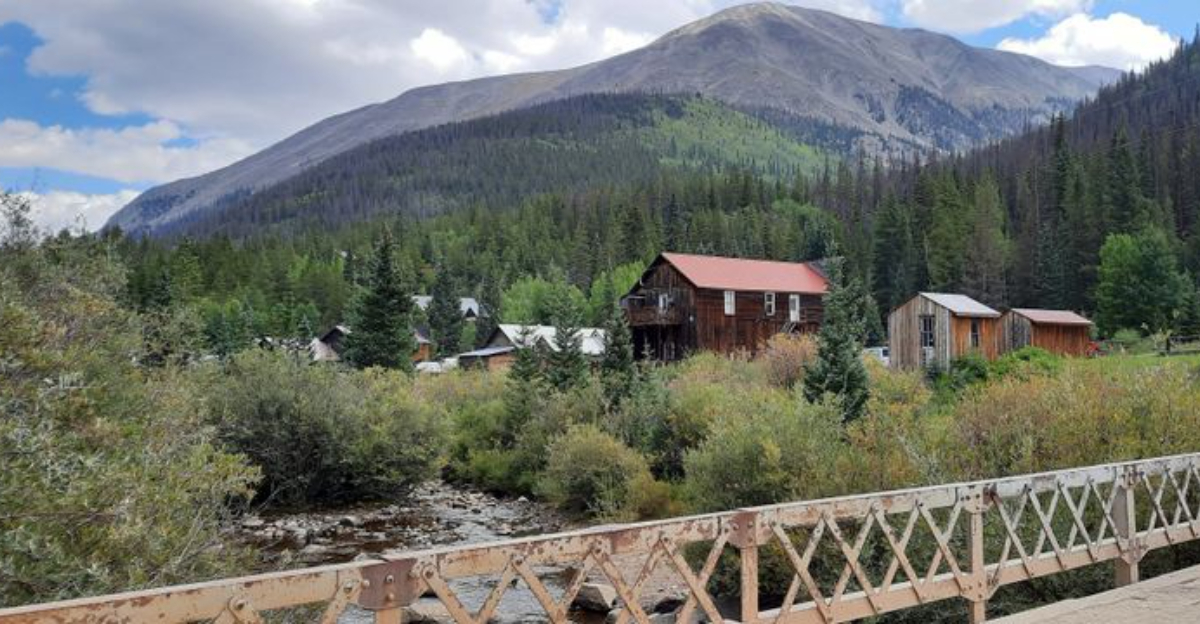
Driving up County Road 162 near Nathrop, Colorado, I remember the moment the pavement surrendered to dirt and the modern world started to fade in my rearview mirror.
St. Elmo Ghost Town sits at the end of that winding forest road, tucked into a high mountain valley where wooden storefronts and sagging cabins tell stories that refuse to stay quiet.
I have wandered through plenty of former mining camps, but this one feels different, like someone hit pause on 1880 and never came back to press play.
The air tastes thin and crisp, making your lungs work a little harder while your imagination drifts through weathered doorways and broken windows.
Chipmunks dart across old boardwalks, peaks crowd the sky, and silence settles in unexpected ways. Instead of feeling abandoned, the town feels gently alive.
In Colorado, places like this blur the line between past and present, and St. Elmo stands as one of the most vivid reminders of Colorado history you can walk straight into.
Preserved Mining Era Architecture
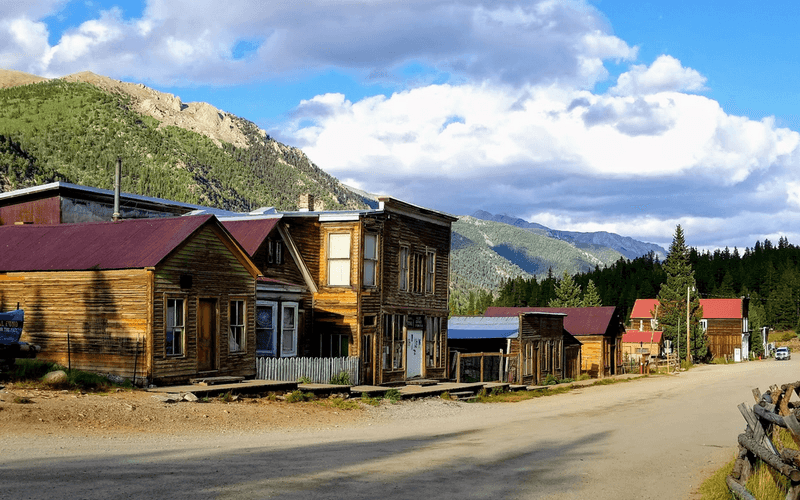
Walking between the old buildings, I kept catching myself reaching out to touch sun bleached wood that has been standing since long before my great grandparents were born. St. Elmo ranks among Colorado’s best preserved ghost towns because its structures remain upright and intact rather than collapsed into romantic ruins.
The storefronts still hold their original frames, and windows capture mountain views through wavy antique glass that subtly distorts the light. Standing there, it is easy to imagine miners trudging past these same doorways at the end of long shifts underground, boots dusty and shoulders heavy.
Some buildings have curtains or paper covering the interiors, which frustrated me at first until I realized the mystery deepens the experience instead of diminishing it. Privately owned and carefully maintained, the town feels like an open air museum where exploration happens at your own pace rather than behind ropes or signs.
I spent more than an hour lingering over details, studying hand cut joints, weathered nails, and uneven boards shaped by tools that no longer exist. Slowing down reveals how much care went into even simple construction.
Every creaking hinge, faded sign, and rough plank becomes a quiet time machine, pulling you backward without spectacle, asking only that you notice and imagine.
The Scenic Mountain Drive
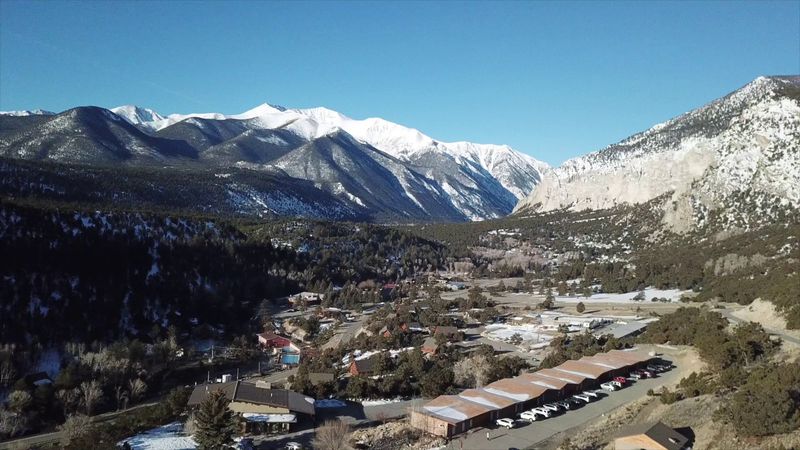
That transition from smooth asphalt to rattling dirt happens faster than you expect, and suddenly your vehicle is bouncing along a forest service road that demands full attention rather than casual cruising. The drive up County Road 162 became half the adventure for me, with views improving steadily as elevation increased and signs of civilization slowly fell away.
The road does get bumpy and uneven, especially after winter snowmelt or spring mud, but with patience and careful driving, any standard vehicle can make the trip without trouble. Slowing down makes a noticeable difference, allowing tires to roll gently over washboards and shallow ruts instead of fighting them.
Along the way, I passed hot springs resorts and quiet campgrounds before the landscape opened into something more remote and distinctly alpine. Every bend in the road revealed another postcard worthy scene, with rugged peaks stacking against a clear blue sky and creek water flashing through stands of trees.
The rough texture of the drive helped set the mood, reinforcing the idea that places worth remembering often require a little effort to reach. By the time I rolled into St. Elmo, dust coated the car and my shoulders felt relaxed, replaced by a quiet satisfaction.
The journey itself had slowed my pace and sharpened my attention, making the arrival feel earned rather than handed over.
Chipmunk Crossing Experience

I never expected a ghost town visit to involve tiny paws scrambling up my arm, but the chipmunks at St. Elmo have absolutely no concept of personal space. For fifty cents, the small general store sells bags of sunflower seeds, and the moment you step outside holding one, you instantly become the most interesting person in town.
These chipmunks have been interacting with visitors for generations, and they show zero hesitation about climbing directly onto hands, arms, and sometimes shoulders to grab their share. Watching them balance, dart, and stuff their cheeks is endlessly entertaining.
I saw kids laughing uncontrollably as chipmunks perched on sneakers and pant legs, and even adults who claimed they were just watching could not hide their smiles. The experience breaks down any guarded mood pretty quickly.
Blue jays sometimes swoop in with bold confidence, snatching seeds and scattering chipmunks in a flurry of wings, which adds another layer of chaos to the scene. What makes it especially memorable is the contrast between the lively wildlife and the silent, weathered buildings surrounding them.
Amid abandoned storefronts and creaking wood, this burst of movement and personality feels almost surreal. By the end of my visit, my camera roll told the story clearly, split evenly between historic architecture and far too many chipmunk closeups.
General Store and Local Hospitality
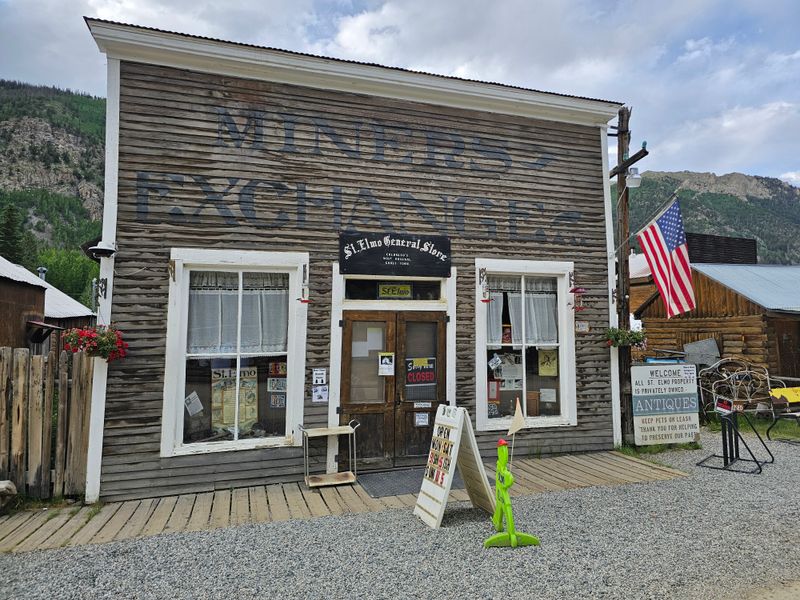
Stepping into the general store felt like entering a carefully curated cabinet of curiosities run by people who genuinely care about preserving the spirit of the place. At St. Elmo, the owners greeted me with real warmth and an easy friendliness that immediately slowed my pace.
What could have been a quick stop turned into a long conversation as they shared stories about the town’s mining past, pointed out architectural details I had already walked past without noticing, and explained how the town has managed to survive in such good condition. The shelves held a thoughtful mix of local trinkets, handmade items, historic photographs, and the famous small bags of sunflower seeds that fuel the chipmunk encounters outside.
I found myself browsing far longer than planned, drawn in by objects that felt personal rather than mass produced, each one carrying a small piece of the area’s character. The store operates on a schedule charmingly listed as “9ish to 5ish,” which perfectly matches the unhurried rhythm of the town itself.
Seasonal closures mean timing matters, with late spring through early fall offering the fullest experience. More than anything, the people behind the counter keep St. Elmo from feeling truly abandoned, adding a quiet human presence that brings warmth and life to the surrounding historical silence.
Surrounding Trail Access
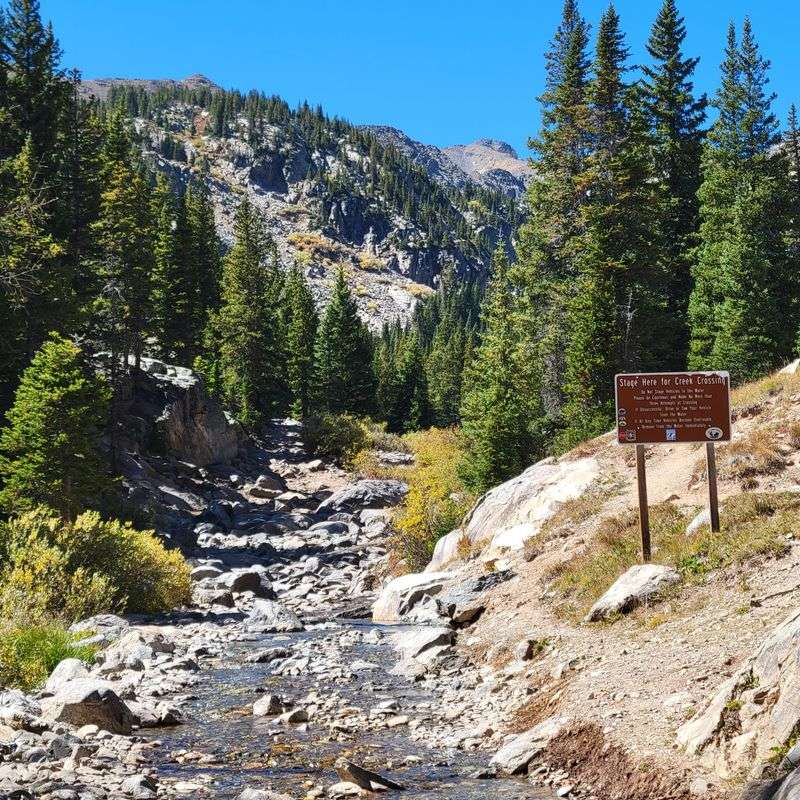
Beyond the town itself, a web of trails and old mining roads fans out into the surrounding mountains, branching like veins that once led to ore and now lead to quiet backcountry spaces. From St. Elmo, it is easy to see why so many people treat the area as a launching point rather than a final stop.
I noticed ATVs and side by sides passing through regularly, engines echoing briefly as they headed deeper into the high country where more ruins, creek crossings, and wide alpine views wait. At the same time, hikers moved more slowly along footpaths that miners once walked every day, routes now softened by pine needles, grasses, and seasonal wildflowers.
That mix of uses gives the area a layered feel, half historical corridor and half modern recreation hub. Some visitors appreciate the convenience and reach that motorized access provides, while others feel the occasional engine noise breaks the spell of the ghost town atmosphere.
Timing plays a big role in which experience you get. I liked having the choice, whether wandering quietly through town, following a trail into the trees, or watching others disappear toward distant ridgelines.
No matter how you explore, the mountains remain indifferent to the traffic, standing broad and unmoved, quietly magnificent in every direction.
Seasonal Timing and Weather
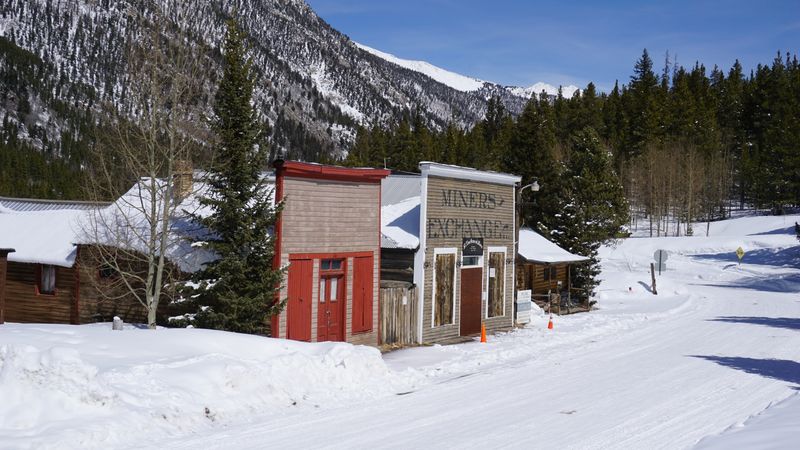
Timing your visit to St. Elmo is a careful balance between access and atmosphere, and each season reshapes the town in a distinctly different way. Winter transforms the buildings into a snow covered scene that feels almost unreal in its beauty, but the road becomes more challenging and the general store typically closes until around Mother’s Day.
Spring arrives slowly, bringing muddy roads and lingering snowpack, yet rewarding visitors with fewer people and a quieter mood. Summer offers the easiest access, open roads, regular store hours, and the full experience, including the constant flutter of chipmunks and increased activity around town.
I visited in late autumn, when crowds had thinned and golden aspen leaves drifted across weathered gray wood, creating a sense of quiet melancholy that felt perfectly matched to the setting. Early mornings consistently deliver the best light and the most peaceful experience, before day trippers arrive and engine noise begins to echo through the valley.
Because of the high elevation, temperatures drop quickly once the sun slips behind the peaks, making warm layers essential even on clear days. Conditions can change rapidly, so checking road and weather reports before driving up is important, as a route that seems manageable one week may become difficult or impassable the next.
Historical Context and Mining Legacy
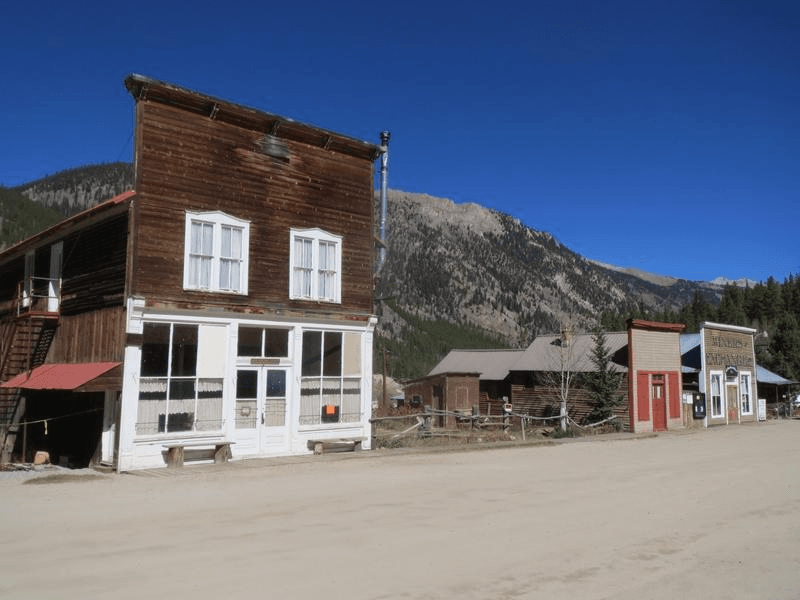
Originally called Forest City, St. Elmo surged to life in the early 1880s when silver and gold discoveries pulled hundreds of hopeful miners into these harsh mountain valleys. At its height, the town supported close to two thousand residents, an impressive number given its isolation and elevation.
Hotels, saloons, boarding houses, a telegraph office, and a busy general store lined the dirt streets, creating a self contained community driven by ambition and hard labor. Walking those same streets today, it was difficult not to imagine the noise that once filled the air, wagons creaking, boots scraping wood planks, voices carrying between buildings as daily life unfolded at a rapid pace.
When the surrounding mines began to dry up and the railroad service ended, the town’s economic foundation collapsed. Families left in waves, choosing opportunity elsewhere over the cost and difficulty of staying.
Many structures were simply abandoned, too remote and too expensive to tear down or relocate. That abandonment ultimately preserved St. Elmo, locking it in time as a remarkably intact example of Colorado’s mining boom era.
The town never became completely empty, though, as caretakers and descendants of original residents continued to maintain properties and pass them down through generations. Standing there now, surrounded by silence and weathered wood, I felt the accumulated weight of countless personal decisions, dreams that briefly flourished, and economic forces that quietly brought an entire town to a halt.
Practical Visitor Tips
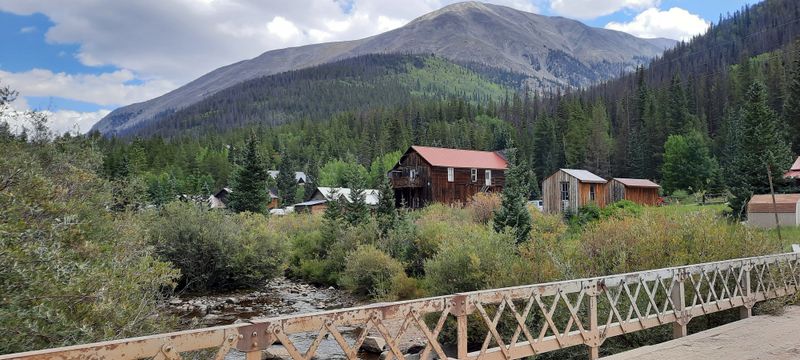
A few practical realities will shape your visit to St. Elmo, and knowing them ahead of time makes the experience smoother and more relaxed. Parking is limited and fills quickly during summer weekends, so arriving early in the morning or choosing a weekday visit helps avoid congestion and long walks from improvised spots.
There are no public trash cans in town, which means everything you bring in must be packed out, including food wrappers and dog waste if you are visiting with a pet. Dogs are welcome, but keeping them leashed shows respect for property owners, wildlife, and other visitors moving through narrow paths.
Most of the buildings are privately owned, and while they look inviting, entering them or touching artifacts is discouraged to protect their condition. Services are minimal beyond the general store, so bringing your own snacks and water is a smart move, especially if you plan to linger or explore nearby trails.
Cell service can be unreliable, so downloading maps and information in advance and letting someone know your plans adds peace of mind. The high elevation combined with uneven ground means pacing yourself matters, particularly if you are not used to thin mountain air.
Slowing down, watching your footing, and staying aware turns these realities into minor considerations rather than frustrations.