
15 Jaw-Dropping Locations You Might Not Know Exist In Pennsylvania
Pennsylvania is full of famous places, but the real fun starts when you chase the jaw-dropping spots most people never even hear about.
One minute you are driving past ordinary scenery, the next you are staring at something that feels almost unreal, like nature and history teamed up to show off.
Think dramatic views, unexpected wonders, and places that make you pull out your phone just to prove it is real.
These are the kinds of locations that turn a regular weekend into a story, the “you will not believe what I found” kind of adventure.
What makes Pennsylvania special is how quickly the landscape can change. Forests, waterfalls, strange rock formations, hidden-feeling trails, and quirky landmarks can all pop up in the same state, often closer than you think.
Some spots deliver quiet, peaceful beauty, others bring big wow-factor energy, but all of them share one thing, they make you glad you got out the door.
Pack snacks, charge your camera, and leave a little room for detours, because the best surprises usually come with a turn you did not plan.
My favorite kind of travel moment is the one where you just stand there for a second and laugh, because it feels like you discovered a secret Pennsylvania was saving for later.
1. Pine Creek Gorge
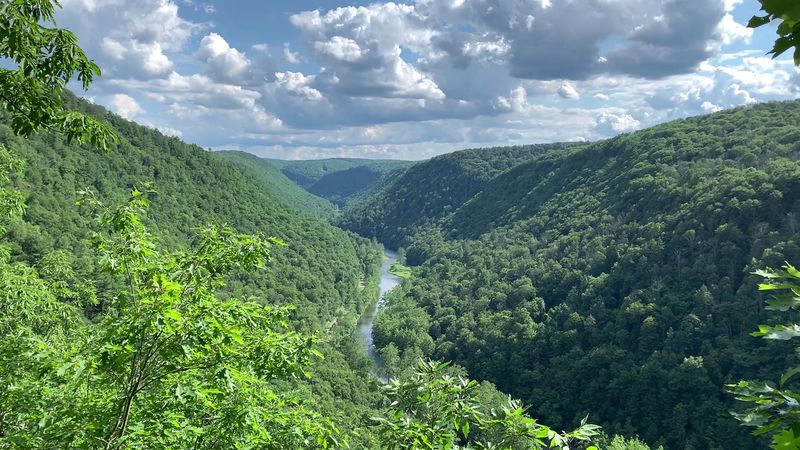
Some folks call it the Grand Canyon of Pennsylvania, and once you peer over the edge, you’ll understand why.
This massive gorge stretches nearly 50 miles through north-central Pennsylvania, with walls plunging up to 1,450 feet down to Pine Creek below.
The views from Leonard Harrison State Park or Colton Point State Park will make your jaw drop. I hiked the Turkey Path trail here last October, and my legs still remember those switchbacks.
The fall colors painting the canyon were absolutely worth the climb back up. You can also bike the Pine Creek Rail Trail that follows the creek for 62 miles through the gorge bottom.
Wildlife is everywhere if you keep your eyes open. Black bears, white-tailed deer, and bald eagles all call this canyon home.
Pack a lunch and spend the whole day because you won’t want to leave once you see it.
2. Cherry Springs State Park
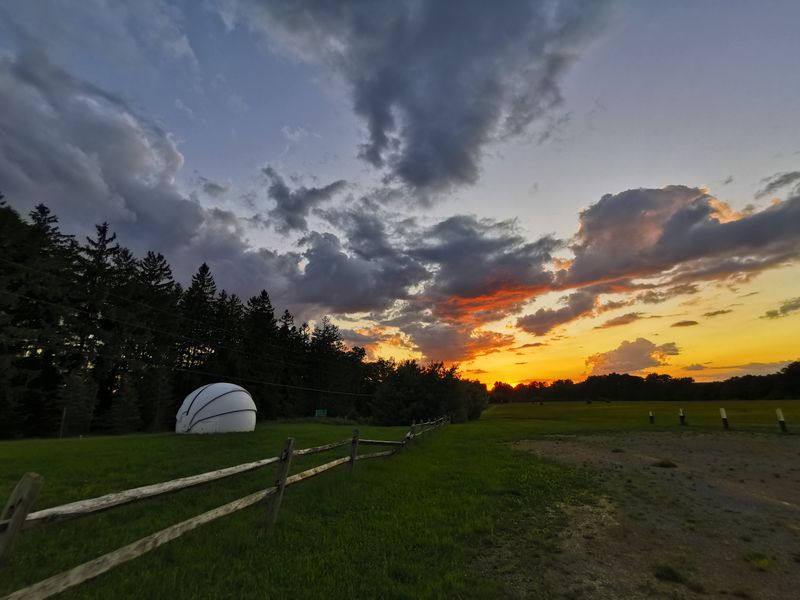
Finding true darkness is harder than you’d think in our light-polluted world. Cherry Springs State Park in Potter County offers some of the darkest skies on the entire East Coast.
On a clear night, you can see thousands of stars, the Milky Way stretching overhead, and even distant galaxies with binoculars.
The park earned official Dark Sky Park status because there’s virtually zero light pollution.
Astronomers travel from several states away just to set up their telescopes here. The park even hosts star parties throughout the year where experts help you spot planets, nebulae, and constellations.
Dress warmly because mountain nights get chilly even in summer. Bring a red flashlight instead of a regular one, since red light doesn’t ruin your night vision.
I’ve never felt so small yet so connected to the universe as I did lying on a blanket here, watching meteors streak across the sky.
3. Kinzua Bridge State Park
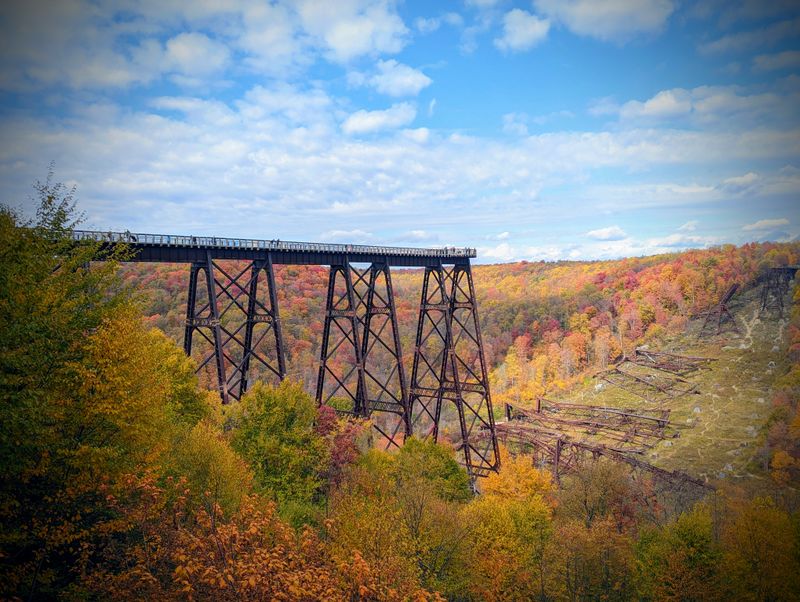
Picture a railroad bridge so tall it once held the record as the world’s highest. The Kinzua Viaduct stood 301 feet above the valley floor and stretched over 2,000 feet across.
Then a tornado ripped through in 2003, toppling much of this engineering marvel and creating something even more dramatic. Today you can walk out onto the remaining towers via a skywalk with a glass floor.
Looking down through that glass at the forest far below makes your stomach flip.
The twisted wreckage of the fallen towers lies scattered in the valley like a giant’s abandoned toy, creating an eerie but beautiful scene.
Located near Mount Jewett in McKean County, the park offers hiking trails and a visitor center explaining the bridge’s history. Built in 1882, it served trains hauling coal and timber for over a century.
Nature reclaimed what the storm destroyed, but the remaining structure stands as a powerful reminder of both human ambition and nature’s strength.
4. Ricketts Glen State Park
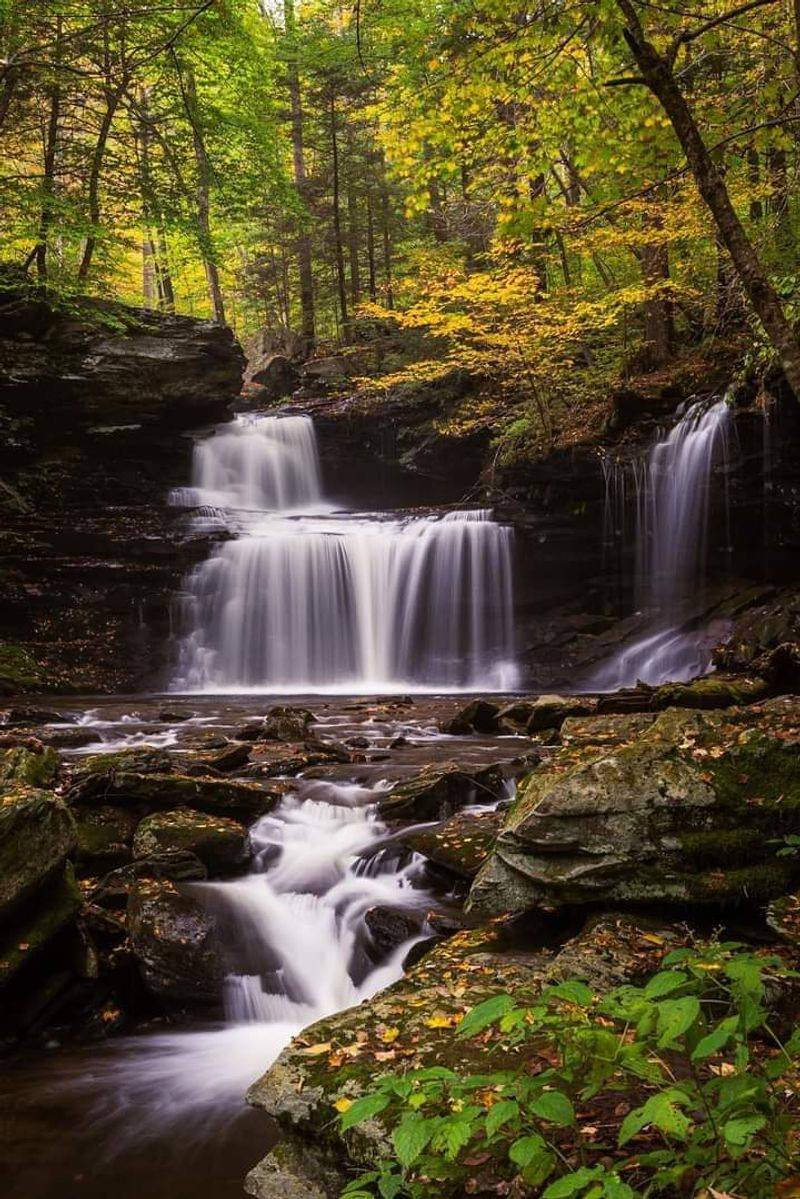
Chasing waterfalls isn’t just a song lyric here; it’s an actual hiking adventure. Ricketts Glen packs 22 named waterfalls along its Falls Trail system, with the tallest, Ganoga Falls, plummeting 94 feet.
The 7.2-mile loop trail climbs over 1,000 feet in elevation, so your legs will definitely know they worked. Every waterfall has its own personality.
Some thunder powerfully over rocky ledges while others whisper gently down moss-covered slopes. Wooden bridges and stone steps help you navigate the sometimes slippery terrain.
Spring runoff creates the most dramatic flows, but fall foliage makes the scenery absolutely magical. The park straddles three counties in northeastern Pennsylvania: Luzerne, Sullivan, and Columbia.
I’d recommend starting early because the parking lot fills up fast on nice weekends. Wear good hiking boots with grip, bring plenty of water, and take your time.
This isn’t a race, and each waterfall deserves a moment of appreciation.
5. Ohiopyle State Park
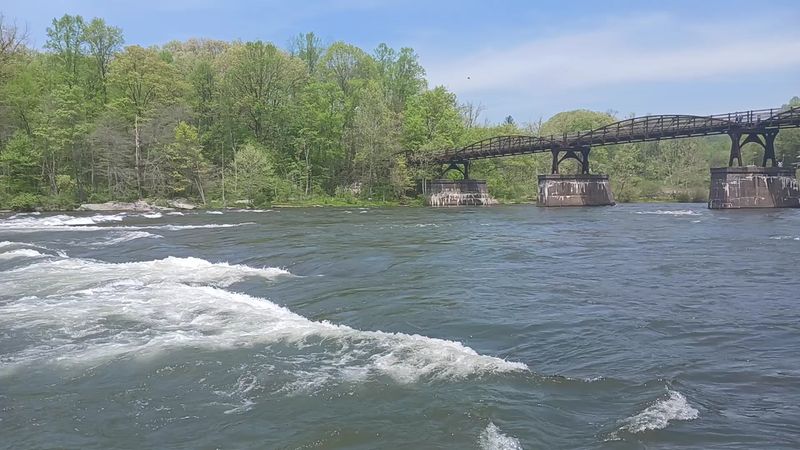
White water rushes through this outdoor paradise in southwestern Pennsylvania’s Laurel Highlands.
The Youghiogheny River, which everyone just calls the Yough, offers some of the best rafting east of the Rockies.
Rapids range from gentle Class I floats perfect for families to heart-pounding Class IV runs that’ll test experienced paddlers.
Beyond the river, over 20,000 acres of forest hold more than 79 miles of hiking and biking trails.
Cucumber Falls drops 30 feet in a beautiful cascade that’s easily accessible. The Great Allegheny Passage rail trail runs right through the park, connecting Pittsburgh to Washington D.C. for long-distance cyclists.
The little town of Ohiopyle sits right in the park, offering restaurants, ice cream shops, and outfitters for gear rentals. Summer weekends get packed with adventurers, so weekdays offer more elbow room.
Whether you’re rafting, hiking, biking, or just picnicking by the falls, Ohiopyle delivers outdoor thrills without requiring a cross-country road trip.
6. Delaware Water Gap National Recreation Area
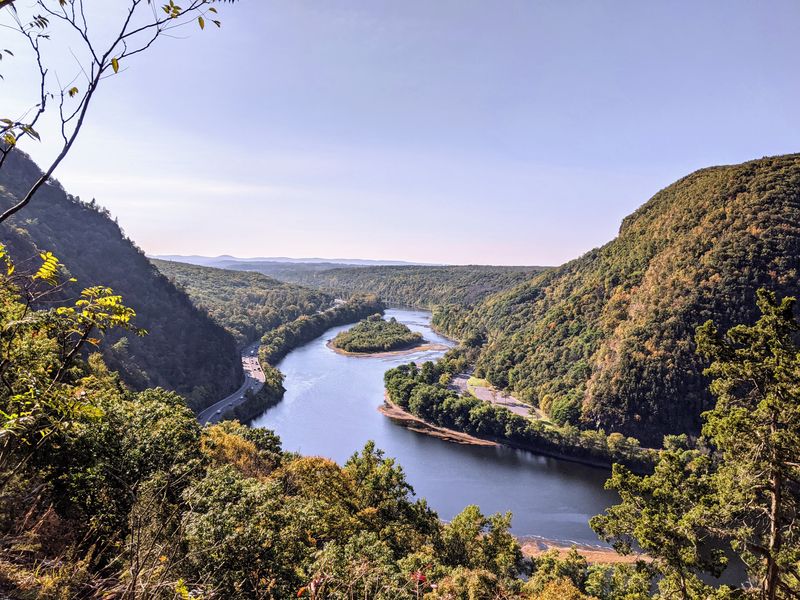
Where the Delaware River slices through the Appalachian Mountains, a stunning gap creates one of the region’s most scenic areas.
Straddling the Pennsylvania-New Jersey border, this recreation area protects 70,000 acres of forests, waterfalls, and river access.
The gap itself rises 1,200 feet on either side of the river. Canoeing and kayaking are hugely popular here, with calm stretches perfect for beginners and families.
Several outfitters along the river rent equipment and provide shuttle services. On land, over 100 miles of trails include a section of the famous Appalachian Trail that passes right through the gap.
I spent a summer afternoon here once, floating lazily downstream while hawks circled overhead. Waterfalls like Raymondskill Falls and Silverthread Falls make excellent hiking destinations.
Historic sites dot the area too, including old villages and the remains of a resort town. Just an hour and a half from Philadelphia or two hours from New York City, it feels worlds away from urban chaos.
7. Boulder Field at Hickory Run State Park
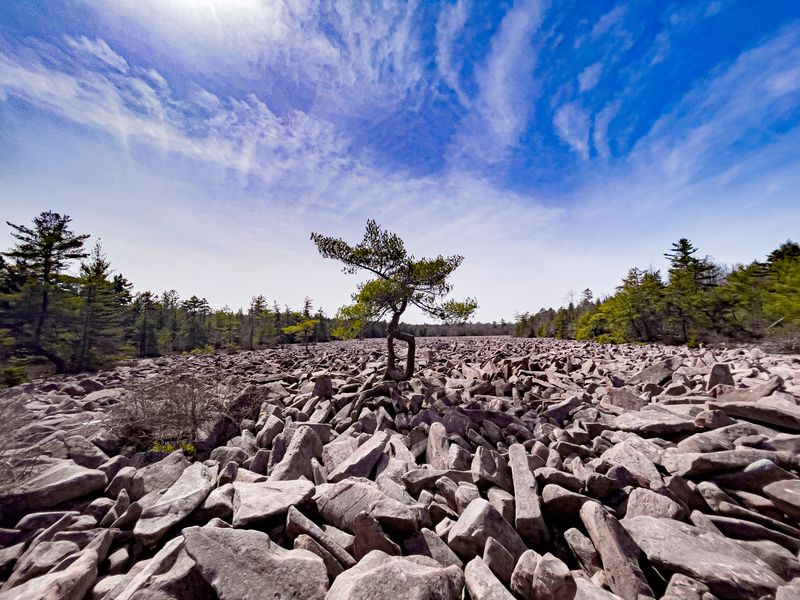
Imagine a frozen river made entirely of boulders. That’s exactly what greets you at Hickory Run State Park in Carbon County.
This National Natural Landmark covers 16 acres with nothing but rounded rocks, some as big as cars, stretching as far as you can see. Not a single tree or plant grows among them.
Scientists believe glaciers deposited these boulders during the last ice age, roughly 20,000 years ago. As the glaciers melted, they left behind this incredible field of rocks.
The boulders create their own microclimate underneath, staying cold enough that ice sometimes forms there even in summer. Walking across the boulder field feels like exploring an alien planet.
You have to hop from rock to rock, carefully choosing your path. The park asks visitors to stay on the boulders rather than walking around the edges to protect this fragile ecosystem.
It’s located near Interstate 476, making it an easy stop if you’re heading to the Poconos. Wear sturdy shoes because those rocks are unforgiving if you slip.
8. Ringing Rocks Park
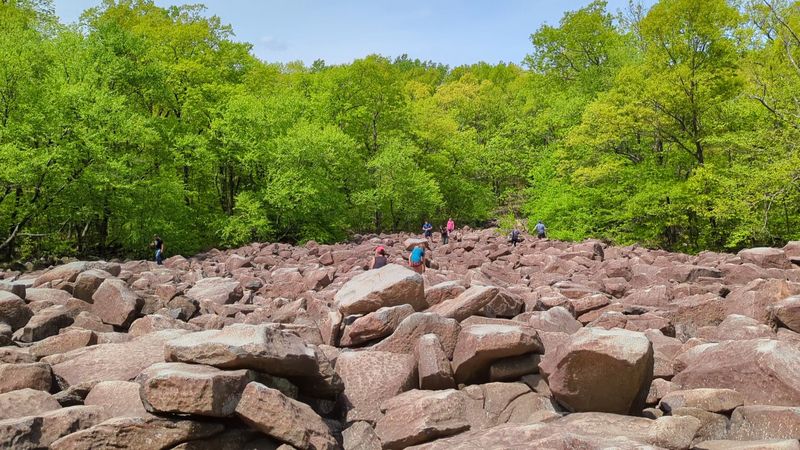
Not all rocks just sit there silently. At this quirky seven-acre park in Upper Black Eddy, Bucks County, the boulders actually ring like bells when you strike them with a hammer.
Seriously. Bring a hammer, find the right rocks, and you can play a stone xylophone concert.
Scientists still debate exactly why these particular diabase rocks produce clear, ringing tones. Most theories involve the rocks’ internal structure and how tightly they’re packed together.
Only about one-third of the boulders actually ring; the rest thud dully. Finding the musical ones becomes a fun treasure hunt for visitors.
My niece spent an entire afternoon here last summer, conducting a boulder orchestra with her friends. They discovered different rocks produce different pitches and even managed to bang out a recognizable tune.
The park provides a unique, free activity that kids and adults both enjoy. Just remember to bring your own hammer since the park doesn’t provide them.
The neighbors probably appreciate when visitors leave before evening.
9. Columcille Megalith Park
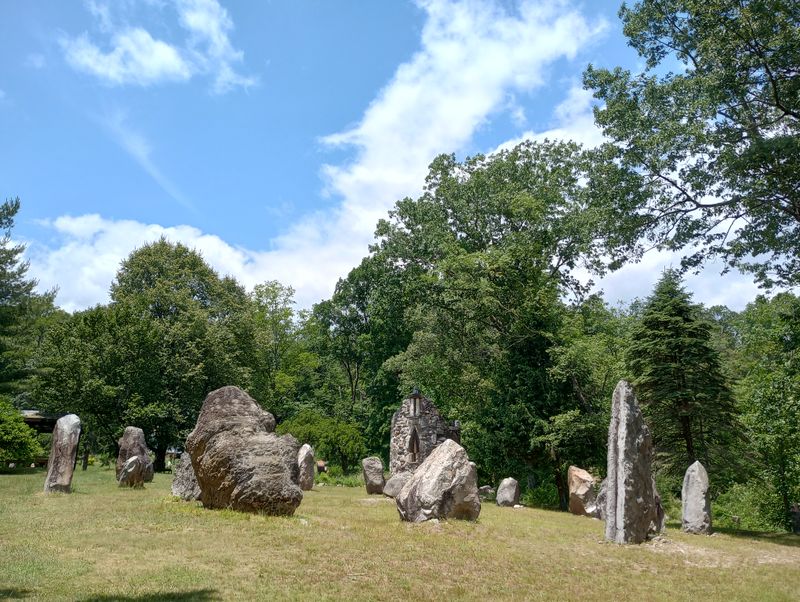
Stonehenge vibes meet Appalachian forest at this mystical park in Bangor, Northampton County. A man named William Cohea created this place starting in the 1970s, inspired by ancient Celtic stone circles and his Irish heritage.
Massive standing stones, stone chairs, and carefully arranged rock formations dot the 37-acre wooded site. Walking the trails feels like stepping into another time or perhaps another world entirely.
Each stone arrangement has symbolic meaning, representing different spiritual concepts or Celtic traditions.
The Bell Tower stone rises dramatically from the hillside, while the Omphalos marks the center of the park.
Meditation spots and quiet clearings invite peaceful reflection. The park welcomes visitors year-round from dawn to dusk, asking only for a small donation.
Many people come seeking spiritual connection or simply appreciating the artistic vision. Seasonal events include Celtic celebrations like Beltane and Samhain.
Whether you’re interested in Celtic culture, art installations, or just unusual places, Columcille offers something genuinely different. The combination of natural beauty and human creativity creates an unforgettable atmosphere.
10. Longwood Gardens
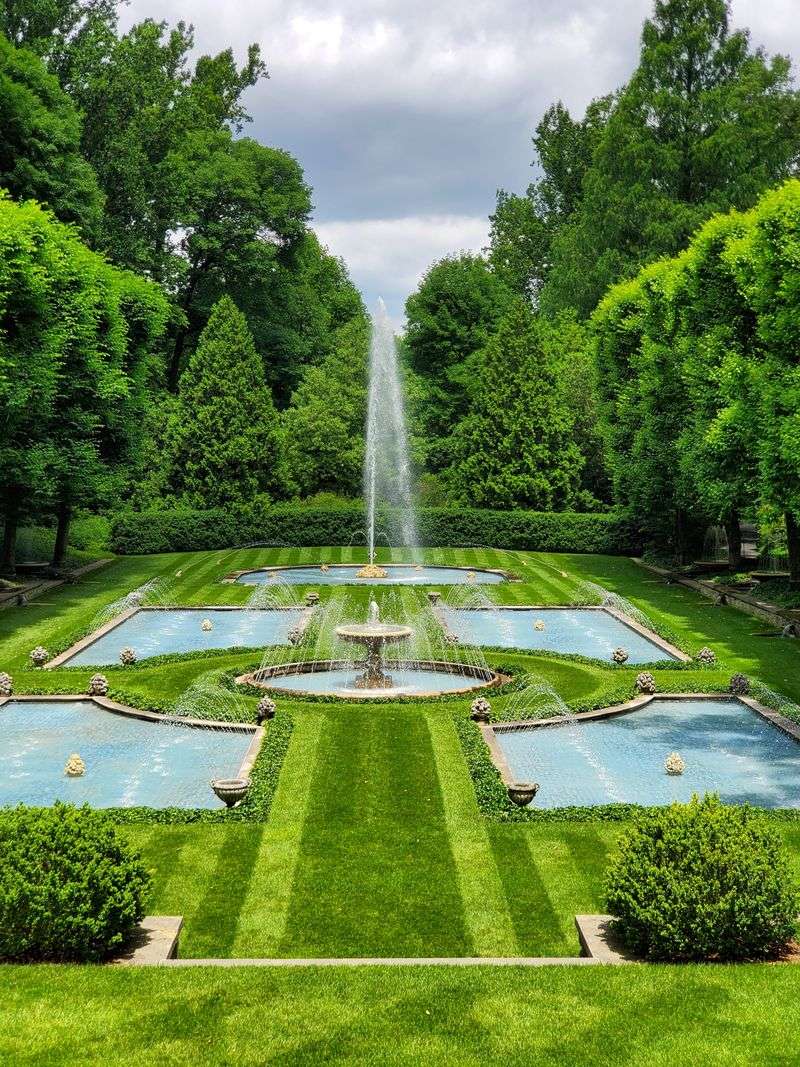
Calling this place just a garden feels like calling the ocean just some water. Longwood Gardens in Kennett Square, Chester County, sprawls across 1,077 acres of horticultural perfection.
Over 11,000 different plant types grow here in outdoor gardens, massive conservatories, and specialty displays that change with the seasons. The fountain shows are absolutely legendary.
Computer-controlled jets shoot water hundreds of feet into the air, choreographed to music and lights during evening performances.
The conservatory alone covers 4.5 acres under glass, maintaining tropical, desert, and Mediterranean environments year-round.
Orchids, exotic palms, and rare specimens from around the world thrive inside. Pierre du Pont, of the famous du Pont family, began creating these gardens in 1906.
His vision and fortune transformed a simple farm into one of America’s premier horticultural displays. I’ve visited during spring tulip season and winter’s holiday light show, and both times left me speechless.
The gardens host concerts, exhibitions, and educational programs throughout the year. Plan to spend at least half a day because there’s simply too much beauty to rush through.
11. Penn’s Cave & Wildlife Park
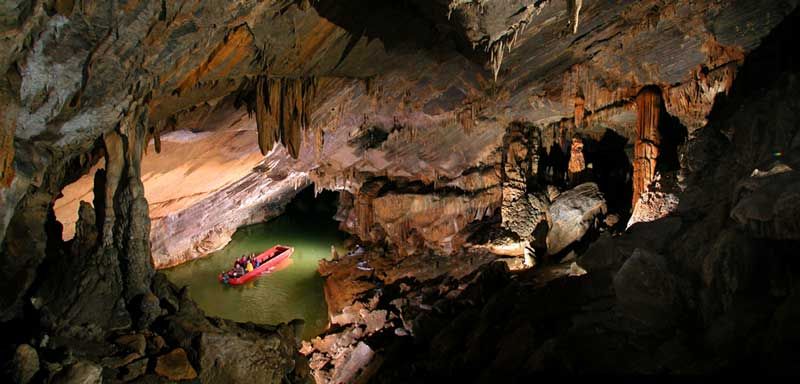
America’s only all-water cavern tour takes you gliding silently through underground passages by motorboat. Penn’s Cave near Centre Hall in Centre County has been wowing visitors since 1885.
Limestone formations reflected in the perfectly still water create mirror images that double the visual spectacle.
Your guide motors you through nearly a mile of passages, pointing out formations with names like the Statue of Liberty, Niagara Falls, and the Garden of the Gods.
The cave maintains a constant 52 degrees year-round, so bring a light jacket even in summer. Stories about the cave include Native American legends and tales of a forbidden romance.
Above ground, the wildlife park lets you drive through 1,500 acres where elk, bison, wolves, and other North American animals roam. Texas longhorns with impressive horns often approach vehicles looking for attention.
The combination of underground wonder and wildlife viewing makes this a full-day adventure. Tours run regularly throughout the day, and the whole property offers a glimpse into both geological history and natural wildlife management.
12. Laurel Caverns
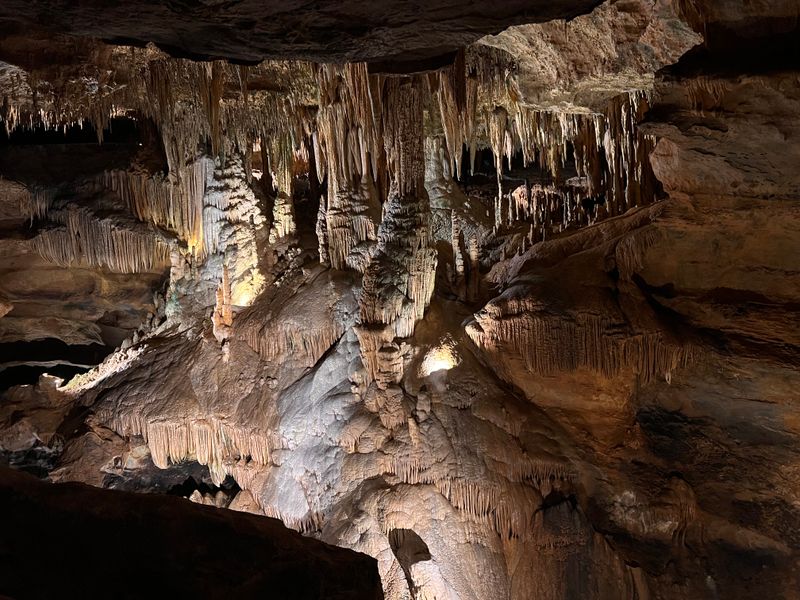
Forget gentle walkways and handrails. Laurel Caverns near Farmington in Fayette County offers real spelunking adventures where you crawl, squeeze, and climb through passages.
As Pennsylvania’s largest cave, it contains over three miles of mapped passages, though most remain wild and undeveloped.
The guided tour options range from the easy walking tour to extreme expeditions requiring helmets, headlamps, and a willingness to get dirty.
Advanced tours take you through tight squeezes with names like the Fatman’s Misery and the Birth Canal. You’ll slide on your belly, chimney up vertical shafts, and navigate by headlamp through total darkness.
Even the basic tour shows impressive formations and teaches cave geology. The cave stays 52 degrees year-round, providing natural air conditioning in summer.
I chickened out of the advanced tour after hearing about the tightest passages, but my adventurous brother loved every claustrophobic minute. Above ground, the site includes a mini-golf course and gem mining for kids.
Serious cavers can even arrange custom expeditions into the deepest, wildest sections with proper training and equipment.
13. Raystown Lake
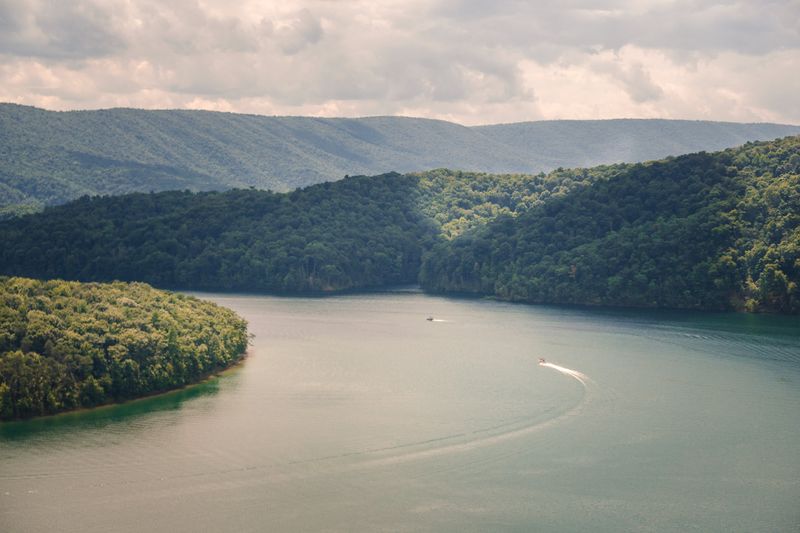
Pennsylvania’s largest lake stretches 28 miles through Huntingdon County, offering 118 miles of shoreline. Created by damming the Raystown Branch of the Juniata River, this reservoir has become a water sports paradise.
Boaters, water skiers, jet skiers, and anglers all find plenty of room to play on its 8,300 acres of water. The fishing here is phenomenal.
Striped bass, muskellunge, walleye, and smallmouth bass all thrive in these waters. Several marinas rent boats, kayaks, and pontoons if you don’t have your own.
The surrounding Raystown Lake Region includes multiple parks, hiking trails, and campgrounds managed by the Army Corps of Engineers. Houseboat rentals are hugely popular for families wanting a floating vacation home.
You can anchor in quiet coves, swim right off your deck, and wake up to misty mountain views. The lake never feels crowded despite its popularity because of its sheer size.
Seven Points Recreation Area and Susquehannock Campground offer excellent land-based camping options.
Whether you’re into fishing, swimming, hiking, or just floating peacefully, Raystown delivers a classic lake vacation without leaving Pennsylvania.
14. Pymatuning Spillway
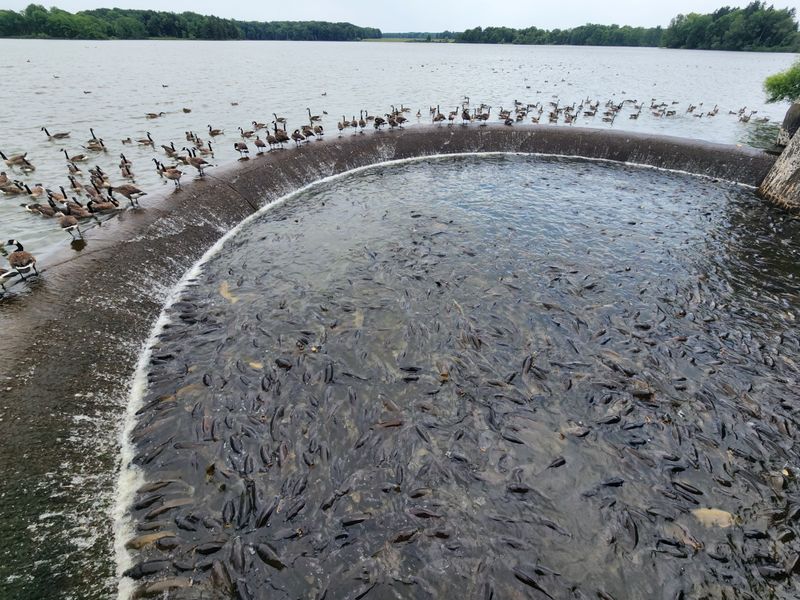
Where the ducks walk on the fish sounds like a tall tale, but it’s absolutely real at Pymatuning Spillway. This spot along the Pennsylvania-Ohio border has become famous for its absurdly dense population of carp.
Thousands of enormous carp pack the water so tightly that ducks literally walk across their backs to grab bread thrown by visitors. Pymatuning Reservoir was created in 1934 as a flood control project.
The spillway area naturally attracted fish, and decades of visitors feeding them created a phenomenon. The carp grow massive here, some reaching three feet long.
They’ve learned that humans mean food, so they swarm whenever anyone approaches the railing. Watching ducks casually stroll across a writhing carpet of fish never gets old.
My kids laughed so hard they nearly dropped their bread bags into the water. Signs remind visitors to only feed the fish appropriate food, not junk that could harm them.
The spillway sits within Pymatuning State Park, which offers camping, boating, and fishing throughout its 17,088 acres.
This quirky natural spectacle costs nothing to witness and provides entertainment and amazement for all ages.
15. Fallingwater
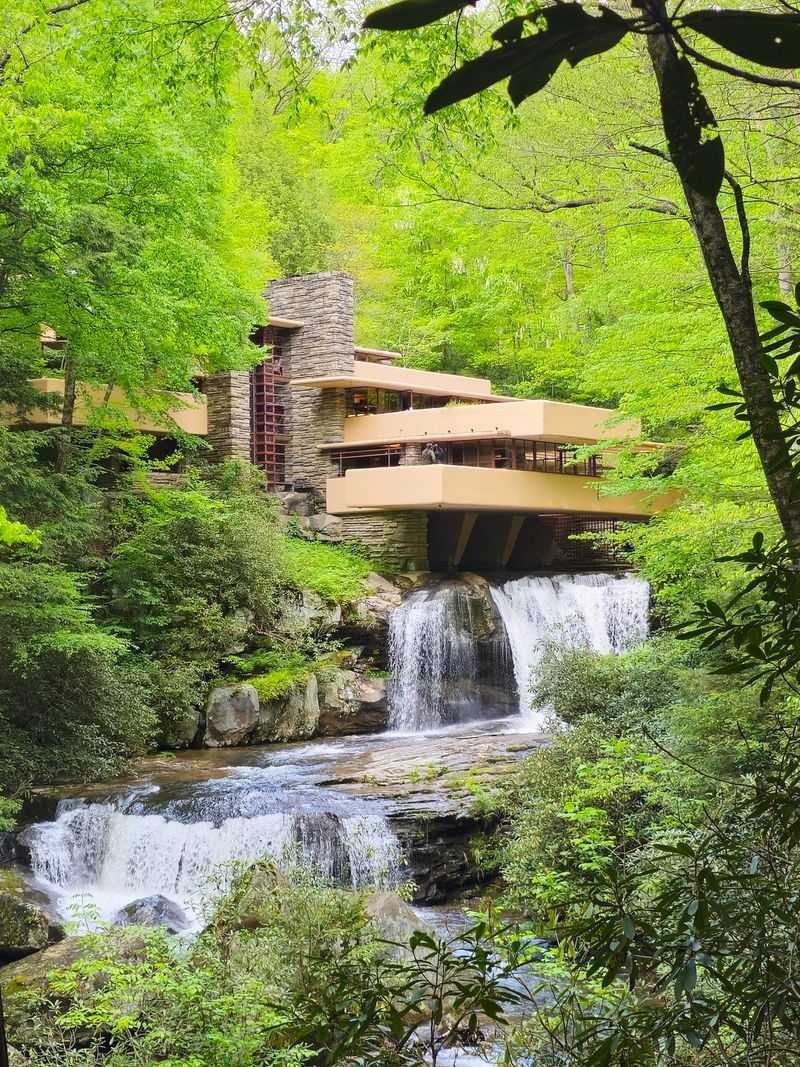
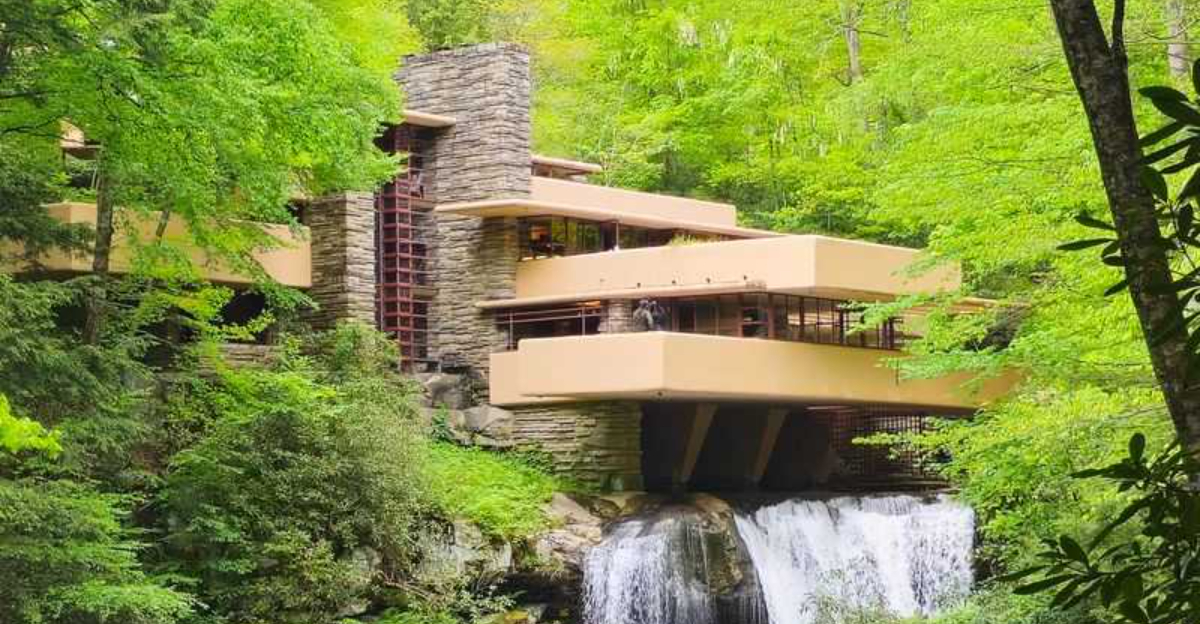
Architecture and nature merge so perfectly here that you can’t tell where the building ends and the forest begins.
Frank Lloyd Wright designed this masterpiece in 1935 for the Kaufmann family, building it directly over a waterfall on Bear Run in Mill Run, Fayette County.
Cantilevered terraces jut out over the cascading water, creating one of the most photographed houses in the world. Wright used local sandstone and concrete to make the house feel like a natural extension of the landscape.
Inside, the sound of falling water provides constant background music. A glass hatch in the living room floor opens to stairs leading down to the stream itself.
Every design choice serves Wright’s philosophy of organic architecture, where buildings should grow naturally from their sites. Tours book up fast, especially during fall foliage season, so reserve tickets well in advance.
The Western Pennsylvania Conservancy now maintains the property, which was declared a National Historic Landmark.
Standing on those terraces with water rushing beneath your feet creates an unforgettable experience. It’s not just a house; it’s proof that human creativity can enhance rather than destroy natural beauty.