
12 Illinois River Towns That Belong On Your 2026 Travel Map
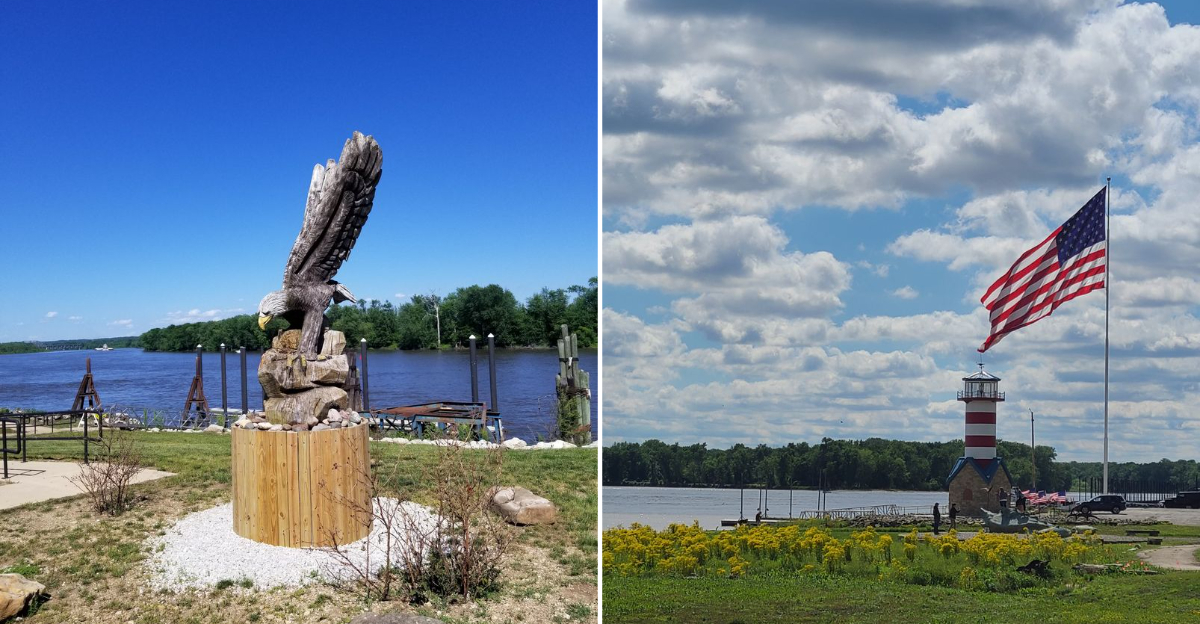
The Illinois River cuts a slow, deliberate path across the landscape, shaping towns that grew up beside it and never lost their connection to the water. This waterway has long carried more than cargo… it has carried stories, livelihoods, and the quiet pride of communities that learned to adapt with every flood and freeze.
Some towns lean into outdoor adventure, others preserve architecture and local lore, and a few simply offer a front-row seat to barge traffic drifting past at sunset. What they share is authenticity: places where history isn’t staged and river views come without pretense.
These twelve Illinois River towns offer travel experiences grounded in character, scenery, and the steady rhythm of life along the water.
1. Morris, Illinois
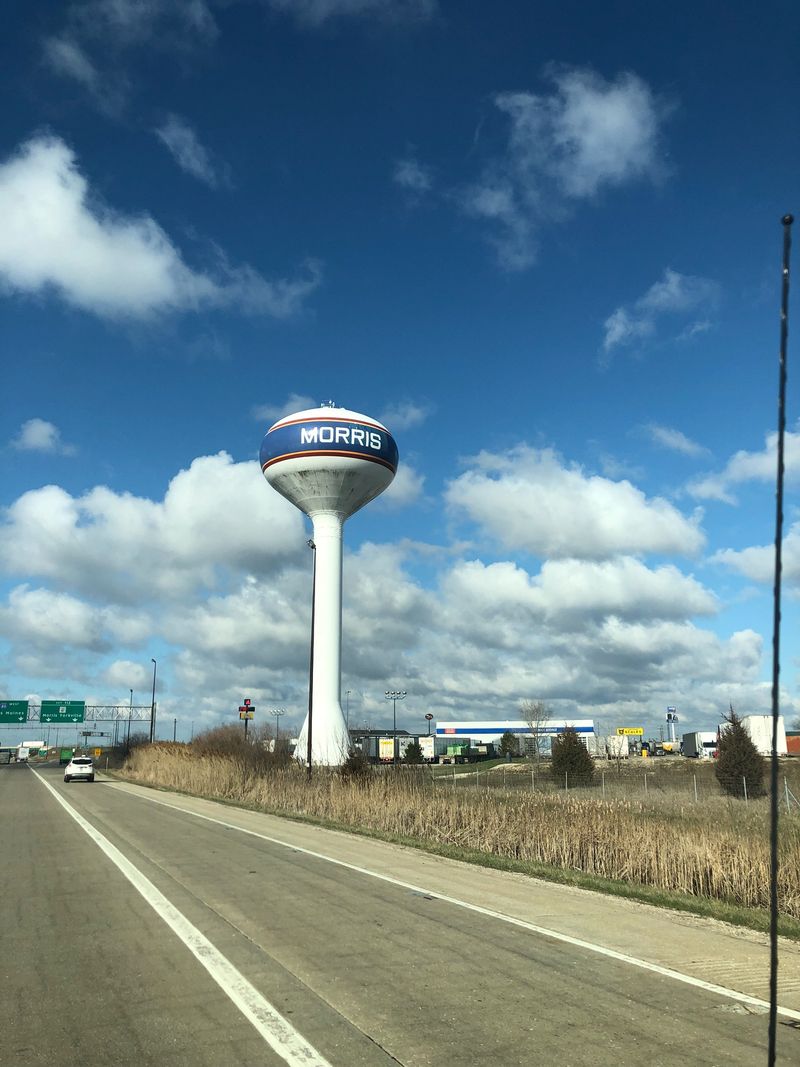
Positioned at the junction where the Illinois & Michigan Canal meets the Illinois River, Morris serves up a delightful blend of industrial heritage and modern charm. Downtown Morris buzzes with independently owned shops, cozy cafes, and restaurants that’ll have you planning your next visit before you’ve even left.
History buffs will absolutely geek out over the Grundy County Historical Society Museum, which showcases the town’s pivotal role in Illinois’ canal-building era. The museum’s collection includes everything from Native American artifacts to Victorian-era furnishings that transport you straight back to the 1800s.
Outdoor enthusiasts can explore the nearby Goose Lake Prairie State Natural Area, where tallgrass prairies stretch toward the horizon like nature’s own cathedral. Morris also hosts the annual Corn Festival each September, proving that Midwesterners really know how to celebrate their agricultural roots with style and plenty of butter.
2. Marseilles, Illinois
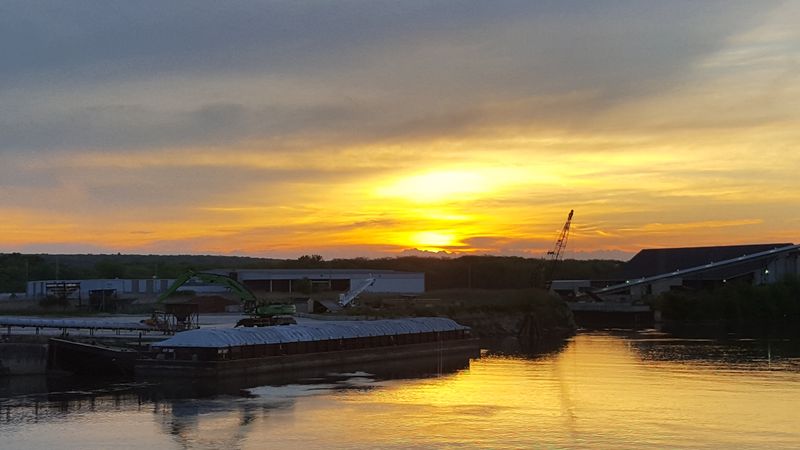
Marseilles might share a name with France’s second-largest city, but this Illinois version trades the Mediterranean for the mighty Illinois River and it’s best known for the nearby Marseilles Lock and Dam along the waterway. Founded in 1835, this pint-sized powerhouse played a crucial role in the state’s early transportation network, and you can still feel that pioneering spirit today.
The town’s crown jewel is undoubtedly the historic lock and dam system, where you can watch massive barges navigate the waterway like synchronized swimmers in slow motion. It’s engineering meets artistry, and it never gets old.
Stroll through downtown and you’ll discover beautifully preserved 19th-century architecture that makes you want to break into a spontaneous historical documentary. Local eateries serve up hearty Midwestern fare that sticks to your ribs in the best possible way.
The riverfront parks offer prime spots for fishing, picnicking, or just contemplating life while watching the water flow by at its own unhurried pace.
3. Ottawa, Illinois
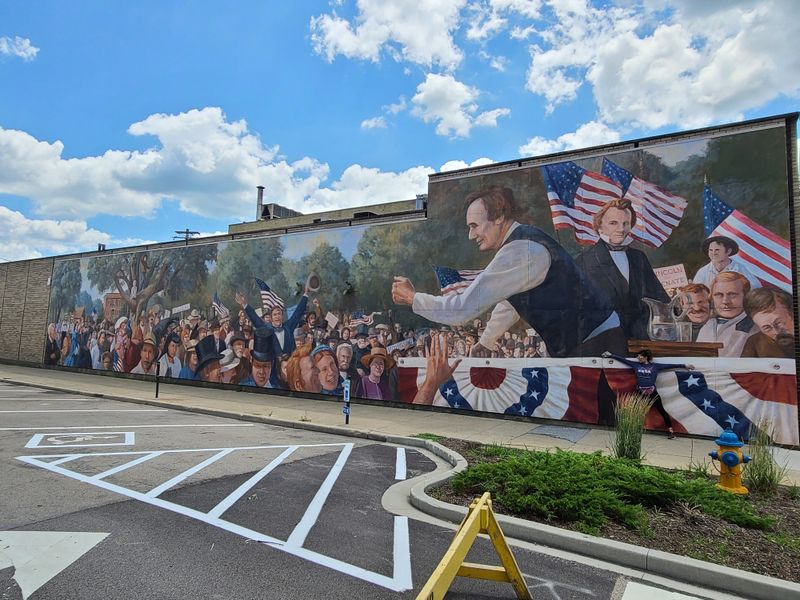
Ottawa stands at the confluence of the Fox and Illinois Rivers like a historical heavyweight champion, with a walkable downtown just steps from the water. This town witnessed the first Lincoln-Douglas debate in 1858, and you can practically hear the echoes of those legendary arguments bouncing off the buildings in Washington Square.
The Reddick Mansion, an Italianate beauty built in 1858, serves up Victorian elegance with a side of fascinating stories about Ottawa’s most prominent citizens. Tours reveal period furnishings and architectural details that’ll make HGTV fans weak in the knees.
Starved Rock State Park sits just minutes away, offering eighteen canyons carved by glacial meltwater that’ll take your breath away faster than a surprise Illinois winter. Downtown Ottawa features antique shops, art galleries, and restaurants housed in gorgeously restored buildings that prove historic preservation and modern commerce can absolutely be best friends.
Trail options around Ottawa make it easy to bike or stroll between river views and historic sites, perfect for anyone who wants fresh air without turning the day into a hardcore workout.
4. Utica, Illinois
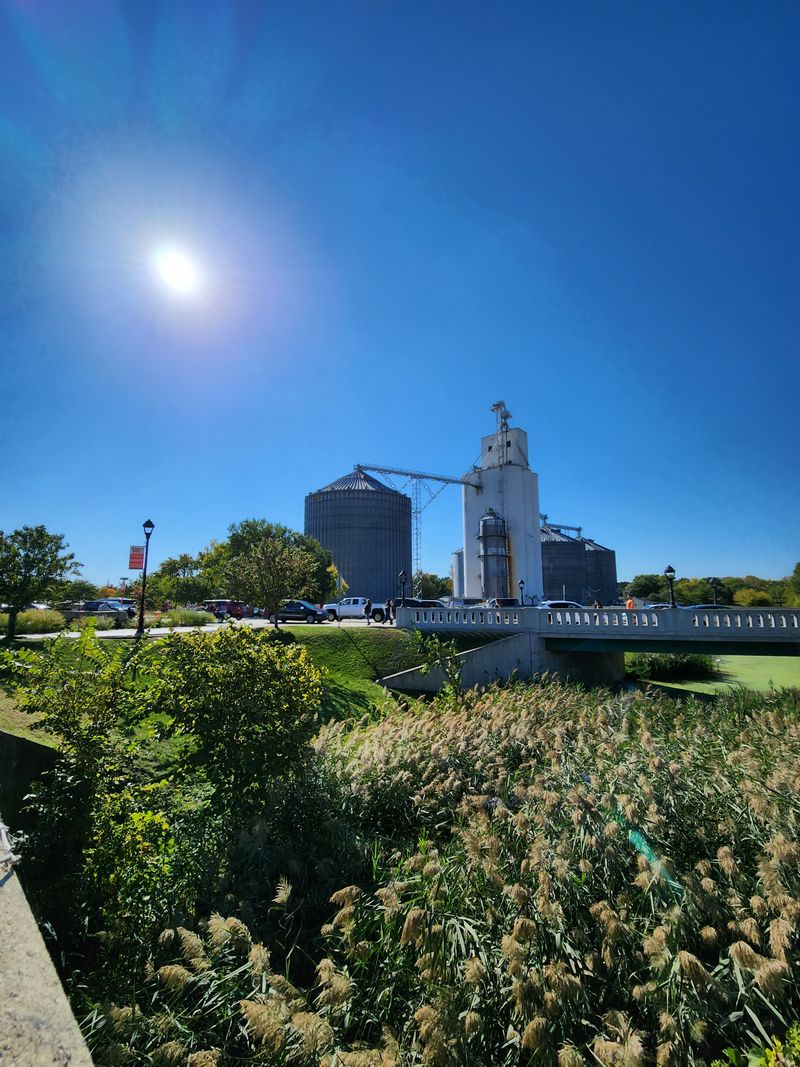
Utica punches way above its weight class for a town of just over 1,000 residents. Serving as the gateway to Starved Rock State Park, this tiny town has transformed itself into a destination that draws visitors from across the Midwest who come for the canyons and stay for the charm.
The downtown strip features an impressive collection of restaurants, taverns, and shops that seem impossibly sophisticated for such a small community. Utica’s compact downtown packs in locally owned spots for food and drinks, making it easy to go from canyon-hiking at nearby Starved Rock to a laid-back evening in town.
Antique hunters will find treasure troves in the local shops, where everything from vintage glassware to rustic farmhouse decor awaits discovery. Nearby at the Starved Rock Lock and Dam in Ottawa, the Illinois Waterway Visitor Center offers exhibits on the river system plus an observation deck for watching barges and wildlife.
5. LaSalle, Illinois
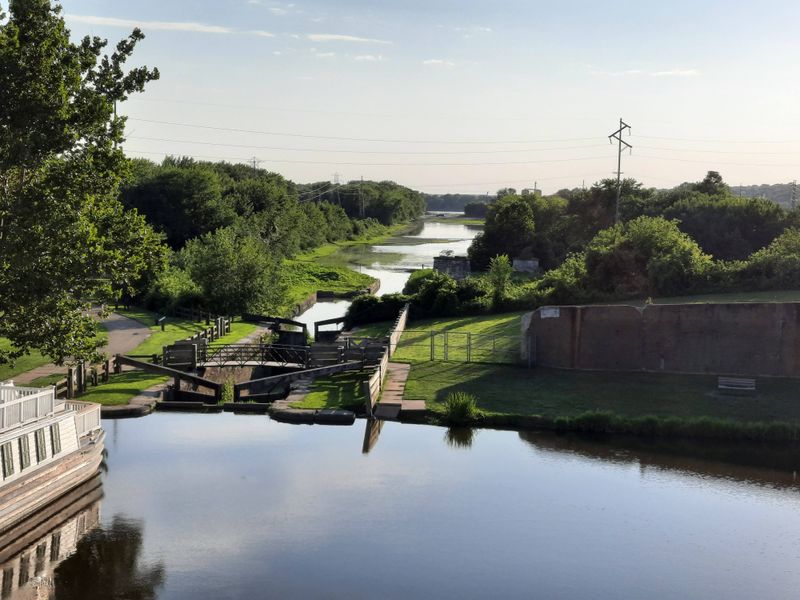
LaSalle sits at the northern end of the Illinois & Michigan Canal, where industrial history meets modern revitalization in a way that’ll make urban planners nod approvingly.
The Lock 16 Café and Bar occupies a historic building that once served canal workers, now serving contemporary American cuisine with views of the very waterway that built this town. The atmosphere combines exposed brick, original architectural details, and a menu that respects both tradition and innovation.
Matthiessen State Park, located just south of town, offers hiking trails through stunning dells and canyons that rival its more famous neighbor Starved Rock but with fewer crowds. Downtown LaSalle features beautifully restored buildings housing boutiques, antique stores, and cafes that prove small-town Illinois knows how to do downtown development right.
The Heritage Corridor Visitors Bureau provides excellent resources for exploring the entire region’s historical significance.
6. Hennepin, Illinois
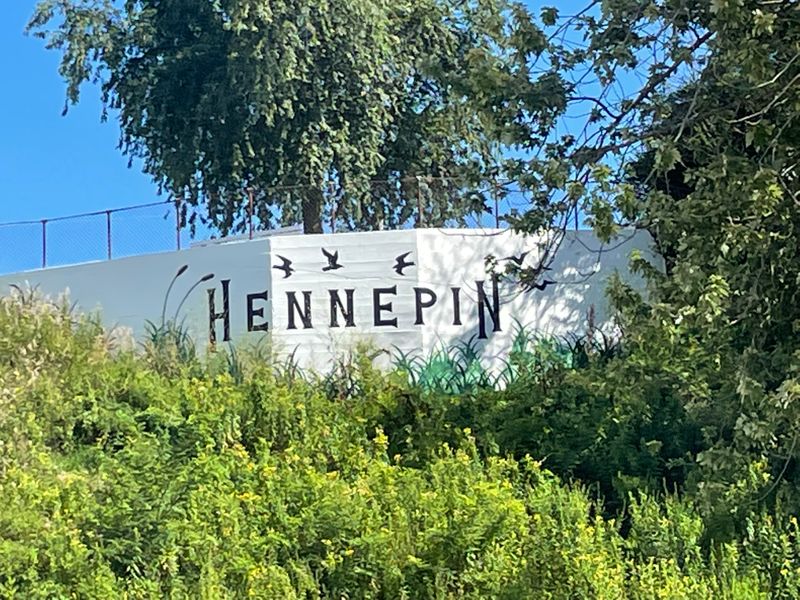
Hennepin may be tiny, but this village delivers outsized personality along the Illinois River’s banks. Named after Father Louis Hennepin, a Belgian explorer who accompanied La Salle’s expeditions, the town wears its French colonial heritage like a badge of honor while embracing thoroughly American small-town sensibilities.
The Hennepin Canal Parkway State Park stretches for miles, offering exceptional opportunities for hiking, biking, and fishing along a waterway that once connected the Illinois and Mississippi Rivers. The towpath trail provides flat, scenic routes perfect for cyclists of all skill levels who want exercise without the drama of steep hills.
Downtown Hennepin features several locally-owned establishments where the coffee’s always hot and the gossip’s always interesting. The riverfront area attracts boaters and anglers who appreciate the excellent fishing and peaceful atmosphere.
Lock 21 stands as a testament to 19th-century engineering ingenuity, now serving as a picturesque backdrop for photos that’ll make your social media followers seriously consider a road trip to central Illinois.
7. Peoria, Illinois
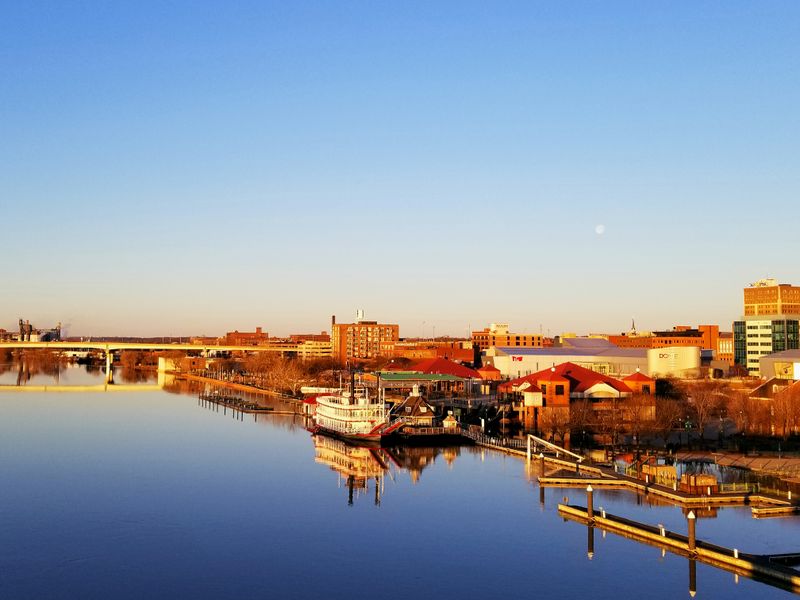
Peoria stands as the undisputed heavyweight champion of Illinois River cities, with a riverfront that’s packed with museums, trails, and downtown energy. This is where “Will it play in Peoria?” originated, making the city synonymous with Middle American taste-making since vaudeville days when performers tested their acts here before hitting the big time.
The Peoria Riverfront Museum delivers world-class exhibits, a planetarium, and a giant-screen theater that proves cultural sophistication thrives well beyond Chicago’s city limits. The museum’s permanent collection and rotating exhibits cover everything from fine art to natural history, keeping repeat visitors perpetually engaged.
Downtown Peoria pulses with restaurants, breweries, and entertainment venues that transform the riverfront into a genuine destination. The Warehouse District features converted industrial spaces now housing trendy eateries and craft cocktail bars where Edison bulbs illuminate conversations about everything except Chicago.
Wildlife Prairie Park offers 2,000 acres of trails, native animals, and outdoor recreation just minutes from downtown, proving Peoria balances urban amenities with easy access to nature better than cities three times its size.
8. Chillicothe, Illinois
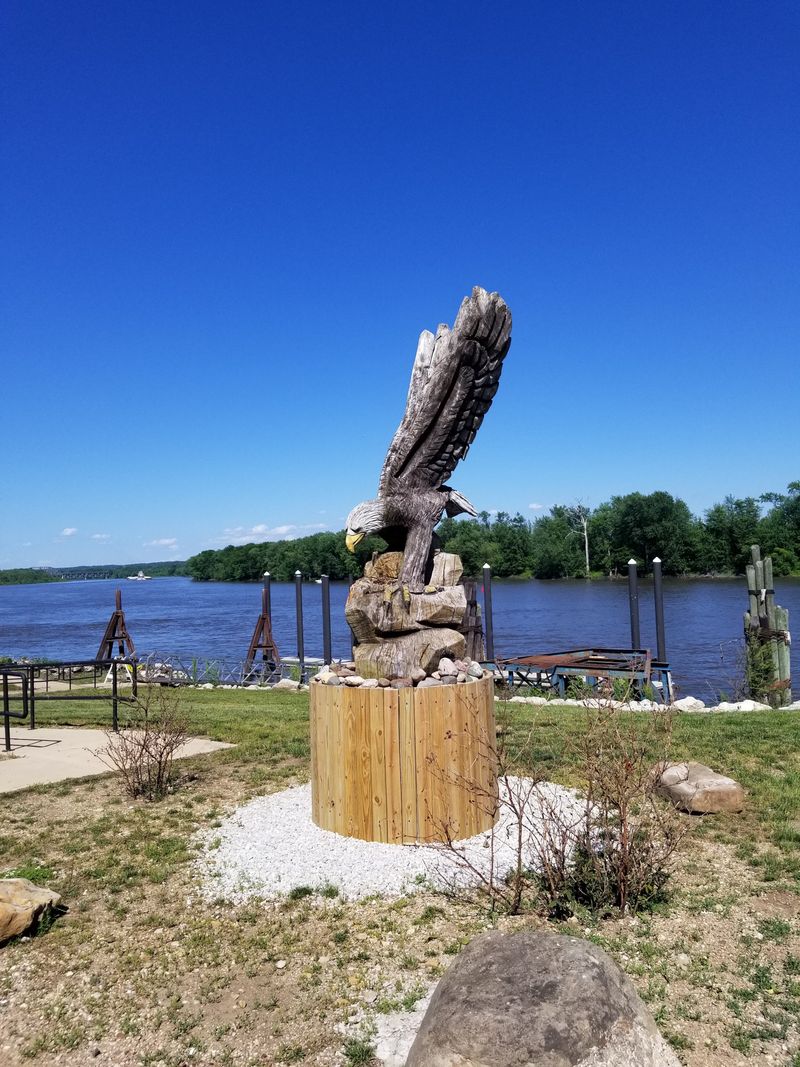
Chillicothe spreads along the Illinois River offering a perfect blend of agricultural heritage and river town charm. The name comes from a Shawnee word meaning “principal town,” and while it might not be the biggest burg on this list, it certainly holds its own in the character department.
The downtown historic district showcases beautifully maintained buildings from the late 1800s and early 1900s, when Chillicothe served as an important shipping point for agricultural products heading downriver. Local shops and restaurants occupy these vintage structures, creating an atmosphere that feels authentically preserved rather than artificially recreated.
Anglers particularly appreciate Chillicothe’s access to prime Illinois River fishing spots, where catfish, bass, and crappie practically line up to take your bait. ycling is a big deal in this stretch of the river valley, and seasonal rides and events bring extra energy to town during the warmer months. Parks along the riverfront provide excellent spots for picnicking, bird watching, or just enjoying the timeless sight of barges navigating the broad brown waters.
9. Havana, Illinois
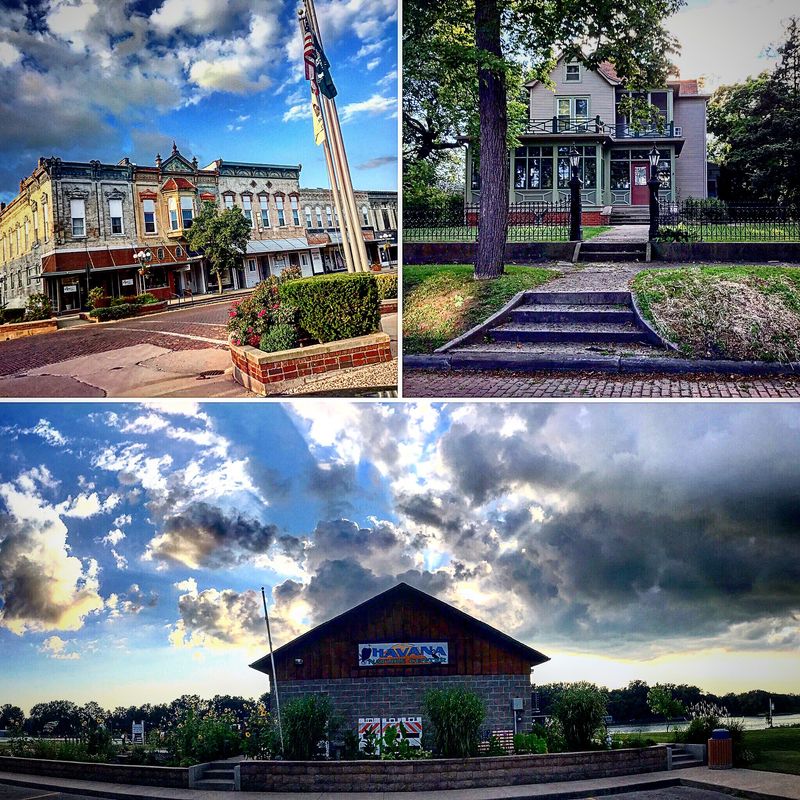
Havana bills itself as the “Fishing Capital of Illinois,” right on the Illinois River, that’s not just marketing hyperbole. This Mason County seat has been drawing anglers since long before fishing became an Instagram-worthy activity, though the sunsets here photograph beautifully regardless.
Downtown Havana features an impressive collection of historic buildings, including the Mason County Courthouse, which dominates the skyline with Victorian-era architectural gravitas. Local shops and restaurants serve a community that takes pride in its river heritage while welcoming visitors with genuine Midwestern hospitality that never feels forced.
A short drive away in Lewistown, the Illinois State Museum–Dickson Mounds preserves and interprets Native American history with scholarly care and powerful storytelling. Chautauqua National Wildlife Refuge provides exceptional opportunities for wildlife viewing, especially during waterfowl migration seasons when the skies fill with ducks and geese in numbers that’ll make your neck hurt from looking up.
Fishing is a way of life here, and seasonal tournaments and angling culture keep Havana’s riverfront buzzing when conditions are right.
10. Lewistown, Illinois
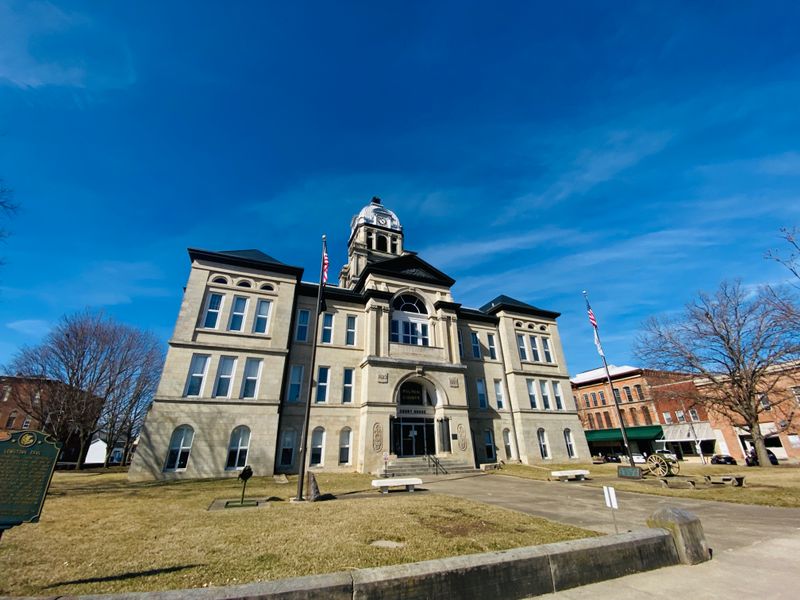
Lewistown presides over Fulton County serving as the county seat since 1823. While technically sitting near the Spoon River rather than directly on the Illinois River, this town’s connection to the broader river valley system makes it an essential stop for anyone exploring central Illinois waterways.
The town square features a classic courthouse surrounded by locally-owned businesses that have weathered economic changes through sheer determination and community support. This is small-town Illinois at its most authentic, where people still know their neighbors and Main Street means something more than a metaphor for American values.
Edgar Lee Masters, author of the famous “Spoon River Anthology,” grew up in Lewistown, and his poetic portraits of small-town life drew heavily from his experiences here. Literature enthusiasts can explore connections between the real town and Masters’ fictional Spoon River.
Dickson Mounds Museum sits nearby, offering world-class archaeological exhibits. The surrounding countryside provides beautiful drives through agricultural landscapes where corn and soybeans stretch toward horizons that seem impossibly distant, reminding visitors why they call this the heartland.
11. Beardstown, Illinois
Beardstown commands attention where the Illinois River bends and Abraham Lincoln once practiced law in the historic courthouse that still stands today. The town’s name honors Thomas Beard, who founded the settlement in 1819, though locals have heard every possible beard-related pun and remain remarkably good-natured about it.
The Grand Opera House, built in 1872, continues hosting performances and events in a beautifully restored venue that transports audiences back to an era when traveling shows brought culture to river towns. The building’s architecture alone justifies a visit, with ornate details that showcase the prosperity river commerce once brought to communities like Beardstown.
Lincoln’s defense of Duff Armstrong in the famous “Almanac Trial” took place here in 1858, and history buffs can visit the courthouse where Lincoln’s clever use of an almanac to discredit witness testimony secured an acquittal. The riverfront provides excellent access for boating and fishing, while downtown shops and restaurants serve visitors with that particular Illinois friendliness that makes strangers feel welcome.
Beardstown proves that small river towns can preserve history while remaining vibrantly alive.
12. Grafton, Illinois
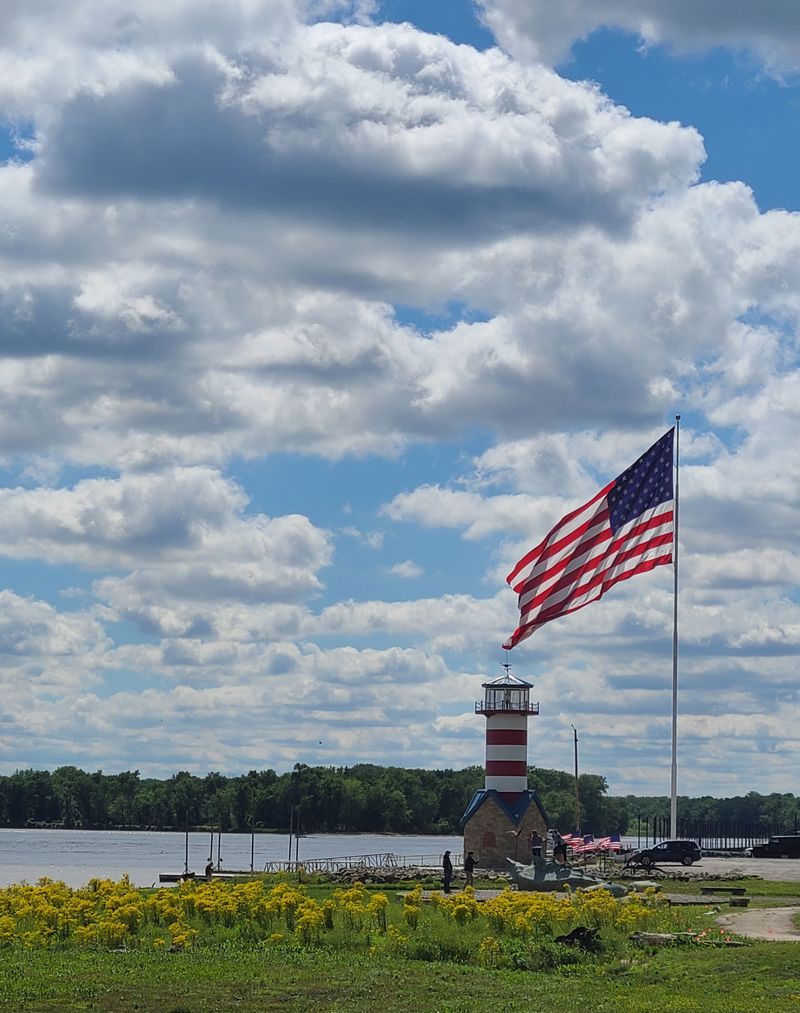
Grafton occupies perhaps the most dramatically beautiful location of any Illinois River town, where the Illinois River flows into the mighty Mississippi. Limestone bluffs tower overhead while two of America’s great rivers converge below, creating scenery that belongs on postcards and travel photography portfolios.
The town’s waterfront district packs an impressive concentration of restaurants, wineries, and lodges into a compact area that’s perfect for exploring on foot. Pere Marquette State Park, just minutes away, offers hiking trails through rugged terrain with overlooks that’ll have you questioning why anyone lives anywhere else.
The fall color displays rival New England’s finest without the crowds or attitude.
Grafton’s restaurants specialize in fresh catfish and river views that enhance every meal, whether you’re dining at casual spots or upscale establishments. The Grafton Zipline Adventure provides adrenaline rushes with panoramic river valley views for those who think scenic overlooks need more screaming.
The Sam Vadalabene Bike Trail links the Grafton area with neighboring river communities, creating a cycling-friendly corridor for warm-weather exploring.