
This Must-See Michigan Roadside Attraction Is Home To The World’s Largest Native American Statue
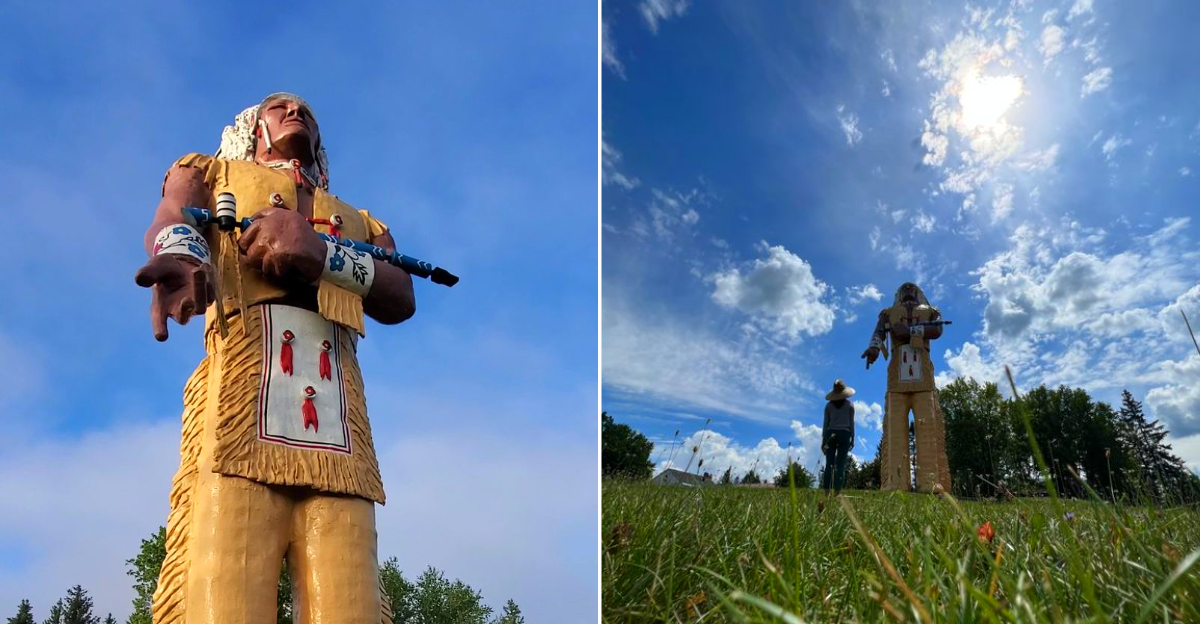
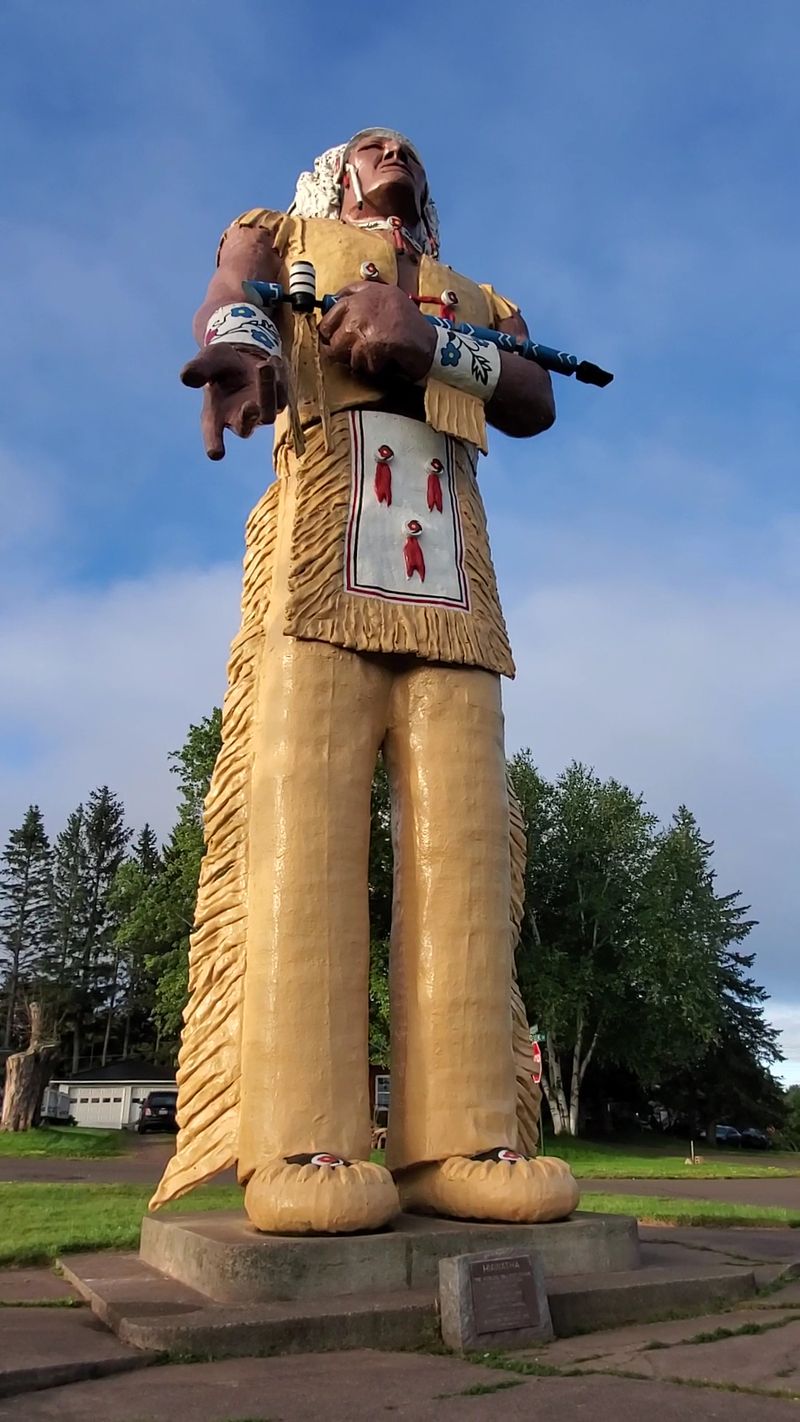
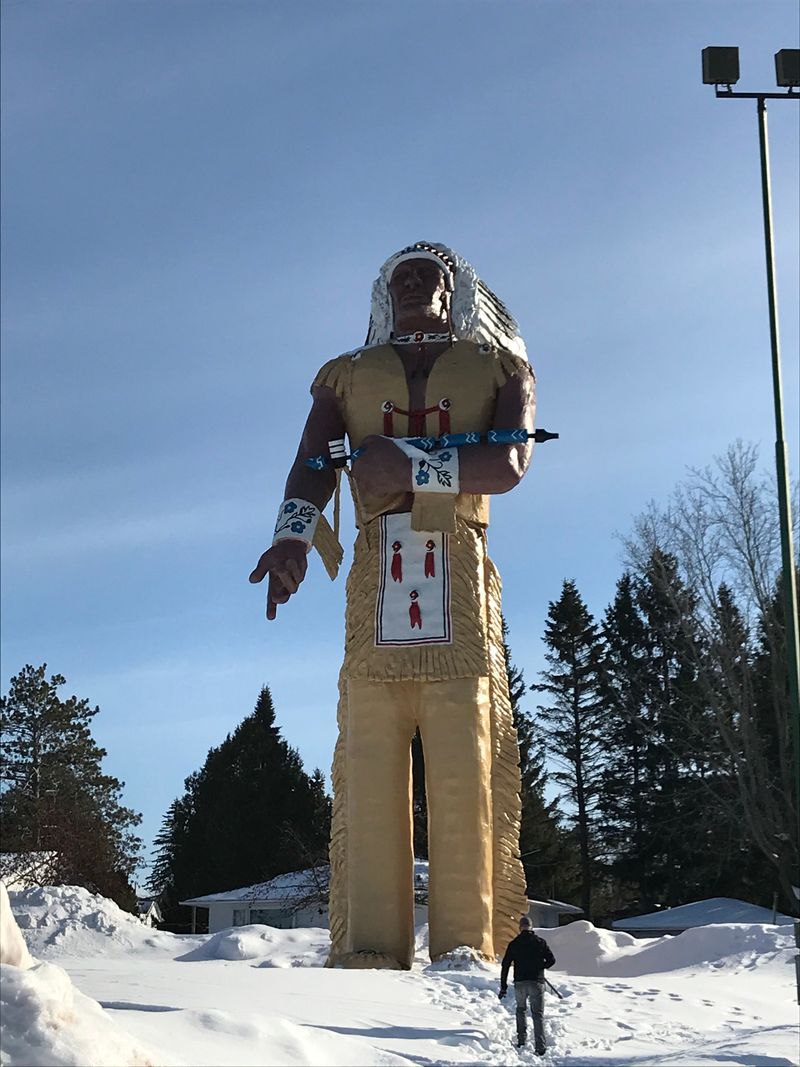
I eased off the gas at Hiawatha St, Ironwood, MI 49938, and felt my sense of perspective warp instantly. Looming 52 feet over a quiet neighborhood is Hiawatha, a nine-ton fiberglass titan born in 1964 who makes the local streetlights look like tiny plastic toothpicks.
The air here carries a crisp, piney bite from the nearby woods, punctuated by the rhythmic creak-swing of a playground that feels absurdly miniature in the shadow of this five-story legend. You can practically hear the wind whistling off Lake Superior as it hums against his stoic, weathered face.
This towering landmark is a must-see for anyone tracking down the weirdest roadside Americana and the deepest iron mining heritage in Michigan.
While kids treat his massive feet like a base for tag, the adjacent memorial reminds you that Ironwood was built on the grit of miners who went just as deep as Hiawatha goes high. It’s a beautifully surreal slice of the U.P. that demands a selfie and a quiet moment of awe.
First Glimpse From Hazel Street
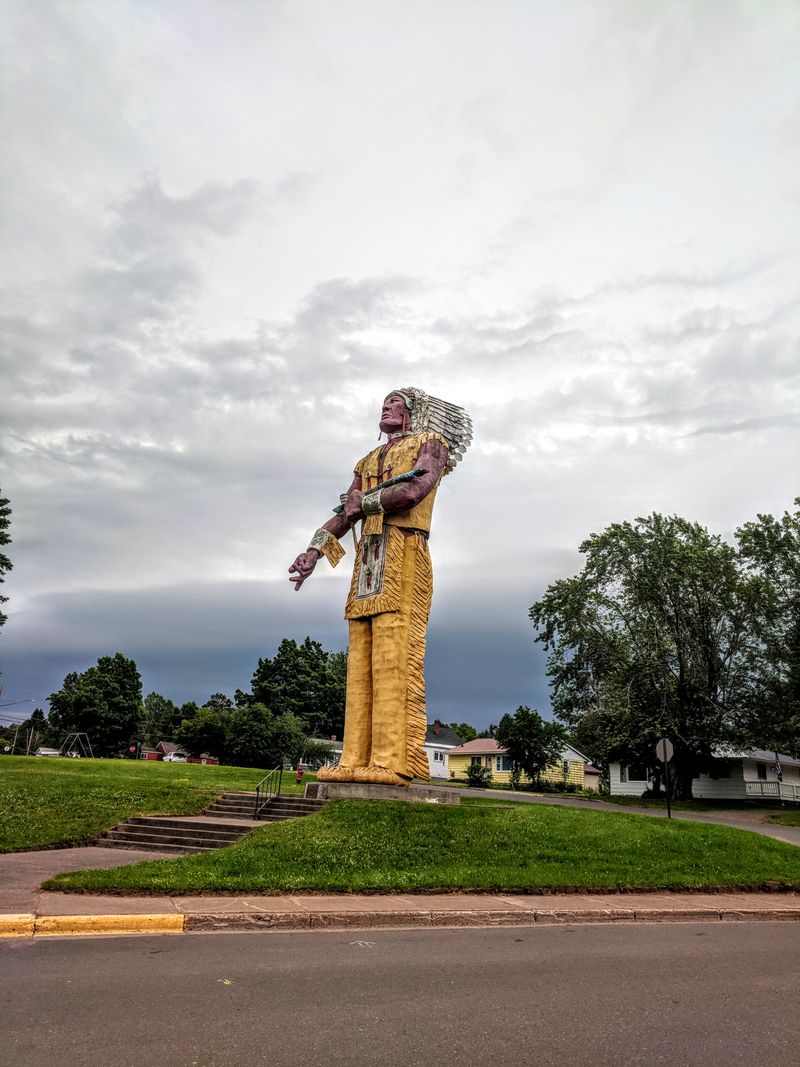
The warm smell of asphalt and the distant, lonely cry of a gull meet you first as Hiawatha appears between the modest houses. It is a visual reset for your internal ruler, as his height completely dwarfs the utility poles and playground frames that usually define the skyline.
You’ll notice how the sunlight slides across the painted folds of his buckskin garment, while a light wind flicks at the nearby pines, creating a living frame for this inanimate giant.
Hiawatha Park sits at the intersection of Burma Road and Hazel Street, tucked neatly into a residential pocket of Ironwood. Built in the mid-1960s, the statue is a vibrant echo of a classic roadside era when bigger was always better.
Signs around the base offer vital community context, explaining that this isn’t just a tourist trap, but a symbol of local pride and stewardship. When you arrive, make sure to park in the small lot just steps from the base, but don’t just stay there.
I’ve found that the best way to really absorb the scale is to step back across the grass to frame your shot.
Reading The Mining Memorial
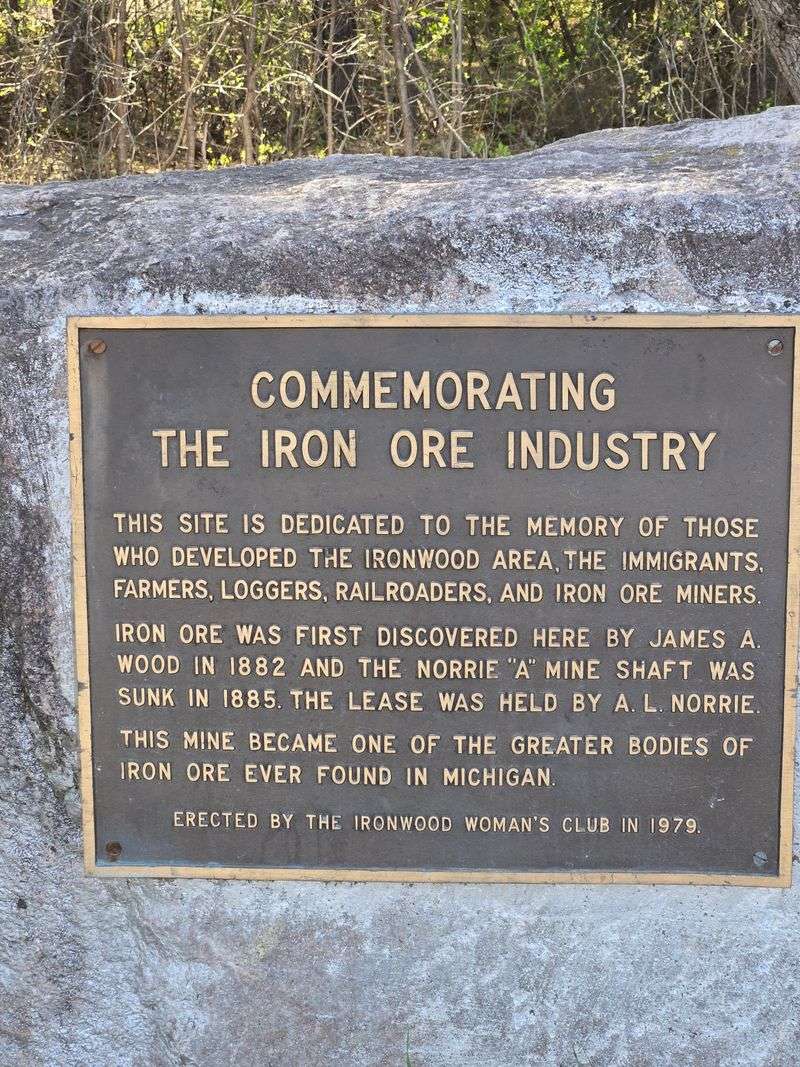
There is a specific feeling when the metal edge of a plaque clinks under your fingers, and suddenly the statue’s backdrop turns into a vivid timeline of human struggle and triumph.
This isn’t just a big guy made of fiberglass; his presence is rooted in the Gogebic Range and its legendary iron story. As you stand there, you can almost hear the phantom echoes of heavy machinery vibrating under the quiet trees.
The memorial across from Hiawatha honors the thousands of miners who shaped the very foundations of Ironwood. It places the statue within a serious community history rather than just being a 1960s novelty.
Visitors often find themselves pausing here much longer than they originally expected, tracing the names and years of the shafts while swapping family memories of their own industrial roots.
My best advice is to read first and photograph second. The historical context actually changes how your eye perceives the monument and, more importantly, how you write your captions later.
Finding The Right Scale In Photos
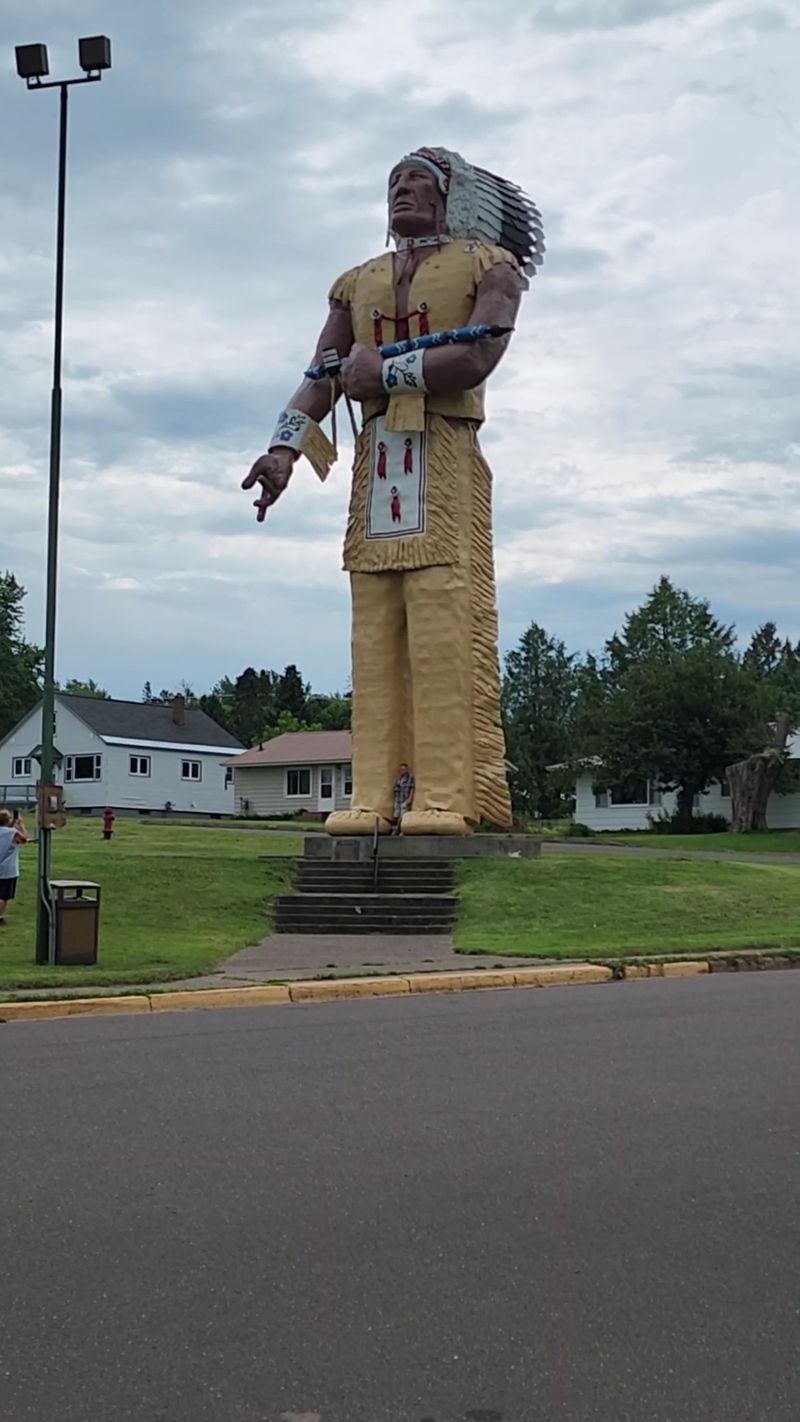
Begin with something ordinary in frame, like the adjacent houses or a friend standing at the base. Your brain needs a ruler to grasp 52 feet. Without context, Hiawatha looks like a model instead of a landmark.
The statue dates to the 1960s roadside attraction wave, repainted over the years to keep colors crisp. Review signs nearby for local notes and restoration mentions. That maintenance matters for photographs.
Try three angles: low and wide from the lot, eye level across the grass, and a side profile by the playground. Midday glare flattens details, so morning or late afternoon light is kinder. Avoid tight crops that hide surroundings.
Neighborhood Vibe, Park Pace
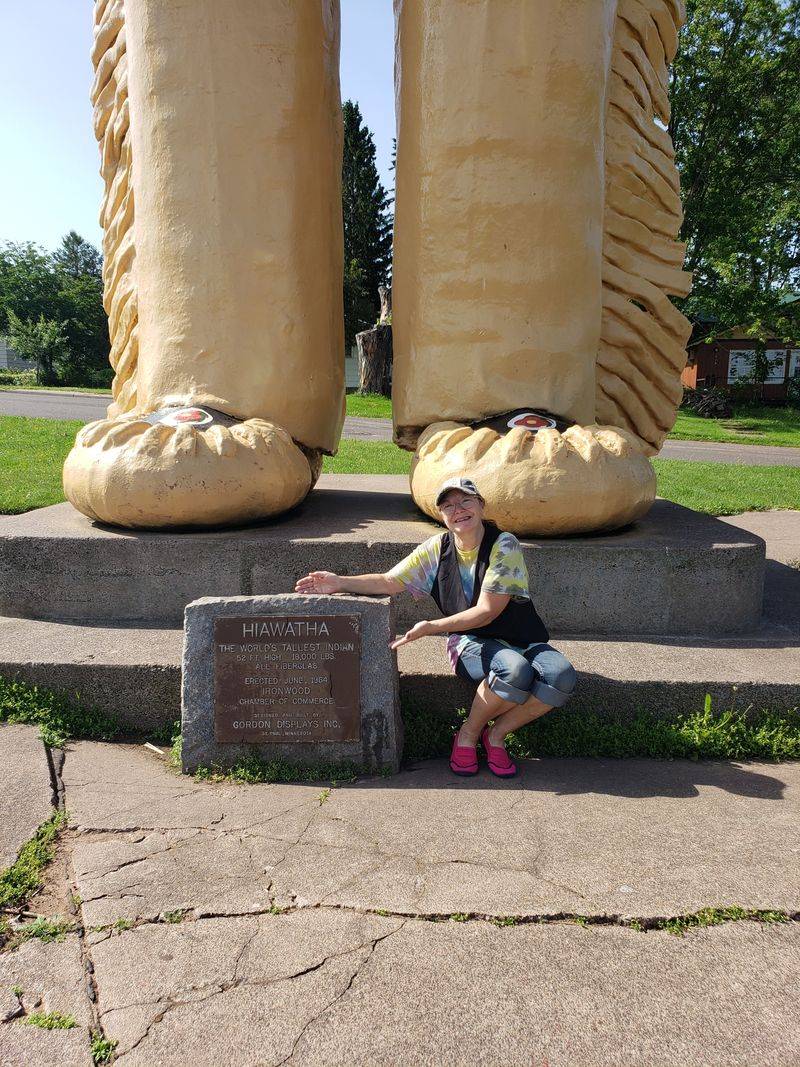
Quiet conversations float from porches while kids chase each other near the playground. The statue presides, not imposing, more like a watchful neighbor. A breeze skims across the grass and the swings creak politely.
Hiawatha Park sits within residential streets, so the atmosphere skews friendly and lived in. That setting aligns with reviews calling it a quick, meaningful stop. Locals use the space, not just travelers.
Keep voices low, wave at passersby, and share space around the base for photo turns. Picnics fit well at tables when weather cooperates. If the lot is full, wait a few minutes; turnover is quick and curbsides are narrow.
A 1960s Roadside Original
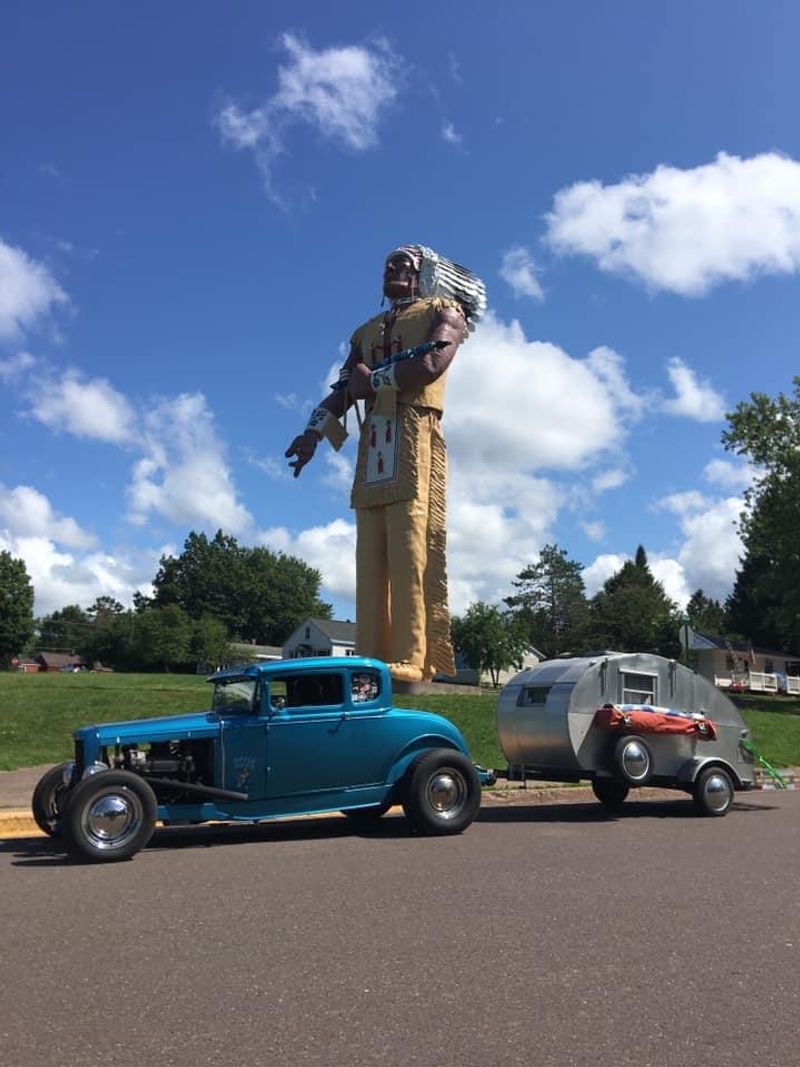
Bright paint and bold gesture immediately signal mid century optimism. The statue’s simplified forms and heroic stance fit the roadside era that loved superlatives. You feel that drive by spectacle baked into its silhouette.
Installed in the 1960s, Hiawatha mirrors a time when travelers sought big, memorable stops between long stretches of highway. It has since been refurbished to keep colors vivid. Community care shows through maintenance cycles.
When photographing, lean into the retro mood. Frame a shot with any vintage looking elements in the park or your car in the foreground. Quick tip: slightly lower angles and centered compositions suit the period’s graphic drama.
Seasonal Light And Weather
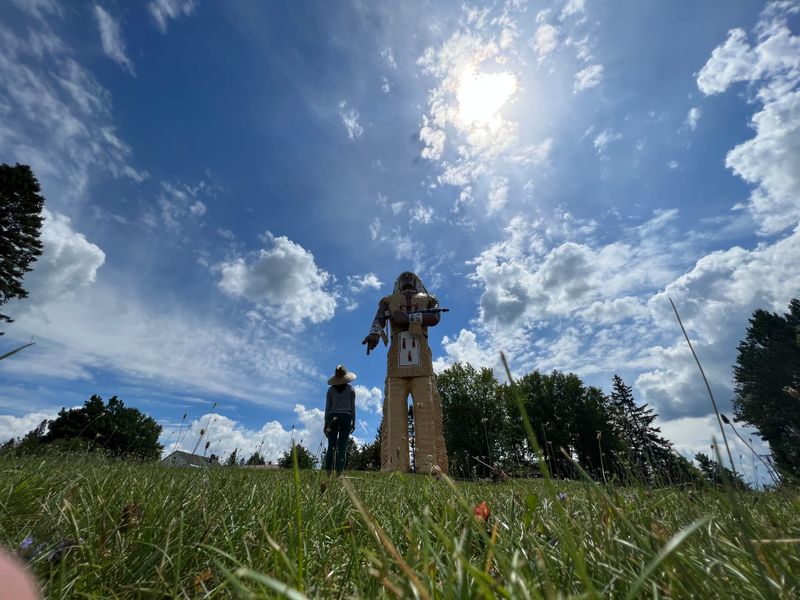
Snow hushes the park, then spring drip patterns the base with melt shadows. Summer brings saturated blues and playful voices, while autumn leaf confetti frames Hiawatha like stage dressing. Each season reshapes the mood without moving the statue an inch.
Locals note the park’s straightforward hours and easy access, even as Google listings can confuse some visitors. The site feels open and casual, with closing times posted for the park, not a ticket booth. Weather does the real gatekeeping here.
Check the forecast and shoes. After rain, grass gets slick; in winter, packed snow can be shiny. Aim for soft morning light in summer, and bring a tripod for dusky winter glow.
Small Details, Big Presence
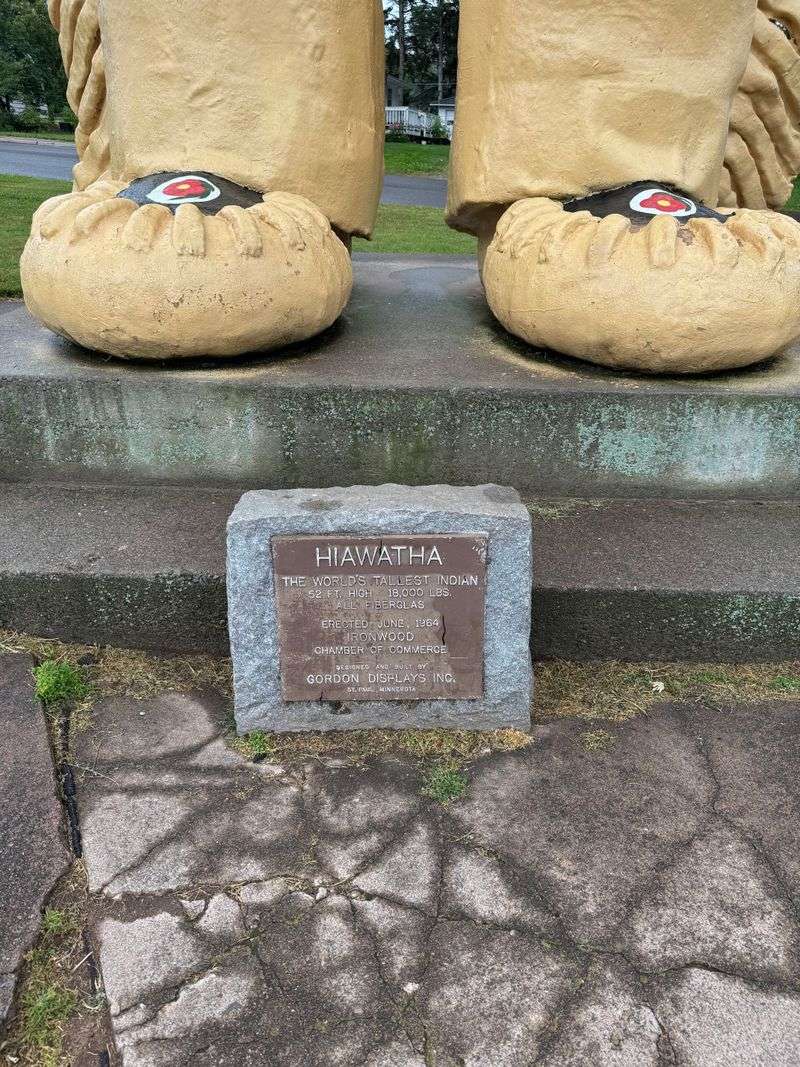
Look closely at paint edges along the garment folds and you will spot careful touch ups. The surface tells a story of ladders and steady hands over the years. From that near distance, the scale swings from monumental to human.
Community maintenance has kept Hiawatha photogenic. Interpretive signs explain local context, while reviews mention recent refreshes. The design remains intentionally stylized, a hallmark of its period.
Walk the perimeter slowly, noting where sun exaggerates texture and where shade softens it. A short telephoto compresses forms for bold shapes. Visitors often circle twice, first for awe, second for clues about how artists solved weather and height.
Getting There Without The Detour
Do not let your GPS send you to the welcome center. Aim directly for Burma Road and Hazel Street, where a compact lot sits about 50 feet from the statue. The first glimpse often arrives abruptly between rooftops.
The site is a cultural landmark with posted hours that sometimes differ from what mapping apps display. Reviewers emphasize how freely accessible it feels. You will not find a ticket booth or tour line.
Plug coordinates 46.4497321, -90.1621241 into your map. If you miss the turn, loop the block rather than U turning where sightlines are tight. Arrive early on sunny weekends to avoid a constant trickle of photo seekers.
Respectful Framing And Context
Pause before the lens comes out and read the signs. Understanding the statue’s place in community history helps you frame images with care. The goal is to document, not caricature, a complex regional story.
Hiawatha’s presence has outlasted trends because locals maintain and contextualize it. Plaques about Ironwood’s past, especially mining, add depth to a quick roadside stop. That context belongs in captions and conversations.
Stand back enough to include the memorial, playground edge, or tree line for honest setting. Avoid climbing or leaning on structures. If kids are playing nearby, keep them out of photos unless families clearly approve.
Quick Stop, Lasting Memory
Sometimes the most impactful stops on a road trip are the ones that only last fifteen minutes but linger in your mind for years.
A quick stretch of the legs, a few snapshots, and a slow exhale beneath a giant figure that has watched generations of Michigan travelers come and go is exactly what the soul needs.
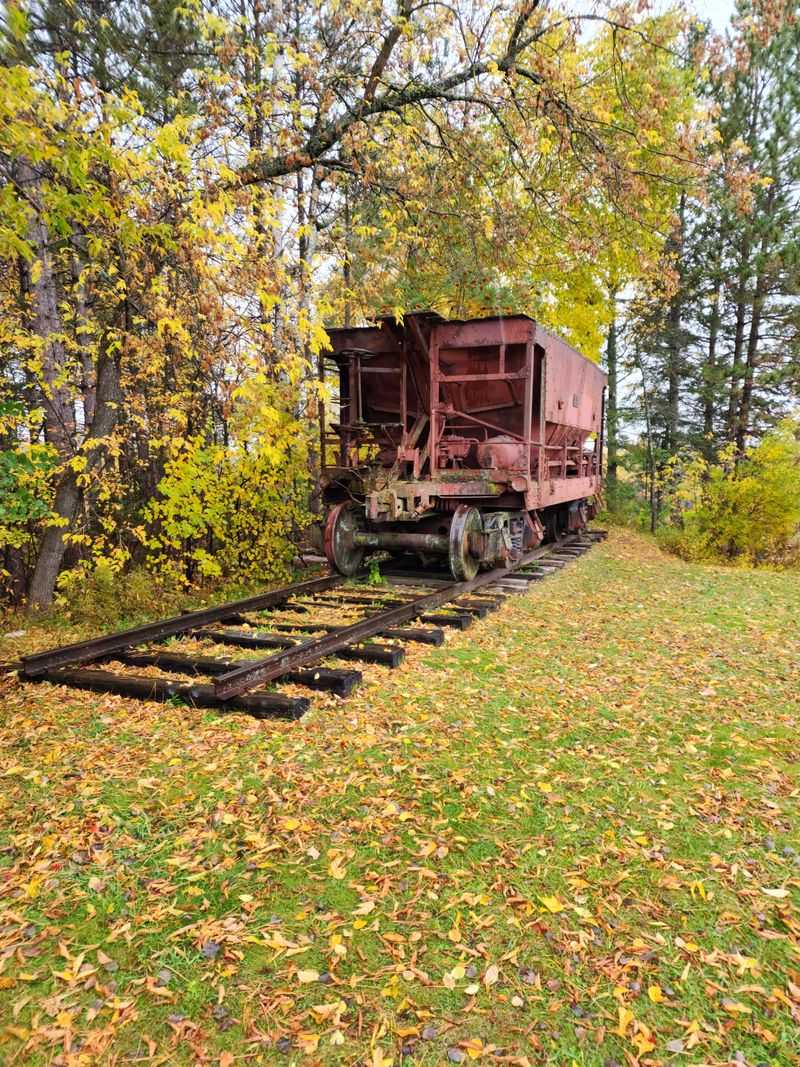
The nearby vintage train car and the humble playground give extra texture to your pause, making the whole park feel like a time capsule.
The statue consistently draws four to five-star reviews for being easy, free, and unexpectedly moving. The fresh paint and straightforward access keep it in great shape for the next generation of explorers.
It is firmly part of the Ironwood identity and a point of pride for the Gogebic Range. Before you hop back in the car, set a simple plan: park, read the history, circle the giant, take your photos, and just breathe.
If you are on a larger road trip, this is the perfect place to pair your visit with a picnic to reset your energy. Before you drive away, take one last wide-angle photo to remember the whole scene: houses, playground, and giant alike.