
11 Can’t-Miss Destinations In Michigan For A 2026 Road Trip
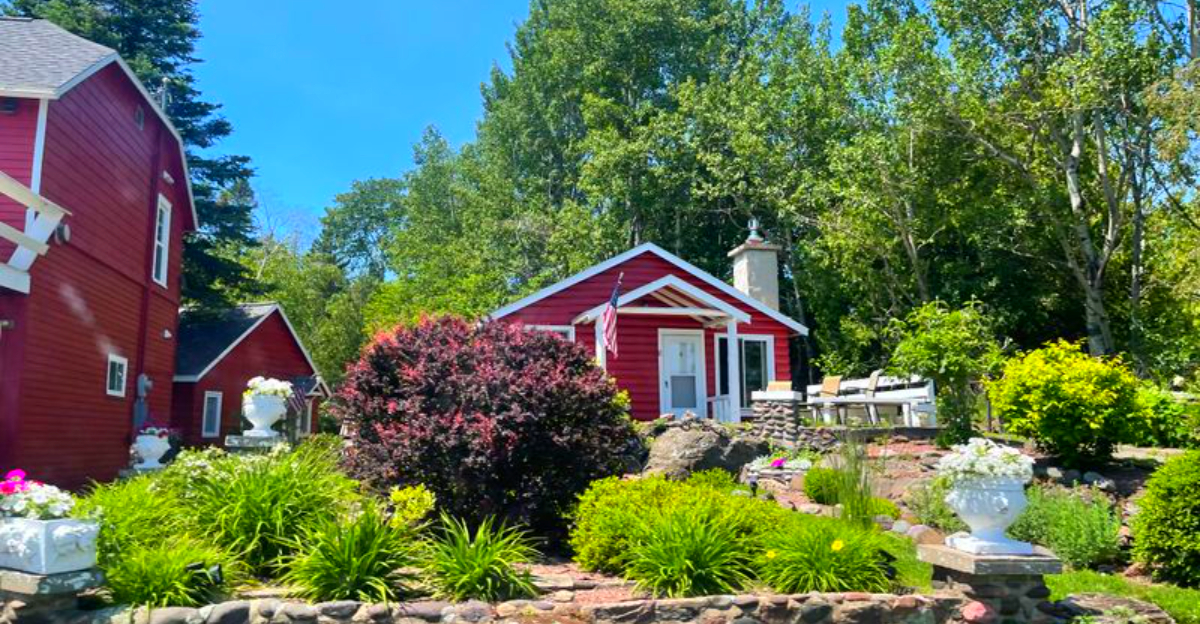
Roll down your windows and let the air shift from sun-baked asphalt to that sharp, cold-water snap only the Great Lakes can exhale. You’ll find yourself in tiny towns where the morning air is thick with the scent of yeasty sourdough and sugar-dusted cherries fogging up local bakery glass.
It’s a landscape of acoustic extremes: the absolute, ear-ringing silence of a cedar forest followed by the rhythmic, guttural boom of Lake Superior slamming into ancient stone.
This curated route connects the dots between shimmering dunes, hidden waterfalls, and historic islands, proving Michigan is the ultimate destination for authentic road trips and natural escapes.
Pack a moth-eaten flannel and keep a spare five-spot for a roadside pasty, it’s the unofficial passport of the North. Forget the GPS; just follow the shoreline until your internal clock resets. This isn’t about checking off a list; it’s about letting the vast, blue horizon remind you exactly how small (and free) you actually are.
1. Sleeping Bear Dunes National Lakeshore, Empire and Glen Arbor
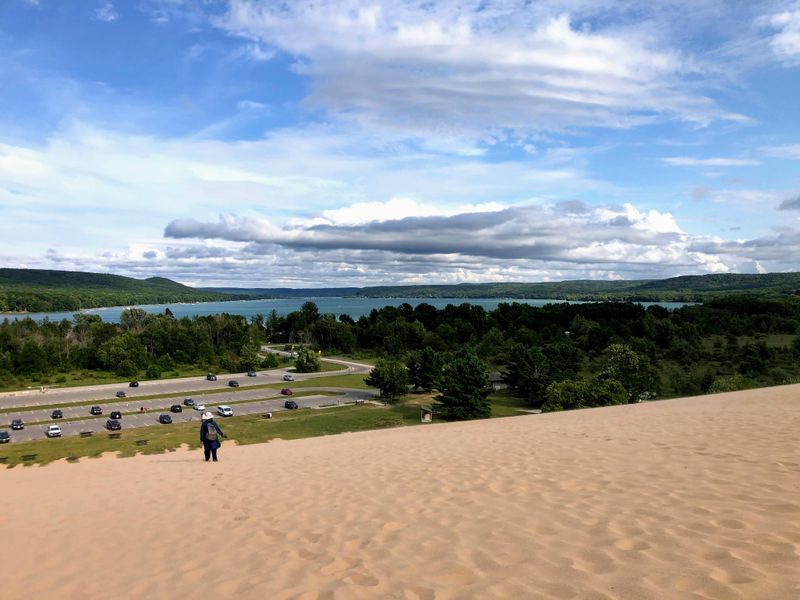
The wind hushes across sand that seems to flow like water, and Lake Michigan throws back a blue so clear it feels borrowed from somewhere tropical and far away. Sleeping Bear Dunes is where the scale of nature finally matches the scale of your imagination, especially once you crest the first ridge and the parking lot chatter falls away.
The dune climbs are steep, playful, and surprisingly quiet at the top, where the horizon opens and time starts moving more slowly than you expected. In Empire and Glen Arbor, the vibe stays relaxed, with bike rentals, roadside stands, and piles of famous cherries that make the towns feel gently busy.
The history of this land is woven into Anishinaabe stories that still echo through the Manitou Islands offshore, even when the water looks calm. The 1970 national lakeshore designation preserved farms, forests, and shoreline, yet the place feels older than its federal title because the land carries its own memory.
For big views without the hardest climb, Pierce Stocking Scenic Drive frames the lakeshore in cinematic windows, and it rewards a slow pace with repeated stops. Start early for cooler sand, carry more water than you think you need, and remember the beach-to-bluff return is far tougher than the descent looks, while Pyramid Point offers a gentler entry with respectful cliff views.
2. Pictured Rocks National Lakeshore, Munising
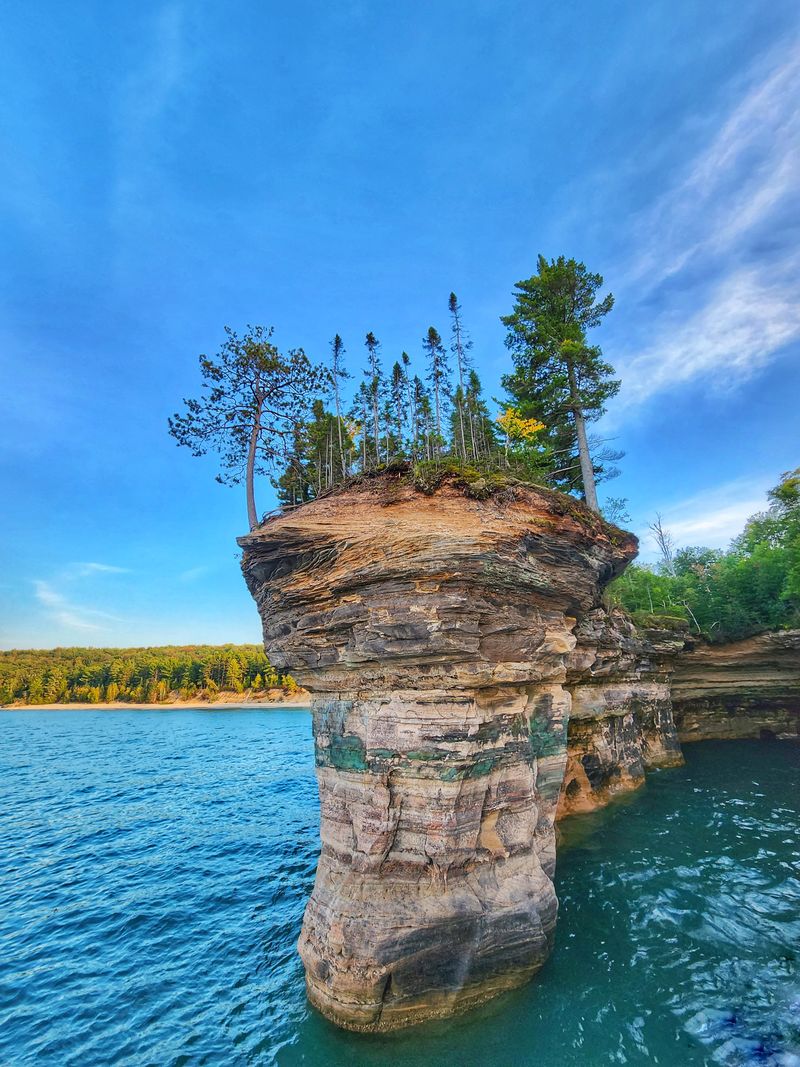
Color drips down sandstone cliffs like watercolor left out in the rain, while Lake Superior keeps carving arches and sea caves with patient, quiet force. The energy shifts by the hour, with hushed sunrise calm, midday boat buzz, and an evening glow that makes the cliffs look newly lit from within.
Munising hums as a gateway town, with outfitters, travelers buying last-minute rain gear, and the savory scent of smoked whitefish floating through the streets. The place feels both practical and excited, as if everyone is preparing for the same beautiful challenge.
These mineral-stained cliffs were protected in 1966, and that step marked the country’s first national lakeshore, which still feels like a big statement when you see the scale. Nearby, the Grand Sable Dunes show how wind can stack time into towering hills of grit, and the Alger Underwater Preserve documents shipwrecks resting offshore in cold clear depths.
If you want famous formations like Miners Castle, reserve a boat tour ahead of time, especially when waves are active and the schedule tightens fast. Guided kayak trips can be unforgettable on low-wind days, and if you prefer solid ground, the Chapel Loop offers cliff vistas with fewer crowds, while bug spray matters more than most people want to admit.
3. Mackinac Island, Mackinac Island
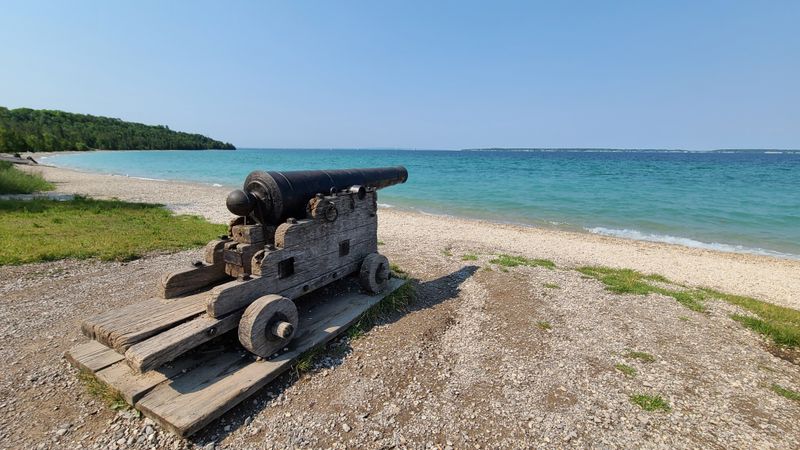
Hoofbeats replace engines the moment you step off the ferry, and the air smells of sugar, horse stables, and lilacs in June when the timing is kind. Downtown feels like choreographed chaos, with bicycles, bellmen, and ferry wakes, yet quiet trails begin only a few blocks away under cool cedar shade.
Climbing to Arch Rock is a rite of passage, because it frames the straits in a perfect postcard and makes the island’s scale feel intimate and grand at once. Once you leave the main streets, the soundscape softens, and even your footsteps start feeling deliberate.
The island’s charm stems from the 1898 ban on automobiles, a preservation experiment that stuck and shaped daily life for more than a century. History stays visible through Fort Mackinac’s musket drills and the Grand Hotel’s famous 1887 porch, which turns the shoreline into a kind of theater.
Rent a bike to circle the eight-mile perimeter on M-185, the only state highway in the country where cars are forbidden, and you will understand the island’s rhythm quickly. Pack a light jacket, catch the earliest ferry for softer morning light, and pause near British Landing to watch freighters move like calm punctuation on the horizon.
4. Tahquamenon Falls State Park, Paradise
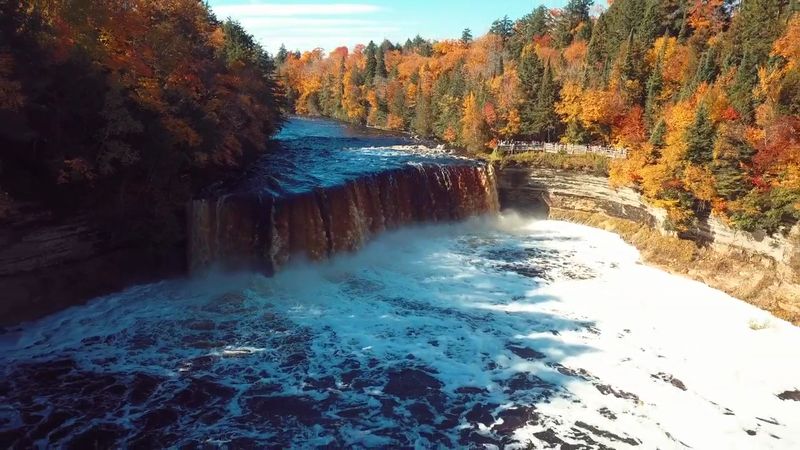
The river runs the color of strong tea, foaming into copper at the brink before it drops into mist that never seems to stop forming. Boardwalks thread through deep cedar shade, and the primeval roar has a way of editing your thoughts down to the bare essentials without asking permission.
Paradise makes a good base, with hot coffee, trail maps, and a small-town steadiness that helps you plan your loops without overcomplicating the day. The nickname Root Beer Falls makes sense once you see the color holding steady through the spray.
The park protects the massive Upper Falls and the smaller Lower Falls, and the distinct color comes from tannins leached from cedar and hemlock bogs upstream. You can still see the sturdy handiwork of the Civilian Conservation Corps in overlooks and steps that guide you through the terrain with practical grace.
Expect heavy mosquitoes in late spring, and bring microspikes for deep winter visits, because the surfaces can turn slick faster than you expect. Sunny weekends get busy, so a good strategy is grabbing a hearty sandwich near the Upper Falls while crowds thin, and if you want true solitude, arrive at dawn for mist, ravens, and quiet.
5. Isle Royale National Park, Isle Royale, via Houghton or Copper Harbor
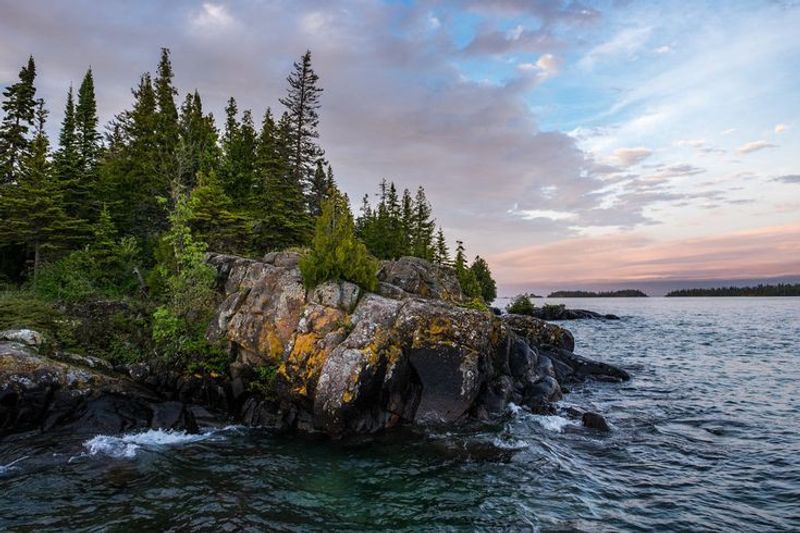
Silence on Isle Royale has texture, with loon calls, twig snaps, and Lake Superior inhaling against ancient basalt in a slow rhythm. It feels far away because it truly is, separated by miles of cold temperamental water that keeps casual crowds from drifting in.
This is a backpacker’s cathedral, where campsites like Moskey Basin or Rock Harbor feel earned, and the Greenstone Ridge turns effort into perspective. The island teaches patience, because the landscape does not reward rushing.
Designated as a national park in 1940, the island is famous for the long-running wolf and moose study, a real ecological story unfolding across ridges and coves. Look closely and you can find traces of 19th-century copper mining under moss, while remote lighthouses blink through frequent fog.
Reserve ferry or seaplane transport months ahead, pack for weather swings that can be dramatic within a single day, and treat food storage as essential because foxes and squirrels can be bold. Plan zero big mileage on your first day, so the lake can recalibrate your pace and you can actually hear what the wilderness is saying.
6. Porcupine Mountains Wilderness State Park, Ontonagon Area
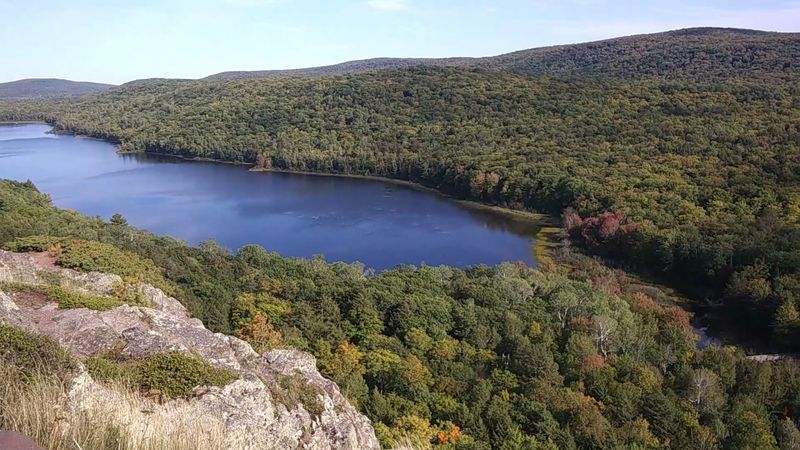
In the Porkies, moss pads every step and the forest often smells like rain being held for later, which makes the air feel thick with quiet. Old-growth hemlock and maple rise tall and dense, and the canopy hushes even the busiest mind with steady shade.
Ridgelines stack like green cutouts against the sky, and backcountry cabins offer simple living with wood stoves and the lake’s distant voice. The place feels like a reset button that works, even if you did not believe you needed one.
Michigan set this 60,000-acre tract aside in 1945, and logging largely missed the core, leaving trunks wide and dignified in a way you rarely see. Lake of the Clouds is the crown jewel, especially in autumn, when color turns the valley into something that looks impossible to photograph accurately.
Carry a paper map because cell reception fades fast, expect sudden storms, and plan far ahead since backcountry sites book quickly. A dusk walk on the Escarpment Trail shows how evening light paints long shadow bands across the valley, and it nudges your internal clock toward a slower mountain-time rhythm.
7. Keweenaw Peninsula And Copper Harbor, Copper Harbor
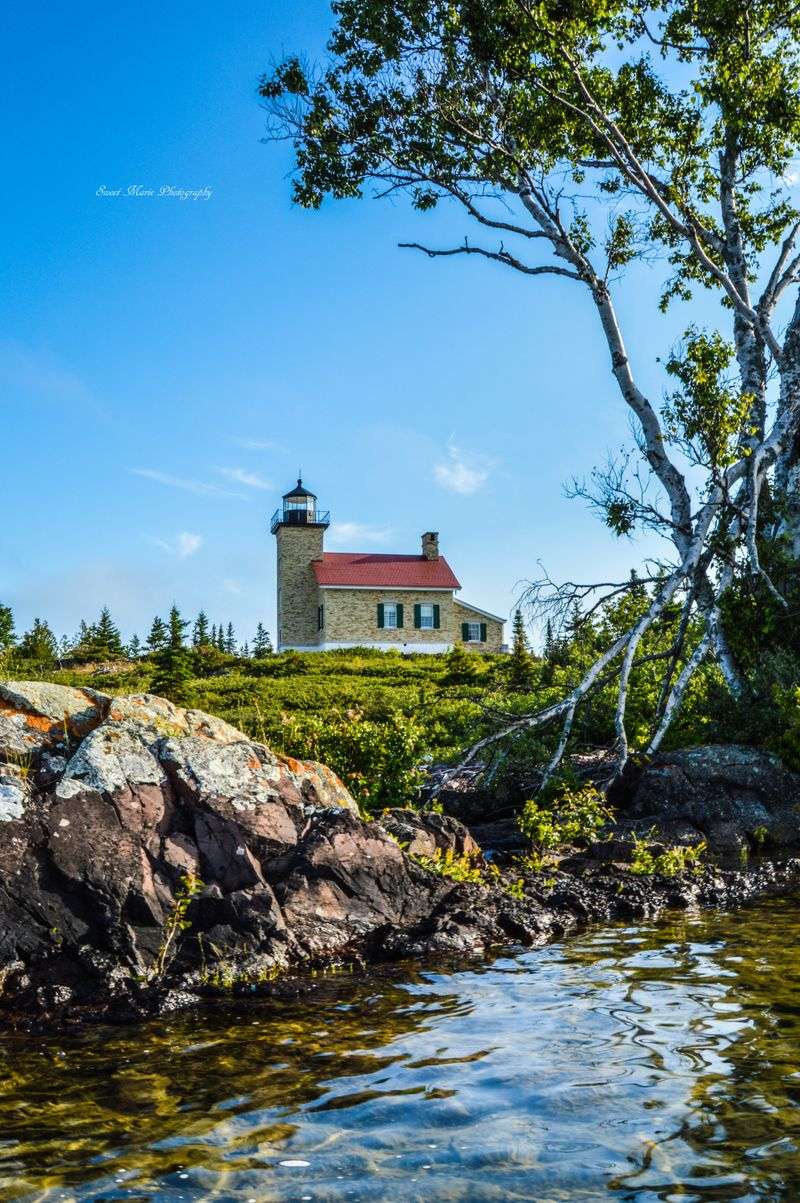
Driving toward the Keweenaw’s tip can feel like the road is shrugging off the rest of the continent, mile by mile, until the world narrows into water and rock. Copper Harbor hums with trail dust, bike racks, and a harbor that seems to drink blue straight out of the sky.
Wildflowers stitch bright color into rocky edges in summer, while Lake Superior keeps the air crisp and honest, even on warm days. The town feels small, but the horizon makes it feel huge.
The region boomed during the mid-1800s copper rush, leaving red brick architecture, shaft houses, and the sites of Keweenaw National Historical Park as proof of the scale. Brockway Mountain Drive gives a panoramic read of the coastline, and it feels like turning a slow chapter in a book you do not want to end.
Bring layers, carry a tire repair kit if you are riding the singletrack, and make time for a hot pasty from a roadside window when the wind starts biting. Check lighthouse hours before committing to long gravel spurs, and if you linger into evening, the Thimbleberry Trail light can make you wonder why the wider world has not found this corner yet.
8. Holland, Holland
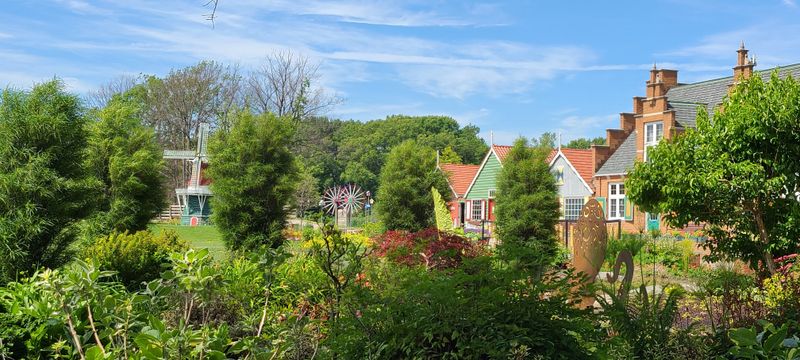
Spring in Holland smells like damp soil and fresh paint, and rows of tulips line curbs in precise color that feels almost mathematical. Downtown mixes tidy brick storefronts with a lakeshore breeze from the west, and the whole city feels freshly aired out after winter.
Local cafés open wide, and the streets feel intentionally welcoming, as if the town is inviting you to slow down and notice small details. Even quick errands can feel like a gentle walk when the light hits right.
The centerpiece is De Zwaan, an authentic Dutch windmill brought over in 1964, dating to 1761 and anchoring Windmill Island Gardens where it still grinds grain. Heritage here shows up in wooden shoe carving demonstrations and gabled rooftops that feel more like a lived neighborhood than a themed set.
If you visit for Tulip Time in May, book lodging far ahead and expect traffic that moves slowly, because crowds arrive with serious enthusiasm. For a quieter moment, head to Holland State Park at sunset to see Big Red silhouetted, then chase a warm stroopwafel with strong black coffee as petals drift like tiny flags.
9. Detroit Institute Of Arts, Detroit
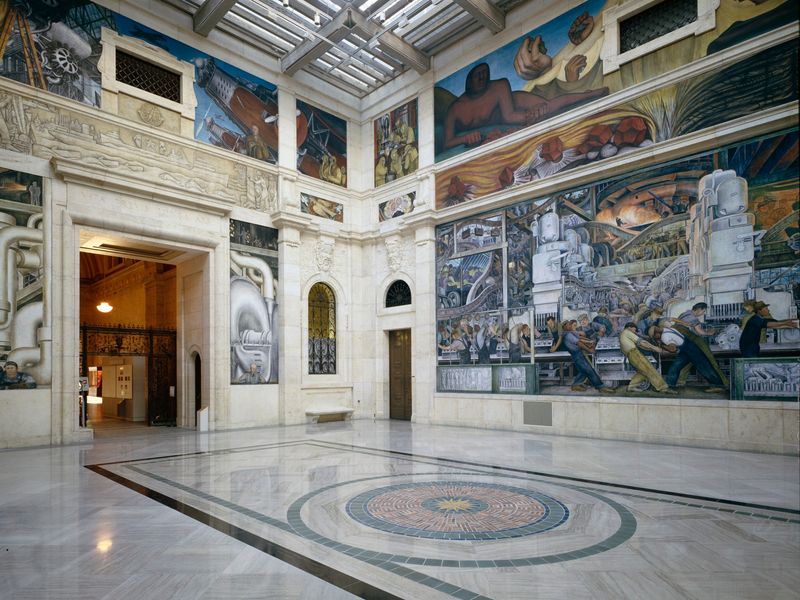
The marble galleries of the Detroit Institute of Arts expand into Rivera Court, where Diego Rivera’s Detroit Industry Murals wrap the room with machinery, hands, and molten steel imagery. The building’s cool calm frames a collection that ranges from ancient artifacts to modern work without shouting, and the quiet helps you actually see.
Step outside and Woodward Avenue adds a fast city pulse, which makes the return to the galleries feel like crossing a boundary into another kind of attention. The contrast between street energy and museum stillness is part of what makes the visit stick.
The museum’s roots go back to 1885, and the Rivera murals were commissioned in 1932 during the Great Depression, capturing both critique and admiration for the industrial age. The collection remained intact through difficult years thanks to major community support, and that history adds weight to the calm you feel inside.
Buy timed tickets for busy weekends, plan a midday pause in Kresge Court for a snack and a quiet seat, and use nearby parking structures to keep logistics simple. Let one piece choose you, follow its thematic thread slowly, and you will leave feeling like you actually met the art instead of rushing past it.
10. The Henry Ford, Dearborn
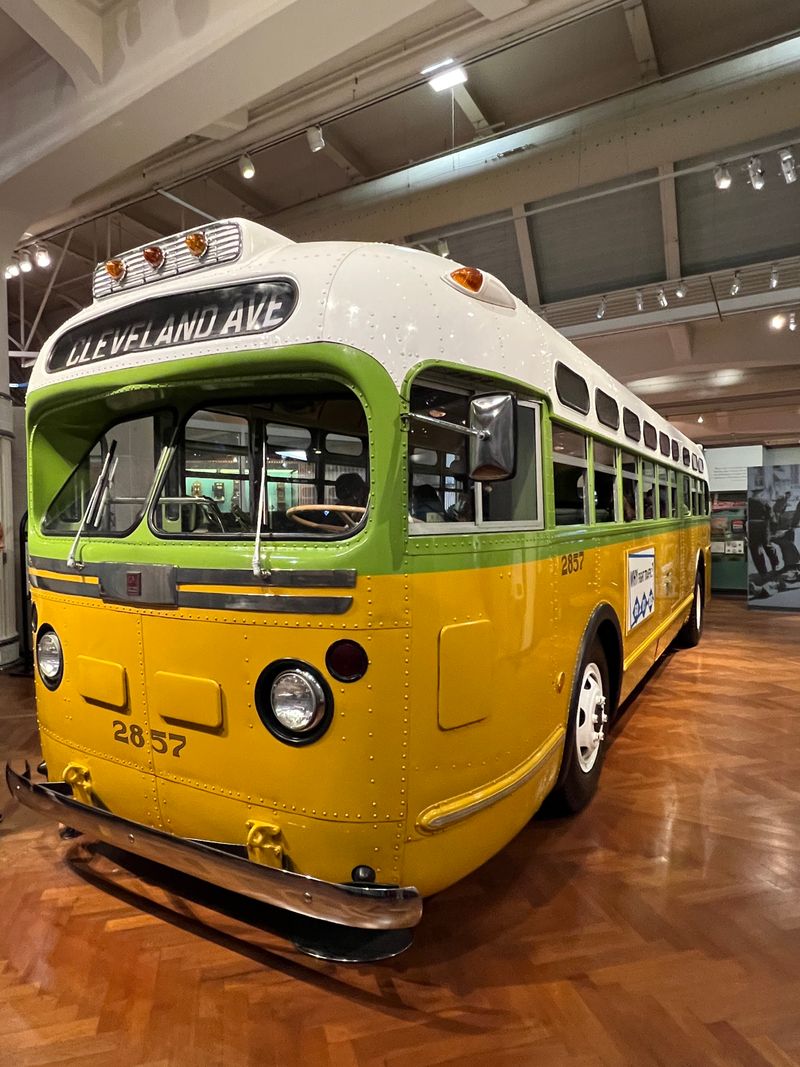
This is a museum that moves, with vintage Model Ts circling the grounds and steam engines hissing in the distance like a steady soundtrack. Inside the Henry Ford Museum of American Innovation, history feels tangible, and seeing the Rosa Parks bus can make time fold inward.
Rows of historic cars tell a story of design and stubborn optimism, and the whole place pulls both kids and adults toward the glass with the same wide-eyed focus. It feels like learning with your whole body, not just your brain.
Founded by Henry Ford in 1929, the 250-acre complex includes Greenfield Village, the indoor museum, and the Ford Rouge Factory Tour, and each section asks for real walking time. Preservation here often means maintaining function rather than freezing objects in place, which makes demonstrations feel alive instead of staged.
Buy the combo ticket, wear comfortable shoes, and schedule the factory tour early to beat the midday rush that builds quickly. Leave extra time for village workshop demonstrations, because sparks, sawdust, and blacksmith hammers make history feel like it was used this morning.
11. Frederik Meijer Gardens And Sculpture Park, Grand Rapids
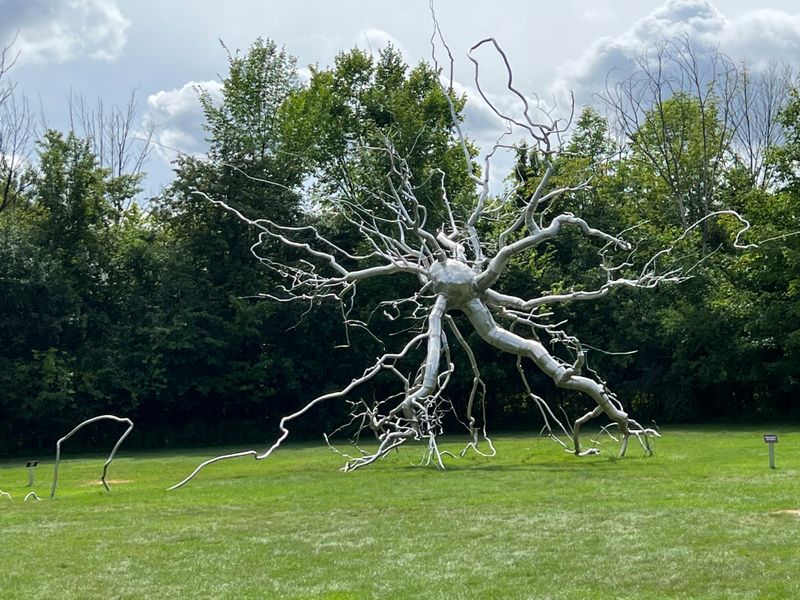
At Frederik Meijer Gardens, a towering steel figure might lean into the sky while bees work coneflowers near your ankles, and that scale contrast is part of the charm. The glass conservatory can fog your glasses for a moment, then clears to reveal palms, waterfalls, and orchids that feel cheerfully out of place in Michigan.
Outside, boardwalks slide between prairies, wetlands, and carefully framed surprises, and the route keeps changing your perspective without feeling confusing. The place makes it easy to stay curious for hours.
Since opening in 1995, the park has grown into a world-renowned collection that mixes major international names with West Michigan’s serious gardening craft. Seasonal highlights, including the Butterflies Are Blooming exhibit, can turn late winter into a soft green reprieve that feels genuinely restorative.
Reserve a timed entry slot on popular weekends, carry water in summer, and take a deliberate detour to the Japanese Garden for a lesson in quiet geometry. Families can navigate kid-friendly loops easily, photographers can chase golden edges of light, and most visitors leave with a little soil on their shoes and a sense that art is best when it has room to breathe outdoors.