
There’s A Castle In Ohio With A Backstory So Unusual You Have To See It To Believe It
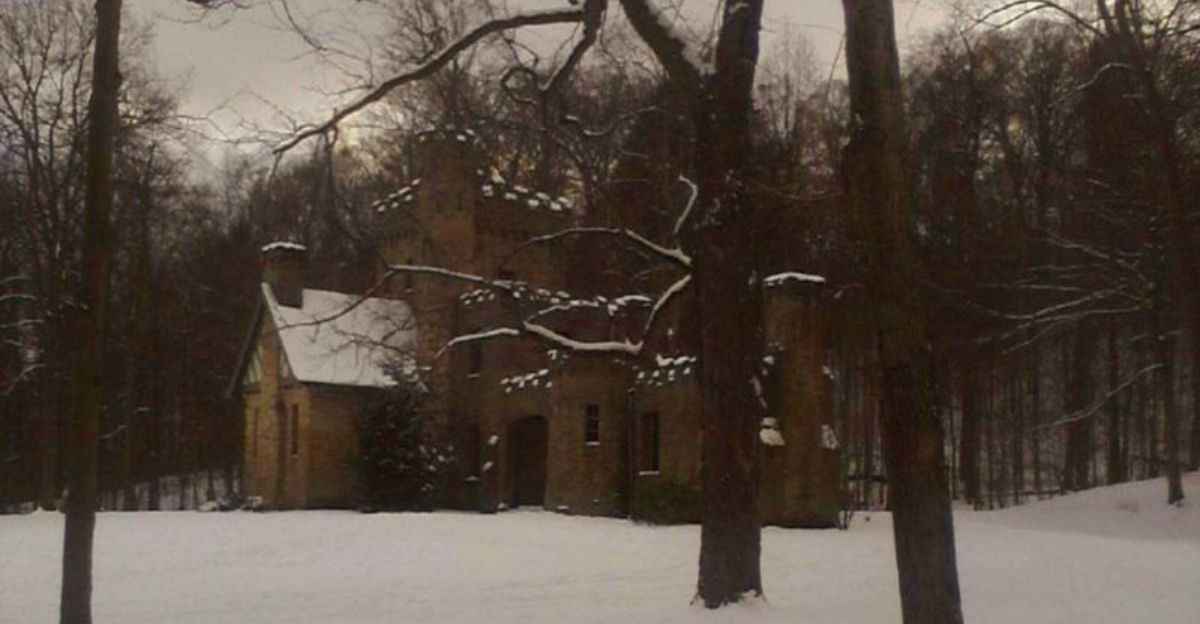
I’ll admit that when I first heard about a castle tucked away in the woods of Willoughby Hills, I was skeptical. Ohio doesn’t exactly scream medieval architecture, and yet here stands a stone structure that looks like it was plucked straight from the English countryside.
Squire’s Castle at 2844 River Rd, Willoughby Hills, OH 44094, has a story that sounds too strange to be true. Built in 1897 as a gatehouse for a grand estate that never came to be, this quirky piece of history has become one of the most photographed spots in Lake County.
What makes it truly fascinating isn’t just the castle itself, but the dreams, ambitions, and unexpected twists that shaped its existence. Today, it stands as a testament to plans gone awry and the beauty that can emerge from unfinished business.
A Gatehouse That Never Got Its Estate
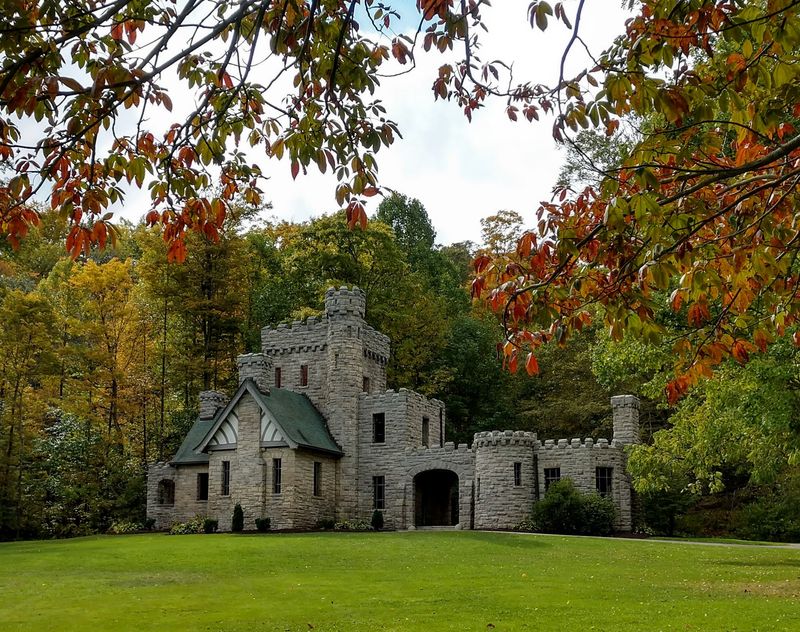
The whole story begins with Feargus Squire, a Standard Oil executive who had grand visions for his property in the late 1800s. He wanted to build a sprawling estate that would rival the finest homes in Cleveland.
What you see today at North Chagrin Reservation was supposed to be just the beginning. The castle was constructed as a gatehouse, meant to welcome visitors to a magnificent main residence that would sit deeper on the property.
But life had other plans. Squire’s wife reportedly refused to live so far from the city, and the grand estate never materialized.
The gatehouse stood alone, a monument to abandoned ambition.
I walked around the structure and tried to imagine what could have been. The craftsmanship in the stonework suggests that Squire spared no expense on even this preliminary building.
Today, visitors can explore the empty shell and let their imaginations fill in the blanks of what might have graced these grounds.
The Three-Story Structure That Lost Its Upper Floors
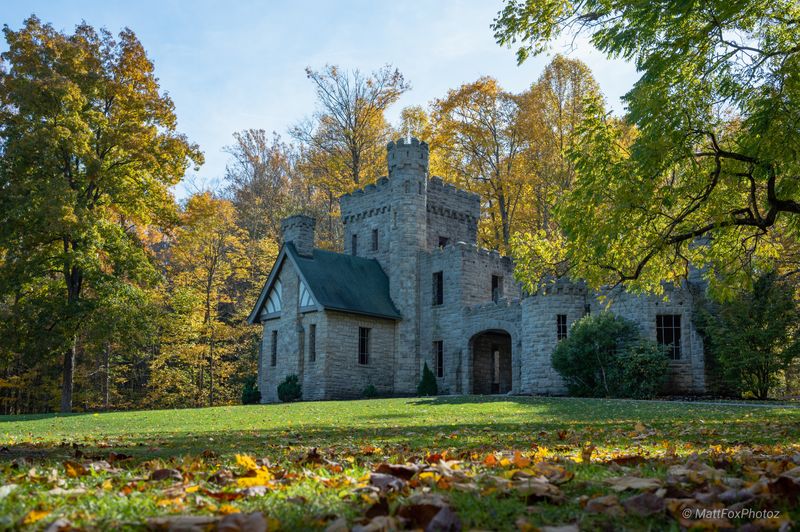
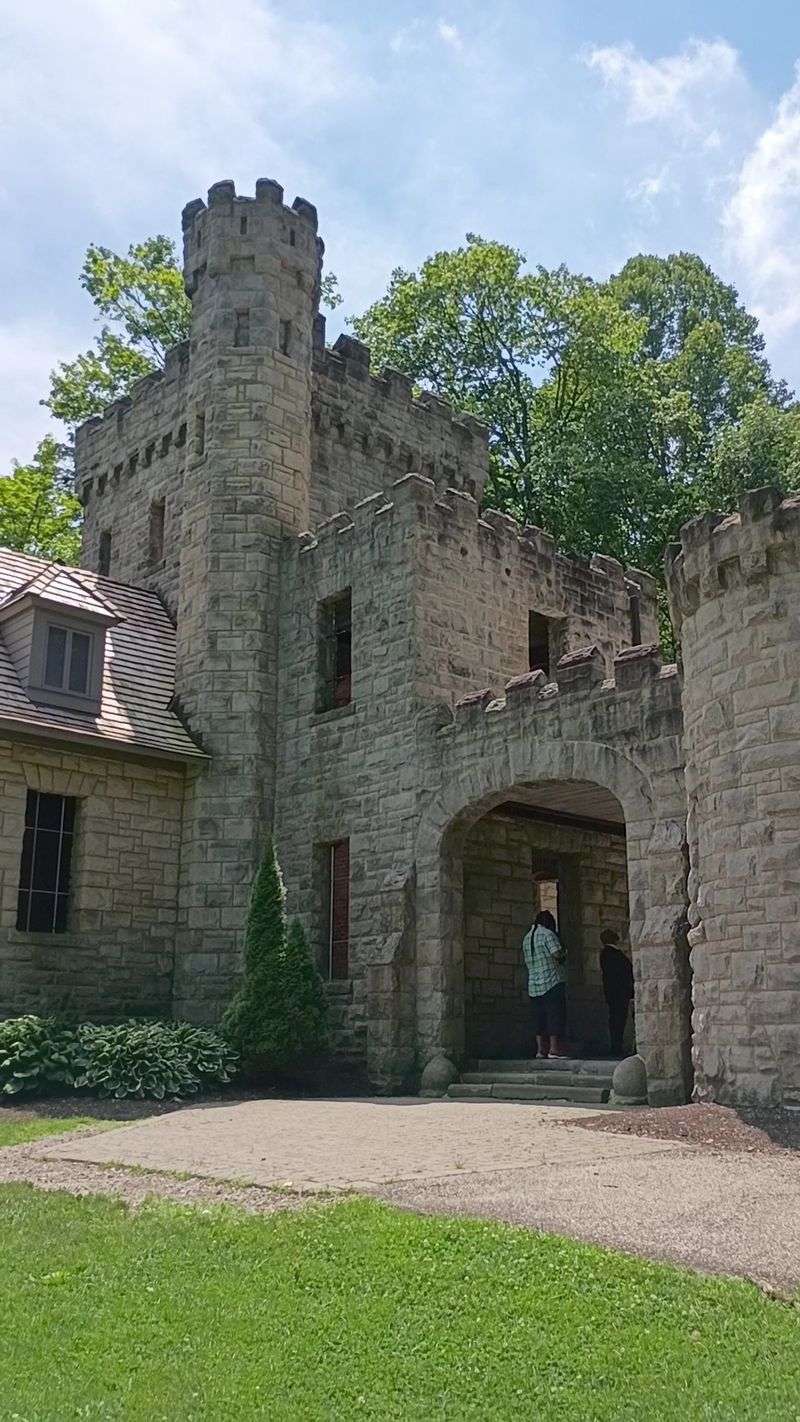
When I stepped inside for the first time, I noticed something immediately odd about the proportions. The ceilings felt unusually low for such an imposing exterior, and the windows seemed strangely positioned.
That’s because what you see now is only a fraction of the original structure. The castle once boasted three full stories plus a basement, complete with a library on the first floor.
After the Cleveland Metroparks acquired the property from a bankrupt real estate developer, they faced a difficult decision. The upper floors had deteriorated to the point of becoming dangerous.
Rather than let the entire structure crumble, they removed the upper levels and sealed the basement. Safety trumped historical preservation, though it’s hard not to feel a pang of loss.
The gated fireplaces you’ll see inside are remnants of the original heating system. Standing in those bare rooms, I found myself wondering what books lined those library shelves and what conversations echoed through the now-vanished upper chambers.
A Photographer’s Paradise In Every Season
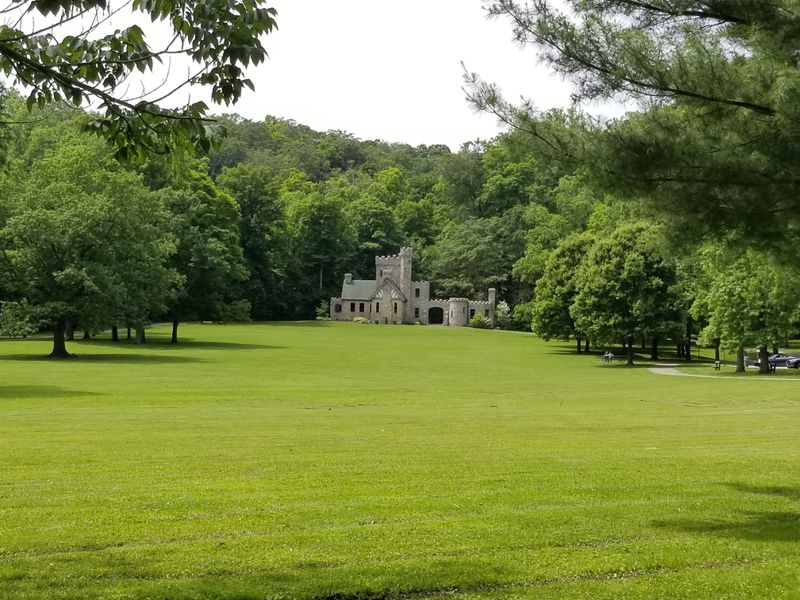
According to locals, this might be the most photographed location in all of Lake County. I can see why after visiting during multiple seasons.
The contrast between the weathered stone and whatever nature decides to throw at it creates endless visual possibilities. Spring brings wildflowers dotting the lawn, while summer wraps everything in lush green.
But fall is when the magic really happens. The surrounding trees explode in reds, oranges, and yellows, creating a backdrop that looks almost too perfect to be real.
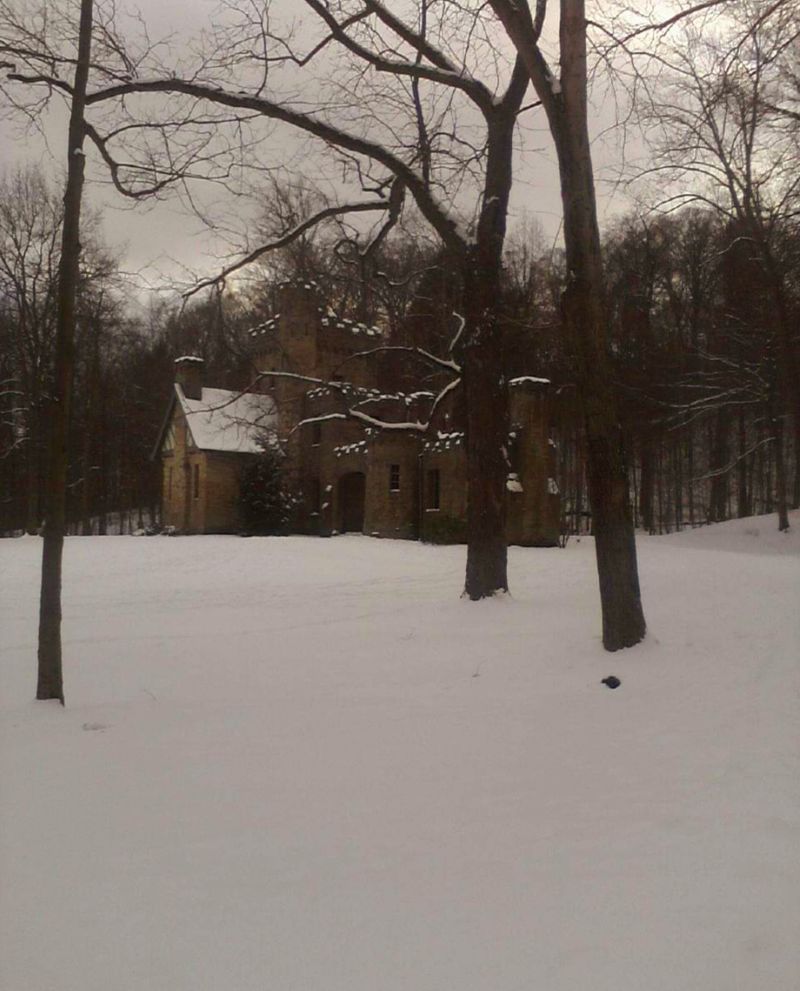
Winter transforms the castle into something from a fairy tale, especially after a fresh snowfall. I visited once just after sunset when frost clung to every surface, and the scene took my breath away.
Wedding photographers flock here for engagement shoots and bridal portraits. The open interior allows for creative framing, and the natural light streaming through those rustic windows creates beautiful effects throughout the day.
Trail Networks That Surprise And Delight
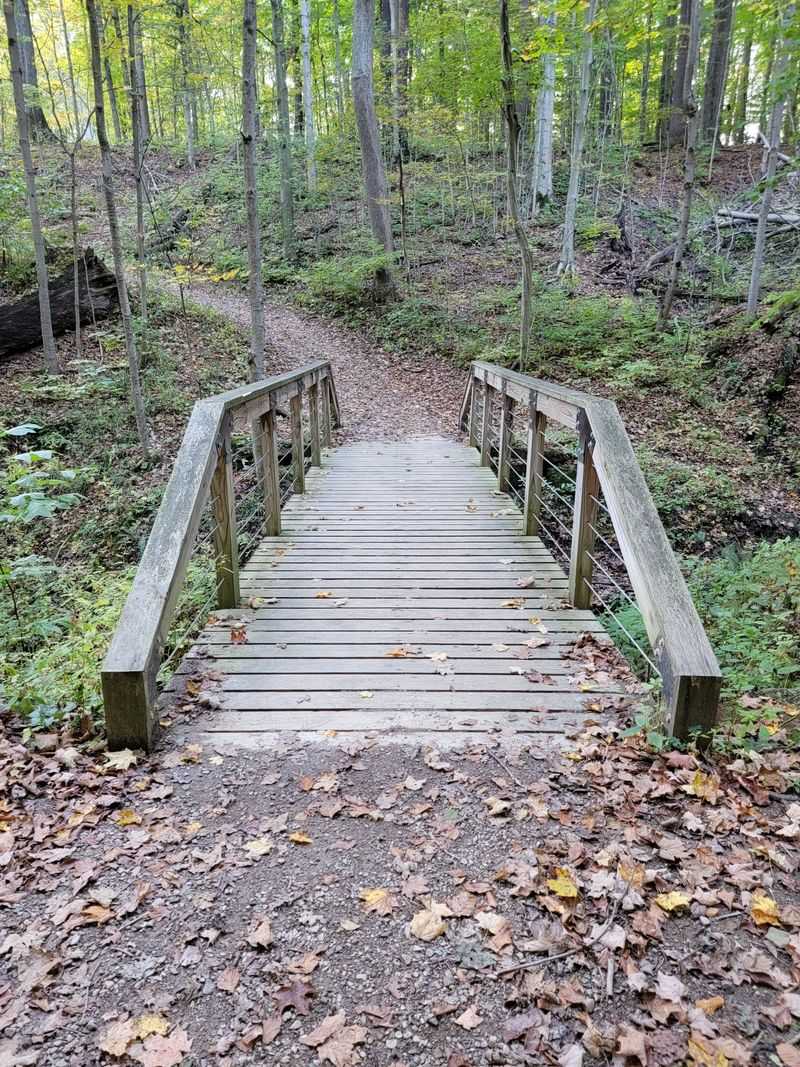
Behind the castle lies a network of trails that range from easy strolls to moderately challenging hikes. The paths are well-maintained and clearly marked, making navigation simple even for first-time visitors.
I’ve heard some people describe the trails as underwhelming, but I think they’re missing the point. These aren’t dramatic overlook trails with sweeping vistas.
Instead, they offer something subtler. The paths wind through dense woodland where you’re fully immersed in nature.
Bird songs replace traffic noise, and the only other sounds are leaves crunching underfoot.
The Scenic Trail lives up to its name, especially during leaf-changing season. There’s enough elevation gain to make you feel like you’ve exercised without leaving you completely winded.
Both walking paths and bridle trails crisscross the property, so keep an eye out for horseback riders. The variety of trees creates an ever-changing canopy, and I’ve spotted everything from wild onions to interesting mushroom varieties along the way.
Perfect Picnic Grounds With Modern Amenities
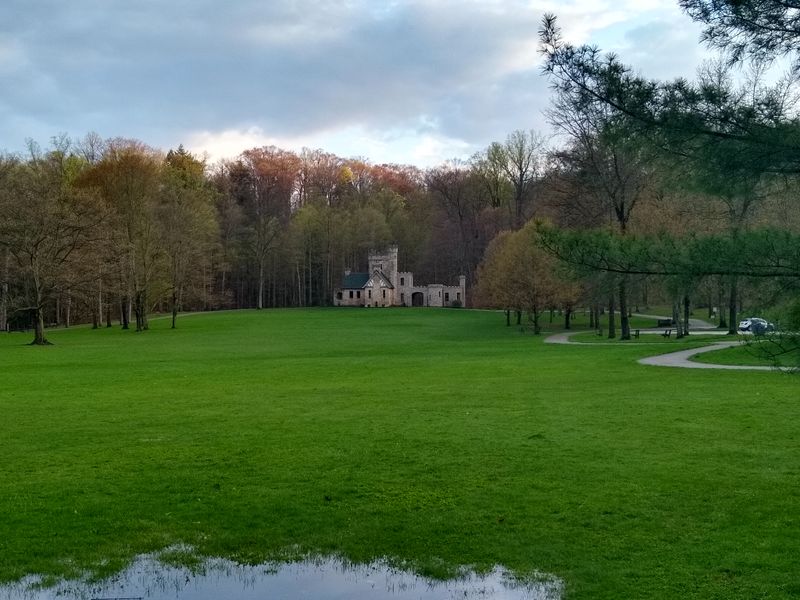
The expansive lawn stretching out in front of the castle practically begs you to spread out a blanket and stay awhile. I’ve seen families claim their spots early on nice weekends, and the space never feels crowded.
Picnic tables are scattered throughout the area if you prefer not to sit on the ground. The pavilion offers shade and shelter, making this a viable destination even when the weather gets iffy.
Clean restrooms near the parking area are a major plus. Trust me, after hiking those trails, you’ll appreciate not having to drive somewhere else for facilities.
The open field gives kids plenty of room to run around, and I’ve watched countless frisbee games unfold on sunny afternoons. Dogs on leashes are welcome, and the grassy areas provide perfect romping grounds for energetic pups.
Pack a camera along with your sandwiches because the castle provides a stunning backdrop for your picnic photos. The combination of history, nature, and recreation makes this one of Ohio’s most versatile outdoor spaces.
Free Access To History And Nature
Here’s the best part about this whole experience. You don’t pay a single penny to visit.
The castle, grounds, trails, and parking are all completely free.
The parking lot offers ample space, and I’ve never seen it completely full, even on beautiful weekend afternoons. Accessibility is straightforward, with clear signage directing you from River Road.
This makes Squire’s Castle an ideal destination for budget-conscious families or anyone looking to maximize their outdoor time without draining their wallet. You could easily spend an entire day here without spending a dime.
The Cleveland Metroparks system deserves credit for maintaining public access to this unique historical site. Many similar properties across the country charge admission or restrict access.
Operating hours run from 6 AM to 11 PM daily, giving you flexibility to visit during golden hour for photography or even experience the castle after dark. That late-night access creates an entirely different atmosphere, though I’d recommend bringing a flashlight for the walk back to your car.
The Castle After Dark Creates a Unique Atmosphere
Most people visit during daylight hours, but staying until after sunset reveals a completely different side of this place. The stone walls take on an almost ethereal quality as natural light fades.
I made the trek one October evening and found myself nearly alone on the property. The empty rooms felt more mysterious, and my footsteps echoed differently against the bare walls.
There’s something about experiencing historical spaces in darkness that amplifies their character. Your imagination fills in details that bright sunlight would wash away.
The surrounding woods come alive with night sounds, creating a soundtrack that feels both peaceful and slightly eerie. It’s the kind of experience you don’t get at your typical tourist attraction.
Safety note: while the park stays open late, bring a reliable light source for navigating back to the parking area. The paths aren’t illuminated, and tree roots can create tripping hazards.
But if you’re comfortable with a bit of darkness, this after-hours experience adds another dimension to your visit.
Informative Plaques Tell The Unfinished Story
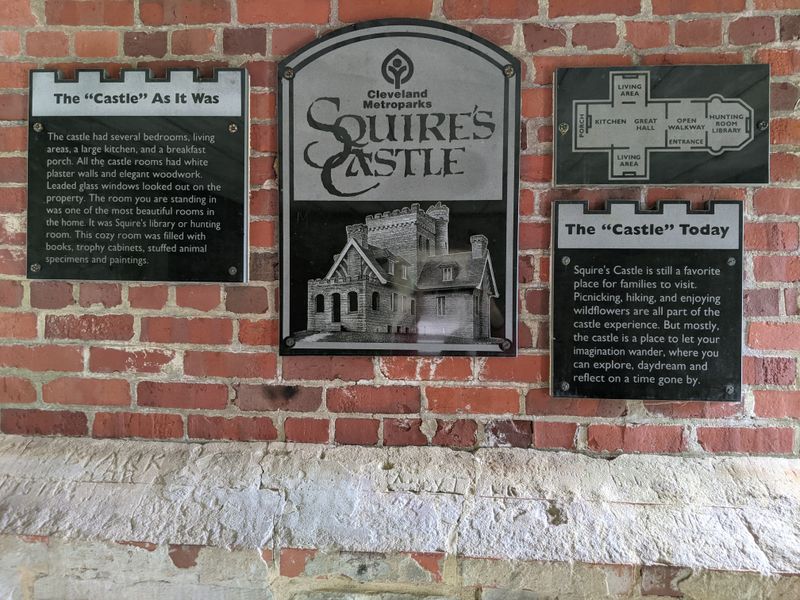
Scattered throughout the castle interior, you’ll find plaques that piece together this peculiar history. They don’t just recite dry facts but invite you to imagine what could have been.
One plaque specifically mentions that it’s up to visitor’s imagination to picture how summers might have been enjoyed on the property. I appreciate that honest acknowledgment of the gaps in the story.
The information covers Feargus Squire’s background as a Standard Oil executive and the original ambitious plans for the estate. You’ll learn about the subsequent owners and how the property eventually came under Metroparks protection.
Some visitors wish for more detailed information about the interior rooms and their original purposes. I understand that desire, though the mystery also adds to the experience.
Reading these plaques while standing in the actual spaces they describe creates a connection to the past that no museum display could replicate. Take your time with them, and let the words reshape how you see the empty rooms around you.
A Standard Oil Legacy In Stone
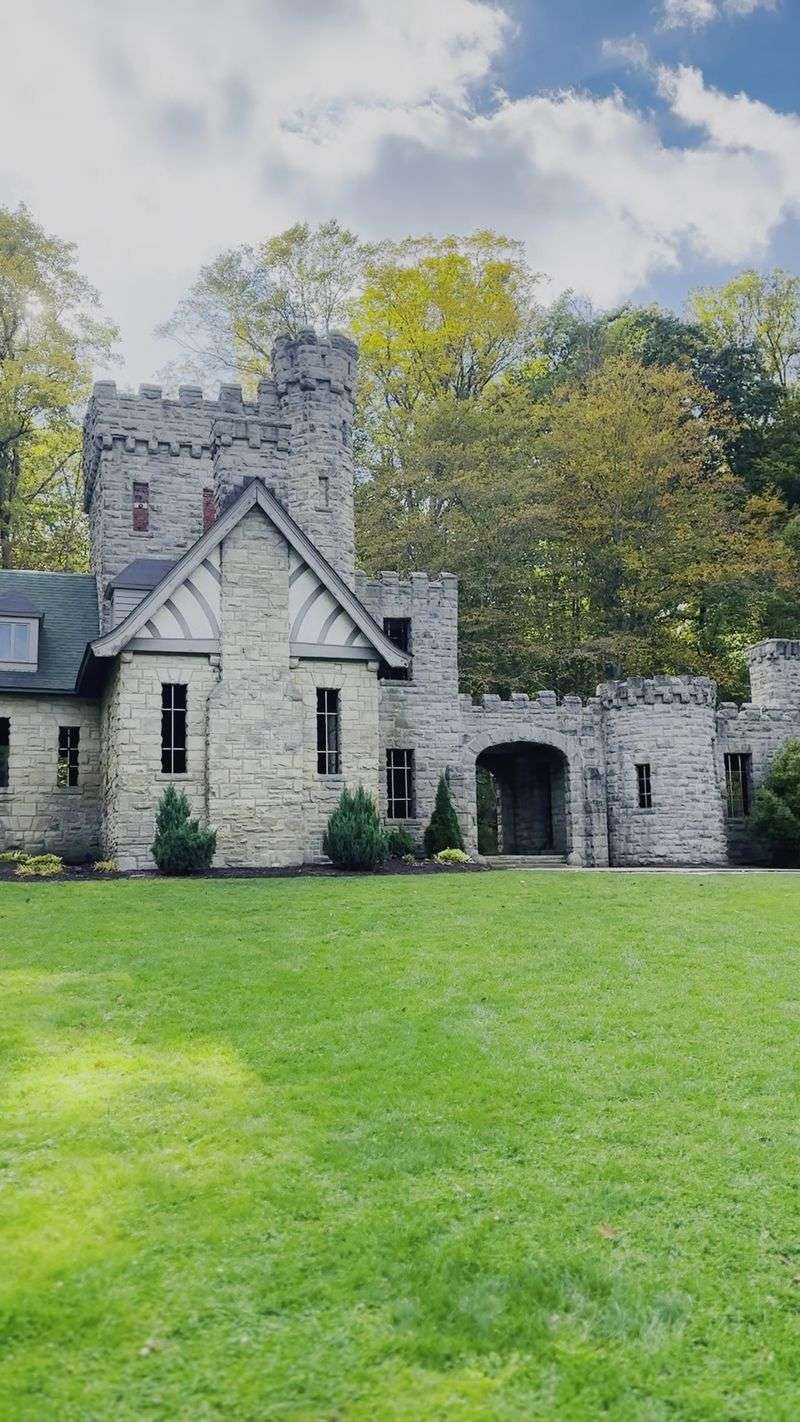
Feargus Squire wasn’t just any businessman. As a Standard Oil executive during the company’s peak, he represented the industrial wealth that transformed Cleveland into a powerhouse city.
The castle reflects that Gilded Age mentality where captains of industry built monuments to their success. Rockefeller and his associates were reshaping the American economy, and their personal ambitions matched their business aspirations.
This gatehouse alone would have cost a small fortune in 1897. The quality of stonework and attention to architectural detail speak to resources most people couldn’t imagine.
Yet even unlimited wealth couldn’t guarantee happiness or completed dreams. Squire’s wife reportedly hated the remote location, preferring city life to countryside seclusion.
Standing here today, I’m reminded that history isn’t just about great achievements but also abandoned plans and compromises. The castle serves as a three-dimensional lesson in how personal relationships and practical realities can derail even the grandest visions.
It’s a very human story told in stone.
Best Times To Visit For Different Experiences
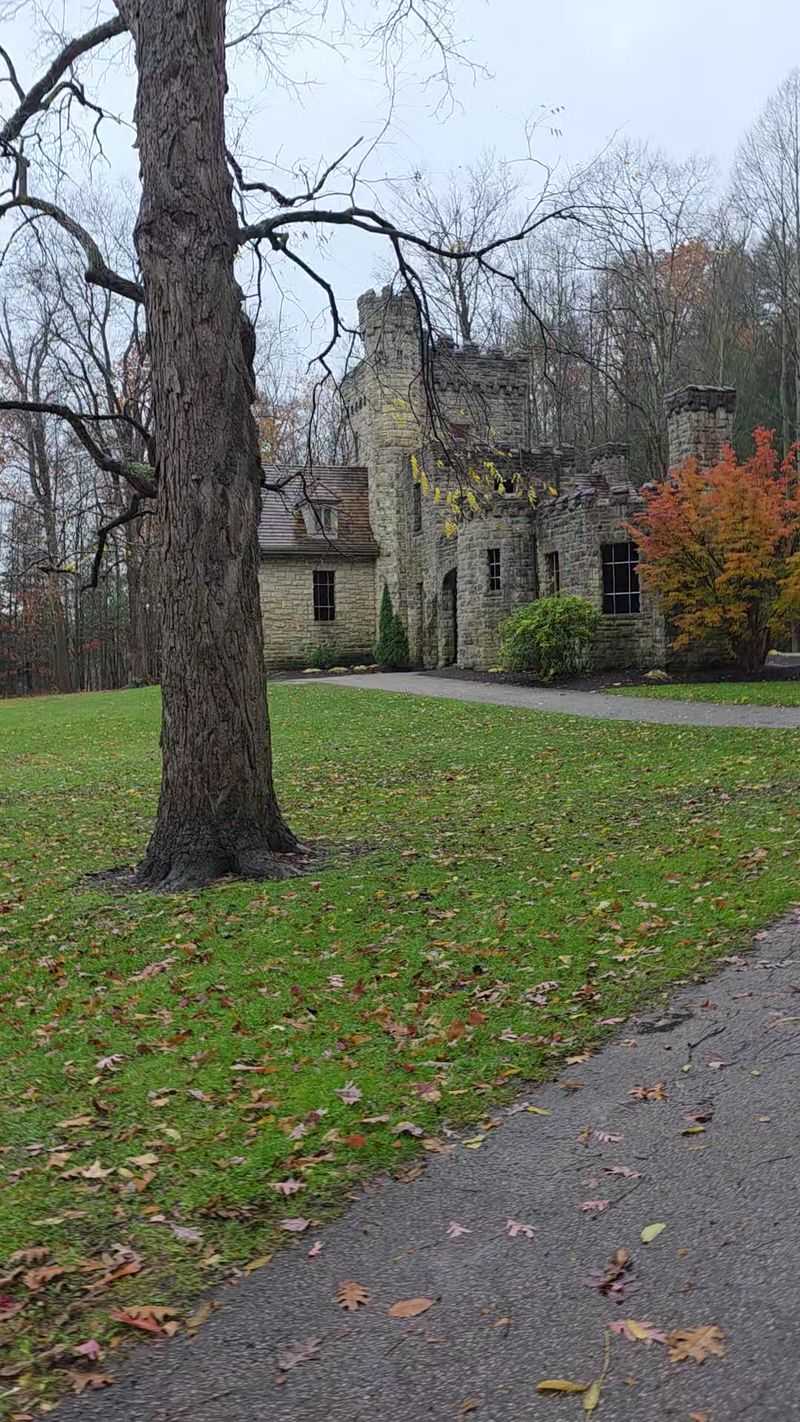
Timing your visit can dramatically change your experience. Most reviewers recommend mid-to-late October when fall colors peak, and temperatures remain comfortable.
Early morning visits, especially on weekdays, offer solitude that weekend afternoons can’t match. I arrived once around 7 AM and had the entire property to myself for over an hour.
Foggy mornings create particularly dramatic conditions. The mist clings to the stone and drifts across the lawn, making the whole scene feel transported from another era.
Spring brings its own charm with wildflowers and the fresh green of new growth. The trails are less muddy than you might expect, thanks to good maintenance and drainage.
Winter visits require proper footwear, but the reward is a completely different aesthetic. Snow transforms the castle into something from a storybook, and icicles hanging from the window openings add sculptural interest.
Just check weather conditions before heading out, as some trails can become icy and treacherous.
Connecting To Nearby Natural Attractions
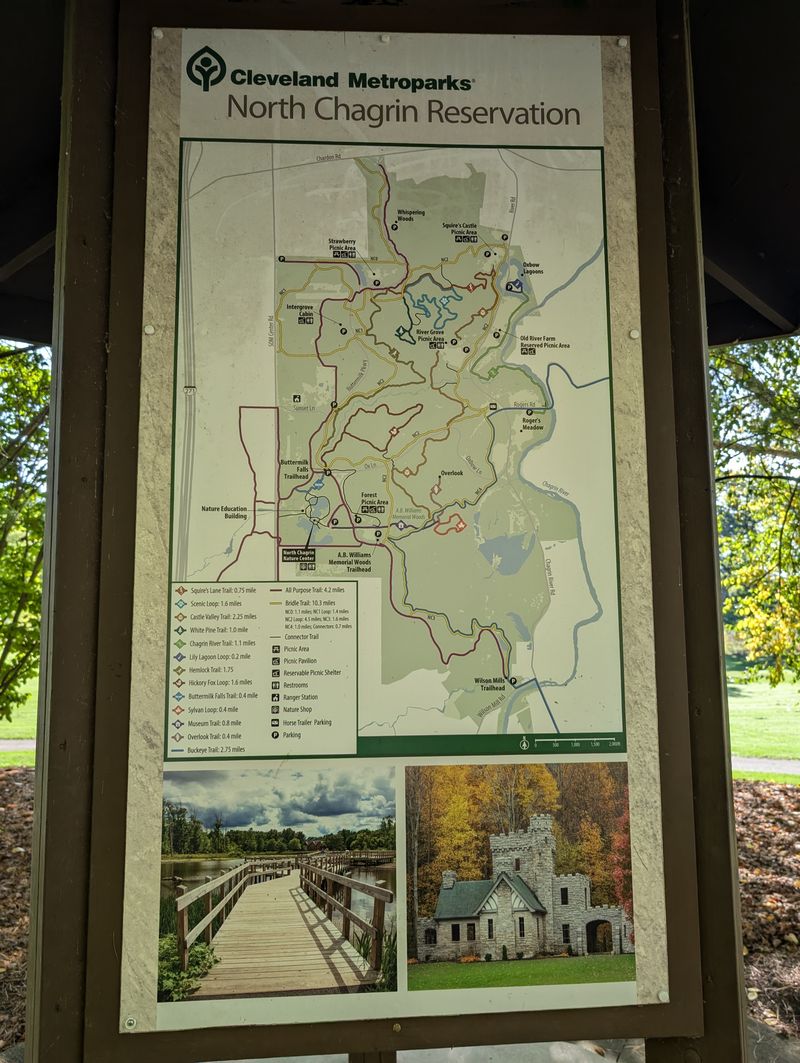
Your visit doesn’t have to end at the castle. The North Chagrin Reservation connects to a broader network of trails and natural features worth exploring.
Buttermilk Falls sits just around the corner, offering a completely different kind of natural beauty. The waterfall makes a perfect complement to the castle’s man-made architecture.
The Scenic Loop trail extends beyond the immediate castle grounds, and several intersecting paths allow you to customize your hiking distance. Some visitors tackle 2.4 miles, while others extend their adventures much further.
This area represents some of the best hiking opportunities in the greater Cleveland region. The terrain varies enough to keep things interesting without becoming overly challenging for casual hikers.
I’ve made a habit of combining castle visits with broader park exploration. Starting at Squire’s Castle and then hiking out to discover other features creates a full day of outdoor adventure.
The Cleveland Metroparks system really shines in how it preserves diverse landscapes and historical sites within easy reach of urban populations.
Why This Castle Matters To Ohio
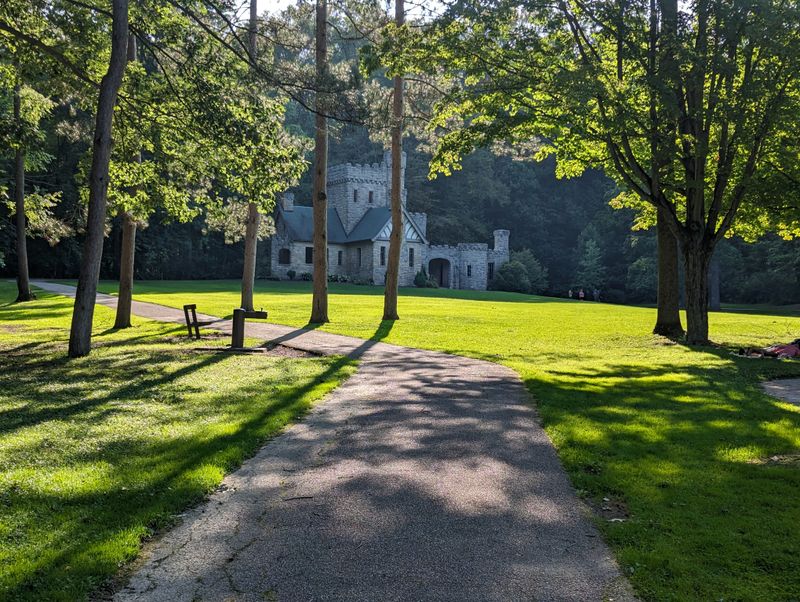
This isn’t just a quirky roadside attraction. The castle represents a specific moment in Ohio’s development when industrial wealth was reshaping the landscape.
Cleveland’s rise as a manufacturing and oil refining center created a class of wealthy executives who sought to establish themselves through grand estates. Most of those properties have been lost to development or decay.
Squire’s Castle survived partly because of its incompleteness. The lack of a main house meant less maintenance burden and fewer reasons for demolition.
The Metroparks’ decision to preserve and open this space to the public ensures that future generations can connect with this piece of regional history. It’s a tangible link to the past that photographs and documents can’t replicate.
I think the castle also matters because it tells an honest story. Not every dream succeeds, not every plan comes to fruition, and sometimes the most interesting historical artifacts are the ones that represent roads not taken.
That’s a valuable lesson wrapped in beautiful stonework and peaceful surroundings.