
This Fascinatingly Weird Museum In Michigan Feels Like A Dream For Horror Movie Fans
Stepping off a quiet downtown Monroe sidewalk into this space feels like the air suddenly dropped ten degrees and turned thick with the scent of old paper and copper. You’ll find yourself inches away from movie props that fueled your childhood nightmares, dusty Ouija boards that look like they have secrets to spill, and human remains displayed with a stark, fascinating clinicality.
It’s a sensory overload of the “is that real?” variety, where every corner smells faintly of history and woodsmoke. As one of the most unique roadside attractions in the Midwest, this Michigan horror museum is a premier destination for fans of true crime memorabilia, haunted artifacts, and dark history.
The reviews are a polarized mix of wide-eyed awe and genuine psychological overload, which, frankly, is the highest compliment you can give a shrine to the strange. For ten bucks, the staff, who live and breathe the eerie, will walk you through the darkest corners of their collection.
Entering The Threshold
The doorway on South Monroe feels unassuming, which makes the first step inside hit even harder. Dim red lighting softens the glass reflections of the display cases, and a low, atmospheric soundtrack sets a steady pulse that follows you through the rooms.
It reads like a cinematic prologue, hinting at two floors packed with objects that reward the patient and observant eye.
History whispers through handwritten placards, some more informative than others, giving the entire collection a deeply personal touch. You quickly realize this is not a corporate attraction, it is part private cabinet of wonders and part community museum curated by people who genuinely care about preserving the peculiar.
Visitors often glance at each other in the dim light, silently deciding if they are in for a thrill or a deeper philosophical pause.
To make the most of your visit, try to arrive close to opening on a weekday to navigate the narrow aisles more freely. Photography is welcome, so pace yourself and frame your shots thoughtfully to capture the mood.
How To Find It
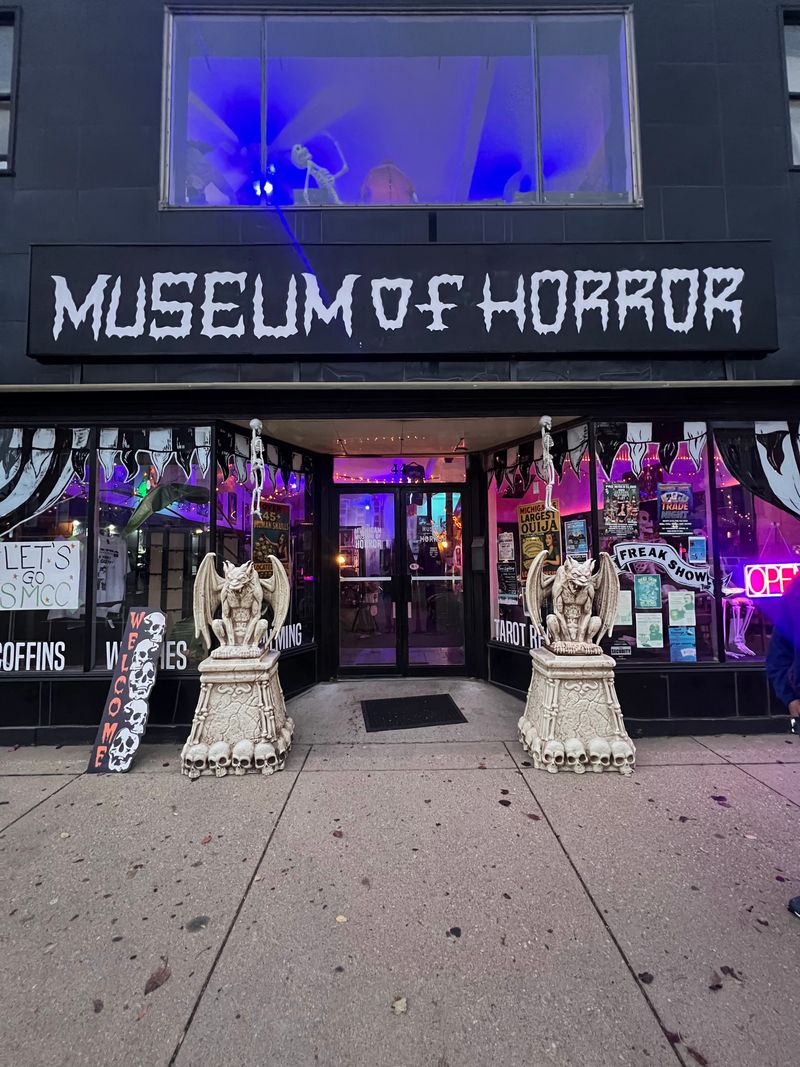
To visit the Michigan Museum of Horror at 44 S Monroe St, Monroe, MI 48161, you can take a straightforward route via I-75. If you are traveling from the north, such as from Detroit, take Exit 15 for Dixie Highway and turn right, following it as it transitions into East Front Street. From there, you will make a right turn onto South Monroe Street to find the museum located right in the heart of the historic downtown district.
If you are coming from the south or the Toledo area, you can take Exit 11 for LaPlaisance Road, turning left to follow it toward East Sixth Street. After making a left on Sixth, a quick right onto South Monroe Street will lead you directly to the destination.
The museum is housed in a prominent two-story building near the intersection of Front Street, situated conveniently across from the Monroe County Museum and the scenic River Raisin. You can typically find available spots in the public lots located just behind the main storefronts or utilize the metered street parking along Monroe Street and the adjacent side roads.
Vibe Of The First Floor
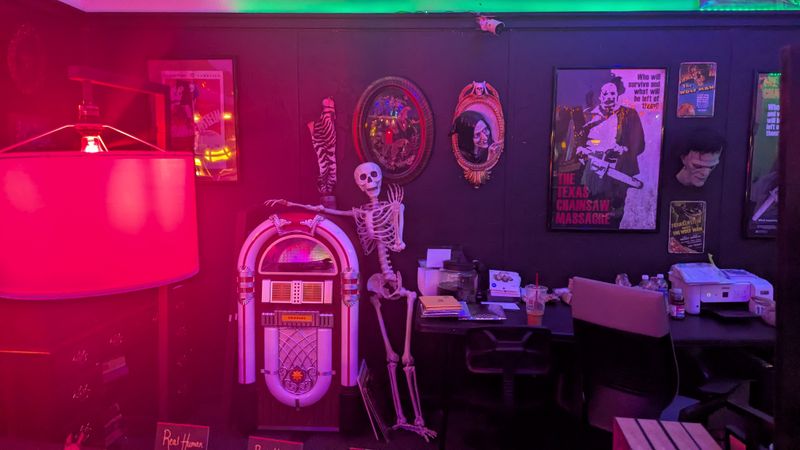
Low light, crimson accents, and that specific hush people adopt in strange places shape the mood of the ground level. Here, biological oddities sit close to true crime displays and preserved specimens.
You immediately sense that the space is compact, which means the minute details of each jar and frame matter far more than the actual square footage.
There is a clear lineage here to the great American dime museums and roadside freak show collections of the past, but the vibe tilts toward something more intentional and educational. The staff is famously friendly and forthright, always open to answering questions about the more baffling items.
While some signage is brief, the cumulative effect becomes a massive collage of American fears and fascinations.
If you are sensory sensitive, it is a good idea to carry ear protection, as some visitors have noted occasional loud moments or jump scare soundtracks that can startle the unsuspecting.
Architecture And Flow
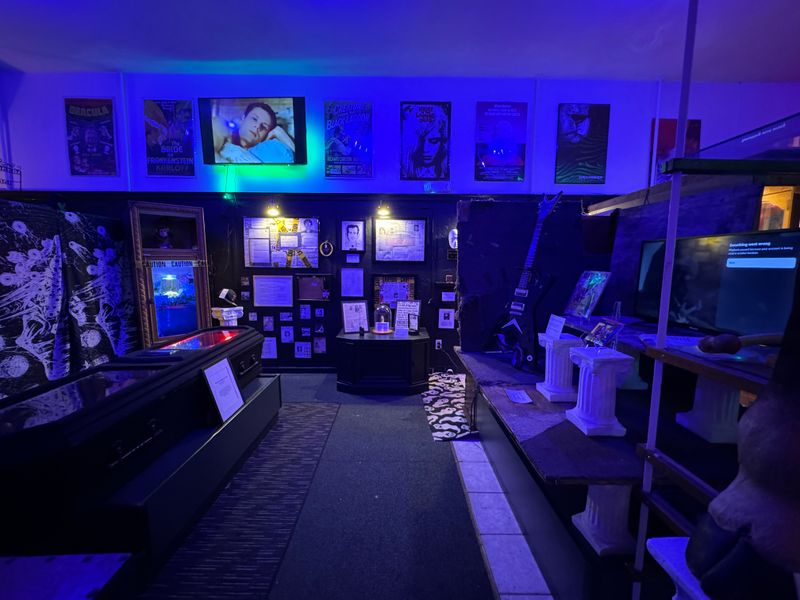
The narrow storefront bones of this historic building dictate your path, a straight shot toward the back, a sharp turn, then a climb up the stairs. Display cases hug the walls tightly, leaving slim corridors that magnify the energy of the crowd.
The layout favors short, intense bursts of attention rather than long, contemplative stares.
Historically, buildings like this anchored the walkable commercial blocks of Michigan’s small towns. The museum leans into that intimate scale, compressing a massive spectacle into a human sized route.
These architectural constraints become curatorial choices, forcing you to get up close and personal with the artifacts.
To avoid weekend bottlenecks, aim for a midweek visit shortly after the noon opening. I recommend looping the floors twice, reversing direction the second time to catch subtle details you likely missed.
The Ephemera
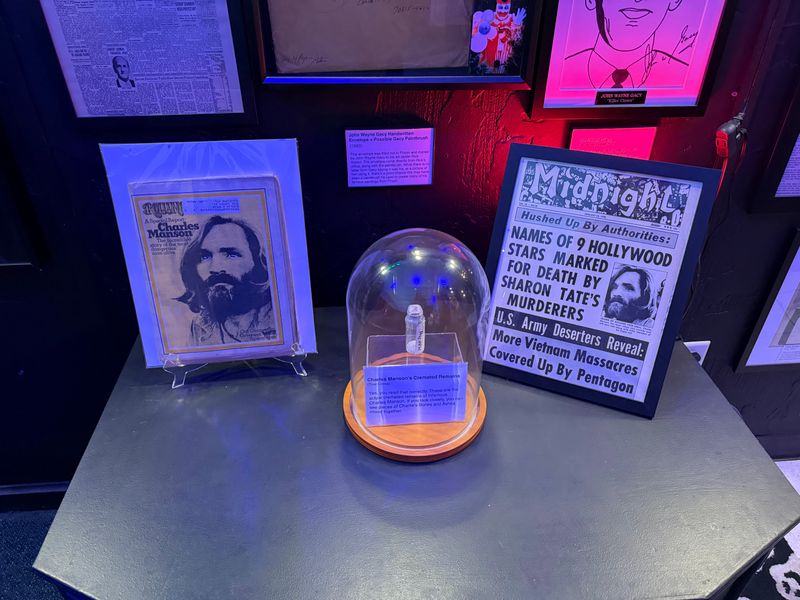
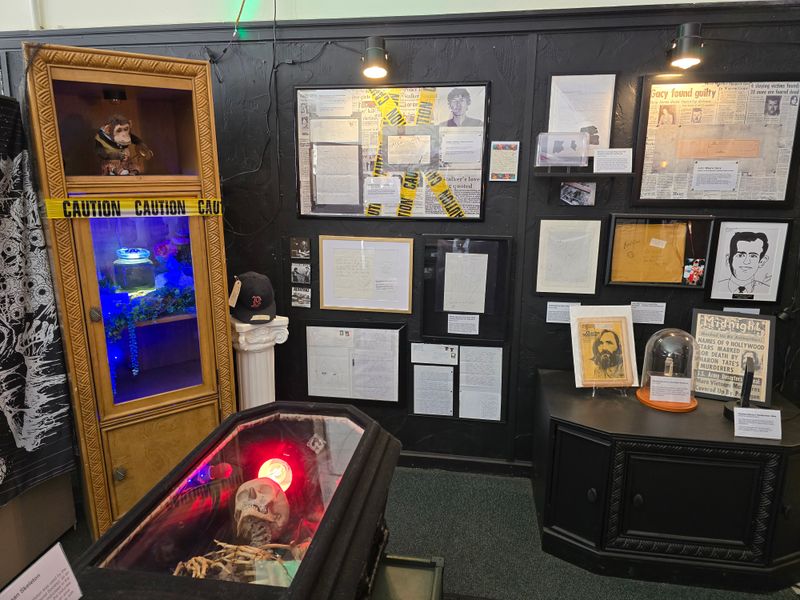
Letters, newspaper clippings, and personal artifacts tied to some of history’s most infamous names sit under glass, pulled from a culture that remains both obsessed and unsettled by these figures. The materials feel raw because they are uncomfortably close to real people and real pain.
Your heartbeat may quicken as you lean in, which is both the point of the exhibit and the ethical puzzle it presents.
The historical thread touches the modern phenomenon of true crime fandom. It is an uneasy fact that belongs in any honest museum dedicated to horror, because it teaches us as much about the audience as about the perpetrators.
Approach these displays at your own comfort level and remember it is perfectly fine to skip sections that feel too heavy.
If visiting with teenagers, preview the room first before deciding if they should enter. Take photos for later reflection rather than for shock value.
Human Remains And Oddities
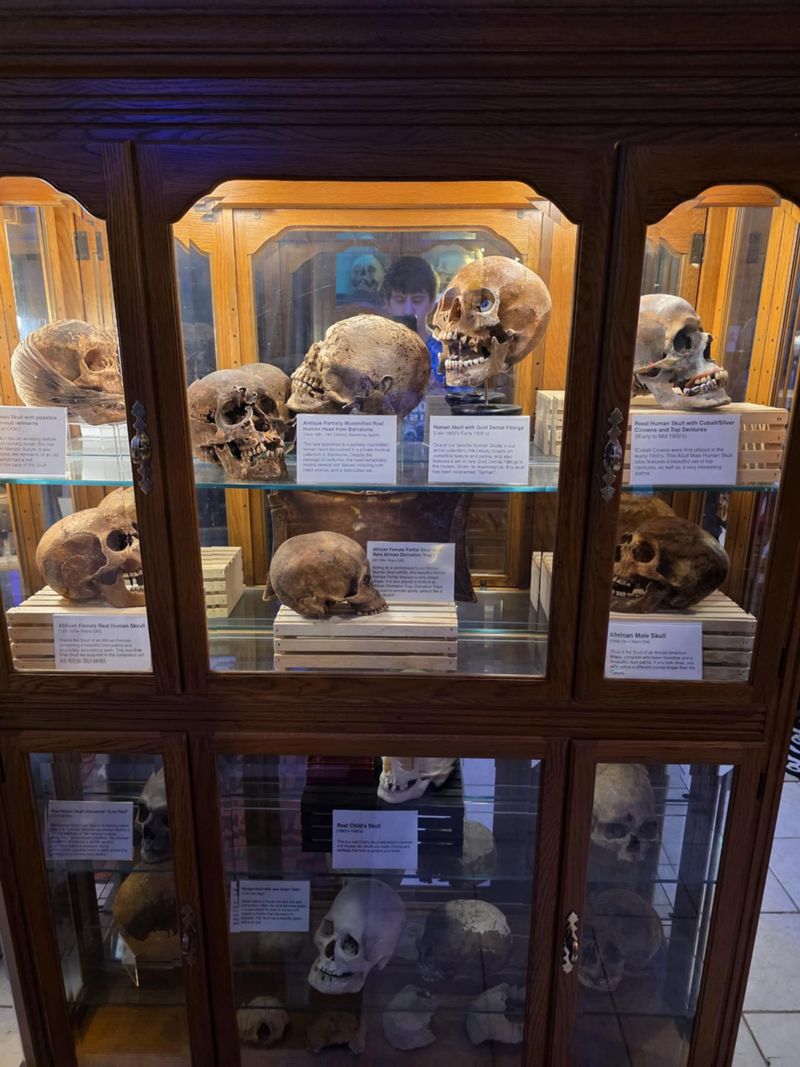
A row of authentic human skulls grounds the collection, providing the kind of heavy presence that usually makes idle chatter stop. The textures of bone become the real lesson, delicate cranial sutures, the wear of time, and occasional medical annotations.
It is not presented theatrically, instead it feels humbling, a stark reminder that bones are often what outlast our stories.
Historically, traditional cabinets of curiosity mixed science with spectacle, and this display echoes that centuries old lineage. The effect lands differently for everyone, and having a visceral reaction or sensitivity is entirely valid.
Move slowly and remember the golden rule, never touch the cases. If anatomy is unfamiliar territory, read every label twice to understand the context. If emotions spike, step outside for fresh air before reentering.
Upstairs: Ouija And Boards
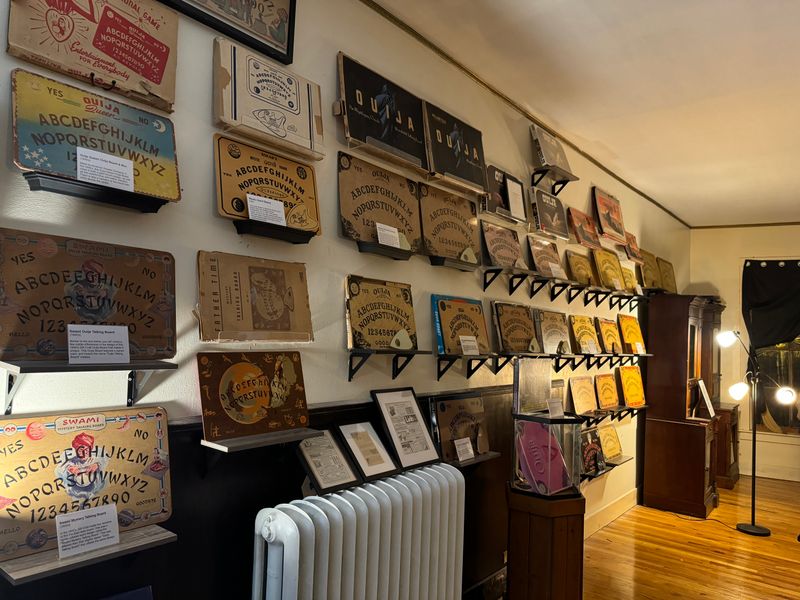
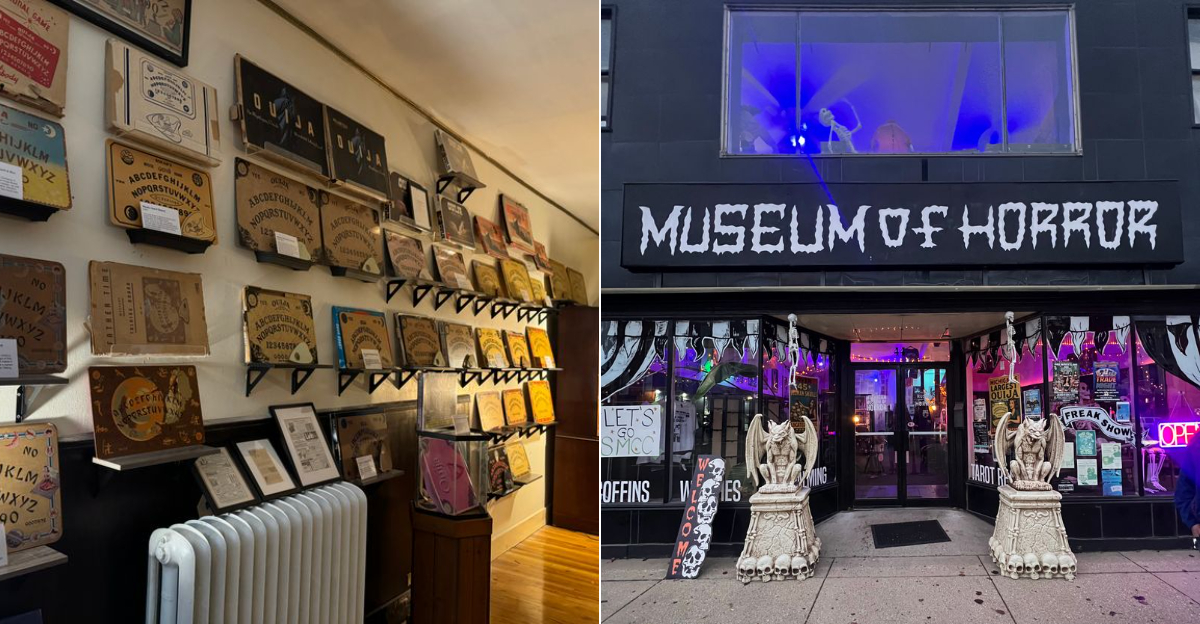
The staircase opens into a world of vintage typography and occult talismans. Rows of Ouija boards from different decades feature fonts that carry the distinct aesthetics of their eras.
Wood grain, aged cardboard patina, and the elegant curves of planchettes create an unexpected warmth and nostalgia.
Spirit boards flourished in late nineteenth century American parlors as a folk technology bridging grief and curiosity. That domestic past lingers in the display’s home scale, making this section feel more about cultural memory than jump scares.
This is an excellent place for close up photos of unique typefaces and brand marks.
If you enjoy regional history, ask whether any boards came from Michigan makers. Compare layouts and notice how superstition often rides on graphic design choices.
Horror Movie Props And Posters
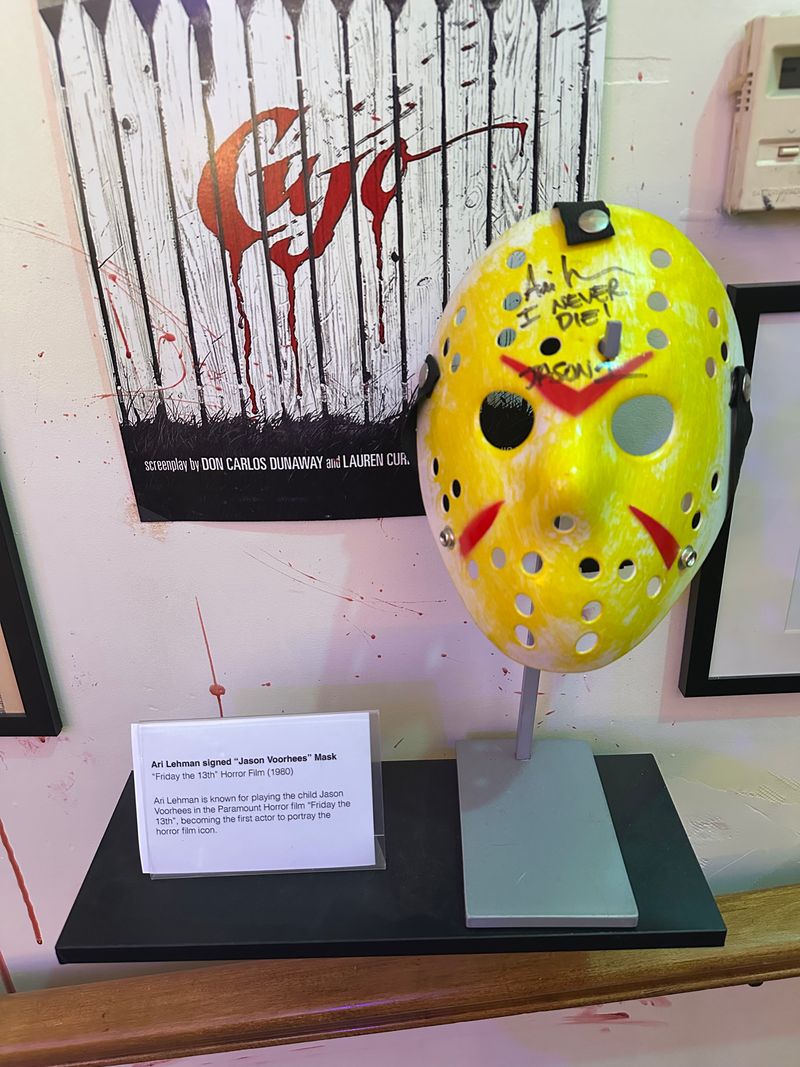
Masks, props, and original one sheets gather like a backstage tour paused mid breath. Some pieces feel instantly familiar, triggering recognition that long time fans crave.
Seeing them in person reveals the craft behind the illusion, foam, latex, hand applied paint, and practical effects.
Movie horror is collaborative history, and even a single mask becomes a tribute to sculptors, painters, and grips who brought it to life. Displayed away from the screen, these items read as handmade artworks.
Ask which props are new to the collection, since the upstairs inventory rotates.
For better photos, angle your shot to reduce glare from the glass. If the room gets crowded, circle back later for a quieter look at the build techniques.
The Controversial Crime Room
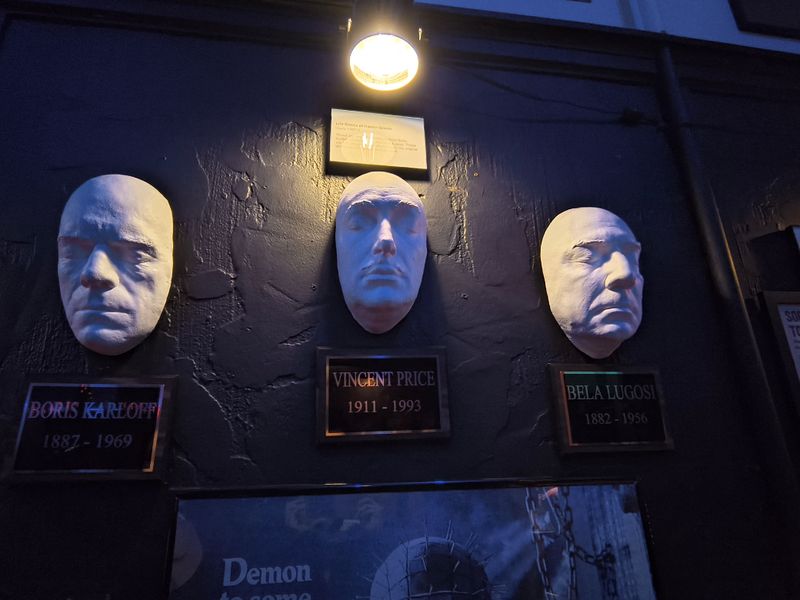
A curtained area at the back of the second floor carries a plain, direct warning, and it certainly means what it says. Inside are graphic crime scene materials that several visitors have found to be deeply overwhelming.
The atmosphere in this specific corner gets dense, and even seasoned true crime followers might find themselves feeling a bit queasy or unsettled.
Museums that tackle the reality of violence must always weigh documentation against human dignity. At The Michigan Museum Of Horror, this balance will not suit every guest, and you can see that honest dissent reflected in public reviews.
That ongoing discourse is essentially part of the exhibit’s meaning, whether the curators intended it or not.
Heed the content warnings strictly. Only enter if you feel fully informed, and do not hesitate to step out the very second your body tells you no. If you are with a group, establish a meeting spot outside the room beforehand so nobody feels pressured to stay longer than they should.
Hosts, Guides, And Small Talk Lore
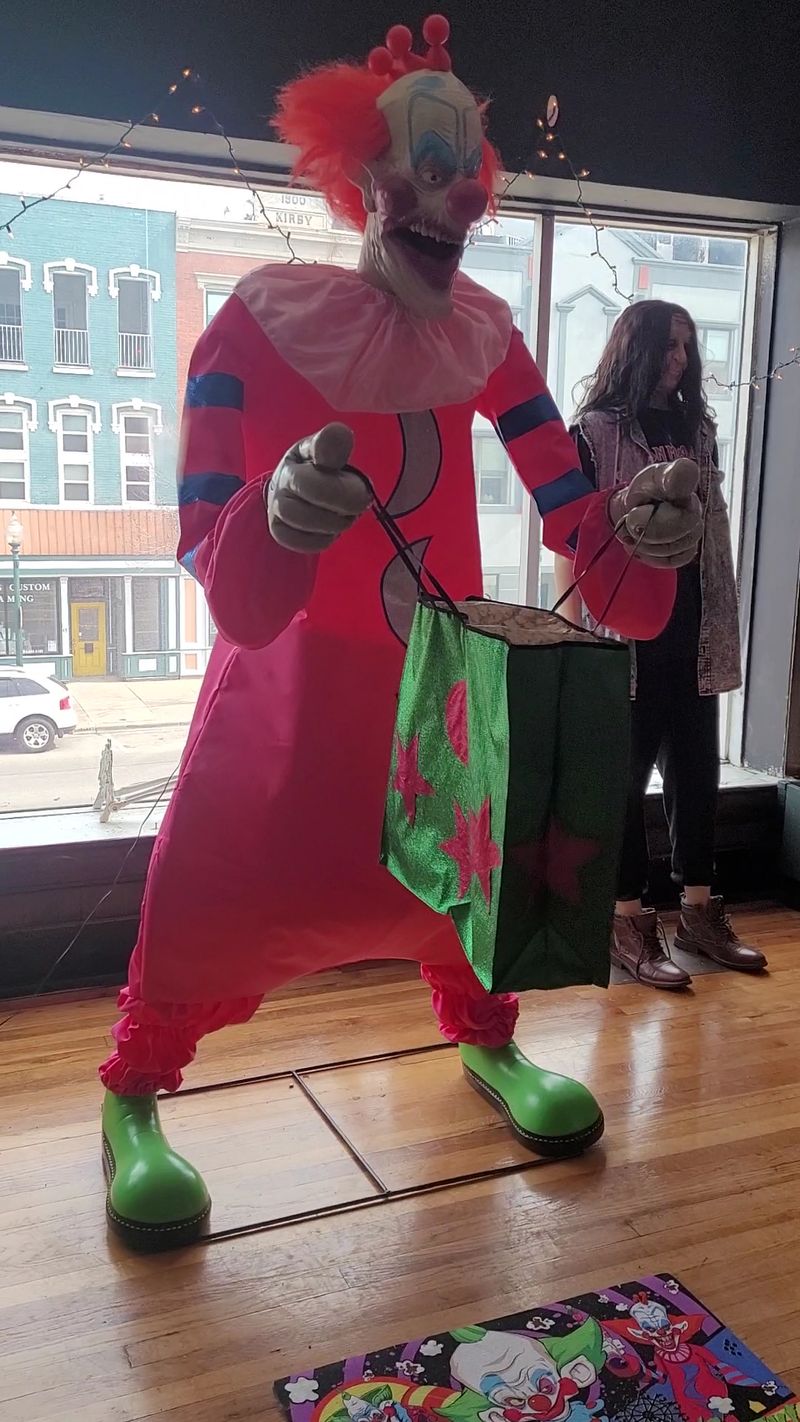
The front desk here often doubles as a tiny oracle for the local area. The staffers are passionate and eager to share how specific pieces arrived at the museum, what has been moved, and how certain displays continue to evolve.
That conversational context is invaluable, especially in areas where the written labels are brief and leave room for interpretation.
Monroe’s downtown rhythm filters into the building through the steady stream of regulars and curious day trippers. You quickly sense a bit of local pride in keeping the unusual alive on this modest street. The museum often feels like a labor of love, a family project scaled perfectly for the community that surrounds it.
Feel free to ask specific questions about the provenance or the care routines for the artifacts, because the staff usually enjoys going into detail. Buying your tickets online can ensure a quick entry, but you should linger to chat once the queue clears and the pace relaxes.
If a staff member offers a walkthrough, join in to get the connective tissue that you simply will not find inside the cases.
Logistics, Hours, And Pace
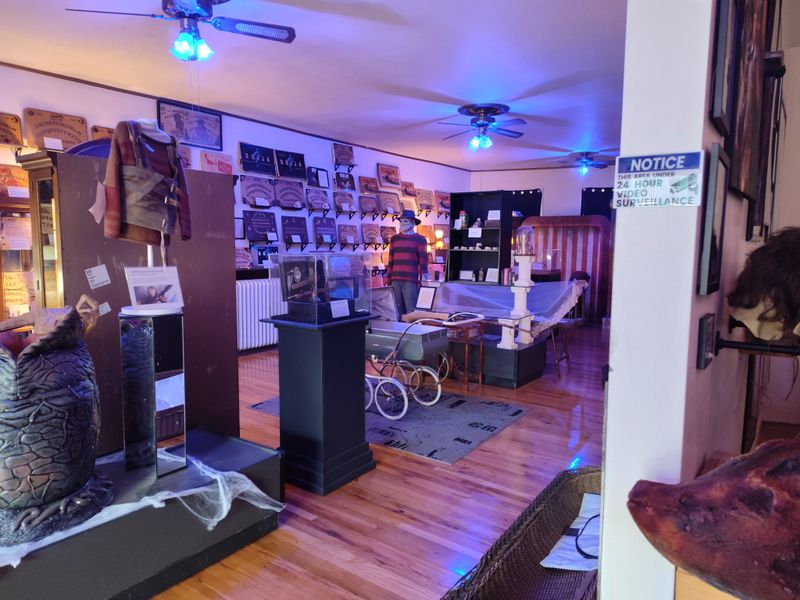
Keeping the practicalities in mind ensures a smooth experience from the moment you arrive downtown. The museum typically opens Wednesday through Sunday, generally from noon until the evening, with later hours on Friday and Saturday.
Admission usually hovers around ten dollars, which is a very fair price that encourages curiosity without putting pressure on your budget. Free public parking is available just a short walk away in the surrounding downtown area, which makes the visit easy to plan.
Local culture in Monroe expects a casual pace and generous photo taking, so you should not feel rushed as you move through the rooms.
People tend to arrive in pairs, whispering and pointing as they drift slowly from case to case, letting the mood guide their tempo. Plan to spend between forty five and seventy five minutes inside, or even longer if you intend to read every single information card carefully.
If the ambient noise of the museum becomes too much, headphones can be a lifesaver and help you regulate the intensity.
Always double check the website before you make the trip, because hours can occasionally shift with seasonal changes or special events. I recommend doing a second loop upstairs just before you leave so you can catch those final, quieter moments before the museum closes for the night.