
A 32-Mile Bike Trail In Florida Follows An Old Railroad Through Four Small Towns
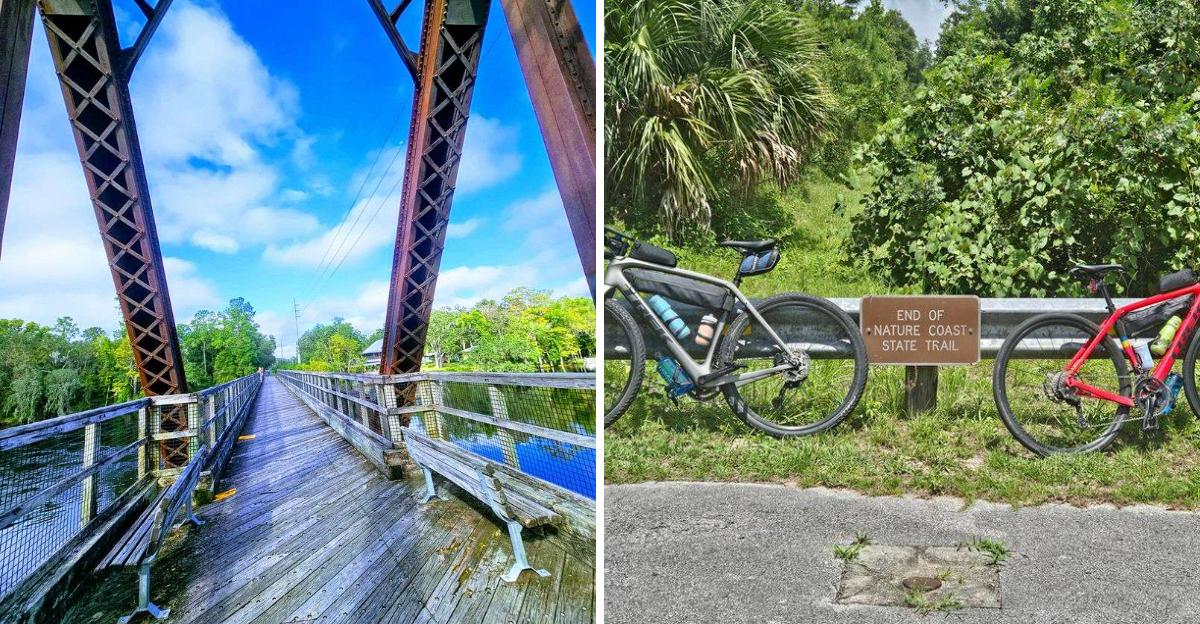
What if one of the most peaceful rides in Florida followed a path built for something far louder? No engines.
No whistles. Just the steady rhythm of pedaling where steel and freight once ruled.
This trail moves through quiet Florida landscapes that feel untouched by hurry. Moss hangs overhead like curtains.
Trees lean in close. The ground stays smooth and forgiving, inviting you to relax instead of brace yourself.
Ever notice how some places seem to slow your thoughts the moment you arrive? This is one of them.
As you ride, small towns appear naturally, each carrying its own personality and history. Nothing feels staged.
Nothing feels rushed. The trail simply connects stories, nature, and movement in a way that feels deeply intentional.
It is Old Florida revealed mile by mile, where the clatter of trains has been replaced by birdsong and spinning wheels.
This is not just a bike ride. It is Florida remembering who it was, and inviting you along for the journey.
Fanning Springs Starting Point
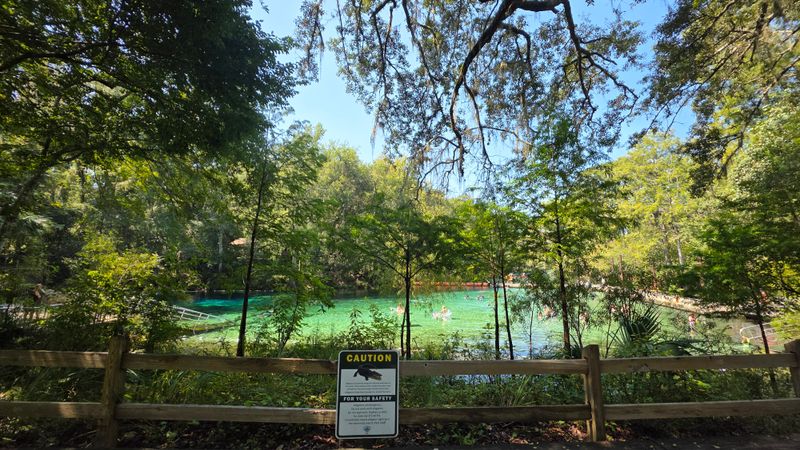
Starting my ride at the northern terminus near Fanning Springs, I couldn’t help but notice how the trail immediately sets a peaceful tone. The trailhead sits near Fanning Springs State Park at 18020 NW US Highway 19 in Fanning Springs, Florida, where the crystal-clear spring waters bubble up at a constant 72 degrees year-round.
Parking here gives you quick access to both the trail and the spring, though I recommend starting early to beat the heat during summer months. The first few miles heading south take you through dense hardwood hammocks where the canopy creates natural shade tunnels.
I noticed the trail surface here is exceptionally well-maintained, with smooth asphalt that makes for easy rolling even on a road bike. Local cyclists told me this section sees the most traffic, especially on weekends when families from Gainesville and Chiefland come out for leisurely rides.
Wildlife sightings are common in the early morning, with deer, wild turkeys, and countless bird species making appearances along the corridor. The gradual transition from springs area to rural farmland happens so smoothly you barely notice you’re leaving civilization behind.
Old Railroad Heritage
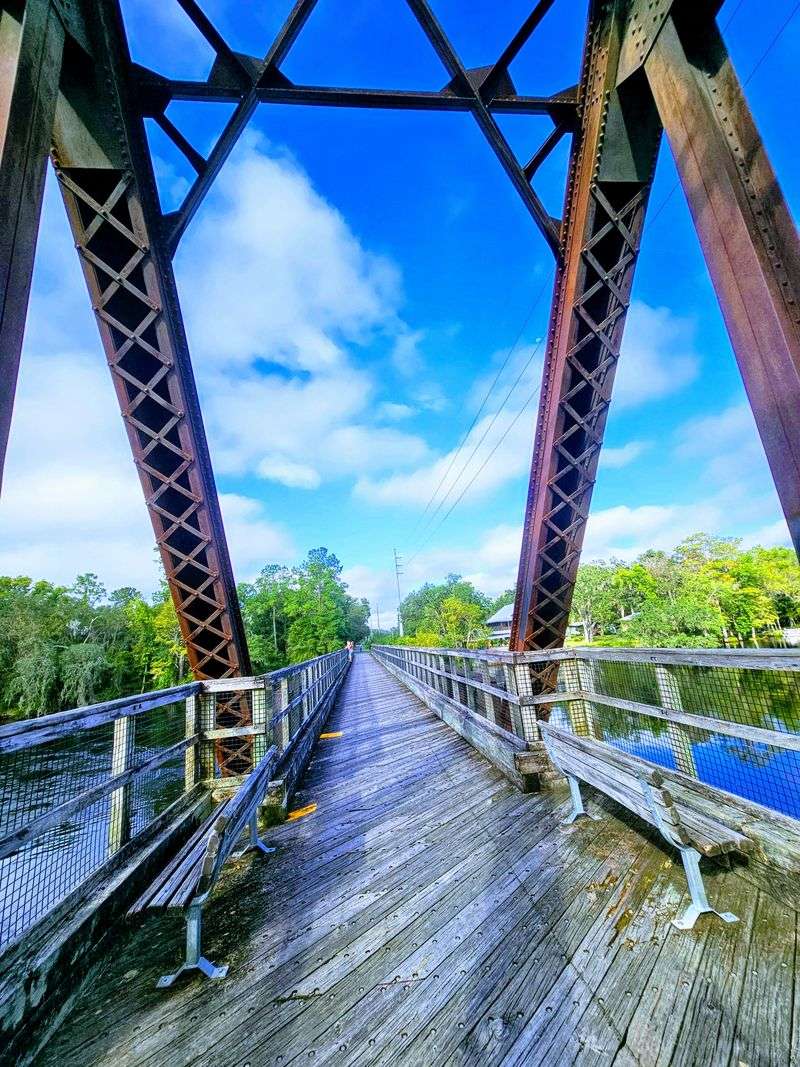
Riding along the trail, I kept spotting remnants of its railroad past tucked into the landscape. The Florida Railroad Company laid these tracks in the late 1800s, hauling timber, turpentine, and naval stores from the interior forests to Gulf ports.
Old railroad mile markers still stand at intervals, their weathered numbers telling stories of a time when steam locomotives rumbled through these same corridors. I stopped at one particularly well-preserved marker and imagined the conductors who once used it to track their progress toward Cross City.
The trail’s conversion happened in the 1990s after the railroad ceased operations, and planners wisely chose to preserve the original corridor rather than let it disappear into development. That decision means modern cyclists enjoy the same gentle grades and strategic routing that railroad engineers carefully planned over a century ago.
Several interpretive signs along the way explain the railroad’s role in opening up this remote region to commerce and settlement. I found these historical touchpoints added depth to what could have been just another bike ride, connecting me to the generations who traveled this route before pedal power replaced steam power.
Trenton’s Small Town Charm
Coasting into Trenton about 8 miles south of Fanning Springs, I discovered a town that embraces its trail-side location. Main Street crosses directly over the trail, creating a natural meeting point where riders can easily access local businesses for water, snacks, or a real meal.
The town’s compact downtown features several locally-owned shops and cafes that have learned to cater to the steady stream of cyclists passing through. I stopped at a small convenience store where the owner kept a bike pump and patch kit behind the counter for riders in need.
Trenton serves as the Gilchrist County seat, and its courthouse stands as an architectural anchor just blocks from the trail. The town maintains a slower pace than you’ll find in bigger cities, with friendly waves from porches and genuine interest in where you’re headed.
I noticed several historical markers around town explaining Trenton’s founding and its connection to the railroad that once brought prosperity to the area. Taking a short detour off the trail to explore the residential streets reveals classic Florida Cracker-style homes with wide porches designed for the humid climate, offering a glimpse into architectural traditions that predate air conditioning.
Bell’s Rural Landscape
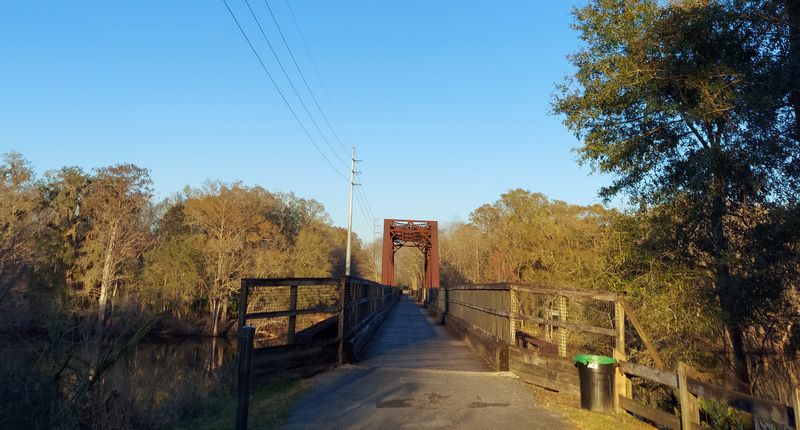
Continuing south past Trenton, the trail enters some of its most rural stretches as you approach the tiny community of Bell. Open cattle pastures replace the forest canopy, and the Florida sky suddenly feels enormous overhead.
Bell itself is barely more than a handful of buildings clustered near the trail crossing, but I found its simplicity refreshing after miles of pedaling. A small park with picnic tables provides a perfect spot to rest and refuel before tackling the remaining miles.
The landscape here reveals the agricultural heart of Levy County, where cattle ranching and timber remain important industries. I watched a cattle egret following a tractor across a field, a timeless scene that could have happened fifty years ago or yesterday.
This section of trail offers the least shade, so I learned to plan accordingly with extra water and sun protection during warmer months. The flatness that made this route ideal for railroads also makes it perfect for cycling, with barely a hill to challenge your legs.
Local residents in Bell have embraced the trail as a community asset, maintaining the crossing areas and keeping the adjacent properties neat. That civic pride shows in small touches like flower plantings and freshly painted trail markers.
Old Town’s Waterside Setting
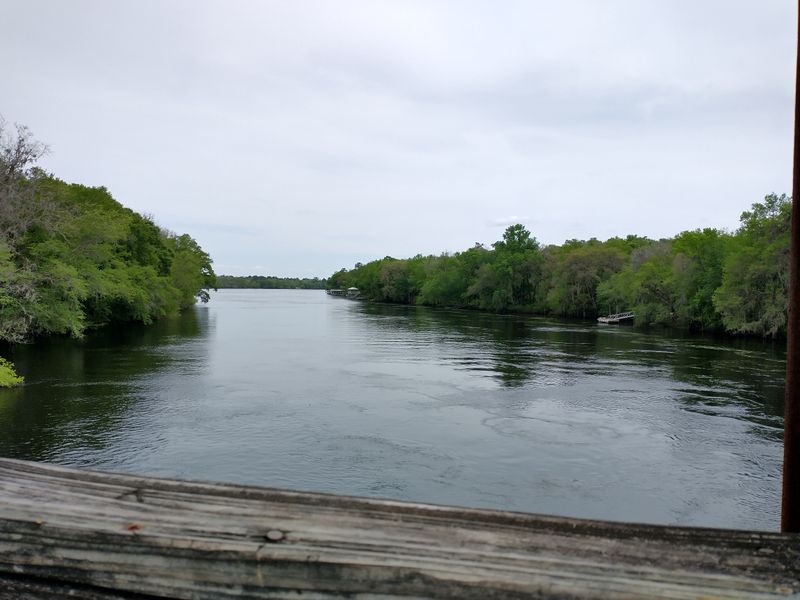
Approaching Old Town, the landscape shifts again as you near the Suwannee River’s influence. Spanish moss grows thicker on the oaks, and the air carries a hint of the tidal waters that connect this area to the Gulf of Mexico.
Old Town marks another historic railroad stop, and its location near the Suwannee River made it an important transfer point for goods heading to coastal markets. The trail passes right through the heart of this small community, giving riders easy access to local amenities.
I found the river proximity adds a different character to this section, with fishing camps and boat launches visible from the trail. Wildlife becomes more diverse here too, with wading birds and occasional alligator sightings in the drainage ditches paralleling the path.
The town maintains several parks near the trail, and I noticed locals using the path for evening walks and bike rides, treating it as an extension of their community space rather than just a pass-through route. Old Town’s slower pace and waterside setting make it worth a longer stop if your schedule allows.
From here, the final stretch to Cross City covers the trail’s most southern miles, gradually bringing you closer to the Gulf coastal plain.
Cross City Southern Terminus
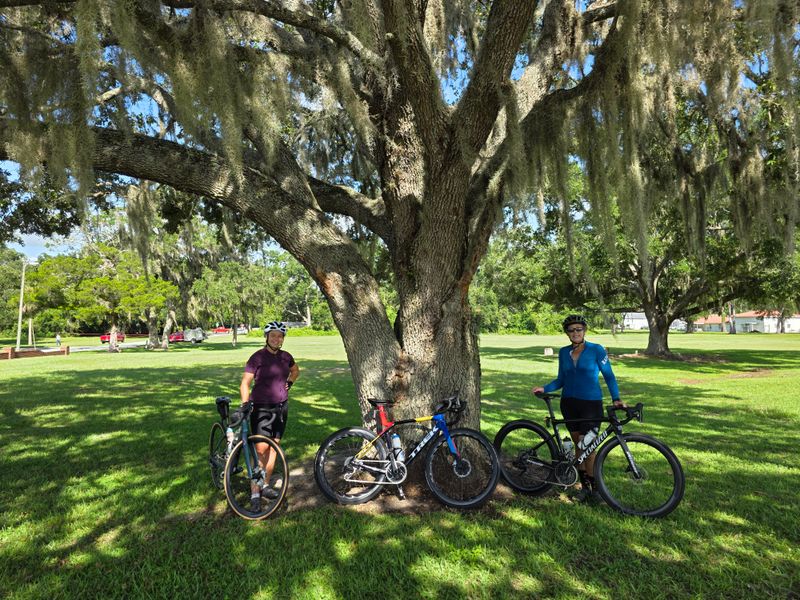
Reaching Cross City at the trail’s southern end, I felt the satisfaction of completing the full 32-mile journey. The terminus sits near the intersection of US Highway 19 and State Road 351, providing easy access for riders who want to start from the southern end.
Cross City serves as the Dixie County seat and offers the most services of any town along the trail, including restaurants, lodging, and bike shops for any mechanical needs. The town’s layout reflects its railroad origins, with streets running perpendicular to the old rail corridor.
I discovered that Cross City makes an excellent base for exploring the Nature Coast region, with the trail providing a car-free route north and the Gulf of Mexico just a short drive west. Several local outfitters offer shuttle services for riders who want to do one-way trips without arranging car logistics.
The trail’s completion here connects to the larger Florida trail network vision, with plans to eventually link this route to other rail-trails and bike paths across the state. Standing at the southern trailhead, I appreciated how this converted railroad serves its communities just as effectively now as it did a century ago, just moving people instead of freight.
Trail Riding Tips and Seasons
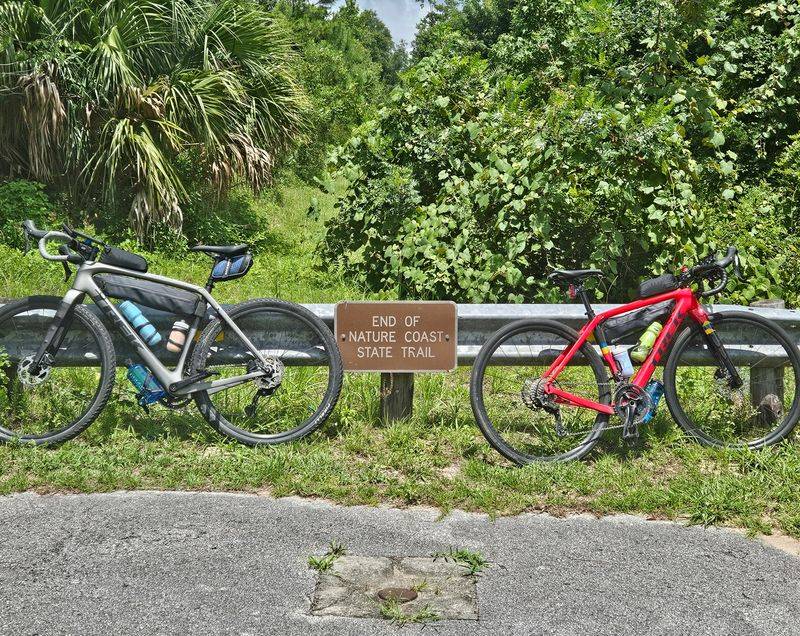
Planning your ride on the Nature Coast State Trail requires thinking about Florida’s distinct seasons and the trail’s rural setting. I learned that fall through spring offers the most comfortable riding conditions, with temperatures ranging from the 60s to 80s and lower humidity than summer months.
Summer riding is possible but demands early starts before the heat peaks, along with plenty of water since services are spaced miles apart. I always carry at least two full water bottles and snacks because the stretches between towns can feel long when you’re battling heat.
The trail’s paved surface handles well in most weather, though afternoon thunderstorms during summer can roll in quickly, so checking forecasts before heading out is smart. I’ve found that starting from either end and riding to the midpoint, then returning, gives you flexibility to adjust distance based on conditions.
Wildlife is most active during dawn and dusk, making those times ideal for nature watching but requiring extra attention for animals crossing the trail. The flat terrain means riders of all fitness levels can complete long distances, though the lack of elevation change means you’ll want to pace yourself rather than relying on downhills for rest.
Local bike shops in Chiefland and Cross City can provide trail updates, maps, and any last-minute supplies you might need before starting your adventure.