
This Secret Japanese Garden In Illinois Will Take You To Another World
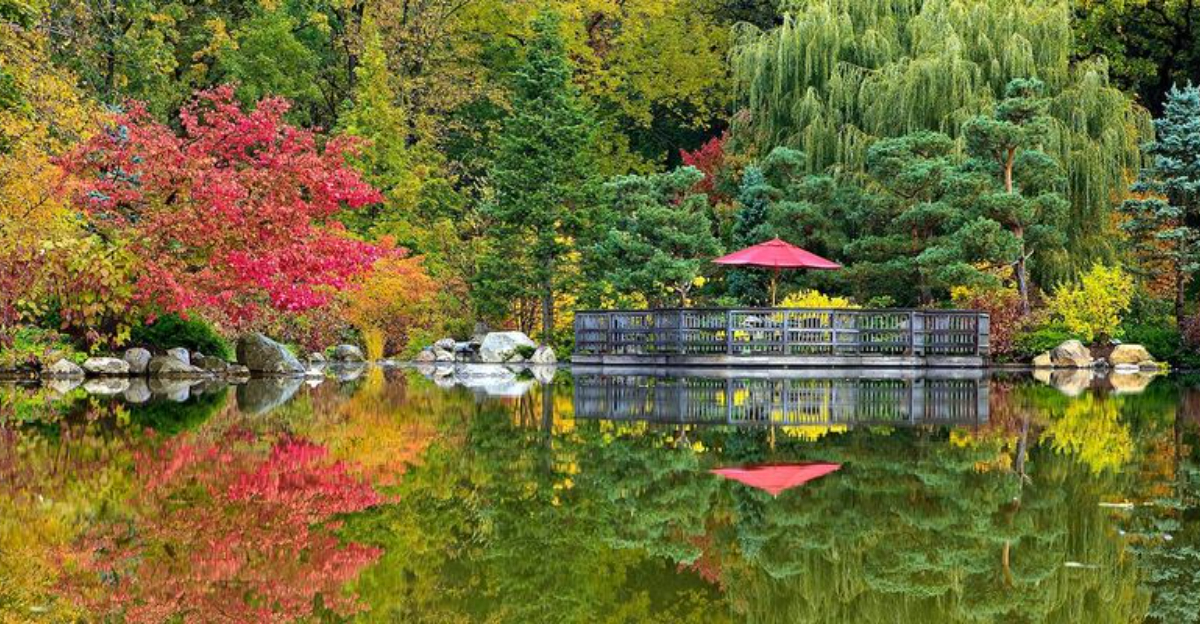
There is a place in Rockford where, from spring through fall, waterfalls hush the city to a whisper and maple leaves glow like lanterns. I remember the first walk there, the air felt softer, as if the everyday noise of Illinois had been folded away behind the trees.
The stillness feels deliberate, shaped rather than accidental, like silence arranged with care. During the open season, the paths guide each turn gently, revealing ponds that hold the sky and bridges that slow the pace without asking.
Every stone and ripple appears considered, never random. I catch myself lingering longer than planned, pausing for no reason other than the sound of water.
By the time I leave, even my thoughts feel quieter, as if they agreed to walk more slowly too.
A Twelve-Acre Masterpiece Of Intentional Design
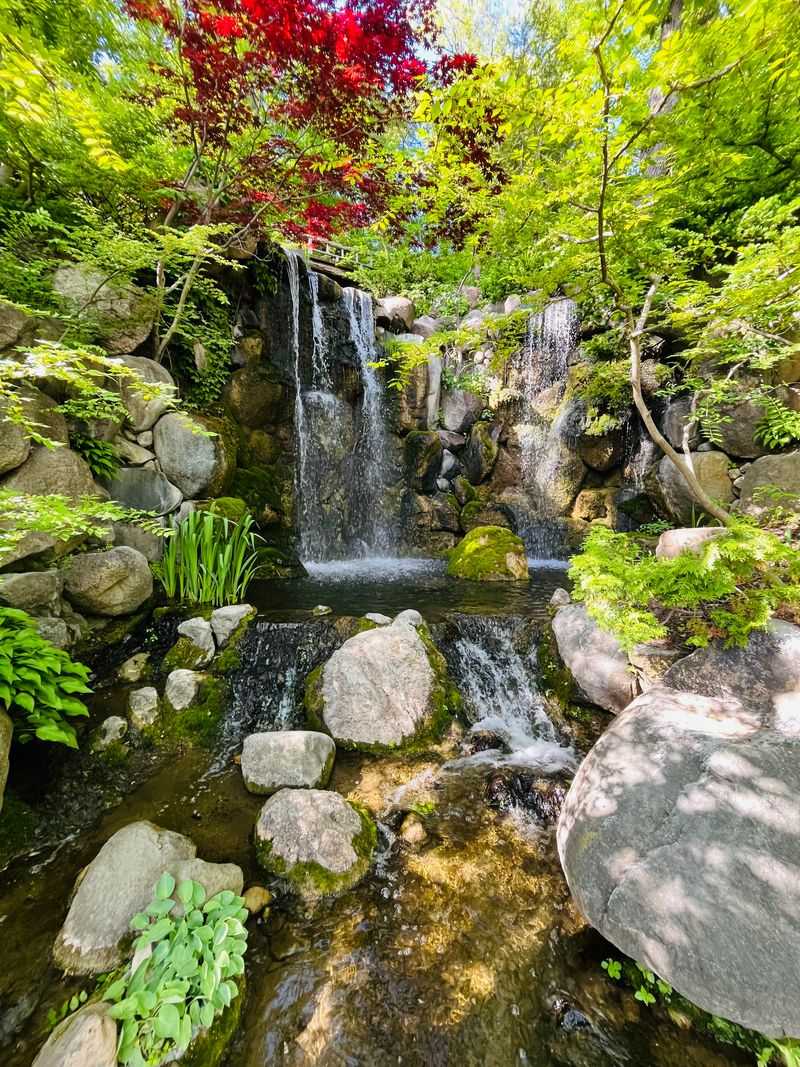
The shift is almost immediate, shoulders loosen before the mind even catches up. The landscape spreads across twelve carefully shaped acres, but it never feels overwhelming.
Water is everywhere, moving quietly through ponds and streams so that each step carries a soft, steady hush.
The paths curve instead of pushing forward, encouraging a slower pace. Small details begin to surface, moss clinging to stone, the still outline of a heron, ripples folding into one another.
There’s no need for a map; the layout seems to guide instinctively.
It’s only after wandering a bit that the setting reveals itself as Anderson Japanese Gardens, a place where nothing feels accidental. Views unfold gradually, never demanding attention, just inviting it.
Waterfalls set a gentle rhythm, balanced by open lawns where the eyes can rest. It’s easy to walk the grounds in an hour, but most people linger, drawn to bridges, benches, and the feeling that the city has quietly slipped away.
Origins: A Local Dream With Global Roots
This place began as the personal vision of founder John R. Anderson, then grew into a civic treasure.
The founders drew inspiration from classical Japanese garden principles that value harmony, asymmetry, and the art of suggestion.
Rather than copying a single style, the design blends ideas from hill-and-pond landscapes, stroll gardens, and dry gardens. It respects Midwestern terrain while honoring Japanese craft, which is why it feels both familiar and transported at once.
Skilled horticulturists and garden staff continue to maintain and refine the site year after year. Stones are not placed for decoration, but for story and weight.
Water is not just pretty, it is the garden’s pulse, setting tempo for your walk.
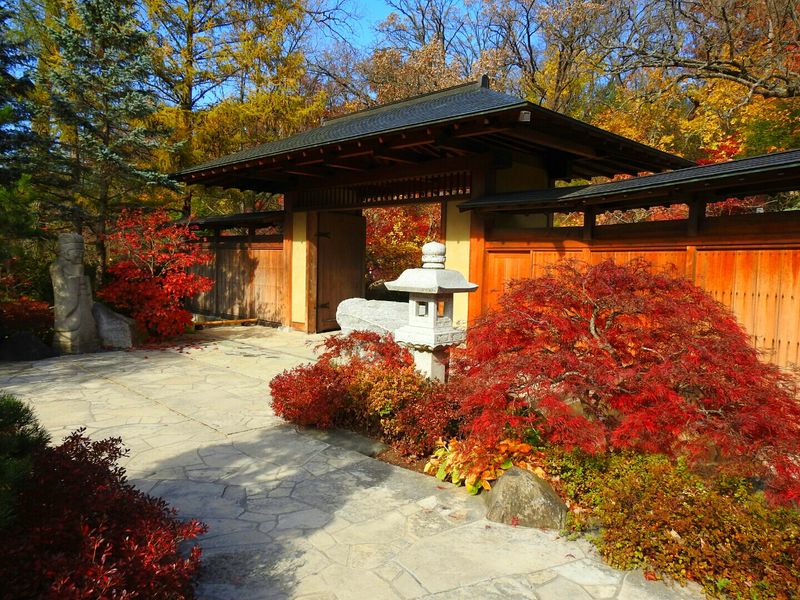
The result is a thoughtful Rockford landmark with global sensibility. You feel that mix under your feet, in the curve of a bridge or the grain of a gate.
The garden keeps evolving without losing its core, and that living quality is part of its magic.
Waterfalls That Steal Your Breath
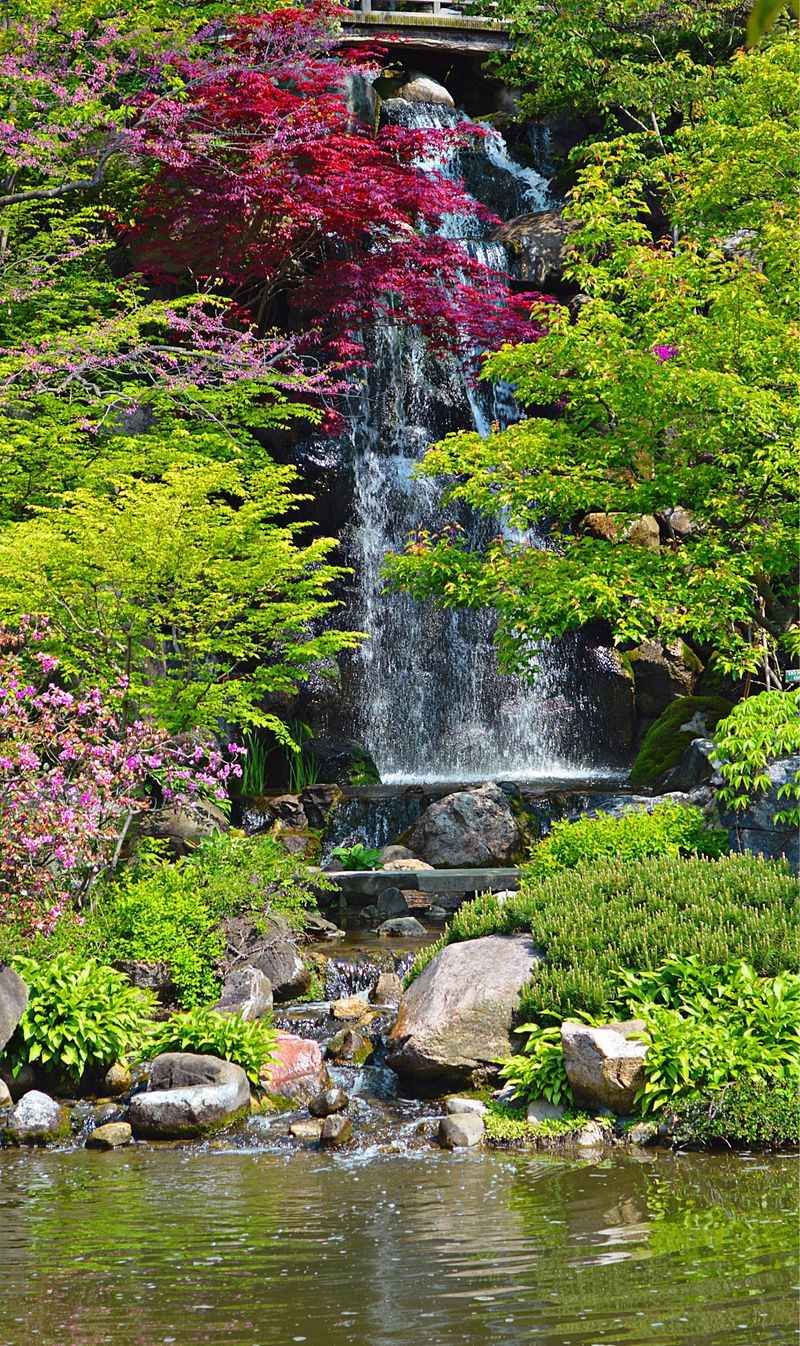
Follow the sound and you will find the heart of the garden. The waterfalls tumble over dark rock, sending up fine mist that clings to your sleeves on a warm day.
Stand on a nearby bridge and watch the surface shiver, then settle into glass.
The choreography is intentional. Fast water becomes slow water so your eyes and mind can settle too.
Kids lean over railings to spot koi, especially near areas where visitor feeding is permitted.
On bright afternoons, the light ricochets across the falls like coins. Early mornings give you a softer glow, and autumn adds copper leaves sliding across the current.
The falls are loud enough to cover small conversations, which is nice if you want space to think.
Sit for five minutes and notice your breathing change. You will leave that ledge with cooler skin and a lighter step, carrying the sound with you down the path.
Bridges, Gates, And The Art Of Crossing
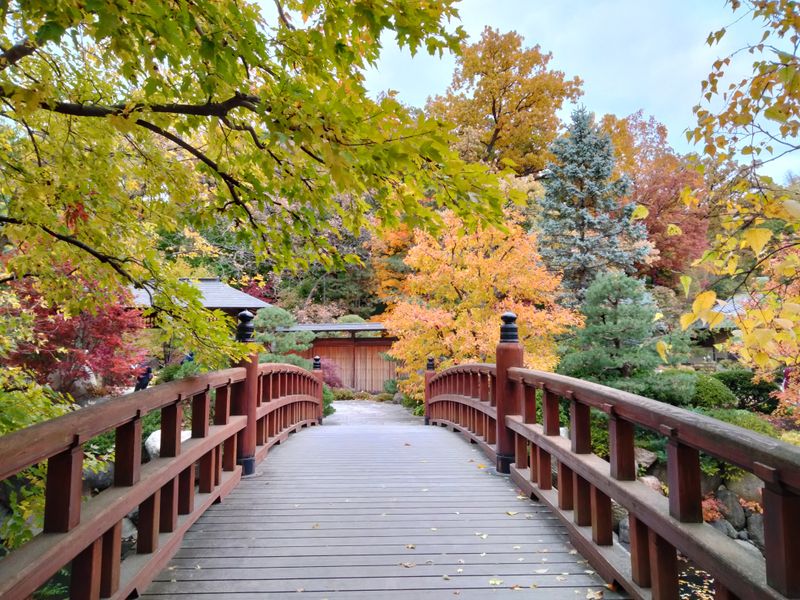
Bridges here are not just shortcuts. They change how you feel.
An arched span lifts you up for a broader view, then a flat bridge nudges you close to the water. A zigzag path makes you focus on each step, which quiets mental noise.
Gates signal small thresholds so the walk feels like a story with chapters. You notice the grain in the wood and the way shadows carve simple lines into the path.
Pause in the middle of any bridge and watch ripples carry a bright maple leaf like a tiny boat. Listen for the creak of timber in the afternoon warmth.
Lean on a rail and you will catch a reflection of pines bending into clouds. Crossing becomes a ritual rather than a task.
Every passage reframes the garden’s shapes so you keep seeing it fresh. It is amazing what a few feet of elevation can do to your mood.
The Koi, Ducks, And A Pocket Universe Of Calm
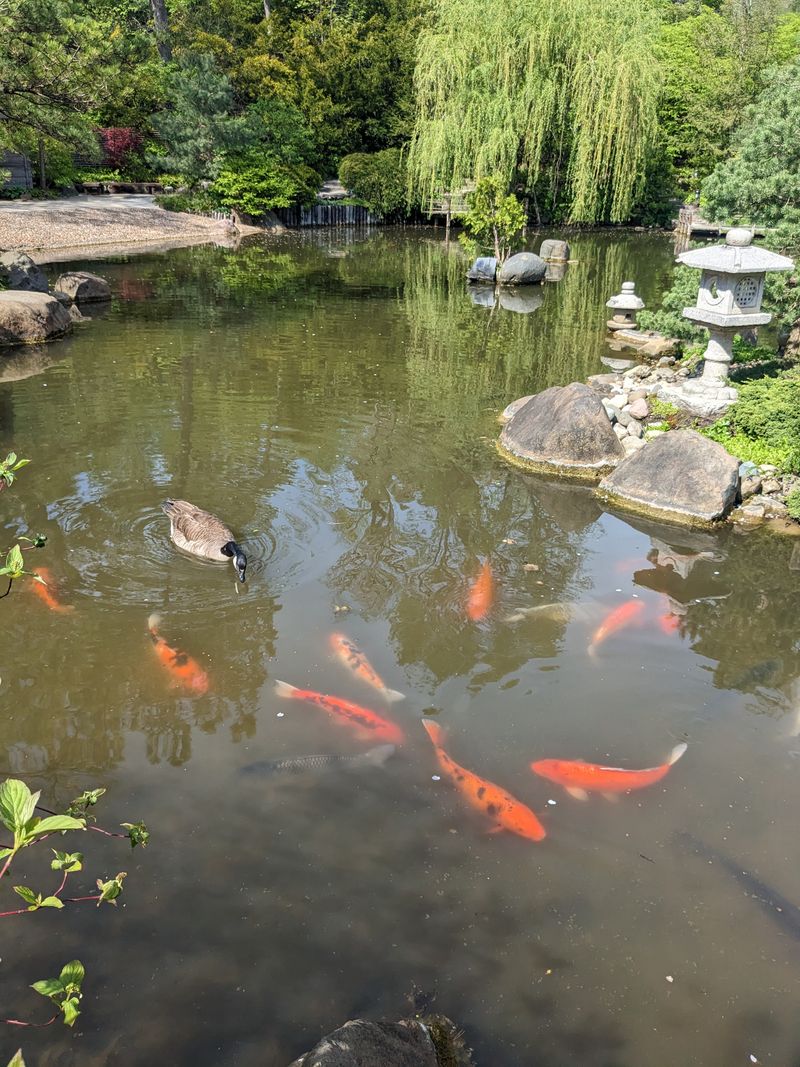
Pick up fish food at the gift shop and you will make instant friends. Koi rise like living jewels, spreading ripples that stitch light and color together.
Ducks drift in from quiet coves, keeping a gentle distance unless snacks appear.
You can stand here for a long time, just watching patterns change as fish braid themselves through water. It feels like slow breathing turned visible.
The world narrows to glints of orange, white, and gold.
Parents love this stop because kids get wide-eyed and patient at the same time. Photographers love it for reflections and movement.
If the sun is high, step into the shade of a nearby pine and let the pond mirror sharpen.
On cooler days, the water smells clean and mineral, with a hint of wet leaf. This is where many people realize they are not rushing anymore.
They are simply standing, happy to watch the water think.
Tea House Presence And Quiet Architecture
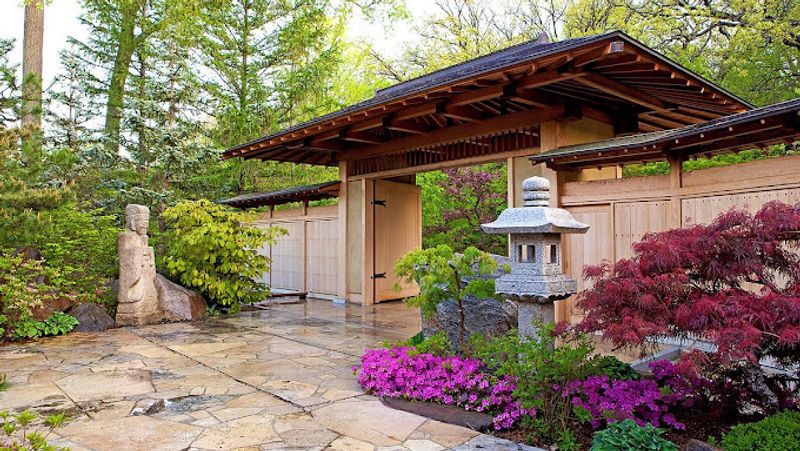
Architecture here whispers rather than shouts. The tea house presence, pavilions, and small shelters keep low profiles, letting wood grain and joinery do the talking.
Rooflines sit like folded paper over beams, and doors frame the landscape as if it were a scroll.
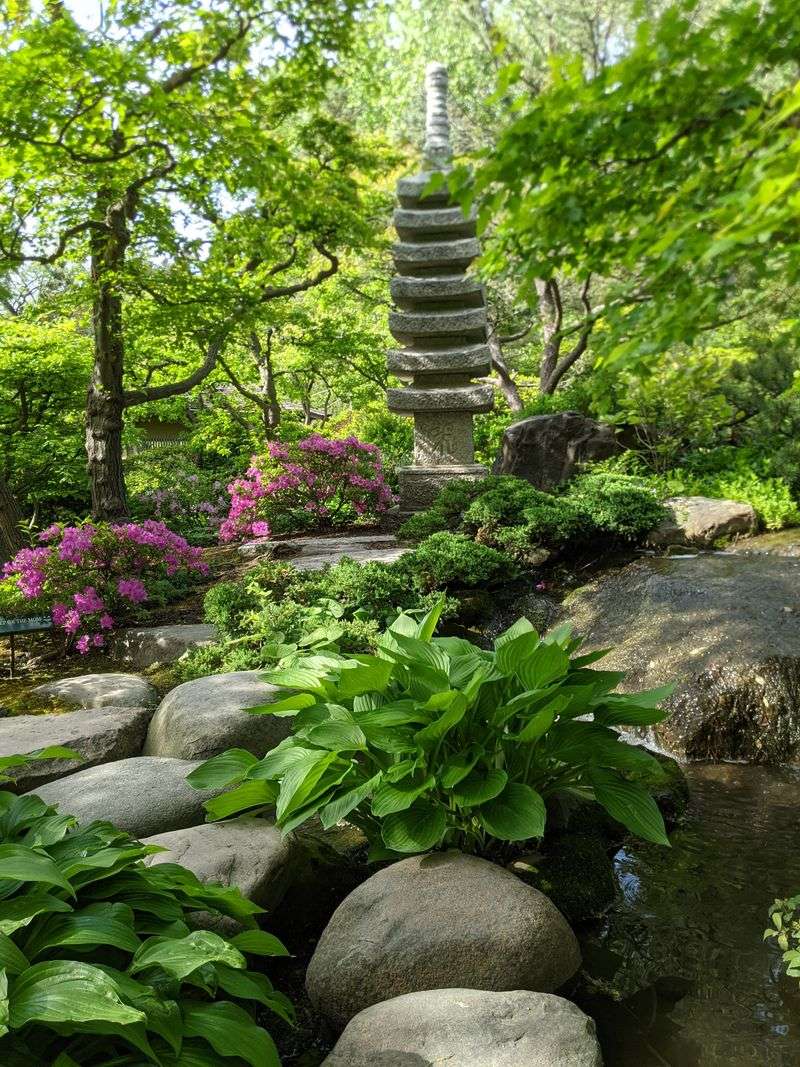
Stand near a stone lantern and you will notice how the building lines echo the garden’s slopes. Nothing feels ornamental for its own sake.
It all serves calm.
Step closer and you will find textures you want to touch, from smooth handrails to weathered posts. The scale invites you in without crowding.
Even when events bring energy, these structures hold a steady mood. You get shade when you need it, and a lens on the waterfalls when the light is right.
Architecture here is a guide and a good listener. It gives you a quiet room outdoors, and the garden fills it with moving air.
Seasons Rewrite The Story
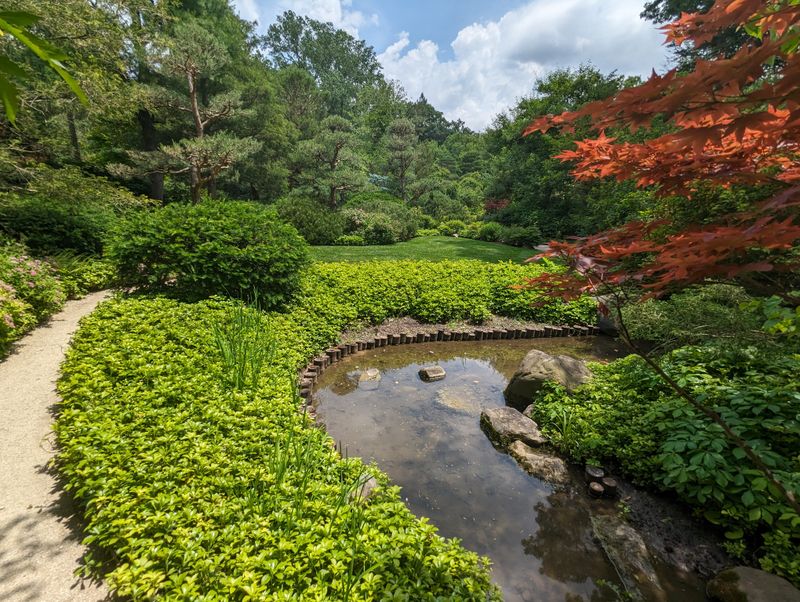
Come in spring and the garden smells sweet and green. New leaves look electric, and irises rise like brushstrokes along the water.
Summer thickens the shade, softens the falls with humidity, and turns every bench into a nap trap. Autumn is a showstopper.
Maples go scarlet, amber, and flame, lighting the water from above. Even overcast days shine.
Winter brings a hush with frost balancing on railings and dark stones, though the garden itself closes for the season and reopens in spring.
It pays to check hours because the garden operates seasonally, typically closing in winter and reopening in mid-spring. The garden operates seasonally, typically opening in warmer months and scaling back in deep winter, though dates can shift.
Morning light flatters everything, and weekdays feel more peaceful if you want photos without crowds. After rain, colors punch up.
After the first chill, koi glide slower. No single visit captures it all.
That is the fun. Each month rewrites the same beautiful sentence.
Visitor Basics: Hours, Tickets, And Parking
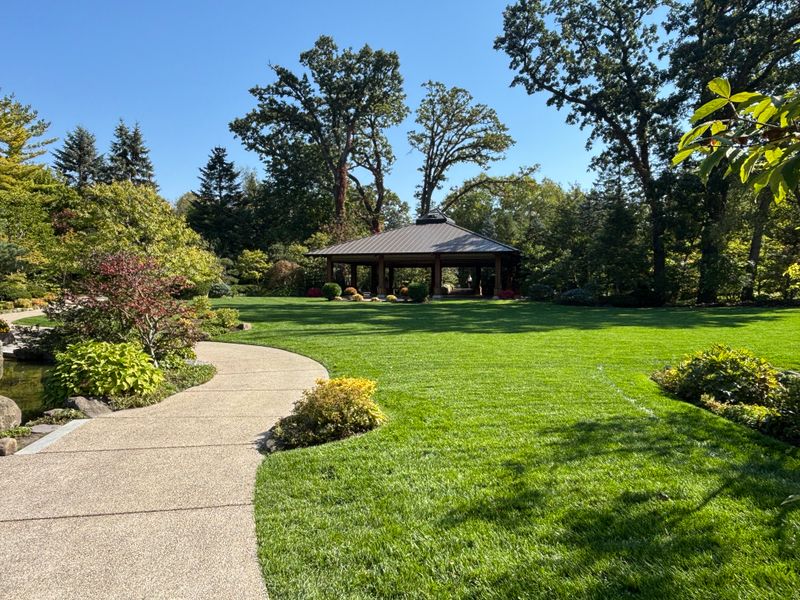
Hours vary by season, and the garden closes in winter, so it is smart to confirm on the official website before you head out. Expect an admission fee that feels fair for the care you are about to see.
Prices can change, but plan for a per-person ticket with possible discounts for kids or seniors. Parking is free in the main lot, and it can fill quickly on weekends or peak color days.
The pace is yours. Many people wander for an hour, but two is better if you like to sit and watch the water.
There is a gift shop for small keepsakes, and restrooms both inside and out. If an event is happening, the entrance team will guide you around any busy spots.
Bring comfortable shoes, a hat on hot days, and curiosity. That is the only gear you truly need here.
Accessibility, Strollers, And Finding The Easy Route
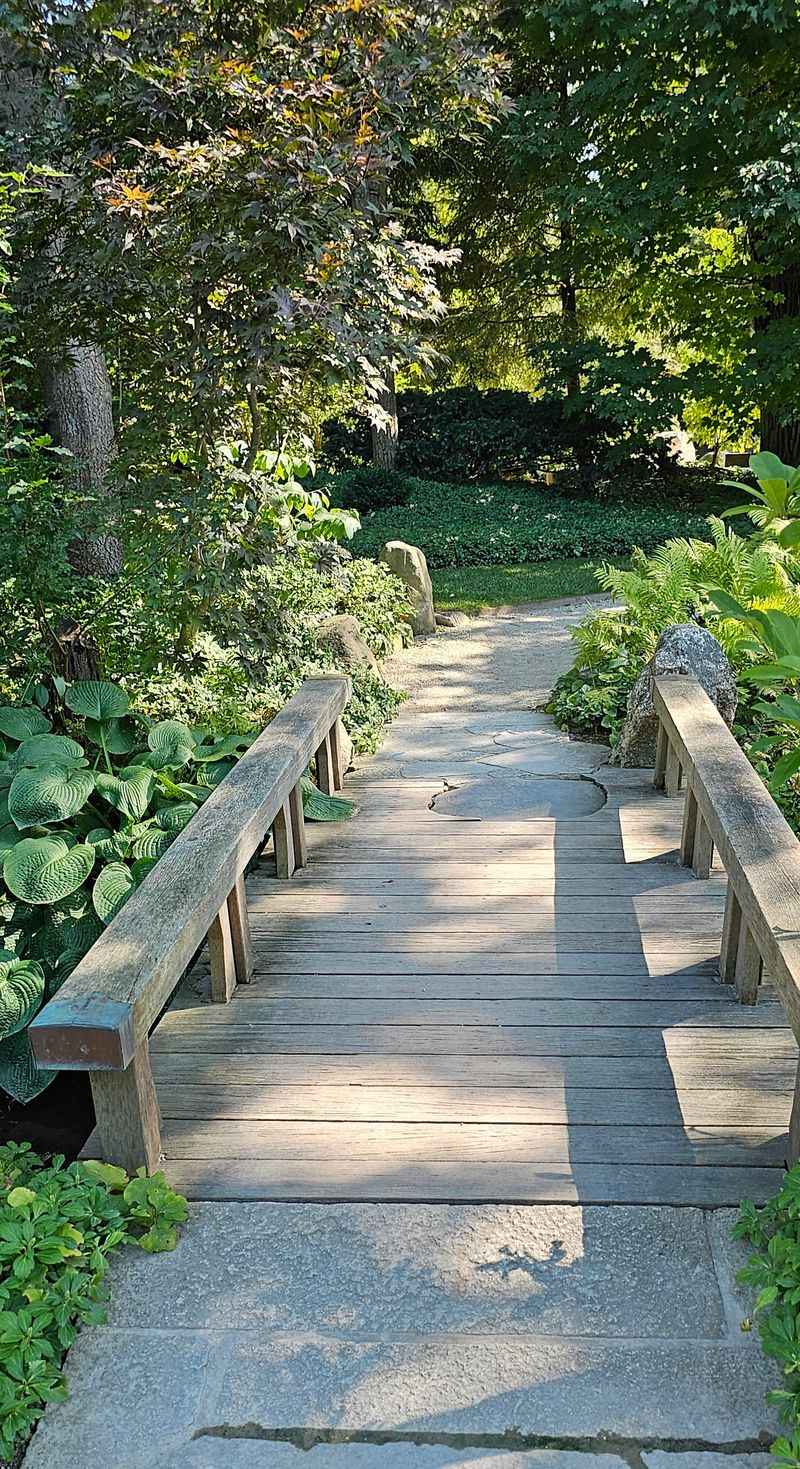
Much of the garden uses gently graded paths that most visitors find comfortable. Strollers do fine, and families often roll through without trouble.
Some sections include steps, bridges, or uneven stone, which can be tricky for wheels.
If you need the smoothest route, ask the staff at the entrance for an accessibility map and current path conditions. They are friendly and know where surfaces are firmest on a given day.
Benches appear often, which helps with pacing.
Handrails near key crossings add confidence, and sightlines are open, so you always have a calm place to aim. There have been visitor reports about challenges with certain equipment, so consider bringing your own mobility aids if possible.
The team is attentive and continues to improve access. If a spot looks tough, there is usually a beautiful alternative view a few steps away.
Take the path that feels right. The garden meets you where you are.
Best Times To Visit And Crowd-Smart Strategies
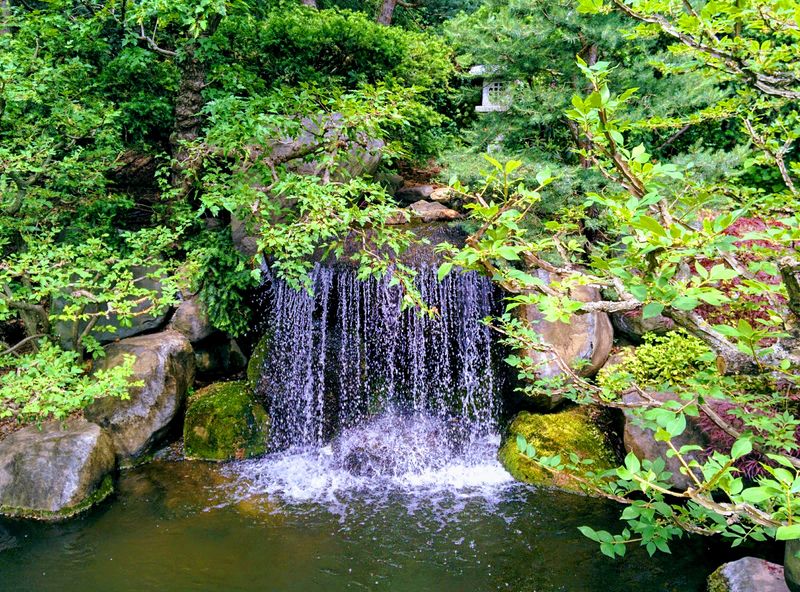
If you want quiet, arrive right at opening. Morning light brushes the waterfalls and you will hear every splash distinctly.
Weekdays offer the most breathing room. During peak foliage, plan a little patience for photos, then circle back to favorite views when crowds drift.
Weddings and events can draw people to certain areas, so check the calendar or ask at the desk. A second lap later often feels like a different garden.
Cloudy days are perfect for photography because colors stay rich and shadows easy. After rain, the stones darken and reflections sharpen, which makes bridges and lanterns pop.
Bring a water bottle on warm days and find shade near the tea house when the sun climbs.
If you only have an hour, prioritize the main falls and koi ponds. If you have two, add the back paths that trade spectacle for lovely hush.
Eat, Pause, And Keep Exploring
When your feet ask for a break, the on-site café, open during the garden season, answers with calm views and fresh fare. Big windows pull the landscape inside so lunch feels like part of the stroll.
Menus lean seasonal and thoughtful.
If the seasonal café is open, grab a seat where you can watch leaves drift past the glass. Hours can shift with the season and events, so it helps to check day-of.
Even a short pause resets your senses.
Afterward, swing through the gift shop for a small token. A bookmark, a tiny lantern, something that carries the hush home.
Then step back outside and let the paths guide you somewhere you missed. Maybe a raked gravel scene where lines hold stillness, or a side cove where ducks nap under pines.
The best surprise is how full you feel leaving. Not just from food, but from quiet, water, and well-placed stones.