
This Florida Bridge Dares Drivers To Face One Of The Scariest Drives In The State
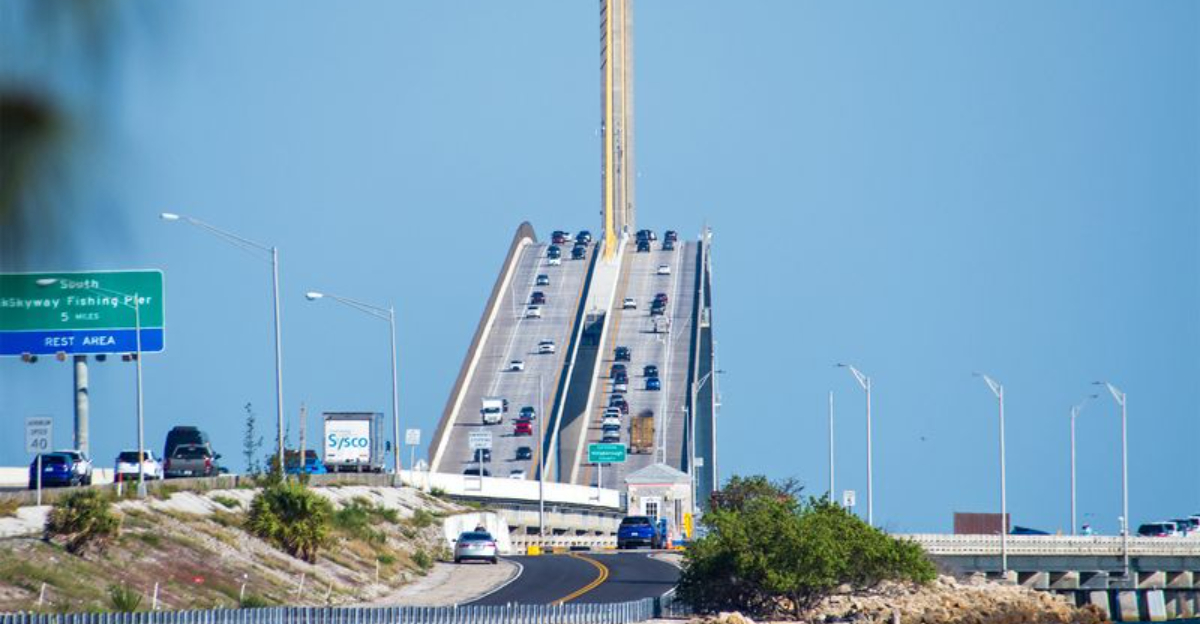
Some drives in Florida feel routine. This one feels like a challenge you accept the moment it rises into view.
The road begins to climb, the horizon opens up, and suddenly there is nothing but sky, water, and a ribbon of pavement pulling you higher than expected.
Wind presses lightly against the car. The bay stretches endlessly on both sides.
Ever had a moment behind the wheel where you realize you are holding your breath without meaning to? This is that kind of crossing.
It is bold, cinematic, and just intimidating enough to make the view feel earned.
The light changes everything. Sunrise softens the nerves.
Sunset turns the drive into pure drama. Even at midday, the color of the water makes you forget where you are headed.
This is not just a way to get from one place to another. It is a Florida experience that asks for trust, rewards courage, and stays with you long after the road levels out again.
First Look: The Climb Into The Sky
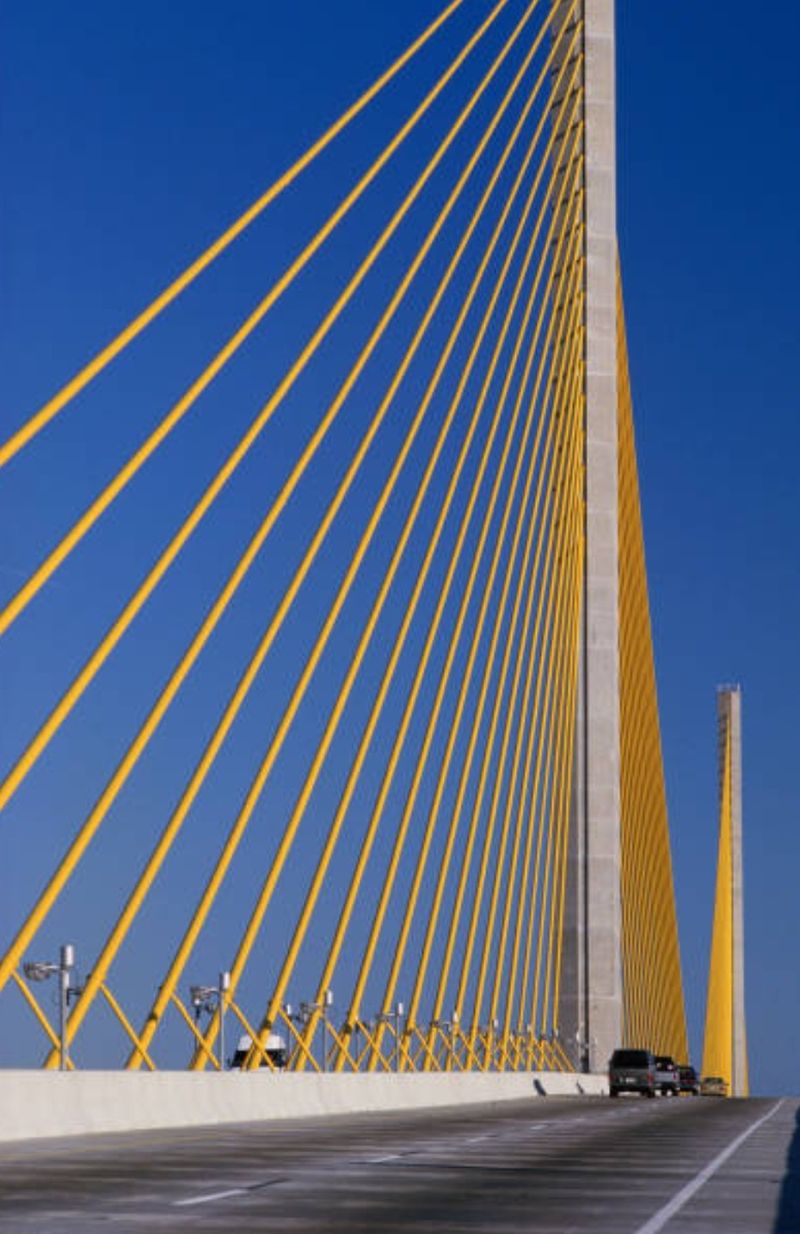
You feel the pitch of the road before you really see it, that steady upward pull as the Sunshine Skyway Bridge gathers you into its bright yellow V. The water on both sides spreads like hammered glass, and the air smells like salt and warm metal.
The first thought is simple: this is higher than expected, and the view is a whole sky full of wow.
Noise changes on the climb. Tires hum a tighter note on the concrete, crosswinds flick your mirrors, and gulls skate the edge of your vision.
If you are nervous about bridges, keep your eyes forward and let the cable stays act like rails, drawing you to the top where the bay opens wider than any postcard.
Stay steady in your lane. Do not race, do not crawl, and resist filming from the driver’s seat.
If you want photos, there are pull-offs on both sides of the bay before and after the main span, with restrooms and tiny beaches where you can let your heart catch up.
Engineering Drama In Yellow Cables
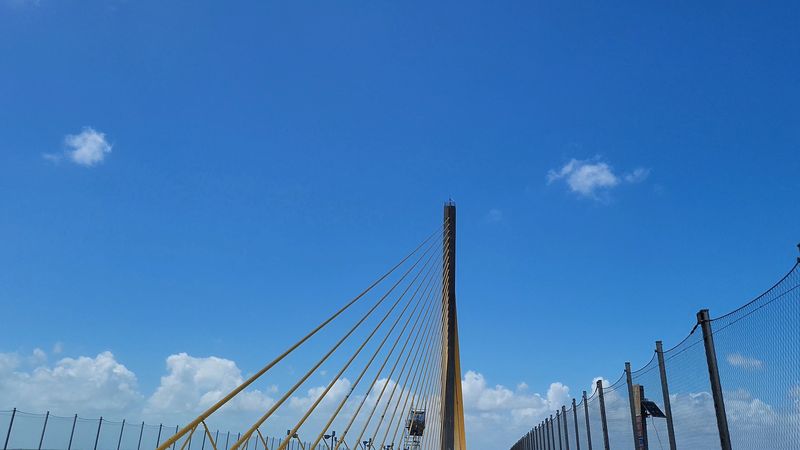
The Sunshine Skyway is a cable-stayed bridge, and you can feel that design working while you drive. The twin pylons, painted a muted yellow, anchor an array of cables that fan out like a harp.
It is elegant because it is practical, each line doing real work while sketching a clean, modern profile across Lower Tampa Bay.
At speed, the geometry becomes rhythm. Cable, gap, cable, gap, all beating like a metronome that steadies your nerves.
Look up for a second at a stop below the span and the perspective turns almost abstract, angles converging into a single point that makes the sky seem closer than it is.
That beauty grew out of hard lessons. Engineers built redundancy into the design, raised the shipping channel clearance, and armored the piers against wayward vessels.
You do not need to know every spec to appreciate the thoughtfulness. Just notice how the structure feels calm even when the wind ruffles the bay, a quiet confidence baked into steel, concrete, and cable.
History On The Waterline
This crossing did not arrive overnight. The original bridge opened in the mid 20th century, and the story took a tragic turn in 1980 when a freighter struck the span during a storm.
Lives were lost, and the collapse shook Florida, imprinting the Skyway name with grief long before the new bridge’s signature yellow cables.
The current structure is the response, built safer and smarter, with massive protective bumpers around the piers. When you glide over the water now, that quiet sense of security is intentional.
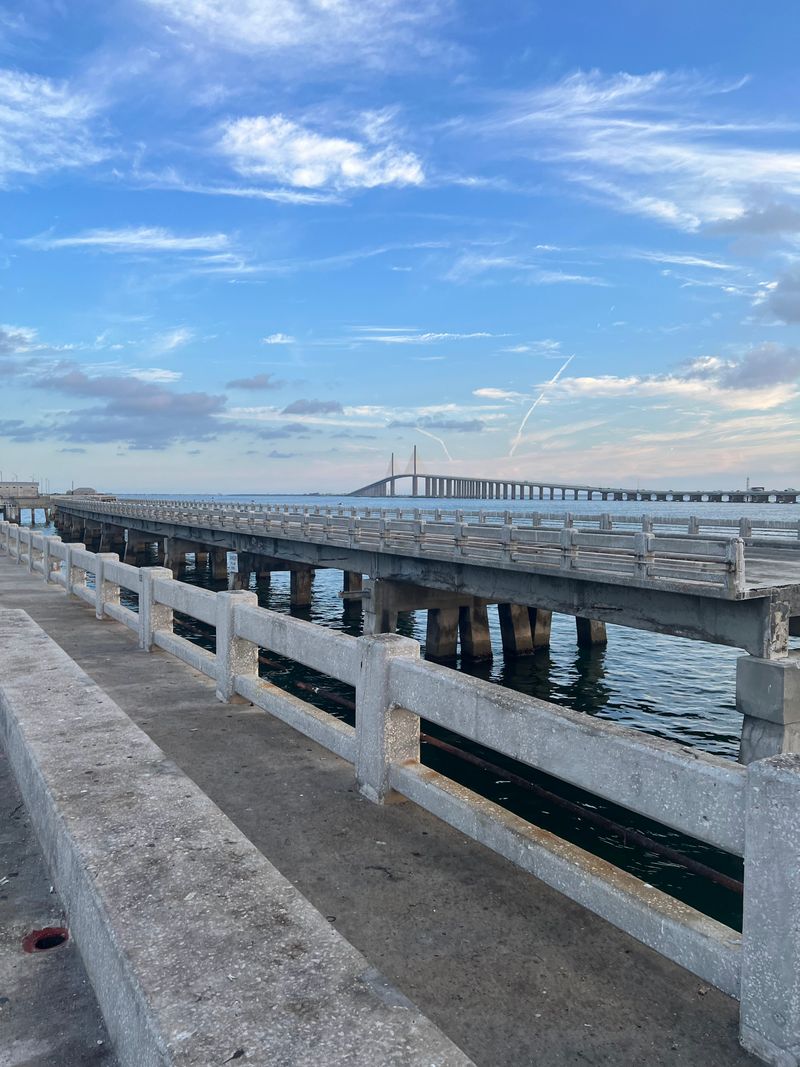
History lingers off to the sides where remnants became fishing piers, giving the past a purpose that locals use daily.
If you pause at the pier, the wind will carry a timeline you can almost taste, salt and diesel mixing with sunscreen and cast-off bait. People swap stories.
Some remember the old span with a distant look, others know it only through photos. The bridge you drive today is both memorial and promise, a reminder that hard lessons can build something steadier for everyone who follows.
The View That Keeps Going
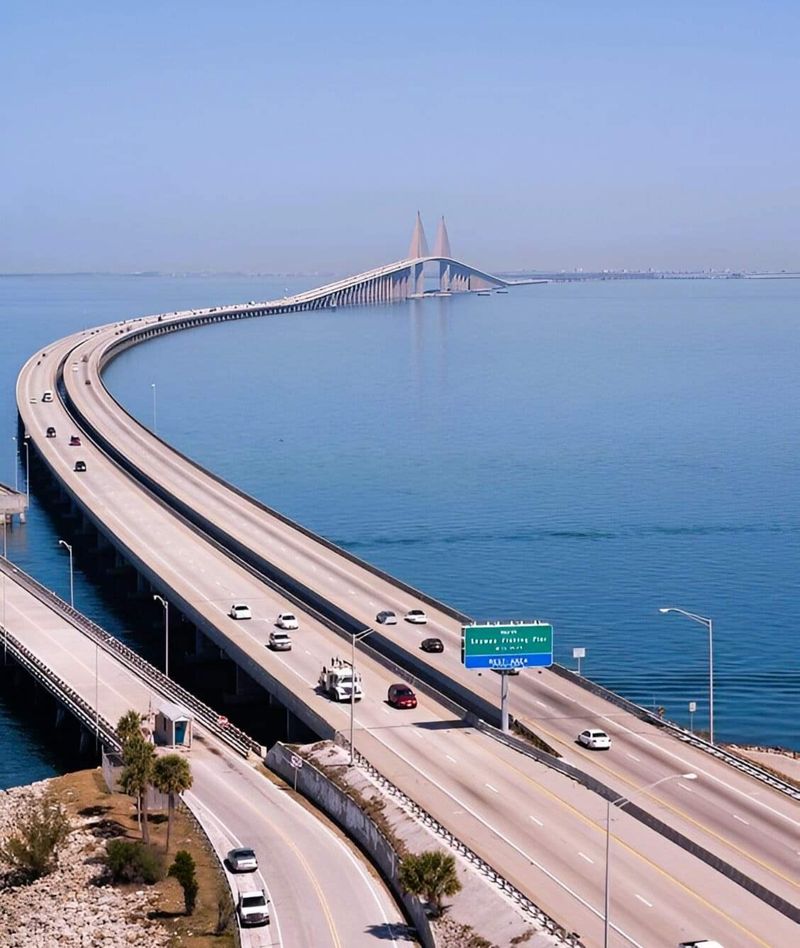
From the crest, Tampa Bay rolls out like a living map. St. Petersburg’s skyline sits to the north with Tampa farther beyond, and the water flashes silver where the sun skips across a shallow wave.
On good days, pelicans arrow low, and dolphins show just enough fin to send you into a delighted gasp.
The horizon shifts fast up here. If it is clear, you feel like a pilot leveling off, the world pressed flat until the colors take over.
When weather moves in, the palette flips to pewter and slate, drama the bridge wears well, like the set of a stormy stage you get to cross.
Want the best color show. Aim for sunrise if you are heading north, sunset if you are rolling south.
Late afternoon on cooler days can be crystal, with air so sharp you see every mast and pier piling. Whatever the hour, let the view stay a view and keep both hands on the wheel until you have a safe pull-off.
Fishing Piers With A Story
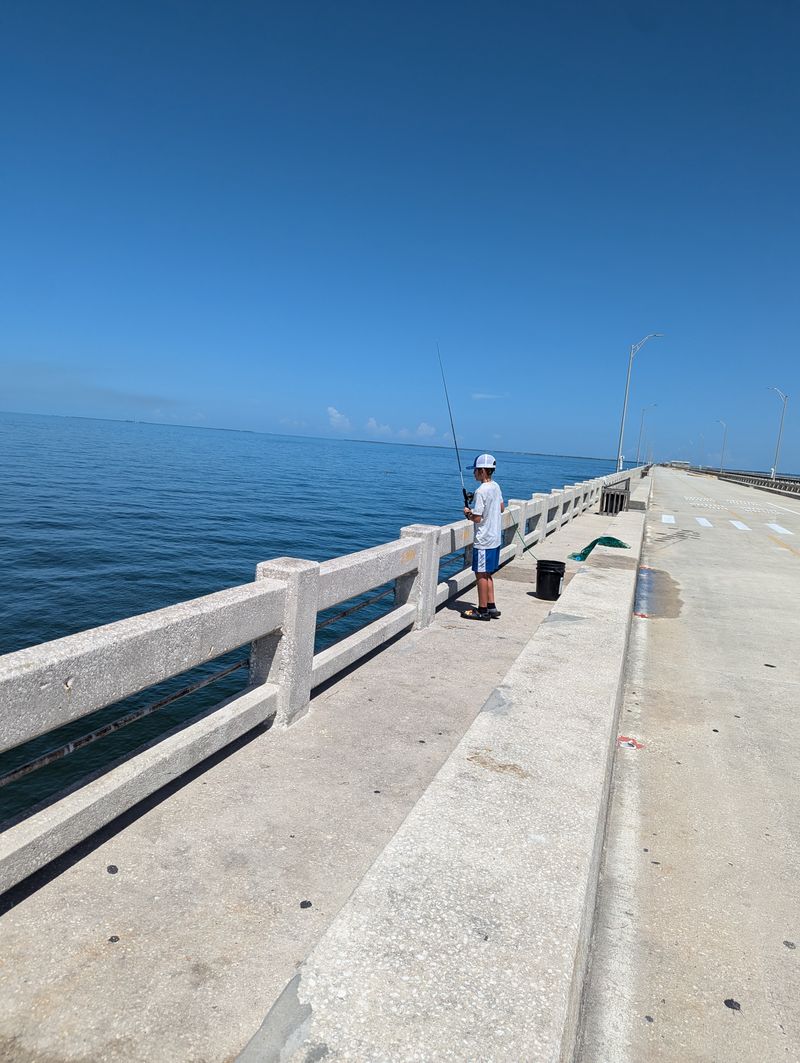
On both sides of the bay, the old bridge lives on as the Sunshine Skyway Fishing Pier State Park. The drive-on piers stretch far into the water, long concrete arms where you can set up a chair, drop a cooler, and cast right from your car.
The vibe is relaxed, almost neighborly, with folks swapping rigs and recipes between bites.
Spanish mackerel are local celebrities, streaking like silver missiles when the bite turns on. You will see pompano, snapper, and sheepshead too, depending on season and luck.
Even if you are not casting, the pier is perfect for sunset walks, dolphin spotting, and photos with the bridge hovering like a modern sculpture in the background.
There is an entrance fee per vehicle that is generally modest for the access you get. Hours usually run 24 hours, but double check seasonal notes and weather advisories.
Bring sun protection, a wind layer, and patience for gulls who would love your bait. If you cook what you catch, keep it cold right away and savor that ocean-clean flavor later.
Driving It Smart: Tolls, Timing, And Nerves
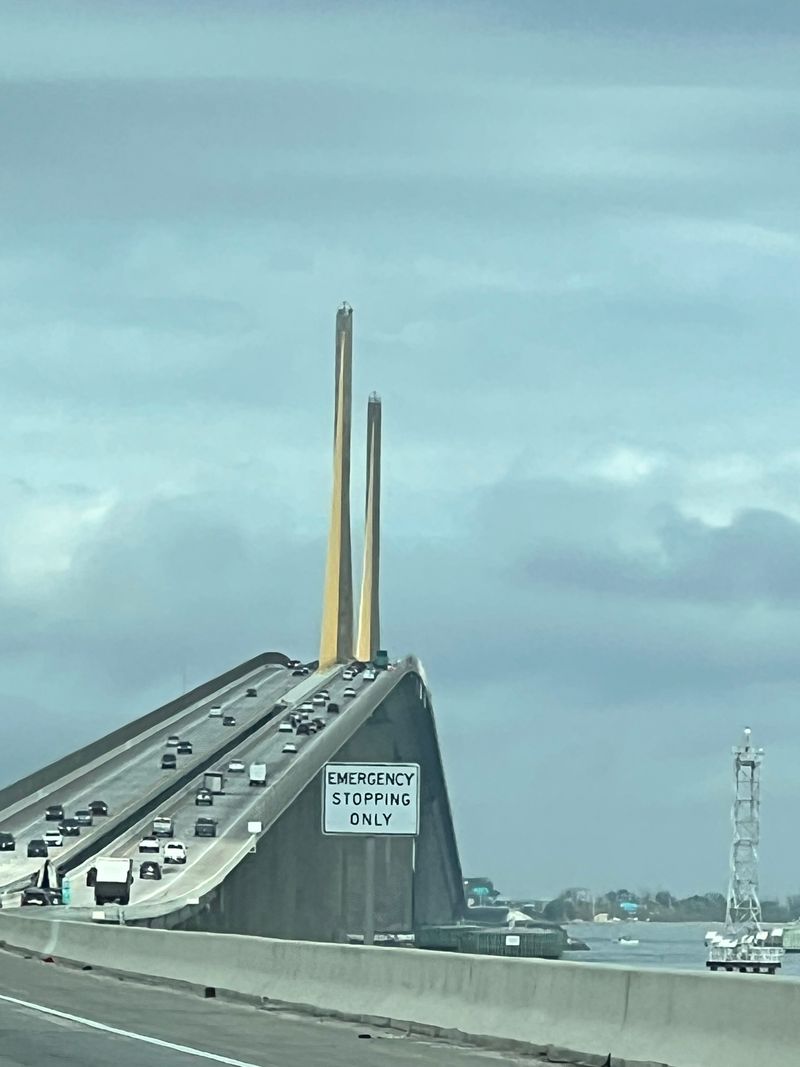
Here is the plan that keeps this drive smooth. Have a SunPass if you can, since electronic tolling is the quickest option.
Expect a reasonable toll, usually under a few dollars, and keep your payment ready if you hit a staffed booth. Traffic can move fast, so let the flow guide you and avoid sudden lane changes on the approaches.
Timing matters. Early morning can feel blissful, midday brings heavier volume, and weekend afternoons draw sightseeing traffic that lingers in the right lane.
If wind ramps up, grip the wheel, reduce speed slightly, and give big trucks extra room. Nervous about heights.
Play a favorite playlist, focus on the lane ahead, and remind yourself the guardrails and cables are doing their job.
The bridge is open 24 hours, but occasional closures can pop up for maintenance or severe weather. Check traffic apps before heading out.
If a storm line is hammering the bay, wait it out at a nearby rest area or pier parking lot and enjoy the show from ground level. You will feel better driving once the gusts settle.
Rest Areas And Tiny Beaches
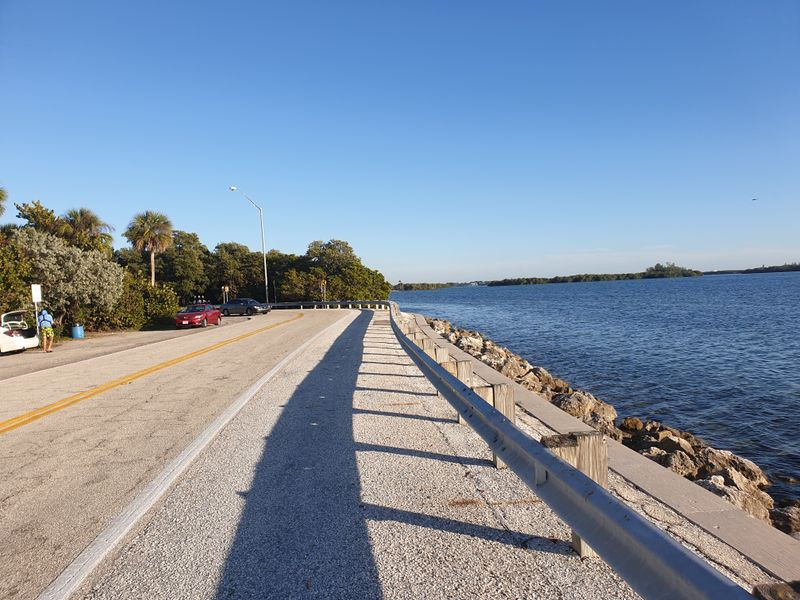
Before and after the main span, you will find small pull-offs that feel like pocket parks. There are restrooms, picnic tables, and sandy shallows where kids kick up little fans of water.
These spots are gold for a snack break, a bathroom run, or a quick photo without juggling traffic and phones on the bridge.
Park so the nose of your car faces the bay, crack the windows, and listen to waves tick the shore. Pelicans perch on signposts like they own the lease, and you can watch freighters pace the channel while the bridge rises behind them like a crown.
If you are road tripping, this is the stretch where everyone resets.
Arrive early on weekends when the weather is perfect, because spaces fill fast. Keep valuables out of sight, close doors gently in the wind, and respect posted signs about wading and fishing.
These rest areas are also a good meeting point if you are caravanning to St. Pete beaches or Fort De Soto, a handy pause before you chase more salt and sun.
Sunsets And Night Lights
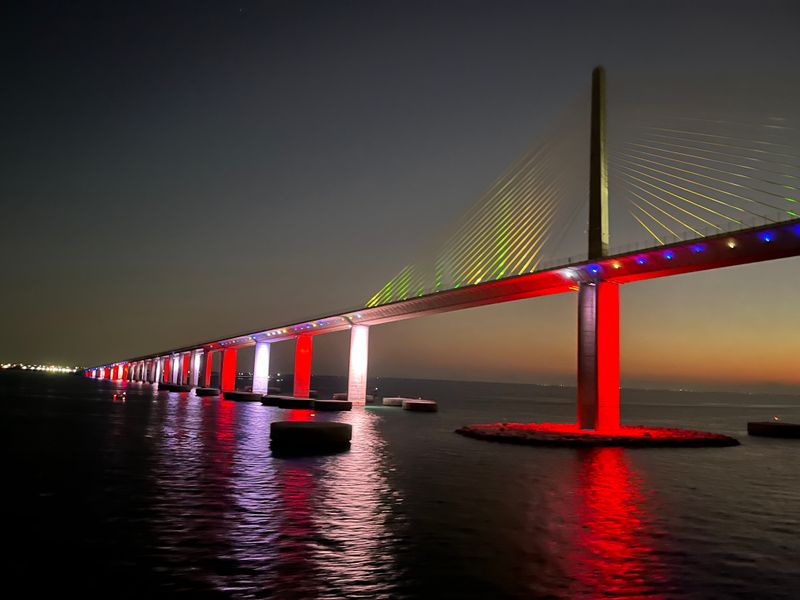
Sunset on the Skyway is a slow burn that sneaks up on you. Colors start shy, then bloom into mango and raspberry, smearing across the water until the span looks like it is floating.
If you want the deep glow in your windshield, drive southbound an hour before sundown and time the peak with the apex.
After dark, the bridge keeps a subtler profile. Lighting accents the structure from below, washing the piers and undercarriage rather than tracing the cables like a marquee.
Some expect a neon outline, and you will not get that. What you do get is a serene silhouette, ships sliding underneath like shadows with mast lights winking.
For photos, scout your angle from the pier or rest areas. A small tripod helps, and a wind jacket is worth its space in your bag.
Night crossing can feel more intimidating if heights bother you, so ride with someone steady at the wheel, let the radio go soft, and let the bay breathe around you.
Weather, Wind, And What To Expect
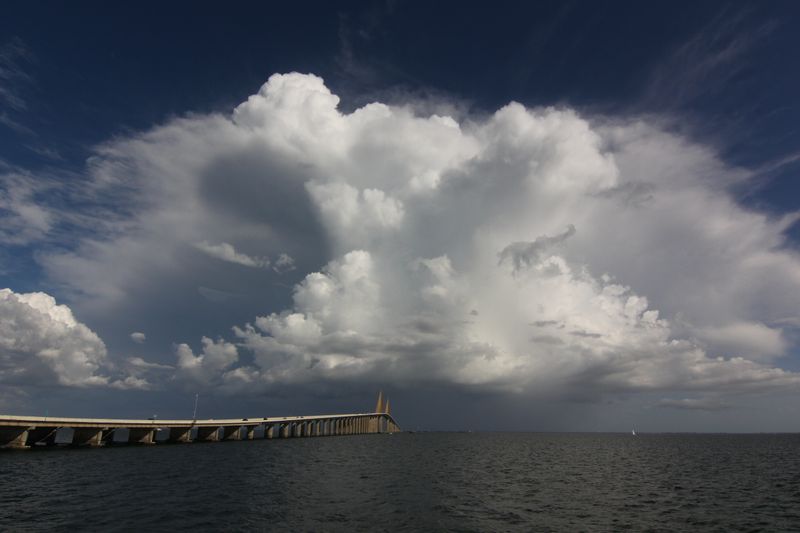
Florida weather changes gears fast, and the Skyway amplifies it. A calm morning can turn breezy by lunch, and afternoon sea breezes stack clouds into big cotton towers.
Crosswinds are the part you will notice most. They are not usually dangerous, just lively enough to remind you that this is open water.
When forecasts hint at storms, be flexible. Lightning advisories and high-wind alerts can slow traffic or cause temporary closures.
If you spot whitecaps marching hard across the bay, expect a push on the wheel at the highest point. Trucks and boxy vans feel it more, so give them space.
Carry sunglasses and a hat even if you do not plan to stop. Glare off the water is real.
After rain, the air turns clear and beautiful, a rinse that sharpens every color from the pylons to the mangroves. Winter fronts can deliver surprise chill on the piers.
Summer heat asks for extra water and sunscreen. You will have a better time if you plan for both ends of the spectrum.
Accessibility On And Around The Bridge
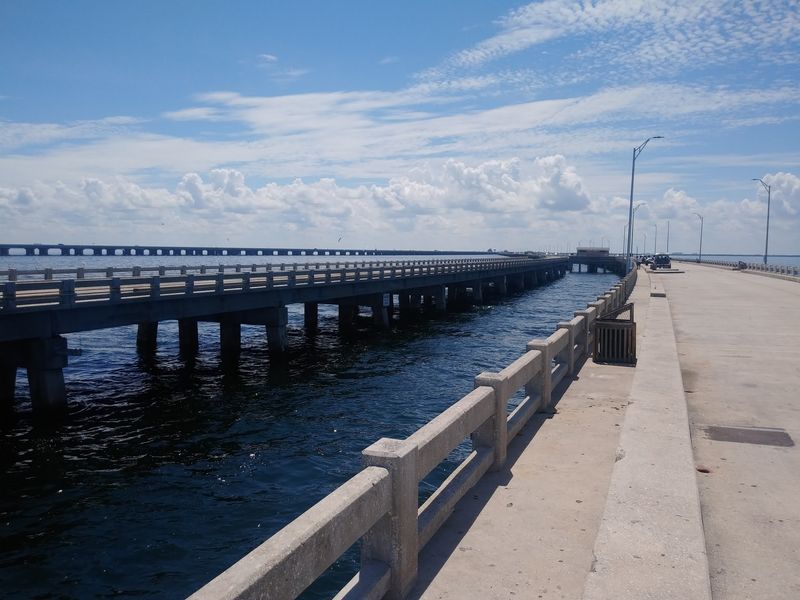
Driving across the bridge is fully accessible by nature, but the surrounding amenities make the experience friendlier for more visitors. The fishing piers offer drive-up spots close to your chosen rail, so mobility devices and chairs come out with minimal fuss.
Ramps and accessible restrooms are on site, though conditions can vary, so it is smart to check recent reports.
At the small beaches and rest areas, you will find paved paths, curb cuts, and parking near facilities. Surfaces are mostly flat, but wind and sand can drift over walkways.
Give yourself extra time, and bring a helper if footing is tricky.
For sensory comfort, consider quieter weekday mornings. Traffic hum is steady but not overwhelming, and there is room to move at your own pace.
If you are arranging a visit for someone sensitive to heights, watch the ascent videos online first, then plan a short crossing with a turn-around at the next exit. The joy is in seeing the bay open up, not in pushing past personal limits.
Practicalities: Hours, Prices, Parking
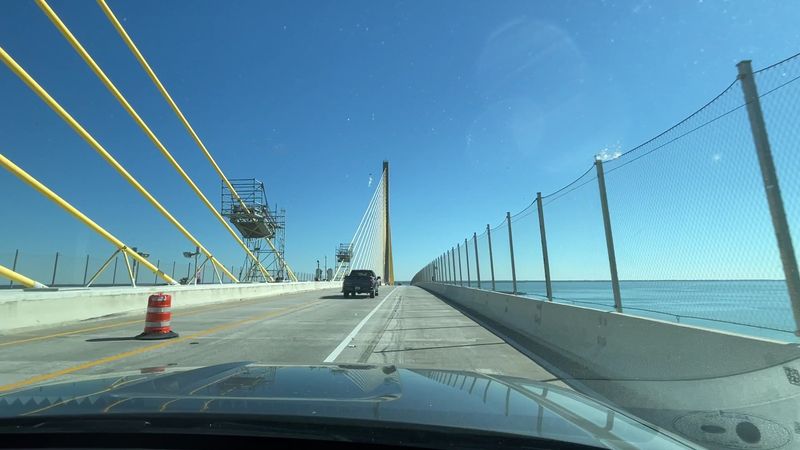
The bridge itself is open 24 hours, a true round-the-clock gateway between St. Petersburg and Manatee County. Tolls are modest by big-bridge standards, usually around a couple dollars, and SunPass keeps things moving.
If you prefer to pay in person, staffed lanes appear on some approaches, though configuration can change with upgrades.
For parking, the fishing pier lots are your best bet for long pauses. Expect an entrance fee per vehicle rather than per person, and hold onto your receipt.
The rest areas have limited spaces that turn over quickly, so avoid lingering if you see a line of cars searching for spots. Bathrooms here are typically clean, and maintenance crews do steady work.
Prices and policies can shift, especially during infrastructure projects or seasonal demand. Check the official website or state park page before you go.
Bring small bills for kiosks just in case, and keep your dashboard free of loose items that can sail off in a gust. You are here for the bay, the view, and that clean sweep of the span, not a parking headache.
Seeing It From The Water
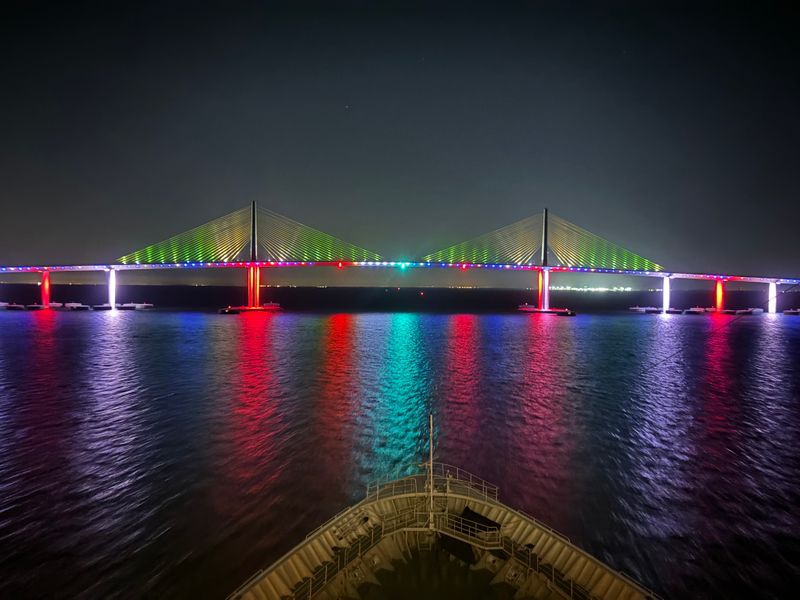
Driving the bridge is one thing. Passing under it by boat is another, a lesson in scale you feel in your shoulders.
From the deck, the pylons look impossibly tall, and the cables turn into wings. Tour operators out of St. Pete run cruises that slip beneath the span, sometimes with dolphins playing tag in the wake.
The channel is wide, and freighters move with patient authority, pilots threading them toward the port with all eyes on tides and wind. When a ship glides through, people go quiet, phones up, faces tipped to the sky.
The bridge becomes a frame for the moment, a bright bracket around industry and nature working the same corridor.
If you want this view, book ahead on weekends. Late afternoon sails catch low sun that paints the concrete warm gold.
Bring a light jacket, sunscreen, and a willingness to share rail space. Your photos will not capture how big it feels, but your memory will.
That is the kind of souvenir worth carrying home.
A Short Guide To Courage
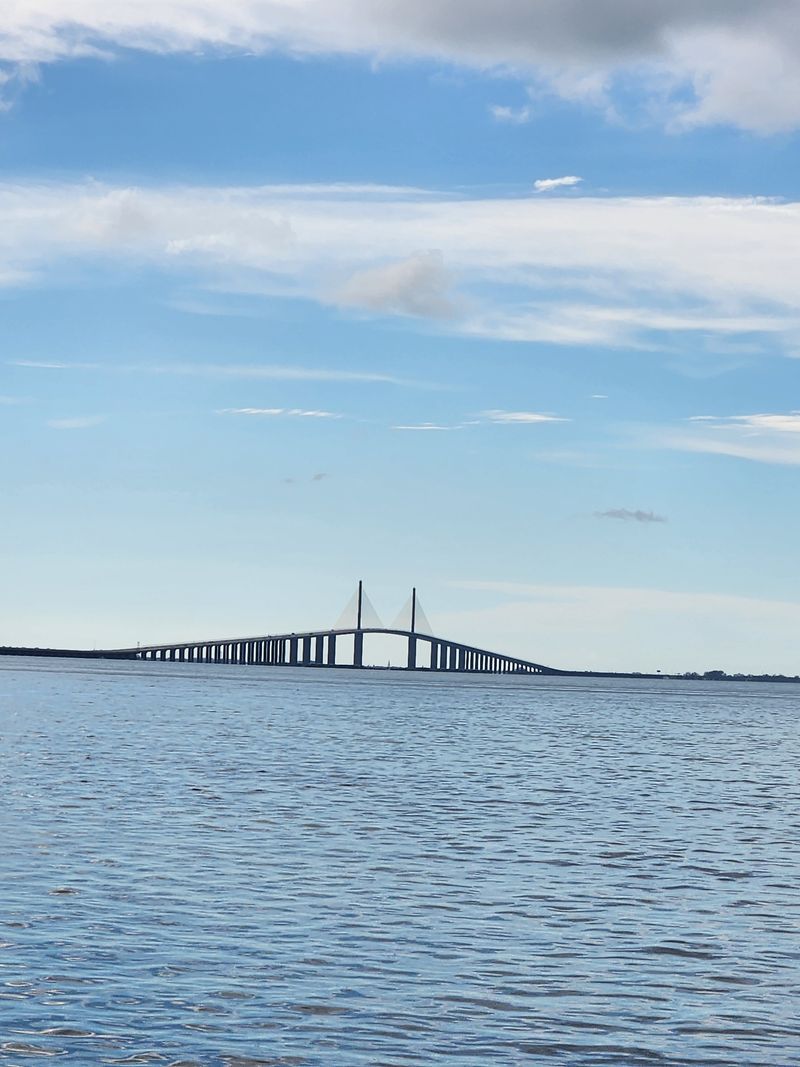
If bridges make your stomach do cartwheels, you are not alone. The Sunshine Skyway looks dramatic, and that drama pokes at nerves.
Here is a gentle approach. Choose a day with light wind and clear skies, ride as a passenger first, and talk through the route so nothing feels like a surprise.
Plan a simple loop using the next exit after the span so you know there is an easy out. Pick a playlist that slows your breathing, and set the air to a comfortable cool.
Focus on the lane markers, keep conversation calm, and count the cables if it helps. By the time you crest the top, the view will catch you like a net.
There is no shame in turning back if it feels like too much that day. You can still enjoy the bridge from the piers, beaches, or a boat, all with less height.
Courage grows in small steps, and the bay is generous with chances to try again. When it clicks, the drive becomes a proud memory that glows every time you see those yellow lines on the horizon.