
10 Michigan Lighthouses Where You Can Book An Overnight Stay
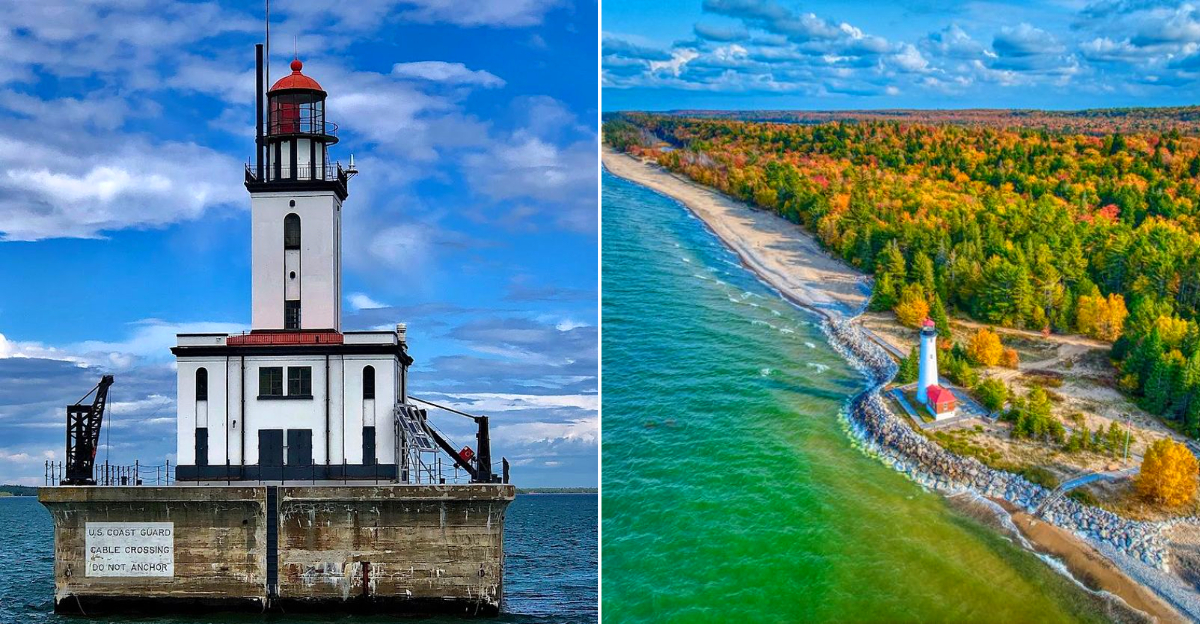
Michigan’s shoreline is stitched with keeper’s lights that still whisper across the water long after dark. As someone who still gets a thrill from a creaky floorboard and the promise of a hidden staircase, I find the idea of sleeping within these stone walls absolutely irresistible.
It’s a chance to trade the predictable hum of room service for the rhythmic shuffle of lake wind and the call of gulls.
Whether you’re bunking in a cozy museum apartment or joining a “keeper-for-a-week” program to polish the brass and greet fellow adventurers, you aren’t just booking a room, but stepping into a living maritime diary.
Staying overnight in a historic Michigan lighthouse offers a rare, immersive adventure where you can witness breathtaking Great Lakes sunrises and experience the true solitude of a keeper’s life.
If waking to a distant foghorn sounds like the ultimate relaxation, this list maps out exactly where to claim your lantern-lit sanctuary.
1. Au Sable Point Lighthouse (Pictured Rocks National Lakeshore)
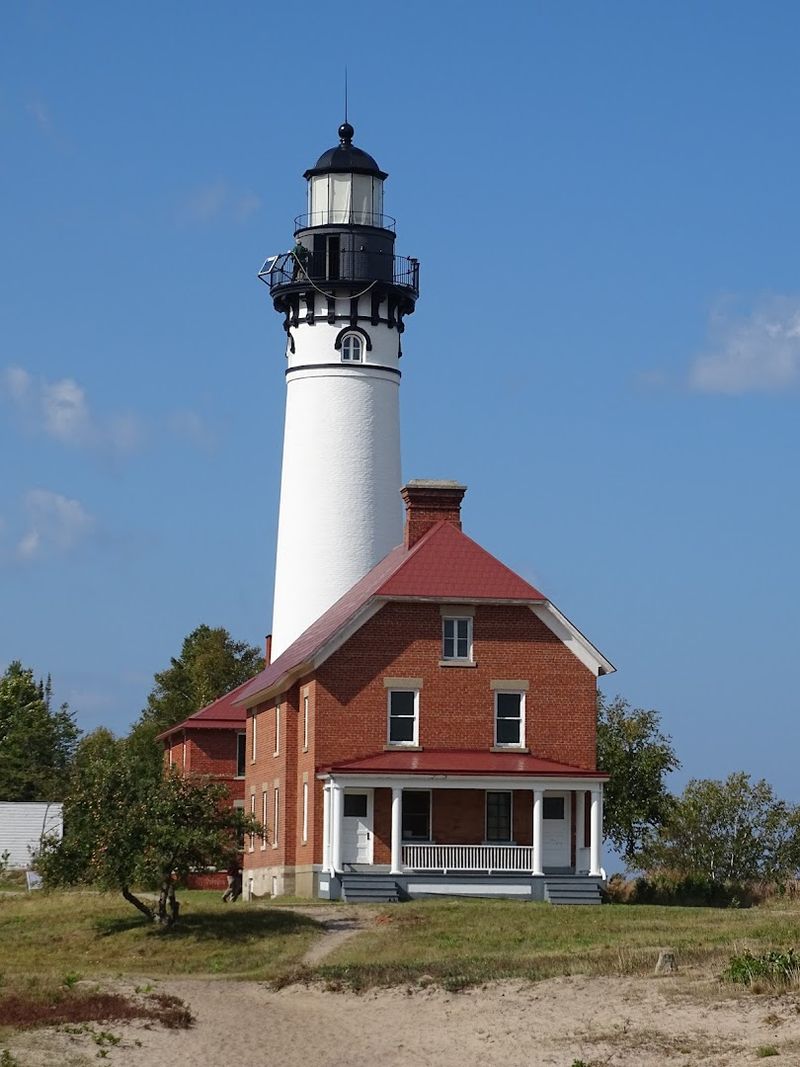
Lake Superior’s breath reaches the dunes here, salted with cold mist and the hush of distant breakers. The brick tower rises from jack pine and sandstone, looking practical and poetic against the rugged backdrop of Pictured Rocks National Lakeshore.
Nights bring a sky scattered with hard, bright stars and the steady rush of water that sounds like the earth itself is breathing. When you stand at the base of the tower, you can feel the isolation that defined this station for over a century.
It’s a place where the modern world feels like a distant rumor. Your only real neighbors are deer and the occasional bald eagle soaring over the cliffs.
Built in 1874, Au Sable Point Lighthouse guarded a treacherous reef and the legendary Shipwreck Alley, a stretch of coast that claimed dozens of vessels. Preservation partners maintain the keeper’s buildings with careful period detail, keeping the site a window into the 19th century.
Staying overnight means learning routines that once kept mariners alive, polishing the glass, checking the weather, and tending to the grounds.
2. Big Bay Point Lighthouse Inn (Big Bay)
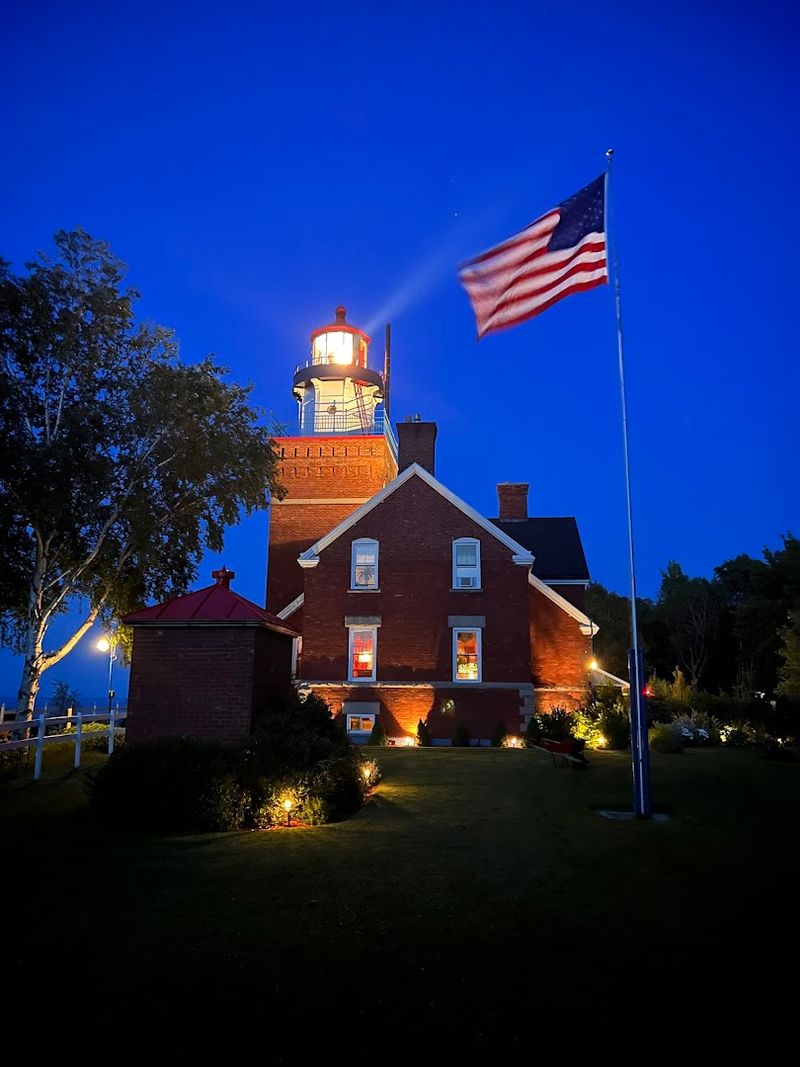
Coffee tastes better on this bluff, where Superior shows seven moods before noon. Big Bay Point Lighthouse doubles as a bed and breakfast, blending historical duty with Victorian comfort.
The air carries pine, damp stone, and a little wood smoke when Upper Peninsula evenings cool. Unlike more rustic keeper setups, this spot offers quilted rooms and a warm breakfast, with the brick tower steps away.
First lit in 1896, the station watched timber freighters and ore carriers grind past Squaw Bay on their way to Marquette. Restoration was a labor of love, keeping its workmanlike character intact, right down to original brick textures and clipped eaves.
You can feel the transition from rugged industrialism to cozy hospitality. The inn holds both comfort and historical weight, ideal if you want the lighthouse experience without hauling water or scrubbing floors.
Reserve early, especially for fall color weekends when surrounding forests turn into crimson and gold. Trails thread the nearby state forest, and Marquette makes a strong day trip for supplies or a local meal.
3. Big Sable Point Lighthouse (Ludington State Park)
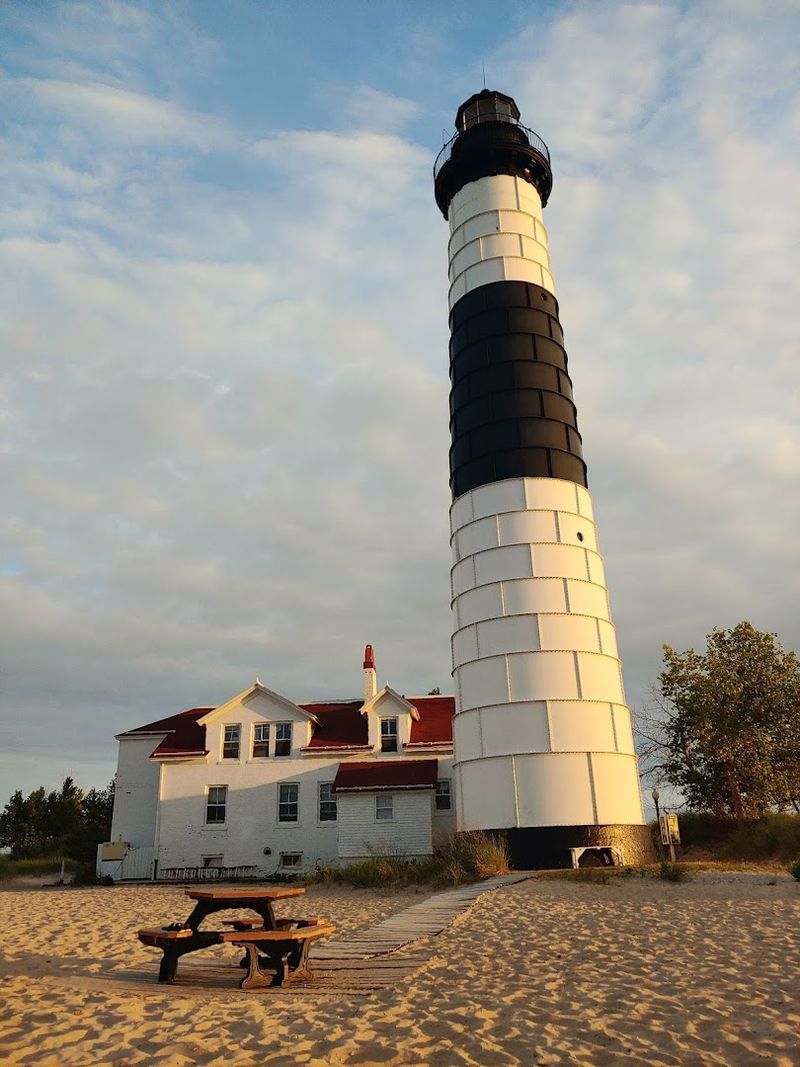
Wind hums across the dunes at Big Sable Point Lighthouse, combing marram grass like a careful hand. The black-and-white striped tower looks nautical and slightly austere, anchoring the horizon against the shifting sands of Ludington State Park.
Evenings settle with gull chatter and a long beach hush that only Lake Michigan produces. The landscape stays in motion, with dunes creeping toward the historic structures, reminding you how nature never stops negotiating.
Completed in 1867, Big Sable guided ships through treacherous shifting bars and thick fog. Today, the Friends of Big Sable Point Lighthouse manage preservation and run a popular keeper-for-a-week program.
The quarters keep a simple, work-first design that feels quietly sturdy. As a volunteer keeper, you’ll spend days in the gift shop or giving tours, but the real magic arrives after the park gates close.
Access is by foot or bike through the state park, roughly 1.8 miles over sand and gravel, so keep luggage light and manageable. Volunteers meet the sun and lake in a way few others do.
4. Crisp Point Lighthouse (Near Newberry)
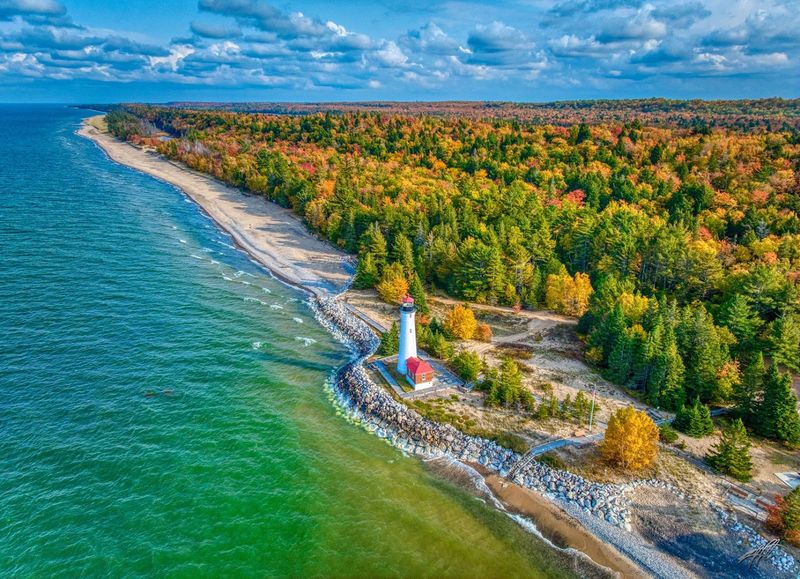
The road in is sand and expectation, rattling through dense forest for miles until the lake appears suddenly. Crisp Point Lighthouse stands alone, a pale needle against Lake Superior’s restless palette, and the isolation is the point.
Nights bring a ringing quiet, broken by waves crashing the shore and the occasional distant bark of a fox. This might be the most solitary light on the list, and that solitude is its greatest gift.
First lit in 1904, it guarded a stretch of coastline infamous for devastating shipwrecks. For decades, the tower sat in heartbreaking neglect, nearly lost to encroaching waves before volunteers restored it piece by patient piece.
The site tells a story of near-loss and tenacity. When you stay here, you aren’t just a guest, you’re a witness to a community’s refusal to let history wash away.
Overnights happen through limited keeper programs and rustic arrangements that are largely seasonal. Pack self-sufficiently, water, warm layers, and deep respect for the distance to the nearest town.
5. DeTour Reef Light (Off DeTour Village)
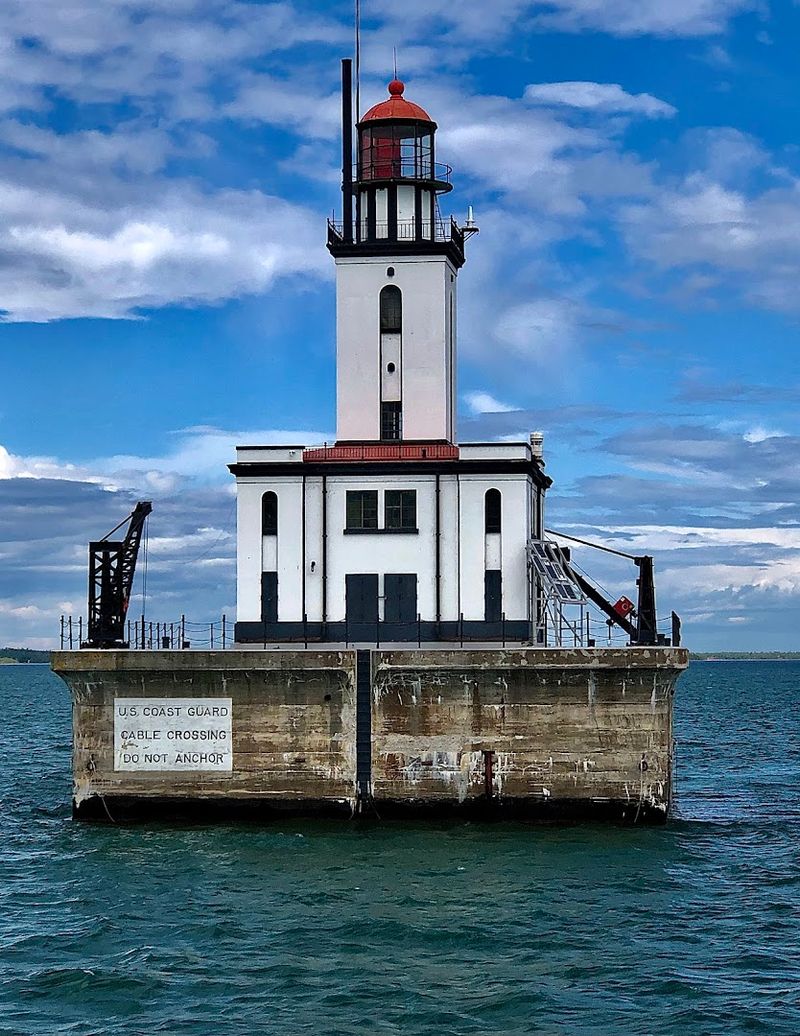
From the approach boat, DeTour Reef Light looks like a floating house with a reinforced backbone. It sits over green-tinted water at Lake Huron’s northern tip, squared and defiant against the currents.
This is a crib light, built on a massive concrete foundation directly in the water. Freighters slide past like quiet multi-story buildings, their engines a low thrum that vibrates through the structure.
Night settles cleanly, with water talking under the floorboards and the feeling of being on a stable, historic ship. Built in 1931 to replace an earlier onshore light, it marks the critical entrance to the St. Marys River.
Preservationists rebuilt details from original cranes to glazed interior tiles. Staying onboard means stepping into a living artifact, surrounded by water 24 hours a day, with weekend stays in surprising comfort.
Guests arrive by small charter boat and learn basic routines, including log entries and light housekeeping. Pack compactly in soft bags, since space is tight and hard suitcases complicate transfers.
Watch the weather window, because Superior and Huron can delay pickup. The isolation feels purposeful, and at dawn a long pink road stretches across the channel, lighting passing freighters in a way you’ll never see from shore.
6. Eagle River Lighthouse (Mohawk Area)
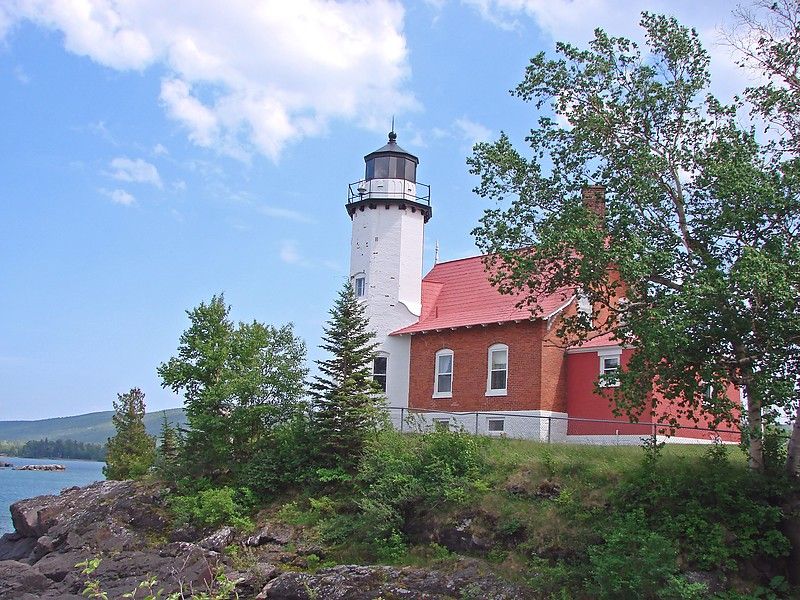
Granite and brick give Eagle River Lighthouse a grounded, almost domestic grace that sets it apart from more industrial towers. It later became a private residence and is now a historic rental with lake views that feel cinematic.
Basalt rocks line the shore, polished into smooth dark spheres by eons of waves. The Keweenaw air is mineral-cool and so clean it almost tastes sweet.
Established in 1858 for Copper Country, the light watched ore ships push north through frigid Superior waters. Restorations honored the original massing, color palette, and the rhythm of the windows, keeping the building’s quiet logic intact.
Inside, decor mixes period cues with unfussy modern comfort. It’s a strong choice if you want to live in a lighthouse, not just sleep near one.
Bookings open seasonally and sell out quickly, especially in summer when Keweenaw sunsets stretch toward 10 PM. Stock groceries in Calumet before heading north, and plan for weather that changes without apology.
7. Pointe Aux Barques Lighthouse (Port Hope)
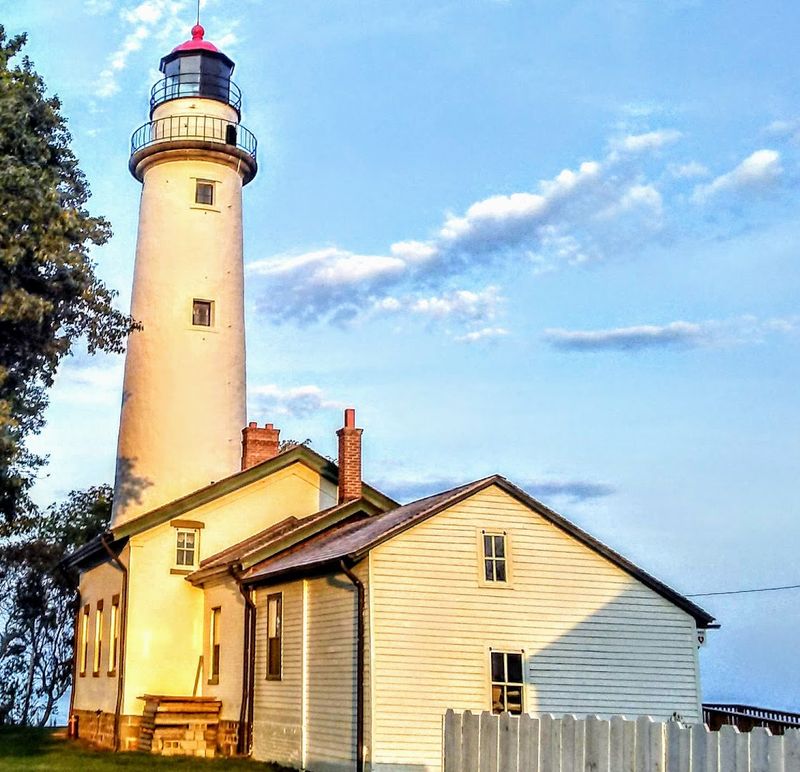
Morning feels tidy at Pointe aux Barques, where the lawn is clipped and Lake Huron stretches like a wide, unwrinkled sheet. The white tower stands without fuss, and that restraint is part of the charm.
It’s a friendly station where visitors wave as if they share a small secret. Located at the tip of the thumb, it feels like a quiet outpost the world hasn’t fully noticed.
Dating to 1848 and rebuilt after a fire in the 1880s, the station guided lumber schooners and lake steamers through treacherous Saginaw Bay waters. Volunteers maintain exhibits and preserve the keeper’s spirit with pragmatic detail.
History here reads as work, not just romance. You sense calloused hands in the building placement and the way equipment was maintained to survive long seasons.
Overnights can happen through occasional volunteer-keeper stays and nearby rental partnerships. Confirm dates with the local Friends group and plan around museum hours.
8. Tawas Point Lighthouse (Tawas Point State Park)
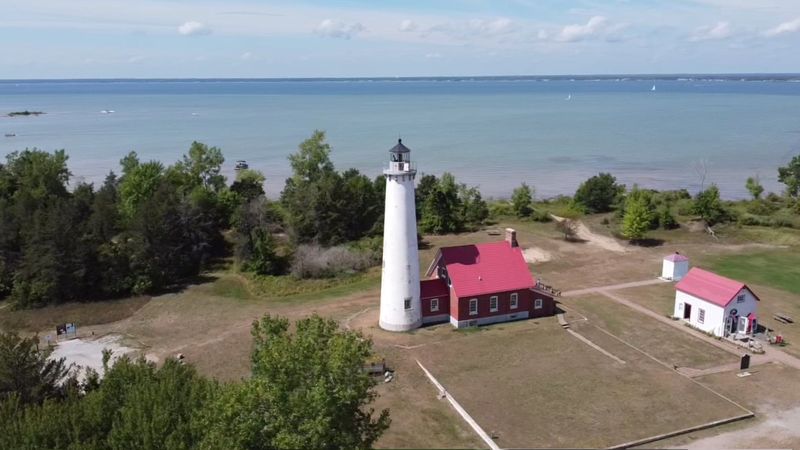
Gulls trace lazy circles over Tawas Point, where the sandbar curves into the bay like a deliberate gesture. The lighthouse presides with easy manners, neighboring swimmers, kite-fliers, and shorebirds.
Evenings cool slowly, carrying nostalgic whiffs of campfires from the nearby campground. This is an accessible, social lighthouse that feels woven into the joy of a Michigan summer.
First lit in 1876, the light had to be moved and rebuilt as migrating sands and shoals shifted over decades. Restoration stays faithful, from brick hues to lantern details at the top.
Staying here feels like a classroom where the lake does most of the teaching. It’s educational, upbeat, and quietly persuasive about how change shapes shorelines.
Apply for volunteer-keeper lodging, which involves greeting visitors and doing simple chores to keep the site in good order. If quarters are full, the state park campsites are a strong backup, especially during spring birding.
Pack binoculars, since the point is a major stopover for migration. At sunrise, gold pours through lighthouse windows and dust motes spark like tiny comets.
9. Mission Point Lighthouse (Mackinac Island)
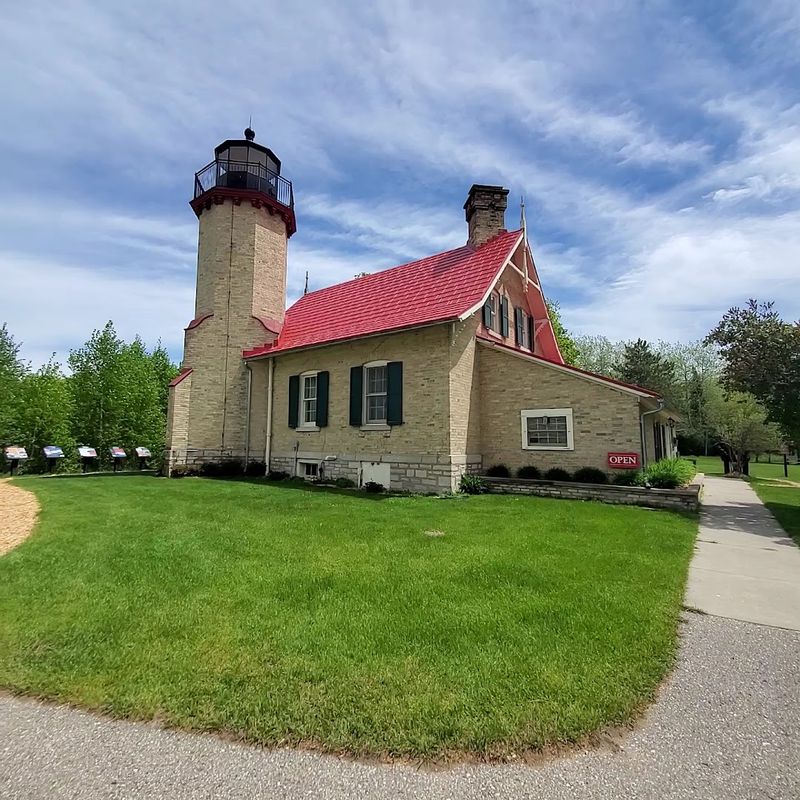
Hoofbeats and a gentle lake breeze set the tempo around Mission Point, at the tip of the Old Mission Peninsula. While some blurbs mention Mackinac, this light sits at the end of one of Michigan’s most beautiful wine-country drives.
The lighthouse wears white paint like a freshly pressed shirt, matching the tidy mood of the surrounding park. Summer days smell of wild roses, with bicycle chains clicking softly as explorers move through trails.
Built in 1870, it shepherded ships through tricky Grand Traverse Bay currents. Caretakers preserve rooms with museum-like clarity and gentle storytelling, so the history feels cared for, not staged.
It’s a smaller, intimate light with a deep connection to the land around it. The whole place has a porch-ready feeling, like it expects company and welcomes it.
Overnight programs let you live as a keeper for a week, and they’re competitive, so plan your application months ahead. Your reward is a sunset view few people get.
Evenings belong to quiet walks along the rocky shore. The beam sketches soft geometry on the water, disappears like a polite guest, then returns again.
10. Grand Traverse Lighthouse (Leelanau State Park)
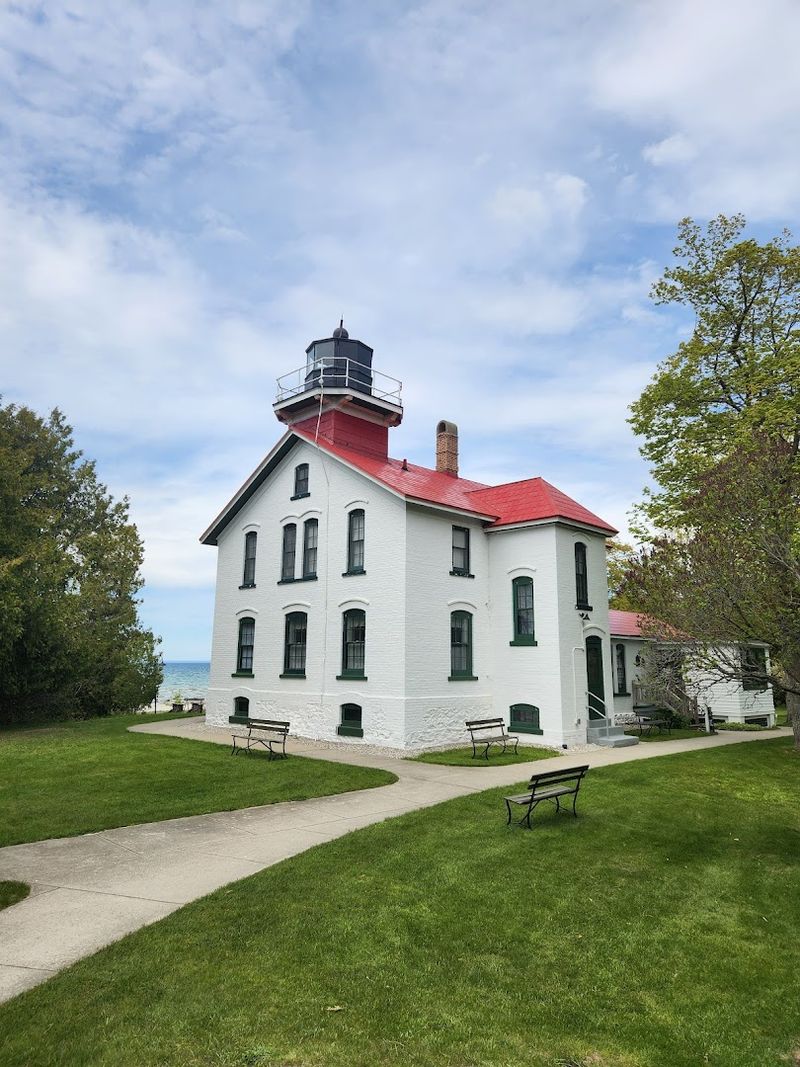
At the tip of the Leelanau Peninsula, wind smells of cedar and cold stone. Grand Traverse Lighthouse sits square and bright, the exact picture that appears when you hear the word lighthouse.
The shoreline is a trove of smooth cobbles that click underfoot, each wave sorting them into new patterns. It’s rugged and beautiful, where the land finally yields and lets Lake Michigan take over.
Established in 1858, it guarded the Manitou Passage, one of the busiest and most dangerous Great Lakes shipping lanes. Restoration is meticulous, from parquet floor patterns to historic lens displays in the fog signal building.
Museum rooms feel lived-in rather than staged, as if the keeper stepped out to check the horizon. That detail makes the site feel human, not purely commemorative.
Apply for the keeper program to stay in the former assistant keeper’s quarters. You’ll help with tours and keep the museum running smoothly for visitors who make the trek to the end of the road.
Northport is your last provisioning stop, and an extra day for wineries and farm stands is worth it. Dress for mosquitoes at dusk, then settle in, lantern-lit notes and sleep that feels gentle, sure, and complete.