
18 Pennsylvania Architectural Treasures Every Design Lover Should See

Pennsylvania is a playground for design lovers, where brick, stone, and steel tell stories as boldly as any history book.
Walk through city streets or country roads and you will spot soaring spires, intricate facades, grand staircases, and bold modern lines that stop you in your tracks.
Call it a blueprint of beauty, a skyline symphony, a masterclass in craftsmanship.
Gothic drama meets industrial grit, colonial charm stands beside sleek innovation, and every structure adds another layer to the state’s rich visual story.
Architecture here is not just something you pass by, it is something you feel. Sunlight glints off stained glass, carved details reward a closer look, and old wood beams carry the faint scent of time itself.
Pennsylvania offers surprises around almost every corner for anyone who appreciates thoughtful design.
First time I started paying attention, I found myself slowing down mid walk, tilting my head upward, snapping photos, and wondering how many incredible buildings I had rushed past without ever truly seeing.
1. Fallingwater
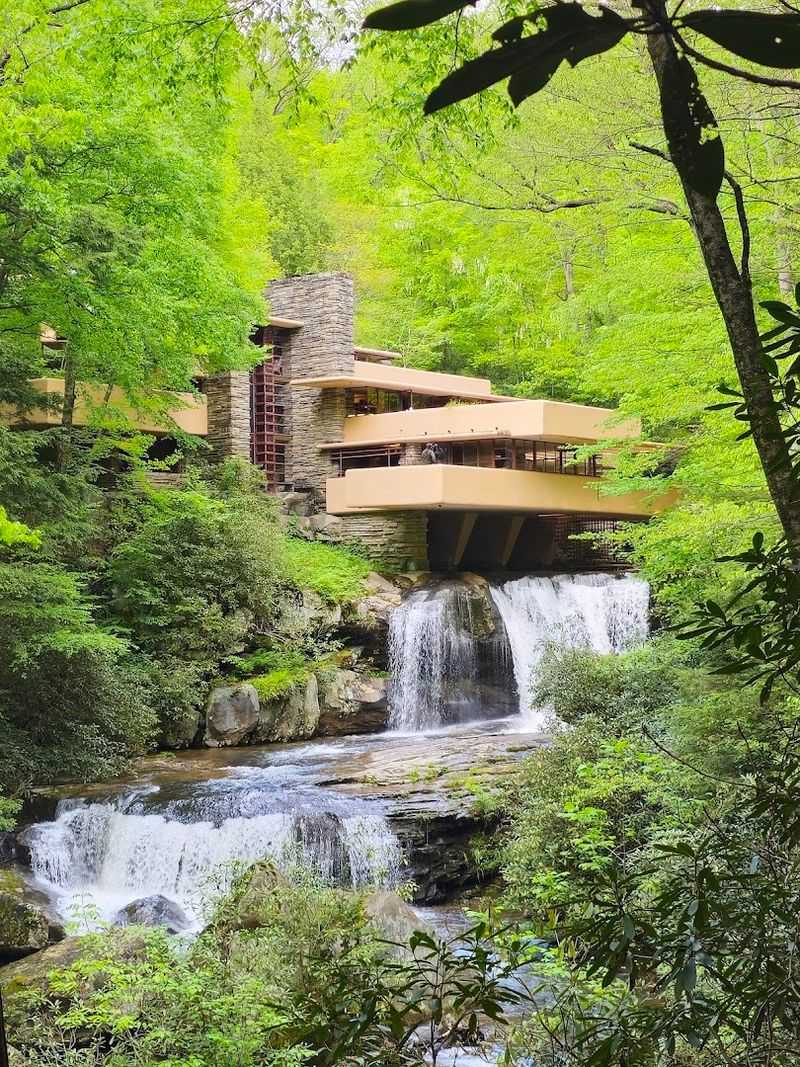
Frank Lloyd Wright built something impossible over a waterfall in southwestern Pennsylvania, and it still stops visitors in their tracks nearly ninety years later.
The house seems to float above Bear Run, with massive concrete terraces jutting out like natural rock formations.
Wright designed every detail to blur the line between inside and outside. Rocks from the stream bed pierce through the living room floor, and corner windows open completely to eliminate barriers between you and the forest.
The sound of rushing water fills every room, creating a constant reminder that you’re living with nature instead of just near it.
Wright called it organic architecture, but I think of it as proof that buildings can grow from their landscape like trees.
Located in Mill Run, this masterpiece attracts architecture students and curious travelers who want to see what happens when genius meets geography.
Tours book up months ahead because everyone needs to experience how Wright turned a weekend retreat into an American icon that changed residential design forever.
2. Kentuck Knob
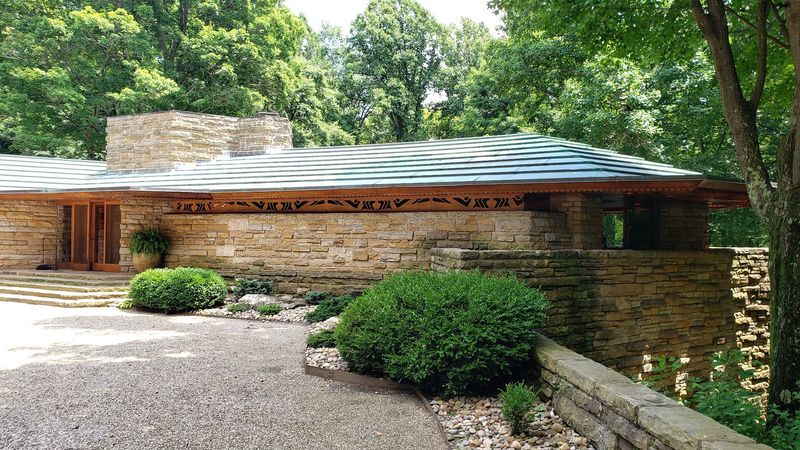
Wright designed another masterpiece just ten miles from Fallingwater, though this one stays closer to the earth.
Kentuck Knob sits on a mountain ridge, spreading out in hexagonal patterns that feel more like a honeycomb than a traditional house.
Built in 1956 for the Hagan family, this Usonian home shows Wright’s vision for affordable, beautiful housing. Red cypress wood and local stone create walls that seem to have always belonged on this ridge.
The house follows the contours of the land instead of fighting against them, with every angle calculated to frame mountain views through floor-to-ceiling windows.
Wright designed built-in furniture and even chose the paint colors, leaving nothing to chance. Sculpture gardens now surround the property, adding contemporary art to Wright’s original vision.
Visitors discover that this smaller Wright house teaches just as much about his philosophy as his more famous works, proving that genius doesn’t always need grand scale to make its point about how humans should live within their landscape.
3. Longwood Gardens Conservatory
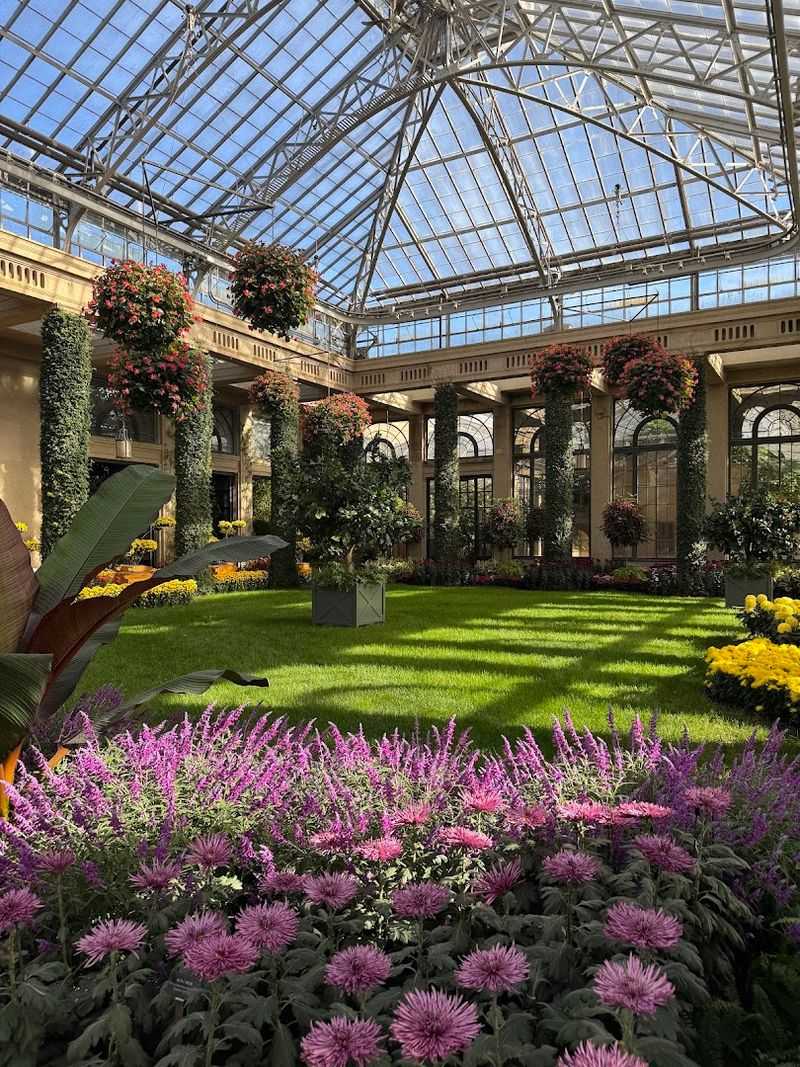
Pierre du Pont transformed a simple farm into a horticultural palace, and the conservatory became his crowning achievement.
Four acres of glass house thousands of plants from six continents, creating climate zones that transport you from Pennsylvania to tropical rainforests in seconds.
The structure itself deserves attention beyond the plants it shelters.
Victorian-era ironwork supports massive glass panels that flood the interior with natural light, while underground heating systems maintain perfect growing conditions year-round.
Du Pont obsessed over every architectural detail, from the fountains that cool the air to the walkways that guide visitors through carefully planned views.
The conservatory expanded multiple times since opening in 1921, each addition respecting the original design while incorporating modern engineering.
Recent renovations added contemporary glass technology that improves climate control without changing the historic appearance.
Standing beneath these soaring glass ceilings in Kennett Square feels like stepping into a cathedral dedicated to plants, where architecture serves nature instead of dominating it.
4. Independence Hall
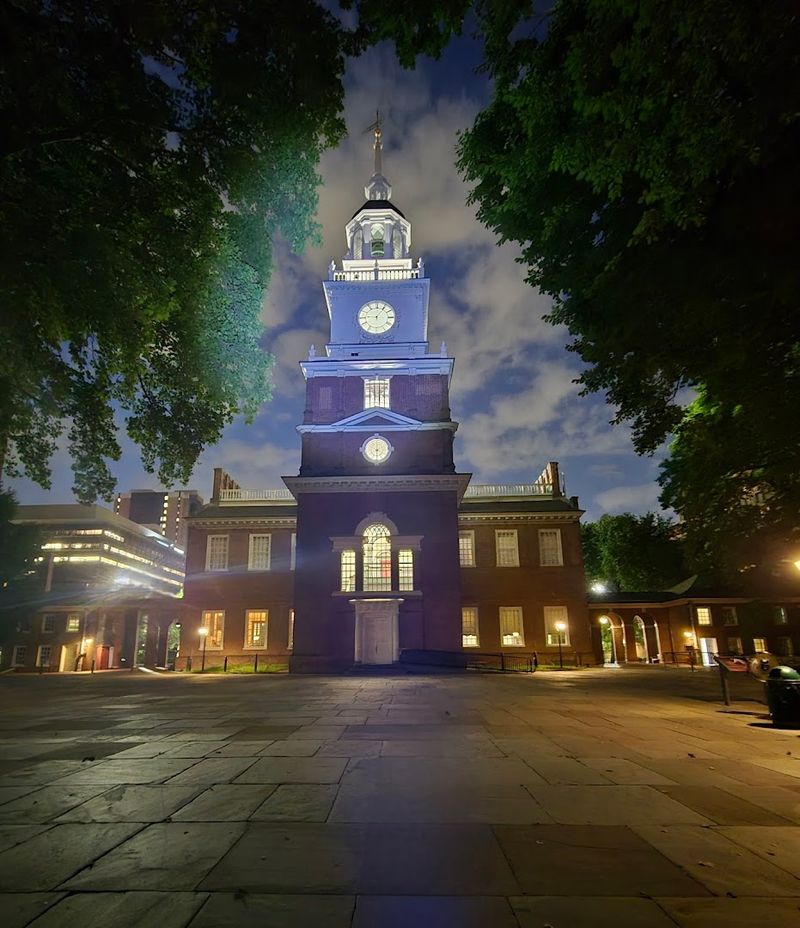
America got its start in this Georgian brick building, where delegates signed documents that changed world history.
The architecture reflects colonial sensibilities, with symmetrical windows, a centered tower, and balanced proportions that communicate order and reason.
Andrew Hamilton designed the Pennsylvania State House in 1732, decades before anyone imagined it would host a revolution.
The Assembly Room still holds the chairs where Benjamin Franklin, George Washington, and Thomas Jefferson debated independence, their words echoing off walls built for provincial governance.
The building’s modest scale surprises first-time visitors who expect something grander for such momentous events.
That simplicity makes it powerful, proving that world-changing ideas don’t require palatial settings. Careful restoration maintains the colonial appearance while protecting the structure for future generations.
Walking through these rooms in Philadelphia connects you directly to founding moments, when architecture witnessed the birth of a nation and preserved those memories in brick and timber that still stand strong.
5. Philadelphia City Hall
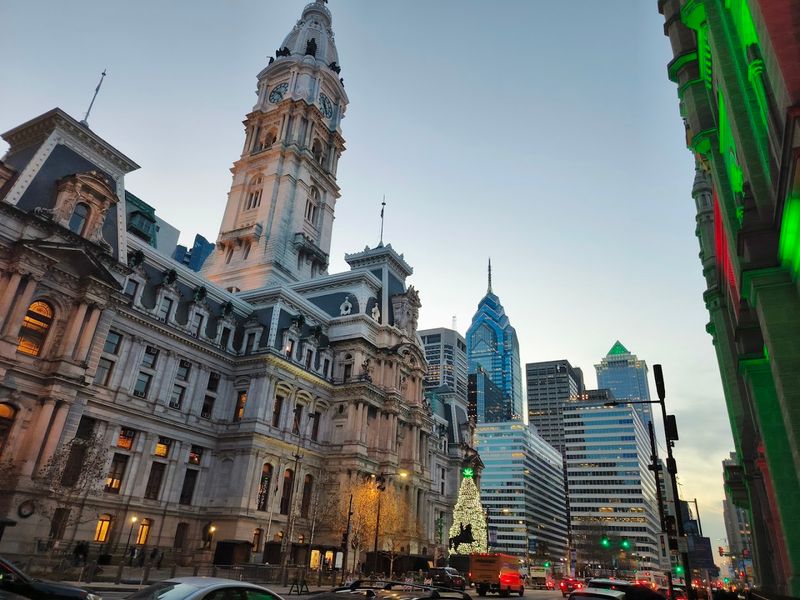
This massive Second Empire building dominated Philadelphia’s skyline for decades, and its tower still draws eyes upward to William Penn’s statue.
Construction took thirty years, creating the largest municipal building in America when it opened in 1901.
John McArthur Jr. packed every surface with sculptural details, using more marble and granite than any previous American building.
The exterior showcases 250 sculptures representing everything from continents to local wildlife, turning the building into a stone encyclopedia.
Inside, the grand staircase and ceremonial rooms display craftsmanship that modern builders struggle to replicate.
Each office and courtroom received custom details, from carved wood panels to painted ceilings that transform government work into an art experience.
The observation deck beneath Penn’s statue offers panoramic city views that explain why this location became Philadelphia’s civic heart.
Standing in the courtyard, surrounded by carved stone rising 548 feet overhead, you understand how architecture can express civic pride and ambition in ways that inspire citizens every single day.
6. Eastern State Penitentiary
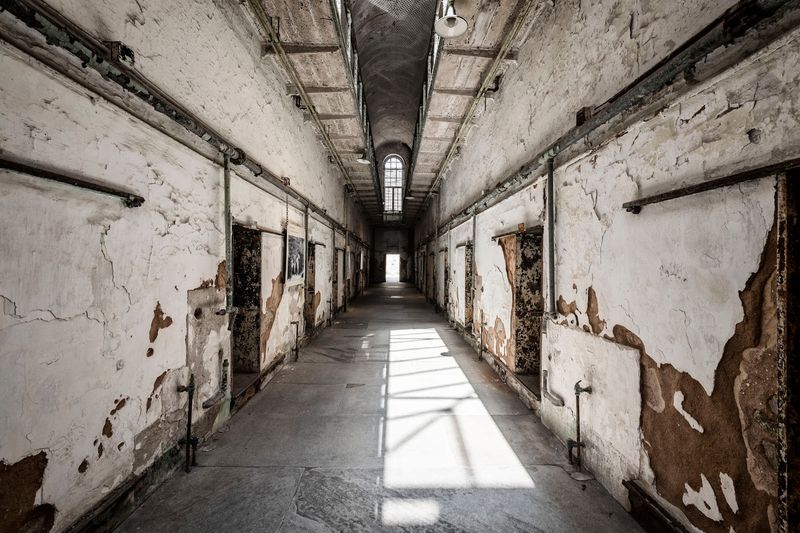
Gothic towers and fortress walls hide a revolutionary prison design that changed corrections worldwide.
John Haviland created the radial plan in 1829, with cellblocks spreading like spokes from a central hub that let one guard monitor hundreds of prisoners.
The architecture enforced solitary confinement through design, giving each inmate a private cell with a skylight called the “Eye of God.”
Vaulted ceilings and stone corridors created an atmosphere meant to inspire penitence through isolation and reflection.
After closing in 1971, the building began its transformation into a stabilized ruin.
Preservationists chose to maintain the decay rather than restore it, creating a haunting space where architecture tells stories about justice, punishment, and changing social values.
Crumbling cellblocks now host art installations that explore themes of incarceration and freedom.
Visiting this North Philadelphia landmark means confronting how buildings shape human behavior, for better or worse, and questioning what our structures say about our values and our treatment of those we lock away from society.
7. Philadelphia Museum of Art
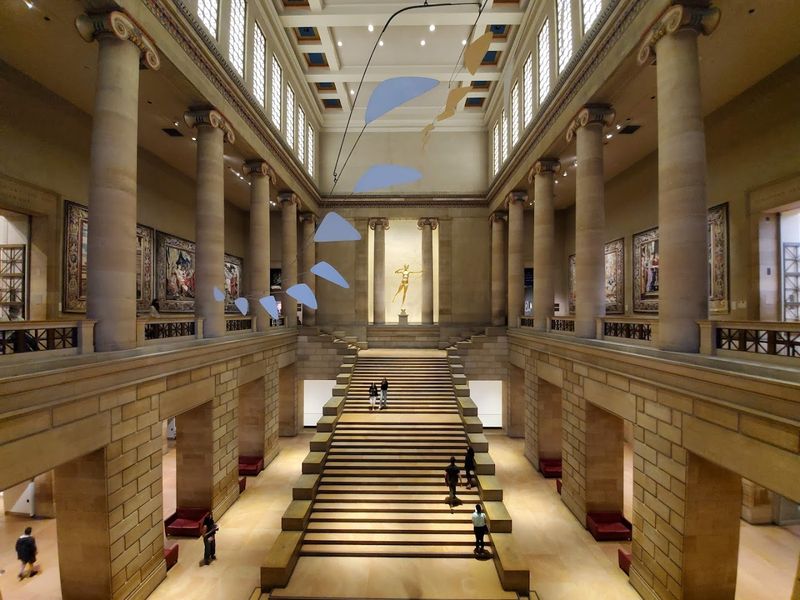
Those famous steps lead to a Greek Revival temple that houses one of America’s finest art collections.
Architects Horace Trumbauer, Zantzinger, Borie and Medary designed a building that announces its cultural importance before you even walk inside.
The exterior mimics ancient Greek temples with massive columns and pediments, but the interior surprises with intimate galleries and unexpected sightlines.
Natural light floods the galleries through carefully placed skylights and windows that enhance the artwork without overwhelming it.
The Great Stair Hall rivals European palaces with its scale and decoration, using marble, bronze, and painted ceilings to create an entrance worthy of the treasures beyond.
Multiple renovations expanded the building while respecting the original 1928 design, proving that historic architecture can adapt to modern museum needs.
Standing on the steps, looking down Benjamin Franklin Parkway toward City Hall, you grasp how this building anchors Philadelphia’s cultural district.
The architecture doesn’t just house art; it becomes part of the experience, shaping how visitors approach and appreciate the collections inside.
8. Cathedral Basilica of Saints Peter and Paul
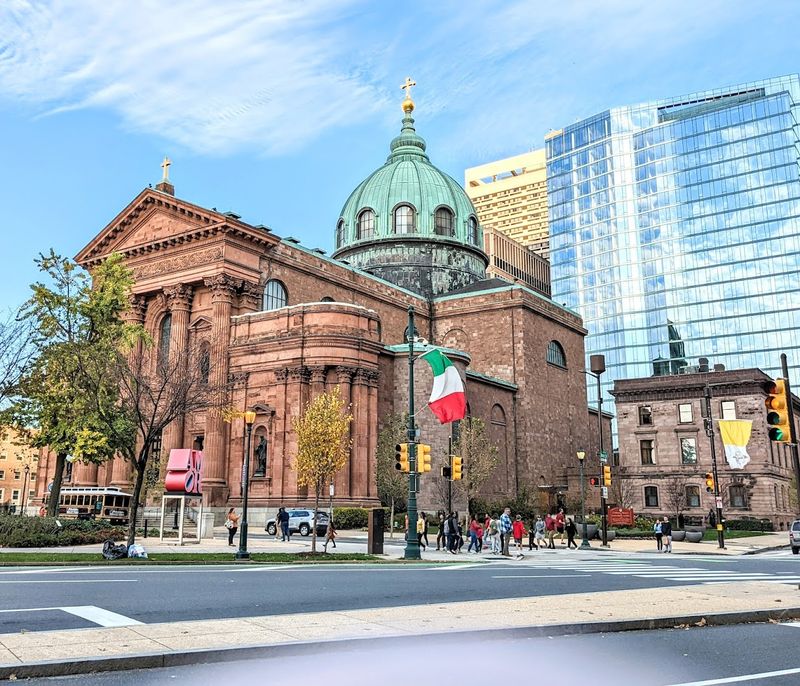
Philadelphia’s Catholic cathedral borrows its design from Italian Renaissance churches, with a massive dome that echoes Rome’s great basilicas.
Architects Napoleon LeBrun and John Notman created a building that brings European grandeur to an American city.
The copper dome rises 157 feet above the floor, drawing eyes upward toward frescoes and ornamental plasterwork that took decades to complete.
Natural light streams through clerestory windows, illuminating marble columns and bronze fixtures that demonstrate extraordinary craftsmanship.
The interior feels surprisingly intimate despite its size, with side chapels and alcoves that offer quiet spaces for reflection.
Stained glass windows filter Philadelphia sunlight into colored patterns that shift throughout the day, transforming the worship experience with changing light.
Located at 18th Street and the Benjamin Franklin Parkway, the cathedral serves both as an active parish and an architectural landmark.
Visitors discover that religious architecture can inspire through beauty and scale, creating spaces that lift spirits whether you come for worship or simply to appreciate how builders reached toward heaven with stone and faith.
9. Fisher Fine Arts Library
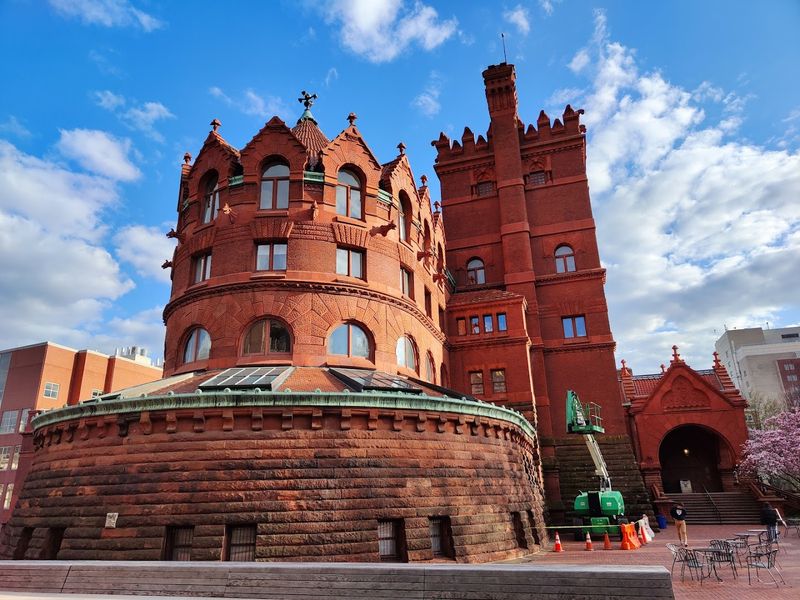
Frank Furness designed a Venetian Gothic masterpiece for the University of Pennsylvania, and it remains one of America’s most beautiful libraries.
Completed in 1891, the building combines medieval inspiration with industrial-age materials in ways that still feel fresh and surprising.
The exterior mixes red sandstone, brick, and terra cotta in patterns that defy conventional symmetry.
Furness rejected boring regularity, creating a facade that rewards close inspection with unexpected details and playful ornamental touches.
Inside, the main reading room soars three stories high beneath exposed iron trusses that support a glass ceiling.
Natural light pours down onto wooden reading tables, creating perfect conditions for study while showcasing Furness’s genius for combining beauty with function.
Recent restoration work revealed original paint colors and decorative details that had been covered for decades.
Walking through this West Philadelphia library means experiencing Victorian confidence and creativity, when architects believed buildings should excite the eye and inspire the mind rather than simply provide shelter and storage for books.
10. The Barnes Foundation
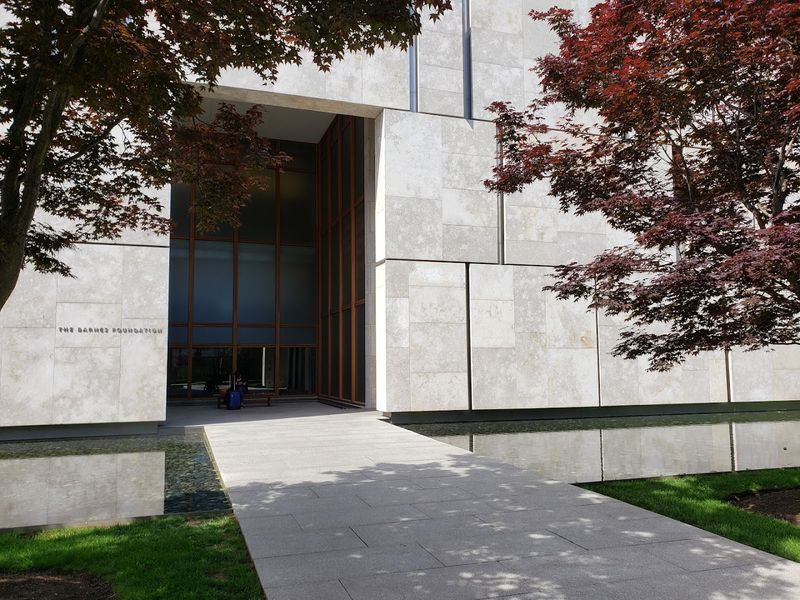
Tod Williams and Billie Tsien designed a new home for Albert Barnes’s incredible art collection, creating a building that honors his vision while meeting modern museum standards.
The 2012 structure in Philadelphia replicates the original gallery layout from the suburban Merion location.
Limestone walls and bronze accents give the exterior a quiet dignity that lets the art inside take center stage.
The architects understood that great museum architecture supports the collection without competing for attention. Natural light remains crucial to the Barnes experience, just as the founder intended.
Skylights and carefully positioned windows illuminate Renoirs, Cézannes, and Matisses with the same quality of light they received in the original building.
The building sits in a landscaped garden that provides a transition between bustling Benjamin Franklin Parkway and the contemplative galleries inside.
Visiting means experiencing how contemporary architecture can respect historical vision while embracing modern accessibility, proving that new buildings can honor old ideas without simply copying them or pretending history never happened.
11. Pennsylvania Academy of the Fine Arts
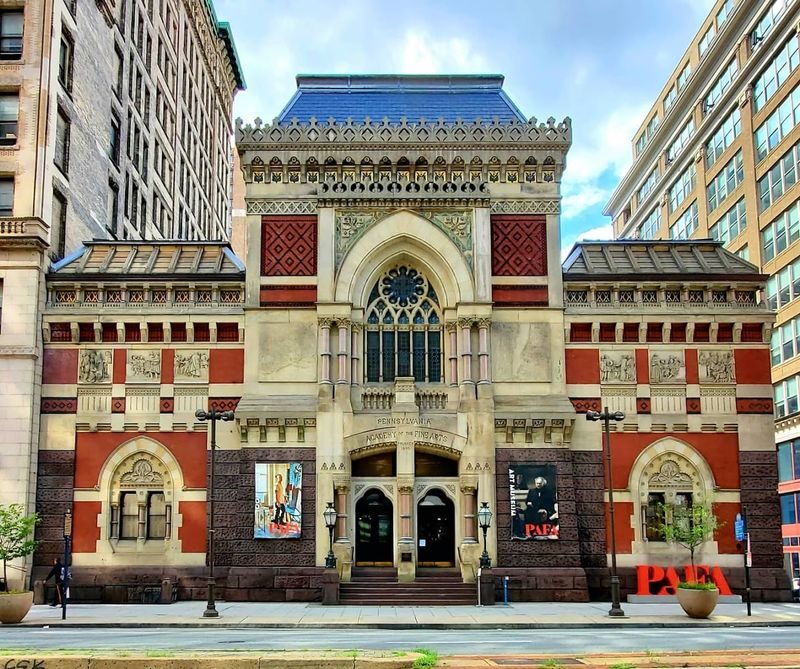
Frank Furness and George Hewitt created a Victorian Gothic jewel box that perfectly houses America’s first art museum and school.
Opened in 1876, the building announces its creative purpose through exuberant decoration and bold color combinations that still shock conservative tastes.
Patterned brickwork, carved stone, and polychrome tiles cover the exterior in a riot of texture and color.
Furness rejected subtle good taste, choosing instead to create a building that demands attention and celebrates artistic freedom through architectural excess.
The grand staircase inside rises through three stories of ornamental ironwork, stained glass, and decorative painting that overwhelms the senses in the best possible way.
Every surface received artistic treatment, from mosaic floors to painted ceilings that transform circulation space into gallery-worthy art.
Standing in this Broad Street landmark, you understand how architecture can embody creativity and inspire artistic ambition.
Furness designed a building that teaches students to be bold, to trust their vision, and to create work that matters rather than playing it safe with conventional approaches.
12. Pennsylvania State Capitol
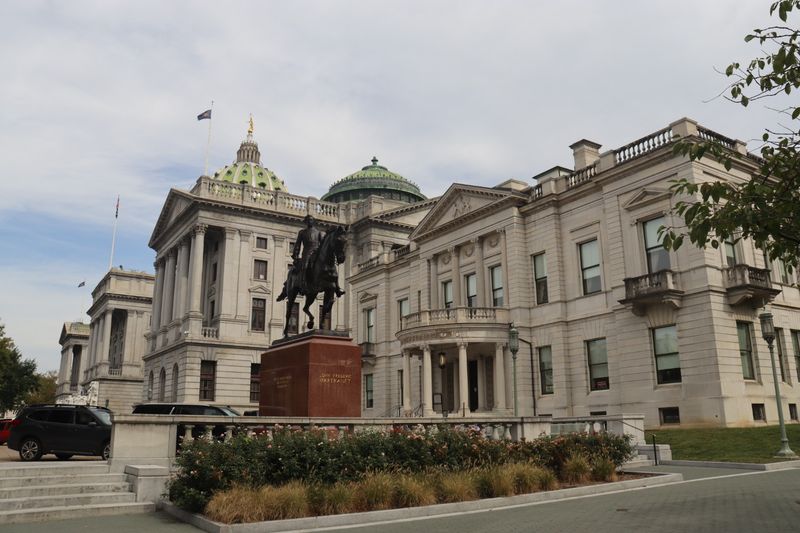
Joseph Huston designed a capitol that rivals European palaces, with a green dome that dominates Harrisburg’s skyline.
President Theodore Roosevelt called it “the handsomest building I ever saw” at its 1906 dedication, and that assessment still holds up.
The exterior combines Vermont granite, Italian Renaissance details, and Beaux-Arts grandeur in proportions that communicate governmental authority without intimidation.
The dome rises 272 feet, inspired by St. Peter’s Basilica in Rome but crowned with a bronze Commonwealth statue.
Inside, the rotunda features murals by Edwin Austin Abbey and stained glass by William Van Alen that transform political space into an art gallery.
Marble from around the world covers floors and walls, while bronze fixtures and carved wood demonstrate craftsmanship that modern governments rarely commission.
The House and Senate chambers showcase different decorative approaches, each stunning in its own way.
Touring this building means discovering that civic architecture can inspire pride and participation, creating spaces that make citizens feel their government deserves beautiful buildings because democracy itself deserves beautiful expression through permanent structures.
13. Bryn Athyn Cathedral
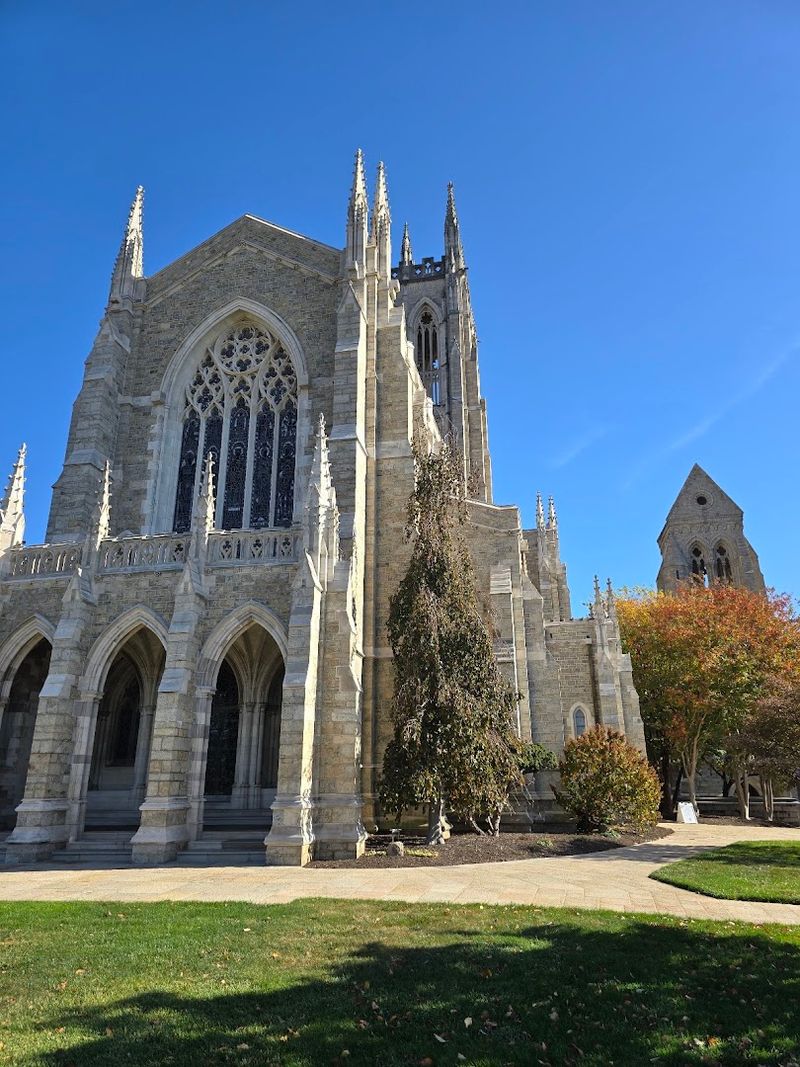
Raymond Pitcairn spent decades building a Gothic cathedral using medieval methods and modern resources.
Construction began in 1913 and continued for years as craftsmen learned forgotten techniques to create an authentic Gothic structure.
The cathedral rises from a hilltop north of Philadelphia, its tower visible for miles across the surrounding countryside.
Local stone and hand-carved details give the building a weathered appearance that makes it look centuries old despite its twentieth-century construction.
Inside, stained glass windows glow with colors that medieval glaziers would recognize, created using traditional methods that produce depth modern manufacturing can’t match.
The woodwork, metalwork, and stone carving throughout the building showcase skills that nearly disappeared before Pitcairn’s project revived them.
The adjoining Glencairn Museum displays artifacts that inspired the cathedral’s design, connecting visitors to the historical sources that guided construction.
Exploring this Bryn Athyn landmark means witnessing what happens when unlimited resources meet passionate dedication to historical accuracy and traditional craftsmanship that honors the past while creating something entirely new.
14. Fonthill Castle
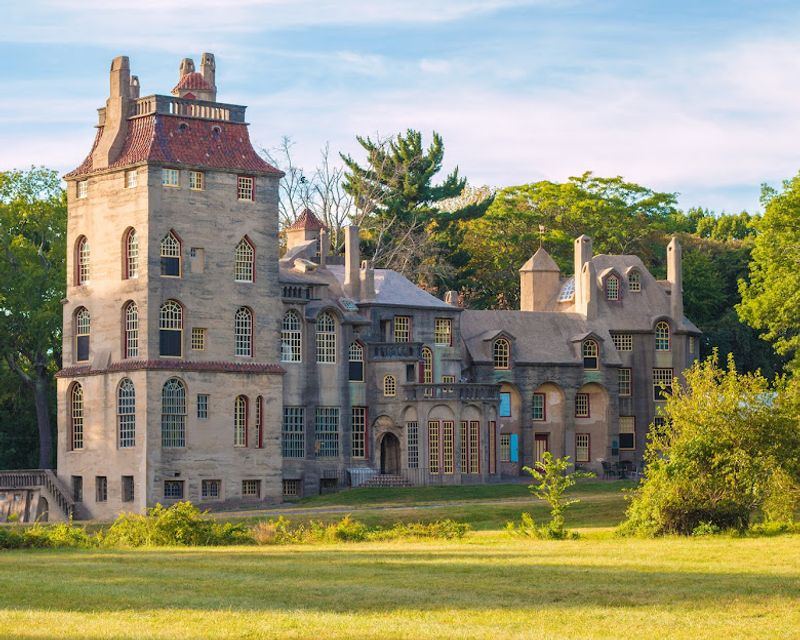
Henry Chapman Mercer built himself a concrete castle filled with tiles, and the result defies every architectural convention.
Completed in 1912, Fonthill sprawls across a Doylestown hillside like a medieval fantasy rendered in modern materials.
Mercer designed the building without formal plans, directing workers to pour concrete into forms that created irregular rooms, unexpected staircases, and passages that twist through the structure like tunnels. No two rooms share the same dimensions or ceiling heights.
Thousands of tiles cover walls, floors, and ceilings, displaying Mercer’s collection from around the world alongside examples from his own Moravian Pottery and Tile Works.
The tiles turn architectural surfaces into historical documents that teach visitors about civilizations through ceramic art.
Windows appear at odd angles, and the roofline jumps in elevation without warning, creating a silhouette that looks like it grew organically rather than following a blueprint.
Touring Fonthill means experiencing architecture as personal expression, where one person’s vision created a building that ignores rules and celebrates individual creativity over conventional good taste.
15. Cathedral of Learning
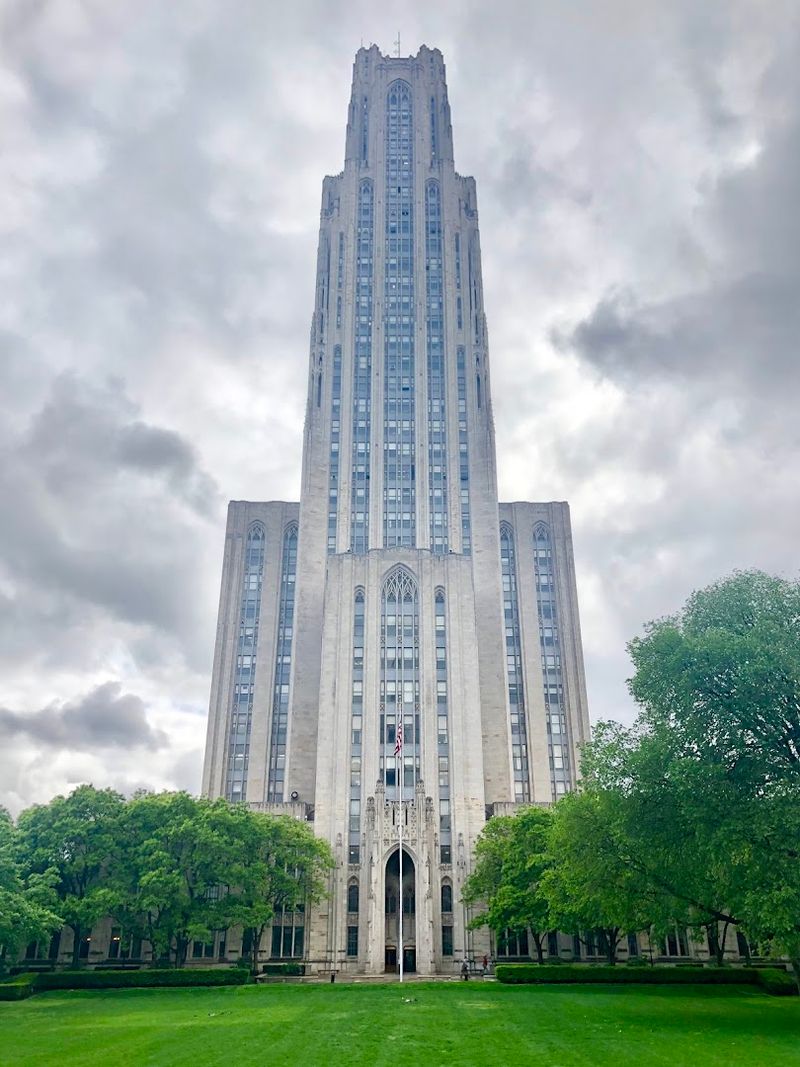
Charles Klauder designed a 42-story Gothic skyscraper for the University of Pittsburgh, creating something that shouldn’t exist but somehow works perfectly.
Completed in 1937, the Cathedral of Learning rises 535 feet, making it the tallest educational building in the Western Hemisphere.
The exterior uses Indiana limestone to create vertical lines that emphasize the building’s dramatic height.
Gothic details like pointed arches and decorative tracery adapt medieval church architecture for a modern academic tower.
Inside, the Commons Room soars four stories high with vaulted ceilings that feel like a cathedral nave transplanted into an office building.
The Nationality Rooms showcase different cultural architectural styles, with 31 classrooms designed by ethnic communities to celebrate Pittsburgh’s immigrant heritage.
Students study in a building that makes education feel sacred and important through sheer architectural ambition.
Standing in the Commons Room, looking up at the vaulted ceiling, you understand how architecture can elevate everyday activities and make learning feel like something worth building cathedrals to celebrate and preserve for future generations.
16. PPG Place
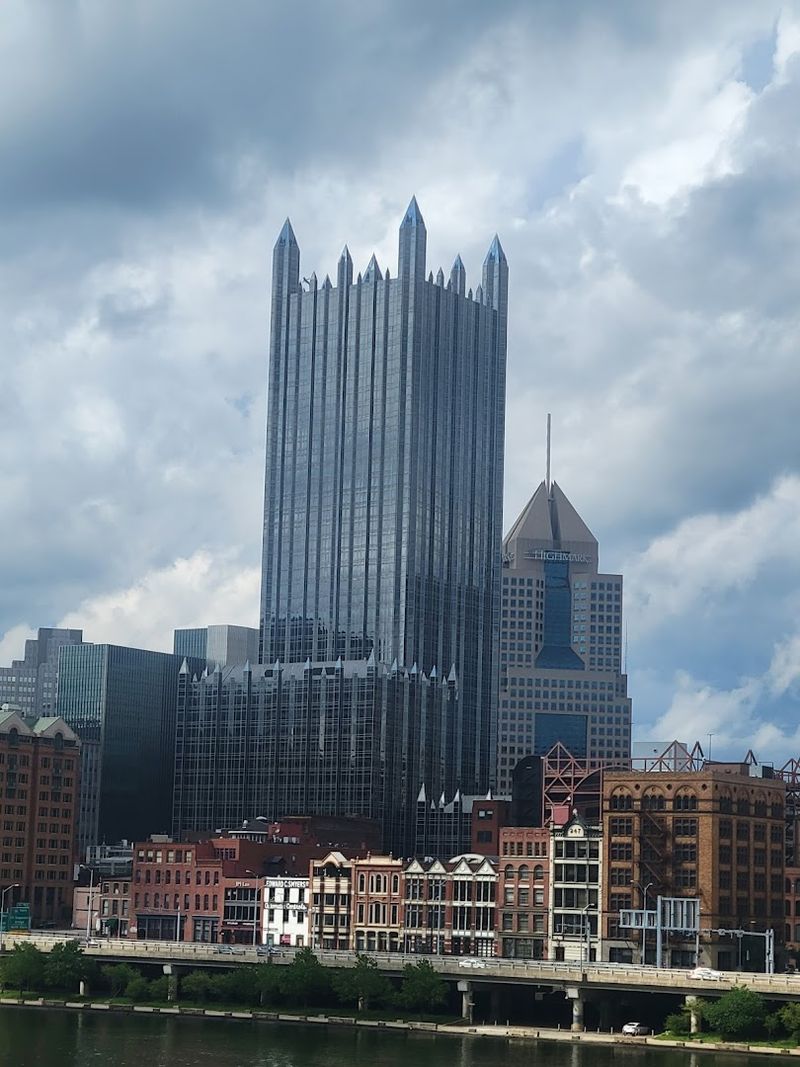
Philip Johnson and John Burgee created a postmodern interpretation of Gothic architecture using reflective glass instead of stone.
Completed in 1984, the complex includes six buildings surrounding a public plaza in downtown Pittsburgh.
The towers feature pointed tops and angular details that reference Gothic cathedrals while embracing modern materials and construction methods.
Over a million square feet of reflective glass creates surfaces that mirror the sky and surrounding buildings, making the complex appear to change throughout the day.
The main tower rises 40 stories, its crown visible throughout the city as a distinctive silhouette that defines Pittsburgh’s skyline.
The smaller towers step down in height, creating a varied roofline that adds visual interest while maintaining architectural unity.
The plaza between the buildings becomes a public gathering space that activates the street level with shops, restaurants, and seasonal events.
Experiencing PPG Place means seeing how postmodern architecture can reference history without copying it, using contemporary technology to create buildings that honor the past while looking confidently toward the future with optimism.
17. Allegheny County Courthouse
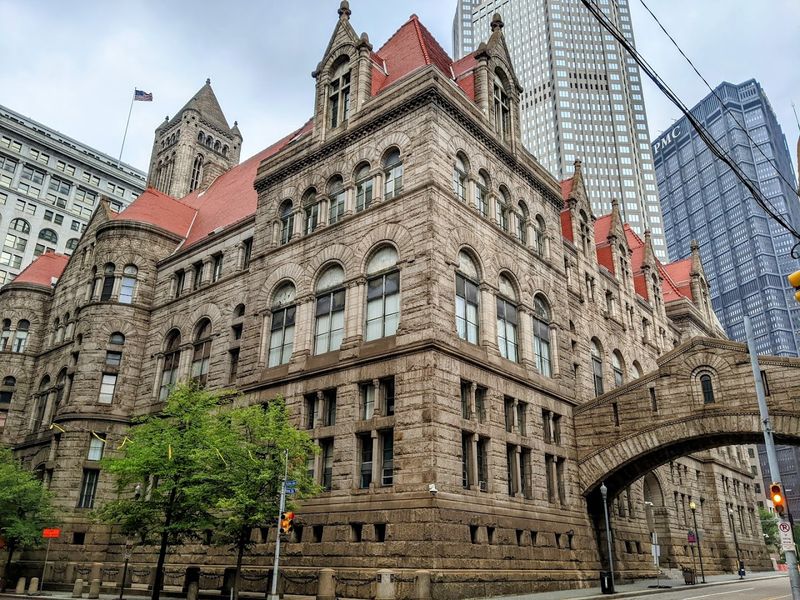
Henry Hobson Richardson designed his masterpiece courthouse just before his death, creating a building that influenced American architecture for decades.
Completed in 1888, the massive Romanesque structure commands an entire Pittsburgh block with walls that look strong enough to withstand anything.
Rough-cut granite and rounded arches give the exterior a fortress-like appearance that communicates governmental permanence and authority.
Richardson rejected delicate details in favor of bold massing and powerful forms that express strength through simplicity.
The interior courtyard surprises visitors with its open, light-filled design that contrasts sharply with the heavy exterior.
A glass roof covers the space, creating a covered plaza that serves as the building’s social heart.
Stone staircases and arched corridors throughout the building demonstrate how Romanesque design principles can organize complex government functions into coherent spaces.
The adjacent jail, connected by the Bridge of Sighs, shares the courthouse’s architectural vocabulary while serving its grimmer purpose.
Visiting means understanding how Richardson invented an American architectural style that expressed democratic values through permanent, powerful buildings that still impress more than a century later.
18. Heinz Memorial Chapel
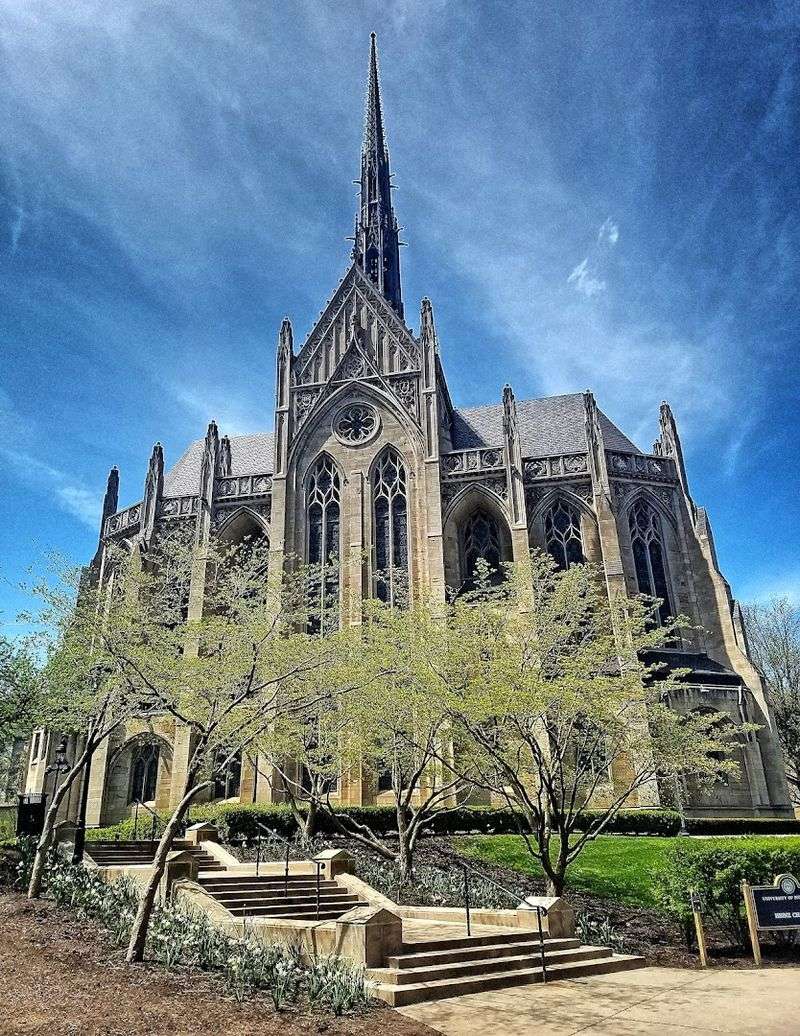
Charles Klauder designed a French Gothic chapel for the University of Pittsburgh that glows with some of the finest stained glass in America.
Completed in 1938, the building serves all faiths while maintaining the architectural vocabulary of medieval churches.
The exterior limestone walls and pointed arches create a traditional Gothic silhouette that complements the nearby Cathedral of Learning.
Flying buttresses support the walls while adding sculptural interest that rewards careful observation.
Inside, 23 stained glass windows rise 73 feet from floor to ceiling, creating walls of colored light that transform the interior throughout the day.
The windows represent religious and secular themes, making the space welcoming to diverse communities while maintaining its sacred atmosphere.
The chapel seats over 1,000 people beneath a ribbed vault ceiling that demonstrates Gothic structural principles.
Weddings, concerts, and university events fill the space with activity that proves religious architecture can serve contemporary needs.
Standing beneath those soaring windows, surrounded by colored light, you experience how architecture can create transcendent spaces that lift the spirit regardless of personal beliefs or religious background.