
This Snow Globe Feeling Winter Weekend In Alpena, Michigan Is Pure Magic
While everyone else is huddled under blankets complaining about the cold, I’m out here living my best life because Michigan winter is, hands down, the superior season.
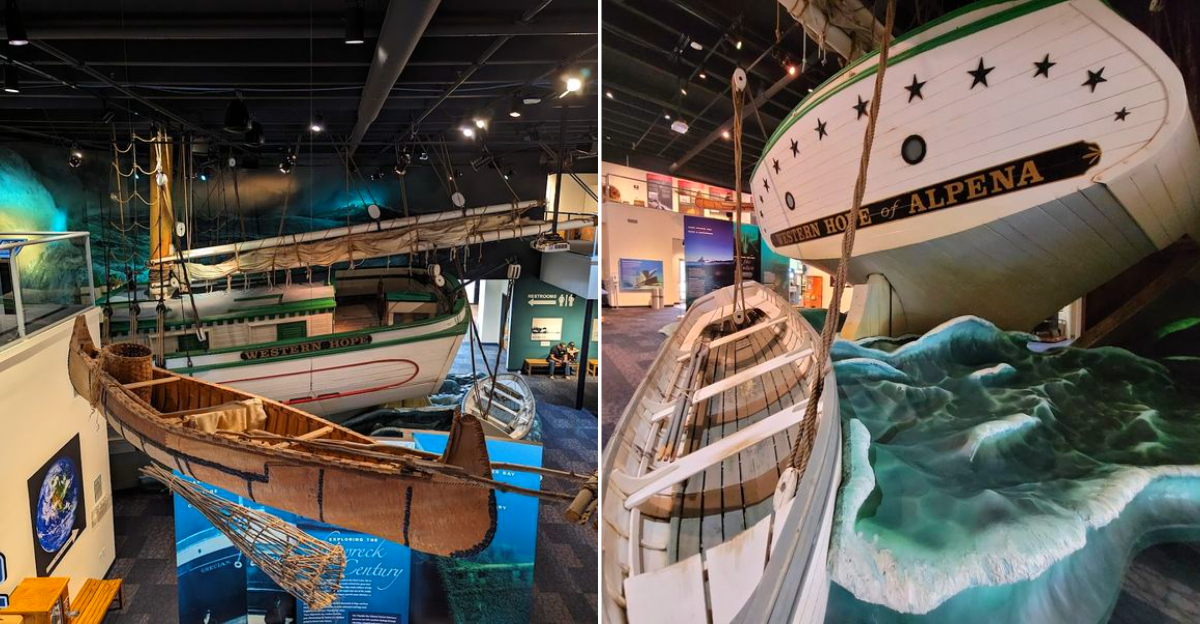
There is nothing like the crisp, lung-clearing snap of the Alpena air to make you feel alive before you duck into the Great Lakes Maritime Heritage Center. Stepping inside on a snowy weekend feels exactly like cracking open a giant, nautical snow globe and stepping right into the heart of the action.
While the bay outside is quiet and frozen, the atmosphere indoors is electric, especially when you’re standing near a storm-lit shipwreck model that groans with enough creaks and history to give you actual goosebumps.
Visit the Great Lakes Maritime Heritage Center in Alpena this winter to explore immersive shipwreck exhibits, maritime history, and the fascinating underwater world of the Thunder Bay National Marine Sanctuary.
Arrive Early For Soft Light And Quiet
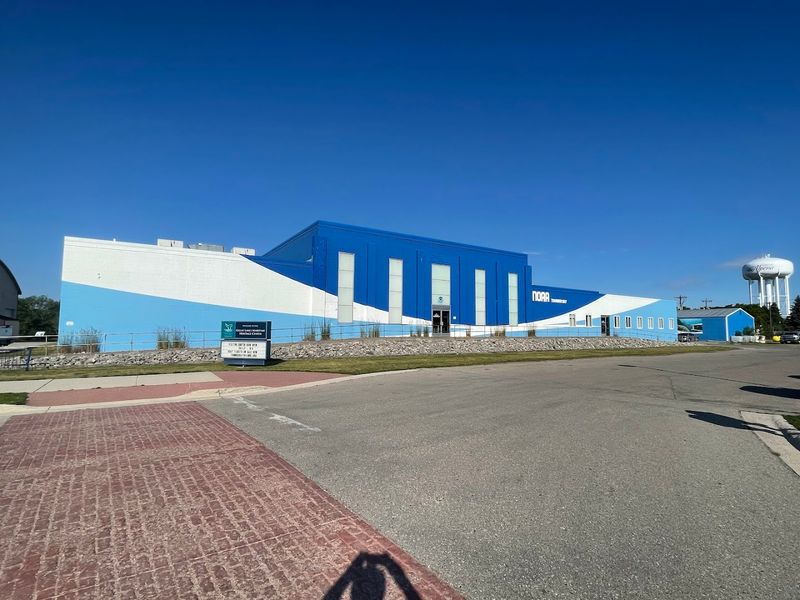
Fresh snow hushes the parking lot at Great Lakes Maritime Heritage Center (Thunder Bay National Marine Sanctuary), 500 W Fletcher St, Alpena, MI, and the center’s glass catches that pale winter blue. Opening at 8 AM on weekdays, the galleries feel like a private reading room when you arrive early.
Docents settle in, lights warm up, and exhibits breathe before the chatter begins. The quiet makes the ship-in-a-storm gallery feel more immersive. You will hear the timbers creak clearly and notice reflections rippling across the floor.
Early hours also mean time to linger at maps of Thunder Bay’s 200 plus wrecks without feeling rushed. Bring a small donation for entry, since admission is free but supported. A calm start steadies the day’s curiosity beautifully.
Walk The Storm-Tossed Ship Safely
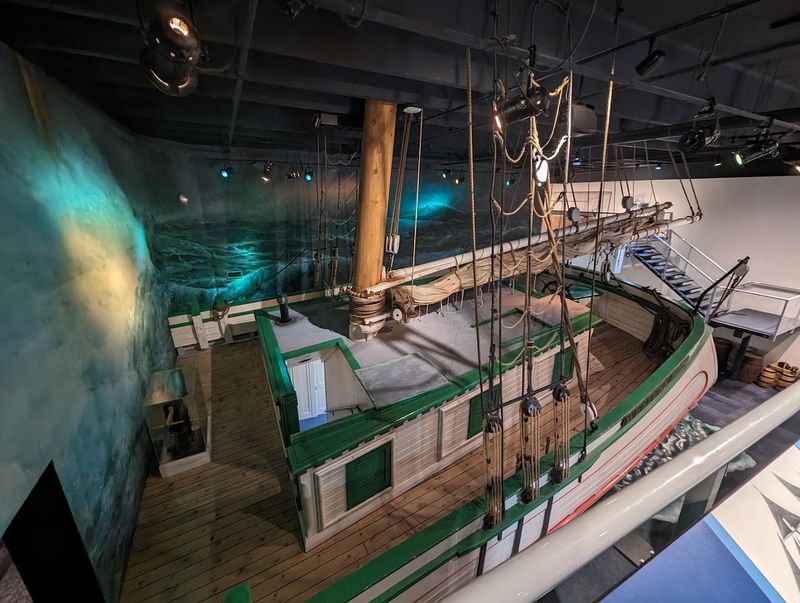
Thunder rumbles, lights flicker, and the deck tilts visually while you walk the full-size schooner model. It is theatrical without feeling fake, and the sound design carries through your chest. Kids often love it, though the intensity can surprise sensitive ears.
Staff have been known to offer sensory adjustments when asked. One review mentioned turning off the storm sequence for a calmer pass. That thoughtful flexibility makes the experience accessible without losing its narrative power.
Hold the handrails and move slowly, especially with boots that may be wet from snow. Pause near the bow to notice lantern glow on rope coils. The details reward patience, and your balance will thank slow steps.
Study The Shipwreck Gallery Like A Detective
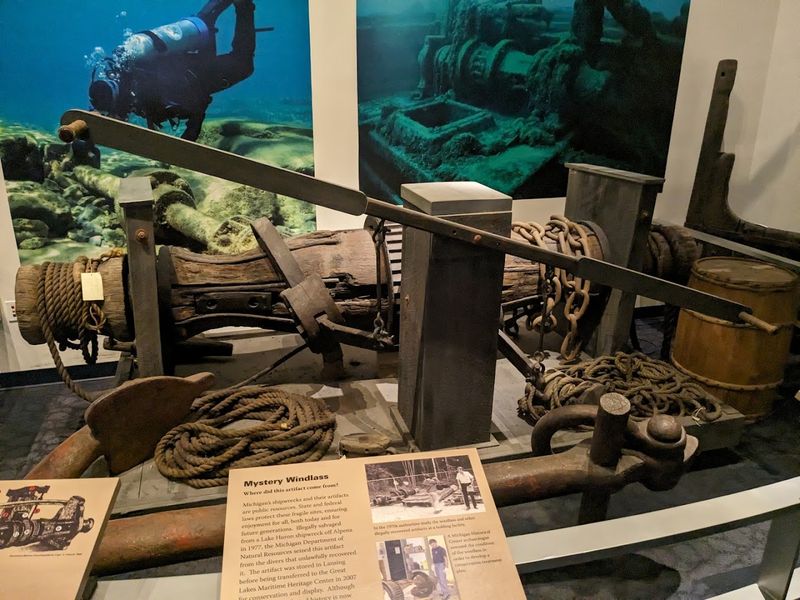
Glass cases display anchors, tools, and fragments that read like sentences from interrupted stories. Sonar prints and underwater photographs pair each artifact with a map of where it rested. The gallery’s cool lighting slows you down, inviting close reading instead of quick glances.
Thunder Bay’s count climbs past 200 wrecks, and the timelines put storm seasons into perspective. You will catch patterns in cargoes, routes, and collisions that mirror Great Lakes trade rhythms. It is history you can almost touch without ever crossing a barrier.
Bring a notebook or use your phone for quick transcriptions of vessel names. Later, search them on NOAA’s site for full logs. Little details turn into satisfying rabbit holes.
Slip Underwater In The Diver Tunnel
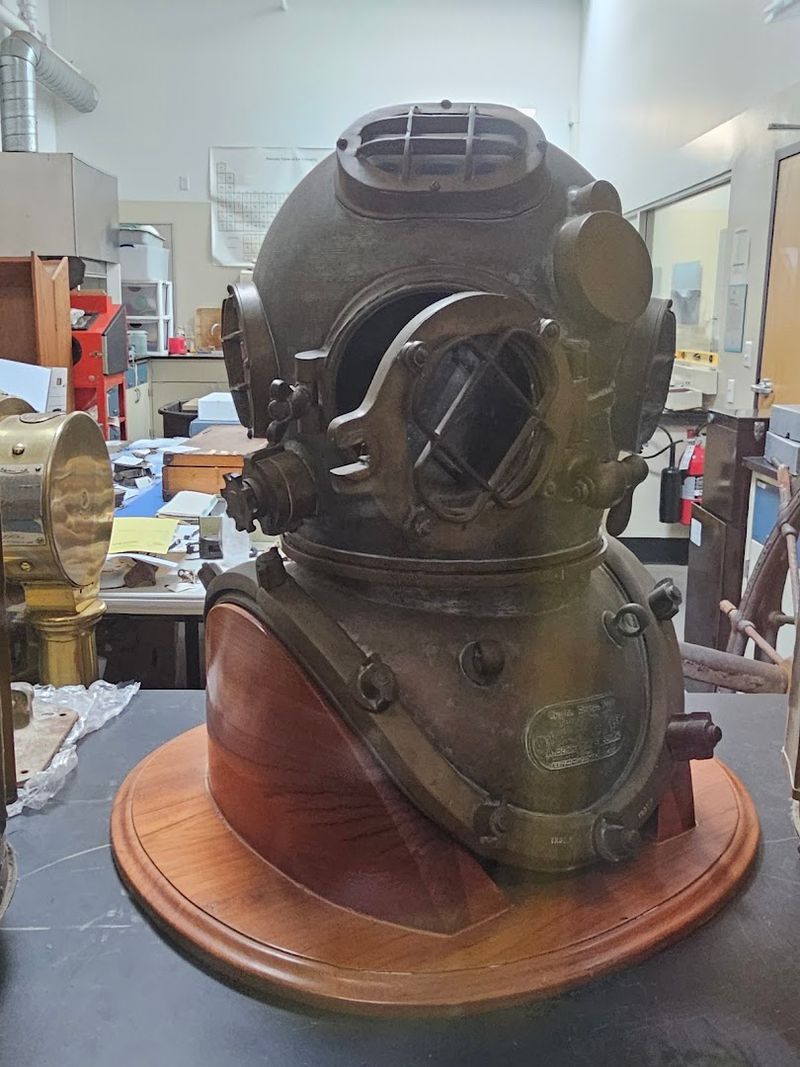
The diver’s perspective comes from a clear tunnel arching above a simulated wreck. Children crawl through like curious otters, peering down at timbers and sand ripples. Overhead lighting mimics shifting water, and the acoustics soften into a submarine hush.
Adults can follow along from the side path and read interpretive panels at eye level. The tunnel ends with a slide, pure delight for small legs and good knees. Even watching is joyful, because enthusiasm is contagious here.
Plan your route so younger visitors run the tunnel before deeper reading time. Energy first, reflection after, often keeps the day balanced. Keep phones ready for quick photos, but mind other families’ space.
Find The Theater And Reset Your Pace
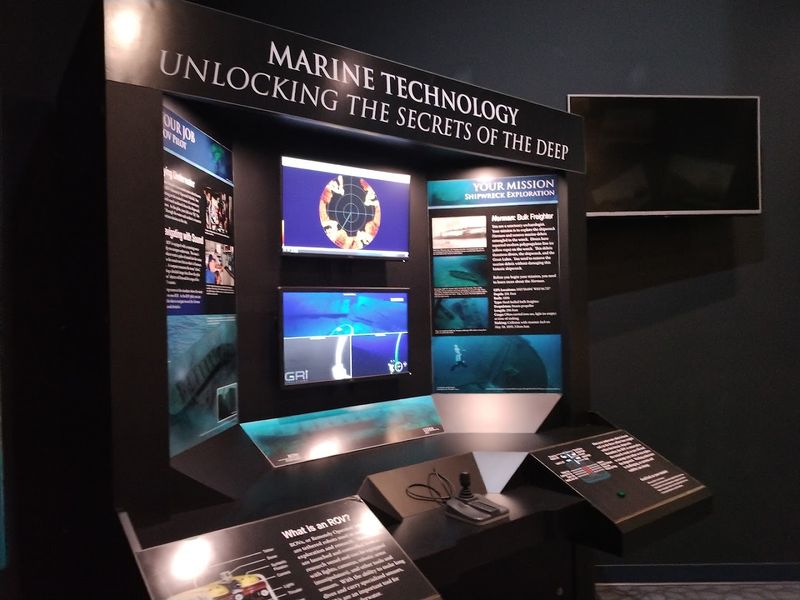
When attention starts to scatter, the in-house theater becomes a metronome. Short films layer weather, trade, and technology into a clear storyline. On a winter weekend, it doubles as a warm pocket where gloves finally thaw.
Documentaries explain side-scan sonar, survey craft, and how archaeologists map wrecks without disturbance. The clarity helps every later exhibit click faster. You will leave with phrases and diagrams that anchor conversations elsewhere in the building.
Check the screening schedule near the entrance and time your visit to catch a film between high-energy exhibits. Use the quiet to compare notes with your group. A reset here saves attention for the archaeology lab.
Peek Into The Archaeology Lab
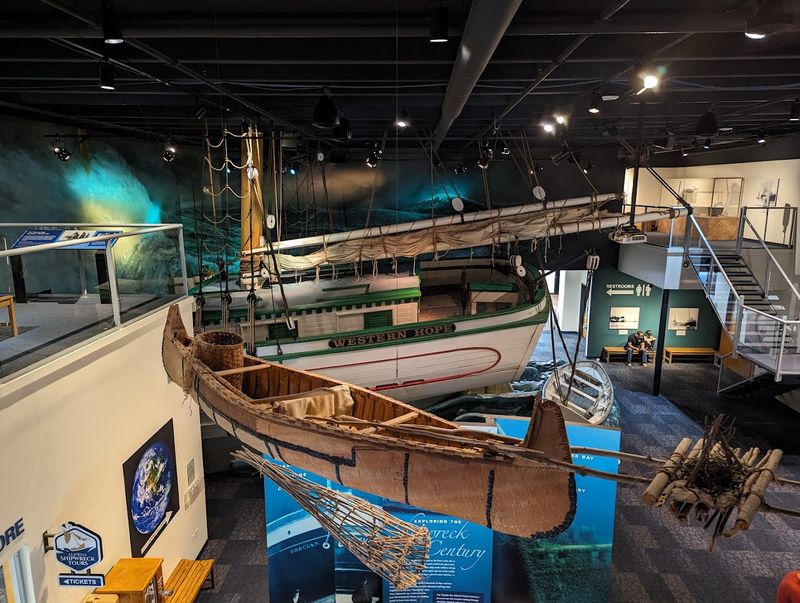
Behind glass, the archaeology lab glows with careful intent. Worktables hold brushes, trays, and labels aligned like a ship’s rigging. You can almost hear the clockwork of documentation, where each artifact’s story is written patiently.
The sanctuary’s mandate is preservation in place, so lab work emphasizes analysis and conservation rather than treasure hunting. That distinction matters. It frames wrecks as cultural resources, not souvenirs, and grounds the romance of exploration.
Stand long enough to notice numbering systems and material notes. Then step back to the gallery and see how the lab’s logic shapes displays. If staff are available, ask about volunteer programs or citizen science. Curiosity is welcome here.
Trace The Living Roof In Winter
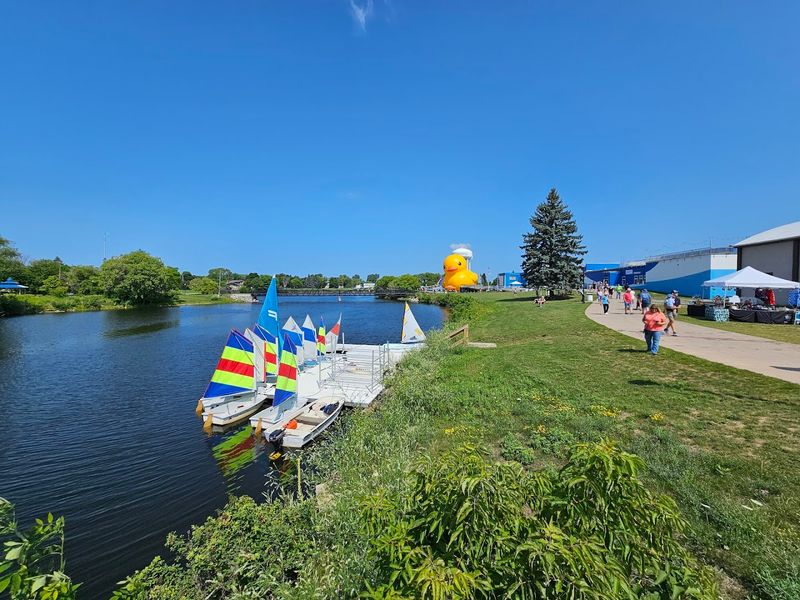
Snow outlines the geometry of the center’s living roof, turning sedum beds into quilt squares. Even dormant, the plantings hold texture against the white. From the ground, interpretive signs explain stormwater control and insulation benefits in practical terms.
Green architecture suits a building devoted to water stories. The roof reduces runoff into Thunder Bay and eases heating loads when winds sharpen. Sustainability here feels applied rather than preached, tied tightly to place.
Ask staff where to spot the best exterior vantage points. Safety first, of course, since winter surfaces can be slick. Photograph the layered roofline against a pewter sky, then compare that grid to archival ship blueprints inside. Patterns converse across seasons.
Map Your Visit Around Hours And Donations
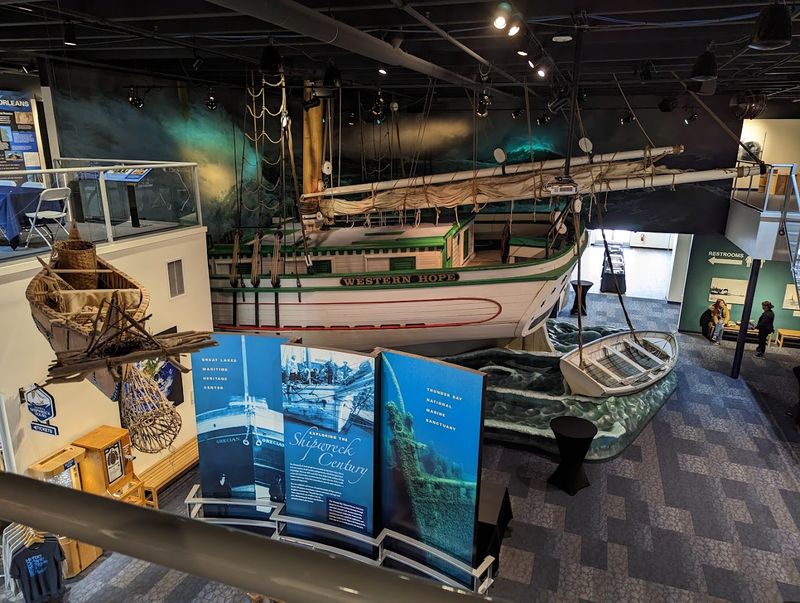
The logistics are straightforward and helpful. Hours show an 8 AM weekday opening, and current details live on the official NOAA sanctuary site. Entry is free, with donations encouraged, so bring small bills to support programming.
Because Alpena winters can pivot from calm to squall, double check the schedule before you drive. A quick call to +1 989-884-6200 answers last minute questions. Local staff know about field trips and bus arrivals that shape crowd patterns.
Plan one unhurried hour at minimum, more with kids who love interactive spaces. Stash gloves in a tote to keep hands free for exhibits. The front desk offers maps that make a clear loop through galleries.
Follow The Thunder Bay Timeline
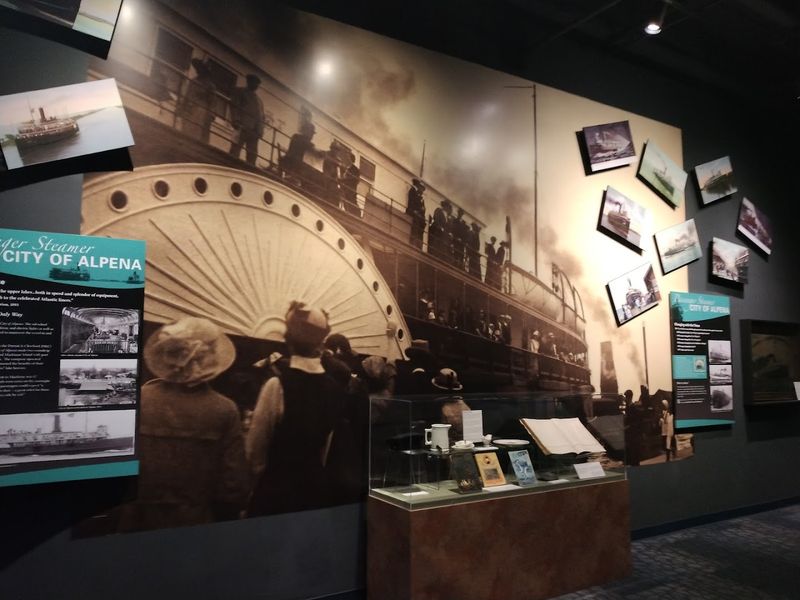
The long wall of dates feels like a shoreline of happenings. Collisions spike in stormy decades, then calm during technological shifts. Reading left to right becomes a quiet walk beside the lake’s working memory.
You will recognize names that recur across the building, connecting artifacts to incidents. The timeline folds ecology into economics, pointing out how ice, fog, and cargo demands shaped risk. It is comprehensive without feeling dense.
Start midway if crowds cluster at the beginning. Then loop back for context. Photograph only a few anchor points so you can stay present. Later, search these vessels on thunderbay.noaa.gov to fill gaps.
The story grows sturdier with each pass.
Listen For Community In The Docent Stories
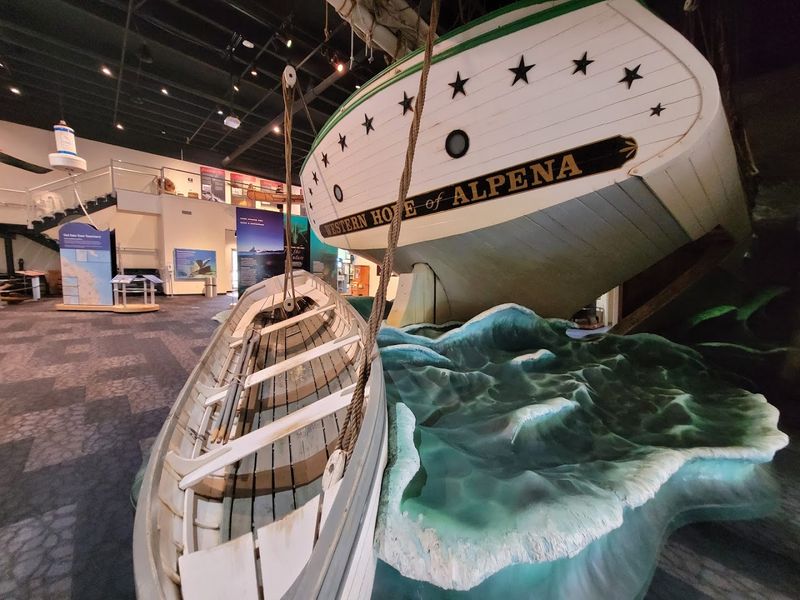
Volunteer docents often carry Alpena in their voices. You will hear lake lore braided with family histories and storm dates. The tone is generous rather than theatrical, which suits a museum built on careful evidence.
Ask about favorite wrecks or how winter changes sanctuary work. Answers tend to include search techniques, local school programs, and field seasons. The result is a picture of culture that values both grit and stewardship.
Stand clear of exhibit entrances so you do not bottleneck traffic. Keep questions specific, then jot names for later research. That respect invites deeper conversation, and you will leave with details no panel can hold.
Step Outside To The Riverwalk Between Exhibits
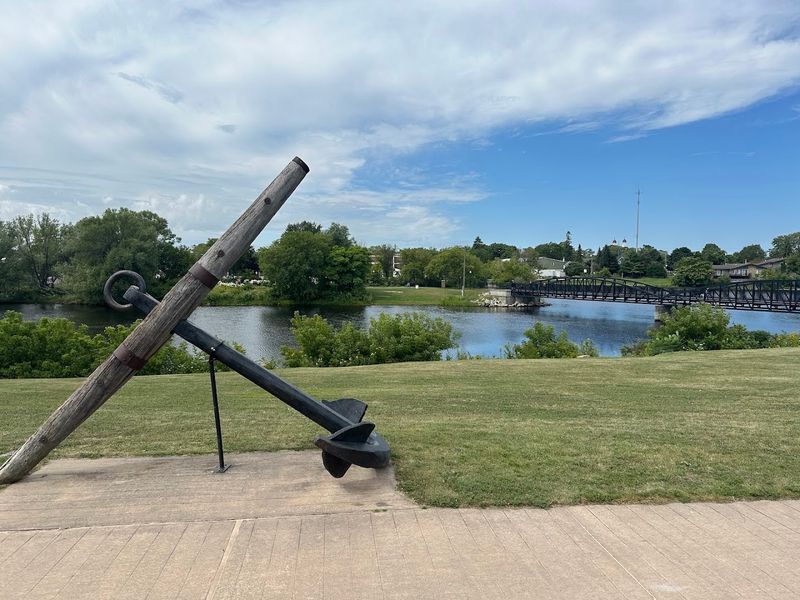
When the galleries crowd, a quick breath on the riverwalk resets focus. Snow softens edges along the Thunder Bay River, and gulls sketch quiet arcs. The museum sits comfortably in this waterscape, not aloof from it.
Short loops keep circulation going without losing your parking spot. You will return with cheeks stinging, which makes the theater feel extra warm. The contrast sharpens eyes for small exhibit clues you missed before.
Watch for slick planks near shaded sections. Ten minutes is enough to change your energy level. Reenter, donate if you have not already, and aim for the archaeology lab or timeline while attention is newly crisp.
End With The Sanctuary’s Bigger Picture
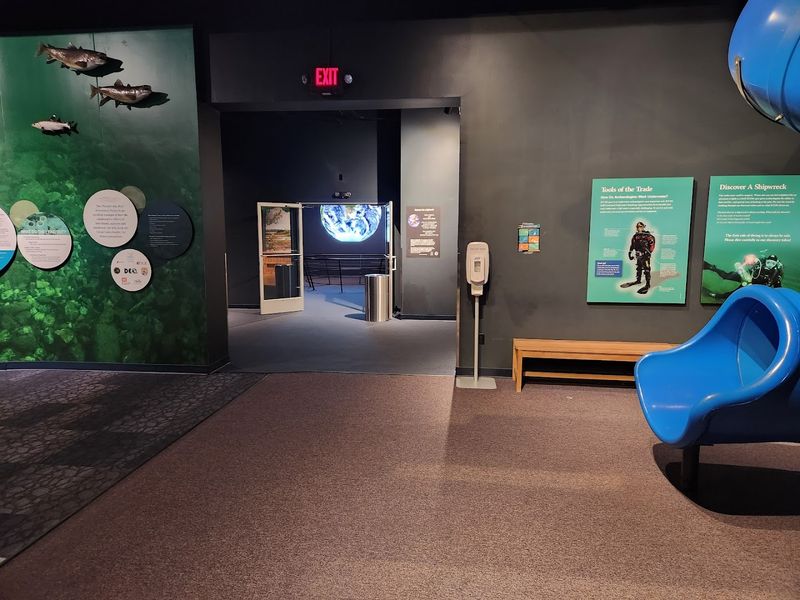
Before leaving, stand where maps of the entire sanctuary pull together wreck zones, currents, and shoreline communities. The scale reframes your footsteps inside the building. What felt like separate rooms becomes one long conversation about care.
Technology threads through it all, from sonar to documentation strategies that avoid disturbance. Preservation here means letting stories stay underwater while still being known. That balance is the center’s quiet achievement.
Pick up the website link and phone number for future planning. If time allows, note special programs listed near the entrance. Walking out into pale Alpena light, you will carry a steadier sense of the lake’s workings and your place within its audience.