
This Michigan “Man Of Steel” Is A Roadside Icon With Serious Small-Town Charm
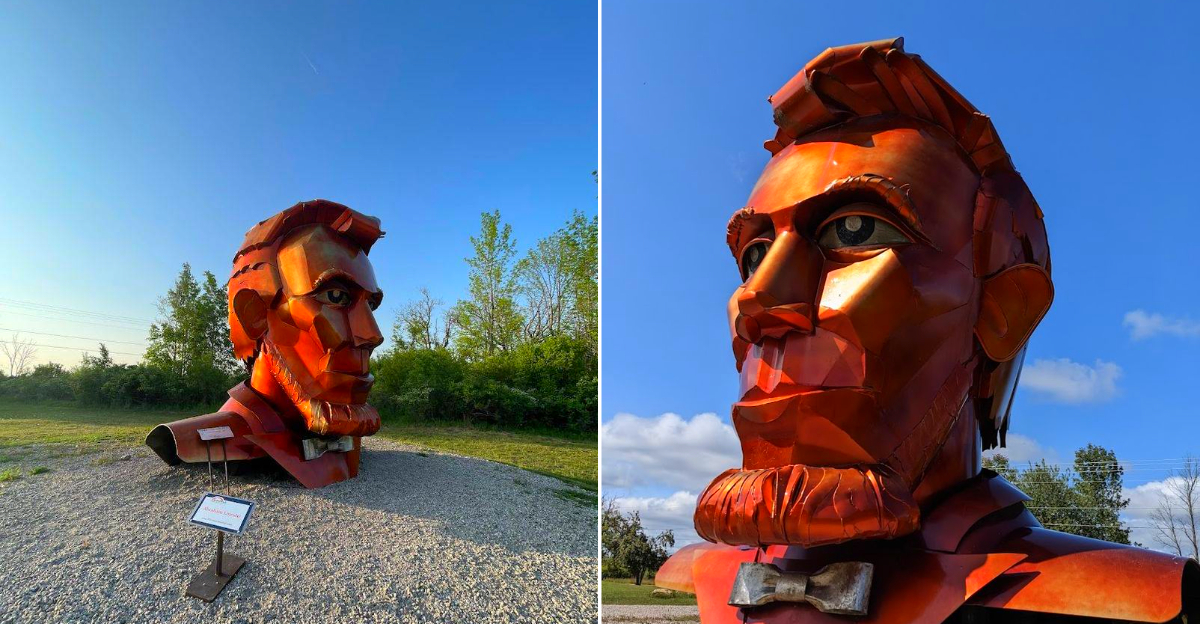
Pulling off M-68 in Onaway feels less like a pit stop and more like falling through a portal where heavy industry finally learned how to tango. It’s a surrealist dreamscape where massive steel presidents stand sentinel over the tall grass and a towering flag ripples against the Northern Michigan sky.
This hidden Northern Michigan sculpture park transforms rusted industrial machinery into a soaring outdoor gallery that rewards the curious traveler with monumental metal art and peaceful woodland trails.
Small towns with outsized imaginations are exactly why I live for road trips. I spent a long afternoon tracing the history forged into these iron giants, feeling like I’d stumbled into a secret conversation between the landscape and the welder’s torch.
If you appreciate art that isn’t afraid to get its hands dirty and a setting that refuses to be ordinary, you’ll find yourself lingering here much longer than planned.
Start With The Gravel Loop
The moment your shoes crunch onto the gravel, the park’s rhythm sets in. A flat loop leads past welded presidents, a rippling steel flag, and benches with room to sit and stare. Sounds are gentle: wind across weeds, a chickadee somewhere, maybe your own surprised laugh.
History rises at the back, where foundations hint at Onaway’s steering wheel legacy. Take the loop clockwise if you want plaques earlier, counterclockwise for a slower build. It costs nothing but attention.
Bring water in summer and boots after rain, since puddles gather in low spots. The full circuit clocks under an hour, unless you stop often, which you should. Every turn reveals another meticulous weld.
Read The Site’s Industrial Bones
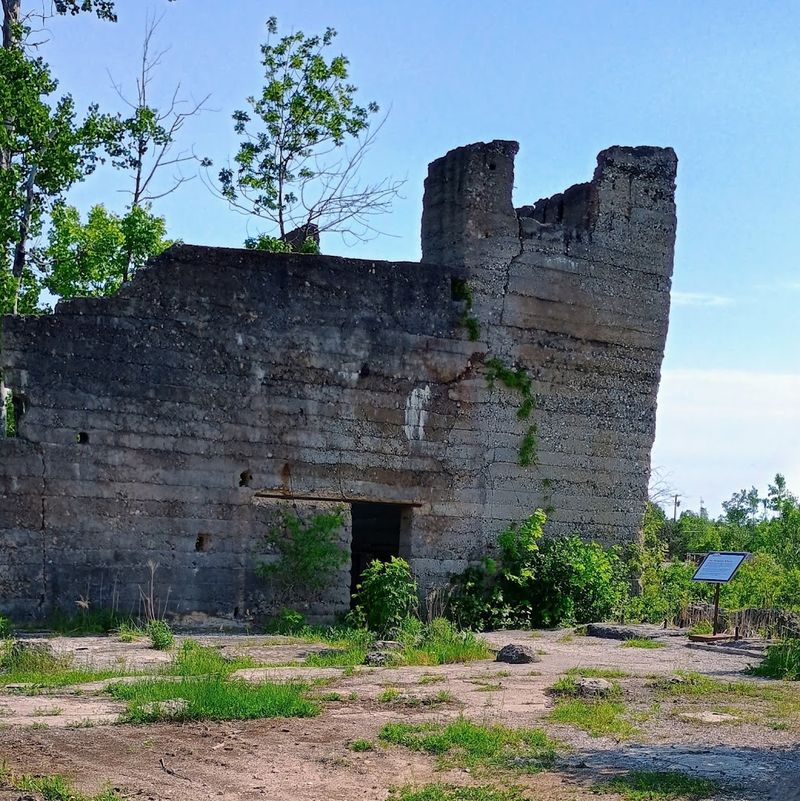
Concrete footings and rusted anchors peek through grass like relics that refused to quit. These bones recall the era when Onaway stamped steering wheels and milled timber at scale. You can trace old lines of force by following bolt patterns and drainage cuts.
Plaques give just enough context to spark imagination without smothering it. The contrast between dead-still foundations and kinetic sculptures creates a conversation across decades. It is the park’s truest duet.
Stay on paths when exploring ruins to protect fragile edges and your ankles. Photograph textures in angled light to reveal tool marks. If you visit after rain, slick concrete demands patience. Slow down, breathe, and let the place teach its layered story.
Study The Welds Up Close
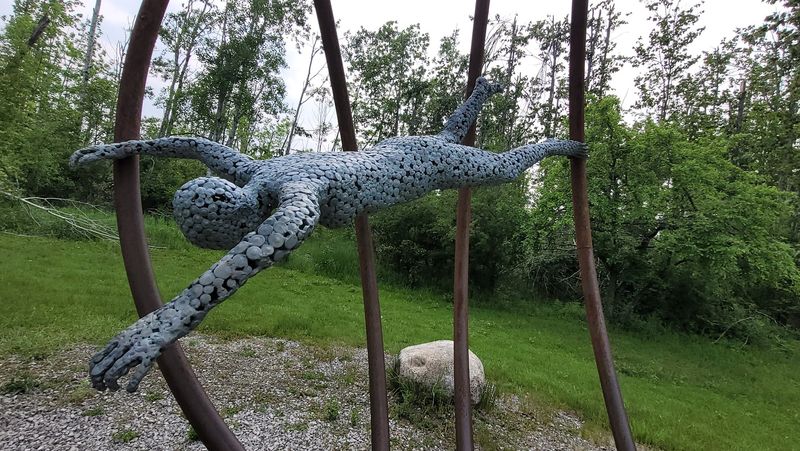
Edges at Awakon are not shy. Beads stack like calligraphy, each pass a sentence written in molten punctuation. Heat tints bloom blue and amber where the torch lingered, mapping invisible patience in mineral color.
Tom Moran’s technique balances brute force with finicky control, letting seams become ornament. From a distance, figures read bold; close up, they whisper process. It is worth crouching to catch light grazing over stacked ripples.
A small flashlight helps you rake light across textures even on sunny days. Resist touching the metal, which can hold heat and oils. Photographers, bracket exposures to keep highlights from blowing out. You will leave with pockets of detail lodged under your eyelids.
Find The Flag In The Windless Sky
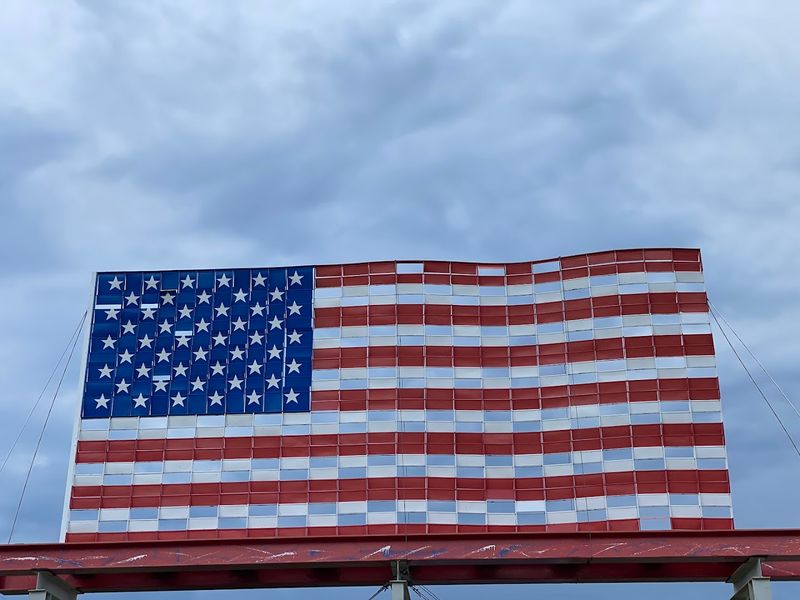
No breeze is needed for the steel flag to ripple. Strips arc and fold, catching sun on their high notes and diving into shadow along the troughs. Stand off-axis and the wave changes, like a lenticular postcard built from iron.
Its placement near open sky gives room for silhouettes, so cloud days win for drama. History is implied rather than lectured, a material salute without noise.
Position yourself low, then tilt up to crop utility lines and frame only blue and metal. Morning light cools the tones; late afternoon glows warmer. If you travel with kids, play a quiet game of counting folds. It turns observation into an easy ritual.
Presidents In Plate And Patina
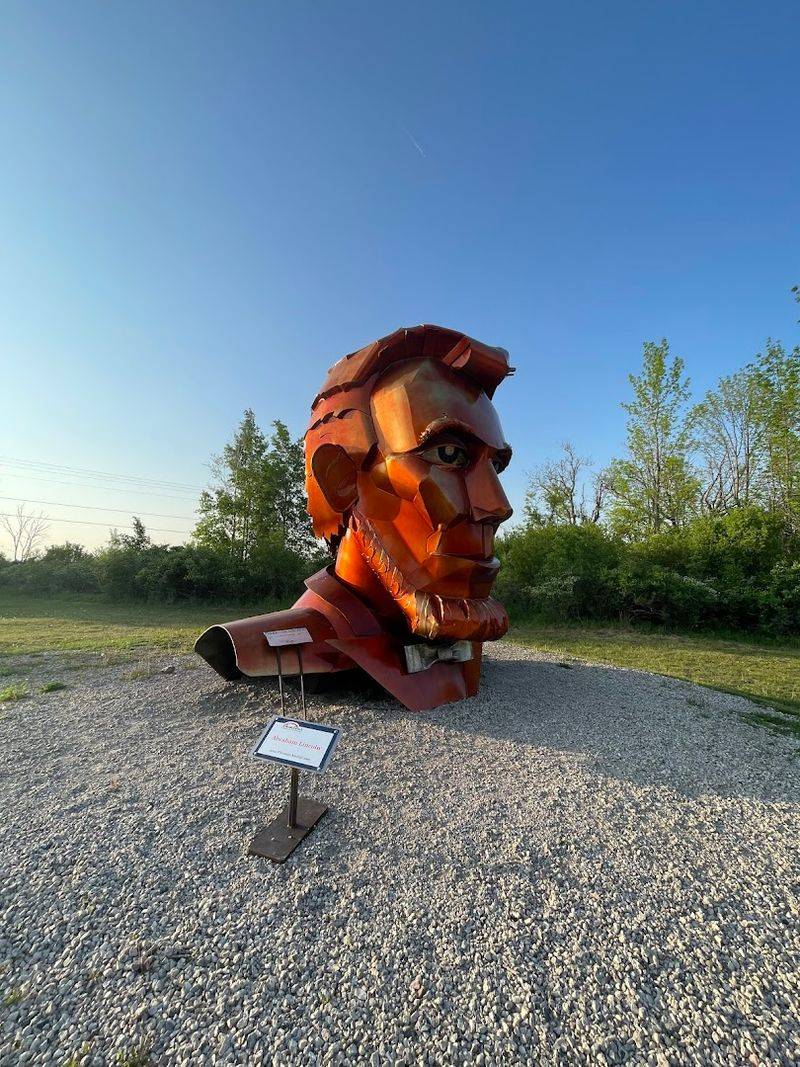
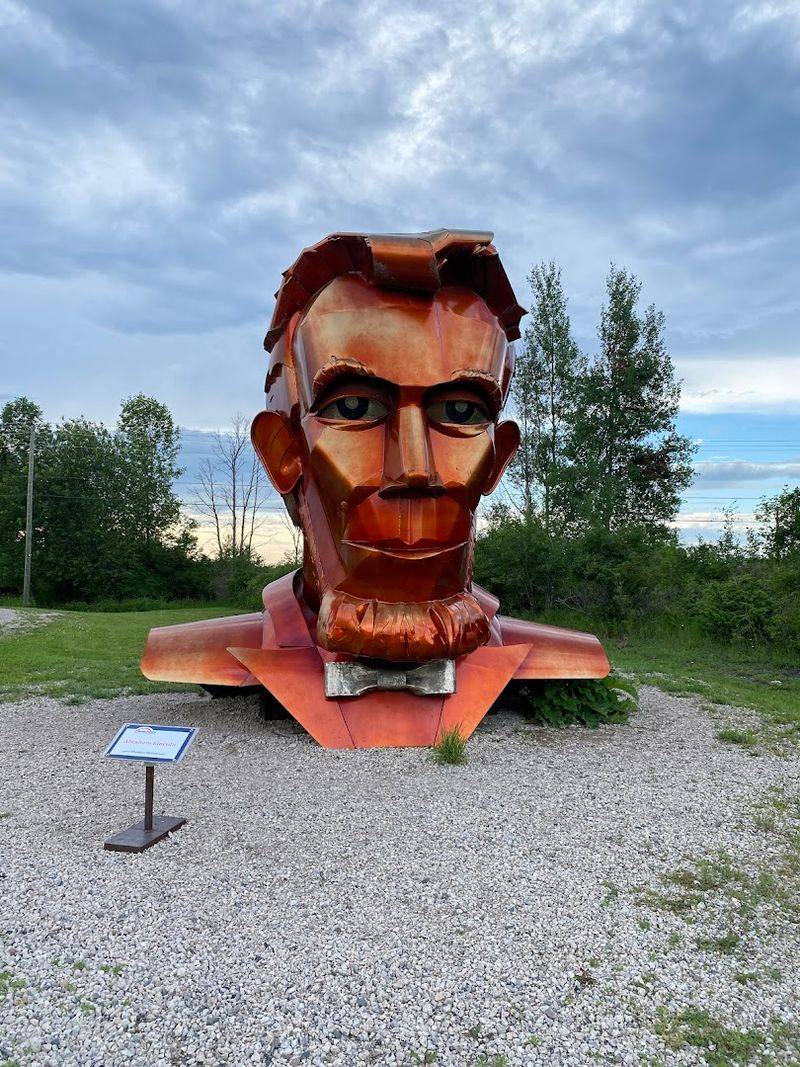
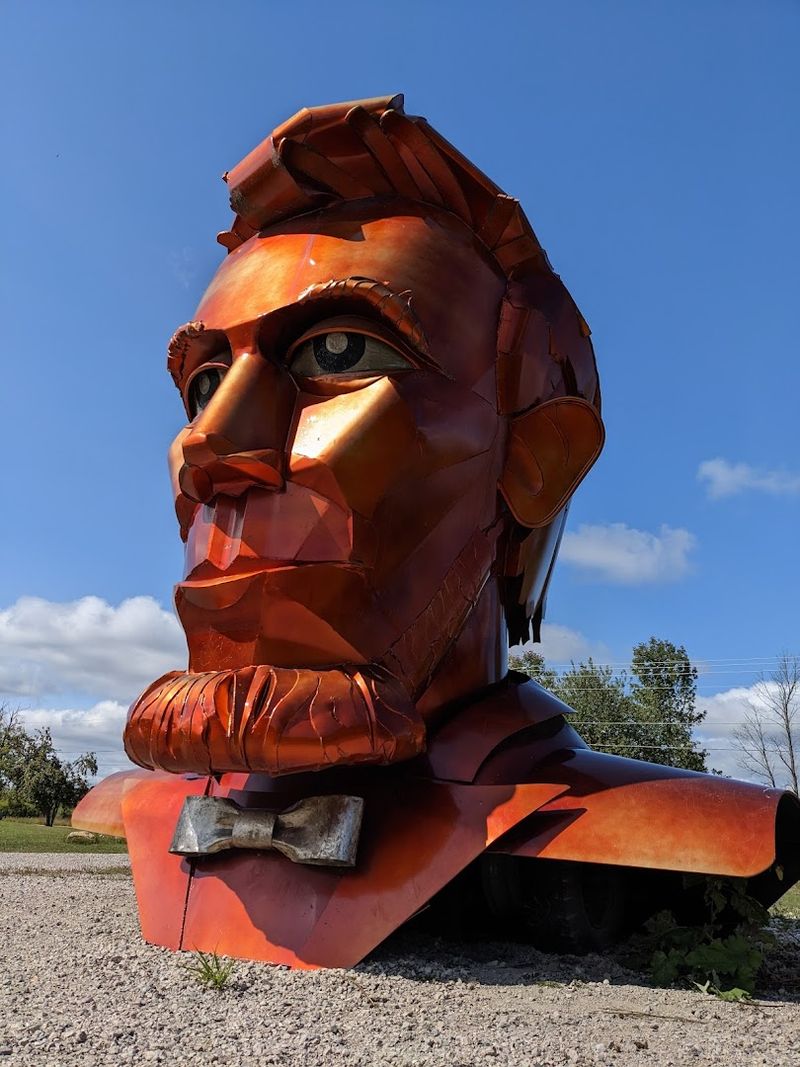
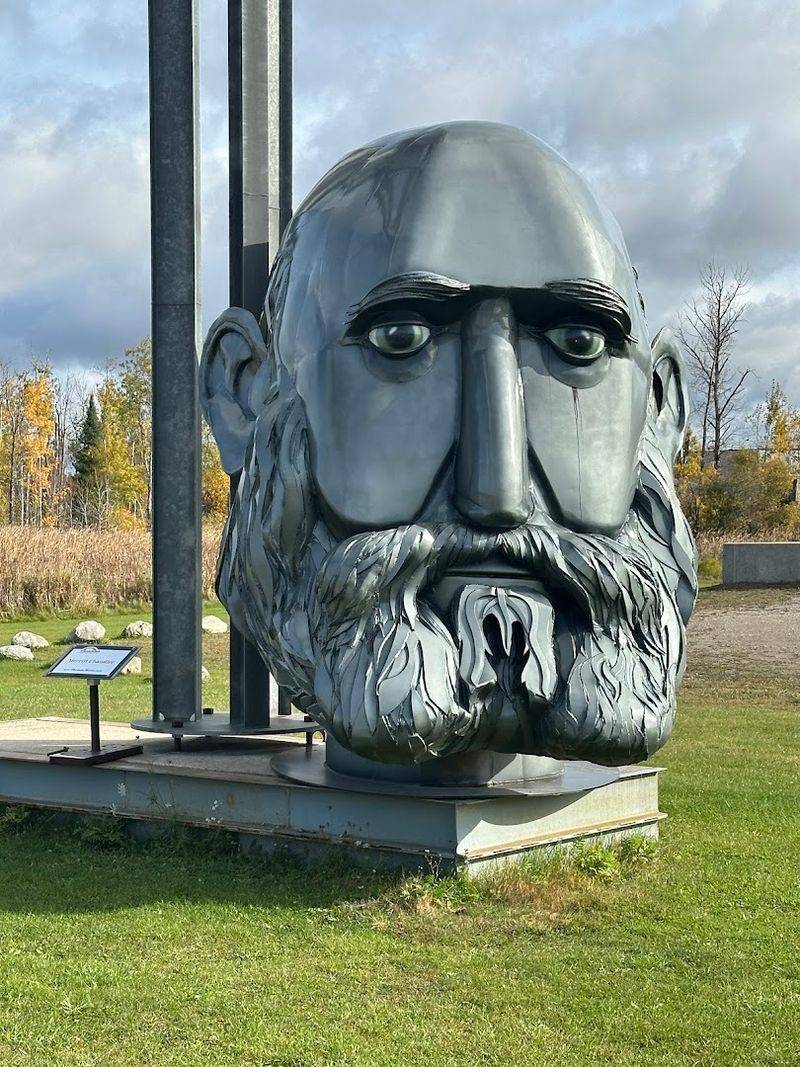
Faces emerge from plate steel with surprising tenderness. Lincoln’s beard becomes layered slivers; Washington’s hair ties into that famous queue someone loved enough to mention. The likenesses lean heroic without tipping into parody.
Metal encourages restraint, so expression is carried by planes and negative space. Step to the side and profiles sharpen; move closer and you see problem-solving frozen mid-spark. It is portraiture by hammer and torch.
Read the nearby notes for context, then build your own reading from angles. Avoid climbing, since even sturdy pieces are not playgrounds. On overcast days the patina’s colors deepen. You will leave hearing the clink of imagined studio tools.
Listen For Quiet In A Loud Material
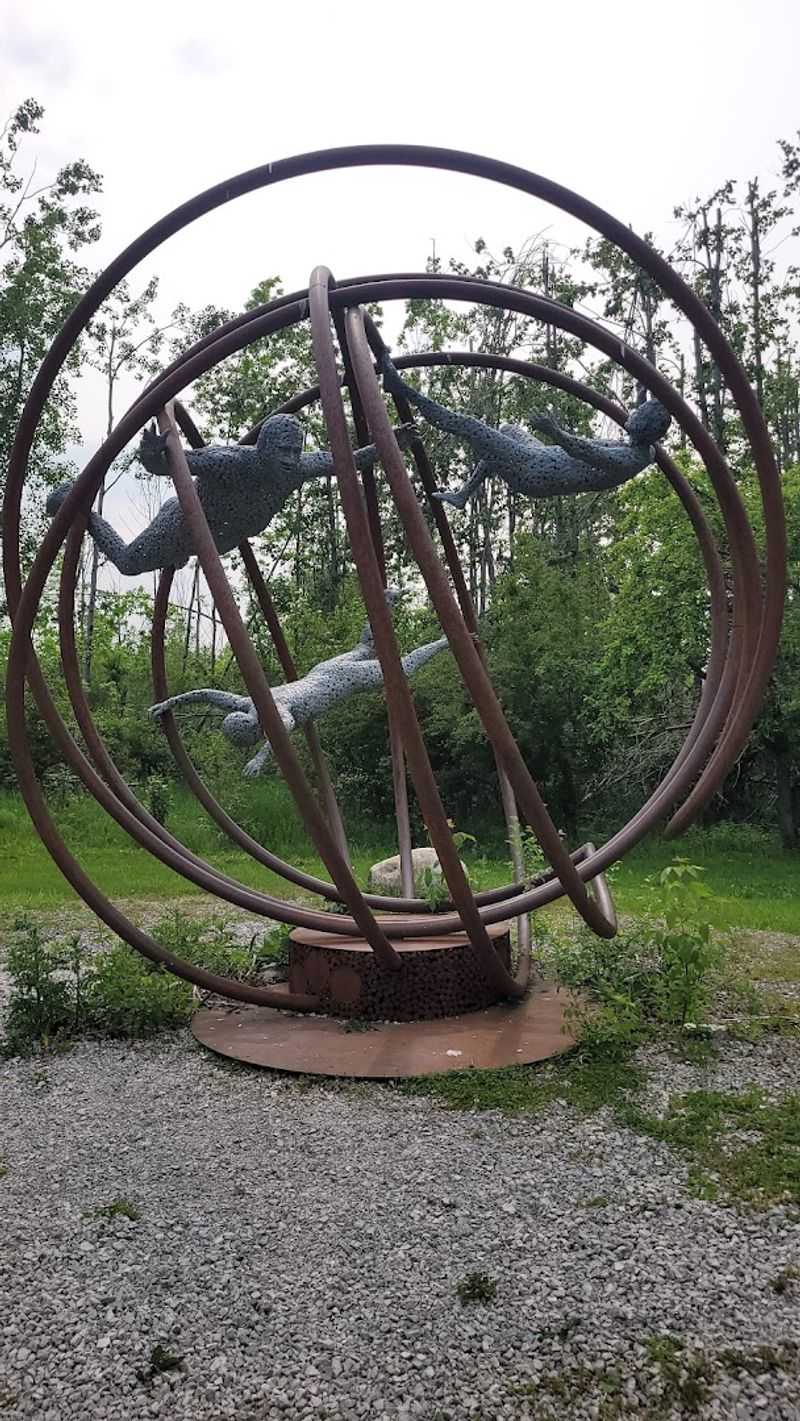
Steel suggests noise, yet the park’s dominant frequency is hush. Grass strokes your ankles, birds argue mildly overhead, and distant traffic dissolves to a hum. The metal stands still enough to become landscape, not spectacle.
This calm gives permission to linger longer than a roadside stop. Benches appear just when you want them, as if the route listened first and planned later. It feels considerate.
Early mornings deliver the clearest soundscape, especially after light rain. Skip earbuds and let small noises sort your pace. If you meet no one, do not worry; solitude fits here. When another visitor appears, eye contact often turns into easy conversation.
Seasonal Shifts Worth Chasing
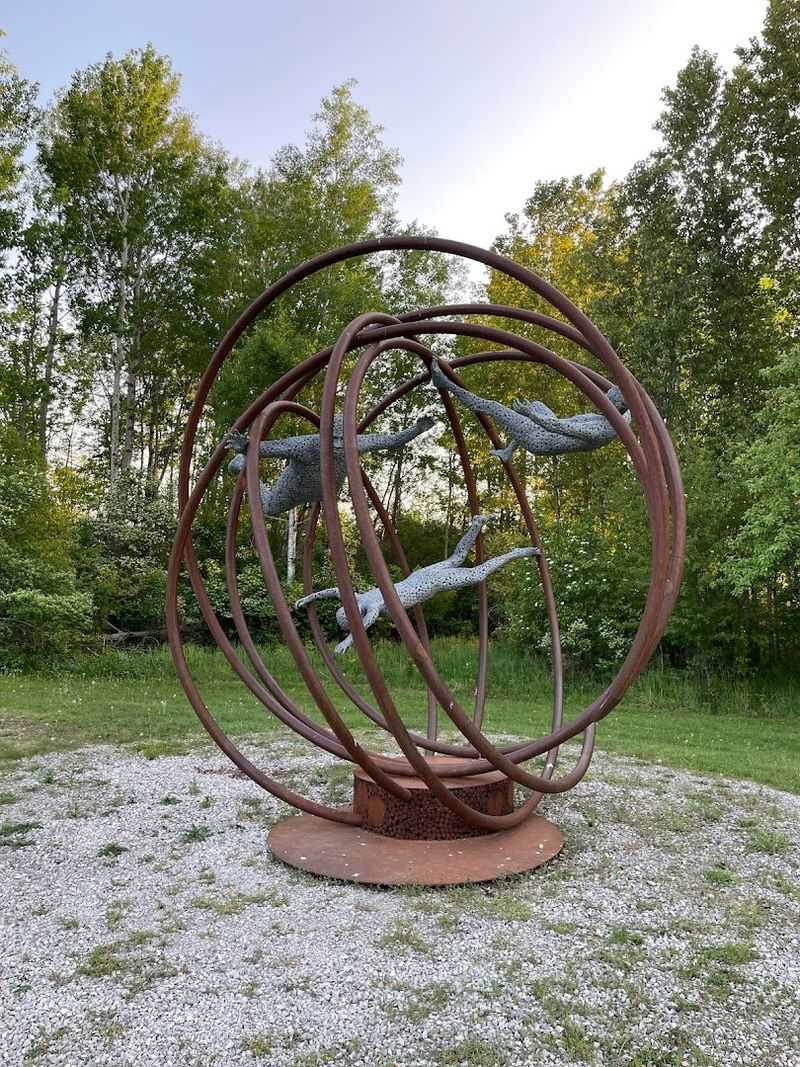
Spring smells like damp iron and thawing soil, with bright greens fussing around bases. Summer throws wildflowers into the mix, softening edges without apology. By early fall, maples warm the palette so patina reads deeper and photographs richer.
Snow, when it comes, sketches outlines and quiets the gravel’s crunch. The sculptures appear heavier and somehow kinder, like elders wrapped in coats. Seasonal change is the park’s slowest performer.
Check road conditions before winter visits and bring traction if icy. In summer, pack insect repellent and sun protection, since shade can be patchy. Shoulder seasons are best for long looks. Return at least twice to feel the work recalibrate.
Local Threads: Onaway’s Steering Wheel Story
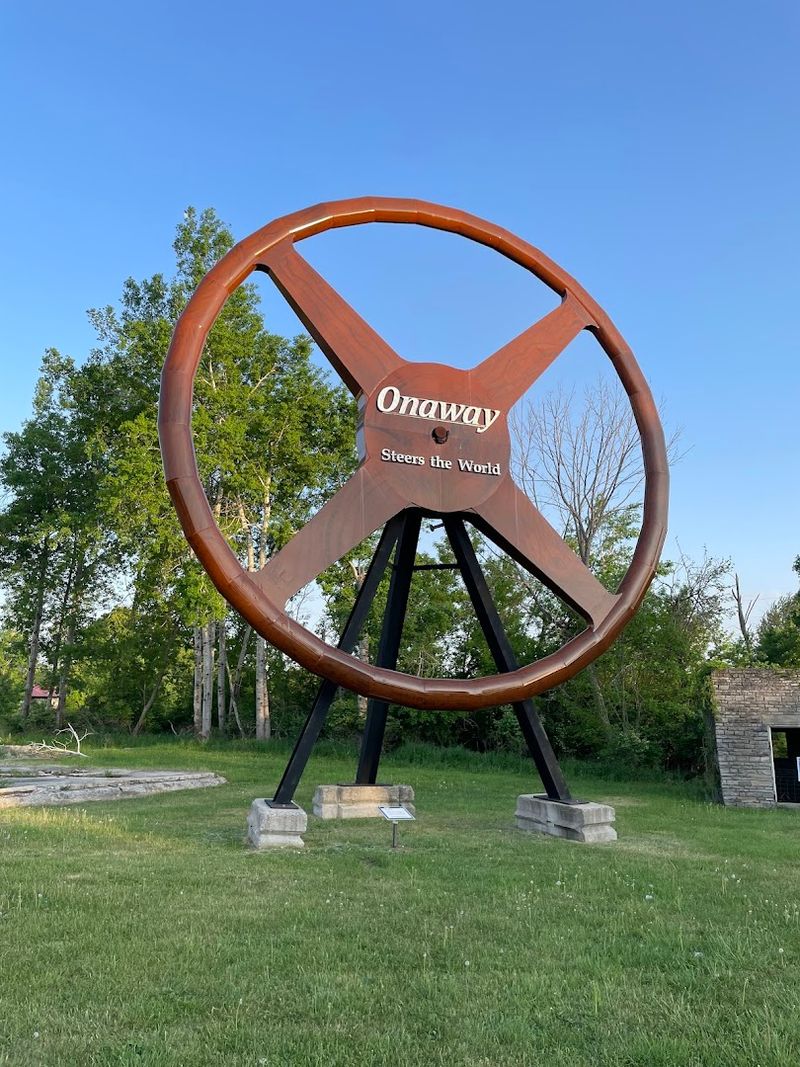
A short read on the plaques ties the park to Onaway’s manufacturing past. Steering wheels once left here for cars far beyond Presque Isle County, a surprising reach from a small town. The ruins are not ornaments; they are anchors.
Seeing that lineage beside contemporary metalwork reframes the sculptures as conversation partners. Labor, resource, and design echo across decades, shifting from utility to expression. It is local culture told plainly.
Photograph the plaques for later reading, then walk the foundations to connect text with space. Ask a local about family ties to the plant if you get the chance. Curiosity is welcomed. Your questions become part of the living archive.
Wayfinding Without Fuss
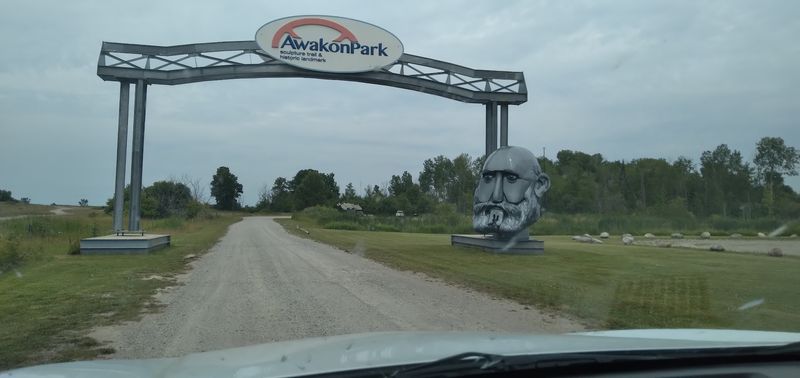
Finding the park is easy once you know to slow before town on M-68. A modest sign and open lot make arrival low drama. There is no gate, no ticket booth, just a path that begins where asphalt ends.
The route circles neatly, so getting lost is unlikely unless you prefer detours. Benches repeat at friendly intervals, and sightlines are clear. Simplicity seems by design.
Call ahead if traveling with a group, using the listed park number, to check for maintenance. Wear closed shoes for gravel comfort. There is no fee, but respect the space by packing out wrappers. An unhurried loop earns better memories than a hurried checklist.
Photograph Like A Sculptor
Angles do the heavy lifting here. Drop low to exaggerate profiles against sky, or sidestep until negative space clicks into place. Raking light brings out weld texture better than noon glare ever could.
Think like a fabricator: identify planes, then show how they meet. Shadow becomes material, outline becomes attitude. Move slow and give frames a chance to argue back.
Golden hour flatters patina, while overcast days make portraits kinder. Clean your lens often, since gravel dust travels. I like to pre-visualize in black and white, then switch back for color surprises. Either way, avoid touching sculptures to steady shots.
Your photos will breathe more if you do.
Respect The Work, Respect The Place
It is tempting to test the sturdiness of steel with a hand or a climb. Resist. The best relationship here is observational, not athletic, and the park rewards that restraint with longer looking.
Paths exist to protect both visitors and the site’s fragile history. Benches are for sitting, sculptures are not. A little quiet goes a long way in a small town that shares this freely.
Pack out everything you bring and photograph signs instead of removing flyers. Pets should stay leashed so everyone enjoys the loop. If you see wear starting, mention it to local contacts. Stewardship keeps the conversation open for the next walker.
Let Contradictions Be The Point
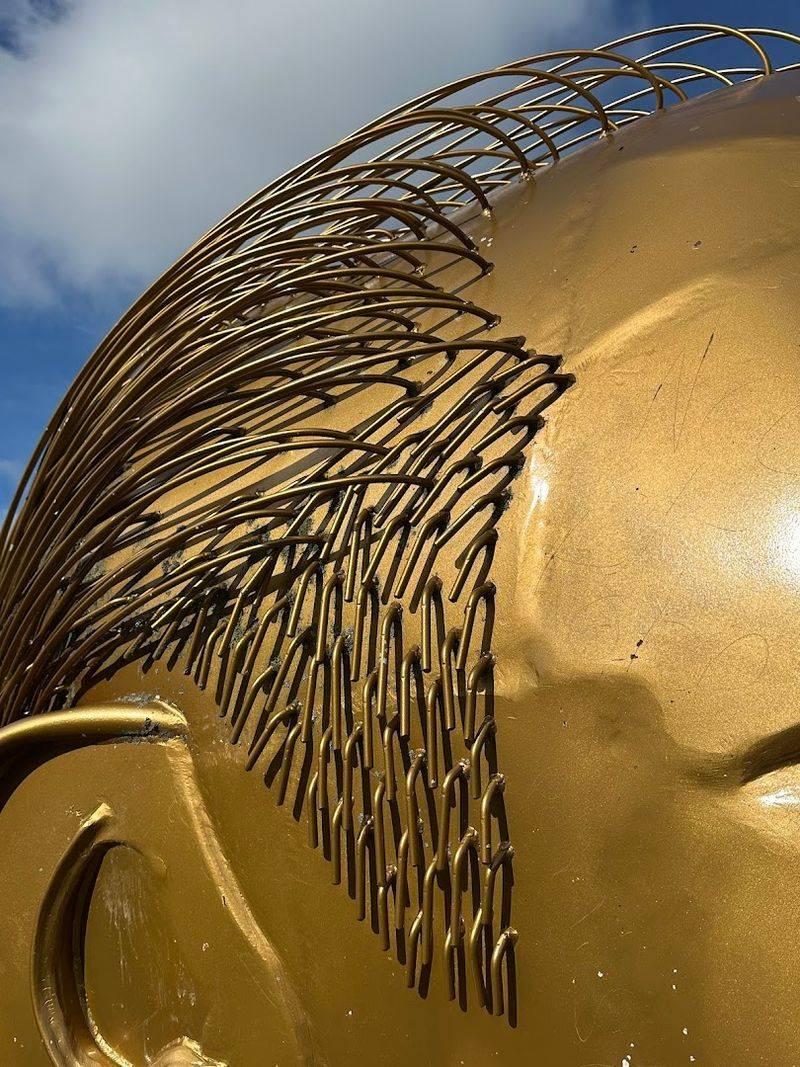
Some visitors call the sculptures an optical assault; others feel instant delight. Holding both reactions makes the place richer. Big gestures live beside small birds, industry beside tenderness.
The park’s genius is not neatness but conversation. Steel remembers mines and mills while inviting play with light and scale. That tension gives you something to take home besides pictures.
Pause whenever you feel pulled both ways. Note exactly which detail tipped you, then walk until you find its counterargument. Share thoughts with your companion at the next bench. You will leave with a clearer sense of how materials argue, and how patience helps them agree.