
10 Illinois Hidden Spots Most Locals Don’t Even Know About (With Map)
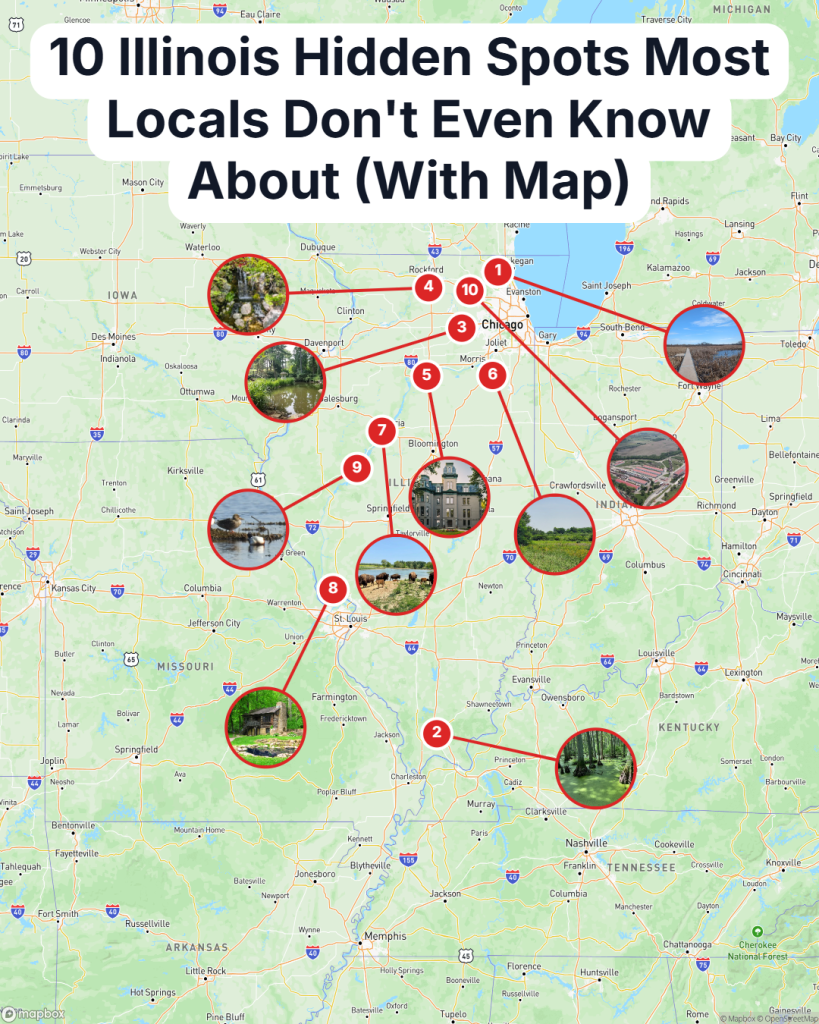
Illinois gets plenty of attention for its big city, but the rest of the state rarely gets the same curiosity. I started paying closer attention during long drives on back highways, pulling off at brown signs and following roads that didn’t promise much.
More than once, that small detour turned into something unforgettable. Illinois surprised me with cypress trees that look like they belong in the Deep South, prairies that stretch wider than expected, and historic places that feel preserved in quiet defiance of time.
I have spent years keeping a running list of stops that almost never make standard travel roundups. Some were recommended by locals, others I found by accident.
Each one changed the way I see Illinois. This guide shares ten places that left a real impression on me and deserve a deliberate visit, not just a glance through the windshield.
1. Volo Bog State Natural Area, Ingleside
One of the rarest ecosystems in the entire Midwest sits quietly off a county road in Ingleside, and most Illinois residents have never heard of it.
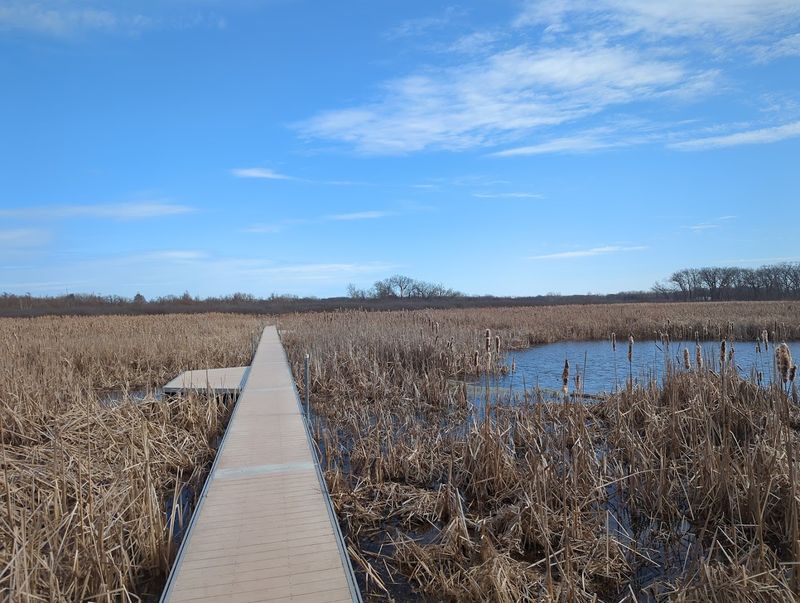
Volo Bog State Natural Area, located at 28478 W Brandenburg Rd, Ingleside, IL 60041, is home to Illinois’ only open-water quaking bog that is accessible to the public. The ground here literally bounces when you walk on it, because you are standing on a floating mat of decomposed plant material over deep water.
The bog formed over 10,000 years ago at the end of the last ice age, and it has been slowly filling in ever since. You can walk a short interpretive boardwalk loop of about half a mile to the “Eye of the Bog,” with additional longer trails extending into the surrounding natural area.
Carnivorous pitcher plants grow right along the boardwalk, which is something you do not expect to find in Illinois.
Spring and early fall are the best times to visit, when wildflowers and migrating birds add extra life to the landscape. Admission is free, and the visitor center has exhibits that explain the bog’s ecology in a way that makes total sense.
Bring bug spray in summer.
2. Cache River State Natural Area (Heron Pond), Belknap
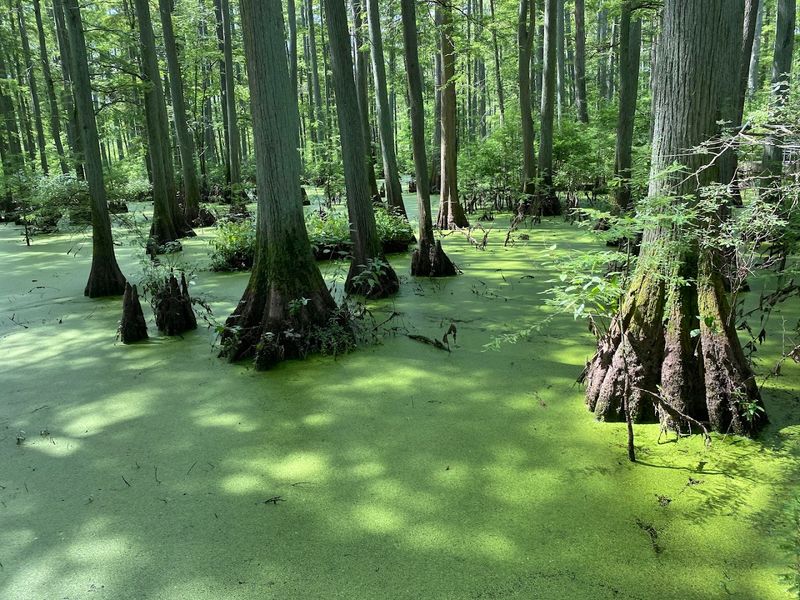
Southern Illinois has a secret that looks like it belongs in Louisiana. Cache River State Natural Area (park address: 930 Sunflower Ln, Belknap, IL 62908), including the Heron Pond Trail area, takes you through a bottomland swamp filled with ancient bald cypress trees that are over 1,000 years old.
The water is dark, the air is thick, and the whole place feels like a different world. Heron Pond is one of the most photographed natural spots in Illinois, yet somehow it remains almost entirely off the mainstream travel radar.
The trail to the pond is only about 1.5 miles round trip, making it accessible for most fitness levels. Great blue herons, wood ducks, and even river otters are commonly spotted in the area.
The area was designated a Wetland of International Importance, putting it in the same category as some of the world’s most significant ecosystems. That is a remarkable fact for a place you can visit for free on a quiet Tuesday morning.
Go in early spring when the cypress trees are just leafing out and the water levels are high for the most dramatic scenery. The silence alone is worth the drive.
3. Fabyan Japanese Garden, Geneva
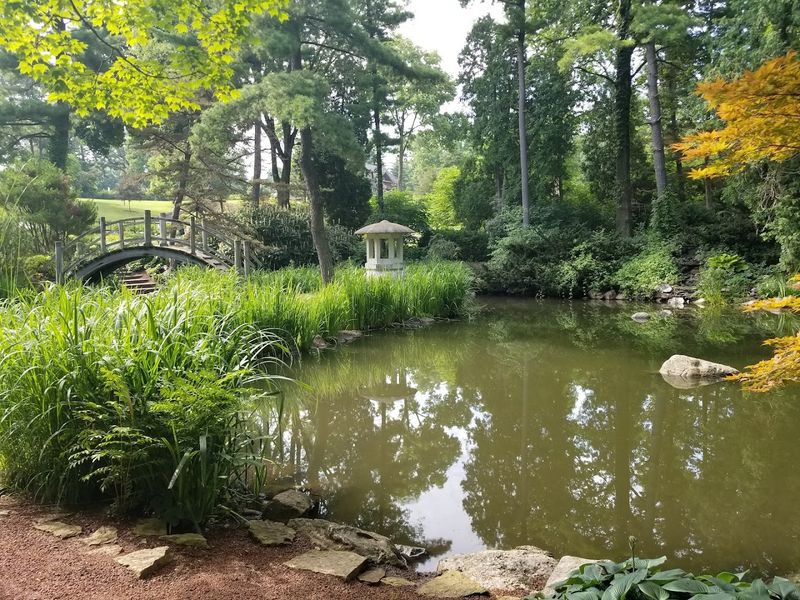
Right along the Fox River in Geneva, there is a Japanese garden that most people in the Chicago suburbs have never visited, even though it has been around since the early 1900s.
Fabyan Japanese Garden, at 1925 S Batavia Ave, Geneva, IL 60134, was originally part of the country estate of Colonel George Fabyan, an eccentric millionaire who had a passion for unusual projects.
The garden was designed with traditional Japanese principles and features a koi pond, stone lanterns, and a wooden footbridge.
What makes this spot especially quirky is what surrounds it. A reconstructed Dutch windmill stands nearby on the same property, and a villa designed with influence from Frank Lloyd Wright is also part of the Fabyan Forest Preserve complex.
It is an unexpectedly eclectic combination that somehow works perfectly.
The garden is free to visit and is located within the Fabyan Forest Preserve, where it is stewarded through the preserve district and local preservation partners. Weekend afternoons in May and June are particularly beautiful when the irises and other flowering plants are in full bloom.
The riverside location adds a calming backdrop to the whole experience. Parking is easy, the paths are well-kept, and the whole visit takes about an hour, making it a perfect low-key afternoon stop.
Quick note: the garden operates on a seasonal schedule with limited open days, so checking current hours in advance is important.
4. Anderson Japanese Gardens, Rockford
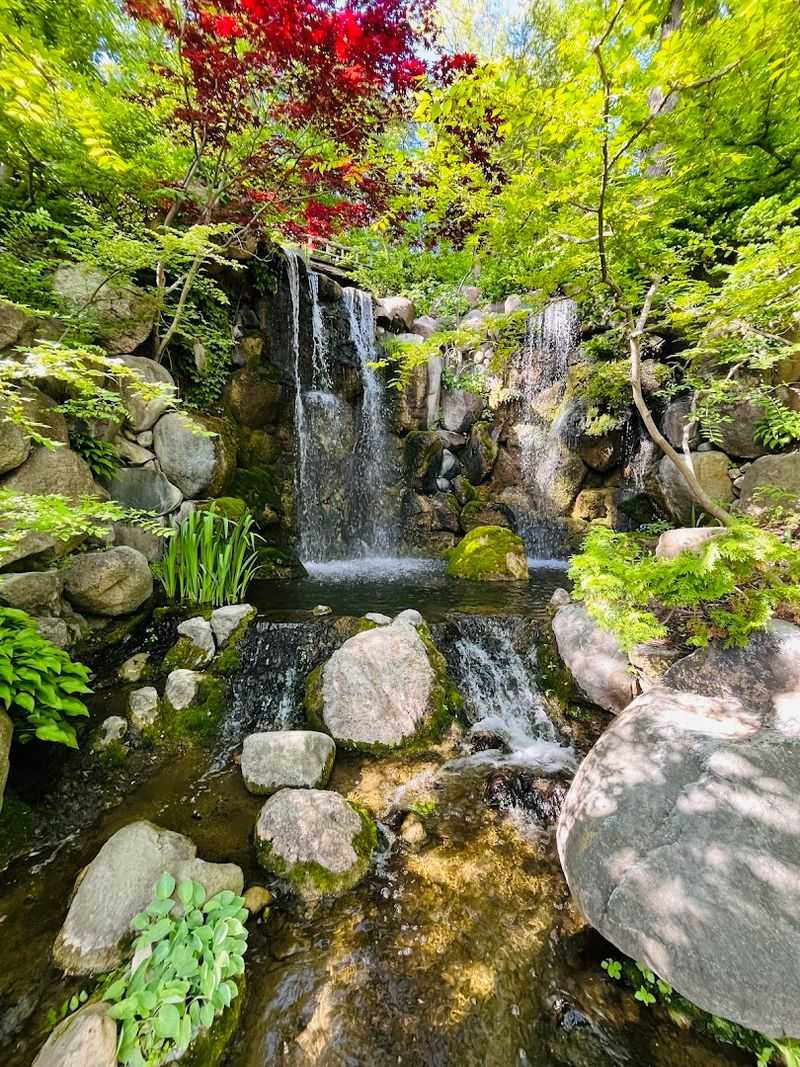
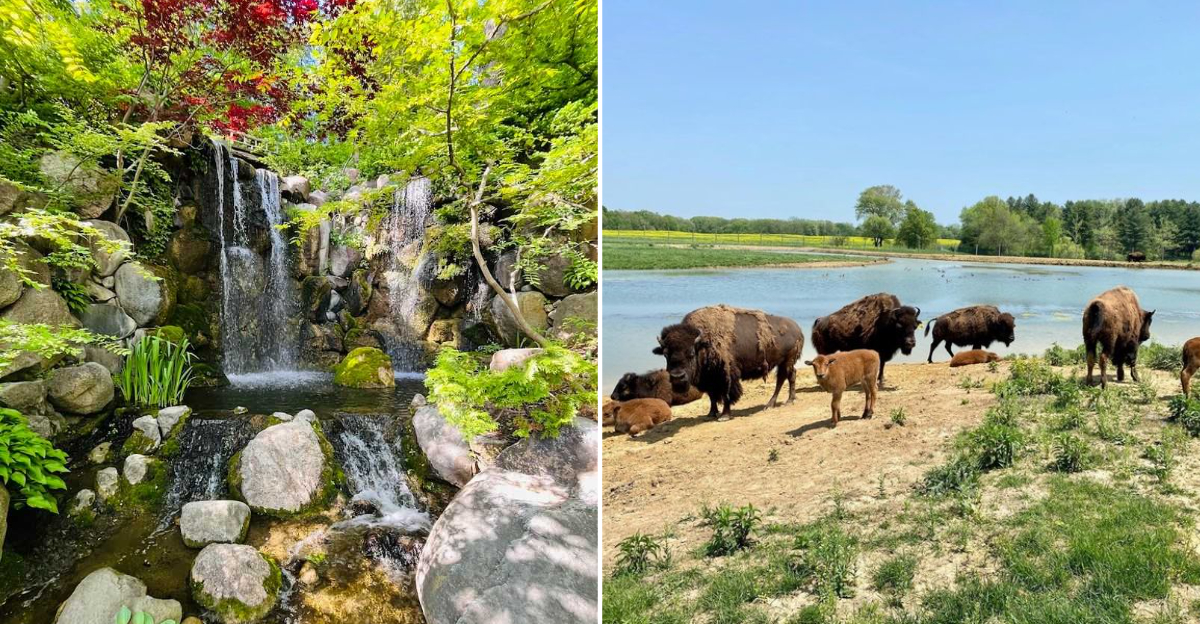
Rockford is not usually the first city that comes to mind when people think about world-class gardens, but Anderson Japanese Gardens at 318 Spring Creek Rd, Rockford, IL 61107 has been rated among the finest Japanese gardens in North America by the Journal of Japanese Gardening.
That is not a local opinion. That is an international ranking, and it is well earned.
The garden was created by John Anderson in the 1970s after he was inspired by a trip to Japan, and it has been expanded and refined over the decades into a stunning 12-acre landscape.
Waterfalls, koi ponds, stone pathways, a traditional guest house, and a waterfall-fed stream wind through the property in a way that feels genuinely transportive. Every corner reveals a carefully composed view.
Unlike some gardens where you rush through, Anderson Japanese Gardens rewards slow walking and sitting still. There are benches positioned at key spots where the scenery is especially striking.
Admission fees apply, and the garden hosts seasonal events throughout the year, including lantern-themed and other specialty programs. Fall foliage season in late October turns the maple trees into vivid shades of red and orange that frame the ponds in a way that photographers absolutely love.
5. Hegeler Carus Mansion, LaSalle
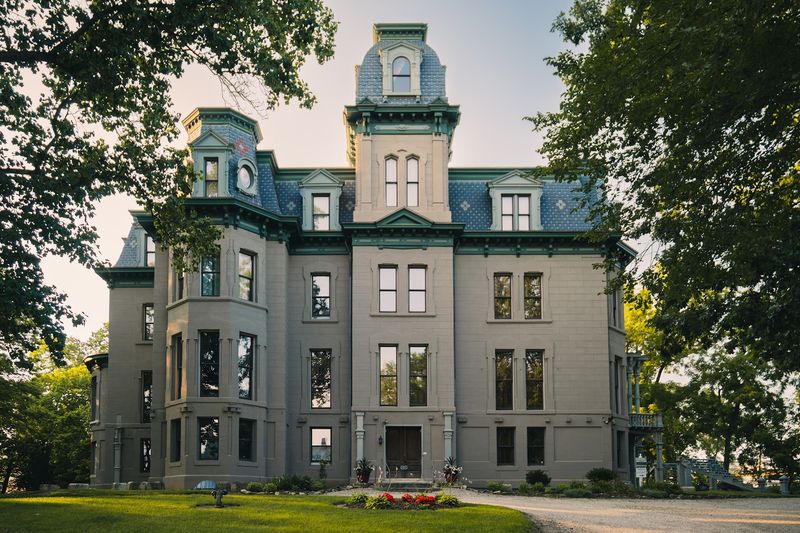
Built in 1876, the Hegeler Carus Mansion at 1307 7th St, LaSalle, IL 61301 is one of the best-preserved Victorian-era estates in the entire Midwest, and almost nobody outside of LaSalle County knows it exists.
The mansion was home to Edward Hegeler, a zinc industrialist, and later became the center of a remarkable intellectual circle that published one of America’s earliest philosophy journals, The Monist, right from this address.
The interior is breathtaking in the most old-fashioned sense of the word. Original furnishings, hand-painted ceilings, a private art collection, and a library filled with rare books are all still intact.
Guided tours are offered and are genuinely engaging, with stories about the family and the philosophical gatherings that took place in these rooms.
The mansion sits in the small city of LaSalle in north-central Illinois, about two hours southwest of Chicago. It is a National Historic Landmark, which means it has been officially recognized at the federal level for its significance.
Tour pricing is reasonable, and the guides are knowledgeable and enthusiastic. If you have any interest in architecture, history, or just beautiful old houses, this place will genuinely impress you in ways a standard museum never could.
6. Midewin National Tallgrass Prairie, Wilmington
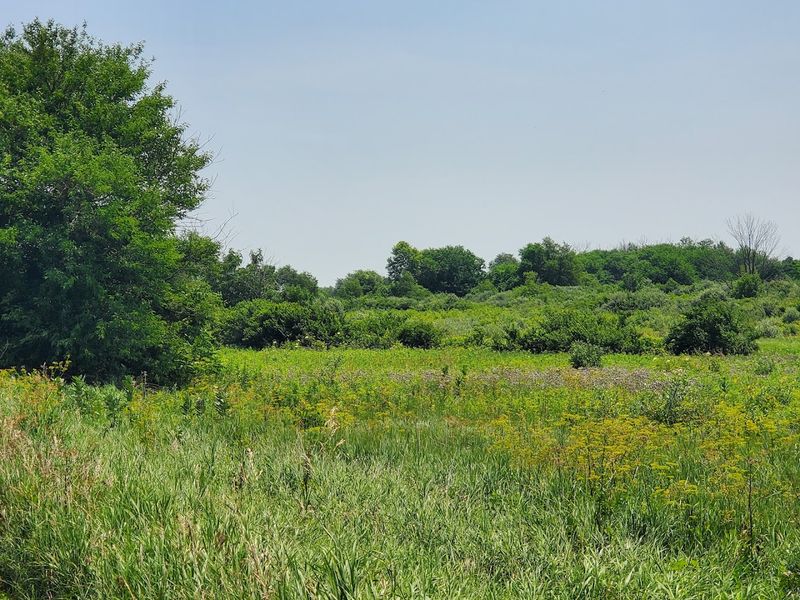
America’s first national tallgrass prairie sits less than an hour south of Chicago, and it is almost comically undervisited given how extraordinary it is.
Midewin National Tallgrass Prairie, at 30239 S State Rte 53, Wilmington, IL 60481, covers over 19,000 acres of restored grassland on what used to be the Joliet Army Ammunition Plant. The transformation from industrial site to wild prairie is one of the most ambitious conservation stories in the region.
Bison were reintroduced here in 2015, making Midewin one of the only places in Illinois where you can see these animals roaming in a natural setting.
The prairie also supports dozens of rare plant species, nesting grassland birds like bobolinks and dickcissels, and miles of hiking trails that stretch through open landscape with genuinely big sky views.
Late June through August is prime wildflower season, when the prairie blooms with coneflowers, rattlesnake master, and compass plants. The site is managed by the U.S.
Forest Service and entry is free. Interpretive programs and guided bison tours are offered seasonally, and they fill up fast.
Bring water, sunscreen, and comfortable shoes because the trails are wide open with very little shade, which is actually part of the charm.
7. Wildlife Prairie Park, Hanna City
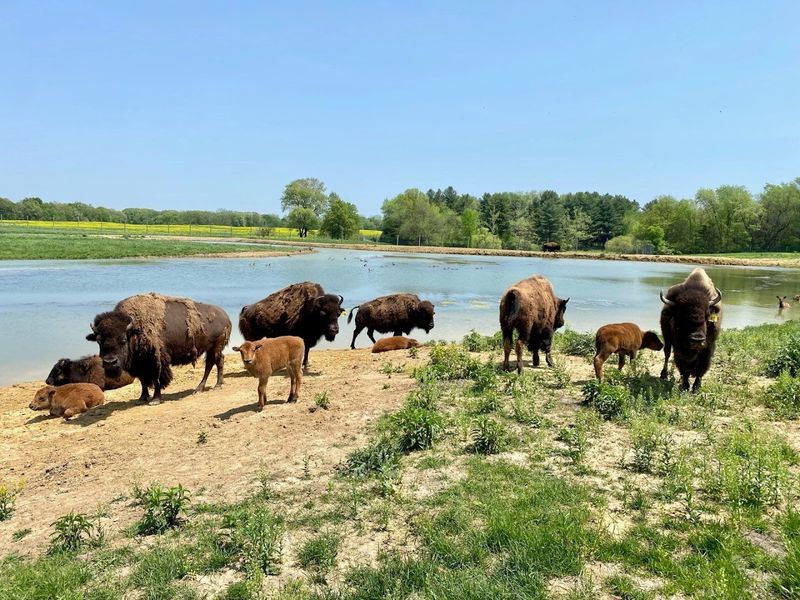
Just outside of Peoria, Wildlife Prairie Park at 3826 N Taylor Rd, Hanna City, IL 61536 offers something genuinely different from a standard zoo experience.
The park is set across approximately 1,800 acres of natural Illinois landscape, and the animals here, including bison, elk, red wolves, black bears, and river otters, are housed in large naturalistic habitats that blend into the surrounding woodland and prairie.
The park has a strong conservation mission, focusing on native Illinois wildlife species that have been displaced or threatened over time.
Walking the trails between exhibits feels more like a nature hike than a zoo visit, with animals often spotted at a distance in open meadows rather than behind small enclosures. That sense of space makes a real difference in how the whole experience feels.
Overnight cabins and caboose rentals are available on the property, making it possible to stay the night and wake up surrounded by nature. The park also has a small farm area that younger kids tend to love.
Seasonal events, including fall harvest festivals, draw local families but rarely the kind of crowds you would find at a larger attraction. Admission is very affordable, and the park genuinely earns every dollar of it.
8. Pere Marquette Lodge, Grafton
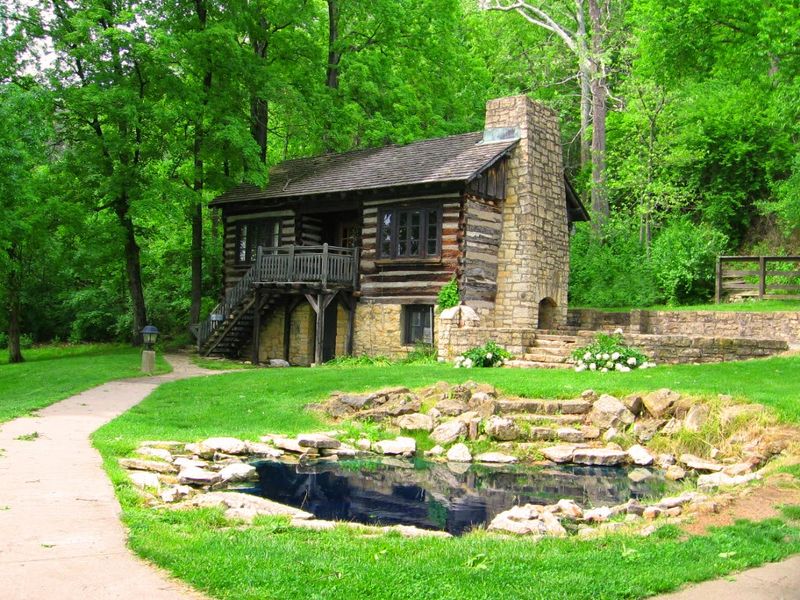
Few buildings in Illinois have the kind of presence that Pere Marquette Lodge commands. Sitting at 13653 Lodge Blvd, Grafton, IL 62037 inside Pere Marquette State Park, this massive stone and timber structure was built by the Civilian Conservation Corps during the 1930s and stands as one of the finest examples of rustic lodge architecture in the country.
The great room alone, with its massive stone fireplace rising roughly 50 feet and its hand-hewn timber ceiling, stops most first-time visitors in their tracks.
The lodge sits near the confluence of the Illinois and Mississippi rivers and offers sweeping river-and-bluff views that turn spectacular shades of red and orange every October.
Eagle watching is a major draw in winter, when bald eagles congregate along the river in large numbers and can be spotted from the lodge’s stone terrace with a pair of binoculars.
Rooms and cabins are available for overnight stays, and the dining room serves classic American comfort food with river views. Grafton itself is a small river town worth exploring for an afternoon, with antique shops and scenic overlooks along the Great River Road.
The entire area has an unhurried, deeply Midwestern charm that feels like a genuine escape from city life without requiring a long drive.
9. Emiquon National Wildlife Refuge, Lewistown, Illinois

In 2007, a long-running agricultural drainage system was shut off, and thousands of acres of historic floodplain began returning to wetland habitat in what is now the broader Emiquon restoration landscape, which includes Emiquon National Wildlife Refuge near Lewistown.
The speed of the ecological recovery was remarkable, and today Emiquon is one of the most important migratory bird stopover sites in the entire Mississippi Flyway.
During peak migration in spring and fall, large numbers of ducks, geese, pelicans, and shorebirds gather here, creating one of the most impressive birding displays in the region.
Bald eagles, sandhill cranes, and tundra swans have all been recorded here. The diversity of species in a single morning visit can be genuinely staggering.
Fishing is also permitted in certain areas, and the restored lake has developed into an excellent fishery for largemouth bass and other native species. The refuge is free to visit and managed by the U.S.
Fish and Wildlife Service.
A viewing platform near the entrance offers broad views across the open water without requiring a long hike. Early morning visits in fall are the most rewarding, when the light is low and the birds are most active.
10. Illinois Railway Museum, Union
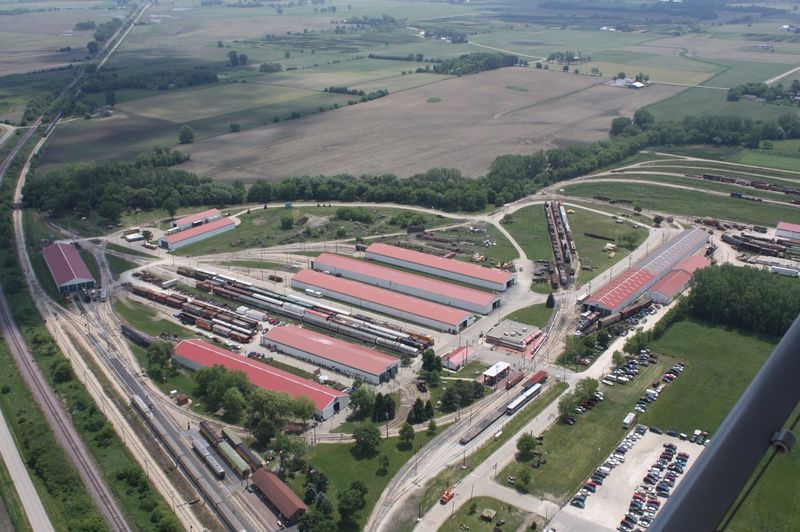
The Illinois Railway Museum at 7000 Olson Rd, Union, IL 60180 is the largest railway museum in the United States, and that is not a title it holds casually.
The collection spans more than 450 pieces of rolling stock, including steam locomotives, electric streetcars, diesel engines, elevated rail cars, and vintage passenger coaches, all spread across a sprawling outdoor campus in McHenry County.
What sets this place apart from a typical museum is that much of the collection actually runs. On operating weekends, you can ride vintage trains and trolleys across the museum grounds, which adds a completely different dimension to the experience.
Hearing a steam locomotive working under power is something that stays with you. The museum’s collection includes cars from the Chicago L system, intercity streamliners, and rare interurban electric trains that once crisscrossed Illinois before highways took over.
Rail enthusiasts will find items here that exist nowhere else in the world. But even visitors with zero interest in trains tend to find themselves fascinated by the sheer scale and variety of what is on display.
The museum operates on a seasonal schedule, typically from spring through fall, with special events including a popular Day Out With Thomas for younger visitors, and it closes during the winter months, so checking current dates before visiting is essential.