
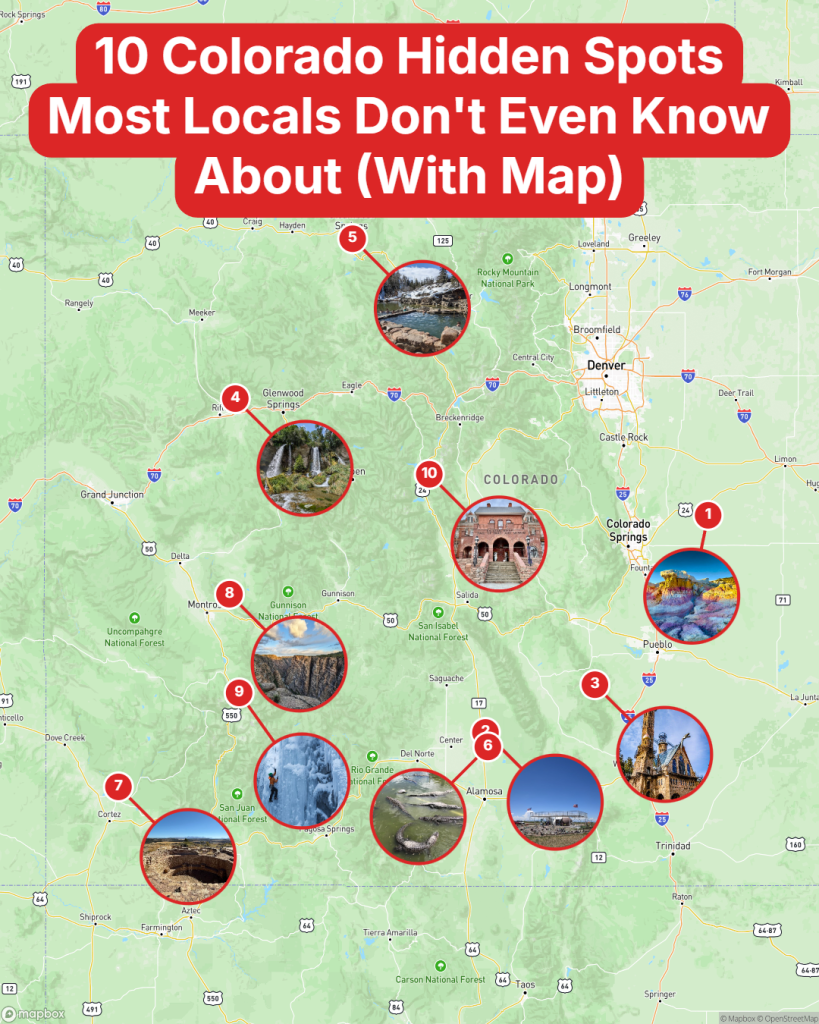
10 Colorado Hidden Spots Most Locals Don’t Even Know About (With Map)
Colorado is famous for its ski resorts and Rocky Mountain views, but tucked between the peaks and plains are places that most people drive right past without a second glance.
From alien watching towers rising from the wide open stretches of the San Luis Valley to a one man castle patiently crafted stone by stone high in the mountains, Colorado offers experiences that surprise even longtime residents.
These hidden gems reward curious travelers who are willing to venture a little off the beaten path and slow down long enough to notice what others overlook.
In Colorado, beyond the postcard scenery and popular vacation spots, there are strange landmarks, artistic experiments, and natural wonders that feel almost secret.
You might stumble upon unusual roadside art, quiet historic sites, or dramatic landscapes that seem untouched by time. For anyone planning a weekend road trip or searching for something genuinely different, this collection offers inspiration and a fresh perspective on adventure.
1. Paint Mines Interpretive Park
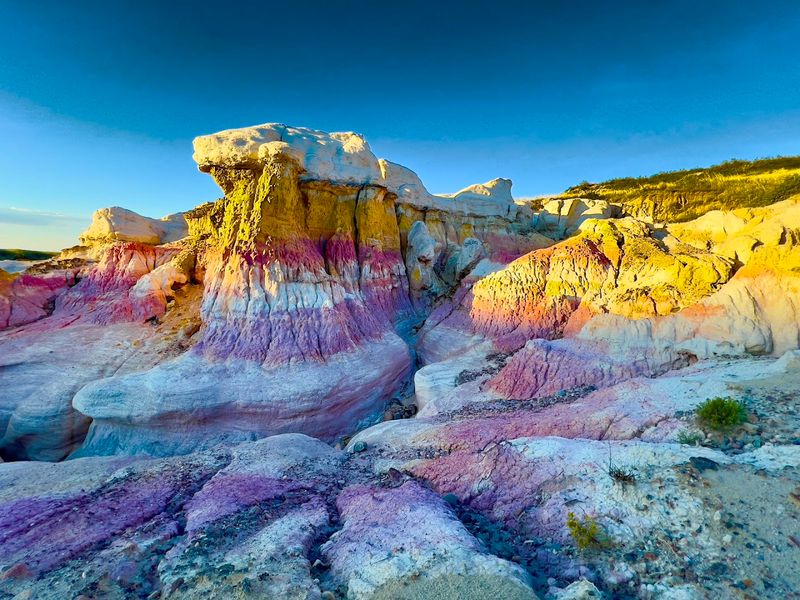
Most people have never heard of a place that looks like it belongs on another planet, yet Paint Mines Interpretive Park sits right along 29950 Paint Mines Road in Calhan, Colorado, less than an hour east of Colorado Springs. The landscape here is startlingly vivid, jagged clay spires in shades of pink, white, lavender, and rust rise out of the shortgrass prairie like something from a fever dream.
These formations are called hoodoos, and they took millions of years to sculpt. Wind and rain carved them from ancient volcanic ash deposits, revealing layers of color that shift depending on the time of day and the angle of the sun.
Early morning light turns the whole area golden, and photographers who show up at sunrise tend to stay much longer than they planned.
The park covers about 750 acres, and several well-maintained trails loop through the formations. Most visitors complete the main trail in about two hours, making it a clean, manageable outing without requiring serious hiking gear.
Bring water and wear sturdy shoes, because the terrain can be uneven near the spires.
Families with kids will find the alien-like landscape genuinely thrilling. Children who have never seen anything like it tend to go wide-eyed the moment the formations come into view over the ridge.
There are no admission fees, which makes the whole visit feel like a lucky find rather than a planned excursion.
What makes Paint Mines especially special is how uncrowded it remains despite being so close to a major city. On a calm weekday morning, you might have the entire trail to yourself, with nothing but wind and the occasional meadowlark for company.
That kind of quiet is increasingly rare and completely worth the drive.
2. UFO Watchtower
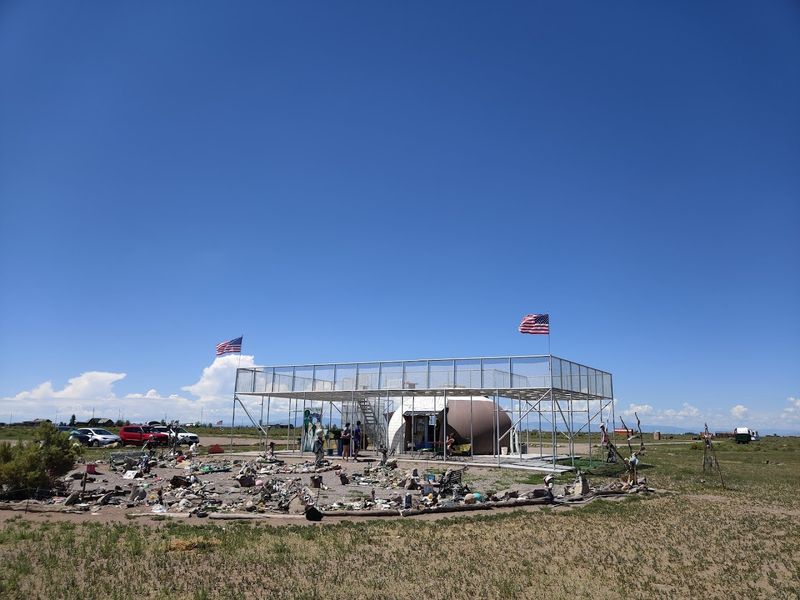
Somewhere between quirky roadside stop and genuine community landmark, the UFO Watchtower at 201-249 Colorado 17 in Center, Colorado has become one of the most delightfully odd destinations in the entire state. The San Luis Valley is one of the most reported UFO hotspots in the country, and this tower was built to give sky-watchers a proper perch from which to look for visitors from above.
The tower itself is modest, a circular platform raised about ten feet off the ground, but the surrounding property is where things get interesting. Visitors have left thousands of offerings in a dedicated “vortex garden,” a patch of land believed by many to hold unusual energy.
Crystals, trinkets, handwritten notes, and small figurines are scattered throughout, creating a folk-art atmosphere that feels earnest rather than campy.
The owner has collected an impressive archive of visitor sightings, sketches, and testimonials over the years. Whether or not you believe in extraterrestrial visitors, flipping through those records is genuinely fascinating.
The valley itself, flat, enormous, and ringed by distant peaks, does have an otherworldly quality that makes the whole concept feel less far-fetched than you might expect.
Solo travelers and couples looking for something memorably strange will find this stop delivers exactly that. It’s a stress-free call: pull off the highway, climb the tower, scan the sky, and leave with a story that’s hard to tell without smiling.
Admission is a few dollars, and a small gift shop stocks alien-themed souvenirs that lean charmingly low-budget.
The best time to visit is at dusk, when the valley goes purple and the first stars appear overhead. Standing on that platform as the light fades, you’ll understand why people keep coming back to look up.
3. Bishop Castle
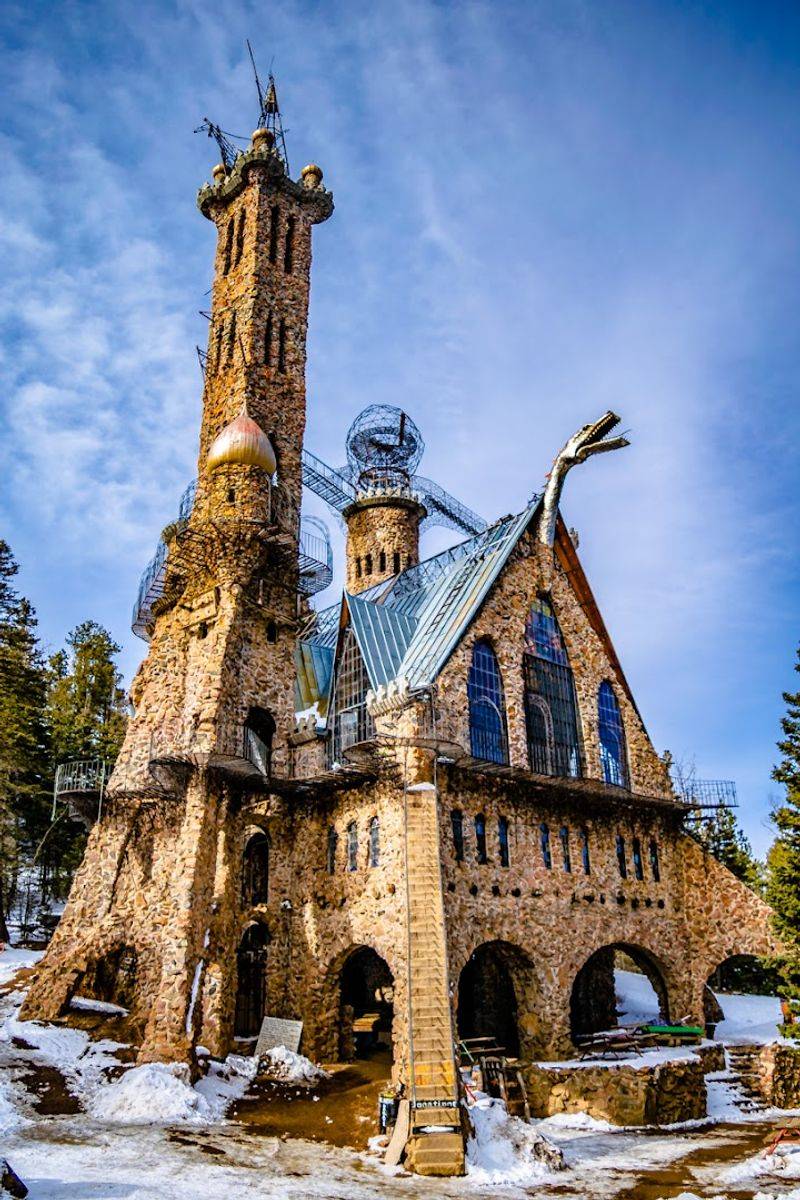
Jim Bishop started building his castle in 1969 with no architectural training, no construction crew, and no permission from anyone telling him he couldn’t. What stands today at 12705 State Highway 165 in Rye, Colorado is a towering, multi-story stone castle complete with hand-forged iron dragons, soaring turrets, and a great hall with a fireplace big enough to walk into.
It is one of the most astonishing one-man construction projects in American history.
Jim is often on site, and if you catch him in a talkative mood, the stories he tells about the build are worth the trip alone. He has hauled every stone himself, welded every iron ornament by hand, and financed the entire project without outside funding.
The castle is open to the public for free, though donations are warmly accepted and genuinely help keep the project going.
Visitors are allowed to climb the towers, cross the suspended bridges, and explore the interior rooms – all at their own risk, which Bishop makes very clear through hand-painted signs posted throughout the property. The experience has a thrilling, unfiltered quality that no corporate attraction could replicate.
It feels raw, personal, and completely unlike anything else in Colorado.
Families with older kids and adventurous teenagers tend to love it here. The combination of castle aesthetics, climbable towers, and the sheer improbability of the whole thing keeps everyone engaged.
The surrounding Wet Mountains provide a dramatic backdrop, especially in fall when the aspens turn gold against the stone walls.
Plan to spend at least two hours, and go on a clear day when the views from the upper towers stretch for miles. Bishop Castle is proof that one determined person, given enough time and stubbornness, can build something genuinely magnificent.
4. Rifle Falls State Park
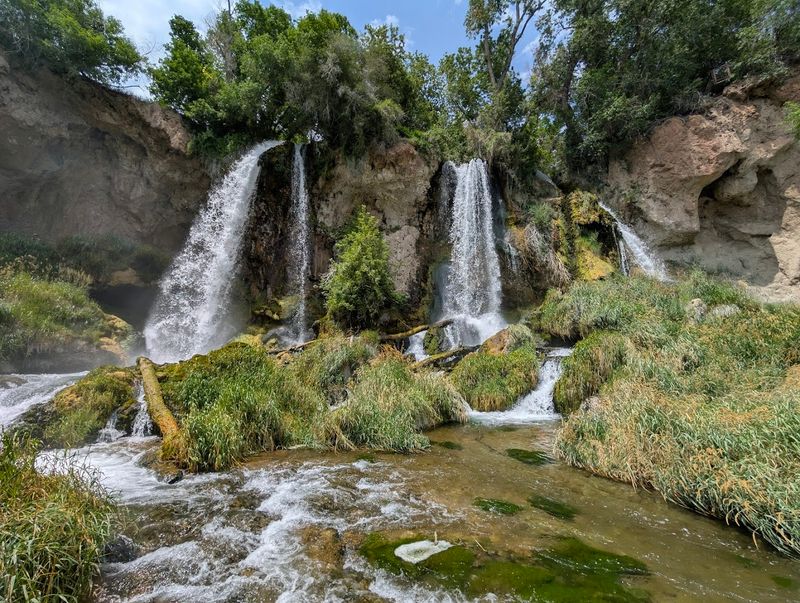
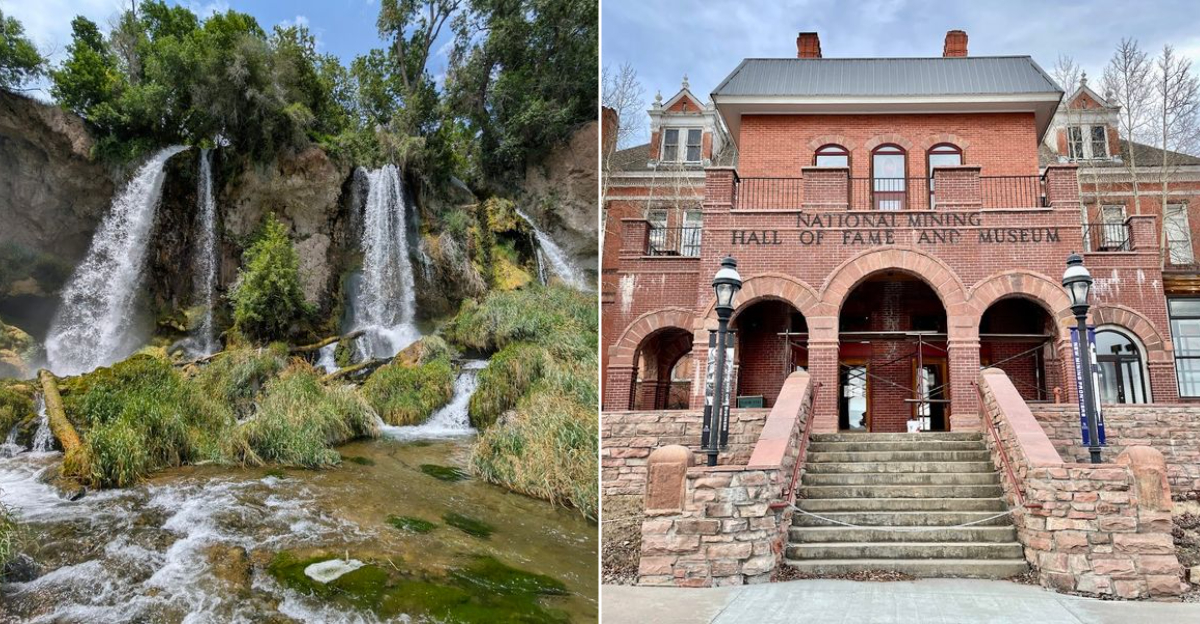
A triple waterfall in the middle of a semi-arid Colorado landscape sounds like a geographic mistake, but Rifle Falls State Park makes it work with remarkable style. Located at 5775 Highway 325 in Rifle, Colorado, the park centers on a set of three waterfalls that drop about 70 feet into a mossy, cave-dotted canyon that feels closer to the Pacific Northwest than the Western Slope.
The contrast is the whole point. You drive through dry scrubland, park the car, walk maybe ten minutes, and suddenly the air turns cool and damp and green.
The falls feed a lush riparian zone where cottonwoods and willows crowd the creek banks, and limestone caves pock the cliff faces on either side. Exploring those caves requires only a flashlight and a willingness to crouch, making them accessible to most visitors without any technical skill.
The park is genuinely compact, which works in its favor. You can see the waterfalls, walk the cave trail, and loop back to the parking area in under two hours.
That makes it an ideal midday stop on a longer road trip through western Colorado, or a standalone Sunday outing for families who want outdoor adventure without a full-day commitment.
Spring and early summer bring the highest water flow, and the falls put on their best show after snowmelt. By midsummer the flow calms down, but the green canyon walls stay lush through the warm months.
Fall visits have their own reward: golden cottonwood leaves drifting past the falls create a scene that feels almost cinematic.
Day-use fees apply, and the park can get busy on summer weekends, so a weekday morning visit earns you the falls almost entirely to yourself, a small logistical adjustment that pays off in a big way.
5. Strawberry Park Hot Springs
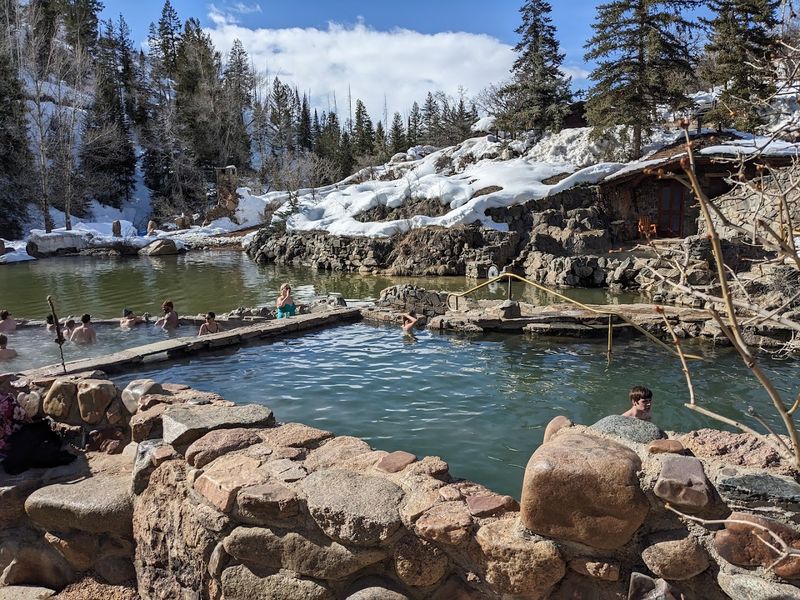
Getting to Strawberry Park Hot Springs at 44200 County Road 36 in Steamboat Springs, Colorado requires a seven-mile drive up a dirt road that turns into a white-knuckle adventure in winter. The effort is the entire point.
By the time you step into those steaming mineral pools surrounded by snow-draped pines, you have earned the warmth in a way that a hotel hot tub simply cannot replicate.
The springs are fed by naturally heated water that flows through a series of rock-lined pools, each at a slightly different temperature. The setting is wild and undeveloped in the best possible way, there are no concrete decks, no pool noodles, no chlorine smell.
Just warm water, cold air, and the sound of the creek running alongside the pools. Locals have been coming here for decades, and the vibe is relaxed and communal without feeling crowded when you time your visit right.
Weekday afternoons in shoulder season hit a sweet spot: the road is passable, the pools are warm, and the crowd is thin. Couples who make the drive often describe it as one of the most romantic stops they’ve made in Colorado, which tracks given the setting.
A few small cabins are available for overnight stays, turning the trip into a proper retreat rather than just a quick soak.
Bring cash for the entrance fee, and call ahead in winter to confirm road conditions. Four-wheel drive is strongly recommended once snow arrives, and the park recommends checking in before sunset for the best experience.
Children are welcome during daytime hours, though the atmosphere after dark shifts to adults only.
Whatever the season, stepping out of those pools into crisp mountain air and looking up at a star-filled sky is the kind of moment that justifies every mile of that dirt road.
6. Colorado Gators Reptile Park
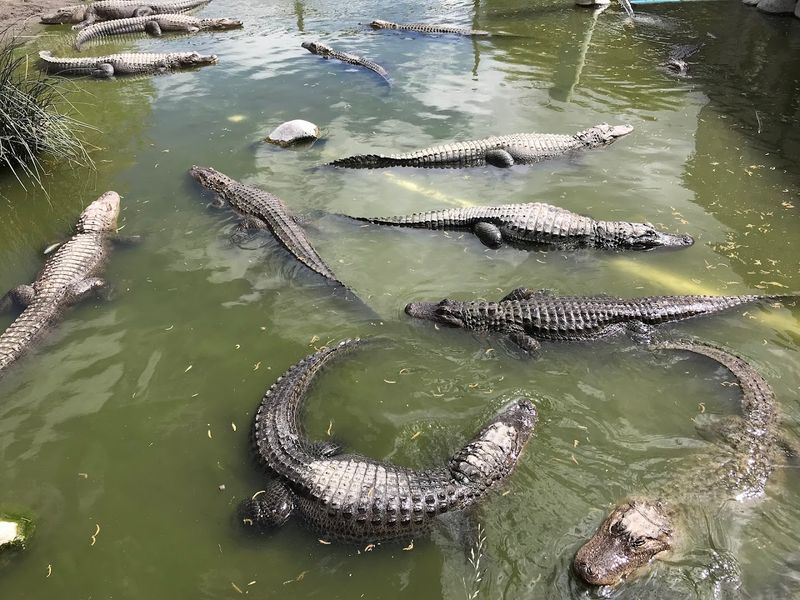
Nothing quite prepares you for the sign that reads “Alligator Farm” appearing in the middle of the San Luis Valley, surrounded by potato fields and distant mountain ranges. Colorado Gators Reptile Park at 9162 County Road 9 North in Mosca, Colorado started as a fish farm in the 1970s and evolved into something far stranger and more wonderful when the owners discovered that the warm geothermal water on their property could sustain alligators year-round.
Today the park is home to hundreds of American alligators along with a remarkable collection of other reptiles, including pythons, tortoises, and monitor lizards. The alligators are the main event, though, and the park doesn’t keep them behind thick glass.
Visitors can get genuinely close, and for those who want a more hands-on experience, guided gator-handling sessions are available for an additional fee. It is exactly as thrilling as it sounds.
The staff here clearly love what they do, and their enthusiasm for reptile education is infectious. Kids who arrive nervous often leave wanting their own pet tortoise, which parents should probably prepare for.
The park also functions as a rescue facility, taking in reptiles that private owners can no longer care for, which gives the whole operation a purpose beyond pure spectacle.
Plan for a couple of hours, and go on a warm afternoon when the gators are most active and likely to be moving around the ponds. The surrounding San Luis Valley is flat, vast, and gorgeous in its own austere way, and pairing the gator park with a stop at nearby Great Sand Dunes National Park makes for an unforgettable day of Colorado contrasts.
Admission is affordable, parking is easy, and the whole experience has a wonderfully unpretentious, family-run feel that big-budget attractions rarely manage to pull off.
7. Canyons of the Ancients Visitor Center and Museum
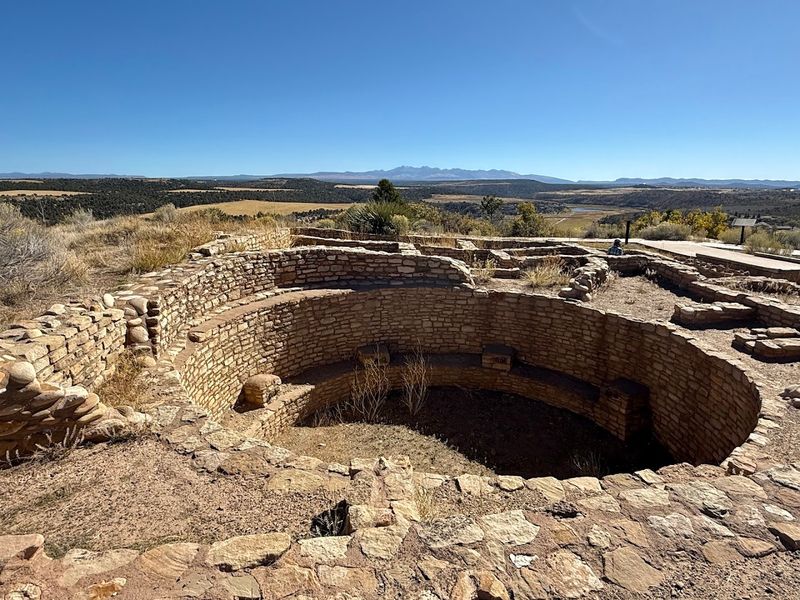
The Canyons of the Ancients region holds the highest known density of archaeological sites in the entire United States, and the visitor center and museum at 27501 Highway 184 in Dolores, Colorado is the best place to start making sense of what that actually means. Thousands of ancestral Puebloan sites dot the surrounding landscape, including cliff dwellings, kivas, and ancient road networks that predate European contact by centuries.
The museum itself is small but exceptionally well-curated. Exhibits walk visitors through the daily lives, spiritual practices, and eventual migration of the people who built this landscape into a thriving civilization.
Pottery, tools, and ceremonial objects are displayed with clear, thoughtful context that respects both the history and the living Indigenous communities who trace their ancestry to this region. It’s the kind of museum that makes you want to stay longer than you planned.
Beyond the building, the monument itself covers over 170,000 acres of southwestern Colorado. Hiking trails lead to actual archaeological sites, some of which receive almost no foot traffic despite being legally accessible to the public.
A ranger or museum staff member can point you toward trails appropriate for your group and help you understand what you’re looking at once you get there.
Travelers making the drive through the Four Corners area often skip this stop in favor of better-known Mesa Verde, but the Canyons of the Ancients offers a quieter, more personal experience. You’re not navigating tour group schedules or timed entry windows, you’re simply walking through a living landscape with deep human history beneath your feet.
The museum is free to enter, though a modest fee applies for driving into the monument. Going on a weekday morning means you’ll likely have the exhibits and several trailheads entirely to yourself, which changes the experience in a profound way.
8. Black Canyon of the Gunnison National Park
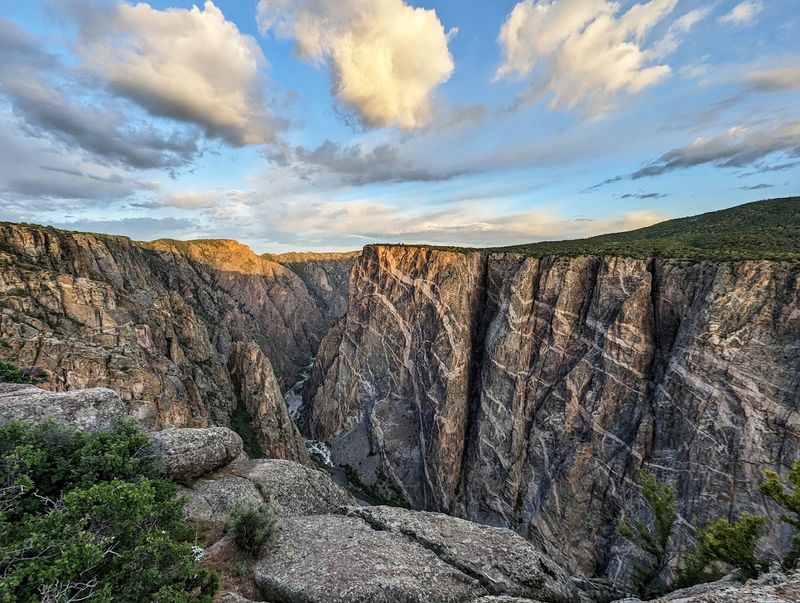
Grand Canyon gets all the postcards, but Black Canyon of the Gunnison at 9800 Highway 347 in Montrose, Colorado makes a compelling argument that narrower, darker, and more vertical is actually more dramatic. The canyon drops nearly 2,700 feet at its deepest point, and in some places the walls are so close together that the sun only reaches the river below for about 33 minutes a day.
That’s not a typo.
The dark Precambrian rock that gives the canyon its name is some of the oldest exposed geology on Earth, streaked through with pale pink pegmatite intrusions that look like lightning frozen in stone. Standing at the South Rim overlooks, you get the unsettling sensation of looking down into something that doesn’t want to be looked into.
The scale is genuinely hard to process, even after you’ve been staring for several minutes.
The South Rim is accessible year-round and offers twelve overlooks connected by a paved road. The North Rim is less visited and requires a longer drive on a dirt road, but the payoff is near-total solitude at some of the most dramatic viewpoints in the park.
Serious hikers can descend into the canyon on unmaintained routes, but these require a wilderness permit and solid experience, they are not casual trails.
Wildlife sightings here are reliable and varied. Peregrine falcons nest on the canyon walls, mule deer graze the rim meadows, and the Gunnison River below holds one of the finest wild trout fisheries in Colorado.
Even a single afternoon visit covers enough ground to leave you genuinely awestruck.
Entry fees are modest for a national park, and the crowds here are a fraction of what you’d find at more famous canyon destinations. That gap in recognition is one of Colorado’s best-kept secrets.
9. Ouray Ice Park
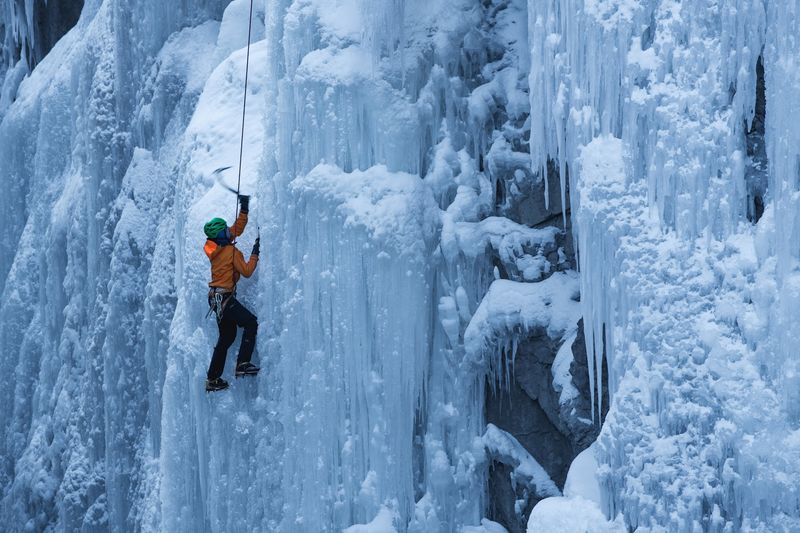
Every winter, the narrow Uncompahgre Gorge just outside the small mountain town of Ouray transforms into something that looks like a fantasy landscape, hundreds of vertical ice columns, frozen curtains, and chandelier formations created by a network of pipes that spray water onto the canyon walls throughout the cold months. The Ouray Ice Park at 280 County Road 361 in Ouray, Colorado is the world’s first and largest artificially irrigated ice park, and it draws climbers from across the globe every January for its annual festival.
But you don’t have to be a climber to appreciate it. A well-maintained trail runs through the gorge at the base of the ice walls, giving non-climbers a ground-level view of athletes working their way up formations with ice axes and crampons.
The sound of ice tools biting into frozen water, the creak of ropes, and the shouts of belayers bouncing off the canyon walls create an atmosphere that’s athletic and theatrical at once.
For those who want to try climbing, guide services in Ouray offer beginner instruction right at the park. Most people who show up with zero experience find themselves ten feet off the ground within an hour, which tends to produce an immediate and lasting addiction.
The park is free to enter, though donations support the infrastructure that creates the ice each season.
The town of Ouray itself is worth a full afternoon, Victorian storefronts, natural hot spring pools, and mountain views that frame every street like a painting. Combining an ice park visit with a soak at the Ouray Hot Springs Pool makes for a perfectly balanced winter day.
Go on a clear, cold morning when the light catches the ice at low angles and turns the whole gorge into something that looks genuinely unreal.
10. National Mining Hall of Fame and Museum
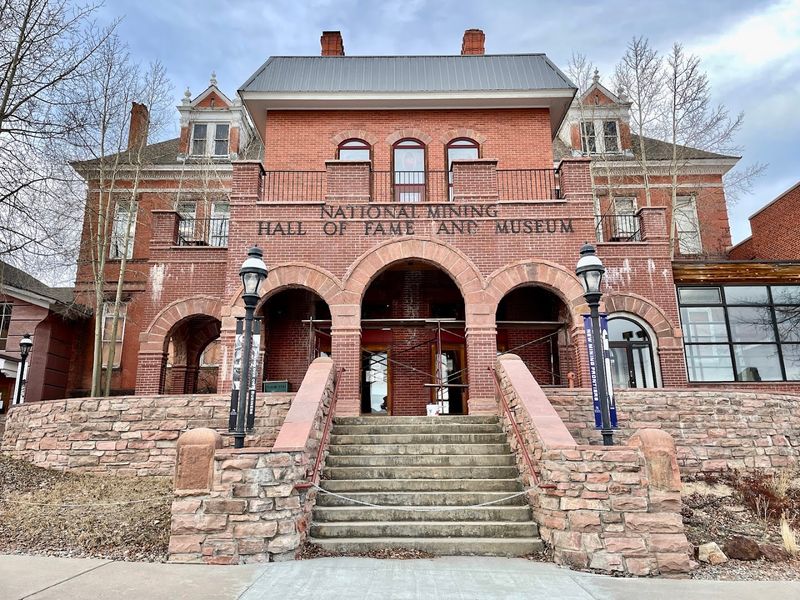
Leadville sits at over 10,000 feet above sea level, making it the highest incorporated city in the United States, and the National Mining Hall of Fame and Museum at 120 West 9th Street in Leadville, Colorado tells the story of how a silver boom turned this remote alpine town into one of the richest places in 19th-century America. The museum is far more absorbing than its institutional name suggests, and visitors who expect a dry collection of old tools tend to walk out genuinely surprised.
The centerpiece exhibit is a full-scale replica of an underground hard-rock mine, complete with tunnels, equipment, and lighting that recreates the actual conditions miners worked in every day. Walking through it gives you an immediate, visceral sense of how physically demanding and dangerous the work was.
Surrounding galleries cover everything from the chemistry of ore processing to the social history of mining camps, told through artifacts, photographs, and first-person accounts.
The Hall of Fame component honors individuals who have made significant contributions to the American mining industry, and the inductee profiles add a biographical dimension that keeps the exhibits from feeling purely technical. There’s genuine storytelling here, anchored in a town that still carries the physical and cultural weight of its mining past.
Leadville itself rewards a slow afternoon walk. The Victorian architecture along Harrison Avenue is remarkably well-preserved, and the surrounding mountains provide a backdrop that makes the whole town feel slightly cinematic.
Several good restaurants and coffee shops line the main street, making a museum visit easy to build into a longer day trip.
Admission is reasonable, and the museum is open most days through the warmer months. For anyone curious about the forces that shaped Colorado’s economy and identity, this is the most concentrated and accessible version of that story you’ll find anywhere in the state.