
Eerie Colorado Ghost Towns You Have To See In Order To Believe
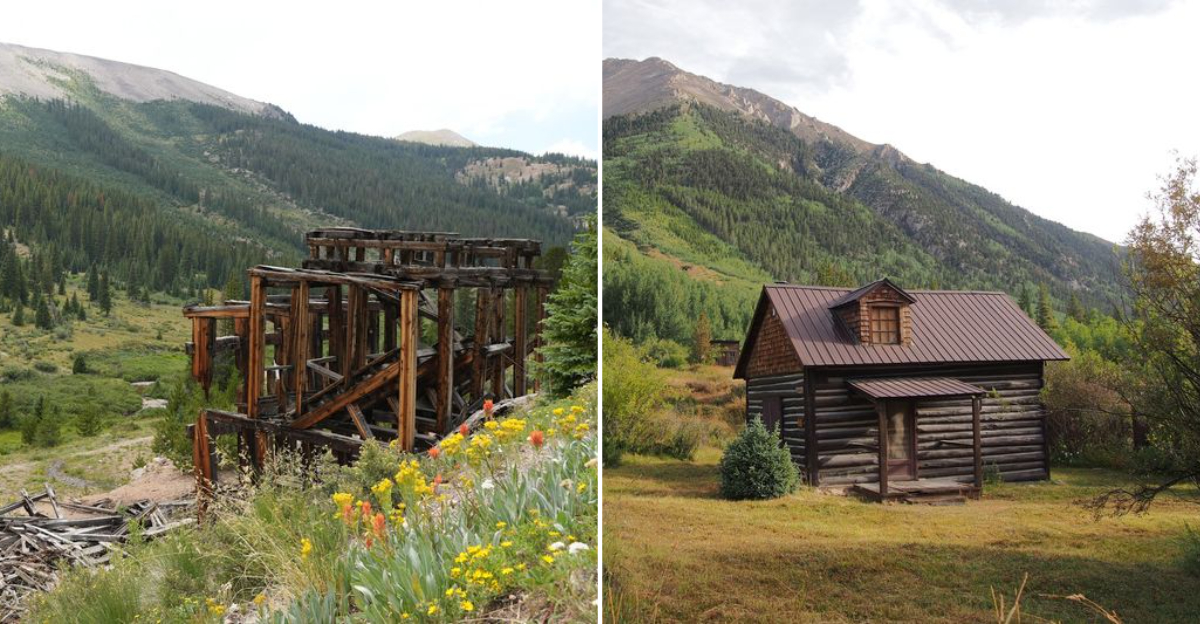
Colorado has a way of tucking its most haunting stories behind winding mountain curves and along dirt roads that seem to vanish into silence. In Colorado, the past does not always stay buried.
Scattered high in the Rockies are ghost towns that stubbornly remain, preserved in thin air and memory with creaking wooden storefronts, weather worn cabins, rusted tools, and hollow windows that stare back like faded photographs.
Colorado’s mining era once pulsed with ambition, drawing hopeful prospectors who chased silver and gold with relentless determination.
Some struck it rich and built lively communities filled with laughter, music, and the clang of industry. Others lost everything to harsh winters, collapsing markets, and unforgiving terrain.
Today, only whispers remain, carried on the wind through empty streets and sagging porches. Visiting these places feels like stepping into another century.
Bring curiosity, sturdy boots, and a bit of courage, because these ten eerie ghost towns are absolutely worth the detour.
1. Saint Elmo Ghost Town
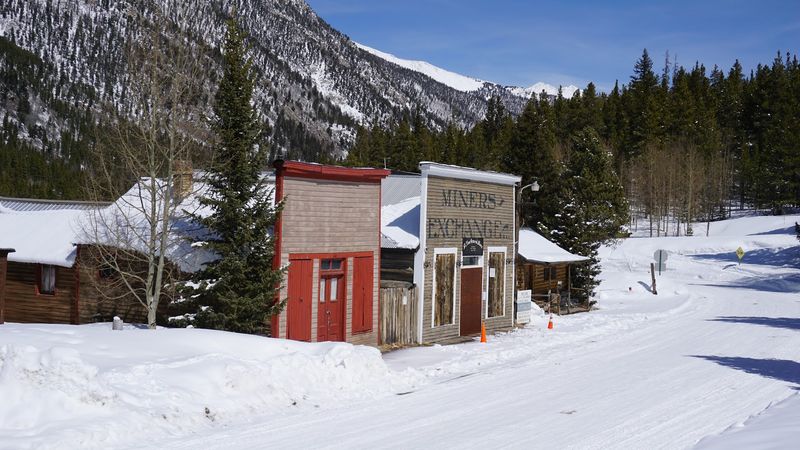
Walking into Saint Elmo feels less like a road trip stop and more like accidentally stepping through a time portal. The wooden storefronts along County Road 162 west of Buena Vista look so intact you half expect a general store owner to lean out and ask what you need.
Saint Elmo is one of Colorado’s most remarkably preserved ghost towns, and that alone makes it worth every mile of mountain driving.
Founded in the 1880s during Colorado’s silver and gold rush era, Saint Elmo once supported a population of around 2,000 people. Miners, merchants, and families filled these streets with noise, ambition, and the particular kind of hope that only a promising ore strike can generate.
Today, the silence is almost theatrical, and honestly, it hits harder than any museum exhibit ever could.
The structures here are not just ruins. Many buildings still have their original signage and architectural details, giving you a genuinely rare look at what a thriving 19th-century mountain mining town actually looked like.
You can stroll the main drag and peer through windows at old equipment, furniture, and the occasional artifact left behind when everyone simply walked away.
Summer is the best time to visit because snow can make County Road 162 impassable in colder months. Plan to arrive early in the morning before the day-trippers from Buena Vista show up, because the quiet hours are when Saint Elmo really earns its reputation.
Personally, standing in that empty street with the mountains framing everything felt like holding a conversation with the past. Bring a camera, bring snacks, and give yourself at least two hours here.
Saint Elmo never rushes you, and you should return the favor.
2. Animas Forks Ghost Town
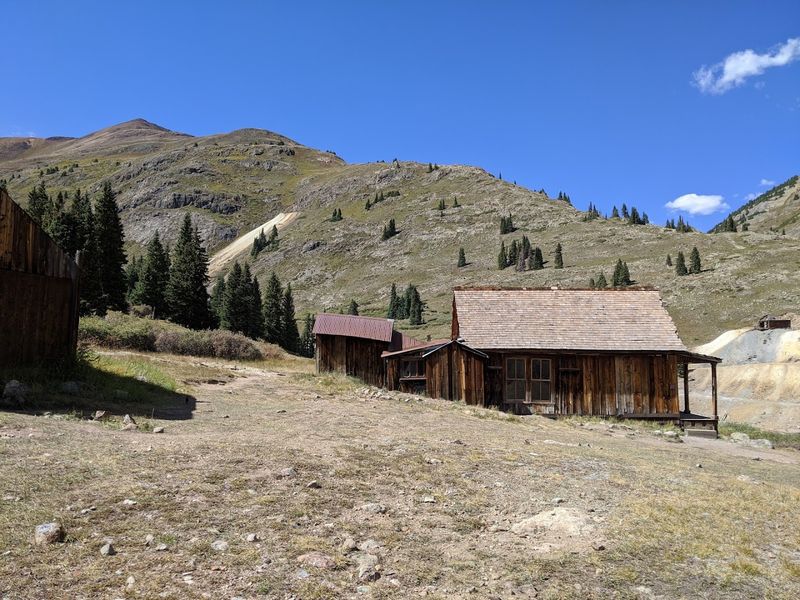
Getting to Animas Forks is half the adventure, and the other half is standing among its surviving buildings wondering how anyone lived up here at all. Perched along the Alpine Loop Road between Silverton and Lake City in San Juan County, this remote settlement sits at roughly 11,200 feet elevation, which means summer snowstorms were not exactly rare events for the miners who called it home.
Nine of the original buildings still stand, which is a minor miracle given the altitude and the brutal winters this place endures. The structures lean and creak in the mountain wind, and the surrounding peaks create a backdrop so dramatic it borders on theatrical.
One particularly striking building features a large bay window that seems wildly optimistic for a mountain mining camp, and yet there it is, still holding its shape after more than a century.
Animas Forks requires a high-clearance four-wheel-drive vehicle for summer access, so this is not a casual sedan day trip. That barrier actually works in your favor because it keeps the crowds manageable and gives the place a genuinely remote, untamed feeling.
The Alpine Loop itself is one of Colorado’s most celebrated off-road routes, so folding Animas Forks into a longer loop adventure makes complete logistical sense.
My honest recommendation is to time your visit for mid-July through August when wildflowers carpet the surrounding slopes and the access road is at its most forgiving. Arrive with a full tank of gas, a solid snack situation, and no particular schedule to keep.
The San Juan Mountains have a way of slowing time down, and Animas Forks sits right at the center of that feeling. Few ghost towns in Colorado deliver this combination of history and raw scenery so effortlessly.
3. Ashcroft Ghost Town
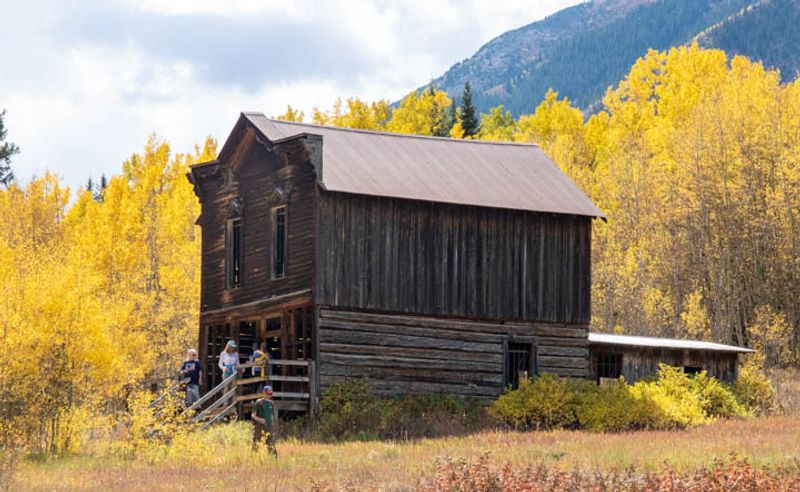
Just a short drive south of glitzy Aspen sits Ashcroft, a ghost town so quietly compelling that it almost feels like the mountains kept it secret on purpose. The contrast is genuinely striking.
You can sip an overpriced latte in downtown Aspen and then, twenty minutes later, stand in front of weathered log cabins that date back to the silver boom of the 1880s. Colorado loves a good plot twist.
Ashcroft was a legitimate boomtown before Aspen stole its thunder, and at its peak it had a population that rivaled its now-famous neighbor. Silver brought people here fast, and the collapse of silver prices sent them packing even faster.
What remains today is a small collection of historic structures preserved well enough to convey the bones of the original settlement without feeling artificially restored.
The site is managed and maintained, which means you can explore it comfortably without worrying about unstable structures. Interpretive signs throughout the area give helpful context without turning the experience into a classroom exercise.
The surrounding landscape of aspen groves and mountain peaks adds a layer of natural beauty that makes Ashcroft feel less melancholy and more like a painting someone left unfinished.
Ashcroft Road is accessible by regular passenger vehicles during summer and fall, making this one of the more approachable ghost town visits on this list. If you are already planning a trip to the Aspen area, skipping Ashcroft would be a genuine mistake.
Personally, I found it more emotionally resonant than the town that outlived it. There is something about a place that almost made it but did not that sticks with you long after the drive home.
Go in the afternoon when the light hits the old wood just right.
4. Independence Ghost Town
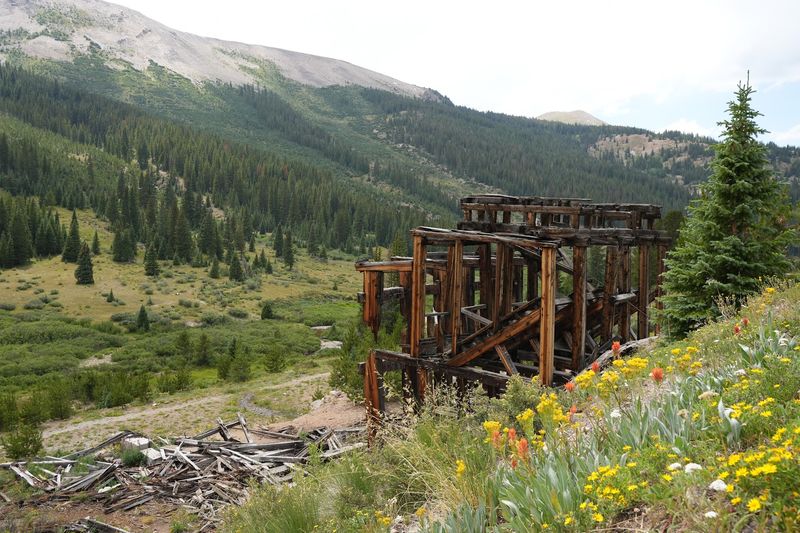
Founded on the Fourth of July in 1879, which is precisely why it got its patriotic name, Independence sits near one of Colorado’s most dramatic mountain passes and delivers a ghost town experience that feels genuinely earned. The elevation here is no joke, hovering around 10,900 feet, and the ruins of cabins and mining structures scattered across the site look like they lost a very long argument with the weather.
Independence was a gold mining settlement, and for a brief, optimistic window it thrived. At its height the town reportedly had a hotel, saloons, and enough residents to justify a real sense of community.
Then the gold thinned out, the winters wore people down, and the population drained away with the kind of quiet inevitability that makes ghost towns so philosophically interesting if you let yourself think about it long enough.
The site sits along Independence Road near Independence Pass in Pitkin County, and during summer months the drive itself is a highlight. The pass road is one of the highest paved routes in Colorado, and the scenery is the kind that makes passengers completely forget to look at their phones.
The ruins at Independence are not as intact as Saint Elmo or Animas Forks, but the setting more than compensates.
Bring layers because the temperature at this elevation can shift dramatically even on a clear summer afternoon. I found Independence particularly moving at golden hour when long shadows stretch across the old foundations and the whole scene takes on an amber glow that feels almost cinematic.
Pair this stop with a drive over Independence Pass and you have built yourself an afternoon that costs almost nothing and delivers memories that last considerably longer. That is a genuinely good deal by any measure.
5. Gothic Ghost Town
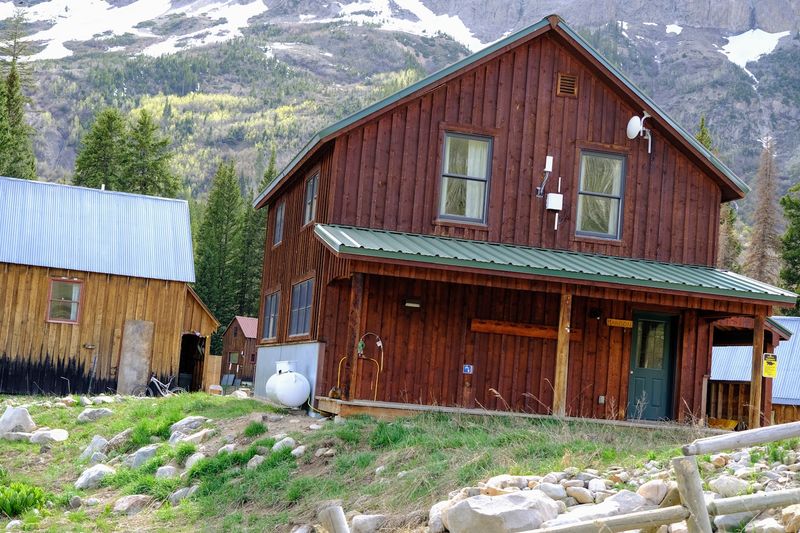
Gothic has one of the more unusual second acts of any Colorado ghost town, because instead of simply fading away it became home to the Rocky Mountain Biological Laboratory, a research station that has operated here since 1928. Scientists study plants, animals, and ecosystems where miners once chased silver veins, which feels like a fitting and even poetic evolution for a place this beautiful.
Located along Gothic Road near Crested Butte in Gunnison County, Gothic sits in a valley so visually stunning that it almost distracts from the historical weight of the place. The surrounding wildflower meadows in July and August are genuinely world-class, drawing photographers and hikers who sometimes seem surprised to find historic mining buildings mixed in with all that natural splendor.
The old structures and the research station coexist in a way that makes Gothic feel alive rather than simply preserved.
The original mining boom here was fueled by silver discoveries in the early 1880s, and Gothic grew quickly before the familiar pattern of bust and abandonment played out. What makes it distinctive today is that ongoing scientific activity gives the place a pulse that purely frozen-in-time ghost towns cannot replicate.
You might spot researchers going about their work while you wander among buildings that predate their great-grandparents.
Gothic Road is a dirt road that requires careful driving but is generally passable by standard vehicles in summer. Crested Butte is close enough to make a natural base camp, and the combination of ghost town history, wildflower scenery, and active research station makes Gothic genuinely unlike anything else on this list.
When I visited, a researcher waved hello from a cabin doorway, and I thought: somewhere between ghost and fully alive is exactly where Gothic belongs. That balance is its real charm.
6. Tin Cup Ghost Town
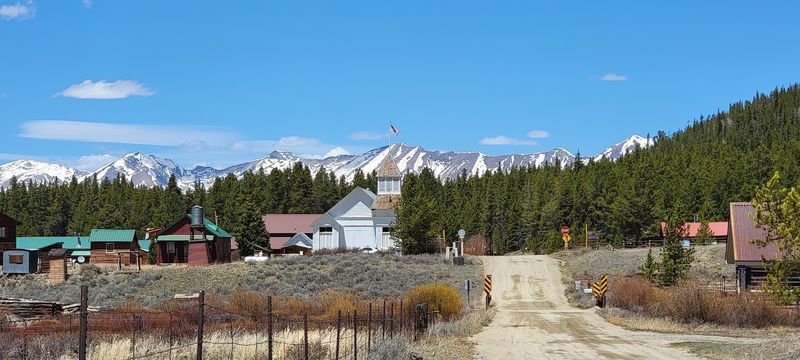
Tin Cup has a name that sounds like a folk song and a personality to match. Tucked along Tin Cup Road in Chaffee County, this small former mining settlement carries a quiet, slightly unsettling charm that rewards visitors who take the time to slow down and really look around.
It does not shout its history at you. Tin Cup whispers it, and that is somehow more effective.
The town had a notably rowdy reputation during its mining heyday in the 1880s, with gambling, saloons, and the kind of frontier lawlessness that made good newspaper copy back in the day. Multiple sheriffs reportedly met unfortunate ends here, which gives Tin Cup a biographical edge that more sanitized tourist destinations cannot match.
History with actual teeth is always more interesting than history that has been polished smooth.
Tin Cup is often explored as a companion stop to nearby Saint Elmo, and the two together make for an excellent half-day loop through Chaffee County’s ghost town corridor. The drive between them is scenic and manageable, passing through the kind of mountain landscape that reminds you why people moved to Colorado in the first place.
A high-clearance vehicle is helpful but not always strictly necessary depending on recent road conditions.
What I find most compelling about Tin Cup is the way the remaining structures seem almost embarrassed by their own survival, leaning and weathering but refusing to collapse completely. There is stubbornness in old wood that has outlasted everyone who ever lived inside it.
Visit in late summer when the surrounding meadows are green and the light is warm, and you will find Tin Cup genuinely atmospheric in a way that photographs cannot fully capture. Some places have to be felt, and this is one of them.
7. Vicksburg Ghost Town
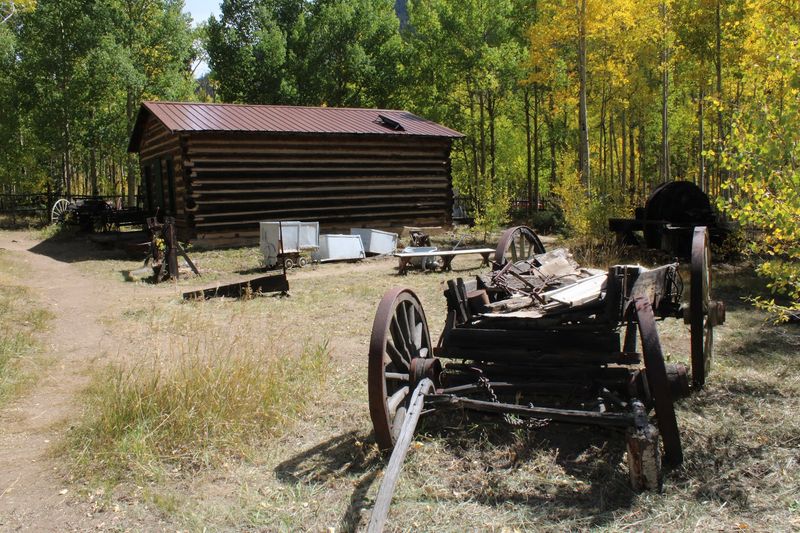
Vicksburg sits quietly in the same Chaffee County corridor as Saint Elmo and Winfield, and while it does not always grab top billing in ghost town conversations, it absolutely earns its place on the itinerary. The old structures and scattered artifacts here offer a glimpse into 19th-century mining life that feels raw and unvarnished in the best possible way.
Nothing about Vicksburg has been prettied up for tourism, and that honesty is its greatest asset.
Founded during the same silver and gold rush era that shaped so much of this region, Vicksburg was a working mining village rather than a commercial hub. The people who lived here were diggers and laborers, not merchants and hotel operators, and the physical remains reflect that workmanlike character.
The structures are modest, the artifacts practical, and the whole scene carries the weight of real effort rather than romanticized frontier mythology.
Access is via County Road 162 in Chaffee County, putting Vicksburg within easy reach of anyone already planning a Saint Elmo visit. The two towns are close enough to combine in a single outing, and doing so gives you a richer, more layered understanding of how mining communities clustered together in these mountain valleys.
Vicksburg adds depth to the story that Saint Elmo alone cannot tell.
Personally, Vicksburg struck me as the most honest ghost town on this entire list. There is no gift shop nearby, no interpretive center, no curated experience waiting for you.
Just old wood, old iron, mountain air, and the particular silence that settles over a place where people once worked very hard for very uncertain rewards. If you want ghost town atmosphere without any tourist scaffolding around it, Vicksburg is your answer.
Bring your own context and let the place do the rest.
8. Winfield Ghost Town
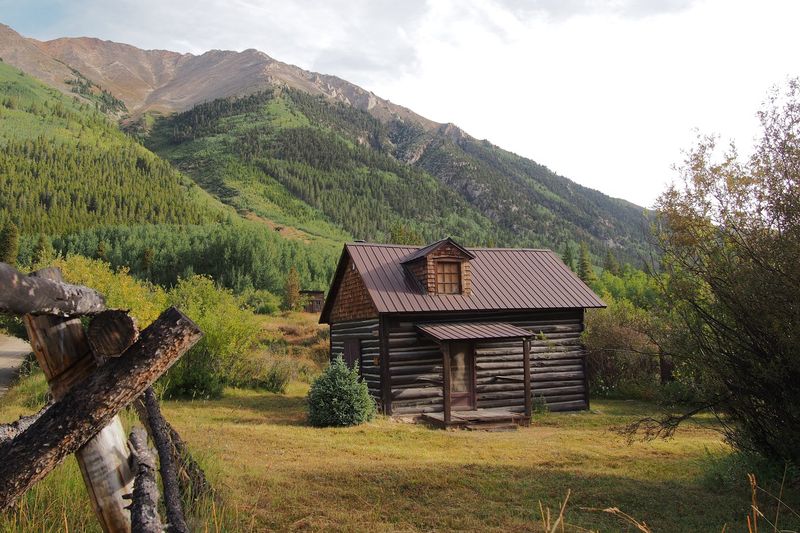
Winfield is the kind of ghost town that makes you feel like you found something the guidebooks forgot to mention, even when you followed directions to get there. Located off County Road 162 in Chaffee County, close to both Saint Elmo and Vicksburg, Winfield rounds out a trio of mining settlements that together paint a vivid picture of what this corner of Colorado looked like during its most ambitious and chaotic decades.
The preserved remnants here include log cabins and old buildings that have held up remarkably well against the years. Winfield sits at the upper end of Clear Creek Canyon, and the natural setting amplifies the ghost town atmosphere considerably.
Mountains press in from multiple directions, the creek runs cold and clear nearby, and the whole composition feels like a landscape painting that someone forgot to remove the people from.
Winfield was a supply and residential settlement supporting the mining operations in the surrounding area during the late 1800s. It never grew into a proper commercial town, which is partly why it still feels so raw and authentic today.
The absence of elaborate commercial infrastructure means what you see is essentially what the original residents saw, minus the noise and activity that once filled these spaces.
Plan to spend at least an hour here, more if you enjoy wandering and poking around old structures at your own pace. The nearby trailhead for Missouri Gulch makes Winfield a natural starting point for hikers who want to combine history with a mountain workout.
For everyone else, the ghost town itself is reward enough. I left Winfield with a peculiar feeling of having been trusted with something fragile, like the place had shown me something real without asking anything in return.
That is a rare quality in any travel experience.
9. Summitville Ghost Town
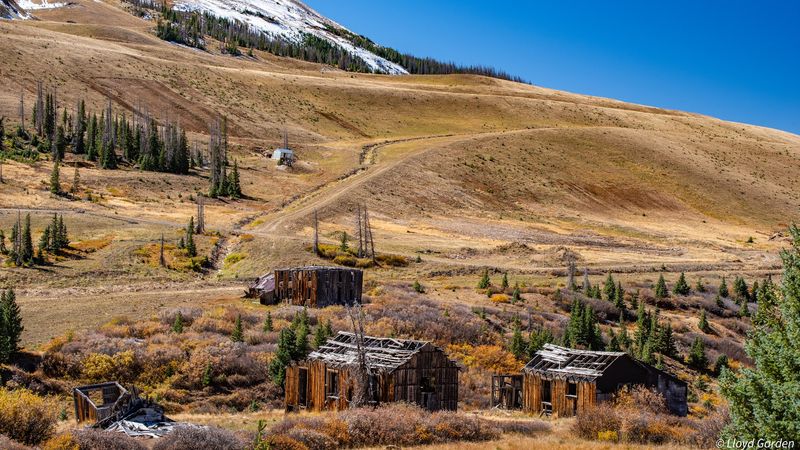
Summitville sits in the kind of remote Colorado terrain that makes you recalculate your life choices somewhere around the third switchback. Located in Mineral County at a punishing elevation, this rugged old mining camp is not the easiest ghost town to reach, and that difficulty filters out the casual visitors in a way that makes the experience feel genuinely exclusive without costing anything extra.
The ruins are visible, atmospheric, and completely unfiltered by tourism infrastructure.
The history here carries an extra layer of complexity because Summitville is also associated with a significant environmental contamination event from a more recent mining operation in the 1980s and early 1990s. That chapter adds a sobering modern dimension to the site’s story, reminding visitors that the impulse to extract mineral wealth from these mountains did not end with the 19th century.
History, it turns out, does not always stay in the past where it is convenient.
The older mining ruins from the original 19th-century camp are visible among the alpine landscape, and the setting is dramatic in the way that only high-altitude Colorado can manage. Sparse vegetation, rocky terrain, and the particular quality of light at elevation combine to make Summitville feel genuinely otherworldly.
On an overcast day it borders on cinematic in a slightly ominous way that ghost town enthusiasts will absolutely appreciate.
Access requires a capable vehicle and should be attempted only in summer when snow has cleared from the approach roads. Check current road conditions before you go because remote mountain access can change quickly and without warning.
I found Summitville one of the most emotionally complex stops on any Colorado ghost town itinerary, equal parts beautiful and sobering in a combination that stays with you. Some places teach you things about human ambition that textbooks never quite manage.
Summitville is one of those places.
10. Teller City Ghost Town
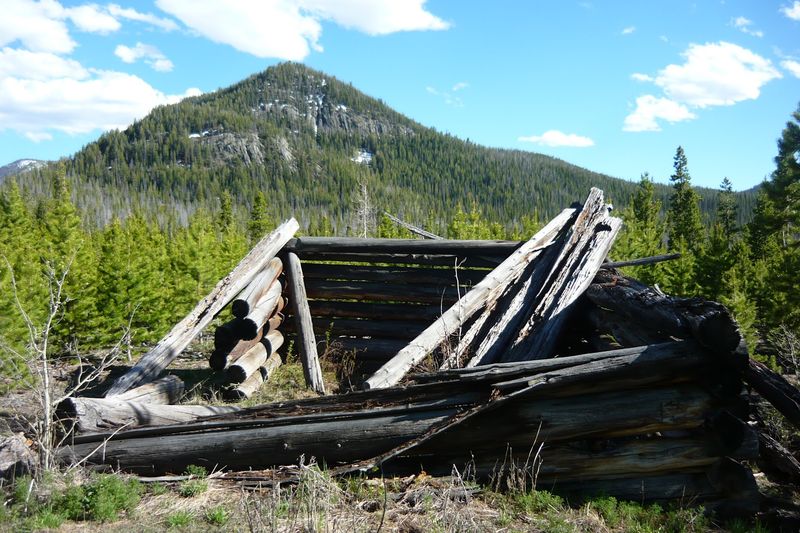
Teller City takes the ghost town concept and commits to it completely. Unlike Saint Elmo with its standing storefronts or Animas Forks with its surviving structures, Teller City has largely returned to the forest, leaving scattered foundations, depressions in the earth, and occasional artifacts as its primary evidence of ever having existed.
It is a ghost town in the most literal sense, and there is something genuinely haunting about a place that has been this thoroughly reclaimed by nature.
Located near Roosevelt National Forest in Grand County, the site requires some genuine exploration to appreciate fully. You are not going to pull into a parking area and immediately see dramatic wooden buildings.
Instead, you move through the trees and gradually begin to notice the geometry of old foundations, the unnatural straightness of certain paths, the rusted remnants of tools and equipment half-buried in pine needles. The town reveals itself slowly, which makes the discovery feel personal.
Teller City had its moment in the 1880s when silver and other mineral deposits drew settlers into this corner of Grand County. At its brief peak the town reportedly had hundreds of residents, multiple businesses, and real aspirations of permanence.
The bust came fast, as it almost always did, and within a few years the population had scattered and the forest began its patient work of erasure.
Visiting Teller City rewards patience and a genuine curiosity about what lies beneath the surface of a landscape. Bring good footwear for uneven terrain and a willingness to look carefully rather than just glance around.
My afternoon here felt more like archaeology than tourism, piecing together a community from its physical fragments. If the more preserved ghost towns on this list feel like open books, Teller City is a book that has been half-buried, and reading it requires real effort.
That effort is absolutely worth making.