
12 Florida Museums That Are Genuinely Unusual And Surprisingly Interesting
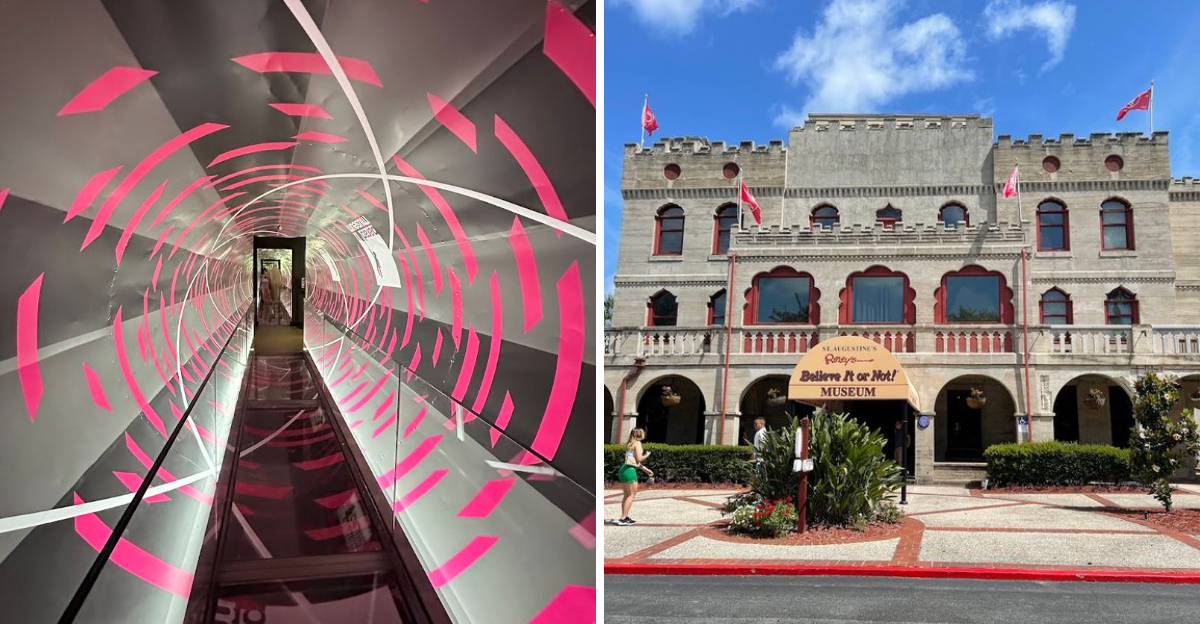
Florida might look like a postcard of palm trees and roller coasters, but beneath the sunshine is a cabinet of curiosities so strange it feels almost unreal.
Hidden between beaches and boulevards are museums packed with shrunken heads, haunted artifacts, swamp legends, alien theories, and relics pulled straight from shipwrecks.
These are not the places printed on theme park brochures. They are the ones locals whisper about, the ones road-trippers stumble into and talk about for years.
Step inside and you might face a twelve-foot skeleton, a room dedicated to cryptids, or a vault glittering with treasure once lost at sea.
Every corner feels like a plot twist. Every exhibit feels like proof that Florida’s wild reputation did not come from nowhere.
If you think you have seen everything the state offers, think again. These twelve bizarre museums prove the strangest adventures are not in the swamps or oceans.
They are hiding behind unexpected doors, waiting for curious visitors to walk in.
1. Salvador Dali Museum
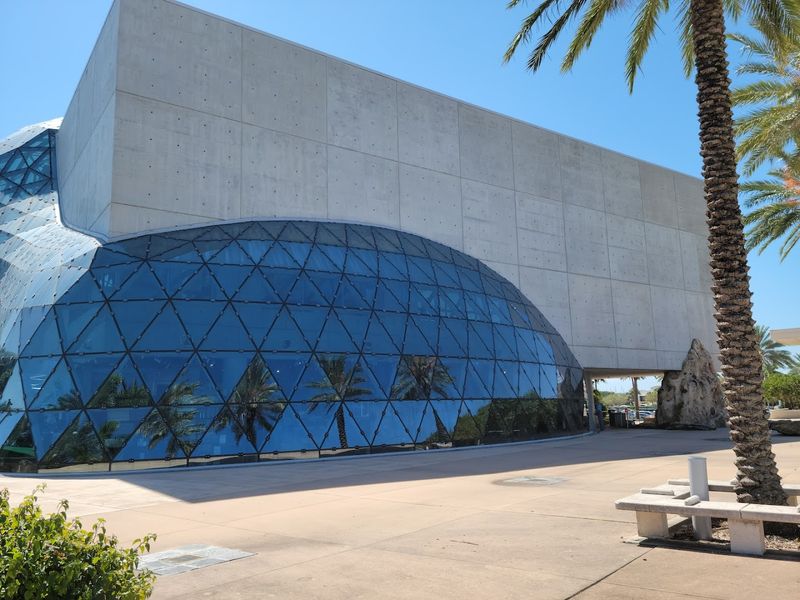
Picture walking into a building that looks like a giant glass bubble melting into a concrete wall, and you already understand the Salvador Dali Museum.
Located at 1 Dali Blvd, St. Petersburg, FL 33701, this museum holds the largest collection of Dali artwork outside of Europe.
The building itself is a work of art, featuring a spiraling glass atrium called the “enigma” that floods the interior with natural light.
Inside, you will find over 2,400 works, including oil paintings, watercolors, sculptures, and photographs collected by A. Reynolds Morse and Eleanor Morse over decades.
Dali was famous for painting melting clocks and bizarre dreamscapes that make your brain do a double take.
Fun fact: The building was designed to withstand Category 5 hurricane winds, because even the architecture refuses to play by normal rules.
Guided tours are available and totally worth it, since many of the paintings contain hidden images and optical illusions you would completely miss on your own.
Visiting families often spend two to three hours here without realizing how much time has passed.
This museum is proof that art can be weird, wonderful, and absolutely unforgettable all at once.
2. Mel Fisher Maritime Heritage Museum
Somewhere beneath the warm waters off the Florida Keys lies one of the greatest treasure stories ever told, and Mel Fisher Maritime Heritage Museum brings it all to life.
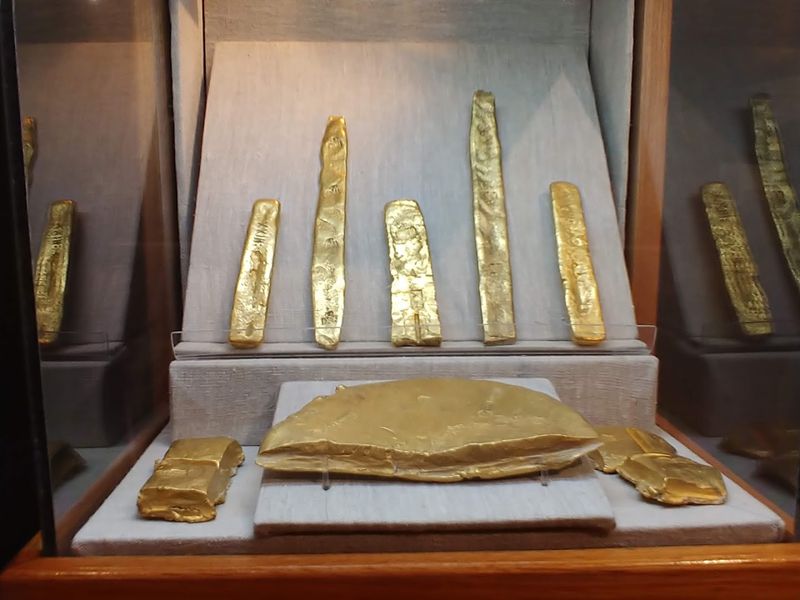
Sitting at 200 Greene Street, Key West, FL 33040, this museum showcases gold bars, silver coins, and emeralds pulled from the wreck of the Nuestra Senora de Atocha, a Spanish galleon that sank in 1622.
Mel Fisher spent 16 years searching for this shipwreck before finally finding it in 1985, a story so dramatic it sounds completely made up.
The total value of the recovered treasure is estimated at over 400 million dollars, making it one of the most valuable underwater finds in history.
Visitors can actually touch a genuine silver bar from the wreck, which is a seriously cool hands-on moment.
The museum also tells the human side of the story, including the heartbreaking loss of Fisher’s son and daughter-in-law during the search.
Staff members are incredibly knowledgeable and happy to answer questions about conservation, underwater archaeology, and the ongoing recovery efforts.
New artifacts are still being found, so the collection continues to grow.
History has never felt this shiny or this real.
3. Mel Fisher’s Treasure Museum
If one Mel Fisher museum is amazing, two is practically legendary, and the Sebastian location delivers its own impressive collection of sunken riches.
Found at 1322 U.S. Highway 1, Sebastian, FL 32958, this museum focuses on the 1715 Spanish Treasure Fleet, a convoy of ships that was destroyed by a hurricane just days after leaving Havana.
Eleven ships sank along the Florida coast that year, scattering gold, silver, and jewelry across miles of ocean floor.
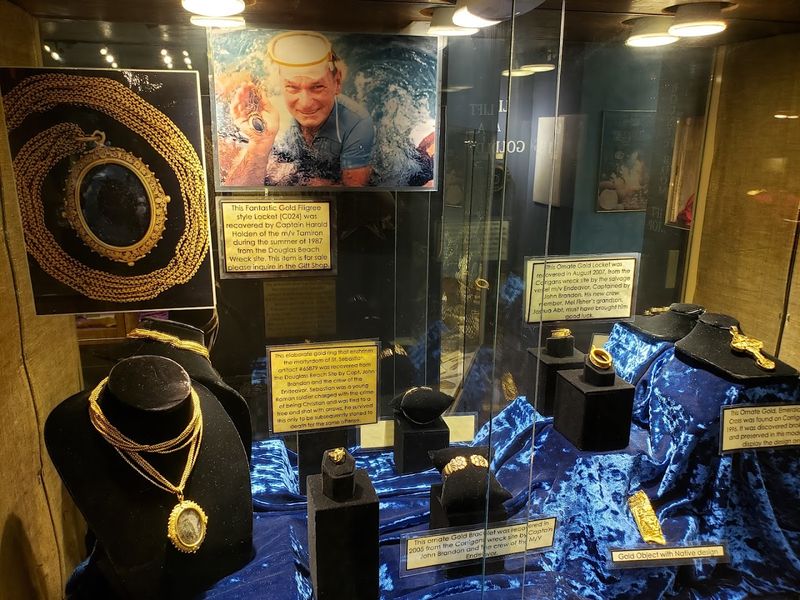
The museum displays coins, cannons, jewelry, and navigational tools recovered from these wrecks, giving visitors a vivid window into colonial-era sea travel.
One of the most jaw-dropping displays is a collection of perfectly preserved gold chains and rings that look like they were made yesterday rather than 300 years ago.
Local treasure hunters still search these waters today, and the museum explains exactly how modern recovery operations work.
Interactive exhibits help kids understand the history of the Spanish empire and why so many ships were crossing the Atlantic during that era.
The staff here is passionate and knowledgeable, often sharing stories about recent discoveries that keep the legend alive.
Honestly, after visiting, you might start eyeing the beach sand a little differently.
4. House Of Refuge Museum
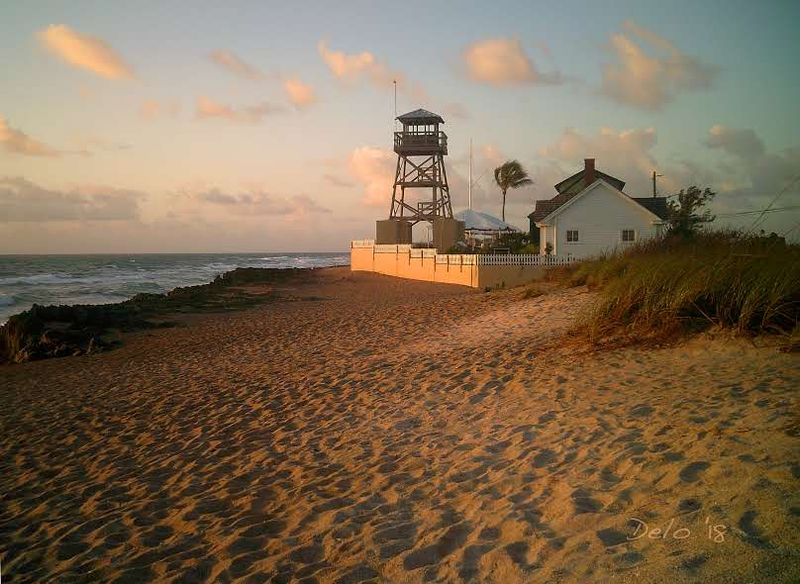
Before the coast guard existed, shipwrecked sailors had almost no hope of surviving along Florida’s remote shores, and that is exactly why the House of Refuge was built.
Perched at 301 S.E. MacArthur Boulevard on Hutchinson Island near Stuart, FL, this is the only surviving House of Refuge from a network of stations built by the U.S. government in the 1870s.
Keepers lived here year-round with their families, ready to rescue any sailors who washed ashore and provide them with food, shelter, and medical care.
The building has been restored to reflect life as it was in the late 1800s, complete with original furniture, tools, and equipment.
Walking through the rooms feels like stepping into a time capsule, with creaky wooden floors and period-accurate details everywhere you look.
The ocean views from the property are absolutely stunning, which makes you wonder how the keepers managed to stay focused on their duties.
Loggerhead sea turtles still nest on the beach nearby, adding one more reason this place feels quietly unforgettable.
5. International Independent Showmen’s Museum
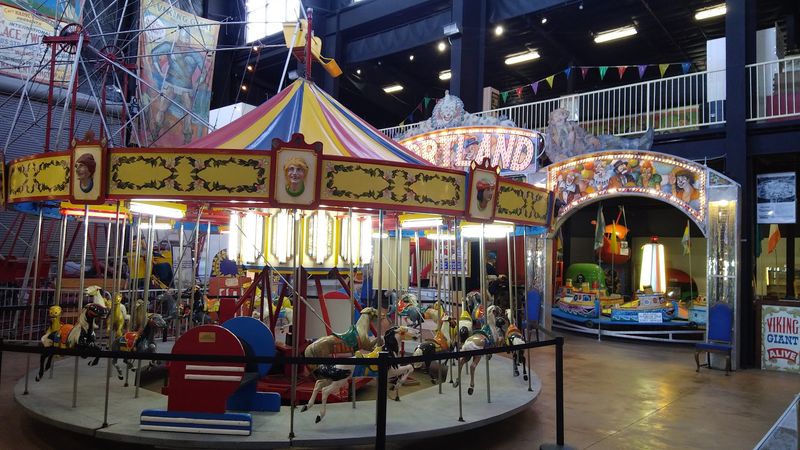
Cotton candy, Ferris wheels, and the smell of popcorn are basically a universal childhood memory, and the International Independent Showmen’s Museum celebrates the entire world that creates that magic.
Located at 6938 Riverview Drive, Riverview, FL 33578, this museum is dedicated to the history of traveling carnivals, fairs, and amusement shows across America.
The collection includes vintage carousel horses, sideshow banners, antique midway games, and an impressive array of carnival wagons that once rolled from town to town across the country.
What makes this place especially unique is that it is run by and for the people who actually work in the traveling show industry, giving it an insider authenticity that commercial museums simply cannot replicate.
Exhibits cover everything from the golden age of circus arts to the evolution of modern amusement rides.
There is even a restored antique carousel that visitors can ride, which is basically the best possible museum bonus activity.
The level of detail in the preservation work is remarkable, with hand-painted signs and ornate carvings restored to near-original condition.
Many artifacts were donated by showmen families who wanted their history preserved for future generations.
Visiting feels like getting a backstage pass to an entire subculture most people never knew existed.
6. Skunk Ape Research Headquarters
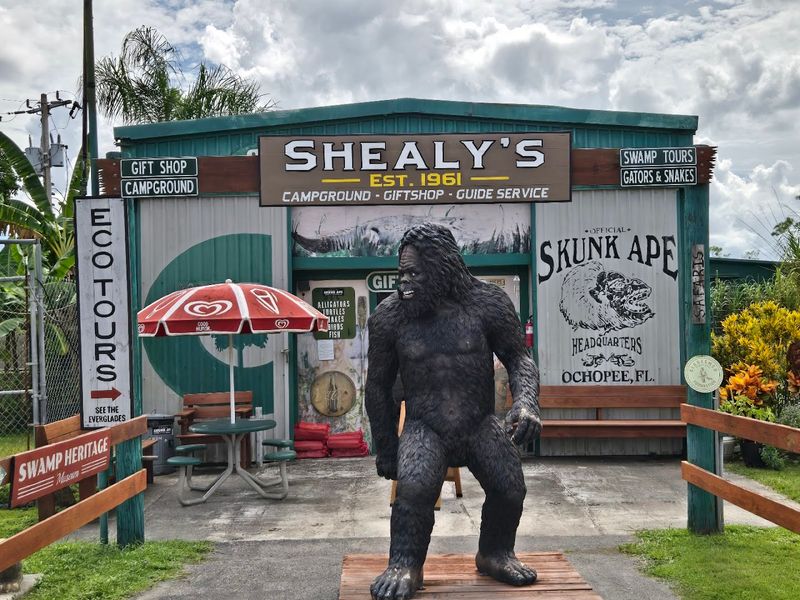
Florida has its very own version of Bigfoot, and it smells significantly worse, which is exactly why someone decided to open a research headquarters dedicated entirely to tracking it down.
The Skunk Ape Research Headquarters sits at 40904 Tamiami Trail E, Ochopee, FL 34141, right in the heart of the Everglades where most Skunk Ape sightings have been reported.
The Skunk Ape is described as a large, hairy, bipedal creature with an extremely unpleasant odor, believed by many locals to be a real undiscovered primate living deep in the swamp.
The headquarters doubles as a gift shop and reptile zoo, so even skeptics can enjoy the visit while surrounded by alligators, snakes, and other genuine Florida wildlife.
Founder Dave Shealy has dedicated his life to researching and documenting Skunk Ape encounters, and his enthusiasm is completely infectious.
Plaster casts of alleged footprints, blurry photographs, and eyewitness accounts fill the displays, creating an experience that is equal parts hilarious and genuinely thought-provoking.
The surrounding Everglades landscape is so vast and wild that the idea of an undiscovered creature lurking there does not feel entirely impossible.
Whether you believe in the Skunk Ape or not, this place is an absolute blast to explore.
Just maybe do not wander off into the swamp alone afterward.
7. Lyons Maritime Museum
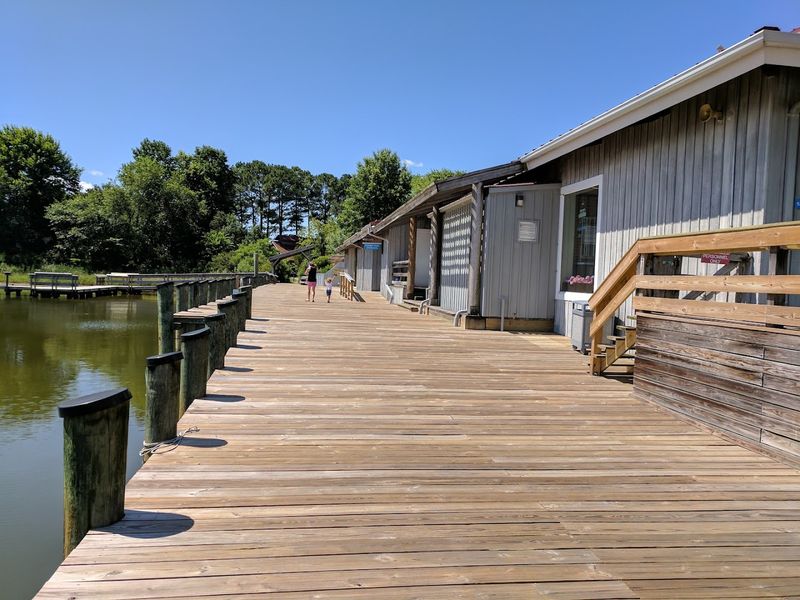
Most museums are housed in grand civic buildings, but the Lyons Maritime Museum in St. Augustine, FL operates out of something far more personal and charming: the creator’s own home.
This labor-of-love museum was built around an extraordinary collection of handcrafted ship models, nautical instruments, and maritime artifacts assembled over many years by a dedicated enthusiast.
Every piece in the collection tells a story about seafaring history, from ancient trade routes to modern naval vessels, and the curator is happy to share those stories in vivid detail.
The intimacy of a home-based museum creates a completely different atmosphere from a typical institution, feeling more like a conversation with a knowledgeable friend than a formal tour.
Ship models on display range from tiny pocket-sized replicas to large, breathtakingly detailed constructions that took hundreds of hours to complete.
Nautical maps, compasses, and logbooks are displayed alongside the models, giving context to each vessel’s historical significance.
St. Augustine itself is the oldest continuously occupied European settlement in the U.S., making maritime history especially relevant to the city’s identity.
Visiting requires reaching out in advance to confirm availability, which adds a wonderfully old-fashioned, personal touch to the experience.
Small museums like this one are irreplaceable cultural treasures hiding in plain sight.
8. American Victory Ship And Museum

Standing on the deck of a real World War II cargo ship while docked in Tampa Bay is the kind of experience that makes history feel completely, powerfully real.
The American Victory Ship and Museum is moored at 705 Channelside Dr., Tampa, FL, and it is one of only four fully operational Victory ships remaining in the United States.
Victory ships were built in massive numbers during the war to transport troops, equipment, and supplies across dangerous ocean routes to Allied forces worldwide.
The American Victory actually served in three different conflicts: World War II, the Korean War, and the Vietnam War, giving it an unusually rich history for a single vessel.
Visitors can explore virtually every area of the ship, from the engine room deep below deck to the bridge where officers once navigated through wartime waters.
The ship still operates under its own power and occasionally makes special cruises in Tampa Bay, which is an extraordinary experience that very few maritime museums can offer.
Volunteer crew members, many of them veterans themselves, guide tours with personal stories and technical knowledge that no textbook can match.
Seeing the cramped sleeping quarters and tiny galleys reminds you just how much sacrifice went into winning those conflicts.
History buffs and casual visitors alike consistently rate this among Tampa’s most memorable attractions.
9. Don Garlits Museum Of Drag Racing
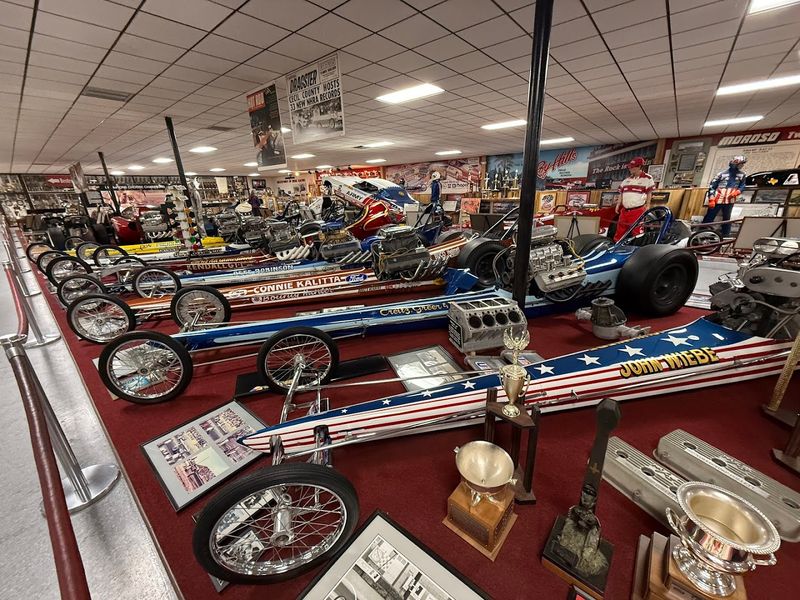
Few names carry more weight in American motorsports than Big Daddy Don Garlits, and his museum in Ocala is a full-throttle celebration of everything that makes drag racing spectacular.
Situated at 13700 SW 16th Ave, Ocala, FL 34473, the Don Garlits Museum of Drag Racing houses nearly 300 vehicles across two buildings, making it the most comprehensive drag racing collection anywhere on Earth.
Garlits himself pioneered the rear-engine dragster design after a catastrophic front-engine explosion cost him part of his right foot in 1970, turning personal tragedy into revolutionary innovation.
The museum traces the entire history of drag racing from its street racing roots in the 1940s all the way through modern Top Fuel competition.
Vintage funny cars, fuel dragsters, and land speed record machines sit side by side, each with detailed histories explaining what made them groundbreaking.
Even visitors who have never watched a drag race in their lives find themselves completely absorbed by the stories behind the machines.
The collection includes multiple cars that held world speed records, some of which exceeded 300 miles per hour on a quarter-mile strip.
Interactive displays let younger visitors learn about the engineering and physics behind drag racing performance.
Garlits occasionally appears at the museum in person, which turns a great visit into an unforgettable one.
10. Ripley’s Believe It Or Not! St. Augustine
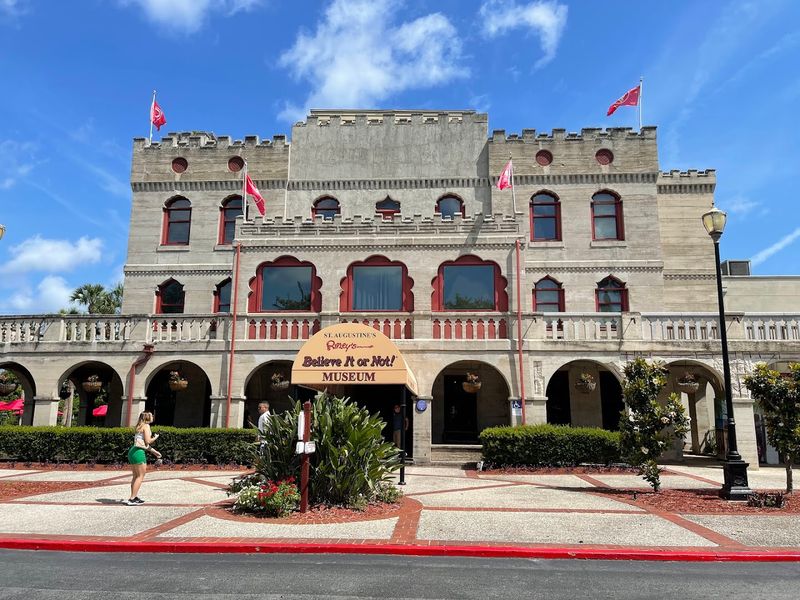
Robert Ripley spent decades traveling the world collecting the strangest, most unbelievable things he could find, and his very first permanent museum opened right here in St. Augustine, Florida.
Located at 19 San Marco Ave, St. Augustine, FL, this is the original Ripley’s Believe It Or Not, and it holds hundreds of exhibits that range from genuinely fascinating to completely baffling.
The building itself sits on a site that reportedly shifted during the great 1812 earthquake, which gives the whole experience an appropriately off-kilter atmosphere before you even walk through the door.
Inside, you will find shrunken heads, a portrait of Van Gogh made entirely from postage stamps, a two-headed calf, and a reproduction of the Mona Lisa constructed from toast.
Ripley was not just a showman but a genuine world traveler who documented cultures and curiosities that most Westerners had never encountered before.
The oddities on display cover categories including human anatomy, natural phenomena, cultural artifacts, and engineering feats that defy common sense.
Kids absolutely love this place, and adults end up just as wide-eyed despite trying to play it cool.
The gift shop alone is worth a stop, stocked with weird and wonderful souvenirs you will not find anywhere else.
St. Augustine being the oldest city in America makes this the perfect home for the country’s oldest Ripley’s.
11. Paradox Museum Miami
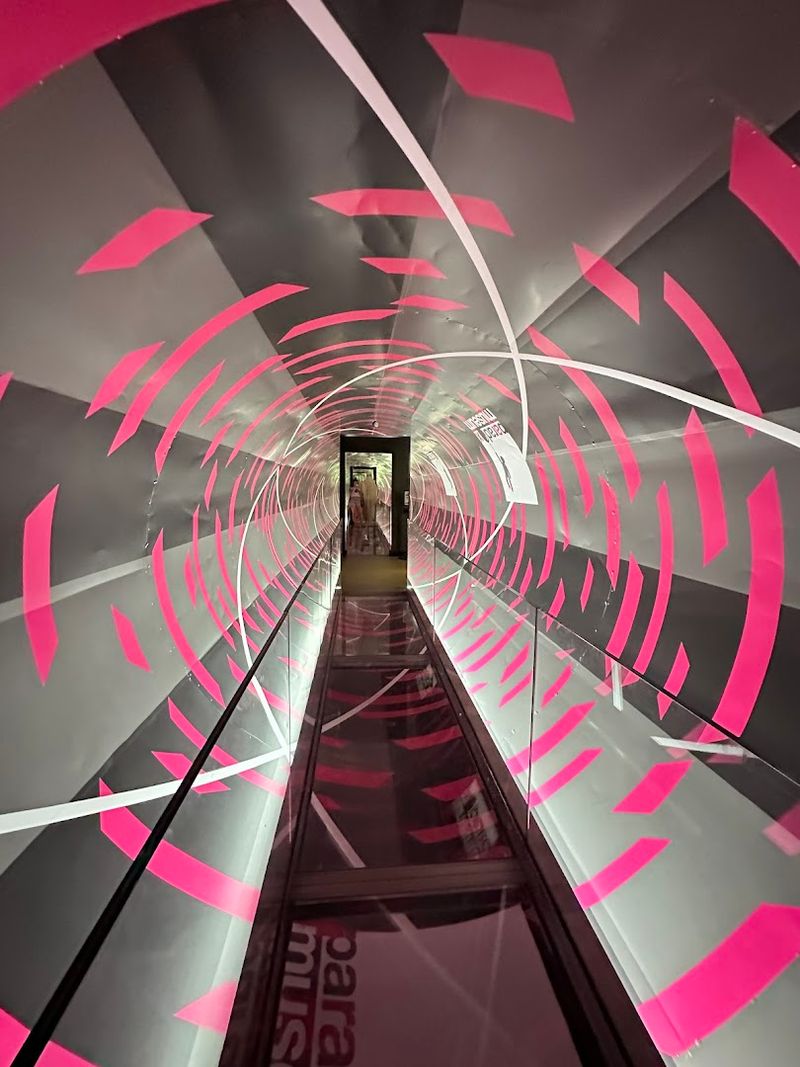
Reality is overrated, and the Paradox Museum Miami at 2301 N Miami Ave, Miami, FL is fully committed to proving that point with more than 70 mind-bending exhibits designed to fool your senses completely.
Every room in this immersive experience challenges how your brain processes what your eyes are seeing, creating moments of genuine confusion that are equal parts frustrating and delightful.
Optical illusions, forced perspective rooms, anti-gravity displays, and impossible geometry installations fill the space with the kind of interactive content that social media was basically invented to showcase.
The museum opened as part of a growing global trend of experience-based attractions, but the Miami location has developed a distinctly vibrant, colorful identity that matches the city’s bold personality.
Unlike traditional museums where you are asked not to touch anything, here you are actively encouraged to climb into exhibits, pose for photos, and engage with every installation hands-on.
Groups of friends often spend hours here, cycling through exhibits multiple times to catch details they missed the first round.
The science behind each illusion is explained on nearby plaques, so the experience is genuinely educational alongside being wildly entertaining.
Younger visitors are especially captivated by the floating ball displays and the room where the floor appears to tilt dramatically.
Bring a fully charged phone because the photo opportunities here are absolutely endless.
12. Disease Vector Education Center (Mosquito Museum)
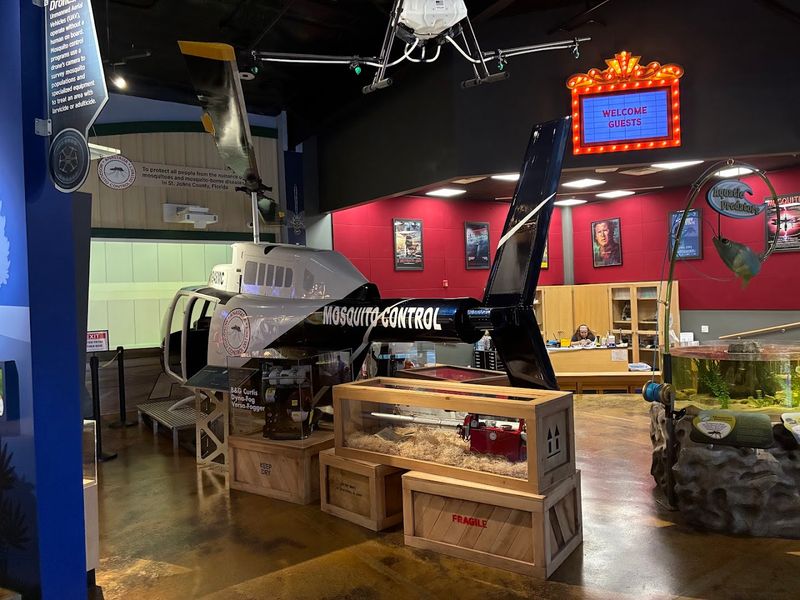
Nobody loves mosquitoes, but after spending an hour at the Disease Vector Education Center in St. Augustine, you might at least respect them a whole lot more.
Located at 120 EOC Dr, St. Augustine, FL, this one-of-a-kind facility is dedicated entirely to educating the public about mosquitoes, the diseases they carry, and the science behind controlling them.
Mosquitoes have a significant global impact on public health, which puts the museum’s mission into clear perspective.
Interactive exhibits walk visitors through the mosquito life cycle, explaining how standing water, temperature, and humidity all influence population growth in Florida’s warm climate.
Giant models of mosquito anatomy let you examine mouthparts, wings, and compound eyes at a scale that would horrify you if you thought about it too hard.
The center also explains the public health work done by St. Johns County Mosquito Control to keep local populations manageable and reduce disease transmission risk.
School groups frequently visit, and the educational programs are designed to make complex biology concepts accessible and genuinely interesting for younger learners.
Staff members bring real enthusiasm to a subject most people would never voluntarily choose to learn about, which makes the whole experience surprisingly engaging.
It turns out the tiny buzzing villain of every Florida summer is way more complicated and fascinating than anyone gives it credit for.