
Why The Best Sight In The World Is A Road Sign Saying Welcome To Arizona
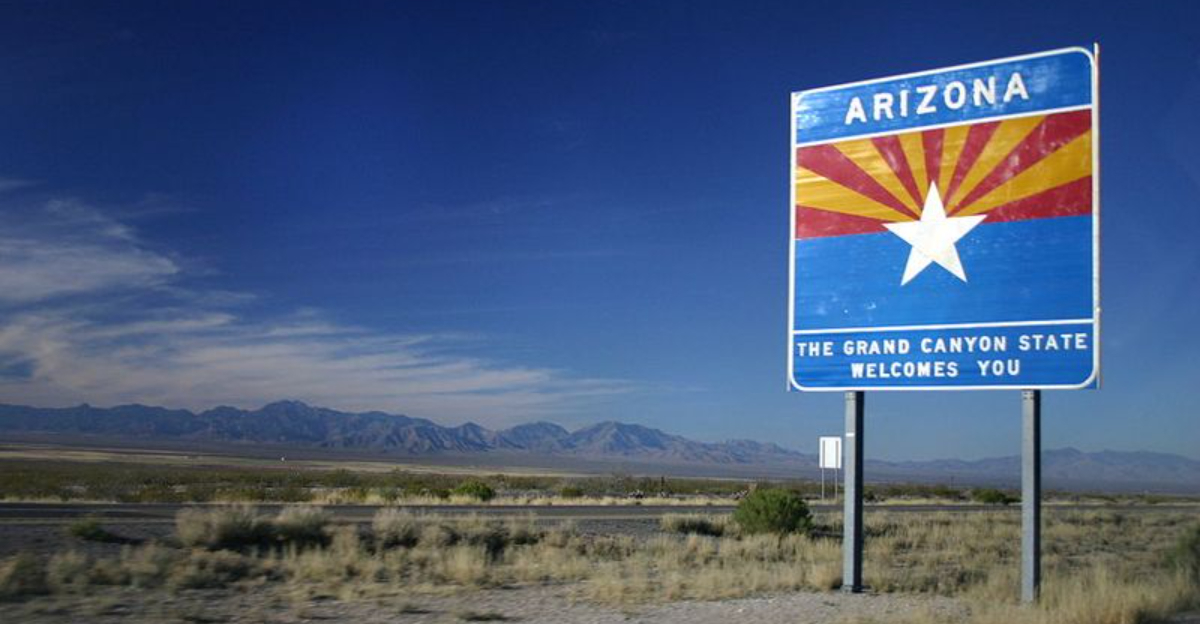
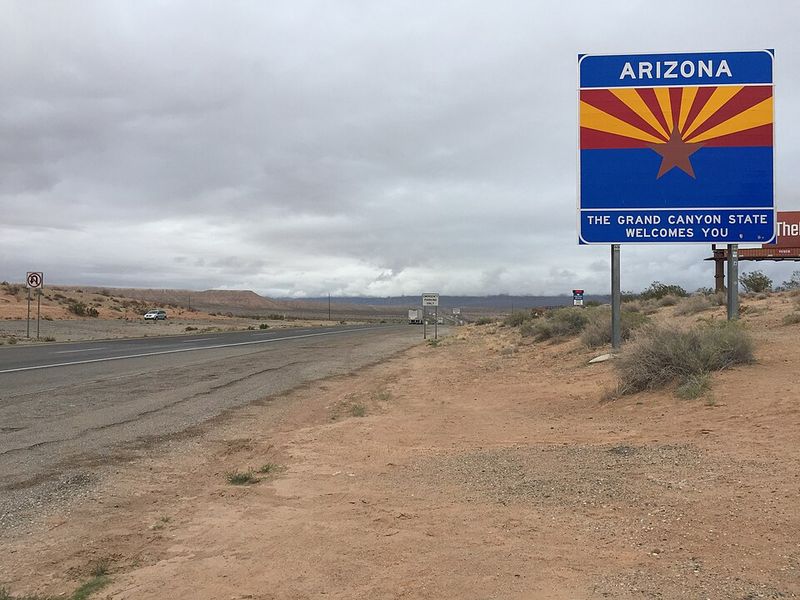
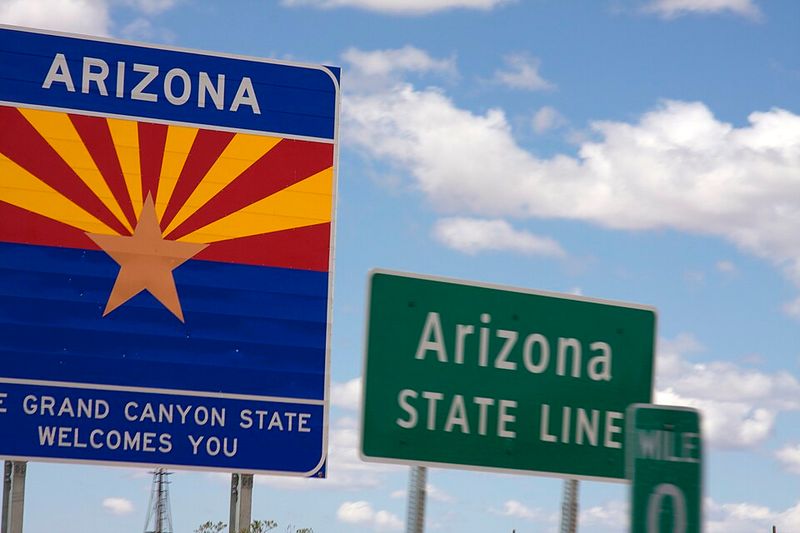
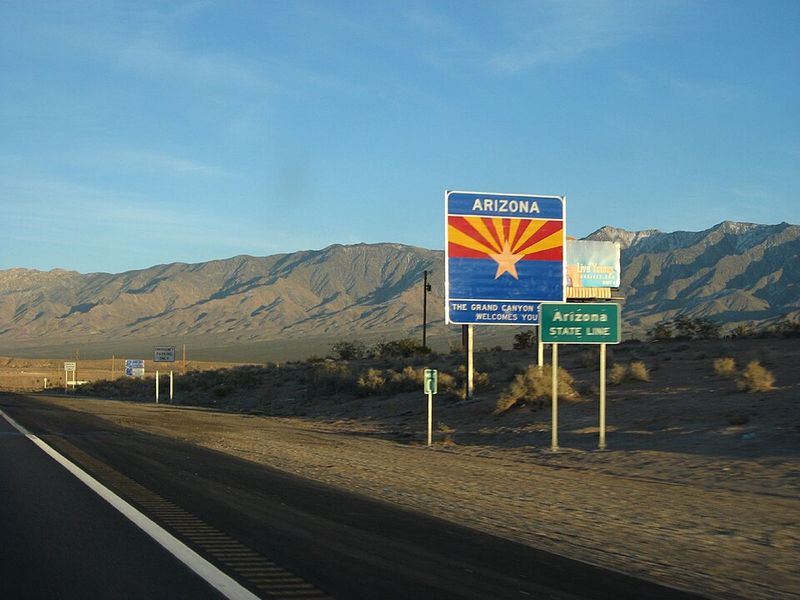
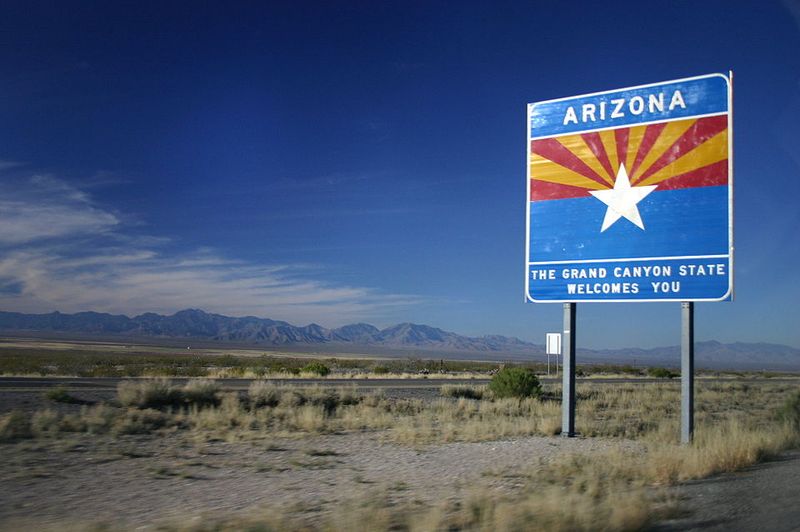
There is a specific moment on a long drive when everything shifts. You spot that green-and-white sign reading Welcome To Arizona, and suddenly the whole trip feels alive in a way it did not a mile back.
The sky looks wider, the road ahead looks more promising, and your foot eases just slightly off the gas so you can soak it all in.
Arizona has a way of announcing itself with that sign, and the state absolutely delivers on every silent promise it makes right there at the border.
The Light Changes The Moment You Cross The State Line
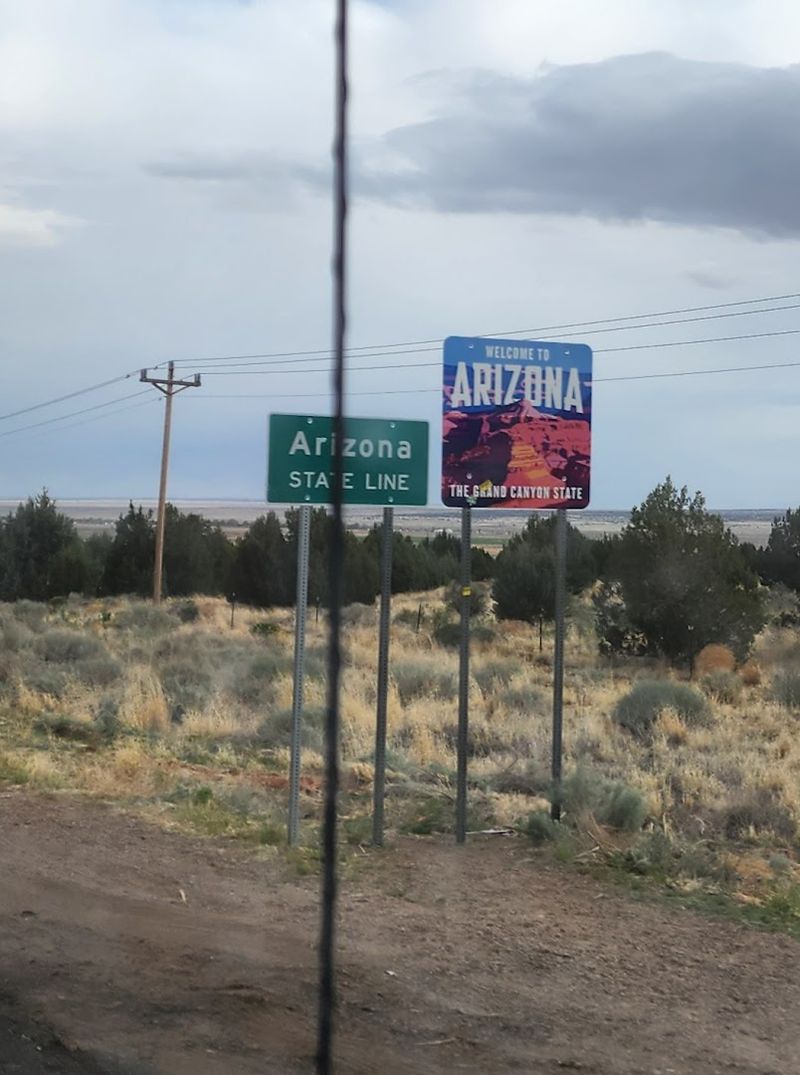
That sign does something to the light. The moment you pass the Arizona border, the desert sun seems to shift angles and paint everything in a richer, warmer gold that you simply do not notice in other states.
It is not your imagination playing tricks on you.
Arizona sits at an elevation and latitude that creates a quality of natural light that photographers travel thousands of miles to capture. The air is clear, the dust is fine, and the sun bounces off sandstone and red clay in ways that make even ordinary roadside rocks look like something out of a painting.
I have crossed into Arizona from Nevada, Utah, New Mexico, and California, and every single time that same golden shift happens. It feels less like entering a state and more like stepping into a landscape that has its own personal lighting designer.
That golden welcome never gets old.
Even on a quick gas stop, you catch yourself staring at the colors a little longer, like your eyes need a second to adjust to how cinematic everything suddenly looks.
Endless Desert Highways That Feel Like Freedom
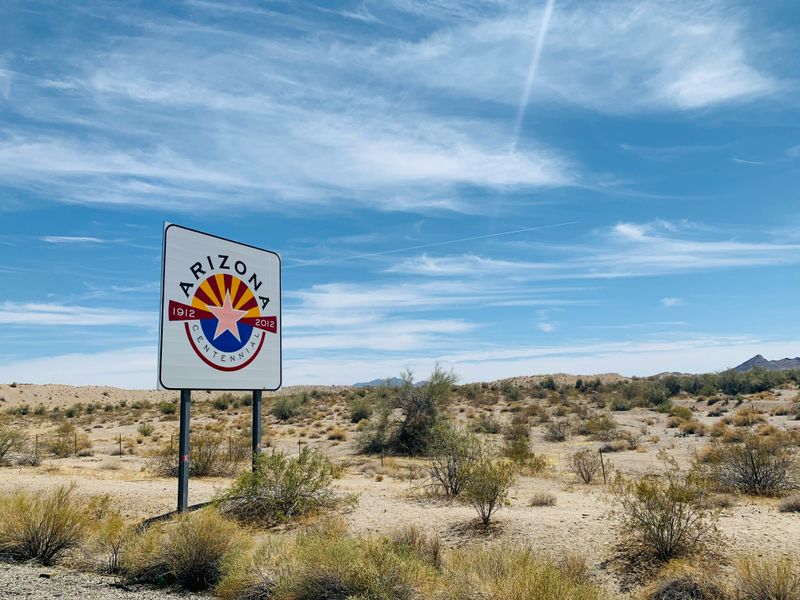
Some roads are just roads. Arizona highways are something else entirely.
The moment that border sign disappears in your rearview mirror, you are greeted by stretches of open pavement that seem to go on forever, framed by nothing but sky and earth in every direction.
Driving through the Sonoran Desert on routes like US-93 or the legendary Route 66 corridor gives you a sense of personal freedom that is hard to put into words. There are no walls, no tunnels, no overpasses blocking your view.
Just you, the road, and a horizon that keeps retreating invitingly as you move toward it.
Arizona has over 1,000 miles of designated scenic byways, and each one offers its own version of that wide-open feeling. Slow down, roll the windows down, and let the dry warm air fill the car.
The road is the destination here, and Arizona makes sure you know it from the very first mile.
Saguaro Cactus Landscapes You Cannot See Anywhere Else On Earth
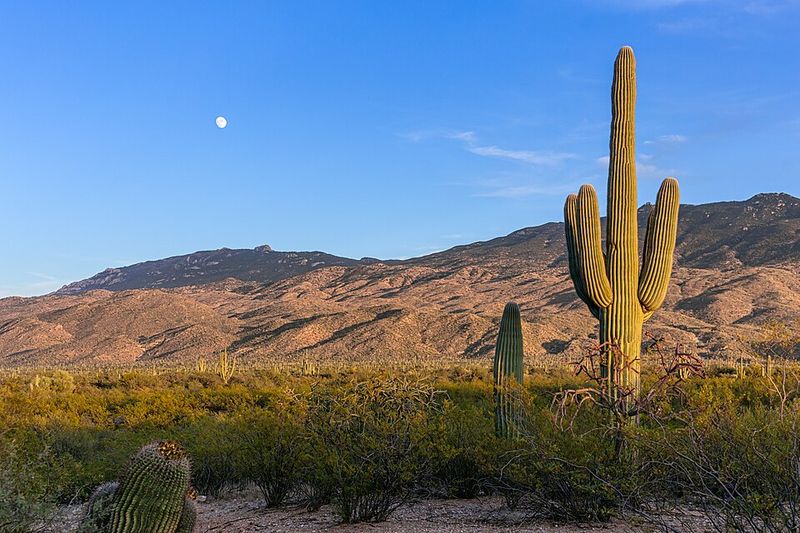
Nowhere else on the planet grows the saguaro cactus naturally except the Sonoran Desert, and the bulk of that desert lives right here in southern Arizona. Spotting those tall, arm-raised silhouettes for the first time after crossing the state line feels like a private welcome from the landscape itself.
A mature saguaro can stand over 40 feet tall and live for more than 150 years. They are slow, patient, and deeply rooted, which makes them feel like the original Arizona residents.
The Saguaro National Park near Tucson is one of the best places to walk among them up close, but honestly, they start appearing along roadsides well before you reach any park entrance.
I always make a point of stopping the car near a cluster of saguaros during golden hour. The way the fading light catches their ribbed skin and throws long shadows across the desert floor is one of those quiet visual moments that stays with you long after you get home.
Red Rock Formations That Look Unreal In Person
Photographs of Sedona never fully prepare you for the real thing. When those red rock formations appear on the horizon for the first time, most people instinctively slow the car down because it genuinely looks like someone has dropped a movie set into the middle of the desert.
The iron oxide in the sandstone gives the cliffs and buttes their signature rust-red and orange tones, which shift dramatically depending on the time of day. At sunrise they glow almost pink.
By midday they burn a deep terracotta. At sunset they turn a blazing crimson that seems almost too vivid to be natural.
Sedona sits about 110 miles north of Phoenix in Yavapai County, and the red rock country extends well beyond the town limits into the surrounding national forest.
Cathedral Rock, Bell Rock, and Courthouse Butte are among the most photographed formations, but even pulling off any random overlook gives you a view worthy of a gallery wall.
Mountain Backdrops That Appear Out Of Nowhere
One of the most surprising things about Arizona is how quickly the landscape changes elevation. You can be cruising across a flat desert plain and within twenty minutes find yourself staring up at a snow-capped mountain range that appeared with almost no warning.
The state has over a dozen mountain ranges, including the White Mountains in the east, the Santa Catalinas above Tucson, and the San Francisco Peaks near Flagstaff, which top out above 12,000 feet. These sudden vertical shifts create a constant sense of visual drama that keeps long drives feeling fresh and interesting.
Flagstaff itself sits at nearly 7,000 feet elevation, meaning you can experience pine forests and cool mountain air in the same road trip where you were sweating through the desert lowlands just hours earlier.
Arizona rewards drivers who pay attention to the landscape, because around almost every long bend there is a new mountain profile rising against the sky to catch you off guard.
The Air Feels Dry, Warm, And Remarkably Calm
If you have spent time in humid climates, stepping out of the car in Arizona feels like someone turned off a heavy blanket you did not know you were wearing. The dry desert air is one of the first physical sensations that tells you the Welcome To Arizona sign meant exactly what it said.
Arizona averages humidity levels below 30 percent across most of the state for much of the year. That dryness makes even 95-degree temperatures feel manageable compared to a muggy 80-degree day somewhere along the Gulf Coast.
Your clothes do not stick, your hair does not frizz, and the air going into your lungs feels sharp and clean.
Many visitors who come for the landscape end up returning partly for how the climate makes their body feel. People with certain respiratory conditions often report feeling notably better during stays in the dry desert air around areas like Scottsdale, Tucson, and the Verde Valley.
Arizona has been a climate destination for over a century for good reason.
Sunsets That Stop You Mid-Drive
Pull over. Seriously.
When an Arizona sunset begins, you do not want to be watching it through a windshield. The combination of desert dust particles in the atmosphere, clear skies, and low humidity creates sunset color displays that regularly look like someone spilled an entire paint set across the horizon.
The colors move through phases, starting with deep yellow along the horizon, then burning through orange and red, before the upper sky turns shades of violet and deep purple.
The whole show can last forty-five minutes if you catch it at the right time of year, especially in late summer when monsoon season adds dramatic cloud formations to the mix.
Some of my favorite sunset spots include the Papago Park buttes in Phoenix, the Airport Mesa overlook in Sedona, and any open stretch of highway in the western desert near Yuma. You do not need a special location, though.
In Arizona, almost any open patch of ground with a western view will deliver something worth remembering.
A Sense Of Adventure Starts Before You Unpack
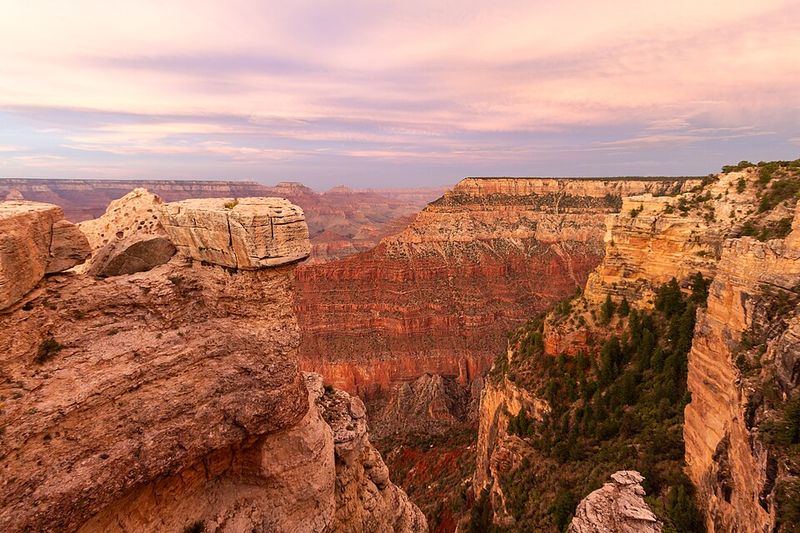
The Grand Canyon alone would justify the Welcome To Arizona sign as the best road sign on earth. But Arizona does not stop there.
The state packs more adventure per square mile than almost anywhere in the country, and it all starts announcing itself the moment you cross the border.
Within a single Arizona road trip, you can hike slot canyons in Page, kayak the Salt River near Mesa, explore ancient cliff dwellings at Montezuma Castle National Monument, and stargaze in some of the darkest night skies on the continent near Flagstaff.
The range of activities is genuinely staggering for one state.
What makes Arizona special for adventure travel is the accessibility. Many of these experiences require no special equipment or advanced planning.
You can pull off a highway, lace up your shoes, and be standing inside a landscape that took millions of years to form. The state practically hands adventure to you at the border and trusts you to make the most of it.
Roadside Stops That Feel Wild And Wonderfully Unexpected
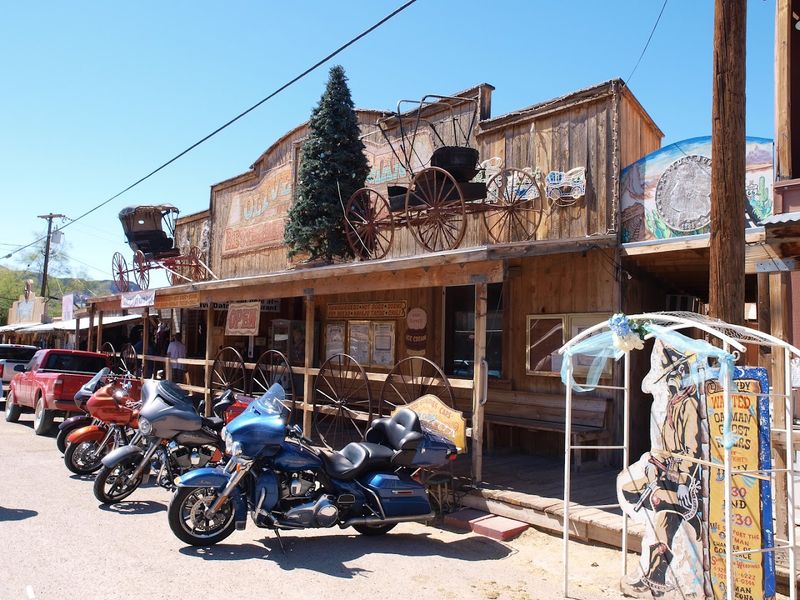
Arizona’s roadsides have a personality all their own. Between the big-name national parks and city destinations, there is a whole world of quirky, memorable stops that remind you road trips are about the journey as much as the destination.
Route 66 through northern Arizona alone offers the Petrified Forest National Park, the painted desert overlooks, the vintage neon signs of Winslow and Williams, and the legendary Standin’ On The Corner Park.
Farther south, roadside trading posts near the Navajo Nation sell handmade jewelry and pottery that you simply cannot find in any mall or online store.
I once stopped at a tiny rock shop near Quartzsite that turned into an hour-long conversation with the owner about Arizona geology. That kind of unplanned human connection is part of what makes Arizona road trips so rich.
The state seems to encourage you to slow down, pull off, and see what is actually there rather than just passing through on the way to somewhere else.
The Vastness Makes You Feel Both Small And Completely Alive
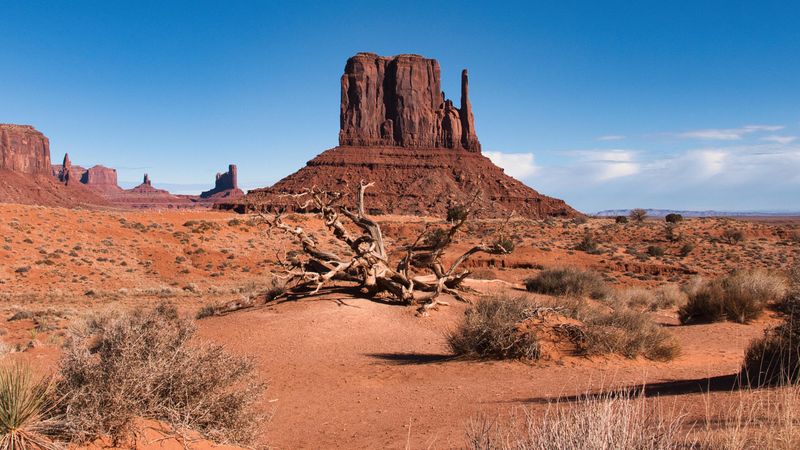
There is a particular feeling that comes from standing somewhere truly vast. Arizona delivers that feeling consistently and generously.
From the rim of the Grand Canyon to the open flats of the Painted Desert, the scale of this landscape has a way of resetting your internal sense of proportion in the best possible way.
Most of us spend our daily lives surrounded by walls, screens, and ceilings. Arizona strips all of that away and replaces it with space.
Real, uninterrupted, horizon-to-horizon space that makes your thoughts slow down and your breathing deepen almost automatically.
The state covers over 113,000 square miles, and a surprising portion of that area remains undeveloped and wild. That openness is not emptiness.
It is presence. The silence of the desert is its own kind of sound, and the sheer visual scale of the landscape creates a feeling of quiet clarity that is genuinely hard to find anywhere else.
That Welcome To Arizona sign is the gateway to all of it. It is the kind of space that makes you feel small in a comforting way, like the world just got bigger than whatever was weighing on you.
Wildlife Encounters That Remind You Nature Still Runs The Show
Pull over long enough near the Arizona border and something wild will almost certainly cross your path. A roadrunner darts across the highway like it owns the place.
A coyote pauses on a rocky ridge and stares back at you without fear, calm and completely unbothered by your presence.
Arizona wildlife does not hide. Javelinas trot through campgrounds, Gila woodpeckers drum on giant cacti, and mule deer graze at the edge of canyon overlooks.
Every encounter feels unscripted and genuinely thrilling. Seeing wild animals living freely in open desert reminds you that humans share this land, not control it.
The stillness of the landscape makes each movement feel amplified, as if nature is quietly inviting you to pay closer attention. Even the silence carries a kind of energy that keeps you alert and curious.
Moments like these slow time down, turning a simple roadside stop into something unexpectedly memorable. You leave with a deeper respect for the wild rhythms that continue long after you drive away.