
11 Breathtaking Day Trips In Arizona Your Family Will Still Talk About Years Later
Arizona has a way of making your jaw drop before you even get out of the car. This state packs more visual drama into a single day than most places manage in a lifetime.
My family and I have spent years road-tripping across the Southwest, and Arizona keeps pulling us back with landscapes that feel almost too spectacular to be real.
Whether you have one day or several, these eleven trips are the kind that kids will beg to repeat and adults will never stop talking about at dinner parties.
Every route feels like a highlight reel, shifting from desert to mountains to red rock vistas without warning. The best part is how easily these adventures fit into a single day, making unforgettable memories feel surprisingly accessible.
1. Sedona Red Rock Scenic Loop
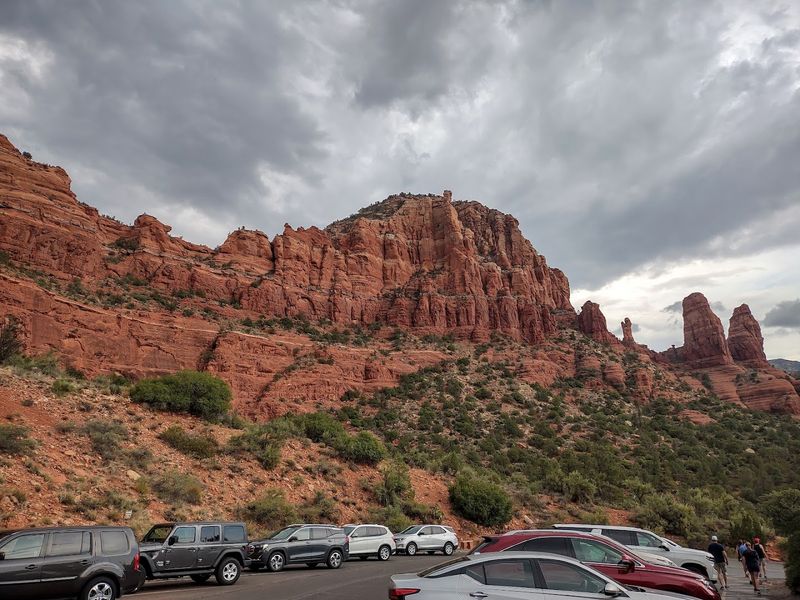
Few drives in the American Southwest hit you quite like the Red Rock Scenic Loop in Sedona, Arizona. The moment you turn onto State Route 179, Cathedral Rock and Bell Rock rise up like something straight out of a movie set, except no film crew could make this look any better.
The loop covers about 12 miles and is dotted with pullouts that practically beg you to stop and stare.
Families with younger kids will love that several trailheads along the route offer short, flat walks that lead directly to those jaw-dropping red walls. Chicken Point, accessible via a jeep tour or a moderate hike, gives you 360-degree views that feel genuinely otherworldly.
Sedona also has a reputation for vortex sites, which are spots where visitors say the energy feels unusually strong, and finding them becomes a surprisingly fun scavenger hunt for curious minds of all ages.
Sunrise and golden hour are the best times to visit for photos. Pack snacks, wear sturdy shoes, and give yourself a full day here because one loop will never feel like enough.
2. Antelope Canyon And Horseshoe Bend, Page
Standing inside Antelope Canyon feels less like hiking and more like stepping into a living painting.
Located near Page in northern Arizona, this slot canyon was carved by centuries of flash flooding through Navajo sandstone, and the result is a series of curving, glowing walls that shift from deep burgundy to bright amber depending on the time of day.
Tours are required and run by Navajo Nation guides, which adds a meaningful cultural layer to the whole experience.
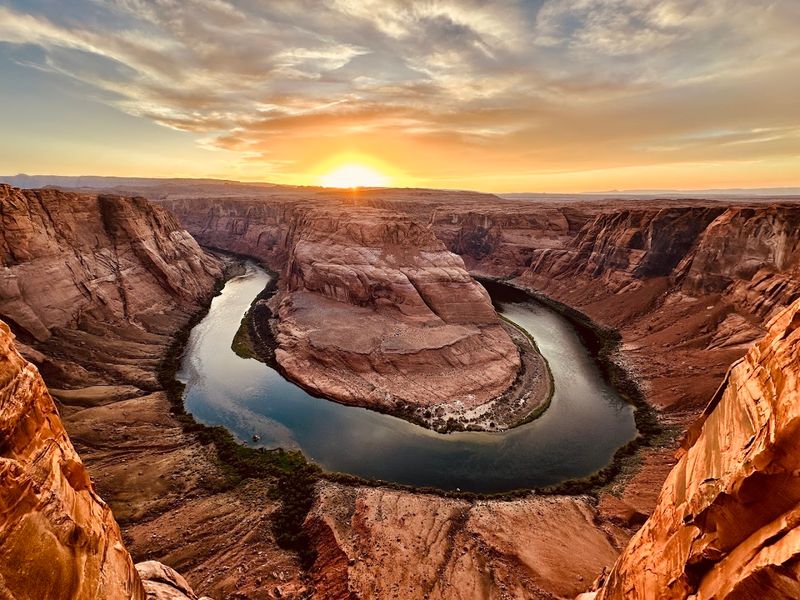
Just a short drive away, Horseshoe Bend delivers a completely different kind of spectacle. The Colorado River curves dramatically around a sandstone peninsula 1,000 feet below the overlook, and the view stops most people in their tracks the first time they see it.
The trail to the overlook is about 1.5 miles round trip, making it very manageable for most families.
Visiting both spots in a single day is very doable and creates a one-two punch of natural beauty that kids and adults rarely forget. Arrive early to beat the crowds and the midday heat.
3. Grand Canyon South Rim
No list of Arizona day trips would be complete without the Grand Canyon South Rim, and honestly, no description fully does it justice until you are standing at the edge yourself.
Located about 60 miles north of Williams, Arizona, the South Rim is the most accessible part of the park and offers viewpoints that range from easy paved walkways to longer rim trails. Mather Point is the classic first stop, and it earns every bit of its reputation.
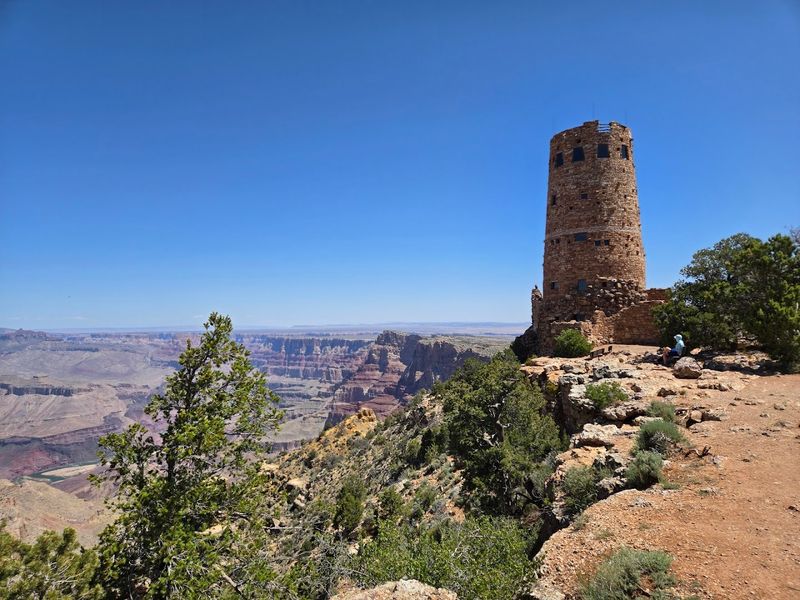
Desert View Watchtower, located at the eastern end of the South Rim Drive, is a must-see structure built in 1932 by architect Mary Colter. Climb to the top for a panoramic view that stretches for miles in every direction.
The Rim Trail connecting the main viewpoints is mostly flat and stroller-friendly, making it a solid option for families with little ones.
Rangers lead free programs throughout the day covering geology, wildlife, and Native American history, which adds real depth to a visit that might otherwise feel like just a lot of looking. Arrive before 9 a.m. to claim parking without the midday scramble.
4. Jerome Ghost Town
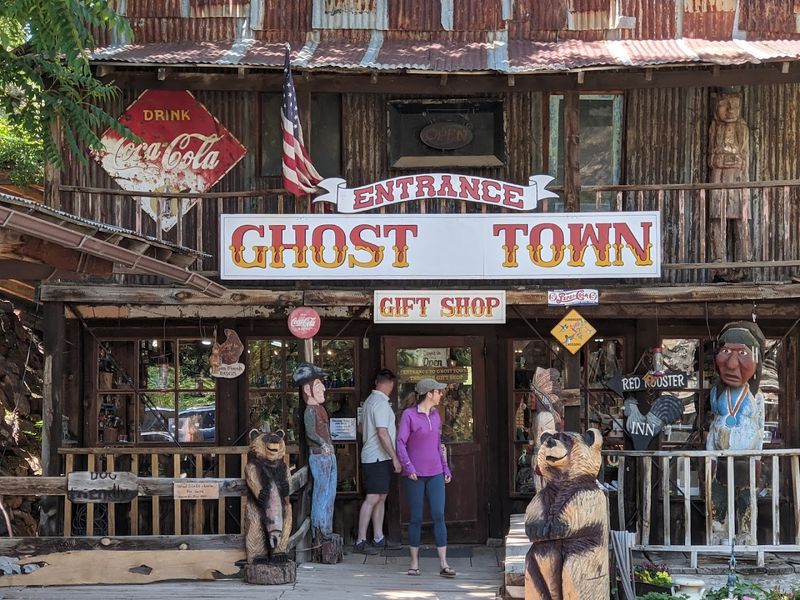
Perched dramatically on Cleopatra Hill in the Black Hills of Yavapai County, Jerome is one of Arizona’s most entertaining and offbeat day trip destinations.
This former copper mining town once housed nearly 15,000 residents during its early 20th-century boom years, but the mines eventually closed and the population dropped to fewer than 100 people by the 1950s.
Today, around 450 residents call it home, and the town has reinvented itself as a quirky arts community full of galleries, boutiques, and historic buildings clinging to steep hillsides.
The streets wind and zigzag in ways that make even a simple stroll feel like an adventure. Jerome State Historic Park sits inside the old Douglas Mansion and tells the story of the mining era through artifacts, photographs, and exhibits that genuinely hold kids’ attention.
The views of the Verde Valley from the upper streets are sweeping and gorgeous, especially in the late afternoon light.
Jerome is about two hours north of Phoenix and pairs beautifully with a stop in nearby Cottonwood or Clarkdale for lunch. Plan to spend at least three hours wandering to really soak up the atmosphere.
5. Mount Lemmon Scenic Byway, Near Tucson
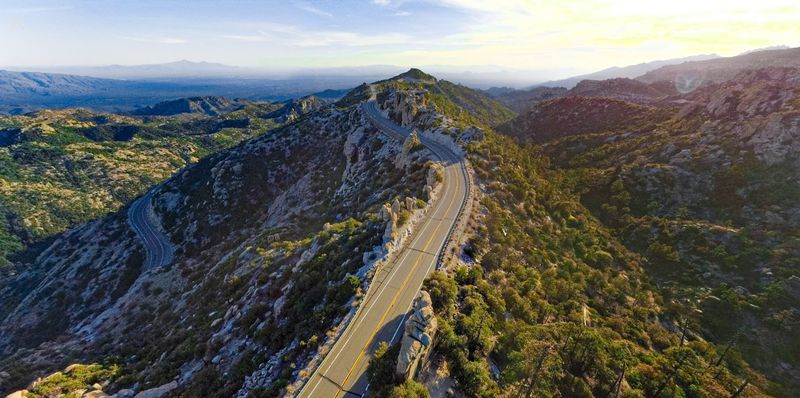
What makes Mount Lemmon one of Arizona’s most surprising day trips is the sheer speed of the transformation. You start in Tucson surrounded by saguaro cacti and desert heat, and within about an hour of driving you are surrounded by ponderosa pines and temperatures that can be 30 degrees cooler.
The Sky Island Scenic Byway, which climbs to over 9,000 feet, is technically one of the most dramatic elevation changes accessible by paved road in the continental United States.
Along the way, stops at Windy Point Vista offer stunning panoramic views back down toward the Sonoran Desert below. Near the summit, the small community of Summerhaven has a handful of shops and a beloved pie shop that has become something of a local legend.
In winter, Ski Valley at the top is one of the southernmost ski areas in the country, which is genuinely wild to think about given how close it is to cactus country.
The drive itself takes about 90 minutes one way at a relaxed pace with stops. Families with young children will enjoy the roadside rock formations and the cool summit air after a hot Tucson morning.
6. Petrified Forest National Park And Painted Desert
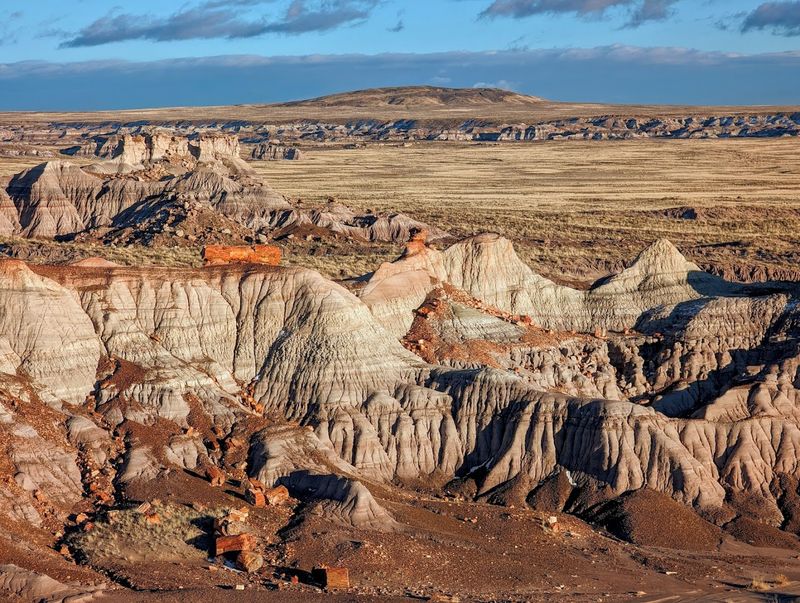
Roughly 225 million years ago, massive trees fell into a floodplain in what is now northeastern Arizona and were slowly replaced by silica, creating the stunning fossilized logs scattered across Petrified Forest National Park today.
Walking among them feels genuinely prehistoric, and the sheer size of some of the logs is hard to believe until you are standing right next to one.
The park sits along Interstate 40 near Holbrook, making it easy to access from both Flagstaff and Albuquerque.
The Painted Desert, which stretches along the northern portion of the park, adds a completely different visual experience. Bands of purple, red, lavender, and orange ripple across the badlands like a slow-motion sunset frozen in rock.
The 28-mile park road connects both sections and includes overlooks, short trails, and a historic 1920s inn that is worth a peek even if you are not staying overnight.
Crystal Forest Trail is an easy one-mile loop that brings you right alongside some of the most colorful petrified logs in the park.
Bring plenty of water, wear sun protection, and set aside a full day to explore both the forest and the desert sections properly.
7. Lake Powell And Glen Canyon Dam
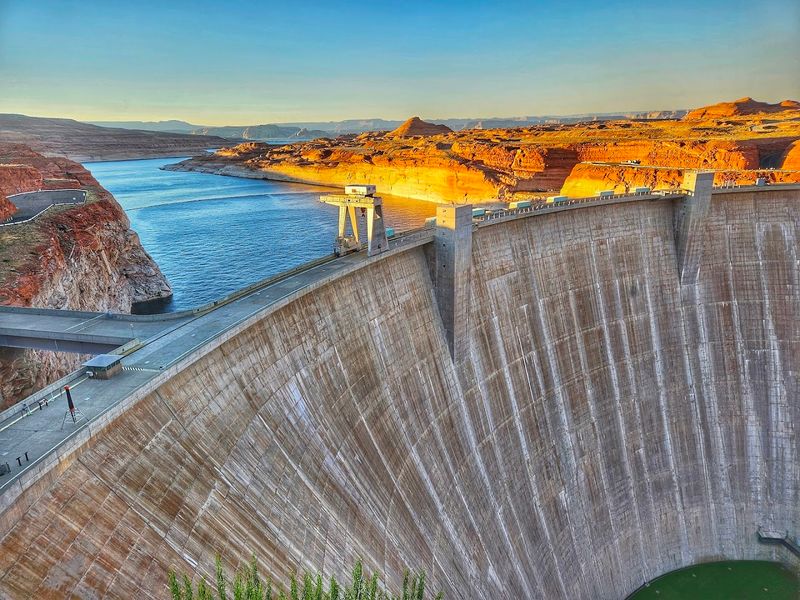
Seeing Lake Powell for the first time tends to produce a specific kind of stunned silence. The contrast between the deep, almost electric blue of the water and the warm red sandstone canyon walls surrounding it is so striking that it barely looks real.
Located near Page, Arizona, Lake Powell is one of the largest man-made reservoirs in the United States and sits within Glen Canyon National Recreation Area.
Glen Canyon Dam, which created the reservoir by blocking the Colorado River, is open for free guided tours that explain the engineering and history behind one of the most ambitious construction projects of the 20th century.
The Carl Hayden Visitor Center beside the dam offers exhibits that put the whole region into geological and historical context. For families who want to get on the water, boat rentals and guided tours are available from Wahweap Marina.
Even a drive along the rim with stops at the dam overlook and Wahweap Overlook gives you a spectacular sense of the scale here. Combining this stop with Antelope Canyon makes for one of the most visually loaded single days Arizona has to offer.
8. Saguaro National Park
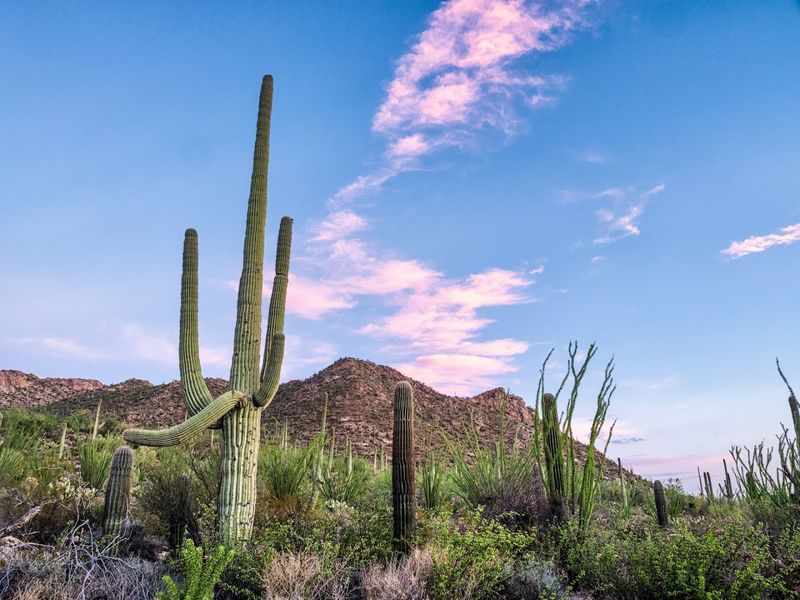
There is something quietly majestic about a forest made entirely of cacti. Saguaro National Park, split into two districts on either side of Tucson, Arizona, protects one of the densest concentrations of saguaro cacti in the world.
These iconic giants can grow up to 40 feet tall and live for 150 to 200 years, meaning many of the ones you see today were already mature when your great-grandparents were born.
The western Tucson Mountain District is more rugged and less crowded, while the eastern Rincon Mountain District has a paved scenic loop road called Cactus Forest Drive that is ideal for families.
Sunrise and sunset are the golden hours here, literally, because the low light turns the cacti into towering amber silhouettes against a blazing sky. Roadrunners, Gila woodpeckers, and mule deer are common sightings along the trails.
The Valley View Overlook Trail in the western district is a short, rewarding hike that ends with a panoramic view of the cactus-filled valley below. Visiting in late April or May means you might catch the saguaros in bloom, which is a bonus worth planning around.
9. Bisbee Historic District
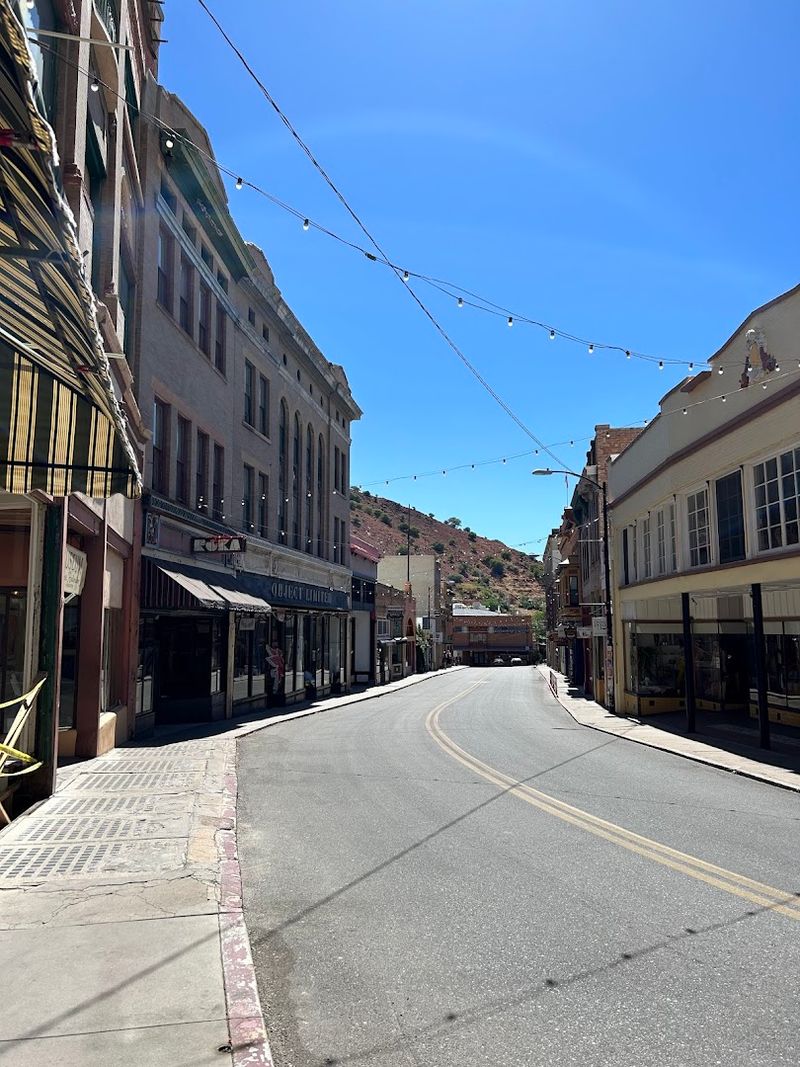
Bisbee is the kind of town that rewards slow walkers. Tucked into a narrow canyon in the Mule Mountains of southeastern Arizona, about 90 miles southeast of Tucson, this former copper mining hub has transformed into one of the state’s most charming and artsy small towns.
The streets climb steep hillsides and connect through a network of staircases, giving the whole place a layered, almost Mediterranean feel that catches most first-time visitors completely off guard.
The Bisbee Mining and Historical Museum, housed in the old Phelps Dodge General Office building, does an excellent job of capturing the gritty, booming energy of the town’s early 1900s heyday.
For a more hands-on experience, the Queen Mine Tour takes visitors underground into an actual copper mine, complete with hard hats and mine carts. Kids absolutely love it, and adults find it surprisingly moving.
Art galleries, vintage shops, and colorful murals fill the streets of Old Bisbee, making a casual afternoon stroll feel like a mini cultural tour. The town also sits close to the border, so the food scene reflects a rich mix of Southwestern and northern Mexican flavors worth exploring.
10. Havasu Falls Area, Havasupai Region
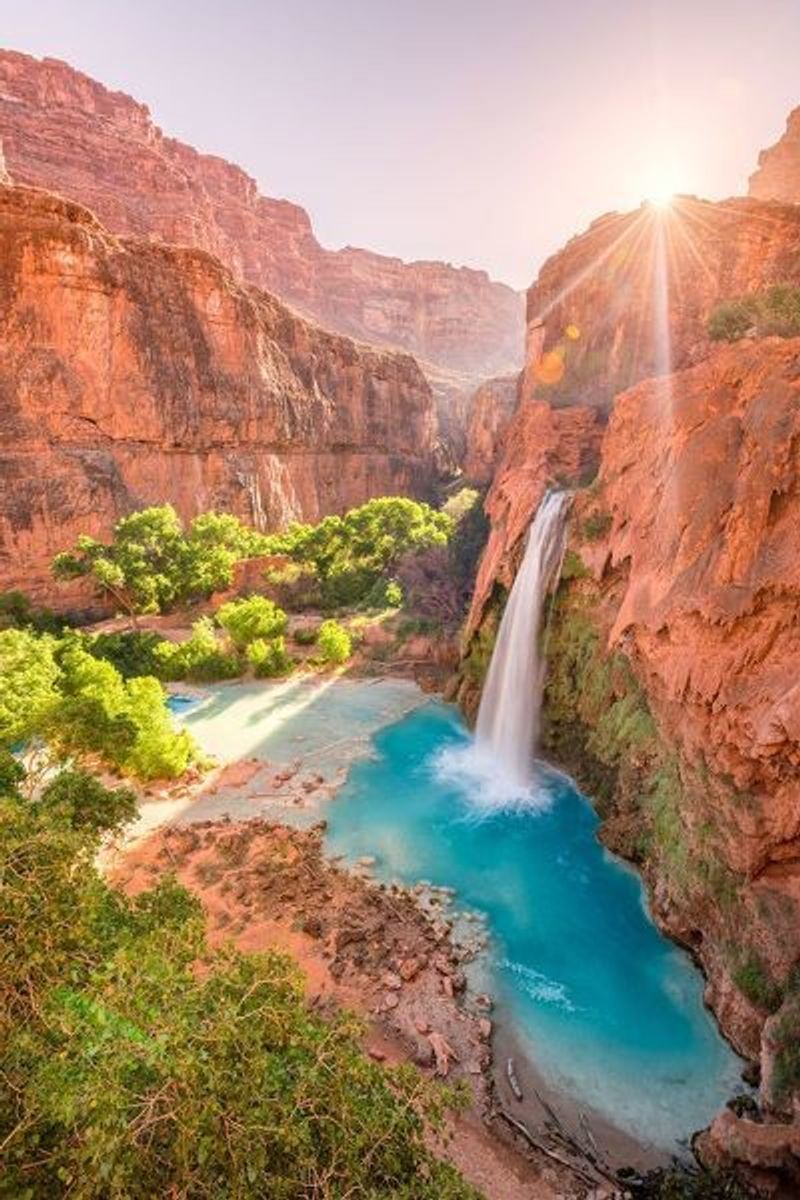
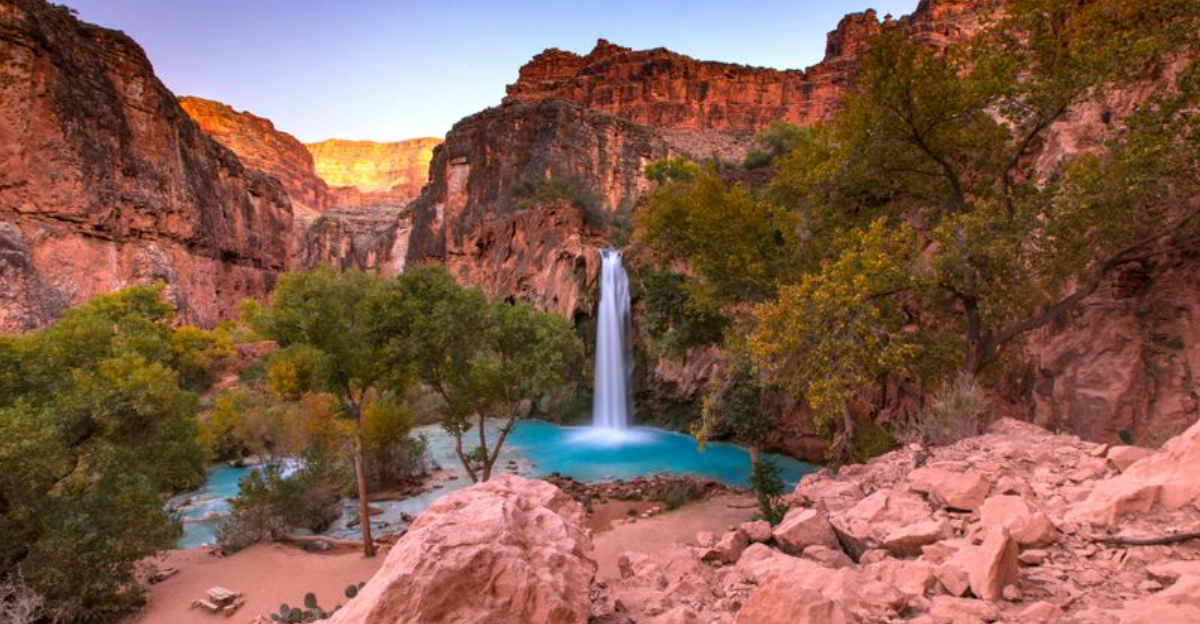
The turquoise waterfalls of the Havasupai region have become one of the most photographed spots in the American Southwest, and for good reason. The water gets its vivid blue-green color from high concentrations of calcium carbonate, which gives it a Caribbean glow that feels completely out of place in the middle of the Arizona desert.
Reaching Havasu Falls itself requires a permit and a multi-mile hike, but the Hualapai Hilltop area at the trailhead offers its own compelling scenery without the full commitment.
Hualapai Hilltop sits at the edge of Havasu Canyon and provides sweeping views into the canyon system that hint at the dramatic landscapes below. The drive to the hilltop from Route 66 is itself a scenic journey through open high desert terrain that feels remote and peaceful.
Families who cannot secure permits can still enjoy the overlook experience and learn about the Havasupai Tribe, whose members have lived in this canyon for centuries.
If a permit does become available, the 10-mile hike each way is strenuous but manageable for fit older kids and adults. The experience of arriving at the falls after that hike is one that tends to stick with people for the rest of their lives.
11. Walnut Canyon National Monument, Flagstaff
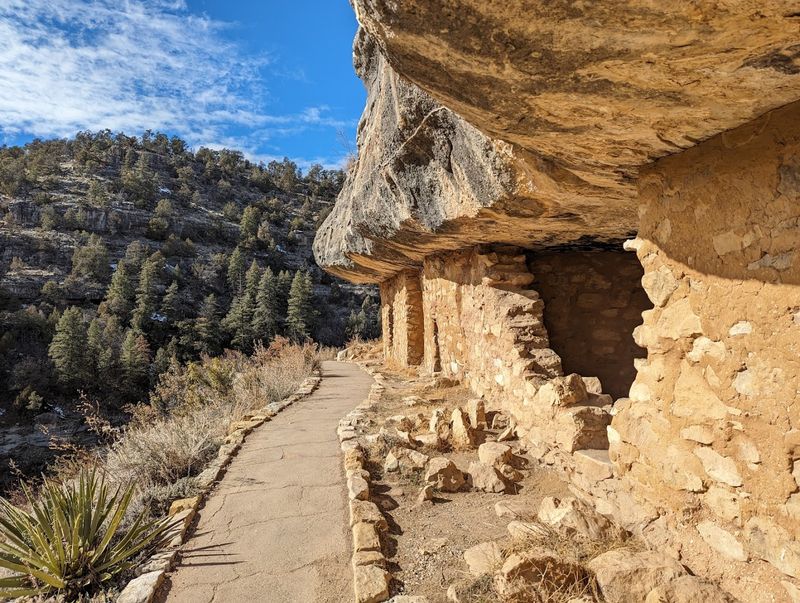
Just a few miles east of Flagstaff, Walnut Canyon National Monument holds one of the most accessible and genuinely fascinating pieces of ancient history in the American Southwest.
Around 800 years ago, the Sinagua people built hundreds of small rooms directly into the limestone ledges of the canyon walls, using the natural overhangs as roofs and the canyon itself as a kind of vertical neighborhood.
Walking past those rooms today, even from a short trail, creates a powerful connection to lives lived in a completely different world.
The Island Trail descends about 185 feet via 240 steps and loops past 25 cliff dwelling rooms that you can peer directly into. The trail is only about a mile long, making it achievable for most school-age kids, though the climb back up will definitely get your heart rate going.
A shorter Rim Trail at the top offers canyon views without the descent for anyone who prefers a flatter walk.
The visitor center has excellent exhibits explaining who the Sinagua were, how they built their homes, and why they eventually moved on. Walnut Canyon is a compact, deeply rewarding stop that proves history does not need a full day to leave a lasting impression.