
This 1-Mile Hike In Arizona Takes You Through An Ancient Cliff Dwelling Village And It’s A 2026 History Lovers Dream
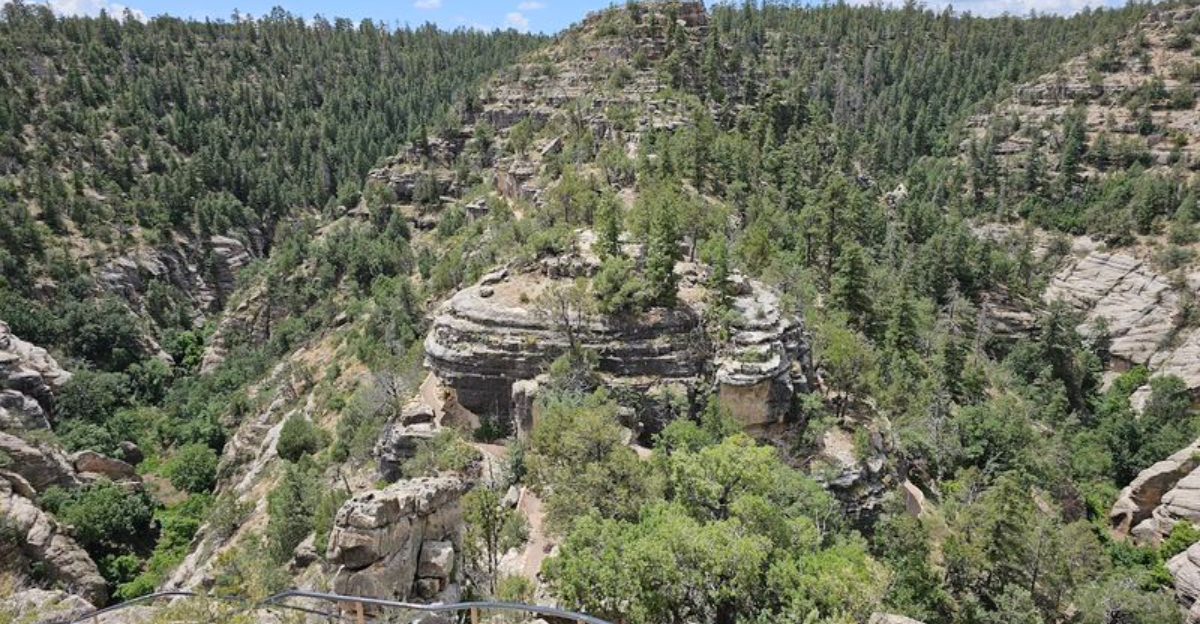
I still remember the first time I descended here and felt the weight of eight centuries pressing gently against my chest.
Walking past stone doorways carved into limestone cliffs, I could almost hear the echo of Sinagua families going about their daily lives.
This national monument near Flagstaff, Arizona offers something rare. A chance to step directly into the past without barriers or ropes keeping you at a distance.
The Island Trail loops through the canyon for just over a mile, bringing you face-to-face with cliff dwellings that have stood silent since the 1200s, and in 2026, it remains one of Arizona’s most intimate historical experiences.
The Island Trail Experience
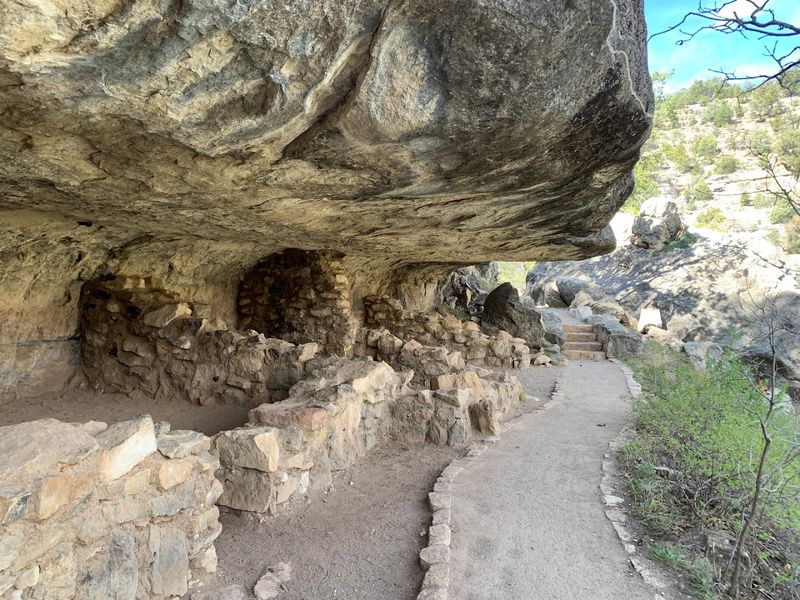
Right out the back door of the visitor center, the trail begins its descent into the canyon with a series of stone steps that wind downward like a staircase through time. I counted about 240 steps on the way down, and while that might sound intimidating, the pace you set is entirely your own.
Once you reach the canyon floor, the trail levels out into a gentle loop that curves around a limestone peninsula. This is where the magic happens.
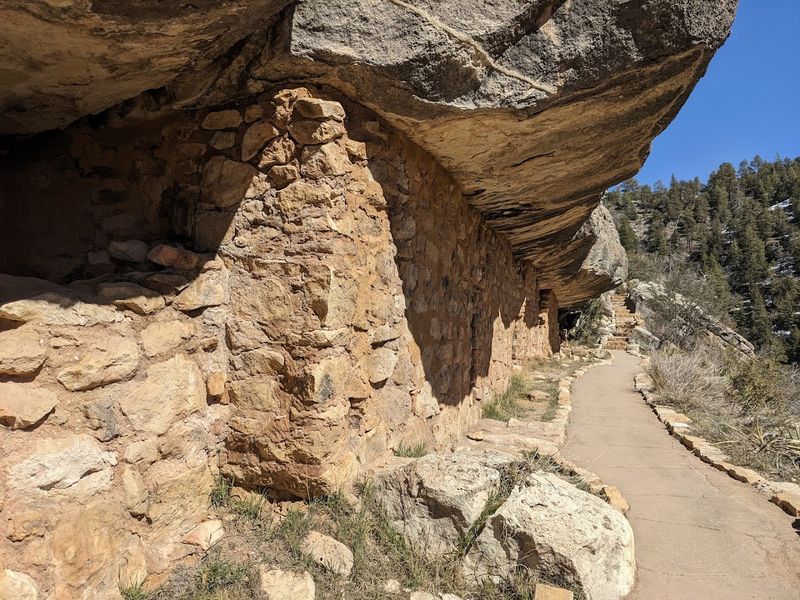
You’ll walk directly past 25 cliff dwellings tucked into natural alcoves, some so close you can peer inside and imagine cooking fires and woven baskets.
The entire loop measures roughly one mile and takes most visitors between 45 minutes to an hour, depending on how long you linger at each dwelling. I spent nearly 90 minutes on my first visit, sitting quietly in front of several rooms and trying to picture daily life here 800 years ago.
Just remember: what goes down must come back up, and those 240 steps become closer to 500 total by the time you complete the loop and return to the visitor center.
The Island Trail loops through the canyon for just over a mile, bringing you face-to-face with cliff dwellings that have stood silent since the 1200s, and in 2026, it remains one of Arizona’s most intimate historical experiences.
The Sinagua People’s Ingenious Architecture
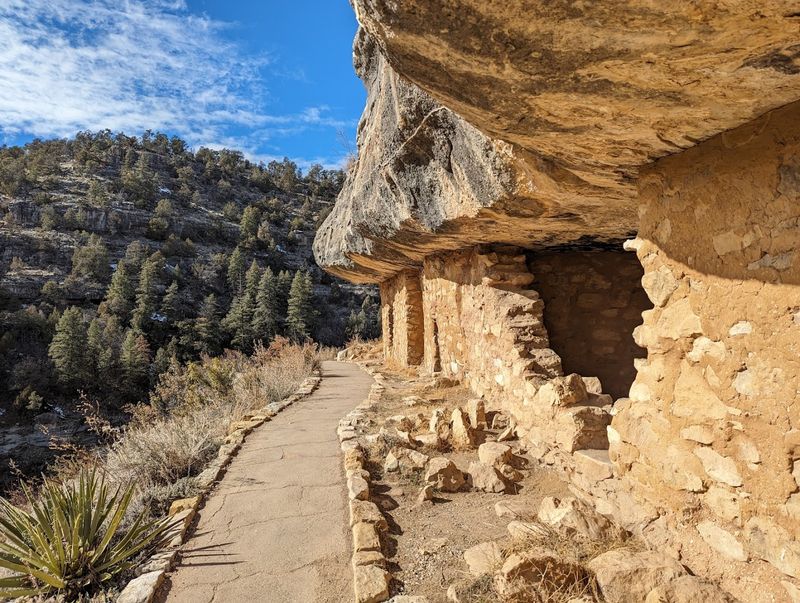
Walking past these stone rooms at Walnut Canyon National Monument, I found myself marveling at the Sinagua people’s architectural brilliance. They didn’t exactly build these dwellings so much as complete what nature started, using the natural limestone alcoves as ready-made ceilings and back walls.
The front walls they constructed from local limestone blocks are still standing after eight centuries, fitted together with mud mortar that has somehow survived Arizona’s temperature swings and monsoon rains. Each dwelling typically contained just one or two rooms, compact but perfectly suited to the canyon’s microclimate.
What struck me most was the strategic placement. These alcoves face south and east, capturing morning sun while staying shaded during the hottest afternoon hours.
In winter, the overhanging rock traps warm air, while summer breezes flow through the canyon providing natural cooling.
The Sinagua lived here from roughly 1100 to 1250 AD, and at the canyon’s peak, around 100 people called these cliff rooms home. Standing in their doorways, I could see the entire canyon spread before me and understood why they chose this spot.
Navigating The 700-Step Challenge
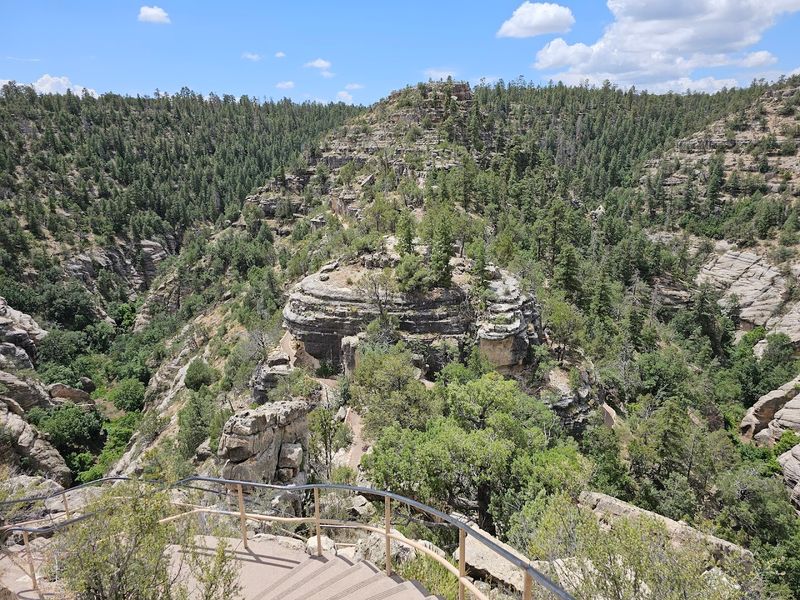
Let’s talk about the elephant in the canyon: those stairs. You’ll see the number 700 thrown around in reviews, and while the actual count is closer to 500 round-trip, it certainly feels like more when you’re climbing back up at 6,690 feet elevation.
I’m not going to sugarcoat it. The return climb is a workout, especially if you’re coming from sea level.
My lungs reminded me repeatedly that Flagstaff sits at high altitude, and oxygen is a precious commodity up here.
But here’s what nobody mentions: the stairs are beautifully constructed, with even spacing and sturdy handrails. You can stop at any of the numerous landings to catch your breath, and there’s absolutely no shame in taking breaks.
I watched a grandmother in her seventies make the entire loop by simply pacing herself and resting when needed.
My advice? Start early in the morning when temperatures are cooler, bring plenty of water, and don’t rush.
The dwellings have waited 800 years; they’ll still be there if you need five minutes to let your heart rate settle.
The Rim Trail Alternative
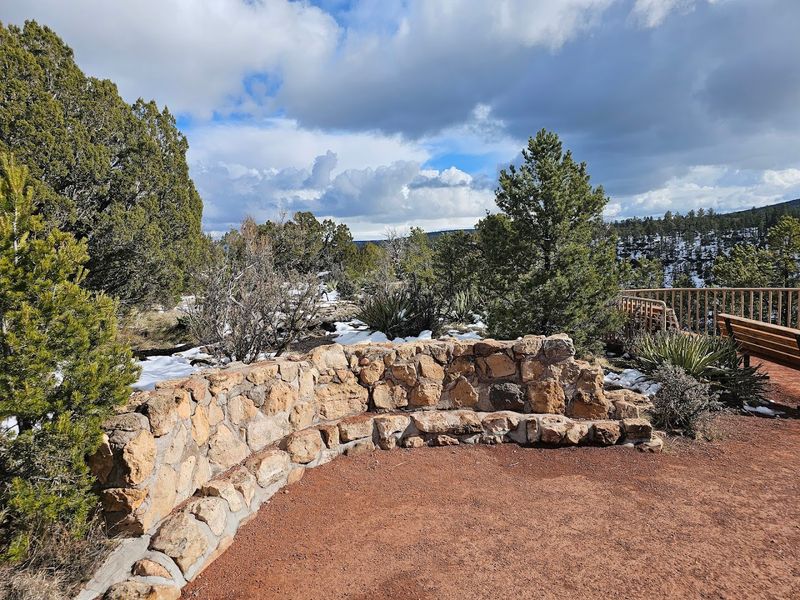
Not everyone can tackle 500 stairs, and thankfully, Walnut Canyon offers a beautiful alternative. The Rim Trail is a three-quarter-mile paved loop that stays at the canyon’s edge, providing spectacular views without the cardiovascular challenge.
I walked this trail on my second visit and appreciated it for entirely different reasons. From up here, you gain perspective on the canyon’s massive scale and can see dozens of cliff dwellings dotting the opposite wall like ancient apartment windows.
Several viewpoint areas have benches and interpretive signs explaining what you’re seeing.
The trail is completely accessible for wheelchairs and strollers, making it perfect for families with young children or anyone with mobility concerns. It takes about 20 to 30 minutes at a leisurely pace, and you’ll still get that sense of awe that makes Walnut Canyon special.
I actually recommend doing both trails if you have time. The Island Trail gives you the intimate, up-close experience, while the Rim Trail provides the big-picture view that helps you understand how this entire community functioned within the canyon’s embrace.
Best Times To Visit
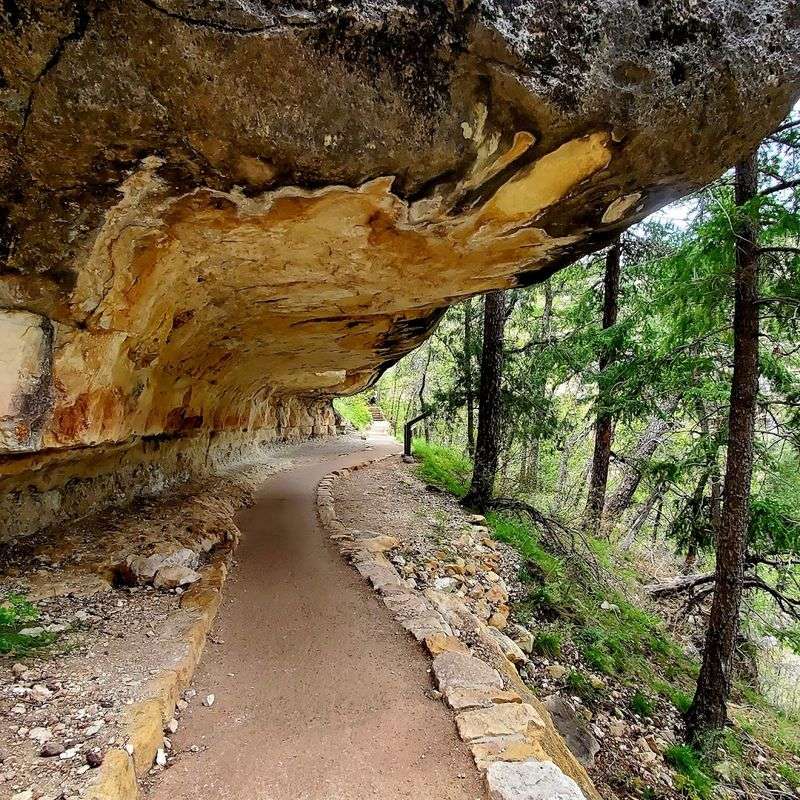
Timing your visit to Walnut Canyon can make the difference between a pleasant hike and an unforgettable experience. I’ve been in different seasons, and each offers something unique.
Spring, from April through early June, brings wildflowers and mild temperatures perfect for hiking. The canyon walls glow in the morning light, and you’ll likely have the trail relatively uncrowded on weekdays.
Summer gets hot, with temperatures often reaching the 80s and 90s, but the elevation keeps it cooler than Phoenix or Tucson.
Fall is my personal favorite. September through November offers crisp air, changing leaves on the canyon’s vegetation, and fewer visitors than summer months.
I visited in October and had entire sections of the trail to myself.
Winter visits are magical but require caution. I’ve seen the canyon dusted with snow, creating a stunning contrast against the red limestone.
However, stairs can become slippery, and the monument sometimes closes the Island Trail during storms. One reviewer described hiking during a snowstorm as breathtaking, and I believe it.
The monument is open daily from 9 AM to 5 PM, and I recommend arriving right at opening to beat the crowds.
What To Bring And Know Before You Go
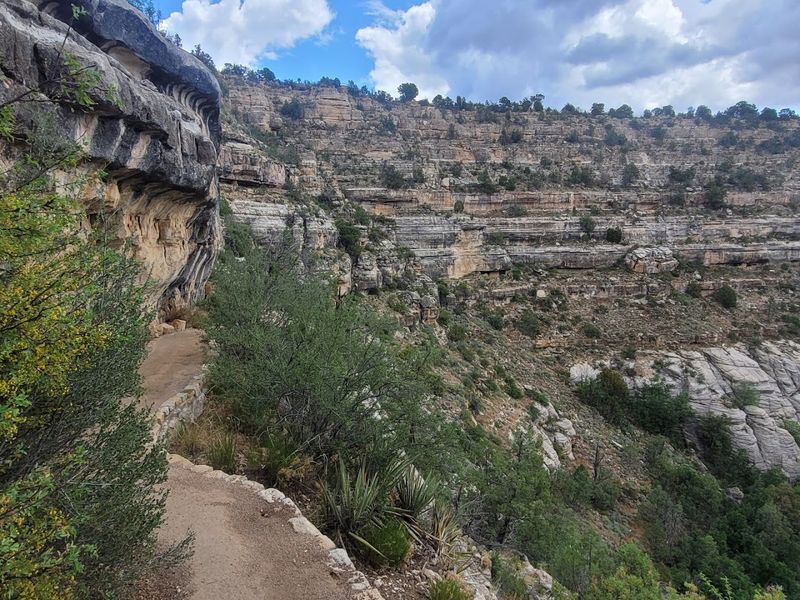
Preparation makes all the difference at Walnut Canyon, and I learned some lessons the hard way so you don’t have to. First and foremost: water.
Bring more than you think you need. The high elevation and dry air will dehydrate you faster than expected, and there are no water fountains along the trail.
Wear sturdy shoes with good traction. I saw someone attempt the Island Trail in flip-flops and immediately regret it.
The stone steps can be uneven, and you want ankle support for the descent and climb.
Sun protection is essential. Even on cloudy days, the Arizona sun is intense at this elevation.
I always bring sunscreen, a hat, and sunglasses. The canyon provides some shade, but you’ll spend plenty of time in direct sunlight.
The entrance fee is covered by the America the Beautiful National Parks Pass, or you can pay a per-vehicle fee that’s valid for seven days. The visitor center has clean restrooms, a small gift shop, and helpful rangers who can answer questions about the trail conditions.
Cell service is spotty, so don’t rely on your phone for navigation or emergencies.
The View From Inside History
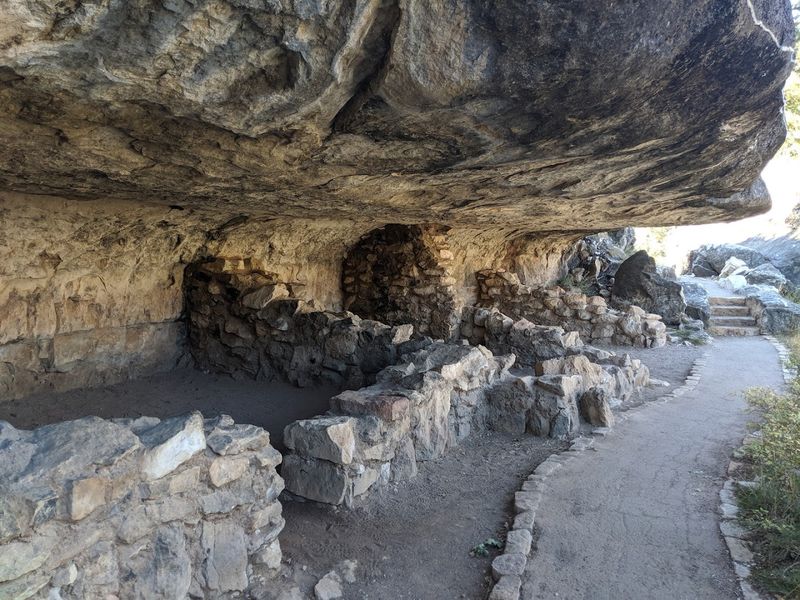
Standing inside one of the cliff dwellings changes everything. The trail allows you to actually enter several of the rooms, and I encourage you to do so, carefully and respectfully.
The first time I stepped through one of those low stone doorways, I felt the temperature drop immediately. The thick limestone walls and overhanging rock create a natural insulation that’s noticeably cooler in summer and warmer in winter.
I understood instantly why the Sinagua chose these alcoves.
Looking out from inside, the view is framed perfectly by the doorway, like nature’s picture window. I could see the canyon floor below, the opposite rim above, and the sky beyond.
Every dwelling has this built-in vista, and I imagine Sinagua families watching storms roll in or tracking wildlife movements from these exact spots.
The ceilings are blackened from centuries of cooking fires, and you can still see finger marks in the mud mortar where someone pressed it into place 800 years ago. These tiny details made the experience profoundly personal, connecting me directly to the people who called this canyon home.
Why This Trail Matters In 2026
In an age of virtual reality and digital experiences, Walnut Canyon offers something increasingly rare: authentic connection to the past. There are no barriers between you and these 800-year-old homes, no glass cases or velvet ropes.
You walk the same paths the Sinagua walked, touch the same stone walls they built, and see the same canyon views they saw.
This accessibility is precisely what makes the monument so valuable in 2026. As our world becomes more disconnected from history, places like Walnut Canyon serve as tangible reminders of the people who came before us.
The Sinagua weren’t abstract historical figures; they were real families who solved problems, raised children, and built communities in challenging environments.
The trail teaches us about adaptation and resilience. These people thrived in the canyon for 150 years using only the resources around them, working with nature rather than against it.
That lesson feels particularly relevant today.
For history lovers, Walnut Canyon is a pilgrimage worth making. It’s not the biggest or most famous ancient site in the Southwest, but it might be the most intimate, offering a rare chance to step literally into the past.