
The Prettiest Peaceful Corners Of Los Angeles, California For A Slow Easy Day
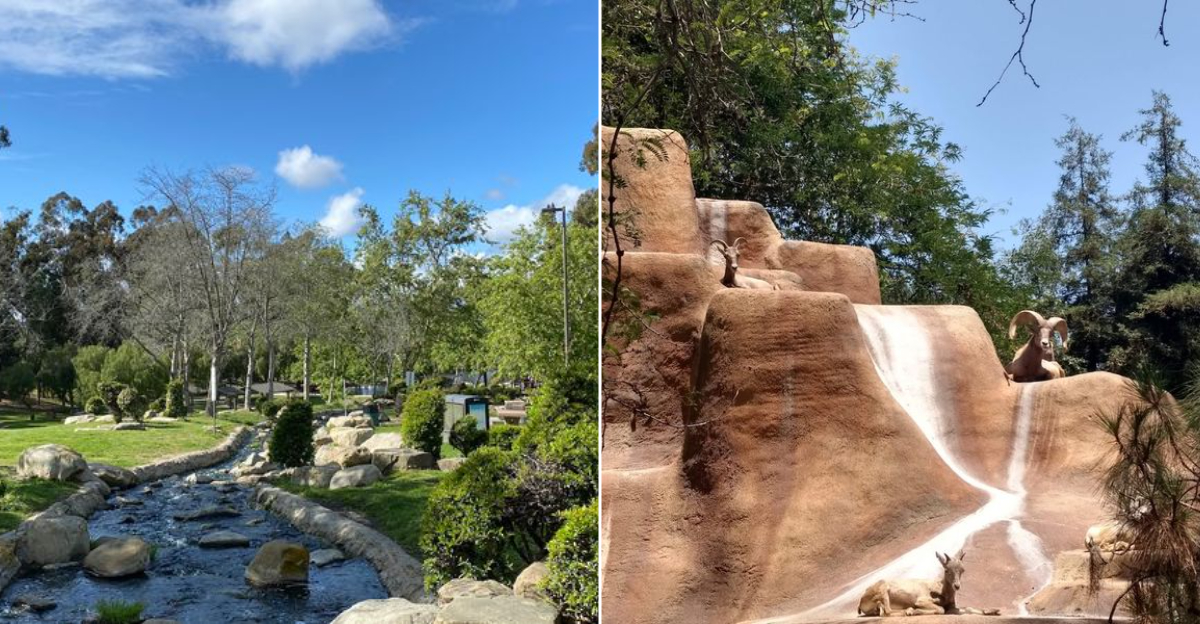
Los Angeles has a reputation. Fast. Flashy. Always “on.” But what if the real flex in Los Angeles, California isn’t the red carpets or rooftop scenes, but knowing exactly where to slow down?
Because beyond the traffic and the headlines, there are corners of the city that feel like a deep exhale. Hidden gardens buzzing with bees.
Ocean overlooks where the world goes quiet for a minute. Tree-lined paths where no one cares about your schedule, your emails, or your five-year plan.
What if the most underrated LA experience isn’t being seen, but disappearing, just for an afternoon? This isn’t about doing more.
It’s about doing less. Intentionally. Softly. Slowly.
Here are the prettiest, most peaceful corners of Los Angeles for a day that moves at your pace, not the city’s.
1. Elysian Valley
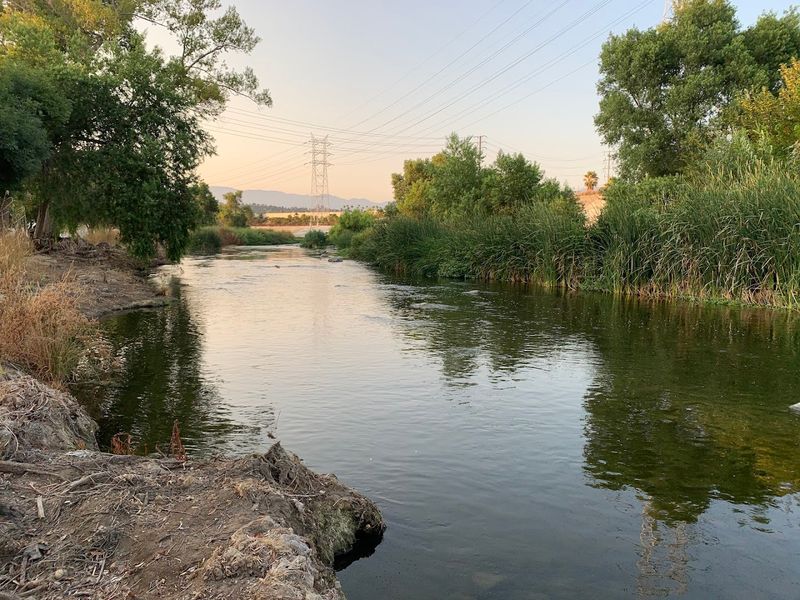
Elysian Valley does not announce itself. There are no billboards, no tour buses, and no overpriced juice bars on every corner.
What there is, though, is one of the most genuinely satisfying stretches of the LA River path you will find anywhere in the city, and it feels completely, wonderfully, like it belongs to the neighborhood.
Located just northeast of downtown, Elysian Valley sits along the Glendale Narrows section of the Los Angeles River near Fletcher Drive. This part of the river is one of the few stretches where the concrete gives way to a soft, natural bottom, which means actual plants, actual birds, and actual calm.
The bike path here runs smooth and flat, making it easy whether you are on a cruiser, a road bike, or just your own two feet.
On a weekday morning, the energy here is refreshingly local. You will pass people walking dogs, cyclists heading to work, and the occasional heron standing perfectly still at the water’s edge like it owns the place.
There is no rush, no agenda, and no performance of being somewhere cool. It just is cool, quietly and without effort.
The surrounding Frogtown neighborhood, as locals call it, has a handful of low-key spots worth exploring after your walk or ride. Small studios, murals, and the occasional food truck add texture without overwhelming the laid-back vibe.
Elysian Valley is proof that the best version of LA is sometimes the one that is not trying to impress you at all. It is just living, and you are welcome to join in.
2. Cabrillo Marine Aquarium
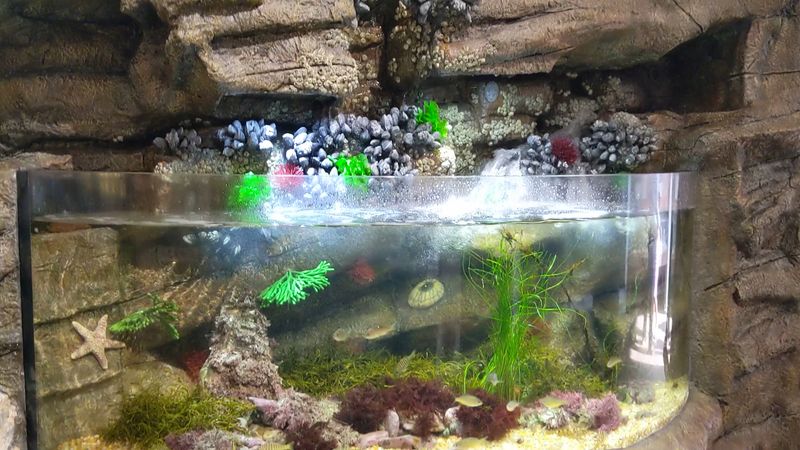
Forget the massive, packed aquariums where you spend half your time navigating strollers and the other half reading exit signs. Cabrillo Marine Aquarium in San Pedro is the kind of place that reminds you what it feels like to actually pay attention to something small and extraordinary.
Sitting right on the waterfront at 3720 Stephen M. White Drive in San Pedro, this aquarium is modest in size but genuinely rich in content.
The focus is entirely on Southern California marine life, which means everything you see actually lives in the ocean just outside the building.
There is something grounding about that connection. Tide pool tanks, local shark species, seahorses, and hands-on exhibits fill the space without overwhelming it.
Weekdays are particularly peaceful here. The lighting is soft, the pace is slow, and the exhibits invite you to linger rather than rush through.
It is the kind of place where you end up staring at a single tank for ten minutes because the creatures inside are just that fascinating.
No flashy 4D experiences, no gift shop pressure, just real marine biology presented with genuine care.
Admission is free, though a small parking fee applies. That accessibility makes it even more appealing for a spontaneous slow day.
The aquarium also sits right next to Cabrillo Beach, so after your visit you can walk the shoreline, watch the boats in the harbor, or find a bench and do absolutely nothing for a while.
San Pedro itself has a gritty, working-harbor charm that feels distinctly un-touristy, and Cabrillo fits perfectly into that honest, unhurried energy.
3. Watts Towers
There are landmarks in Los Angeles that feel designed for Instagram, and then there is Watts Towers, which feels designed for something much harder to name.
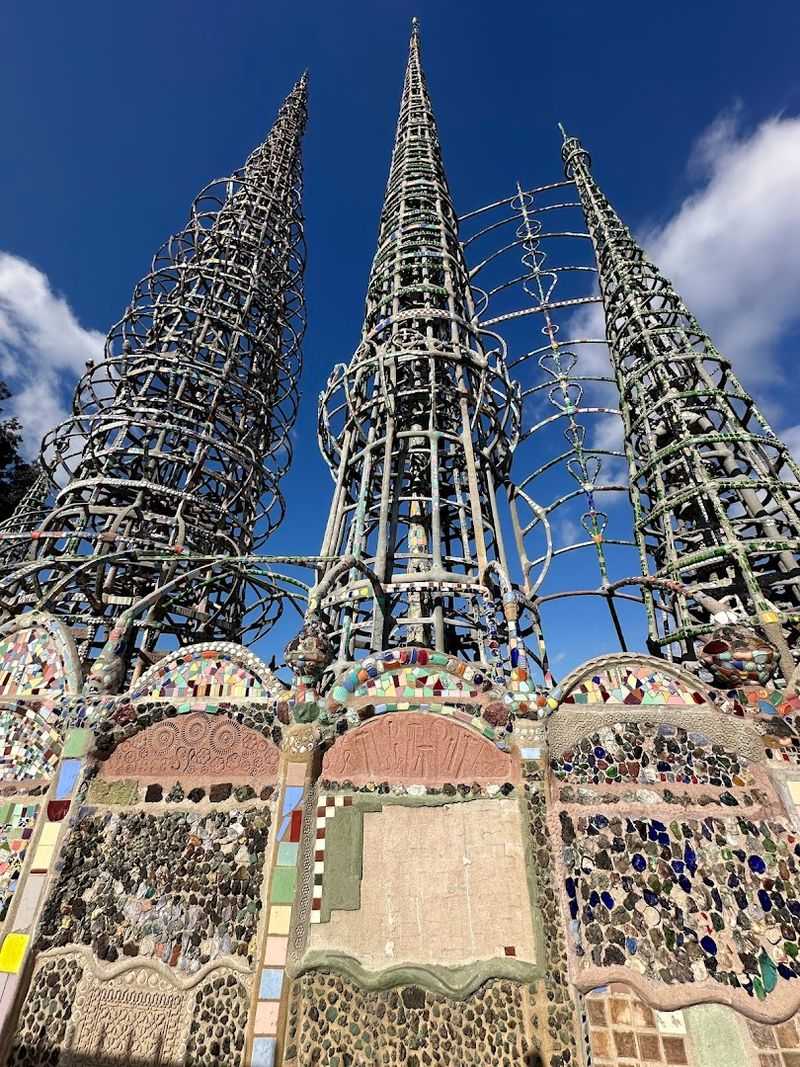
Standing in front of these structures for the first time, the word that keeps coming up is impossible, because that is genuinely what it looks like: something that should not exist but absolutely does.
Located at 1765 East 107th Street in Watts, the towers were built by Sabato Rodia, an Italian immigrant and construction worker who spent 33 years creating this sprawling assemblage of steel, mortar, and found objects entirely by hand and without any formal training.
Broken tiles, seashells, glass bottles, and ceramic pieces are pressed into every surface, catching light differently depending on where you stand and what time of day you visit.
What makes Watts Towers feel special is how under-visited it remains compared to its actual significance. This is a National Historic Landmark and one of the most remarkable works of outsider art anywhere in the United States.
And yet on most days, you can stand here in near silence, taking it all in without a crowd pressing around you. That quiet is part of the gift.
Guided tours are available through the Watts Towers Arts Center next door, which adds cultural context and neighborhood history that deepens the experience considerably. The surrounding area has a rich artistic community worth acknowledging and exploring.
Watts Towers is not a detour or a curiosity. It is one of the most genuinely moving things you can see in this entire city, full stop.
4. Hollyhock House
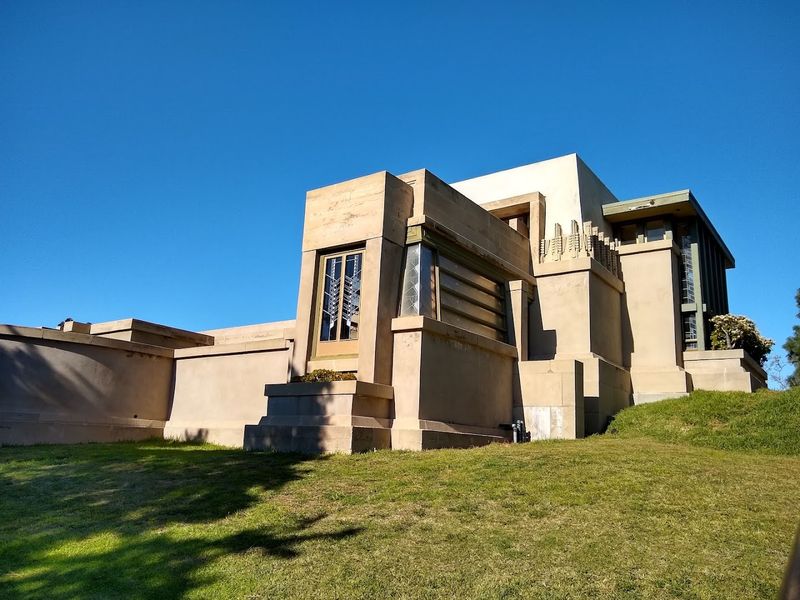
Frank Lloyd Wright designed Hollyhock House as if he wanted to prove that a building could feel like it grew out of the earth rather than being placed on top of it.
Standing on the grounds of Barnsdall Art Park, the house sits low and wide against the hillside, its concrete walls decorated with abstracted hollyhock motifs, and the whole thing has an almost ceremonial stillness about it.
The address is 4800 Hollywood Boulevard in Los Feliz, but once you step through the gate into Barnsdall Park, Hollywood Boulevard might as well be another city entirely. The park itself is a quiet hilltop retreat with sweeping views of the Hollywood Hills and the Griffith Observatory in the distance.
On a clear day, the light here is exceptional, and the grounds are peaceful enough to just wander without any particular destination.
Entry to the house is by guided tour only, with limited capacity, which naturally keeps the experience from feeling crowded or rushed.
The tour covers the architectural details, the history of the original client Aline Barnsdall, and Wright’s broader design philosophy in ways that are genuinely interesting even if you do not consider yourself an architecture person.
The hollyhock motif appears everywhere once you start looking for it, carved into walls, cast into furniture, woven into window designs.
Hollyhock House was designated a UNESCO World Heritage Site in 2019, making it one of only a handful of Wright buildings to receive that recognition.
That context adds weight to a visit that already feels meaningful. Architecture this intentional deserves to be experienced slowly, and this place makes that easy.
5. Kenneth Hahn State Recreation Area
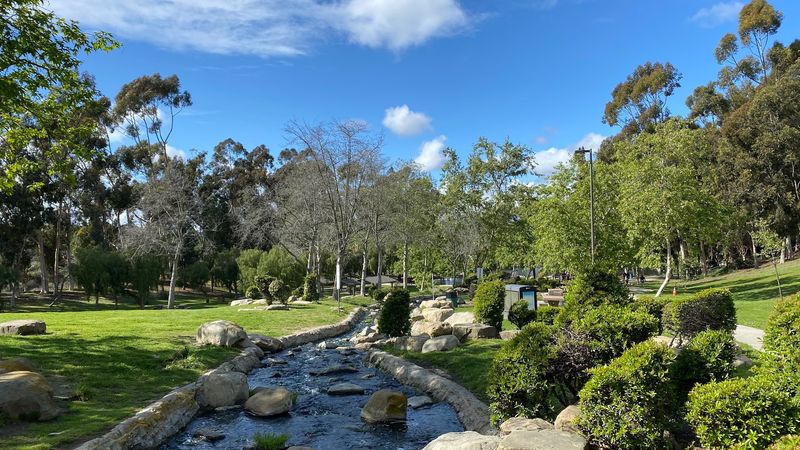
Some parks in LA feel like they are trying to be something. Kenneth Hahn State Recreation Area is not trying to be anything except exactly what it is: a big, generous, genuinely beautiful green space in the middle of the city where you can breathe out and mean it.
Situated in the Baldwin Hills at 4100 South La Cienega Boulevard, Kenneth Hahn covers over 300 acres of trails, meadows, a fishing lake, Japanese gardens, and viewpoints that put the downtown skyline and, on a clear day, the Pacific Ocean into easy view. The scale here is what gets you.
It is large enough that even on a moderately busy weekend, you can find a trail or a patch of grass where it genuinely feels like you are alone with the city humming softly in the distance.
The trail system ranges from flat, easy paths around the lake to steeper routes that climb toward the hilltop overlooks. None of it is extreme, which makes it accessible for a truly casual pace.
Bring a book, a blanket, or just your own thoughts. The park holds all of it without judgment or rush.
One underrated detail: the Japanese garden near the lower section of the park is a quiet gem that most people walk right past. It is small, carefully maintained, and feels genuinely removed from the surrounding urban landscape.
Kenneth Hahn is the kind of place that longtime Angelenos mention with a particular fondness, the way you talk about something you are glad has not been discovered by everyone yet. Protect this one.
6. Baldwin Hills Scenic Overlook
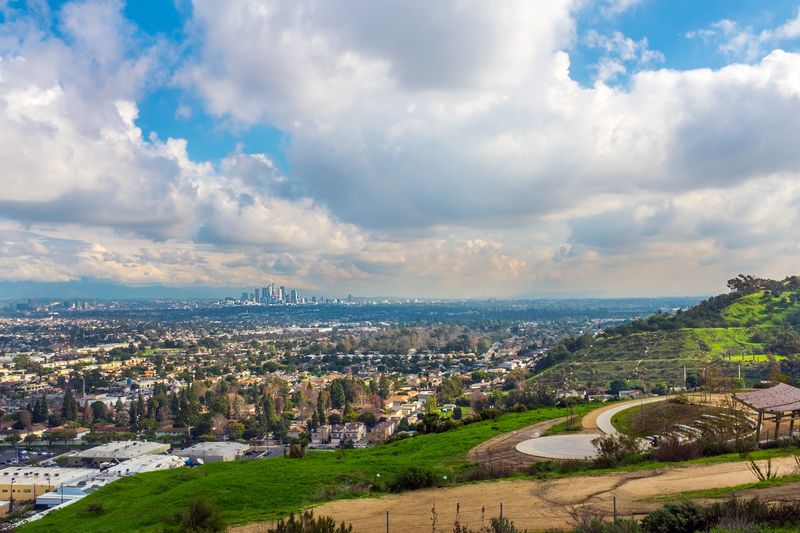
There is a staircase at Baldwin Hills Scenic Overlook that will make your legs burn, your lungs work, and then reward you with one of the most expansive views in all of Los Angeles. The whole climb takes about fifteen minutes.
The view stays with you considerably longer.
The overlook is located at 6300 Hetzler Road in Culver City, right along the edge of the Baldwin Hills. The trail to the top is steep and direct, a wide paved path that does not pretend to be anything other than a climb.
But the payoff at the summit is real: on a clear day you can see downtown LA, the Santa Monica Mountains, the Pacific Ocean, and the Hollywood sign all at once. That panorama is hard to beat anywhere in the city.
Sunrise is the move here. Arriving before the sun is fully up means cooler temperatures, softer light, and a summit that feels almost private.
Watching the city wake up from this vantage point, with the sky shifting from pink to gold over the skyline, is one of those simple LA experiences that costs nothing and delivers everything. Weekday mornings are reliably quiet.
The overlook also connects to the Kenneth Hahn State Recreation Area below, so you can extend your morning into a longer walk if the mood strikes. There are benches at the top for sitting, which is exactly what you should do after climbing.
Catch your breath, look out at the city, and appreciate the fact that sometimes the best things in LA require just a little bit of effort to reach.
7. Point Fermin Park
Point Fermin Park sits at the southern tip of Los Angeles like a secret the city forgot to advertise. The cliffs here drop sharply to the ocean below, the air smells like salt and something older than the city itself, and the pace is so unhurried it feels almost defiant given how close you are to everything else.
Located at 807 West Paseo Del Mar in San Pedro, the park stretches along the bluffs above the Pacific with well-maintained paths, open lawns, and benches positioned perfectly for watching the horizon. On clear days, Catalina Island floats on the water in the distance like a postcard that has not been sent yet.
The views shift beautifully depending on the time of day, with late afternoon light turning the cliffs warm and golden.
What makes Point Fermin feel different from busier coastal parks is the absence of urgency. There are no vendors, no beach crowds, no parking lot chaos.
The neighborhood surrounding it is quiet and residential, and the park itself reflects that energy. People come here to sit, to walk slowly, to read, and to watch the sea.
It is the kind of place where an hour passes without you noticing.
The combination of dramatic geology, ocean views, and Victorian-era architecture from the nearby lighthouse creates a visual atmosphere unlike anywhere else in LA. Point Fermin is proof that the city has edges worth exploring, places where the concrete gives way to cliff and sky and the sound of waves doing what they have always done.
Sometimes that is all you need from a day.
8. Point Fermin Lighthouse
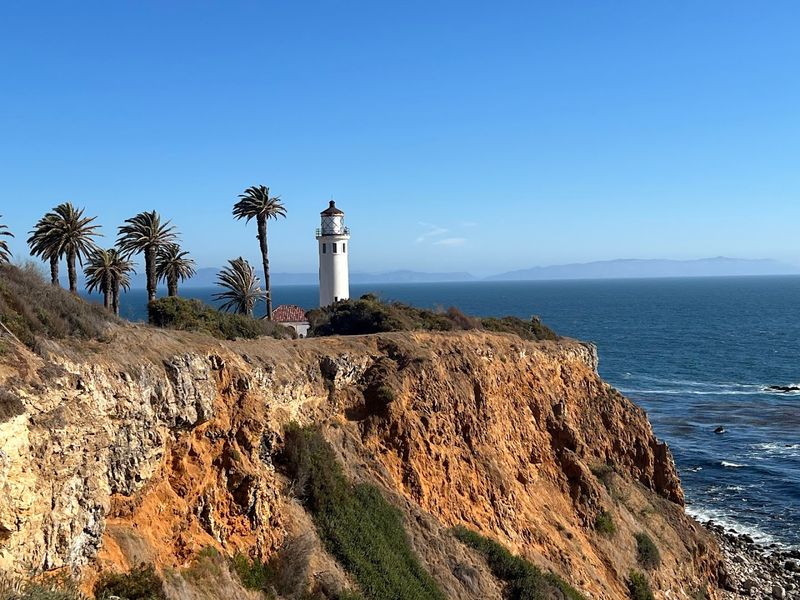
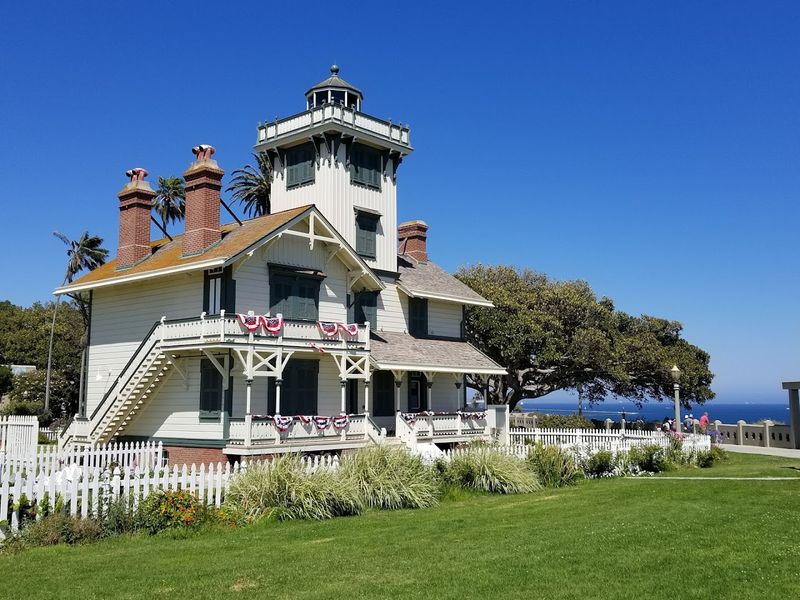
Right at the edge of Point Fermin Park stands one of the most charming structures in all of Los Angeles, a Victorian-era lighthouse that looks like it was plucked from a storybook and placed on a cliff above the Pacific.
Point Fermin Lighthouse has been standing here since 1874, and it still has the quiet dignity of something that was built to last.
The lighthouse is located at 807 West Paseo Del Mar in San Pedro, sharing the park grounds with the blufftop paths and ocean views. It is only open to the public on specific days, typically Tuesdays through Sundays with limited touring hours, and that schedule does something wonderful: it naturally keeps the experience from feeling overcrowded.
Check the current hours before visiting, as they do shift seasonally.
The architecture alone is worth the trip. The Stick-style Victorian design, complete with ornate wooden detailing and a widow’s walk at the top, feels genuinely rare in a city that tends to tear things down and rebuild them bigger.
Guided tours take you through the restored interior, which includes period furniture and interpretive exhibits about the lighthouse’s history and its role in guiding ships through the busy San Pedro Bay.
Pairing the lighthouse with a walk through the surrounding park makes for an easy, beautiful couple of hours. The combination of coastal air, historic architecture, and ocean views creates an atmosphere that feels almost cinematic without being staged.
Point Fermin Lighthouse is one of those places that makes you wonder why it is not talked about more, and quietly grateful that it is not.
9. Leimert Park Village
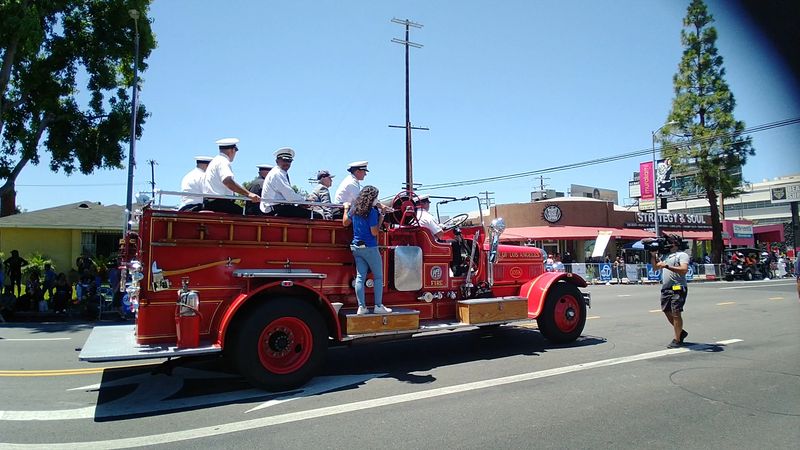
Leimert Park Village is not a destination you visit to check a box. It is a neighborhood you experience on its own terms, one that has its own rhythm, its own voice, and a cultural identity that runs deeper than any headline or neighborhood guide can fully capture.
Centered around 43rd Place and Degnan Boulevard in South Los Angeles, Leimert Park has been the cultural heart of the Black arts community in LA for decades. The streets here are lined with galleries, performance spaces, bookstores, and murals that reflect a living, ongoing creative tradition rather than a preserved or curated one.
Walking through feels like being invited into something real.
The Village has a particular energy on weekend afternoons, when vendors set up along the sidewalks and the outdoor plaza at 43rd and Degnan becomes a gathering point for artists, musicians, and community members. But even on quieter weekday visits, the neighborhood rewards attention.
The murals alone could occupy an entire afternoon if you move slowly enough to actually look at them.
What makes Leimert Park worth including on a slow day itinerary is precisely that it asks something of you. It asks you to slow down, to listen, to look, and to engage rather than just consume.
That kind of intentional visiting is more satisfying than any passive tourist experience.
The coffee is good, the art is real, and the community presence is palpable in the best possible way. Leimert Park is not a backdrop.
It is the whole story, and it is one worth hearing properly.
10. Griffith Park Old Zoo
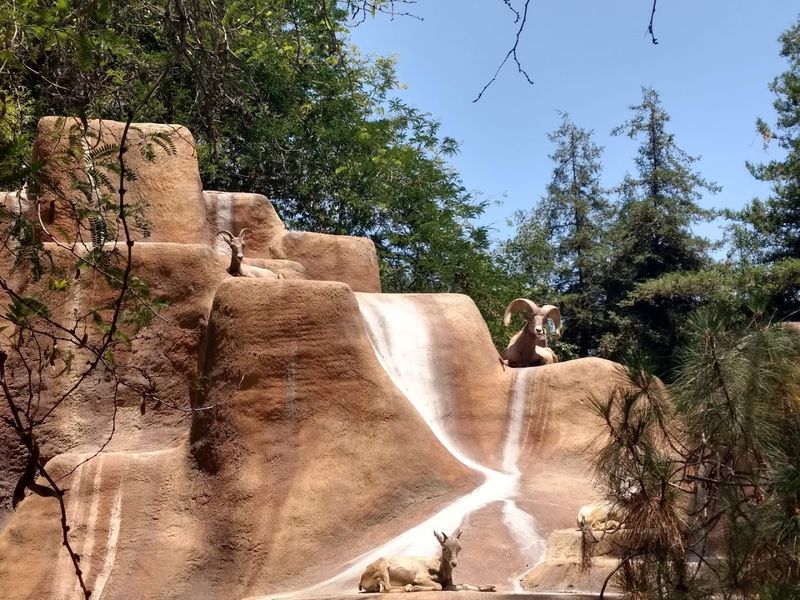
Somewhere in the hills above Los Feliz, there is an abandoned zoo slowly being reclaimed by plants, and it is one of the strangest and most atmospheric places in all of Los Angeles.
The old Griffith Park Zoo closed in 1966, and what remains are the original concrete enclosures, grottos, and cages, now moss-covered and half-swallowed by California oak and chaparral.
The site sits within Griffith Park near the intersection of Crystal Springs Drive and Zoo Drive, not far from the current LA Zoo but feeling like an entirely different world. There are no admission fees, no scheduled hours, no tour guides.
You just walk in along a short trail and find yourself standing in what feels like the ruins of something both eerie and beautiful. Picnic tables have been scattered throughout, which means people actually come here to eat lunch surrounded by empty lion enclosures, and honestly, that is very LA.
On weekday mornings or late afternoons, the old zoo is genuinely quiet. The light filters through the tree canopy in long, soft beams, and the sounds of the city disappear almost entirely.
It is a favorite spot for photographers, hikers looking for something off the main trail, and anyone who appreciates the particular beauty of places that have been left to their own devices.
The old zoo is weird in the best possible way. It does not fit neatly into any category of what a park attraction should be, and that is exactly why it works.
Los Angeles is full of places that are trying very hard to be something. This one stopped trying decades ago, and it has never been more interesting.
Have you ever found beauty in something forgotten?